Every day, businesses across Nigeria lose an estimated ₦10,000 to ₦50,000 monthly due to simple manual errors in tracking payments. That’s revenue evaporating, not from market shifts, but from misplaced ledgers, forgotten follow-ups, and miscalculated balances. For companies operating on installment sales, these small leaks can quickly sink the ship.
 Nigerian business owner looking stressed over scattered paperwork
The True Cost of Manual Fee Tracking in 2026
In today's competitive Nigerian market, relying on manual methods for managing installment payments, client records, and agent commissions is not just inefficient—it's a significant financial drain. For real estate developers, car dealers, cooperative societies, and building material suppliers, the sheer volume of transactions and client interactions makes manual tracking a recipe for disaster.
Consider the typical costs:
- Manual Ledger Books: Annually, businesses spend ₦2,000 to ₦5,000 on basic notebooks or specialized accounting ledgers. This might seem small, but it's just the tip of the iceberg.
- Printing Receipts: If not using digital receipts, monthly printing costs can range from ₦3,000 to ₦10,000, depending on transaction volume.
- Lost Revenue Due to Errors: The most significant hidden cost is the revenue lost from manual errors, estimated at ₦10,000 to ₦50,000 monthly. This includes undercharging, missed payments, unrecorded transactions, and incorrect calculations.
- Staff Time & Salary: An entry-level bookkeeper or accountant, if hired, costs ₦70,000 to ₦150,000 monthly. Even if staff are not solely dedicated to this, their valuable time is diverted from growth-oriented tasks to tedious data entry and reconciliation.
> "The biggest risk in business isn't taking a calculated leap, it's standing still while the world moves forward."
What You Need Before You Start
Before diving into automating your fee tracking, ensure you have these foundational elements in place:
- Clear Payment Terms: Define your installment schedules, down payment requirements, and late payment policies clearly for each product or service.
- Reliable Internet Access: Automation relies on connectivity. Budget for monthly internet data costs, which typically range from ₦5,000 to ₦15,000 for basic mobile data to dedicated broadband.
- Basic Digital Literacy: While intuitive systems require minimal training, a basic understanding of using smartphones or computers will be beneficial for your team.
- Dedicated Team Member (or Yourself): Assign a person responsible for overseeing the transition and initial setup of the automated system.
- Existing Client Data: Compile any existing client information, contract details, and payment histories, even if currently in manual ledgers, as you'll need to transfer this data.
Step-by-Step: Automating Your Installment Fee Tracking
Transitioning from manual ledgers to an automated system might seem daunting, but by breaking it down into manageable steps, any business can achieve greater efficiency and stop revenue leakage. This guide focuses on implementing a robust system for comprehensive business payment management.
Step 1: Centralize Client and Asset Information
The first crucial step is to consolidate all your client and asset data into a single, accessible system. Manual records often scatter client details across notebooks, excel sheets, and even WhatsApp chats, making it impossible to get a clear overview.
Start by gathering every piece of information: client names, contact details, identification, purchase history, and payment agreements. For assets like cars, property, or equipment, document serial numbers, models, and unique identifiers. A robust system allows you to register and manage clients and track assets, linking them directly to specific contracts. This central repository ensures that every team member has access to the most current and accurate information, reducing errors and improving customer service.
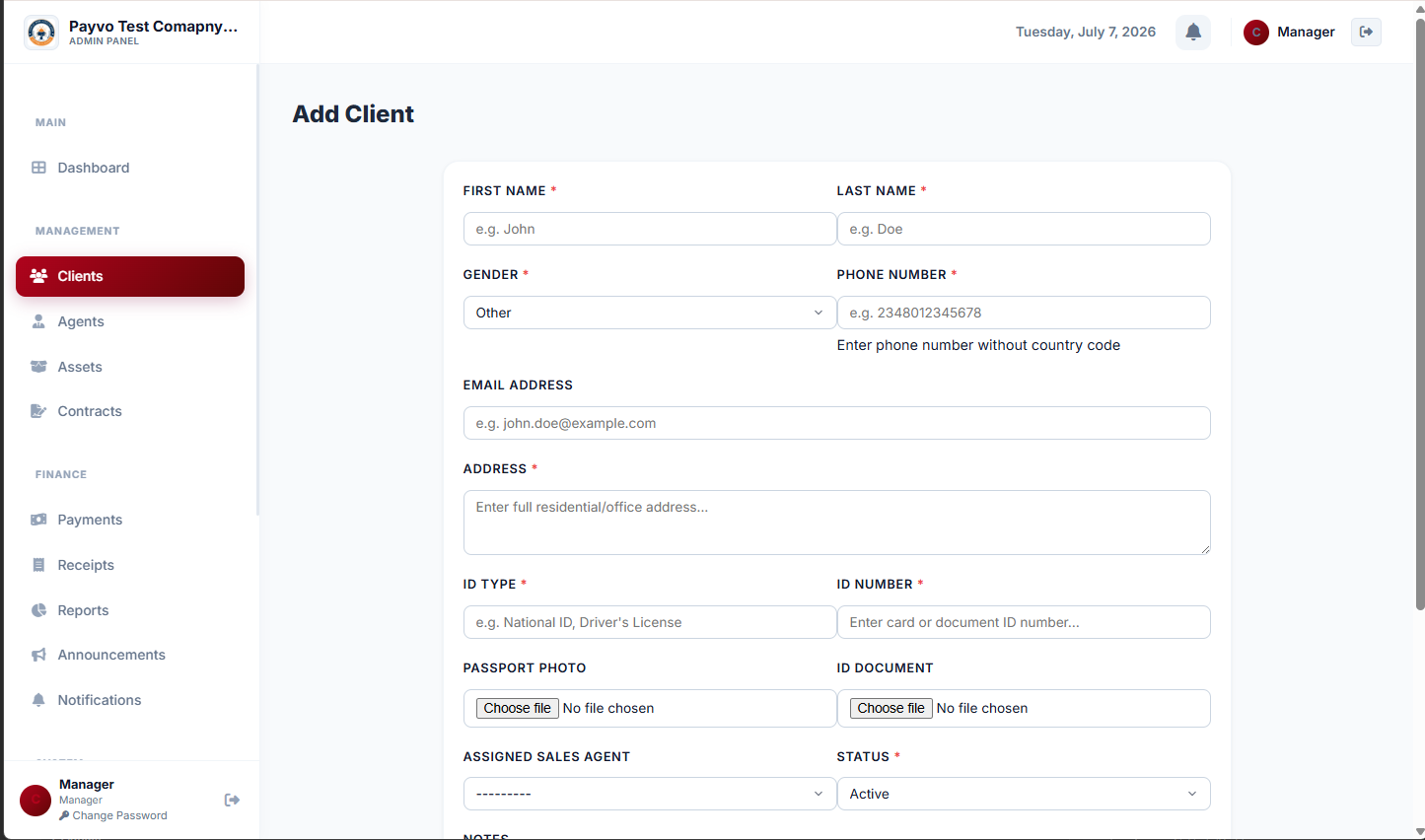 Client: Add Client page
Step 2: Define and Digitize Your Contracts
Once your client and asset data are organized, the next step is to digitize your contracts. This means moving away from paper agreements and setting up your payment terms within a software system. For businesses selling on installment, this involves detailing the total amount, down payment, number of installments, due dates, and any applicable interest or late fees.
A good contract management software Nigeria solution will allow you to create contracts where you set payment terms once, and the installment schedules are generated automatically. This eliminates manual calculation errors and ensures consistency across all agreements. It also provides a clear, digital record of each contract, easily retrievable for reference or audits.
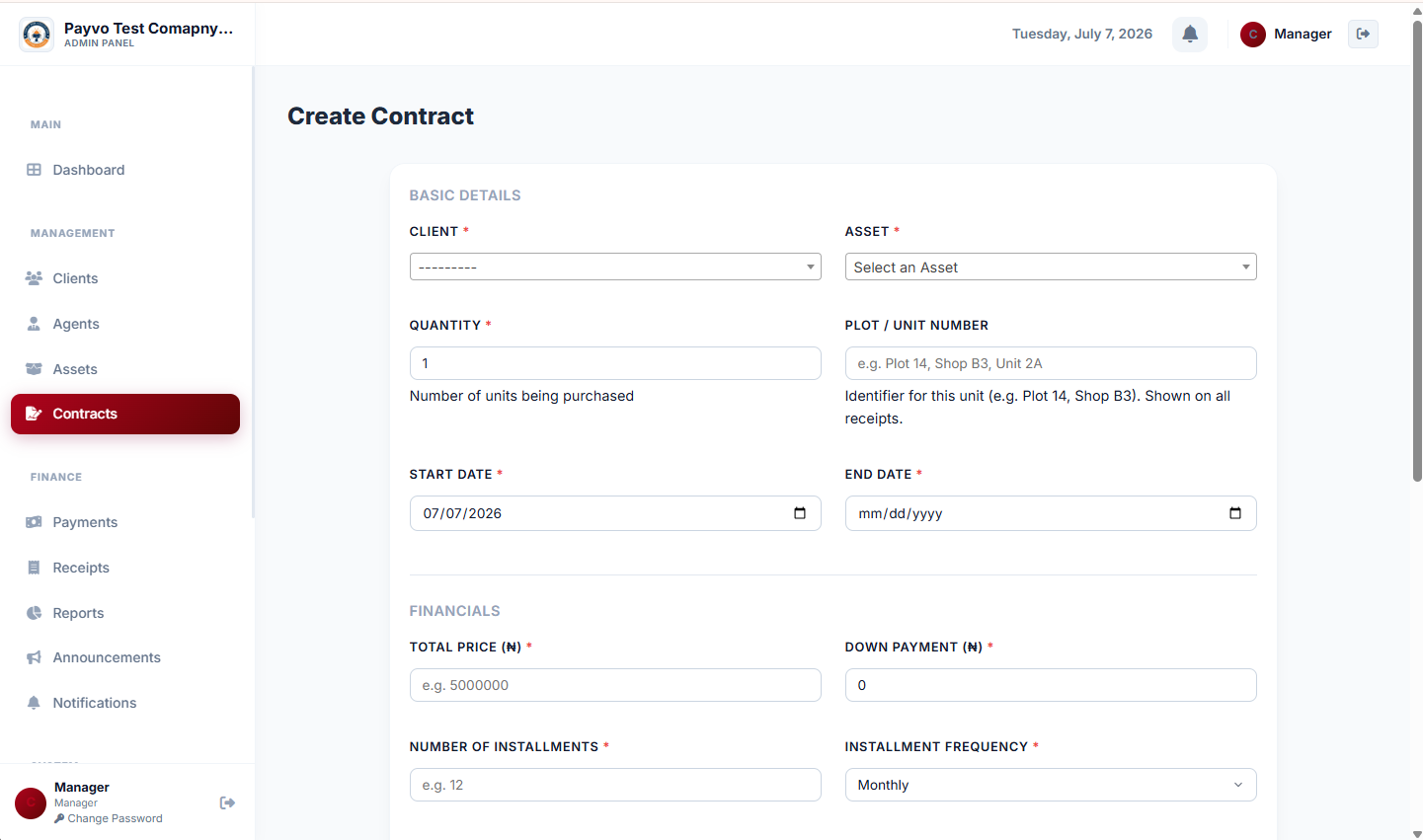 Management: Add contract (top)
Step 3: Implement Seamless Payment Recording and Receipt Generation
This is where automation truly shines and combats manual fee tracking problems. Instead of laboriously writing out receipts and updating ledgers, an automated system streamlines the entire payment process. When a client makes a payment, it should be recorded instantly against their contract.
Look for a system that allows you to log single payments against any contract, with full history tracked. Crucially, it should also generate receipts automatically. These branded receipts, complete with your company logo, colors, and digital signature, can be created for every payment and even provide a master receipt for full contracts. This not only enhances your professional image but also provides clients with instant proof of payment and reduces disputes. This is a significant upgrade from manual receipt generation, which can cost ₦3,000 - ₦10,000 monthly in printing alone.
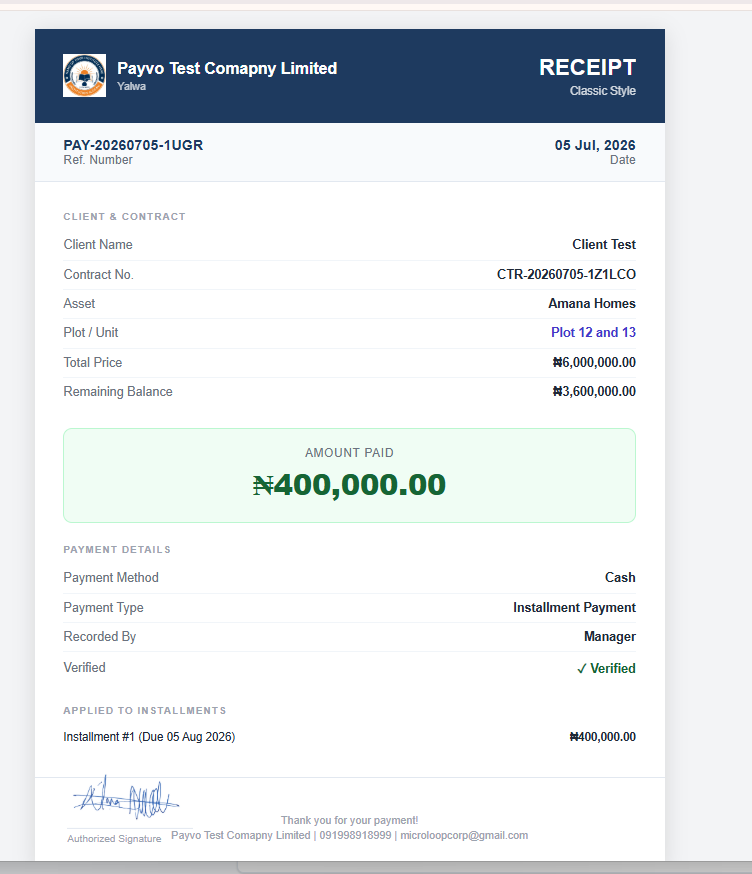 Finance: Paymnet Receipt Sample
Step 4: Automate Communication and Reminders
One of the biggest culprits of lost revenue in installment sales is forgotten due dates and a lack of consistent follow-up. Manual systems make it nearly impossible to send timely reminders to every client without dedicated staff time. Automation solves this by enabling a WhatsApp payment notification system and email alerts.
The ideal solution will send automatic notifications for new clients, new contracts, payment received, and, most importantly, payment reminders before due dates. These reminders remove the need for manual follow-up calls, saving valuable staff time and significantly improving collection rates. Clients can also receive a public receipt link they can view, save, or share, enhancing transparency and convenience. This proactive approach to communication is a hallmark of effective installment management software Nigeria.
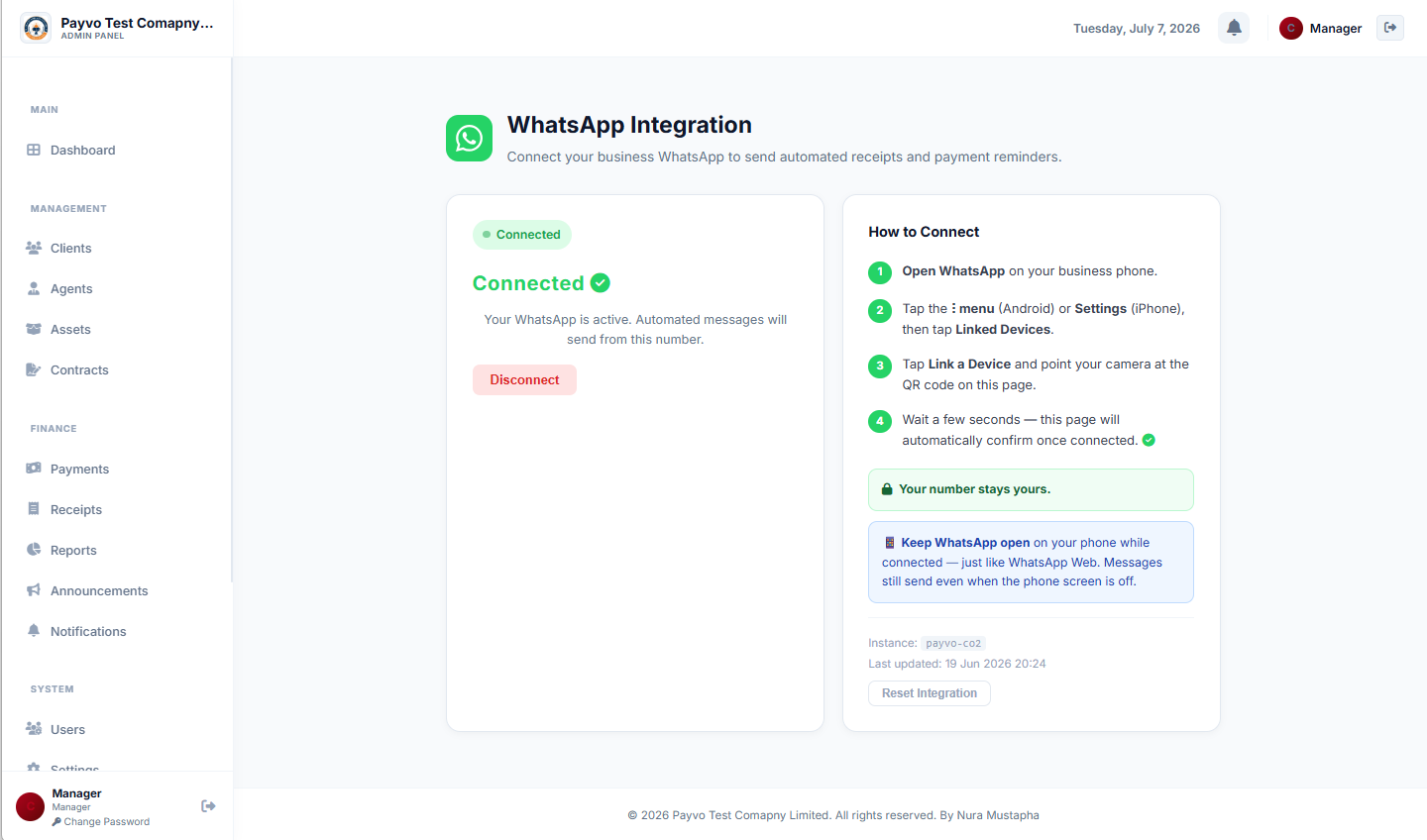 Admin: Whatsapp Integration
Step 5: Empower Your Team and Track Agent Performance
For businesses utilizing sales agents, managing commissions and tracking performance manually is a complex, error-prone task. An automated system transforms this by providing tools for agent commission tracking software. You should be able to assign agents to contracts, automatically calculate commission per payment, and track their full earnings and payout history.
Furthermore, empowering agents with self-tracking capabilities allows them to log in with a unique code to view their own earnings and submit withdrawal requests directly. This transparency motivates agents and significantly reduces administrative overhead for managers. Managing staff accounts with role-based permissions also ensures that each team member only accesses the information relevant to their role, enhancing security and efficiency. Learn more about empowering your sales force through agent tracking.
Step 6: Gain Insights from Real-time Data and Reports
The power of automation extends beyond just processing payments; it provides invaluable insights into your business's financial health. Manual tracking offers limited, often outdated, visibility. An automated system provides real-time dashboards where you can see total clients, active contracts, amount collected, outstanding balances, and next payment due at a glance.
Beyond dashboards, the ability to generate comprehensive reports is critical for accounting and strategic planning. Look for features that allow you to export payment and contract data as PDF or Excel. This provides the necessary documentation for financial reconciliation and helps identify trends, predict cash flow, and make informed business decisions. Automated weekly company reports sent directly to your email can summarize key performance metrics, keeping you informed without manual effort. This capability is essential for car dealer installment software users and real estate payment tracking Nigeria companies alike.
Common Mistakes to Avoid
Transitioning to automated fee tracking is a significant step, but pitfalls exist. Be mindful of these common errors:
- Underestimating Data Migration: Don't rush the process of transferring your old manual data. Allocate sufficient time and resources to accurately input existing client and contract details into your new system. Errors here will propagate.
- Neglecting Staff Training: Even the most intuitive software requires basic training. Ensure your team understands how to use the new system effectively, from recording payments to generating reports.
- Ignoring System Security: While automation enhances security over scattered paper records, ensure your chosen platform has robust security measures, including user permissions and audit logs, to protect sensitive financial data.
- Overlooking Integration Needs: If you use other business tools (e.g., accounting software), consider if your fee tracking solution can integrate or at least easily export data for seamless transfer.
- Failing to Automate Reminders: Simply tracking payments isn't enough. Not leveraging automated payment reminders is a missed opportunity to significantly reduce late payments and outstanding balances.
- Choosing a Complex System: For most Nigerian SMEs, a straightforward, user-friendly interface is more effective than an overly complex system with features you'll never use. Prioritize ease of use and direct benefits.
How to Track and Grow After Launch
Once your automated fee tracking system is up and running, the real work of leveraging its power begins. Tracking progress and identifying growth opportunities becomes significantly easier.
Key Performance Indicators (KPIs) to Watch:
- Collection Rate: Monitor the percentage of due payments actually collected within the grace period. Automation should dramatically improve this.
- Outstanding Balances: Keep a close eye on the total amount owed across all contracts. A decrease indicates improved financial health.
- Payment Delinquency Rate: Track how many payments are late and by how long. This helps identify problematic contracts or clients early.
- Agent Performance: For businesses with agents, track individual agent collection rates and commission earnings to identify top performers and areas for improvement.
- Client Retention: Understand which clients are consistent payers and which require more follow-up.
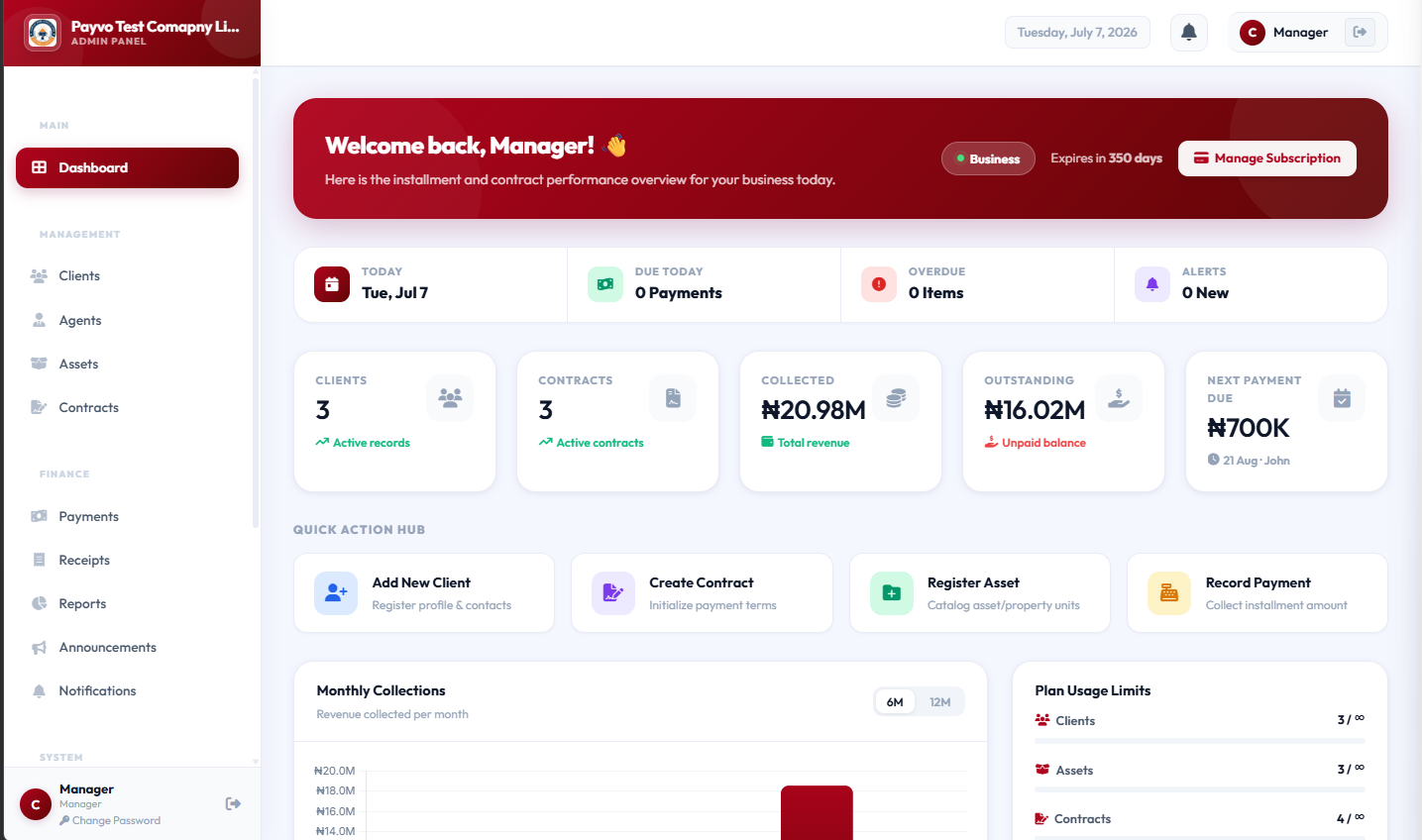 Dashboard (bottom)
Frequently Asked Questions
Q1: Is automated fee tracking expensive for a small business in Nigeria?
Not necessarily. While there might be an initial investment, consider the significant costs of manual tracking: ₦10,000 - ₦50,000 monthly in lost revenue due to errors, plus staff time and material costs. Monthly software subscriptions for basic fee tracking typically range from ₦3,000 - ₦10,000. Many providers offer flexible pricing plans, making it accessible even for smaller operations. You can explore various options on a pricing page.
Q2: What if my internet connection is unreliable?
While automated systems require internet, many modern solutions are designed with offline capabilities or can sync data once connectivity is restored. For critical transactions, a backup mobile data plan (₦5,000 - ₦15,000 monthly) can ensure continuous operation. The benefits of automated payment tracking far outweigh the occasional connectivity challenges.
Q3: Can I still use my existing bank accounts with an automated system?
Absolutely. Automated fee tracking software typically integrates with or at least complements your existing bank accounts. You'll record payments received into those accounts within the system. The software primarily manages the tracking, reconciliation, and communication aspects, not directly processing funds like a bank.
Q4: How long does it take to set up and train staff on a new system?
Setup time varies. A basic fee tracking software for a small business might take a few hours to a couple of days to configure. More robust systems with extensive data migration could take longer. Training for staff is often quick, especially with user-friendly interfaces. Some providers offer one-time setup/training for ₦15,000 - ₦50,000, or you can self-setup with online guides.
Q5: What kind of businesses benefit most from automated fee tracking?
Any business that sells on installment or credit terms, manages recurring payments, or deals with a large volume of client transactions will benefit immensely. This includes real estate developers, car dealers (especially with car dealer installment software), cooperative societies, microfinance operators, solar/equipment leasing companies, building material suppliers, and even schools or training centers managing tuition fees. If you're currently using manual fee tracking, you stand to gain.
Q6: How does automated payment tracking improve client relationships?
Automation leads to greater transparency and efficiency. Clients receive instant, branded receipts, timely payment reminders, and clear communication via email and WhatsApp. This professional approach reduces misunderstandings, builds trust, and makes the payment process smoother for everyone, ultimately enhancing client satisfaction and loyalty.
 Nigerian small business owner smiling while reviewing digital
Ready to Streamline Your Operations and Boost Your Bottom Line?
Stop losing precious revenue to manual errors and inefficient processes. Embrace the future of business payment management with a system designed for the unique needs of Nigerian businesses. If you're looking for a robust solution for contract management software Nigeria, client tracking, automated reminders, and agent commission tracking, consider exploring Payvo. It's built to replace scattered notebooks and manual follow-ups with one automated system, managing everything from client registration to payment collection and reporting. Take the first step towards smarter business operations today. Register into Payvo page and transform your fee tracking.