The relentless pace of business in 2026 often leaves entrepreneurs feeling overwhelmed, juggling countless tasks from client management to payment tracking. A recent study revealed that small business owners spend an average of 15 hours per week on administrative tasks, detracting significantly from strategic growth activities. This administrative burden isn't just a time sink; it's a productivity killer that can stall momentum and obscure your path to profitability.
The Operational Reality for Installment-Based Businesses in 2026
The landscape for businesses relying on installment sales – whether real estate, car dealerships, solar equipment leasing, or building material suppliers – is more competitive and complex than ever. Digital transformation, while offering immense opportunities, also brings new demands for efficiency and transparency. Businesses in Nigeria, for instance, are increasingly recognizing the imperative to streamline operations to stay ahead. According to a 2025 report by the National Bureau of Statistics, businesses adopting digital tools for financial management saw a 20% average increase in operational efficiency compared to those relying on manual methods. The shift towards automated systems is not just a trend; it's a necessity for managing client relationships, tracking assets, and ensuring timely payments in a market where every Naira counts. Manual processes lead to errors, delays, and frustrated customers, directly impacting your bottom line and reputation.
> "In the modern business environment, efficiency is not merely about saving time; it's about preserving capital, strengthening client trust, and creating a scalable foundation for future growth."
The rise of mobile communication, especially platforms like WhatsApp, has also changed customer expectations. Clients now expect instant updates and accessible information regarding their contracts and payments. Businesses that can meet these expectations through automated notifications and accessible digital receipts are building stronger, more loyal customer bases. The challenge, however, lies in integrating these disparate functions into a cohesive, manageable system without adding more complexity. This is where the concept of a 'reset button routine' for your business operations becomes invaluable.
What You Need Before You Start
Before you can effectively implement a 'reset button routine' for your business operations, especially when dealing with installment sales, you need a few foundational elements in place. These prerequisites ensure that your efforts to streamline are built on a solid, functional base.
- Clear Operational Procedures: Documented processes for client onboarding, contract creation, payment collection, and follow-up.
- Dedicated Team: Staff members assigned specific roles and responsibilities within the sales and finance cycles.
- Reliable Communication Channels: Established methods for client interaction, including email, phone, and potentially a WhatsApp payment notification system.
- Financial Oversight: A clear understanding of your cash flow, outstanding balances, and payment schedules.
- Access to Technology: Readiness to adopt and integrate digital tools that can automate repetitive tasks and provide real-time insights.
Step-by-Step: Implementing Your Business Reset Button Routine
This routine focuses on establishing clarity, automation, and control over your installment sales process, allowing you to quickly identify and address issues, much like hitting a 'reset button' on a computer.
Step 1: Centralize Client and Asset Information
The first step to reclaiming control is to eliminate scattered data. Many businesses still rely on physical ledgers, disparate spreadsheets, or even notes in a phone for client details and asset tracking. This fragmentation is a prime source of inefficiency and error, particularly for real estate payment tracking Nigeria and car dealer installment software needs. You need a single, secure repository for all client and asset data.
Begin by gathering all existing client information – contact details, historical purchases, payment history, and communication logs. Simultaneously, create a comprehensive inventory of all assets sold on installment, whether it's land plots, vehicles, solar panels, or building materials. Each asset should have a unique identifier, condition reports, and its associated client. This centralization makes it easier to manage client details and link assets directly to contracts, providing a holistic view of your operations.
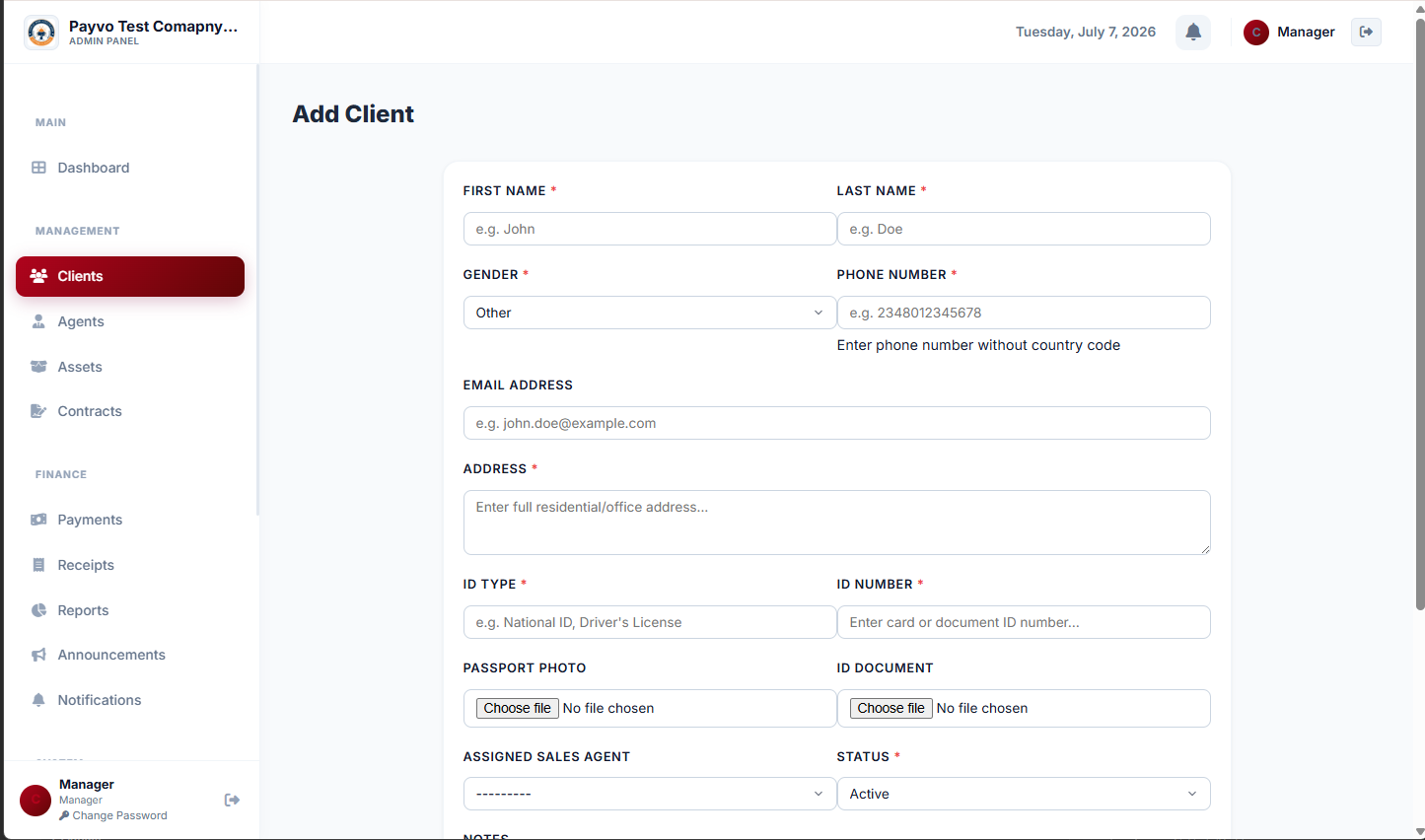 Client: Add Client page
Step 2: Automate Contract Generation and Management
Manual contract creation is time-consuming and prone to human error, especially when dealing with complex installment schedules. A crucial part of your reset routine involves moving to an automated system for generating, managing, and tracking contracts. This ensures consistency, accuracy, and legal compliance across all your agreements.
Define your standard contract templates, including all necessary clauses, payment terms, and default conditions. The goal is to set payment terms once, and have the system automatically generate the installment schedules. This not only saves time but also reduces the likelihood of discrepancies that can lead to disputes. For businesses using cooperative society management software or those managing microfinance operations, automated contract generation is indispensable for maintaining regulatory compliance and transparency.
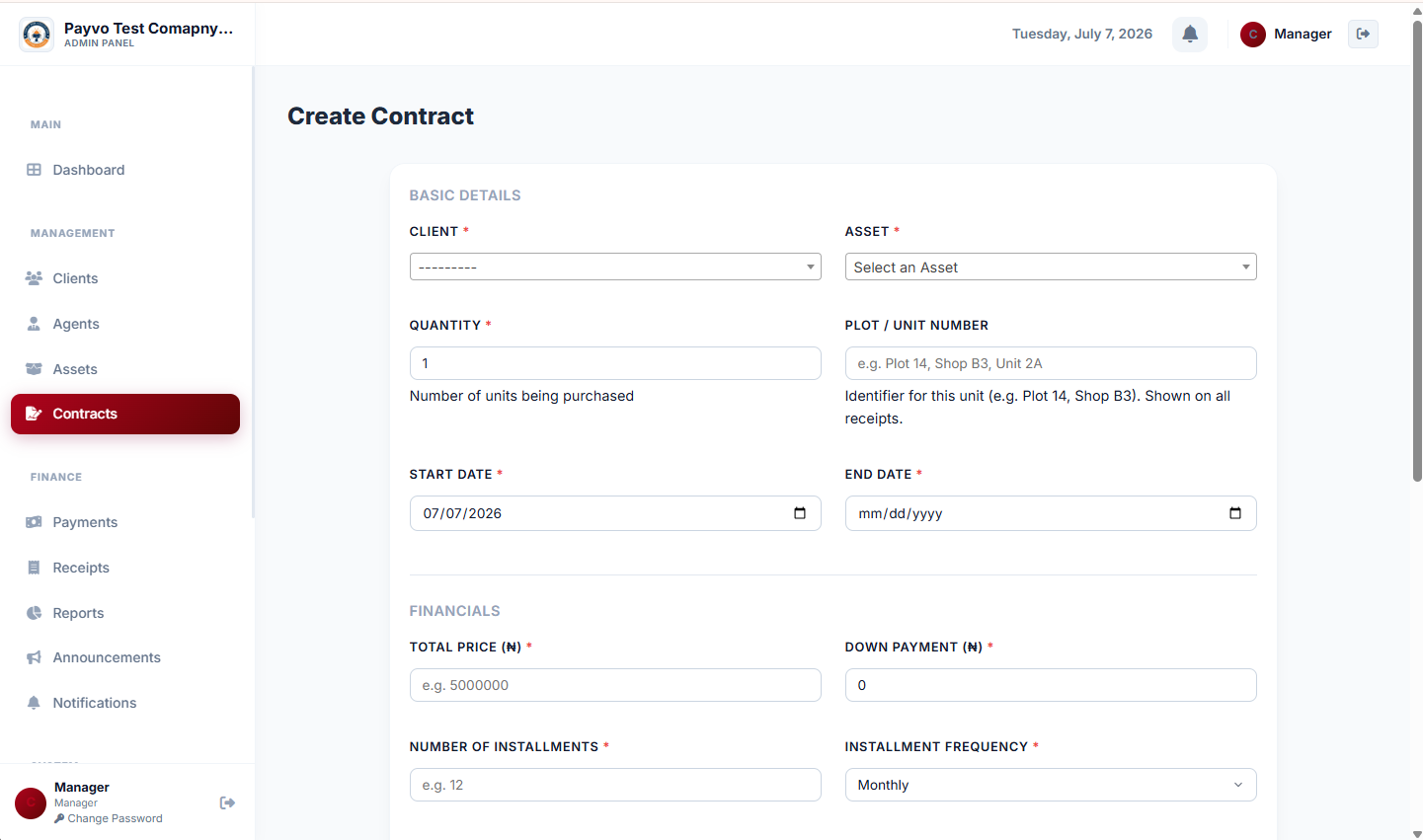 Management: Add contract (top)
Step 3: Streamline Payment Recording and Receipting
One of the biggest pain points for installment-based businesses is the manual recording of payments and the creation of receipts. This process can be a significant drain on resources and a common source of errors. An effective reset involves automating these financial transactions to ensure accuracy and provide immediate proof of payment.
Implement a system where payments can be logged quickly and accurately against specific contracts. This should automatically update the client's payment history and generate a branded receipt. The receipt generator app Nigeria businesses rely on should include your company logo, colors, and digital signature, providing a professional touch and building client trust. This automation removes the need for manual reconciliation and ensures that both your business and your clients have an immediate, verifiable record of every transaction.
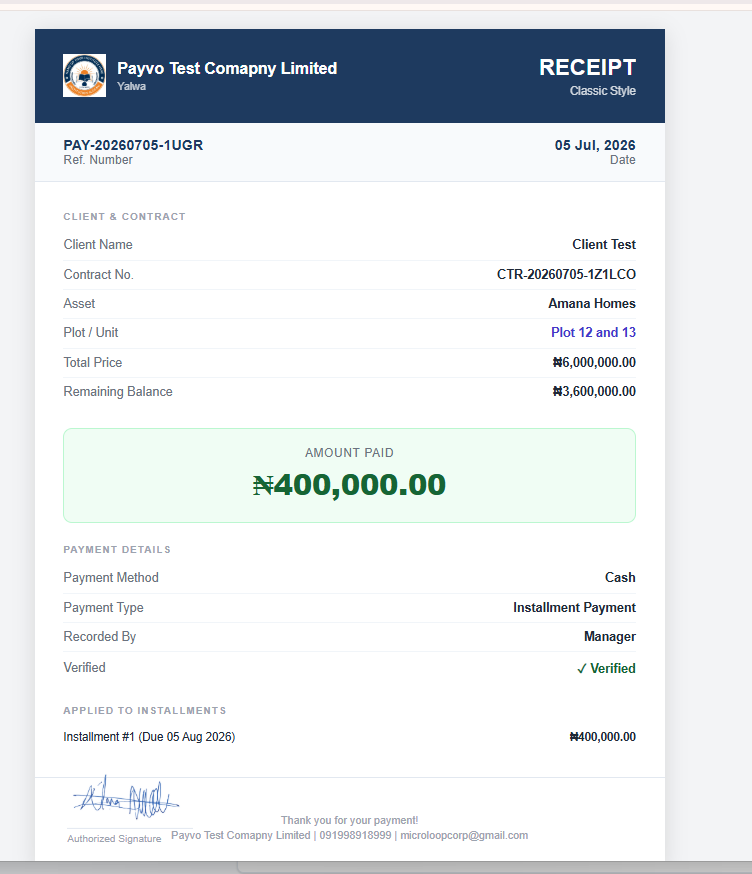 Finance: Paymnet Receipt Sample
Step 4: Implement Automated Client Communication
In 2026, clients expect proactive communication, especially regarding their financial commitments. Manual follow-ups for payments are incredibly time-consuming and often ineffective. Your reset routine must include an automated system for notifications and payment reminders.
This step involves setting up automatic alerts for new clients, new contracts, and, most importantly, payment received confirmations and reminders before due dates. These notifications should be sent through channels your clients actively use, such as email and WhatsApp. A robust WhatsApp payment notification system can significantly reduce late payments and improve customer satisfaction by keeping them informed. Additionally, providing a public receipt link that clients can easily view, save, or share enhances transparency and convenience. This proactive communication strategy helps maintain a healthy cash flow and strengthens client relationships without requiring constant manual intervention.
Step 5: Establish Robust Staff and Agent Management
For businesses with multiple employees or a network of agents, managing permissions, tracking performance, and calculating commissions can be a complex administrative task. An efficient reset button routine extends to your internal operations, ensuring accountability and fair compensation.
Set up a system that allows business owners to add staff with role-based permissions, controlling what each person can see and do within the business management platform. This is crucial for data security and operational integrity. Furthermore, if you work with agents, implement an agent commission tracking software that automatically calculates commission per payment and tracks full earnings and payout history. Agents should ideally have the ability to log in (with specific permissions) to view their own earnings and submit withdrawal requests directly, streamlining the entire process and providing them with real-time insights into their performance. This level of internal organization is vital for scaling operations effectively and fairly.
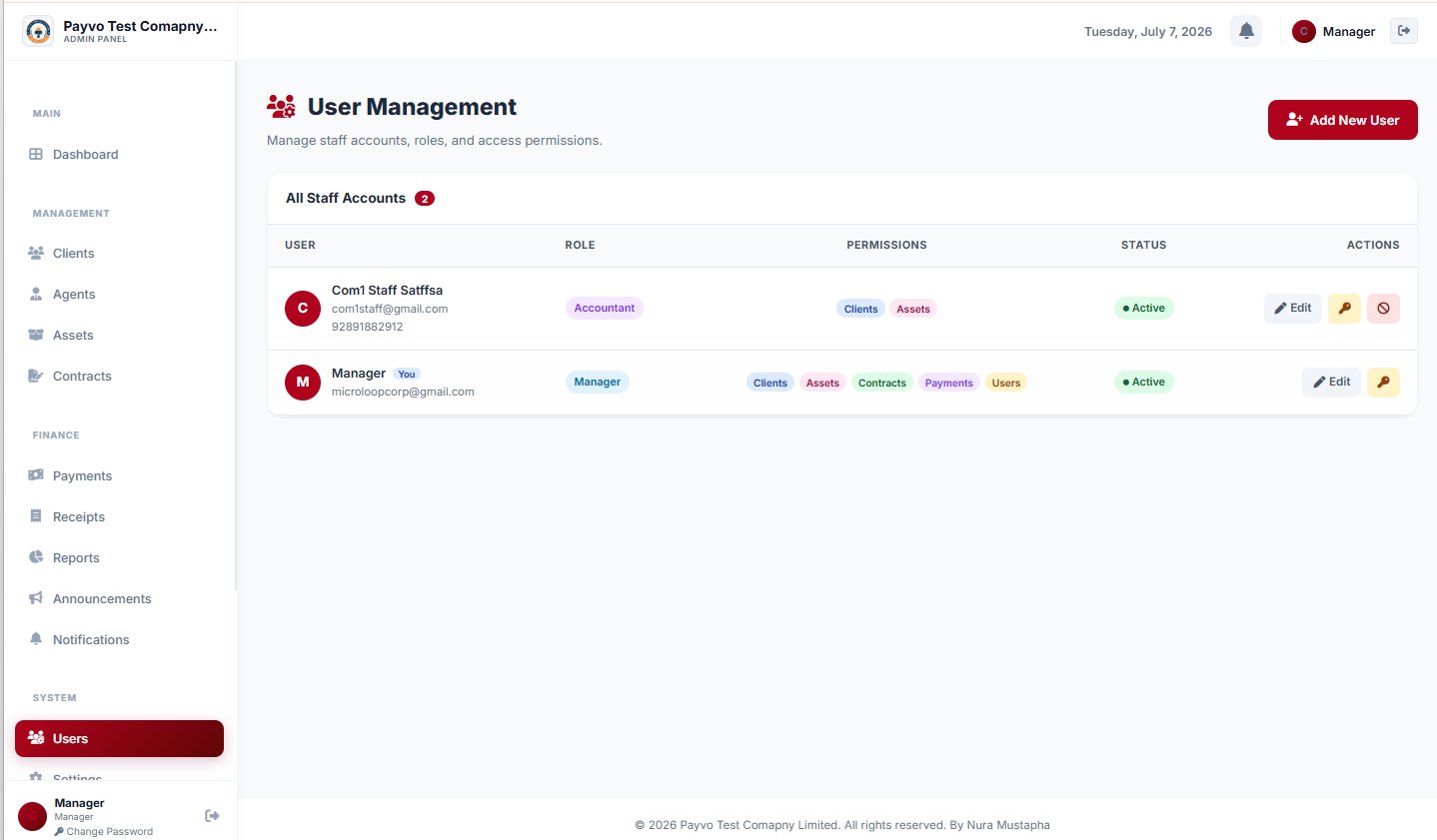 Admin: User Management Page
Step 6: Leverage Real-time Dashboards and Reports
The final, but continuous, step in your reset routine is to gain real-time visibility into your business performance. Manual tracking and periodic report generation often leave you reacting to problems rather than proactively managing them.
Implement a solution that provides real-time dashboards where you can see key metrics at a glance: total clients, active contracts, amount collected, outstanding balances, and next payment due. This immediate insight is invaluable for making informed decisions and quickly identifying any bottlenecks or areas of concern. Additionally, ensure the system can generate comprehensive reports, exporting payment and contract data as PDF or Excel for accounting, record-keeping, and strategic analysis. Automated weekly company reports sent directly to your email can provide a consistent overview of key business performance metrics, acting as a regular pulse check for your operations. For a comprehensive contract management software Nigeria businesses can rely on, real-time data and robust reporting are non-negotiable features.
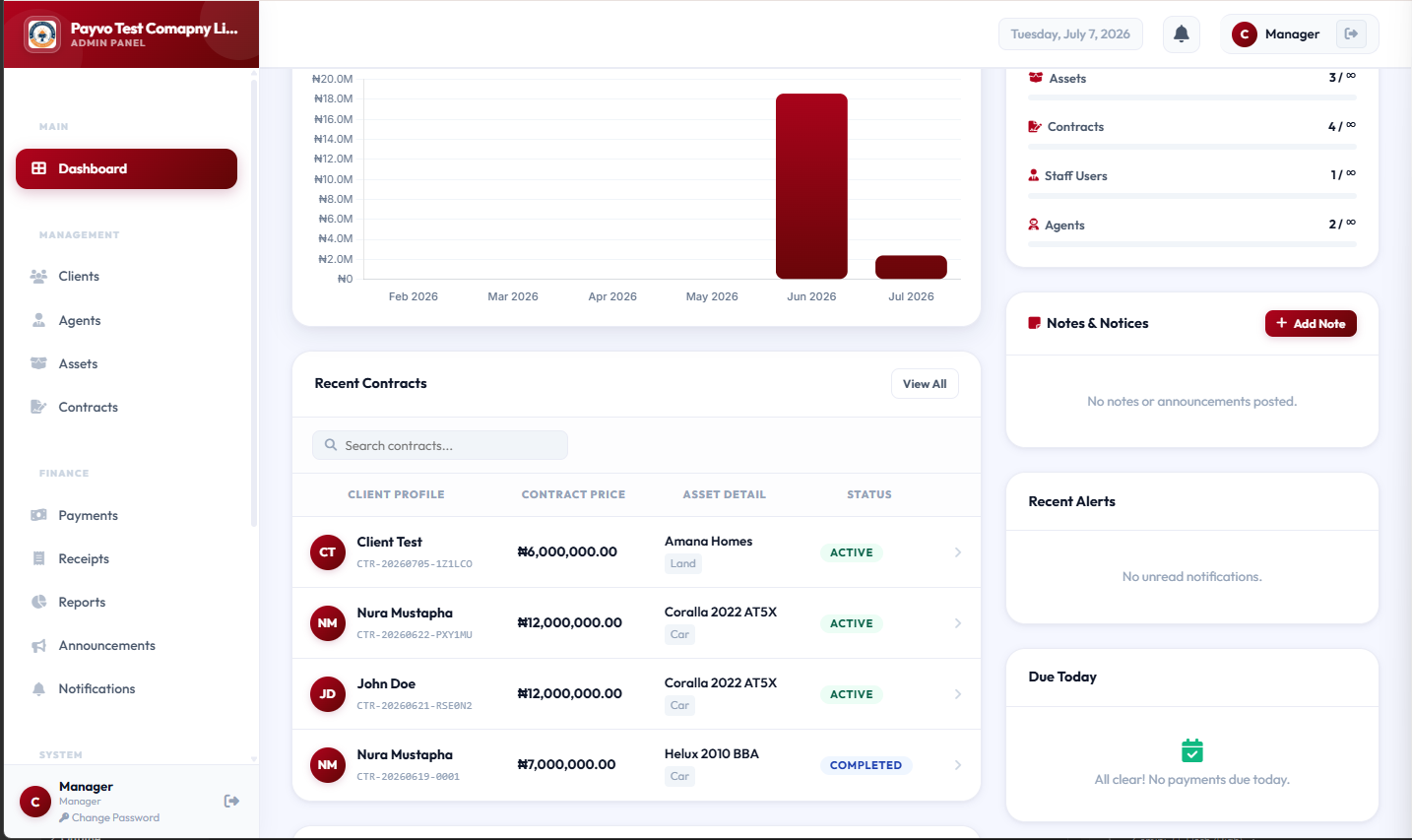 Dashobard (top)
 Descriptive Alt Text
Common Mistakes to Avoid
Implementing a new system or routine can be challenging. Avoiding these common pitfalls will smooth your transition and maximize the benefits.
- Underestimating Training Needs: Don't assume your team will intuitively understand a new system. Provide thorough training and ongoing support.
- Ignoring Data Migration: Poorly executed data migration from old systems to new ones can lead to significant errors and loss of historical information. Plan this meticulously.
- Over-Customizing Initially: While flexibility is good, trying to customize every single aspect of a new system from day one can delay implementation and introduce complexity. Start with core functionalities.
- Neglecting Client Communication: Failing to inform clients about new processes (like automated notifications or digital receipts) can lead to confusion or resistance.
- Skipping Regular Reviews: The "reset button" isn't a one-time fix. Regularly review your processes and system usage to identify areas for continuous improvement.
- Not Securing Data: In the rush to automate, overlook the importance of data security and privacy. Ensure your chosen solution complies with data protection standards. You can read more about data protection on our Privacy Policy Page.
How to Track and Grow After Launch
Once your reset button routine is in place and your operations are streamlined, the focus shifts to tracking performance and fostering growth. An effective installment management software Nigeria needs to provide the tools to not only manage but also to analyze and predict.
Key Performance Indicators (KPIs) to watch include:
- Payment Collection Rate: Percentage of due payments successfully collected within the grace period.
- Average Collection Period: The average number of days it takes to collect an installment after its due date.
- Client Retention Rate: The percentage of clients who continue their contracts or make repeat purchases.
- Agent Performance: Track commissions earned, contracts closed, and client satisfaction metrics per agent using dedicated Agent Tracking Page.
- Outstanding Balance Growth: Monitor trends in your total outstanding balances to understand financial exposure.
 Descriptive Alt Text
Frequently Asked Questions
Q1: What is the biggest advantage of using installment management software?
The biggest advantage is the significant reduction in administrative burden and errors. It centralizes client and asset data, automates contract generation, streamlines payment tracking, and provides real-time insights, allowing businesses to focus on growth rather than manual reconciliation. This automation also drastically improves cash flow predictability.
Q2: Can these systems integrate with existing accounting software?
Many modern installment management systems offer API access or export functionalities (like PDF or Excel) that allow for seamless integration or easy data transfer to existing accounting software. This ensures that your financial records are always up-to-date and consistent across platforms.
Q3: How secure is my client and financial data on these platforms?
Reputable contract management software Nigeria providers prioritize data security. They employ robust encryption, secure servers, and often offer audit logs and role-based permissions to ensure that sensitive client and financial data is protected from unauthorized access. Always check the provider's security protocols and Terms of Service before committing.
Q4: Is a WhatsApp payment notification system truly effective for reminders?
Yes, a WhatsApp payment notification system is highly effective in Nigeria due to the platform's widespread usage. Automated reminders sent via WhatsApp have a high open rate, significantly reducing late payments and improving communication with clients who might not regularly check emails. It provides a convenient and immediate channel for important updates.
Q5: How long does it take to implement such a system for a small business?
Implementation time varies depending on the complexity of your business operations and the amount of data migration required. For small businesses with well-defined processes, a basic setup can often be completed within a few days to a couple of weeks, with full optimization taking a bit longer. Many platforms offer guided onboarding to speed up the process.
 Descriptive Alt Text
Ready to Reclaim Your Day?
If manual tracking, missed payments, and administrative overload are holding your installment-based business back, it's time for a change. Discover how an automated contract and installment management system can transform your operations, giving you the clarity and control you need to thrive. Explore the possibilities and start your journey towards enhanced productivity and profitability today. Register into Payvo page to see how our platform can become your business's ultimate reset button.