"Just keep all your receipts, that's how you prevent payment disputes." You've probably heard that advice a thousand times, right? Most business gurus will tell you to just file everything, make sure your customers sign off, and boom—no more arguments about who paid what. But let me tell you, after 12 years running retail shops in Lagos and now consulting for businesses just like yours, that advice is flat-out wrong. It’s too simplistic, and it sets you up for bigger headaches down the line. Keeping receipts is the bare minimum, a starting point. To truly prevent payment disputes and build accurate customer records, especially when dealing with installment sales, you need a system, not just a stack of paper. I'm going to show you why that common wisdom fails and what you actually need to do in 2026 to protect your business.
 Business owner looking stressed at a pile of
The Reality Check: What Nobody Tells You About Customer Payment Disputes
Here's the hard truth nobody wants to discuss: a payment dispute is rarely just about a missing receipt. It's usually a symptom of a much larger breakdown in your payment record management. Think about it. You sell a plot of land in Kaduna for ₦3.5 million, with a ₦500,000 down payment and ₦250,000 monthly installments. The customer pays for six months, then comes to your office swearing they've paid ₦2 million, but your books say ₦1.75 million. You pull out your ledger, they pull out their bank alerts. Who's right?
This isn't just an inconvenience; it's a financial drain. On average, a business in Nigeria can lose anywhere from ₦5,000 to ₦50,000 per incident from unrecovered small debts or disputes, simply because their records are messy. Imagine that happening multiple times a month. That's money directly out of your pocket. And it's not just the lost money. The time you spend arguing, digging through old files, or trying to reconcile bank statements? That's time you could be using to close new deals or improve your service. An average business owner could easily spend 5-10 hours a month just resolving these kinds of issues. If your time is worth, say, ₦5,000 an hour, that's an extra ₦25,000 to ₦50,000 in lost productivity.
Many businesses try to cut costs by using free tools or manual methods. They rely on WhatsApp chats for payment confirmations, scattered Excel sheets, or even just physical notebooks. While these might seem cheap upfront, they cost you dearly when disputes arise. A basic record-keeping software subscription might set you back ₦5,000 to ₦15,000 a month in 2026, depending on features and location. Compare that to the potential losses from just one or two major disputes, not to mention the reputational damage. It's a false economy.
What You Actually Need to Get Started
Alright, so ditch the idea that just keeping receipts is enough. To truly prevent customer payment disputes, you need to be proactive. This isn't about being fancy; it's about being solid.
Non-Negotiables (You Must Have These):
- A Clear Contract/Agreement: I don't care if you're selling a car on hire purchase in Abuja or building materials on credit in Onitsha, get it in writing. This document should detail the total price, down payment, installment amounts, due dates, payment methods, and what happens if payments are missed. This is your foundation.
- A Dedicated Payment Record Management System: Forget scribbling in notebooks or relying solely on bank alerts. You need a centralized place where every single payment is logged, immediately, with details like date, amount, payment method, and who received it. This could be a specialized business payment tracking app Nigeria offers, or even a robust spreadsheet (though I'll tell you why spreadsheets eventually fail you).
- Standardized Receipt Generation: Every payment, no matter how small, gets a receipt. Period. This isn't just about giving the customer proof; it's about creating an internal audit trail. A professional receipt generator app Nigeria businesses use can save you here.
- Defined Communication Channels: How will you notify customers about upcoming payments? How will they notify you of payments made? Is it WhatsApp, email, or a phone call? Make it clear and consistent. A WhatsApp payment notification system can be a lifesaver.
- Regular Reconciliation Process: At least once a week, sit down and compare your payment records with your bank statements. Don't wait till month-end. Spot discrepancies early.
- Agent Commission Tracking Software: If you have sales agents, especially in real estate or car dealerships, you need to track their sales and commissions accurately. This often ties into payment tracking, as agents might collect initial payments.
- Automated Reminders: Imagine your system automatically sending a WhatsApp message to a customer two days before their installment is due. Less chasing for you, fewer missed payments for them.
- Cloud-Based System: This means you can access your records from anywhere, anytime, securely. Reliable internet data for cloud-based systems costs about ₦5,000 to ₦15,000/month. It's an investment in accessibility and security.
- Digital Document Storage: Scan and upload all signed contracts and supporting documents. No more searching through dusty files.
The Complete Step-by-Step Breakdown to Prevent Payment Disputes
Let's break down how you actually build a bulletproof system to prevent payment disputes. This isn't theoretical; this is what I teach my clients who are tired of fighting with customers over money.
Step 1: Formalize Your Agreements – The Contract is King
Before any money exchanges hands, you need a clear, written agreement. This is your first line of defense against customer payment disputes. For a real estate developer selling plots in Kano, this means a detailed land purchase agreement. For a car dealer in Lagos offering hire purchase, it's a hire purchase agreement.
This contract must specify: the full purchase price (e.g., ₦8.7 million for a property), the initial deposit (e.g., ₦1.5 million), the exact installment amount (e.g., ₦300,000), the payment frequency (weekly, monthly), the due dates, accepted payment methods (bank transfer, POS, cash), and penalties for late payments. Get both parties to sign and date every page, and provide the customer with a copy. This foundation is non-negotiable.
Step 2: Implement a Centralized Payment Tracking System
This is where most businesses stumble. They start with notebooks, then move to Excel, and before they know it, they have multiple versions of "the truth." You need one single source of truth for all your installment payment history. This is critical for preventing customer payment disputes.
Instead of scattered notes, think about dedicated installment management software Nigeria offers. For example, a system like Payvo allows you to log every payment against a specific customer and contract. When a customer pays ₦75,000 for their solar panel installment, you record it immediately. This prevents those "I paid, you didn't record it" arguments. It also helps with agent commission tracking software if you have sales agents involved, ensuring everyone is on the same page about what's been collected.
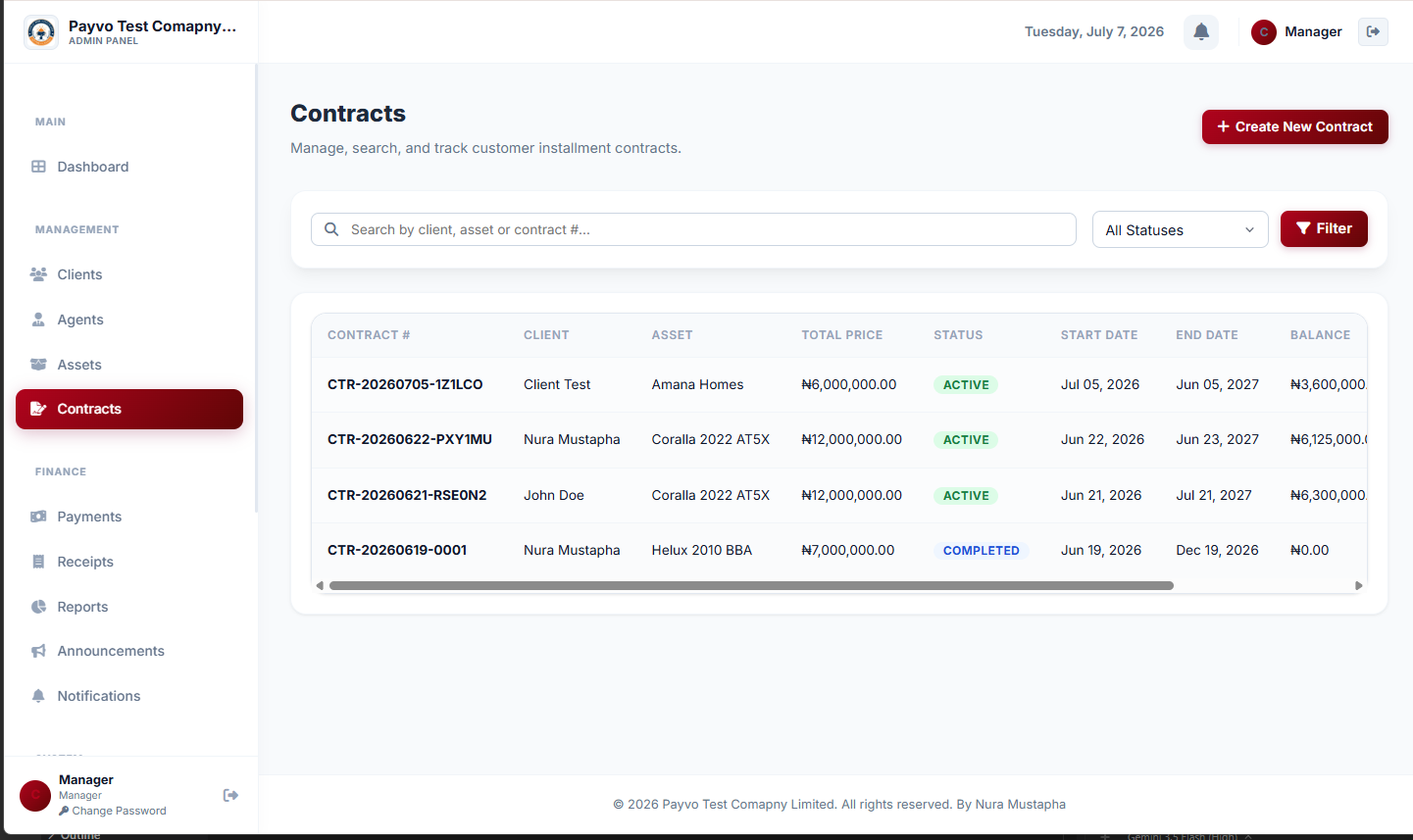 Dashboard showing a list of customer contracts
A clear overview of contracts is essential for managing installment payments.
Step 3: Issue Detailed Receipts for Every Single Payment
This isn't just good practice; it's essential for avoiding payment record disputes. Every time a customer pays, they must receive a receipt. This receipt should include: your business name, customer name, date of payment, amount paid, payment method, the specific contract/item the payment is for, the balance paid to date, and the remaining outstanding balance.
You can use a simple receipt generator app Nigeria has many of, or if you're using a dedicated system, it should generate professional receipts automatically. Physical receipt books cost about ₦3,000 to ₦10,000 per batch of 10, but digital receipts are often more efficient and less prone to loss. Make sure your staff are trained to issue these receipts immediately, without fail.
Step 4: Automate Payment Reminders and Notifications
Let's be honest, customers forget. You forget. Life happens. But missed payments lead to confusion and potential disputes. This is where automation becomes your best friend. Set up a system to send automated reminders a few days before a payment is due. A WhatsApp payment notification system is incredibly effective in Nigeria because almost everyone is on WhatsApp.
These reminders aren't just for overdue payments; they're also great for confirming payments received. "Dear Mr. Adebayo, your payment of ₦150,000 for Plot 3B in our Lekki Gardens estate has been received on 17/10/2026. Your new outstanding balance is ₦950,000. Thank you!" This proactive communication significantly reduces misunderstandings and builds trust.
Step 5: Conduct Regular, Thorough Reconciliation
This step is your internal audit. At least once a week, sit down and compare your payment records (from your tracking system) with your bank statements and cash receipts. Are there any payments recorded in your system that haven't hit the bank? Are there bank deposits that haven't been recorded in your customer's installment payment history?
This process helps you catch errors early – whether it's a typo from your staff, a misallocated payment, or even a customer claiming to have paid into the wrong account. For cooperative society management software users, this means reconciling member contributions against bank deposits. For car dealer installment software users, it means matching customer payments to the specific vehicle contract. Don't skip this.
Step 6: Maintain a Clear Audit Trail for All Communications
Beyond just payments, keep a record of significant communication regarding payment terms or issues. If you agree to a payment deferral for a customer buying solar equipment, make a note of it in their file. If a customer disputes a payment over the phone, follow up with an email summarizing the conversation.
This doesn't mean saving every single WhatsApp chat, but key agreements or dispute resolutions should be documented. This creates a comprehensive payment record management system that can back you up if things go sideways.
5 Mistakes That Cost Nigerian Business Owners the Most
I've seen these mistakes play out repeatedly, costing businesses hundreds of thousands of naira. Don't be one of them.
- Relying Solely on Bank Alerts/Statements: "My customer sent me a screenshot of their bank alert, so it's paid." WRONG! Bank alerts can be faked, or payments can reverse. Always verify the payment in your bank account before marking it as received. I once saw a building material supplier in Aba lose ₦187,500 because they released goods based on a fake alert.
- Mixing Business and Personal Accounts: This is a recipe for disaster. When your business transactions are mixed with your personal expenses, tracking customer payments becomes a nightmare. You'll spend hours trying to figure out if that ₦50,000 inflow was for a customer's installment or a friend repaying a loan. Keep them separate.
- Not Training Staff Properly: Your staff are your front line. If they don't know how to correctly record payments, issue receipts, or use your business payment tracking app Nigeria, you're building a house of cards. A simple mistake like mis-entering ₦10,000 as ₦1,000 can lead to massive customer payment disputes later. The cost of hiring a part-time data entry/admin staff is ₦30,000 to ₦70,000 a month, but even they need proper training on your specific processes.
- Delaying Record Updates: A customer pays cash on Monday, but your staff only updates the ledger on Friday. What happens if there's an audit or a customer query on Tuesday? The records are wrong. Update records immediately, as payments come in. This is especially true for businesses using agent commission tracking software; delayed updates can cause friction with your sales team.
- Lack of Clear Payment Terms in Contracts: If your contract doesn't explicitly state the exact payment schedule, late fees, and resolution process for disputes, you're leaving yourself open to arguments. Ambiguity is the enemy of clarity. Legal fees for small claims court can range from ₦50,000 to ₦200,000 – far more than the cost of a clear contract upfront.
How to Know If You're on Track (Success Metrics)
So, how do you know if your efforts to prevent payment disputes are actually working? You need to track a few key things.
- Dispute Resolution Time: How long does it take you to resolve a payment dispute? If it's taking days or weeks, your system still has holes. Aim for resolution within 24-48 hours, ideally by simply pulling up accurate records.
- Number of Payment Discrepancies: Are you seeing fewer customers coming to you with "My records say X, but yours say Y"? A drop in these incidents is a clear sign of success.
- Overdue Payment Rate: While not directly a dispute metric, a high overdue rate often correlates with poor record-keeping and communication. As your records improve and reminders go out, this rate should drop.
- Customer Satisfaction Scores (Related to Payments): If customers consistently express frustration about your payment tracking or receipts, you have work to do. Positive feedback means you're on the right path.
- Time Spent on Reconciliation: If your weekly reconciliation takes less time because records are cleaner and fewer errors need fixing, that's a win. A good installment management software Nigeria businesses use, like Payvo, can provide reports that make this process much faster, showing you your installment payment history at a glance.
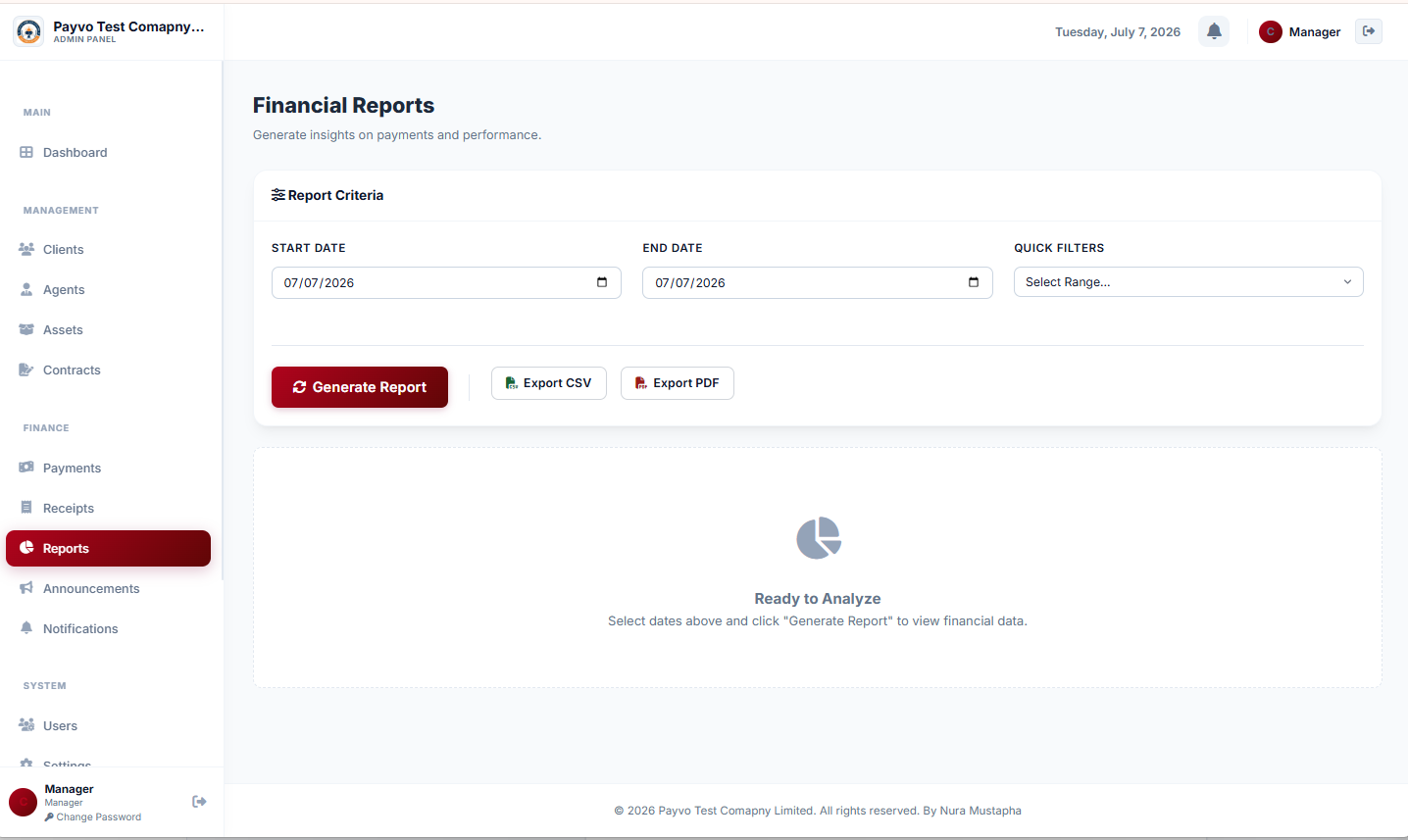 Dashboard showing financial reports
Financial reports give you a clear picture of your payment status.
Real Questions People Ask (FAQ)
You've got questions, I've got answers based on years of experience.
Q1: What's the best business payment tracking app Nigeria has for small businesses?
Honestly, "best" depends on your specific needs. For businesses managing installment sales, like real estate, car dealers, or solar equipment providers, a dedicated installment management software Nigeria offers, such as Payvo, is often the most effective. It's built specifically for tracking contracts, payments, and balances, which Excel or generic accounting software might struggle with for complex installment plans. Always look for something user-friendly, with good support, and that handles Naira transactions seamlessly.
Q2: How can I track agent commissions accurately without causing disputes with my sales team?
This is a common issue, especially with real estate payment tracking Nigeria. The key is transparency and a clear system. First, ensure your agent agreements clearly define commission structures (e.g., 5% of down payment, 2% of subsequent installments). Second, use agent commission tracking software that links directly to the customer's payment records. When a customer pays, the system automatically updates the agent's commission. This removes manual calculation errors and provides an undeniable audit trail. Regular, scheduled commission payouts also help manage expectations.
Q3: My customers often pay via WhatsApp screenshots. How do I manage that to avoid payment record disputes?
This is a tricky one, and it's a common challenge for businesses operating with a WhatsApp payment notification system. While WhatsApp is great for communication, it's terrible for reliable financial records. You must verify every payment in your actual bank account. Train your staff that a WhatsApp screenshot is just a notification, not proof of payment. Once verified in your bank statement, immediately record the payment in your centralized system and issue a formal receipt. You can then send that receipt via WhatsApp, but the official record is in your system, not the chat history.
Q4: Is it worth investing in contract management software Nigeria offers if I only have a few installment customers?
Even with a few customers, the value of contract management software Nigeria provides is in accuracy and peace of mind. Imagine you have just five customers paying ₦100,000 monthly over 12 months. That's 60 transactions a year. Manually tracking that, calculating balances, and issuing receipts is prone to error. One mistake can wipe out any perceived savings from not having software. If you plan to grow, or if the value of your contracts is significant (like property or vehicles), then yes, it's absolutely worth it to protect your cash flow and reputation.
Q5: What's the biggest cause of customer payment disputes, in your experience?
From what I've seen, the single biggest cause is inconsistent record-keeping. It's not usually malicious intent from either side, but rather a lack of a single, verifiable source of truth. One party remembers one thing, the other has a different record, or no clear record at all. This often stems from using multiple disparate systems (notebooks, Excel, WhatsApp, bank alerts) that don't talk to each other. When you centralize your installment payment history and ensure every entry is accurate and immediately recorded, disputes plummet because there's no room for doubt.
Your Next Move
Look, I've been there. The sleepless nights wondering if your books are correct, the awkward conversations with customers. You don't need that stress. The most important thing you can do right now to prevent payment disputes is to stop patching up old systems and invest in a reliable one.
If you're serious about managing your installment sales, tracking customer payments, and keeping your records straight, then take a look at Payvo. It's built for Nigerian businesses like yours, handling everything from contracts to receipts to payment tracking. You can explore how it works and what it offers by visiting their website. Don't wait for the next dispute to force your hand. Get organized today.