<p>The informal credit market in Nigeria, a lifeline for countless businesses and consumers, is projected to exceed ₦10 trillion by the end of 2026. Yet, for many Nigerian businesses — from car dealers selling on hire purchase to real estate developers offering flexible payment plans — managing these complex installment sales often feels like navigating a maze blindfolded. Missed payments, forgotten agreements, and manual tracking errors don't just cost money; they erode trust and stifle growth.</p>
 A busy nigerian market scene with traders and
The Evolving Landscape of Installment Sales in Nigeria (2026)
In 2026, the demand for installment payment options across Nigeria continues to surge. High inflation and fluctuating economic conditions mean more Nigerians are seeking flexible ways to acquire assets, whether it's a plot of land in Abuja, a new vehicle in Lagos, or building materials for a small construction project. This shift presents a massive opportunity for businesses willing to adapt, but it also introduces significant operational challenges.
Consider the car dealer in Kaduna managing dozens of hire purchase agreements, each with unique payment schedules. Or the cooperative society in Kano providing micro-loans and equipment leases. The traditional methods of ledger books, scattered WhatsApp chats, and inconsistent Excel sheets are no longer sustainable. They lead to:
- Lost Revenue: Difficulty tracking due dates results in delayed or missed payments.
- Operational Inefficiency: Staff spend countless hours on manual reconciliation and follow-ups.
- Poor Customer Experience: Inaccurate records and confusing communication frustrate clients.
- Lack of Insight: Business owners struggle to get a clear, real-time overview of their financial health.
The need for robust payment management application solutions is no longer a luxury but a necessity for survival and growth in this competitive market. Businesses that embrace technology to streamline their installment sales are better positioned to scale, reduce risk, and provide superior service, ultimately capturing a larger share of Nigeria's growing credit economy. You can learn more about how modern solutions are transforming businesses on our blog page.
What You Need Before You Start
Before diving into implementing a payment management system, a few foundational elements will ensure a smoother transition and maximize your return on investment:
- Clear Understanding of Your Current Process: Document how you currently manage contracts, payments, and client communication. Identify pain points and bottlenecks.
- Defined Business Goals: What do you hope to achieve with a new system? (e.g., reduce payment defaults by 15%, save 10 hours of staff time per week, improve client satisfaction).
- Dedicated Team Member(s): Assign someone responsible for learning, implementing, and overseeing the new software.
- Reliable Internet Access: Essential for cloud-based solutions and automated notifications. Budget around ₦5,000 - ₦15,000/month for consistent internet data.
- Budget Allocation: Be realistic about the costs involved. While some basic payment gateways offer free setup, more comprehensive solutions will have subscription fees.
- Payment Gateway Setup Fee: ₦0 - ₦50,000 (Free for basic, higher for premium features).
- Monthly Payment Gateway Transaction Fees: 1.5% - 2.5% per transaction + ₦50 - ₦100.
- Subscription for Off-the-Shelf Payment Management Software: ₦5,000 - ₦50,000/month.
- Staff Training: ₦10,000 - ₦50,000 for a small team.
Step-by-Step: Implementing a Payment Management Application in 2026
Implementing an effective installment management software Nigeria requires a structured approach. This guide breaks down the process into actionable steps to help your business thrive.
Step 1: Assess Your Specific Needs and Research Solutions
Every business is unique. A real estate developer selling plots in phases will have different needs than a solar equipment leasing company. Start by listing out all the functionalities you absolutely require.
Do you need to track:
- Client details and payment history?
- Specific assets (cars, properties, equipment) linked to contracts?
- Automated installment schedules?
- Agent commissions?
- Automated client notifications and reminders?
Research available options for business payment tracking app Nigeria. Look for solutions specifically designed for installment sales and contract management. Don't be swayed by flashy features you don't need; focus on core functionality and ease of use.
Step 2: Choose Your Core Payment Management Platform
This is arguably the most critical decision. You need a system that can handle the complexity of installment contracts while remaining intuitive for your staff. Look for a platform that offers robust client and asset management, automated contract generation, and comprehensive payment tracking.
For businesses dealing with high-value assets and complex installment plans, a dedicated contract management software Nigeria is invaluable. It should allow you to:
- Register and manage clients: Store full client details and view complete payment history per client.
- Register and manage assets: Track cars, property, equipment, or any item sold, linked directly to contracts.
- Create contracts: Set payment terms once, and installment schedules are generated automatically.
Payvo, for instance, is designed to replace manual ledgers and scattered records with an automated system for businesses that sell on installment. It handles everything from client registration to contract creation, ensuring all details are captured accurately from the start.
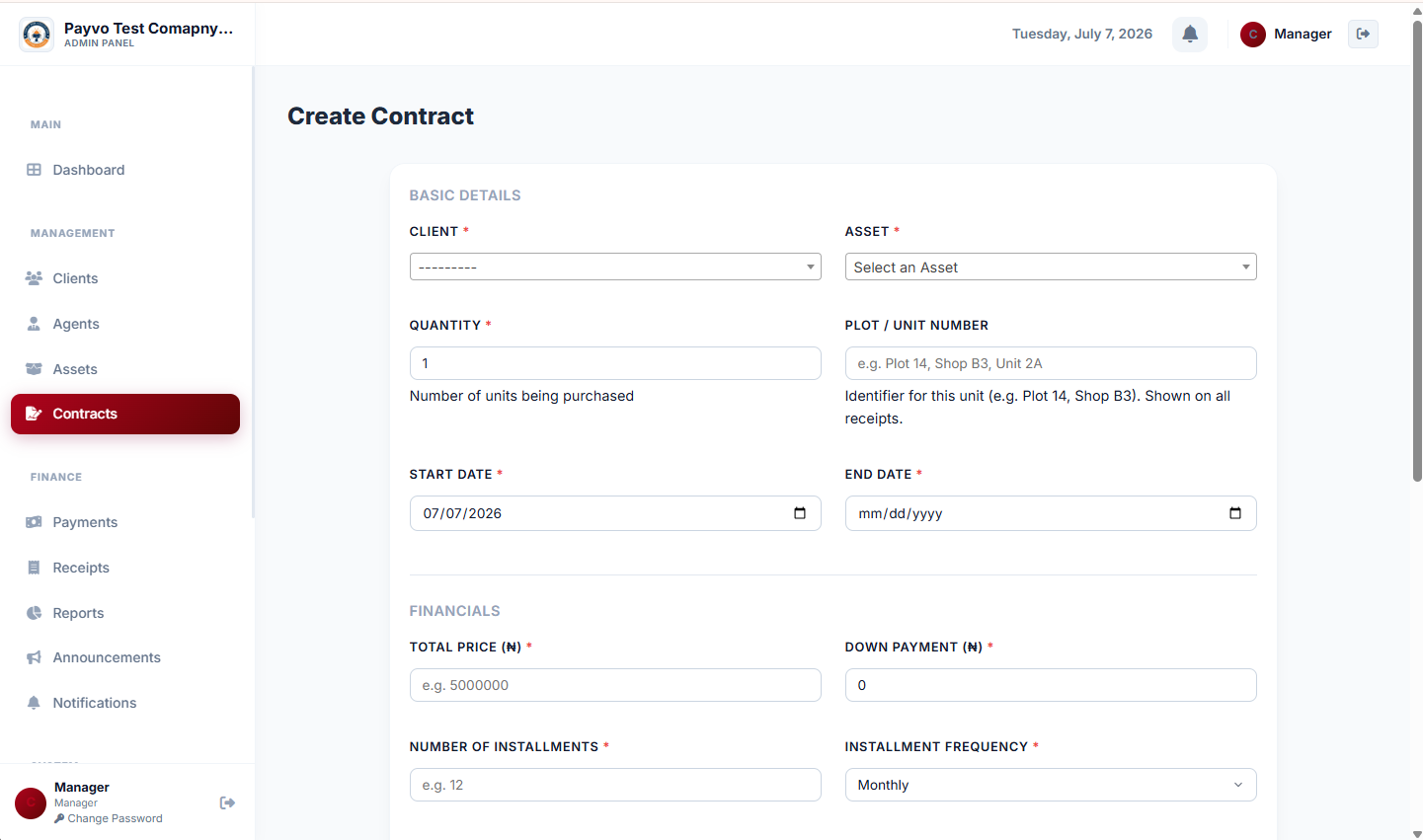 Management: Add contract (top)
Step 3: Integrate Payment Gateways and Recording Mechanisms
Once your core management platform is selected, you need a way to actually process and record payments.
- Online Payments: If you accept online payments, integrate with a reliable payment gateway. Consider their transaction fees (typically 1.5% - 2.5% per transaction + ₦50 - ₦100) and settlement times.
- Offline Payments (Cash/Bank Transfer): Your payment management application should have a seamless way to record these manual payments against specific contracts. Look for features that allow staff to log single payments with ease.
- Automated Receipt Generation: This is crucial for transparency and record-keeping. The system should automatically generate branded receipts (with your company logo, colors, and signature) for every payment.
A good system will allow you to record payments efficiently and generate professional receipts, eliminating the need for manual receipt books.
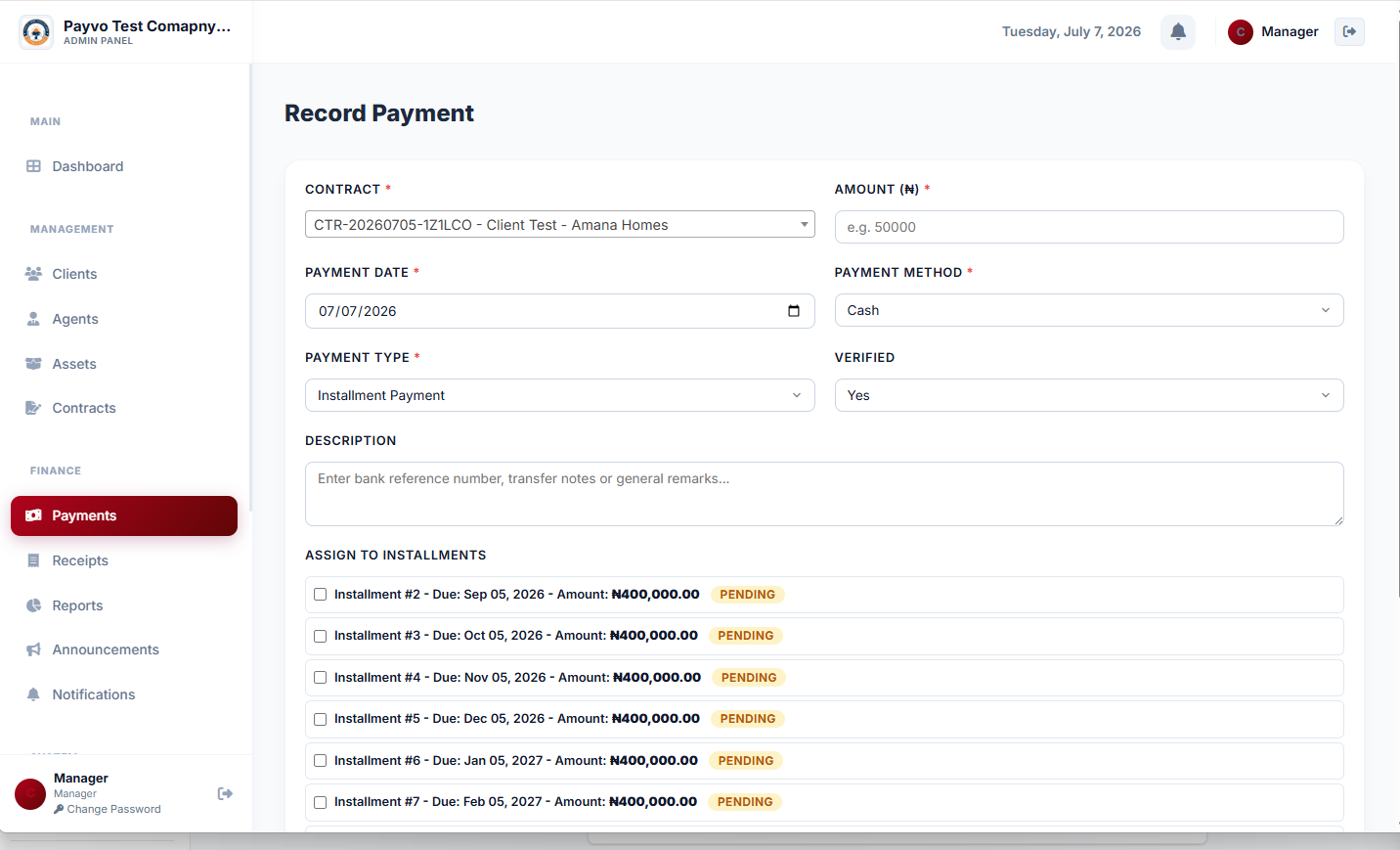 Finance: Record Payments Page
Step 4: Automate Notifications and Reminders
One of the biggest time-savers and revenue protectors is automated communication. Manual follow-up calls and messages are time-consuming and prone to human error. Your chosen system should be able to:
- Send automatic notifications for new clients, new contracts, and payment received.
- Send payment reminders automatically via email and WhatsApp before due dates. These reminders remove the need for manual follow-up calls, significantly reducing your administrative burden.
- Include a public receipt link that clients can view, save, or share, enhancing trust and convenience.
This feature is particularly beneficial for cooperative society management software, where consistent communication with members is key. Payvo's WhatsApp payment notification system ensures clients are always informed.
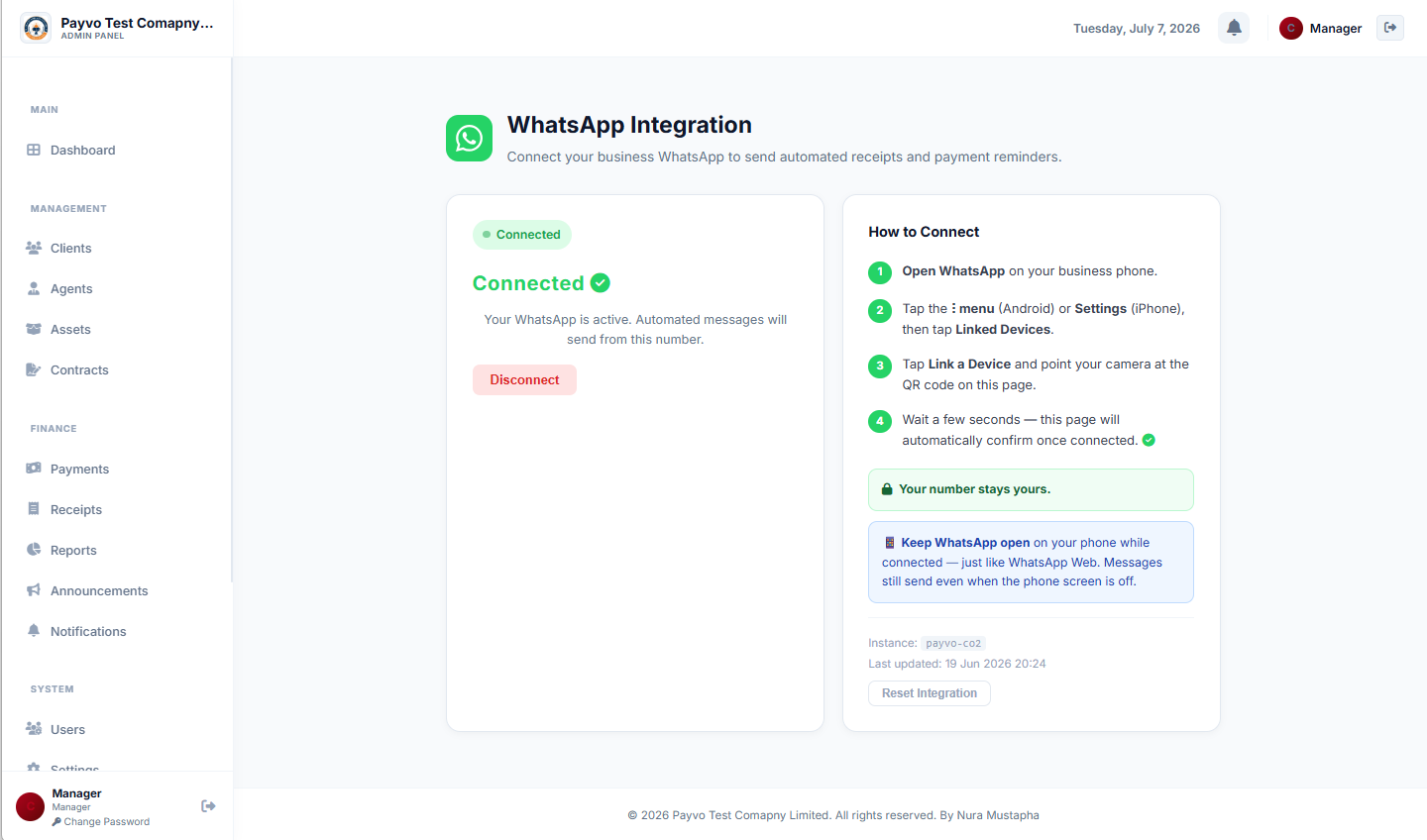 Admin: Whatsapp Integration
Step 5: Set Up Staff and Agent Management
For businesses with multiple employees or a sales agent network, robust user management is essential.
- Staff Accounts: The business owner should be able to add staff with role-based permissions, controlling what each person can see and do within the system. This ensures data security and accountability.
- Agent Management: If you work with agents, the system should allow you to assign agents to contracts, automatically calculate commission per payment, and track full earnings and payout history.
- Agent Self-Tracking: Empower your agents. A good system will allow agents to log in with a code given by their manager to view their own earnings (KPIs only) and submit withdrawal requests directly, which managers are notified of instantly. This streamlines the agent payout process and increases transparency.
This is a critical feature for car dealer installment software and real estate payment tracking Nigeria, where agents often play a pivotal role. More details about agent tracking capabilities can be found on our agent tracking page.
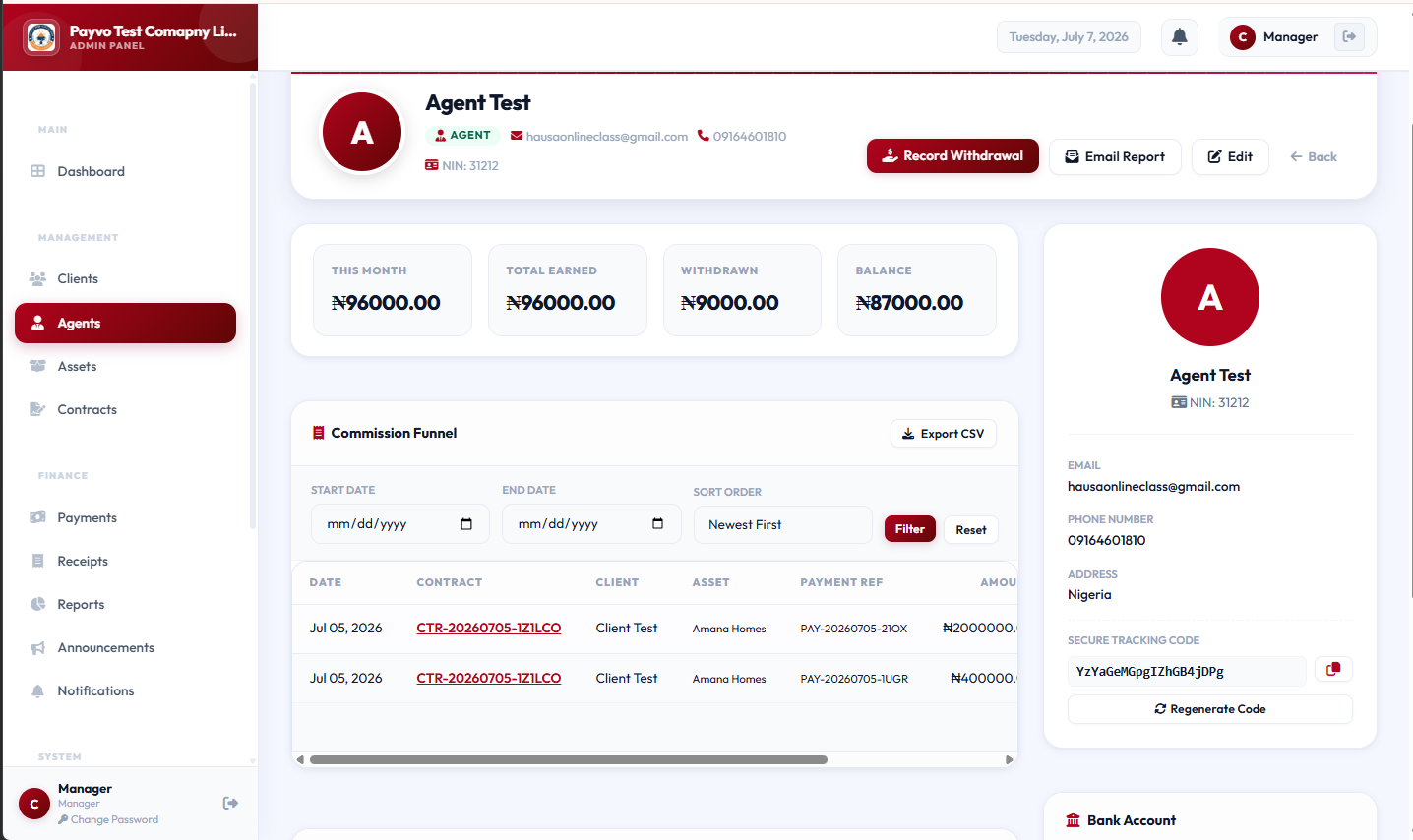 Agent: Agent details page
Step 6: Customize Branding and Reporting
Your payment management system should reflect your business's professionalism.
- Branding: Customize your company's logo, brand colors, and digital signature, which automatically apply to all receipts and client-facing documents. This reinforces your brand identity.
- Reporting: The ability to view real-time dashboards is crucial. You should be able to see total clients, active contracts, amount collected, outstanding balances, and next payment due at a glance.
- Financial Reports: Generate reports that export payment and contract data as PDF or Excel for accounting and record-keeping. This simplifies financial audits and planning.
- Automated Summaries: Receive weekly company reports via email, covering key business performance metrics.
These features provide invaluable insights into your business's financial health, helping you make informed decisions.
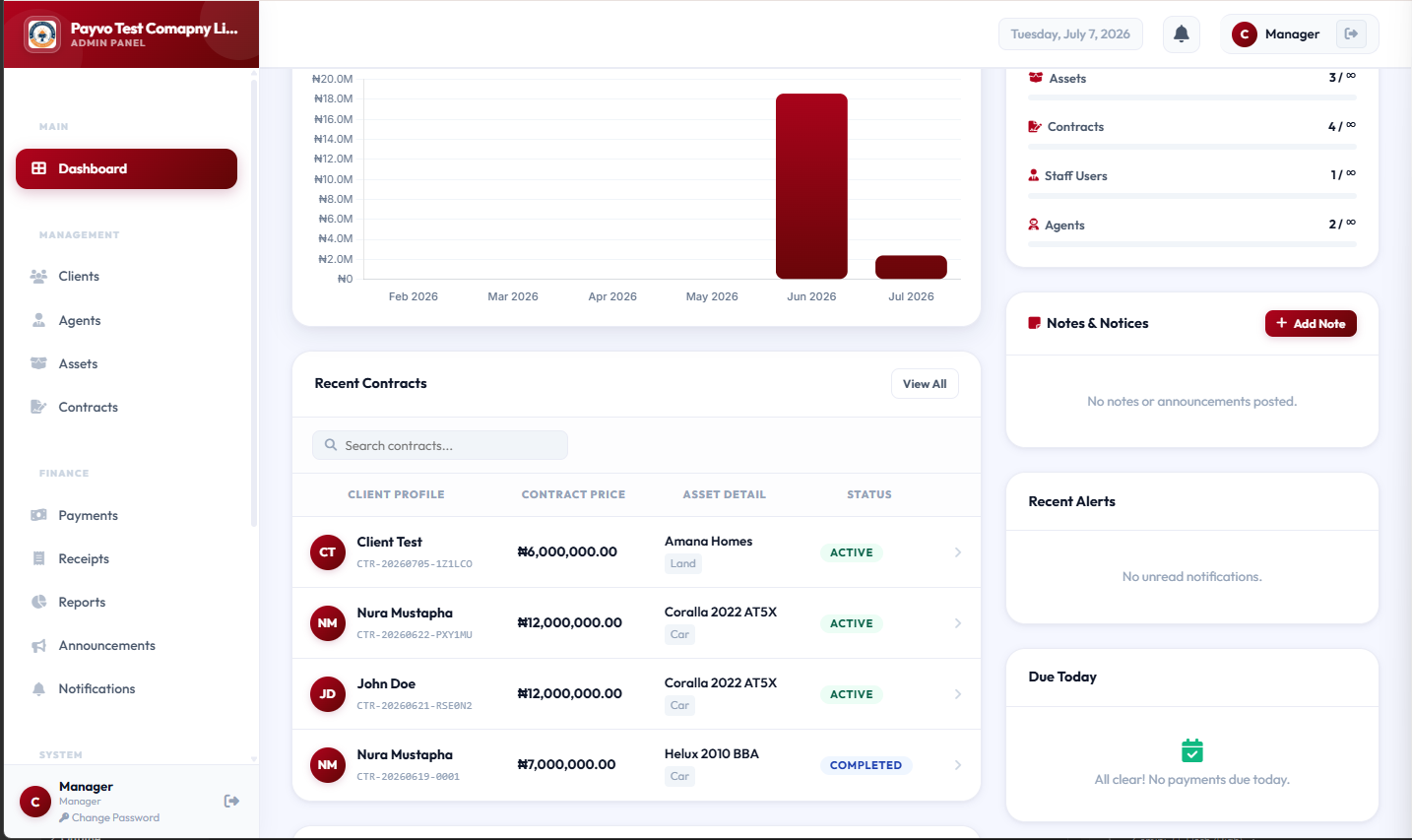 Dashobard (top)
Common Mistakes to Avoid
Implementing new technology can be tricky. Avoid these common pitfalls to ensure a smooth transition:
- Underestimating Training Needs: Don't assume staff will intuitively understand a new system. Budget time and resources for thorough training (e.g., ₦10,000 - ₦50,000 for a small team).
- Ignoring Data Migration: If you have existing client and contract data, plan carefully for its migration. Manual entry can be time-consuming and error-prone.
- Overlooking Security: Choose a platform with robust security features and data privacy protocols. Always read the privacy policy and terms of service.
- Not Customizing: A generic setup might not fit your unique business processes. Utilize customization options for branding, contract terms, and notification settings.
- Failing to Monitor and Adapt: Technology is not a "set it and forget it" solution. Regularly review performance, gather feedback from staff, and make adjustments as needed.
- Neglecting Customer Communication: Inform your clients about the new system and how it benefits them (e.g., easier access to receipts, timely reminders).
How to Track and Grow After Launch
Once your payment management application is up and running, the real work of leveraging its power begins.
- Monitor Key Performance Indicators (KPIs):
- Payment Success Rate: Track the percentage of payments made on time versus those that are delayed or missed.
- Average Days Overdue: Measure how long overdue payments typically remain outstanding.
- Client Retention Rate: See how many clients complete their contracts and potentially engage in new ones.
- Staff Efficiency: Observe the reduction in time spent on manual tasks like payment reconciliation and follow-ups.
- Agent Performance: If applicable, track agent-specific metrics like contracts closed and payment collection rates.
- Utilize Reporting and Analytics:
Regularly access your system's dashboards and reports. A good installment management software Nigeria will provide real-time insights into your overall financial health, outstanding balances, and future payment projections. These reports are invaluable for strategic planning and cash flow management. <a href="https://payvo.ng/" target="_blank" class="blog-link project-name-link">Payvo</a>'s comprehensive reporting features allow you to export data as PDF or Excel, making it easy to share with accountants or use for internal analysis.
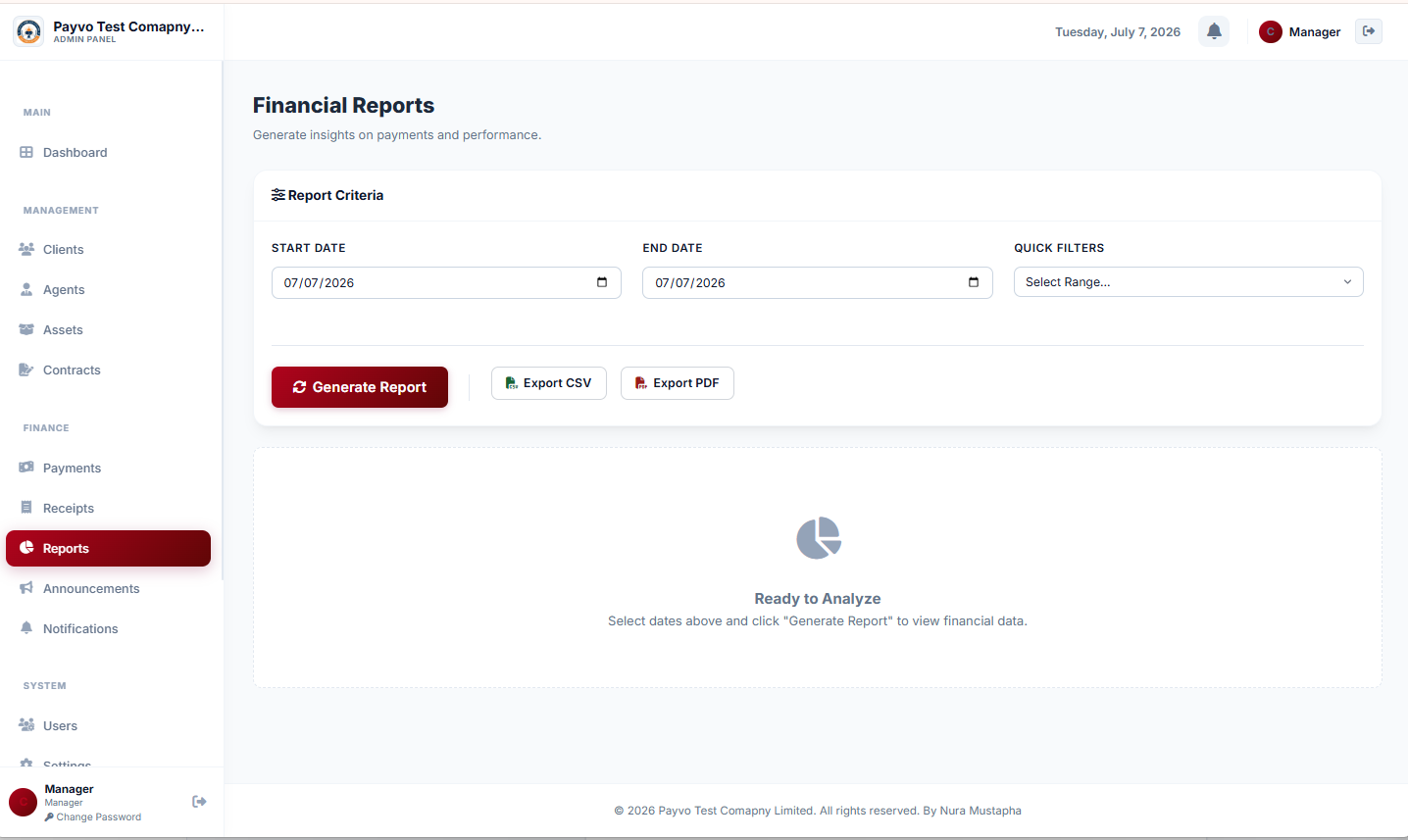 Finance: Financial Reports Page
> "In the Nigerian market, visibility into your cash flow is not just about profit; it's about survival. You can't manage what you can't measure, and manual systems blind you to critical opportunities and risks."
- Gather Feedback:
Talk to your staff and clients. Are they finding the system easy to use? Are there any pain points? Continuous feedback helps you optimize usage and identify areas for further improvement or training.<br>
- Optimize Reminders and Notifications:
Experiment with the timing and frequency of automated payment reminders. Some clients might respond better to reminders 3 days before a due date, while others prefer 7 days. Tailor your communication to maximize effectiveness.<br>
- Scale Your Operations:
As your business grows, your payment management solution should scale with you. A robust platform allows you to add more clients, contracts, and staff without compromising efficiency. This means you can confidently take on more real estate developments, expand your car dealership, or grow your cooperative society without being overwhelmed by administrative burden.
Frequently Asked Questions
Q1: How much does payment management software cost in Nigeria?
A1: The cost varies significantly based on features and scale. Basic off-the-shelf subscriptions can range from ₦5,000 to ₦50,000 per month. One-time setup fees for payment gateways can be ₦0 to ₦50,000, while custom software development for large enterprises might exceed ₦5,000,000. It's crucial to consider the total cost of ownership, including transaction fees (1.5% - 2.5% + ₦50 - ₦100 per transaction) and staff training.
Q2: Can a payment management application handle both online and offline payments?
A2: Yes, a comprehensive payment management application should be able to integrate with online payment gateways for digital transactions and also provide a robust system for recording cash payments, bank transfers, or POS terminal transactions. The key is that all payment types are logged against the correct contract and client for a unified financial record.
Q3: Is it possible to track agent commissions with this type of software?
A3: Absolutely. Many advanced installment management software Nigeria solutions include agent commission tracking features. This allows businesses to assign agents to contracts, automatically calculate their commission based on collected payments, and maintain a clear record of their earnings and payouts. This streamlines the agent management process for car dealers, real estate developers, and other businesses reliant on sales agents. You can explore this on our agent tracking page.
Q4: How does a WhatsApp payment notification system work?
A4: A WhatsApp payment notification system integrates directly with your payment management software. When a payment is made, a contract is created, or a payment due date is approaching, the system automatically sends a personalized message to the client's registered WhatsApp number. This often includes a link to their digital receipt or a reminder about their upcoming payment, significantly improving communication and reducing manual follow-ups.
Q5: What kind of businesses benefit most from installment management software?
A5: Businesses that sell products or services on credit or installment plans benefit immensely. This includes real estate developers & property sellers, car dealers selling on hire purchase, cooperative societies & microfinance operators, solar/equipment leasing companies, building material suppliers, and any small business offering flexible payment terms. Essentially, if you track recurring payments from clients over time, this software is for you.
 A business owner reviewing financial data on a
Ready to Transform Your Installment Sales Management?
Managing installment sales doesn't have to be a manual, error-prone headache. With the right payment management application, you can automate processes, track every Naira, and provide exceptional service to your clients. If you're a real estate developer, car dealer, cooperative society, or any business selling on installment, explore how a dedicated platform can help you grow. Learn more about our comprehensive features or get started today by visiting our registration page.