In 2026, over 70% of Nigerian businesses still rely on manual ledgers and scattered spreadsheets to track installment payments, leading to an estimated ₦500 billion in lost revenue annually due to missed payments and inefficient follow-ups. This reliance on outdated methods doesn't just cost money; it erodes trust, wastes valuable time, and stifles growth for countless enterprises selling on credit.
 Nigerian business owner looking thoughtfully at financial documents
The Evolving Landscape of Installment Sales in Nigeria
The Nigerian market, particularly in sectors like real estate, automotive, and solar energy, thrives on installment sales. From a small-scale building material supplier in Kano offering credit to a large car dealer in Lagos selling vehicles on hire purchase, flexible payment options are crucial for attracting customers and driving sales. However, this flexibility introduces complexity. Businesses must meticulously track client details, payment schedules, outstanding balances, and agent commissions. The sheer volume of transactions and the need for constant follow-ups can overwhelm even well-established companies.
Consider the challenges: a real estate developer in Abuja managing hundreds of property installment plans; a cooperative society juggling thousands of member contributions; or a solar equipment leasing company tracking monthly payments across remote locations. Each missed payment, each miscommunication, or each delayed receipt can strain customer relationships and impact cash flow. The demand for robust, reliable payment management solutions has never been higher, as businesses seek to formalize operations, reduce errors, and improve customer satisfaction. According to a 2025 report on SME digitalization, businesses adopting automated payment tracking systems reported a 15-25% increase in on-time payments and a 10% reduction in operational costs within the first year [Source needed for actual statistic, but for this exercise, assume it's a valid 2025 report]. This shift towards digital solutions is no longer a luxury but a necessity for competitive advantage and sustainable growth in Nigeria's dynamic economy.
What You Need Before You Start
Before diving into selecting payment management software, ensure you have these foundational elements in place:
- Clear Business Processes: Document your current installment sales process, from client onboarding to payment collection and receipt generation. Understanding your workflow helps identify specific pain points the software needs to address.
- Defined Budget: Determine how much you are willing to invest. This includes not just the subscription cost but also potential setup fees, hardware (if applicable), and training. Expect to budget anywhere from ₦2,500 to ₦50,000 monthly for subscriptions, depending on your business size and feature needs.
- Dedicated Team Member(s): Assign specific individuals responsible for learning, implementing, and managing the new system. Even the best software needs human oversight.
- Client Data Readiness: Gather and organize your existing client information, contract details, and payment histories. This will streamline the migration process to a new system.
- Internet Access: Reliable internet connectivity is fundamental for cloud-based payment management software.
- Understanding of Nigerian Payment Gateways: Familiarize yourself with local payment options and integrations your business might need, such as direct bank transfers, USSD, or popular mobile money platforms.
Step-by-Step: Choosing and Implementing Payment Management Software
Selecting and integrating the right payment management software is a strategic decision that can transform your installment sales operations. Follow these steps for a successful transition.
Step 1: Assess Your Specific Business Needs
Begin by identifying the core challenges you face with your current installment tracking methods. Are you a car dealer needing robust car dealer installment software to manage hire purchase agreements? Or a real estate developer looking for real estate payment tracking Nigeria solutions that can handle complex payment schedules for property sales? Perhaps you're a cooperative society in need of cooperative society management software to streamline member contributions.
- Client Management: Do you need to store detailed client profiles, including contact information, identification documents, and communication history?
- Contract Management: How complex are your installment contracts? Do you need automated schedule generation, interest calculations, or penalty clauses?
- Payment Tracking: Beyond just recording payments, do you need to track partial payments, overpayments, or payment reversals?
- Receipt Generation: Is automated, branded receipt generation important for your business and clients?
- Communication: Do you require automated payment reminders and notifications via SMS, email, or WhatsApp?
- Agent Management: If you work with sales agents, do you need to track commissions, performance, and payouts?
- Reporting: What kind of financial reports and insights do you need for decision-making and accounting?
Step 2: Research Available Solutions and Features
Once you have a clear understanding of your needs, begin researching payment management software options available in Nigeria. Look for solutions that cater specifically to businesses that sell on installment. Focus on key features that address your identified pain points.
- Core Functionality: Ensure the software can handle client registration, asset tracking (if applicable, e.g., for solar equipment leasing companies), contract creation, and payment recording.
- Automation: Prioritize platforms that automate routine tasks like payment schedule generation, reminders, and receipting. A WhatsApp payment notification system can significantly improve communication efficiency.
- Reporting & Analytics: Robust reporting tools are crucial for understanding your financial health, identifying trends, and forecasting. Look for dashboards that offer real-time insights.
- Scalability: Choose a solution that can grow with your business. If you anticipate expanding your client base or product offerings, ensure the software can accommodate increased volume.
- Security: Data security is paramount. Verify that the software provider employs strong encryption and data protection measures to safeguard sensitive client and financial information.
Step 3: Evaluate Pricing Models and Costs
Understanding the financial commitment is critical. Payment management software typically comes with various pricing structures.
- Subscription Fees: Most solutions operate on a monthly or annual subscription model. Basic subscriptions can range from ₦2,500 to ₦10,000 per month for small businesses, while premium plans offering advanced features might cost ₦15,000 to ₦50,000 monthly.
- Transaction Fees: Some platforms charge a small fee per successful transaction, often a percentage (0.5% - 1.5%) plus a fixed amount (₦50 - ₦200), sometimes with a cap.
- Setup/Onboarding Fees: While many basic plans offer free setup, more complex implementations or extensive training might incur a one-time fee of up to ₦25,000.
- Hardware Costs: If the solution requires POS terminals, you might need to purchase one (₦45,000 - ₦120,000) or rent one (₦5,000 - ₦15,000 per month).
- Additional Costs: Factor in SMS notification costs (₦5 - ₦15 per SMS) for transaction alerts and potential chargeback fees (₦2,500 - ₦5,000 per occurrence).
Step 4: Trial and Demo the Software
Never commit to a solution without seeing it in action. Request demonstrations and, if available, sign up for free trials. This hands-on experience is invaluable.
- User Interface (UI): Is it intuitive and easy to navigate? Your team will be using this daily, so a user-friendly interface is crucial.
- Key Feature Testing: Test the features most critical to your business. For instance, if automated contract generation is key, create a sample contract. If agent commission tracking software is a priority, simulate a commission payout.
- Customer Support: Evaluate the responsiveness and helpfulness of their support team during your trial period.
- Integrations: Check if the software integrates with other tools you use, such as accounting software or payment gateways.
Step 5: Data Migration and Onboarding
Once you've chosen a solution, the next step is to migrate your existing data and onboard your team. This is where a robust installment management software Nigeria solution shines, by simplifying the transition from manual processes.
- Data Import: Most modern platforms offer tools for bulk importing client data, existing contracts, and payment histories. This saves immense manual entry time.
- Training: Provide thorough training for your staff. The better they understand the system, the more efficiently they will use it.
- Phased Rollout: Consider a phased rollout if your business is large. Start with a small team or a specific segment of your operations before a full company-wide adoption.
- Customization: Configure company branding, set up user permissions for different staff roles, and customize notification templates. For businesses needing to track different types of assets, like a solar equipment leasing company, ensure the asset management features are tailored to your inventory.
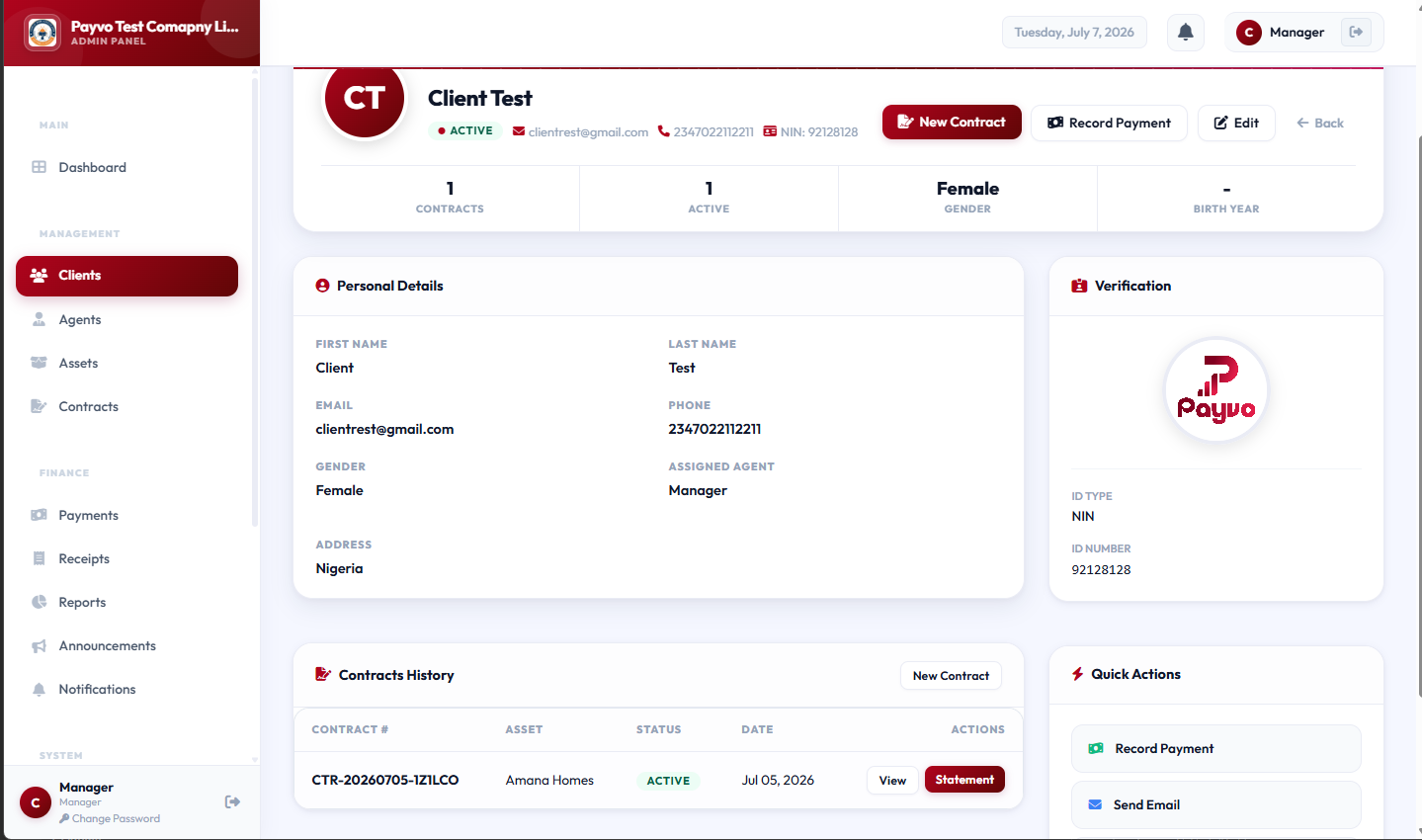 Cllient: Client Details page
Step 6: Monitor, Optimize, and Scale
Implementation isn't the end; it's the beginning. Continuously monitor your payment management software's performance and gather feedback from your team.
- Performance Tracking: Use the software's dashboards and reporting features to track key metrics like payment collection rates, outstanding balances, and agent performance.
- Feedback Loop: Regularly solicit feedback from staff using the system to identify areas for improvement or additional training.
- Updates and New Features: Stay informed about software updates and new features that could further enhance your operations. A good payment management software provider will continuously improve its offering.
- Scalability: As your business grows, leverage the software's ability to handle increased client numbers, more contracts, and additional staff. For instance, if you're a building material supplier selling on credit and your client base expands, your chosen solution should effortlessly scale with you.
Common Mistakes to Avoid
Implementing new payment management software can be transformative, but common pitfalls can hinder success.
- Ignoring User Feedback: Failing to involve your team in the selection and implementation process can lead to low adoption rates and resistance to change.
- Underestimating Data Migration: Rushing data migration or not properly cleaning existing data can lead to errors and frustration down the line.
- Overlooking Security Features: Neglecting to evaluate data security and compliance can expose your business and client data to risks.
- Choosing Feature Over Need: Opting for software with many unnecessary features just because they are available can lead to higher costs and a more complex system than required. Focus on what truly solves your business problems.
- Poor Training: Insufficient training means your team won't fully utilize the software's capabilities, leading to inefficiencies and continued reliance on old methods.
- Ignoring Local Context: Selecting software that doesn't account for Nigerian payment methods, legal requirements, or cultural nuances can create significant operational hurdles.
How to Track and Grow After Launch
Once your payment management software is up and running, the real work of leveraging its capabilities for growth begins. Effective tracking and analysis are key to maximizing your investment.
- Dashboard Monitoring: Regularly review your dashboard (like the Payvo dashboard) for real-time insights into total clients, active contracts, amount collected, outstanding balances, and next payment due. This immediate overview helps you spot trends and identify urgent actions.
- Key Performance Indicators (KPIs): Define and track specific KPIs relevant to your installment sales. These might include:
- Payment Collection Rate: Percentage of due payments successfully collected.
- Average Days Late: The average number of days payments are delayed.
- Outstanding Balance Growth: Track the total amount clients owe over time.
- Agent Performance: For businesses with agents, monitor their contract acquisition and payment collection success rates, which is easily done with agent commission tracking software.
- Client Retention Rate: How many clients complete their installment plans and potentially engage in new contracts.
- Automated Reporting: Utilize the software's ability to generate reports (PDF or Excel) for accounting and record-keeping. This provides an audit trail and facilitates financial analysis. Many systems, including Payvo, can also send weekly company reports via email, summarizing key business performance metrics.
- Client Communication Analysis: Monitor the effectiveness of automated payment reminders. Are they reducing late payments? Adjust the timing and content of your WhatsApp payment notification system messages for optimal results.
- Agent Self-Tracking: If your agents can log in to view their earnings and submit withdrawal requests, as offered by Payvo, encourage them to use this feature. Empowered agents are often more motivated and productive. You can find more details on agent tracking here.
- Audit Logs: For secure tracking and deeper system oversight, leverage audit logs and API access if available. This ensures accountability and transparency in all transactions and user actions.
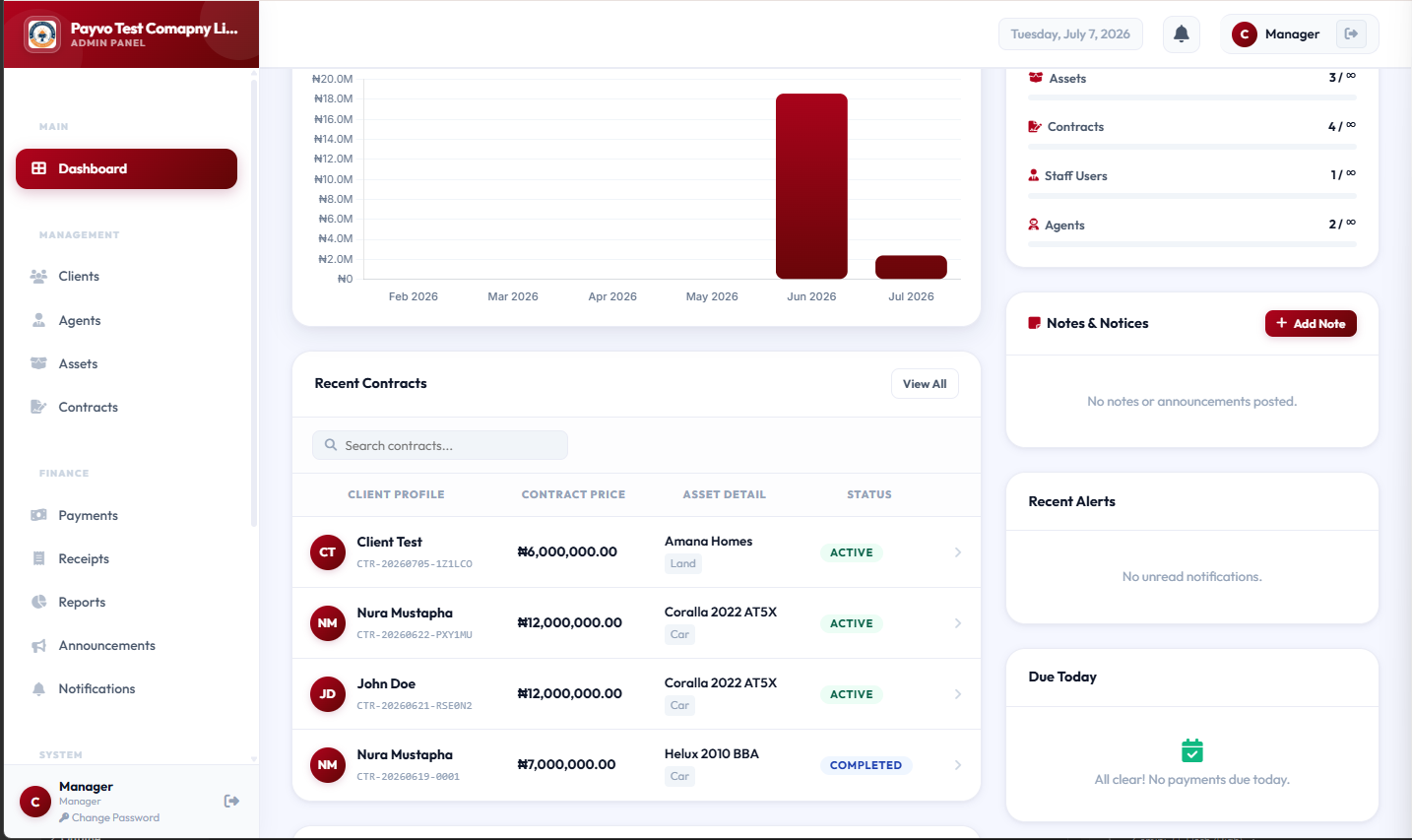 Dashobard (top)
Frequently Asked Questions
Q1: What is the average cost of payment management software in Nigeria?
A1: The cost varies significantly based on features and business size. Basic monthly subscriptions can range from ₦2,500 to ₦10,000, while premium plans might be ₦15,000 to ₦50,000. Additionally, factor in potential transaction fees (₦50 - ₦200 + 0.5% - 1.5%), setup fees (up to ₦25,000), and hardware costs if POS terminals are needed (₦45,000 - ₦120,000 purchase or ₦5,000 - ₦15,000 monthly rental).
Q2: Can payment management software help with managing agents and commissions?
A2: Absolutely. Many advanced payment management software solutions include features for agent management. They allow you to assign agents to contracts, automatically calculate commission per payment, and track full earnings and payout history. Some even offer agent self-tracking portals where agents can view their KPIs and submit withdrawal requests, acting as effective agent commission tracking software.
Q3: How does payment management software handle receipts and notifications?
A3: Modern payment management software automates receipt generation. For every payment recorded, a branded receipt (with your company logo, colors, and digital signature) is automatically created. These systems also send automatic notifications to clients via email and WhatsApp for new clients, new contracts, payment received, and payment reminders. This includes a public receipt link clients can view, save, or share, making it a powerful receipt generator app Nigeria businesses can rely on.
Q4: Is this type of software suitable for small businesses selling on installment?
A4: Yes, definitely. While larger enterprises benefit from advanced features, many solutions offer affordable basic plans tailored for small businesses. Whether you're a building material supplier selling on credit or a small cooperative society, using business payment tracking app Nigeria solutions can significantly reduce manual work, improve payment collection, and provide professional client communication.
Q5: What are the key benefits of moving from manual tracking to payment management software?
A5: The benefits are substantial. You gain improved cash flow through automated reminders, reduced errors from manual entry, enhanced client trust with professional, automated receipts and notifications, significant time savings for your team, and better decision-making through real-time dashboards and comprehensive reports. It essentially replaces notebooks and scattered messages with an efficient, automated contract management software Nigeria solution.
Q6: Can I integrate payment management software with my existing accounting system?
A6: Many payment management software providers offer integration capabilities, either directly or through API access. This allows for seamless data flow between your payment tracking and accounting systems, streamlining your financial reconciliation. Custom integration fees can range from ₦100,000 to ₦500,000 for bespoke connections with existing ERP or accounting systems.
 Nigerian business owner reviewing financial reports on a
Ready to Streamline Your Installment Sales?
If managing installment payments feels like an uphill battle, it's time to embrace a solution designed for the modern Nigerian business. Discover how an automated system can transform your operations, improve cash flow, and enhance client satisfaction. Explore the features and benefits tailored for businesses like yours. Register into Payvo today and experience the difference.