Chasing down installment payments manually is a drain on resources, a source of endless frustration, and a significant barrier to growth for countless Nigerian businesses. From handwritten ledgers to scattered WhatsApp messages, the inefficiencies can cost you not just time, but substantial revenue and client trust.
 Nigerian business owner looking at ledgers
The Evolving Landscape of Installment Sales in Nigeria (2026)
The Nigerian economy in 2026 continues to present unique challenges and opportunities. For many consumers, outright purchases of high-value items like property, vehicles, or even solar equipment remain out of reach. This reality has cemented the importance of installment payment systems for businesses across various sectors, from real estate developers in Abuja to car dealers in Lagos, and even cooperative societies nationwide. Offering flexible payment plans isn't just a competitive advantage; it's often a necessity for capturing and retaining a significant customer base.
However, managing these systems manually is becoming increasingly unsustainable. The average Nigerian business owner juggling 50-100 installment contracts faces a mountain of administrative work. Consider the costs: a dedicated customer service staff member for installment queries could cost between ₦60,000 and ₦120,000 per month. Then there are potential losses from missed payments, errors in manual tracking, and the sheer time spent reconciling accounts. The shift towards digital solutions is not just about efficiency; it's about survival and scalable growth in a dynamic market. Businesses that successfully automate their installment processes are better positioned to reduce overheads, improve cash flow, and enhance customer satisfaction.
What You Need Before You Start
Before diving into setting up an effective installment payment system, ensure you have these foundational elements in place:
- Clear Business Model: Define what products or services you'll offer on installment, your target market, and your typical payment terms (e.g., duration, down payment requirements, interest rates if any).
- Legal Framework: Understand the legal implications of offering credit and installment plans in Nigeria. Consult with legal professionals to draft clear, compliant contract terms that protect both your business and the customer.
- Initial Capital: While automation reduces manual costs, there are still setup and operational expenses. These can include initial software setup fees (from ₦0 for basic plans up to ₦50,000 for advanced features), potential POS terminal purchases (₦45,000 - ₦120,000), or integration costs if you have a custom e-commerce platform (₦50,000 - ₦300,000).
- Dedicated Personnel (or System): Even with automation, someone needs to oversee the system, handle exceptions, and manage customer queries. This could be a staff member or a robust system that minimizes manual intervention.
- Reliable Internet Access: Essential for cloud-based installment management software and seamless communication.
Step-by-Step: Implementing an Effective Installment Payment System
Implementing a robust installment payment system involves several critical steps, from initial client engagement to final payment collection and reporting.
Step 1: Define Your Installment Offerings and Terms
Before anything else, clearly outline what you're selling on installment and the specific terms. This includes the total price, required down payment, duration of the payment plan, frequency of payments (weekly, monthly, quarterly), and any late payment penalties. For instance, a real estate developer might offer a 2-year payment plan for a plot of land with a 30% down payment, while a solar equipment leasing company might have a 12-month plan for an inverter system. Transparency in these terms builds trust with your clients.
Consider different scenarios your business might encounter. Will you offer discounts for early payments? What are the procedures for payment deferrals or contract cancellations? Having these policies clearly articulated upfront will streamline your operations and provide clear guidance for your staff and customers.
Step 2: Client Onboarding and Contract Creation
The initial client interaction is crucial. You need a streamlined process to capture client details, verify their identity, and formally create the installment contract. This includes personal information, contact details, and any necessary guarantor information. For a car dealer selling on hire purchase, this might involve extensive background checks, while a cooperative society might rely on member history.
Once the client details are captured, the contract needs to be generated, clearly outlining all agreed-upon terms, payment schedules, and obligations. Manually drafting these for each client is time-consuming and prone to errors. This is where an effective contract management software Nigeria solution becomes invaluable.
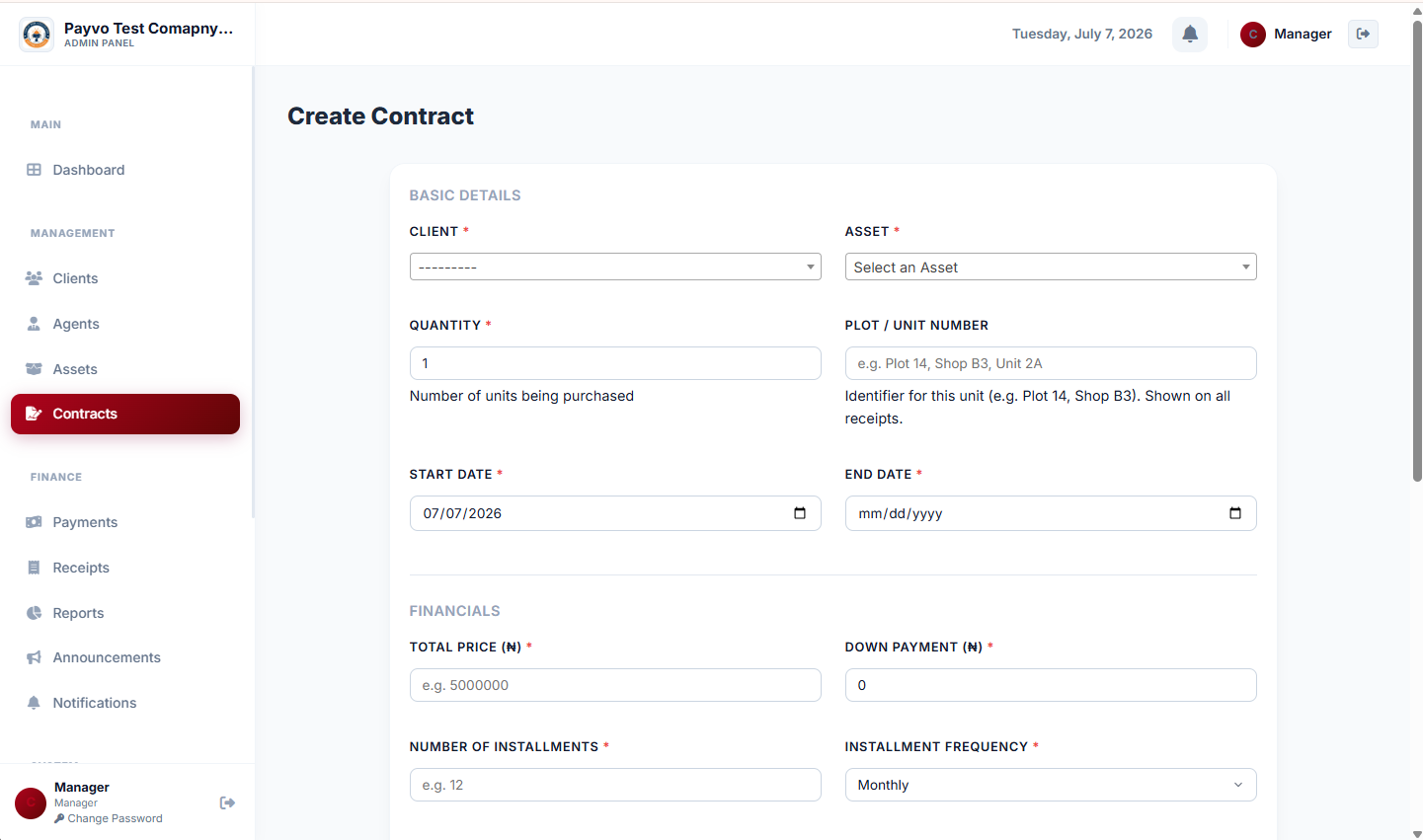 Management: Add contract (top)
A system that allows you to easily register and manage clients, and then create contracts with automatically generated installment schedules, saves immense time. You should be able to link specific assets (like a car, a piece of land, or an equipment unit) directly to a client's contract, ensuring clear tracking of what is being paid for. For businesses managing numerous contracts, automating this step ensures consistency and accuracy.
Step 3: Payment Processing and Receipt Generation
Collecting payments is the core of an installment system. You need multiple convenient options for clients to pay and a reliable way to record each transaction. This could include bank transfers, direct deposits, POS terminals, or mobile money agents. The crucial part is accurately logging each payment against the correct contract and client.
Every payment received requires a receipt. These receipts not only serve as proof of payment for the client but also as a vital record for your business. A good receipt generator app Nigeria will automatically create branded receipts for every payment, complete with your company logo, colors, and digital signature. It should also be able to generate a master receipt for the full contract once all installments are complete. The ability to send these receipts automatically via email or WhatsApp, with a public link for clients to view, save, or share, significantly improves customer experience and reduces administrative burden.
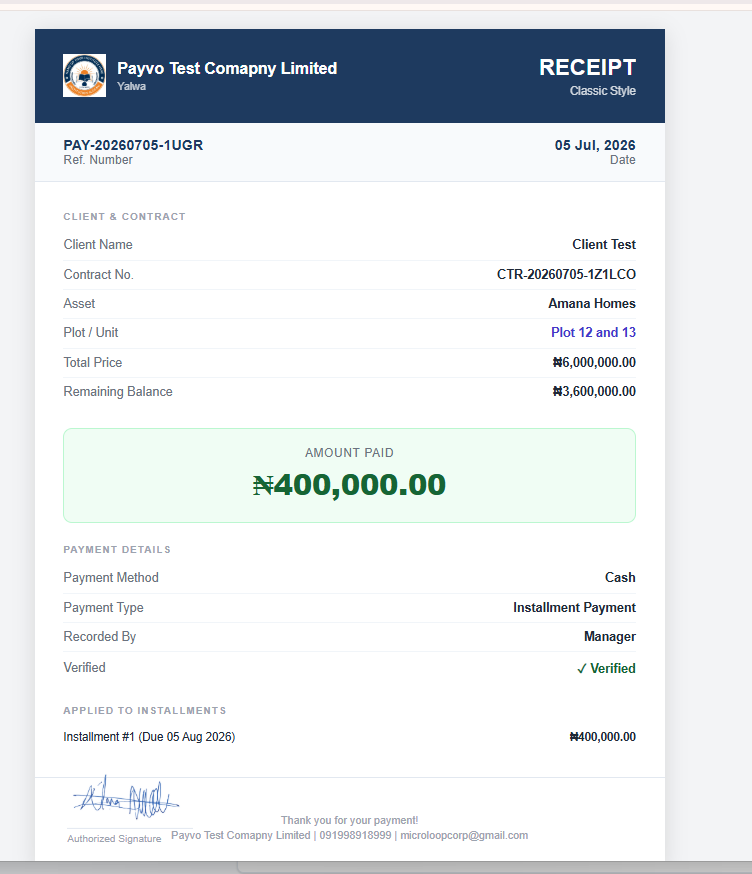 Finance: Paymnet Receipt Sample
Step 4: Automated Payment Reminders and Notifications
One of the biggest challenges in installment management is ensuring timely payments. Manual follow-up calls and messages are incredibly time-consuming. An automated WhatsApp payment notification system or email reminder system is a game-changer. These systems can send reminders to clients a few days before a payment is due, on the due date, and even after a payment is missed.
This proactive approach significantly reduces late payments and frees up your staff to focus on other critical tasks. Beyond reminders, the system should also send automatic notifications for new clients, new contracts created, and successful payment receipts, keeping both your business and your clients informed at every stage.
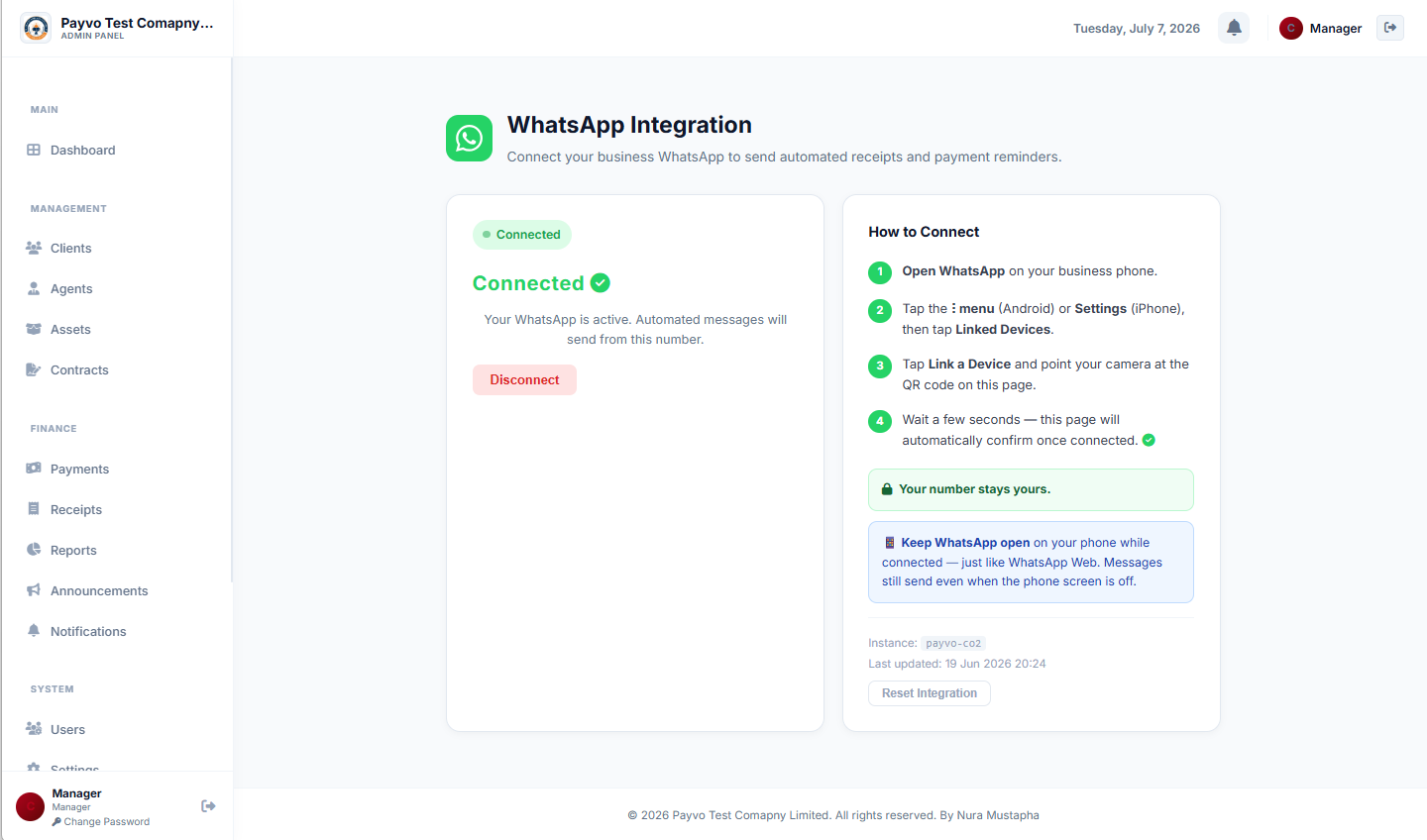 Admin: Whatsapp Integration
Step 5: Staff and Agent Management
Many businesses, especially real estate developers and car dealers, rely on a network of sales agents. Managing their commissions and tracking their performance on installment sales can be complex. An effective installment management system should include features for managing staff accounts with role-based permissions, allowing business owners to control what each team member can see and do.
Furthermore, for businesses with agents, the system should allow you to assign agents to contracts, automatically calculate commission per payment received, and track their full earnings and payout history. An agent commission tracking software that even allows agents to log in, view their own earnings (KPIs only), and submit withdrawal requests directly, streamlines the entire process, fostering transparency and motivation. This is particularly beneficial for businesses scaling their sales force.
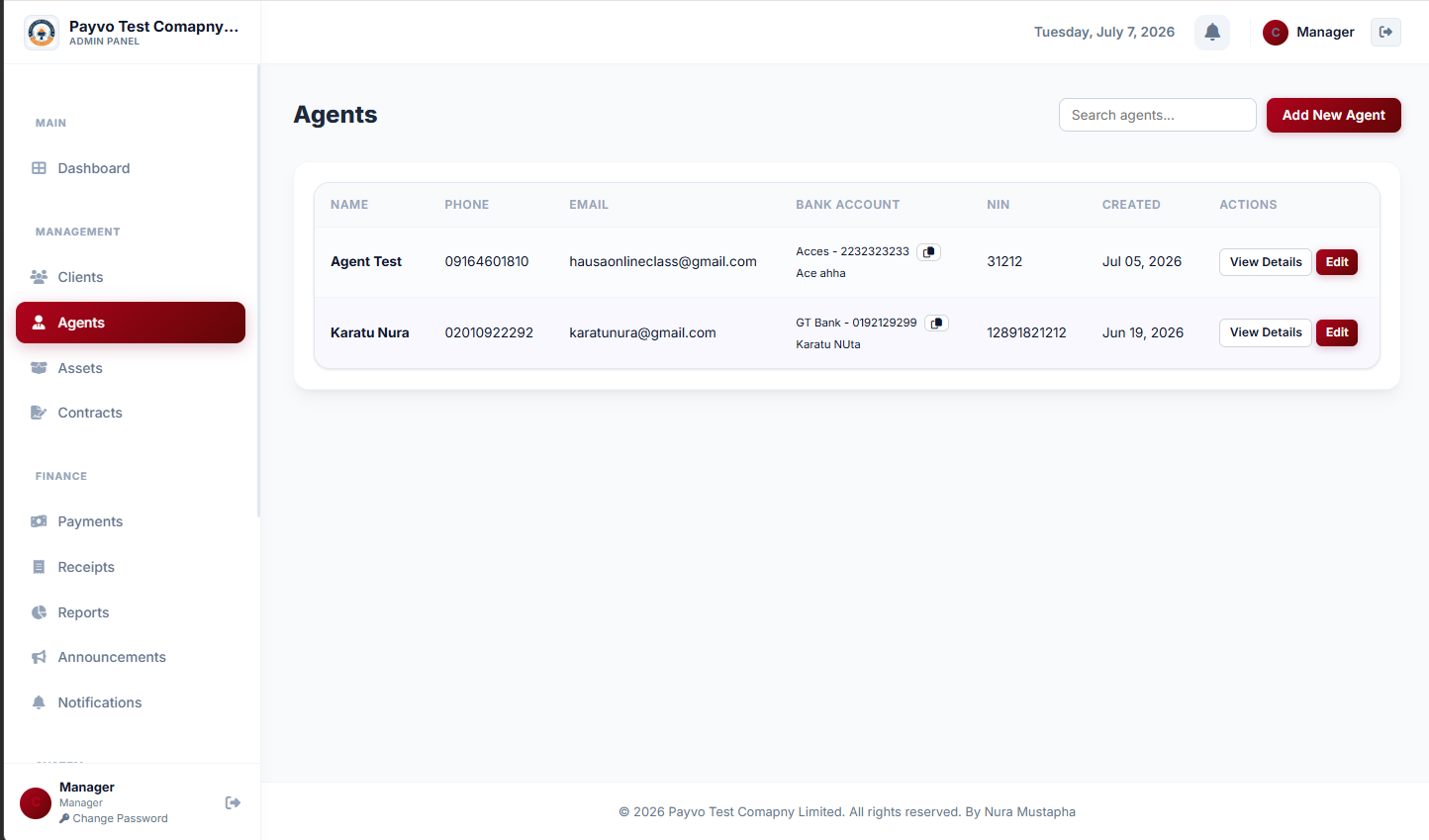 Agent: Agents list page
Step 6: Real-time Tracking and Reporting
Once your system is in place, continuous monitoring is essential. You need clear visibility into your financial health and contract status at all times. This includes tracking total clients, active contracts, amounts collected, outstanding balances, and next payment due dates.
A robust business payment tracking app Nigeria will provide real-time dashboards that offer an at-a-glance overview of your key performance indicators. Beyond dashboards, the ability to generate detailed reports (PDF or Excel) for accounting, auditing, and strategic planning is critical. This data helps you identify trends, assess risk, and make informed business decisions. For example, understanding the average settlement period (typically 24-72 hours for most payment gateways) helps manage cash flow expectations.
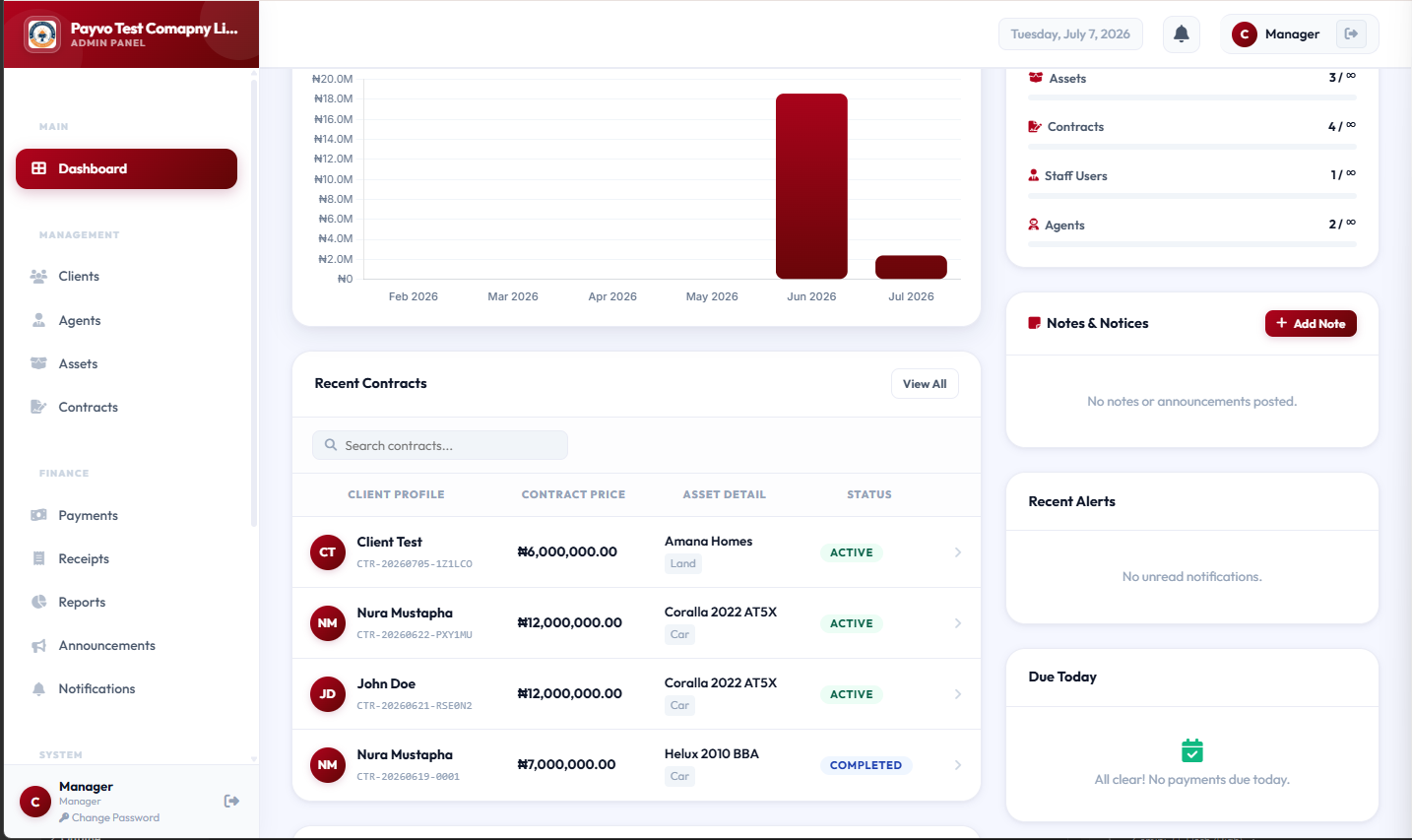 Dashobard (top)
Common Mistakes to Avoid
- Underestimating the Cost of Manual Processes: Many businesses fail to calculate the true cost of manual tracking, including staff time, error rates, and lost revenue from poor follow-up. These hidden costs often far outweigh the investment in an automated system.
- Ignoring Legal Compliance: Not having clear, legally sound contracts and terms for installment sales can lead to disputes, chargeback fees (which can range from ₦2,500 to ₦10,000 per incident), and reputational damage.
- Poor Communication with Clients: Lack of clear payment reminders or instant receipts frustrates clients and increases the likelihood of missed payments. Transparency and consistent communication are key.
- Lack of Data Analysis: Simply collecting data isn't enough; you need to analyze it to understand customer behavior, identify payment trends, and refine your installment offerings.
- Choosing the Wrong System: Opting for generic spreadsheet solutions or systems not designed for installment sales can create more problems than they solve. Look for dedicated instalment software that understands the nuances of installment management.
- Neglecting Staff Training: Even the best system is ineffective if your team doesn't know how to use it properly. Invest time in training your staff on the new processes and software.
How to Track and Grow After Launch
After successfully implementing your installment payment system, the work shifts to continuous tracking, analysis, and strategic growth.
Firstly, regularly monitor your real-time dashboards. Keep an eye on key metrics like payment collection rates, outstanding balances, and the average time to full payment. This data will highlight areas of success and potential bottlenecks. For example, if you notice a high rate of late payments for a specific product, it might indicate issues with the initial payment terms or the effectiveness of your reminder system.
Secondly, leverage the reporting features of your chosen platform. Generate weekly or monthly reports on cash flow, client acquisition, and agent performance. These reports are invaluable for financial planning, identifying your most profitable products or agents, and understanding seasonal trends. Many advanced systems provide weekly company reports directly to your email, giving you a summary of key business performance metrics without even logging in. This data-driven approach allows you to refine your marketing budget for promoting installment options (which could range from ₦20,000 to ₦150,000 per month for targeted social media ads).
Finally, don't be afraid to iterate. Use client feedback and system data to make improvements. Perhaps a different reminder schedule would be more effective, or a change in your down payment structure could attract more clients. A flexible instalment management system will allow you to adapt and optimize your strategies for sustained growth.
 Nigerian business owner reviewing financial reports
Frequently Asked Questions
Q1: What are the typical costs associated with setting up an installment payment system in Nigeria?
A1: Costs vary widely depending on the sophistication of the system. Initial setup fees for payment gateways can range from ₦0 for basic plans to ₦50,000 for more advanced features. Transaction fees typically range from 1.5% to 3.5% plus ₦50-₦150 per installment. Some providers might also charge a monthly maintenance fee of ₦0 to ₦10,000. If you need a POS terminal, a one-time purchase can be ₦45,000 - ₦120,000, or you can rent one for ₦2,500 - ₦7,000 monthly. Custom integrations for e-commerce can cost ₦50,000 - ₦300,000.
Q2: How can I ensure my clients actually pay their installments on time?
A2: The most effective strategies involve clear communication, automated reminders, and flexible payment options. Use a WhatsApp payment notification system or email reminders to notify clients before due dates. Ensure your contracts are clear about terms and consequences of late payments. Building a good relationship with your clients also encourages timely payments.
Q3: Is an installment management system only for large businesses?
A3: Absolutely not. While large enterprises benefit, small to medium-sized businesses, including car dealer installment software users, real estate payment tracking Nigeria firms, cooperative societies, and building material suppliers, often see the most immediate and significant improvements from automating their installment processes. Even a business with just a few dozen active installment contracts can save substantial time and reduce errors.
Q4: What happens if a client disputes a payment?
A4: Payment disputes, also known as chargebacks, can incur fees ranging from ₦2,500 to ₦10,000 per incident from banks or processors. A robust installment management system helps by keeping detailed records of all transactions and communications, providing solid evidence to dispute fraudulent claims. It's also crucial to have clear terms and conditions in your contracts.
Q5: Can these systems help with managing agents and their commissions?
A5: Yes, many modern instalment software solutions, like Payvo, include comprehensive agent commission tracking software. They allow you to assign agents to contracts, automatically calculate their commission based on payments received, and track their earnings and payout history. Some even offer agent self-tracking portals to view their KPIs and submit withdrawal requests directly. You can learn more about agent tracking features on our dedicated page here.
Ready to Streamline Your Installment Sales?
Stop losing sleep over manual tracking and inconsistent payments. An automated installment management system can transform your business operations, boost cash flow, and free up valuable time. Explore how a dedicated platform can help you manage clients, contracts, payments, and agents seamlessly. Visit our features page to see everything it can do, or if you're ready to take control, register into Payvo today and experience the difference.