In Nigeria, managing installment sales often feels like juggling flaming swords – one missed payment, one misplaced record, and your entire cash flow is at risk. For businesses from car dealerships to real estate developers, the promise of increased sales through flexible payments is often overshadowed by the nightmare of manual tracking, reconciliation errors, and endless follow-up calls. In 2026, relying on ledgers and WhatsApp messages for your core revenue stream isn't just inefficient; it's a direct threat to your bottom line.
 Nigerian business owner reviewing financial documents
The Evolving Landscape of Installment Sales in Nigeria (2026)
The Nigerian market, despite its unique challenges, continues to embrace flexible payment options. In 2026, offering installment plans is no longer a niche strategy but a competitive necessity across various sectors. From car dealers in Lagos providing hire purchase options to solar companies in Kaduna making clean energy accessible, the demand for deferred payments is surging. This shift is driven by economic realities where significant upfront costs are often a barrier to purchase for the average Nigerian consumer, whose monthly income typically ranges from ₦50,000 to ₦150,000. Businesses that adapt thrive, seeing increased sales volumes and broader customer bases.
However, this opportunity comes with complexities. A recent market survey indicated that businesses offering installment plans spend an average of 15% more time on administrative tasks compared to those operating on upfront payments. This administrative burden, coupled with the risk of payment defaults, necessitates robust systems. The informal nature of many transactions, often managed through manual records or scattered digital notes, leads to significant revenue leakage and customer dissatisfaction. Without a proper installment management system, businesses risk losing track of payments, miscalculating agent commissions, and failing to provide timely customer support. Understanding these dynamics is crucial for any business looking to successfully implement or optimize their installment sales strategy in Nigeria. For more insights into business management, explore our blog page.
What You Need Before You Start
Before diving into setting up an installment payment system, ensure you have these foundational elements in place:
- Clear Business Objectives: Define what you aim to achieve with installment sales (e.g., increase sales by X%, reduce payment defaults by Y%).
- Legal Framework Understanding: Familiarize yourself with Nigerian contract laws and consumer protection regulations relevant to installment agreements.
- Capital Buffer: A working capital buffer of ₦100,000 - ₦1,000,000 is essential to cover potential delayed payments and maintain operations, especially for businesses offering significant installment volumes.
- Defined Products/Services for Installment: Clearly identify which of your offerings are suitable for installment plans.
- Pricing Strategy: Establish transparent pricing, including any interest rates (0% - 5% per month) if applicable, for your installment plans.
- Dedicated Staff or Training Plan: Identify who will manage the installment process and how they will be trained. Staff training can cost between ₦5,000 - ₦20,000.
- Basic Digital Infrastructure: Access to a computer or smartphone and reliable internet connectivity.
Step-by-Step: Implementing an Installment Payment System
Implementing an effective installment payment system requires a structured approach. Follow these steps to ensure a smooth transition and maximize your business's success.
Step 1: Define Your Installment Policies and Terms
Before anything else, clearly outline your installment policies. This includes down payment requirements, payment frequencies (weekly, monthly, quarterly), duration of the installment plan, and consequences for late or missed payments. Consider your target market's financial capacity; for example, a property seller in Kano might offer longer terms than a building material supplier in a smaller town. Transparency here builds trust and prevents future disputes.
For instance, a real estate developer selling plots for ₦5,000,000 might require a 20% down payment (₦1,000,000) and allow the remaining ₦4,000,000 to be paid over 24 months. This means monthly payments of approximately ₦166,667. Clearly communicate these terms to your customers, perhaps even providing a sample contract.
Step 2: Choose the Right Payment Collection Methods
Decide how your customers will make their installment payments. Common methods in Nigeria include direct bank transfers, POS terminals, and mobile money. While direct transfers are common, they often lack automated tracking. For in-person collections, a basic mobile POS terminal can cost ₦45,000, while more advanced integrated terminals for larger retail stores might go up to ₦120,000. The key is to offer convenience to your customers while ensuring you can reliably track each payment.
Consider the security and reconciliation aspects of each method. Manual reconciliation of bank statements with customer records is time-consuming and prone to errors. Look for solutions that offer automated payment logging or easy integration with your tracking system.
Step 3: Select Your Installment Management Software
This is arguably the most critical step. Your chosen software will be the backbone of your installment operations. You need a system that can handle client registration, contract creation, payment tracking, and automated reminders. Look for features like client management, asset tracking (for businesses selling physical goods like cars or solar panels), and robust reporting.
For example, a comprehensive platform like Payvo allows you to register and manage all client details, view their complete payment history, and track specific assets linked to their contracts. This replaces scattered notebooks and ensures all information is centralized and easily accessible.
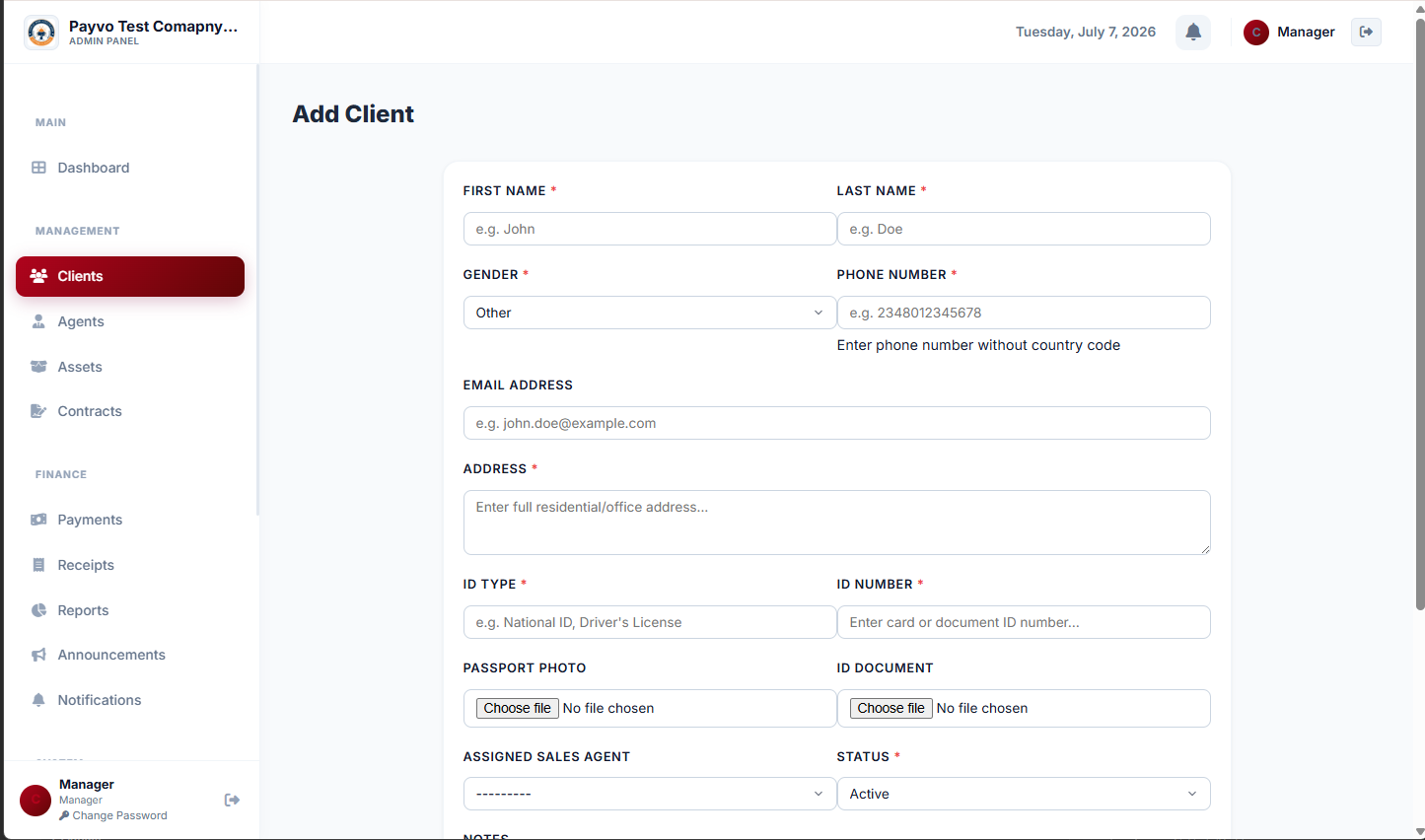 Client: Add Client page
Step 4: Integrate and Set Up Your System
Once you've chosen your software, the next step is integration and setup. This might involve configuring payment gateways, importing existing client data, and setting up contract templates. The initial setup fee for payment gateways can range from ₦0 (for basic plans) up to ₦50,000 for advanced features or dedicated support. For custom website or app integration, costs could be ₦50,000 for a simple plugin to ₦500,000 for complex API development by a freelance developer.
Ensure that your staff are properly trained on how to use the new system. This includes how to create new contracts, record payments, and generate receipts. A system that offers intuitive interfaces and clear workflows will minimize the learning curve.
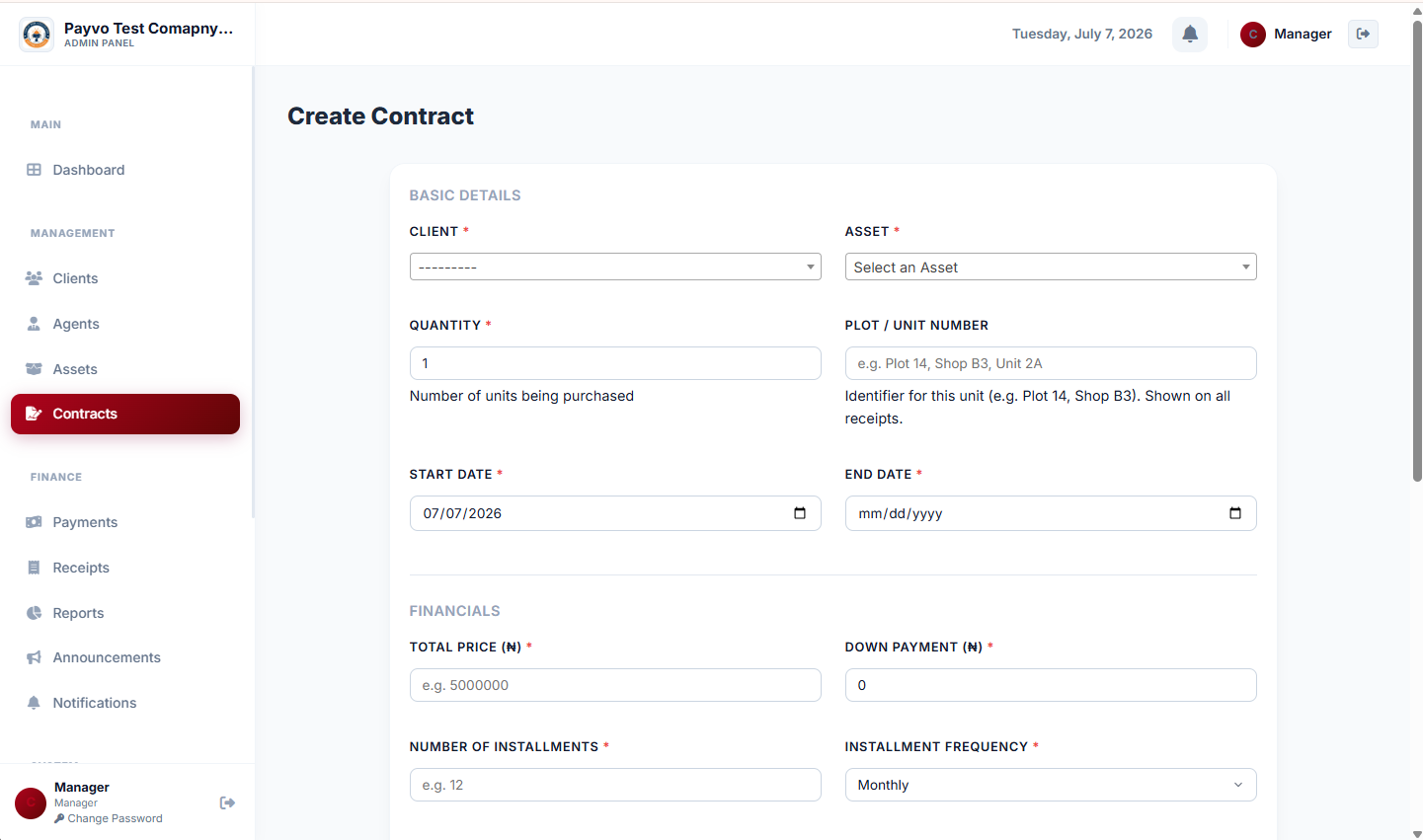 Management: Add contract (top)
With a system like Payvo, you can set payment terms once, and installment schedules are generated automatically. This eliminates manual calculation errors and speeds up the contract creation process significantly.
Step 5: Automate Communication and Reminders
One of the biggest challenges in installment sales is ensuring timely payments. Manual follow-ups are labor-intensive and often ineffective. An effective installment management system should automate client communication. This includes sending payment reminders before due dates and notifications upon successful payment.
Automated notifications, especially via platforms like WhatsApp and email, are incredibly effective in the Nigerian context. Payvo, for instance, sends automatic notifications for new clients, new contracts, payment received, and payment reminders via email and WhatsApp, including a public receipt link clients can view, save, or share. This significantly reduces the need for manual follow-up calls and improves payment consistency.
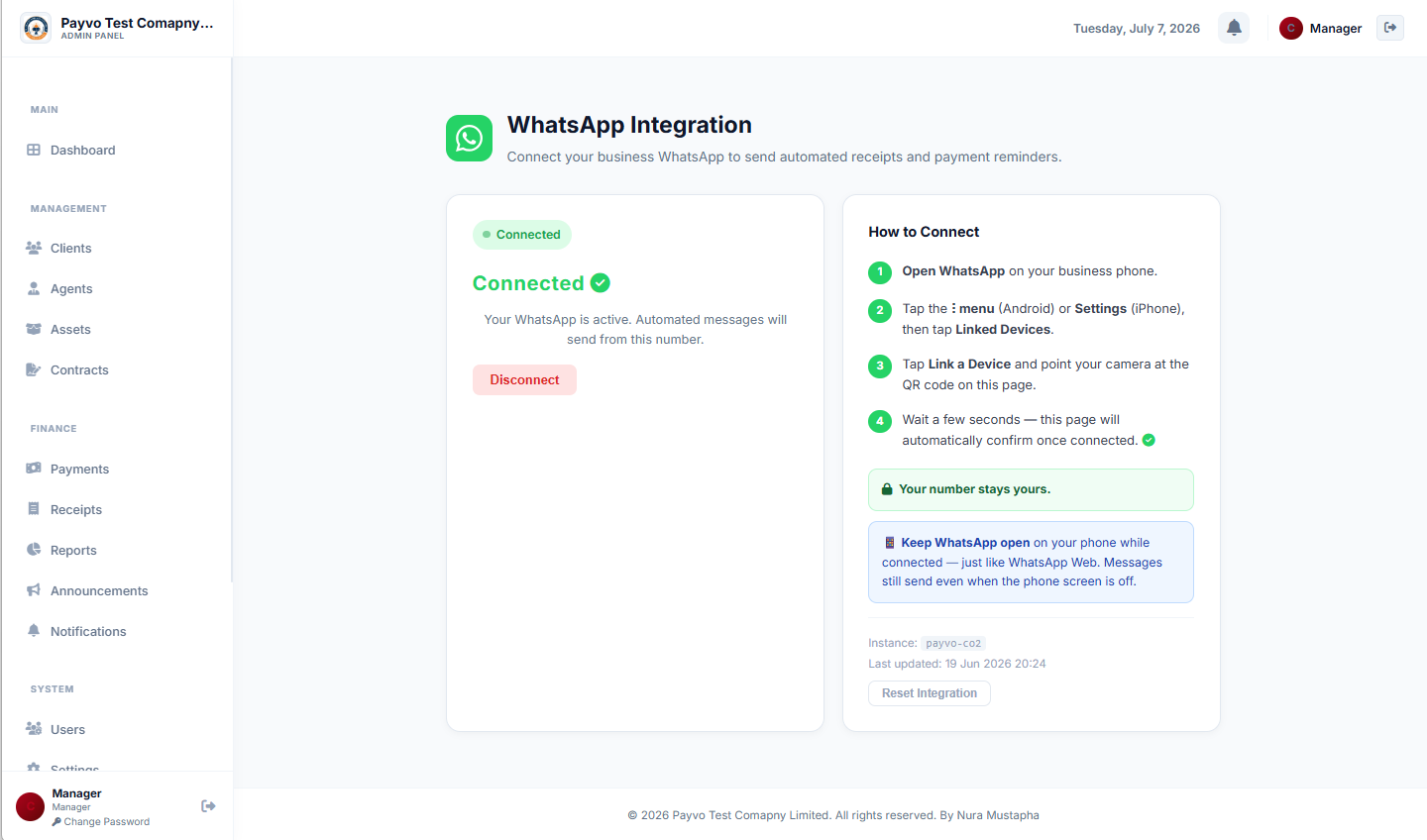 Admin: Whatsapp Integration
Step 6: Implement Robust Reporting and Analytics
To understand the health of your installment business, you need real-time data and comprehensive reports. Your system should provide dashboards that show total clients, active contracts, amounts collected, outstanding balances, and next payment due at a glance. The ability to generate detailed reports (PDF or Excel) for accounting and record-keeping is also crucial.
These reports help you identify payment trends, potential risks, and areas for improvement. They are also vital for financial reconciliation and tax purposes. A monthly subscription for advanced features like recurring billing and advanced analytics can range from ₦5,000 to ₦30,000.
Step 7: Manage Agents and Commissions Effectively
For businesses that rely on agents, like real estate firms or car dealerships, tracking commissions accurately is paramount. Your system should allow you to assign agents to contracts, automatically calculate their commission per payment, and track their full earnings and payout history. This transparency motivates agents and prevents disputes.
Furthermore, consider systems that allow agents to track their own earnings. Payvo's agent self-tracking feature enables agents to log in with a code to view their KPIs and submit withdrawal requests directly, streamlining the commission management process. Learn more about our agent tracking page.
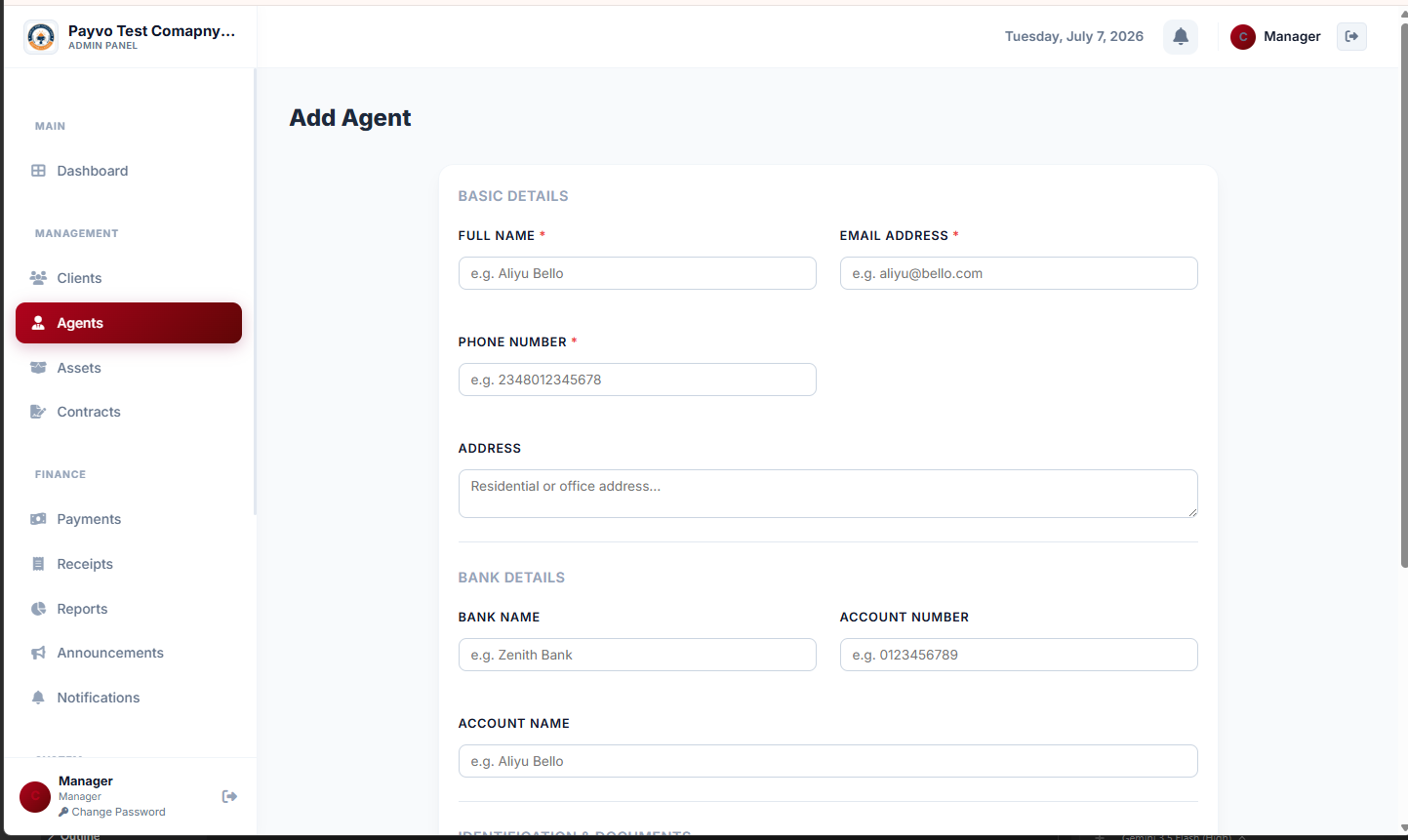 Agent: Add agent page
> "In a market as dynamic as Nigeria's, the businesses that succeed are not just those that offer credit, but those that can meticulously manage it. Manual processes are no longer a viable option for growth."
Common Mistakes to Avoid
Navigating installment sales can be tricky. Here are some common pitfalls Nigerian businesses often encounter:
- Inadequate Due Diligence: Failing to properly vet customers before offering installment plans. This can lead to high default rates and significant losses. Always perform basic background checks where possible.
- Lack of Clear Contracts: Operating without clear, legally binding contracts detailing payment terms, responsibilities, and consequences. This leaves you vulnerable in case of disputes.
- Manual Tracking Overload: Relying solely on notebooks, spreadsheets, or WhatsApp chats to track payments. This is inefficient, prone to errors, and makes scaling impossible. This is where an effective installment management system becomes invaluable.
- Poor Communication: Not sending timely payment reminders or clear communication about account status. This often results in delayed payments or customer frustration.
- Ignoring Chargebacks: Not understanding or preparing for chargeback fees, which can range from ₦2,500 to ₦10,000 per incident. Implement strong customer service and clear refund policies to minimize these.
- Neglecting Staff Training: Launching a new system without adequately training staff on its use. This leads to operational bottlenecks and reduced efficiency.
How to Track and Grow After Launch
Launching your installment system is just the beginning. Continuous monitoring and strategic growth are key to long-term success.
Key Performance Indicators (KPIs) to Watch:
- Payment Success Rate: Percentage of installments paid on time.
- Default Rate: Percentage of customers who fail to make payments.
- Average Collection Period: The average time it takes to collect an installment.
- Customer Lifetime Value (CLTV): The total revenue you expect to earn from a customer over their relationship with your business.
- Agent Performance: Track agent-driven sales and commission payouts.
- Refine Your Offerings: Based on data from your installment management system, adjust your installment plans to better suit customer needs and market trends. Perhaps shorter payment terms are more popular, or certain products sell better on installment.
- Targeted Marketing: Use insights from your sales data to create targeted marketing campaigns. The cost of marketing installment options can range from ₦10,000 for basic social media promotion to ₦100,000/month for targeted digital ad campaigns.
- Customer Feedback: Actively solicit feedback from customers regarding their installment experience. This can highlight areas for improvement in your process or service.
- Leverage Automation: Utilize automated features for communication, reminders, and reporting to free up staff time for sales and customer service. A system that offers real-time dashboards can significantly aid in this. For example, Payvo provides comprehensive dashboards allowing you to see total clients, active contracts, amount collected, outstanding balances, and next payment due at a glance, enabling quick, data-driven decisions.
- Expand Product Lines: Once your installment system is stable, consider offering more products or services on installment, gradually expanding your market reach.
- Optimize Agent Network: If you work with agents, use the data from your agent commission tracking software to identify top performers, provide additional training, or expand your agent network in underserved areas.
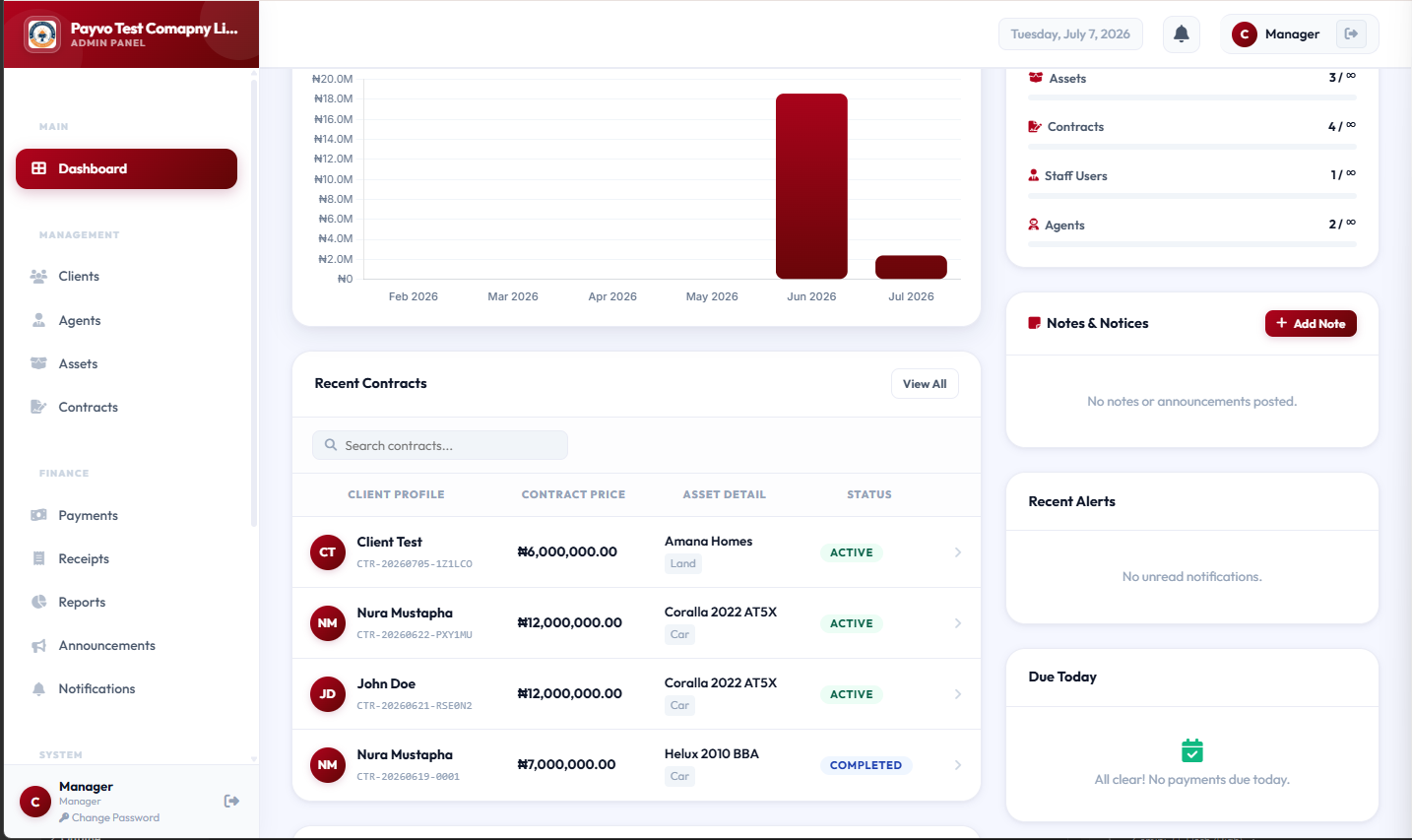 Dashobard (top)
Frequently Asked Questions
Q1: What is the average transaction fee for installment payments in Nigeria?
A1: Transaction fees typically range from 1.5% + ₦100 to 3% + ₦200 per successful installment payment. These fees can be lower for high-volume businesses or higher for smaller merchants and specific payment methods. It's crucial to factor these into your pricing strategy.
Q2: How can I prevent payment defaults on installment plans?
A2: Prevention is key. This includes thorough customer vetting, clear and legally sound contracts, automated payment reminders (via SMS, email, or WhatsApp payment notification system), and maintaining open communication with customers. A solid installment management system will offer many of these features to help reduce defaults.
Q3: Is it possible to manage agent commissions automatically with an installment system?
A3: Yes, absolutely. Modern installment management systems are designed to automate agent commission tracking. They allow you to assign agents to contracts, automatically calculate their commission based on payments received, and track their earnings and payout history. This eliminates manual errors and boosts agent morale.
Q4: What kind of reports should I expect from a good installment management software?
A4: A robust system should provide real-time dashboards and generate reports on total clients, active contracts, amount collected, outstanding balances, upcoming payments, payment history per client, and agent performance. The ability to export these as PDF or Excel for accounting and record-keeping is also essential for a comprehensive business payment tracking app Nigeria.
Q5: Can I customize receipts with my company's branding?
A5: Yes, many dedicated installment management systems offer customization options for receipts. You should be able to include your company logo, brand colors, and digital signature on automatically generated receipts. This professionalism enhances your brand image and builds customer trust. Look for a receipt generator app Nigeria that offers this functionality.
Ready to Streamline Your Installment Sales?
Don't let manual tracking and administrative headaches limit your business growth. Embrace the power of automation and precision in your installment operations. Discover how a dedicated contract and installment management system can transform your business, from real estate payment tracking Nigeria to car dealer installment software. Take the first step towards smarter, more efficient sales management. Register into Payvo today and experience the difference.
 Business owner using a tablet to manage finances