Chasing down installment payments, reconciling ledgers, and manually sending reminders can feel like a full-time job – one that takes you away from growing your business. For many Nigerian businesses offering goods and services on credit, managing these complex payment schedules often means lost revenue, frustrated customers, and endless administrative headaches.
 Business owner looking stressed while reviewing ledgers
The Evolving Landscape of Installment Sales in Nigeria (2026)
In 2026, the demand for installment payment options across Nigeria continues to surge. From real estate and automobile sales to solar equipment and building materials, more consumers are seeking flexible payment plans to acquire essential assets. This trend is a double-edged sword for businesses: while it expands market reach, it also introduces significant operational complexities. A recent report by the National Bureau of Statistics (NBS) indicated a 15% year-on-year increase in consumer credit applications, highlighting the growing reliance on deferred payment models. Businesses that fail to adapt with efficient systems risk being left behind or, worse, accumulating bad debt.
The manual methods of tracking installments – spreadsheets, notebooks, and countless WhatsApp messages – are simply unsustainable. They are prone to human error, make accurate financial reporting a nightmare, and often lead to strained customer relationships due to missed reminders or payment discrepancies. For a car dealer in Kano, a property seller in Abuja, or a cooperative society in Lagos, efficient payment tracking is not just about convenience; it's about survival and profitability in a competitive market. Businesses are actively seeking solutions that automate these processes, freeing up valuable time and resources.
What You Need Before You Start
Before diving into selecting and implementing an installment payment software, ensure you have the following foundational elements in place:
- Clear Installment Policies: Define your payment terms, late fees, grace periods, and default procedures. This clarity is crucial for setting up the software correctly and communicating effectively with clients.
- Client Data: Compile existing client information, including contact details, past payment history, and any outstanding balances.
- Asset Inventory (if applicable): For businesses selling physical assets like cars, property, or equipment, have a detailed list of these items, including unique identifiers and current status.
- Budget Allocation: Determine a realistic budget for software subscriptions, potential one-time setup fees, and staff training. Expect to allocate anywhere from ₦5,000 to ₦50,000 monthly for software, plus potential one-time costs of ₦30,000 to ₦100,000 for setup.
- Reliable Internet Access: As most modern installment management software is cloud-based, a stable internet connection is essential. Factor in additional data costs, which could range from ₦5,000 to ₦15,000 per month for consistent operation.
- Designated Staff: Identify who will be responsible for managing the software, entering data, and addressing client queries related to payments.
Step-by-Step: Choosing and Implementing Installment Payment Software
Navigating the world of installment payment software can be daunting. This step-by-step guide will help you make an informed decision and seamlessly integrate a solution into your business operations.
Step 1: Assess Your Specific Business Needs
Before you even look at software, understand your unique requirements. Are you a real estate developer managing long-term payment plans for multiple property units? A car dealer handling hire-purchase agreements? Or a cooperative society tracking member contributions? Each business type has distinct needs.
Consider the following:
- Number of Clients & Contracts: How many clients and active contracts do you currently manage? How many do you project in the next 1-3 years?
- Types of Assets: Do you sell physical goods (cars, solar panels, building materials) or services (property development, microfinance loans)?
- Payment Frequency & Structure: Do clients pay weekly, monthly, quarterly? Are payments fixed, or do they vary?
- Staff & Agent Management: Do you have sales agents who earn commissions? Do you need to manage different staff roles and permissions?
- Reporting Requirements: What kind of financial reports do you need for accounting, audits, or business analysis?
Step 2: Research Available Solutions and Features
Once you have a clear picture of your needs, start researching software options. Look for solutions specifically designed for installment sales or with strong customization capabilities. Key features to prioritize include:
- Client Management: The ability to store comprehensive client details, including contact information, identification, and a complete payment history.
- Contract Management: Tools to create, manage, and track individual contracts, including payment schedules, due dates, and outstanding balances.
- Payment Tracking & Recording: A system to easily record payments, apply them to specific installments, and mark contracts as paid.
- Automated Reminders & Notifications: This is crucial for reducing manual effort and improving collection rates. Look for software that can send automated payment reminders via SMS, email, or even WhatsApp.
- Receipt Generation: Automated, branded receipts for every payment instill professionalism and provide clients with proof of payment.
- Reporting & Analytics: Dashboards and reports that give you an overview of your financial health, including collected amounts, outstanding balances, and upcoming payments.
Step 3: Evaluate Pricing Models and Total Cost of Ownership
Pricing for installment payment software can vary significantly. Most providers offer subscription-based models, often tiered by the number of users, clients, or features.
- Basic Plans: Typically range from ₦5,000 - ₦15,000/month. These are suitable for small businesses or startups with essential needs.
- Advanced Plans: Can cost between ₦20,000 - ₦50,000/month, offering more robust features like inventory integration, API access, and premium support.
- One-time Setup/Integration Fees: Some providers charge an initial fee for setup, data migration, or custom integrations, ranging from ₦30,000 - ₦100,000.
- Transaction Fees: Be aware of any transaction fees, typically 0.5% - 2.5% per installment payment, which can add up.
- Premium Customer Support: Dedicated support might cost an additional ₦10,000 - ₦30,000/month.
Step 4: Test Drive and Demo the Software
Never purchase software without thoroughly testing it. Take advantage of free trials or request demos. During this phase, focus on:
- Ease of Use: Is the interface intuitive? Can your staff quickly learn how to use it?
- Core Functionality: Does it perform the key tasks you identified in Step 1 efficiently? Try creating a client, setting up a contract, and recording a payment.
- Support: How responsive is their customer support? Are they knowledgeable about local business practices?
- Integration: Does it integrate with any existing systems you use, such as accounting software or payment gateways?
Step 5: Data Migration and Initial Setup
Once you've chosen a software, the next step is to migrate your existing data and configure the system. This often involves:
- Importing Client Data: Uploading your client list, contact information, and relevant details.
- Registering Assets: If you sell physical goods, you'll need to input your asset inventory.
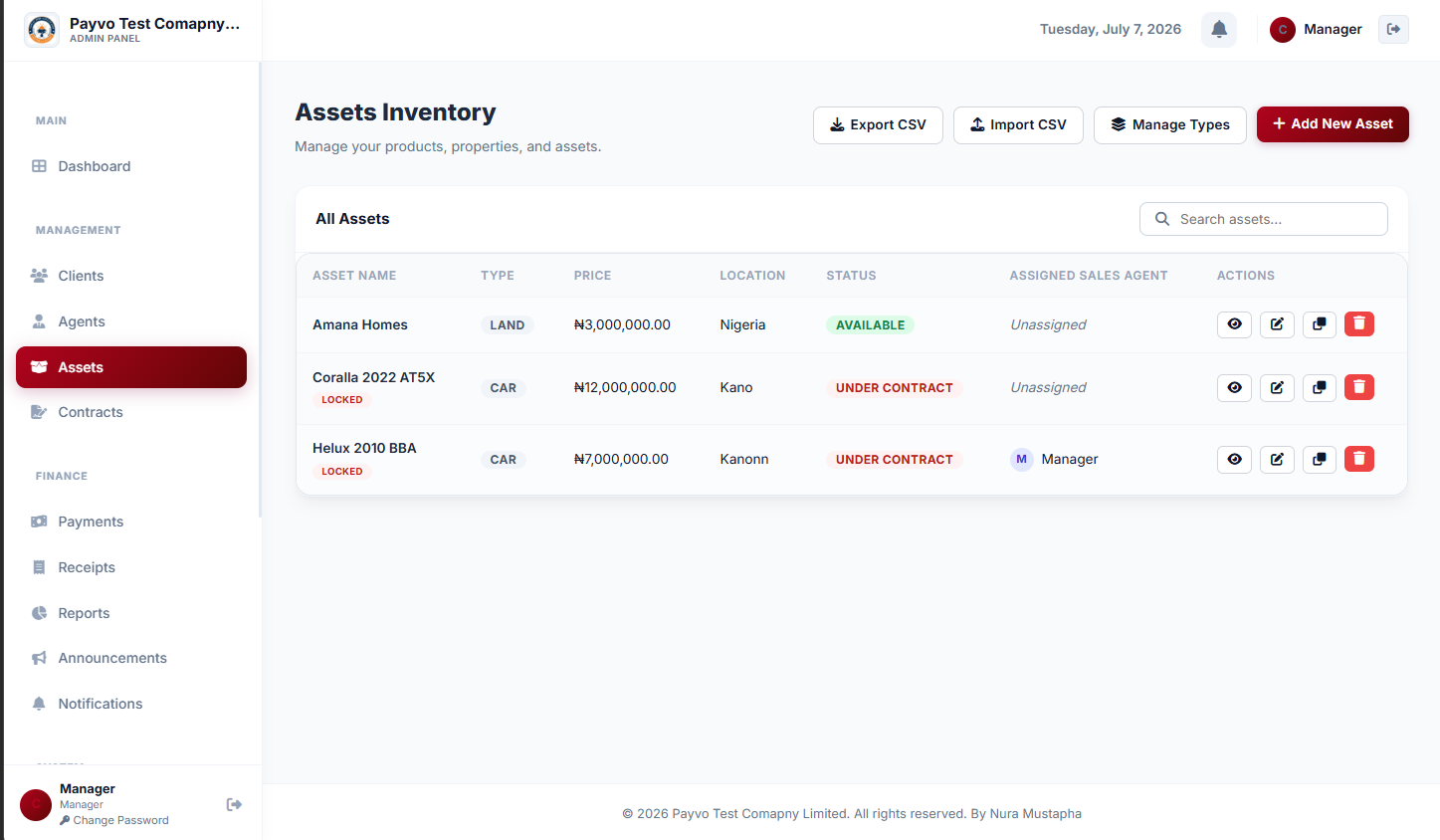 Assets list page
- Configuring Contract Templates: Setting up standard contract terms, payment schedules, and grace periods.
- Branding: Customizing receipts and notifications with your company logo and colors.
Step 6: Staff Training and Rollout
Even the most intuitive software requires some training. Conduct thorough training sessions for all staff who will be using the system.
- Role-Based Training: Tailor training to specific roles (e.g., sales agents, accounts staff, managers).
- Practice Scenarios: Provide practical exercises to help staff get comfortable with the new system.
- Q&A Sessions: Address any concerns or questions your team might have.
Step 7: Go Live and Monitor Performance
After training, it's time to go live. Start using the software for all new installment sales. For existing contracts, you might run a parallel system initially or migrate them in phases.
- Monitor Data Accuracy: Regularly check that client and payment data is being entered correctly.
- Track Payment Collections: Observe if the automated reminders are improving your collection rates.
- Gather Feedback: Solicit feedback from your staff and clients on their experience with the new system. This helps identify areas for improvement.
Common Mistakes to Avoid
Implementing new software can be tricky. Here are some common pitfalls Nigerian businesses encounter and how to avoid them:
- Underestimating Training Needs: Assuming staff will "just figure it out" leads to errors and low adoption. Invest time in comprehensive training.
- Ignoring Data Migration Quality: Rushing data entry or importing inaccurate data will lead to problems down the line. Double-check all migrated information.
- Overlooking Local Context: Choosing software that isn't built with Nigerian business realities in mind (e.g., WhatsApp integration, local payment methods) can lead to frustration.
- Neglecting Automated Reminders: One of the biggest benefits of installment software is automation. Failing to configure and utilize automated payment reminders is a missed opportunity to improve cash flow.
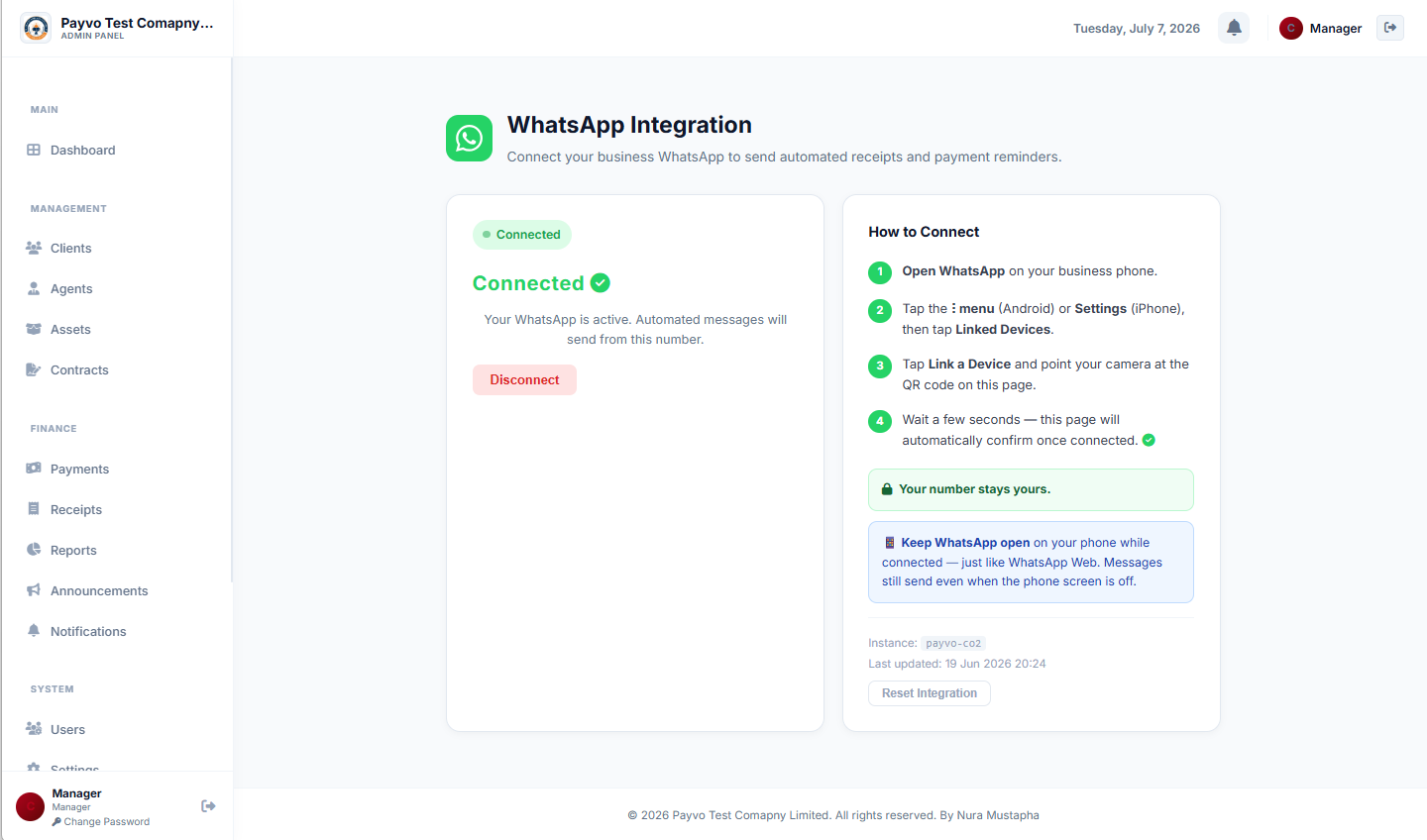 WhatsApp Integration
- Lack of Clear Policies: Software automates processes, but it doesn't create policies. Ambiguous terms for late payments or defaults will still cause issues, regardless of your software.
- Choosing Overly Complex Software: For many small and medium-sized businesses, a simple, effective solution is better than an enterprise-level system with features you'll never use. Focus on core needs first.
How to Track and Grow After Launch
Implementing installment management software is just the beginning. To truly leverage its power, you need to actively track performance and use insights to drive growth.
Key Performance Indicators (KPIs) to Monitor:
- Collection Rate: The percentage of due payments successfully collected. An automated system with automated reminders sent before due dates should significantly boost this.
- Arrears Rate: The percentage of outstanding payments past their due date. A lower rate indicates better financial health.
- Customer Retention Rate: Happy clients who find payment convenient are more likely to do business with you again.
- Average Payment Cycle: How long it takes for a full contract to be paid off.
- Agent Performance: For businesses with agents, track individual agent collection rates and commission earnings.
- Analyze Payment Trends: Use the software's reporting features to identify patterns in payments. Are certain months harder for clients? Can you adjust payment plans accordingly?
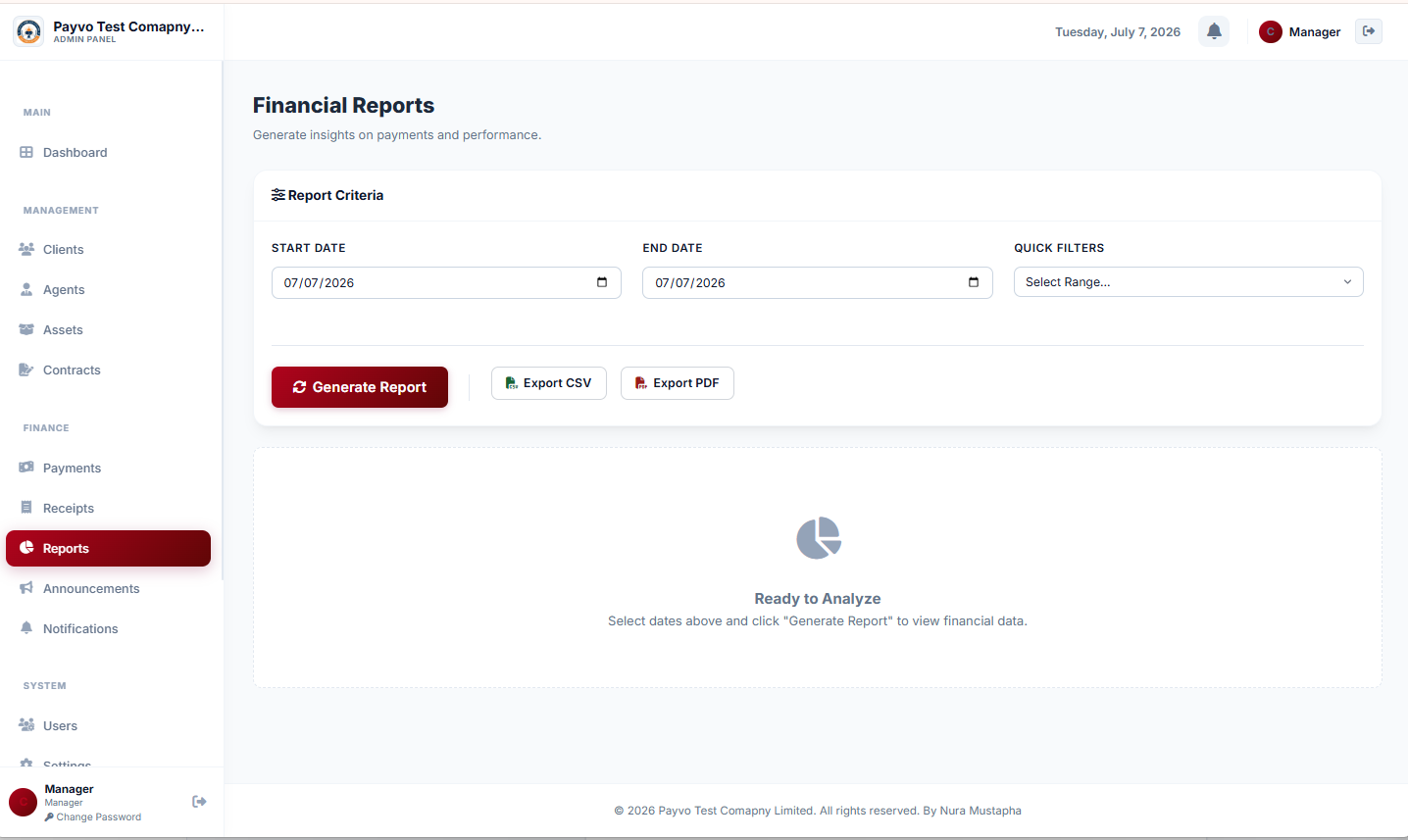 Financial Reports Page
- Optimize Communication: A WhatsApp payment notification system can dramatically improve client engagement. A/B test different reminder messages to see what works best.
- Identify High-Performing Agents: Use agent commission tracking software to reward top performers and understand their strategies.
- Refine Contract Terms: Based on payment data, you might discover that certain contract durations or down payment requirements lead to better outcomes.
- Leverage Data for Marketing: Understand which products or services are most popular on installment plans and tailor your marketing efforts.
Frequently Asked Questions
Q1: Is installment payment software only for large businesses?
No, absolutely not. While large enterprises benefit, small and medium-sized businesses, including individual traders, car dealers, real estate agents, and cooperative societies, gain immensely from automating their installment processes. Even a business managing just a few contracts can save significant time and reduce errors.
Q2: How secure is my client data with these software solutions?
Reputable installment management software providers prioritize data security. They typically use encryption, secure servers, and strict access controls. Look for features like audit logs and role-based permissions, which ensure that only authorized staff can access sensitive information. Always review the provider's privacy policy and terms of service.
Q3: Can these systems integrate with my existing accounting software?
Many advanced installment management software solutions offer API access or direct integrations with popular accounting software. This allows for seamless data flow, reducing manual data entry and ensuring your financial records are always up-to-date. It's a key question to ask during your software evaluation.
Q4: What if my clients prefer to pay offline (e.g., cash or bank transfer)?
Even if payments are received offline, the software still plays a crucial role. You simply record the payment manually within the system. The software then updates the client's ledger, generates a receipt, and sends automated notifications, ensuring all records are centralized and accurate, regardless of the payment method. This is where a robust receipt generator app Nigeria becomes invaluable.
Q5: How long does it take to implement an installment payment software?
Implementation time varies depending on the complexity of your business and the chosen software. For simpler solutions and businesses, it could be as quick as a few days to a week. For more complex setups involving data migration and extensive staff training, it might take several weeks. Providers often offer support to expedite this process.
Q6: What's the biggest benefit of using installment management software?
The biggest benefit is the significant reduction in administrative burden and human error, leading to improved cash flow and better customer satisfaction. Automating tasks like payment tracking, reminders, and receipt generation frees up your time to focus on sales and business growth, making it a critical tool for any business offering credit.
Ready to Streamline Your Installment Sales?
The era of manual tracking and missed payments is over. Embrace efficiency, improve your cash flow, and enhance client relationships with a dedicated installment management solution. Explore how a comprehensive platform can transform your operations by visiting our features page or registering for an account to see it in action.