In Nigeria, businesses selling goods or services on installment face a significant challenge: 40% of small and medium-sized enterprises (SMEs) report cash flow issues as their primary concern, often exacerbated by inefficient payment collection and tracking methods. Relying on manual ledgers or scattered spreadsheets for installment sales not only wastes valuable time but also introduces errors that can severely impact profitability and client relationships.
The Evolving Landscape of Installment Sales in 2026
The Nigerian market for installment sales is booming, driven by increasing consumer demand for accessible financing options for everything from real estate to solar equipment. According to a 2025 report by the National Bureau of Statistics, consumer credit, including installment plans, grew by 18% year-over-year, reflecting a significant shift in purchasing habits. This growth presents immense opportunities for businesses like real estate developers in Abuja, car dealers in Kano, cooperative societies, and equipment leasing companies. However, this expansion also brings complexity. Managing a growing portfolio of contracts, tracking diverse payment schedules, ensuring timely reminders, and accurately calculating agent commissions can quickly overwhelm businesses using outdated methods. The digital transformation sweeping across various sectors means that customers now expect seamless, transparent communication and efficient processes. Businesses that fail to adapt risk losing market share to more agile competitors who leverage technology to streamline their operations and enhance the customer experience. The need for robust, comprehensive installment management software Nigeria has never been more critical.
What You Need Before You Start
Before diving into selecting installment payment software, ensure you have the following prerequisites in place:
- Clear Business Processes: Document your current installment sales workflow, including client onboarding, contract creation, payment collection, and follow-up procedures.
- Defined Payment Terms: Standardize your payment plans, interest rates (if applicable), and late payment policies.
- Client Information: A consolidated list of existing client data, including contact details and current contract status.
- Asset Inventory: A detailed catalog of all assets (e.g., properties, vehicles, equipment) sold on installment, with unique identifiers.
- Team Structure: An understanding of your team's roles and responsibilities, especially concerning sales agents, finance personnel, and management.
- Budget Allocation: A realistic budget for software acquisition, implementation, and potential training.
- Internet Access: Reliable internet connectivity is essential for cloud-based installment payment software.
Step-by-Step: Choosing Installment Payment Software with Critical Features
Selecting the right installment management software for your business means looking beyond just basic payment tracking. Here are 10 critical features to prioritize, presented as a step-by-step guide to your selection process.
Step 1: Prioritize Robust Client and Asset Management
Your software should serve as a central hub for all client interactions and asset details. This isn't just about storing names and numbers; it's about creating comprehensive profiles. For real estate developers, this means linking a client directly to the specific plot or house they are purchasing, complete with property details, payment history, and communication logs. Car dealers need to track VINs, vehicle models, and maintenance schedules alongside client contracts.
A top-tier system will allow you to store full client details, including identification documents, contact information, and a complete payment history per client. Similarly, it should enable you to register and manage assets, tracking cars, property, equipment, or any item sold, linked directly to specific contracts. This integrated approach ensures that all relevant information is easily accessible, reducing manual lookups and improving data accuracy.
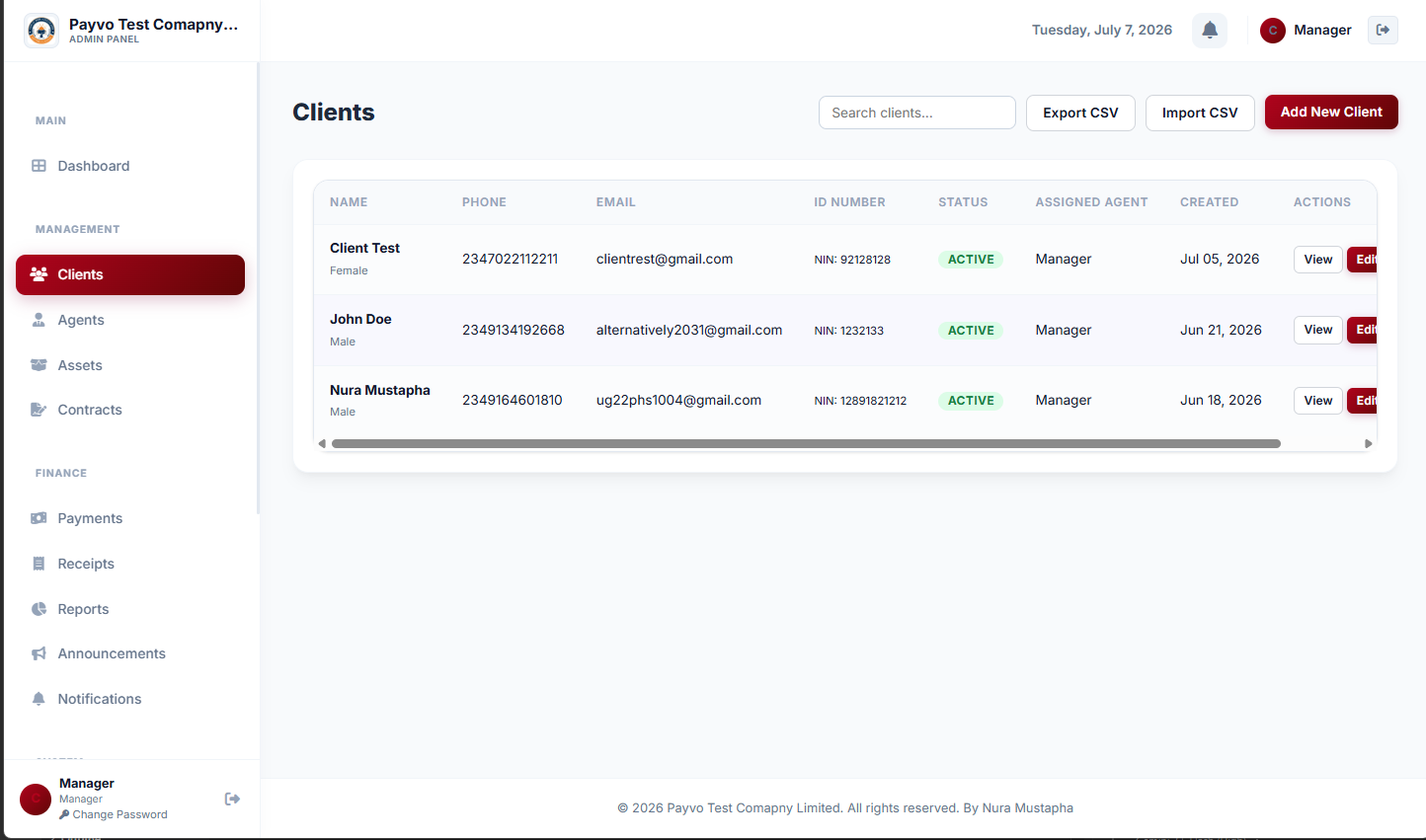 Client: Clients list page
Step 2: Seek Automated Contract Creation and Scheduling
Manual contract generation is time-consuming and prone to errors. A superior installment software will automate this process. You should be able to define payment terms once, and the system automatically generates detailed installment schedules. This includes setting down payments, payment frequency (monthly, quarterly), and due dates.
The benefit here is immense: consistency across all contracts, reduced administrative burden, and a clear, unambiguous payment plan for both your business and your clients. This feature is particularly valuable for cooperative societies and microfinance operators who manage a high volume of diverse contracts.
Step 3: Ensure Seamless Payment Recording and Receipt Generation
The core of any installment system is payment tracking. Look for software that allows you to easily record single payments against any contract, with a full, unalterable history tracked. Beyond just logging, the ability to generate professional, branded receipts automatically is crucial.
These receipts should include your company logo, brand colors, and even a digital signature, providing a professional touch and building client trust. The system should also generate a master receipt for full contracts upon completion. This not only streamlines your accounting but also gives clients clear proof of their transactions. A robust receipt generator app Nigeria is a non-negotiable feature.
Step 4: Demand Automated Communication and Reminders
One of the biggest pain points in installment sales is chasing payments. The best installment payment software eliminates this by offering automated notifications. This includes sending alerts for new client registrations, new contract creations, payment received confirmations, and, most importantly, payment reminders.
These notifications should ideally be sent via multiple channels like email and WhatsApp, including a public receipt link clients can view, save, or share. Automated reminders sent before due dates significantly reduce the need for manual follow-up calls, improving collection rates and freeing up your staff. This WhatsApp payment notification system is a game-changer for customer service and efficiency.
Step 5: Implement Robust Staff and Agent Management
For businesses with sales teams, especially those using agents, managing their activities and commissions is vital. Your chosen software should allow business owners to add staff with role-based permissions, controlling what each person can see and do within the system. This ensures data security and operational efficiency.
Furthermore, it should offer comprehensive agent commission tracking software. This means being able to assign agents to contracts, automatically calculate commission per payment received, and track their full earnings and payout history. Some advanced systems even provide agents with self-tracking capabilities, allowing them to log in with a unique code to view their own earnings (KPIs only) and submit withdrawal requests directly, which managers are notified of instantly. This level of transparency and automation is essential for managing a motivated sales force.
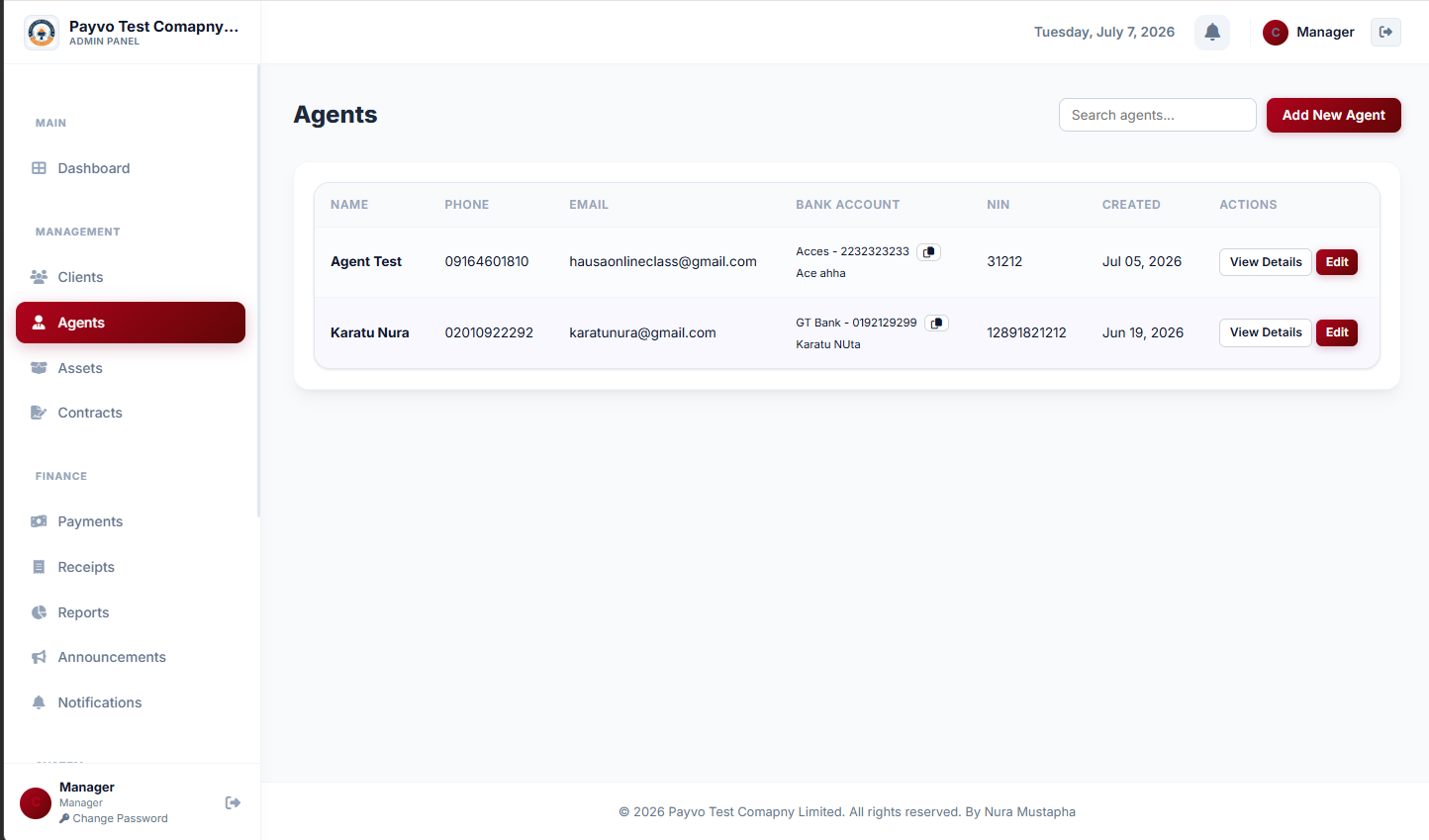 Agent: Agents list page
Step 6: Prioritize Customization and Branding
Your installment management software should reflect your brand, not a generic template. Look for features that allow you to customize company branding. This includes setting your logo, brand colors, and digital signature, which automatically apply to all receipts, contracts, and client-facing documents. This consistency reinforces your brand identity and professionalism.
Step 7: Insist on Real-time Dashboards and Reporting
To make informed decisions, you need real-time data. A critical feature is the ability to view real-time dashboards that provide an at-a-glance overview of your business. This should include key metrics such as total clients, active contracts, amount collected, outstanding balances, and next payment due.
Beyond dashboards, the software must be capable of generating comprehensive reports. You should be able to export payment and contract data as PDF or Excel for accounting, auditing, and record-keeping purposes. Look for systems that also provide weekly company reports via email, summarizing key business performance metrics. This level of insight is invaluable for strategic planning and managing your business payment tracking app Nigeria effectively.
Step 8: Demand High Security and Audit Trails
Given the sensitive nature of financial data, security cannot be an afterthought. The software must track everything securely, offering audit logs that record every action taken within the system. This provides an indisputable trail of activities, crucial for accountability and compliance. For businesses requiring deeper system oversight, API access can also be a valuable feature for integration with other business tools.
> "The true measure of an installment management system isn't just how well it collects payments, but how effectively it builds trust and transparency with every customer interaction."
Step 9: Look for Scalability and Integration Capabilities
As your business grows, your software needs to grow with it. Ensure the solution you choose is scalable, capable of handling an increasing number of clients, contracts, and transactions without performance degradation. While not explicitly a "feature," consider if the software offers API access or integrations with other essential tools you use, such as accounting software or CRM systems. This ensures a cohesive and efficient business ecosystem.
Step 10: Evaluate User Experience and Support
Finally, no matter how feature-rich, software is only effective if it's easy to use. Look for an intuitive user interface that minimizes the learning curve for your staff. Excellent customer support, including documentation, tutorials, and responsive helpdesk services, is also crucial. A cooperative society management software, for instance, needs to be accessible to various staff members with different levels of technical proficiency.
Common Mistakes to Avoid
- Underestimating Automation Needs: Many businesses focus only on basic tracking, ignoring the vast efficiency gains from automated reminders, receipt generation, and commission calculations. This leads to continued manual workload.
- Ignoring Scalability: Choosing a system that works for your current size but can't handle future growth. This forces costly and disruptive migrations later.
- Neglecting Client Communication Features: Failing to prioritize automated client notifications (payment reminders, receipts) can lead to higher default rates and poor customer satisfaction.
- Overlooking Agent Management: For businesses with sales agents, not having integrated agent commission tracking software leads to manual errors, disputes, and demotivated agents.
- Poor Data Security: Opting for cheaper solutions that lack robust security features and audit trails, putting sensitive client and financial data at risk.
- Skipping Customization: Settling for generic interfaces instead of a system that allows branding, which can dilute your professional image.
How to Track and Grow After Launch
Once your installment payment software is up and running, the real work of leveraging its capabilities begins. Tracking and growth are intrinsically linked:
- Monitor Key Performance Indicators (KPIs): Regularly review your dashboard for critical metrics like collection rates, overdue payments, new contracts, and client retention. Focus on trends rather than just individual data points. A real estate payment tracking Nigeria solution should provide clear insights into property sales performance and outstanding balances.
- Analyze Payment Behavior: Use the reporting features to identify patterns in payment behavior. Are certain payment plans more successful? Do reminders at specific intervals yield better results? This data can inform future sales strategies and contract terms.
- Optimize Communication: Test different reminder frequencies and messaging styles. The goal is to be effective without being intrusive. Use the insights from your WhatsApp payment notification system to refine your approach.
- Evaluate Agent Performance: For businesses utilizing agents, leverage the agent tracking and commission features to identify top performers and areas where agents might need additional training or support. This data is crucial for optimizing your sales force.
- Gather Client Feedback: Proactively seek feedback from your clients on their experience with the automated notifications and payment process. Their input can highlight areas for improvement in your service delivery.
- Utilize Reporting for Financial Health: Generate regular financial reports for accounting and auditing. This ensures compliance and provides a clear picture of your cash flow and revenue.
- Iterate and Improve: Business is dynamic. Use the insights gained from your installment management software to continuously refine your sales processes, contract terms, and customer engagement strategies.
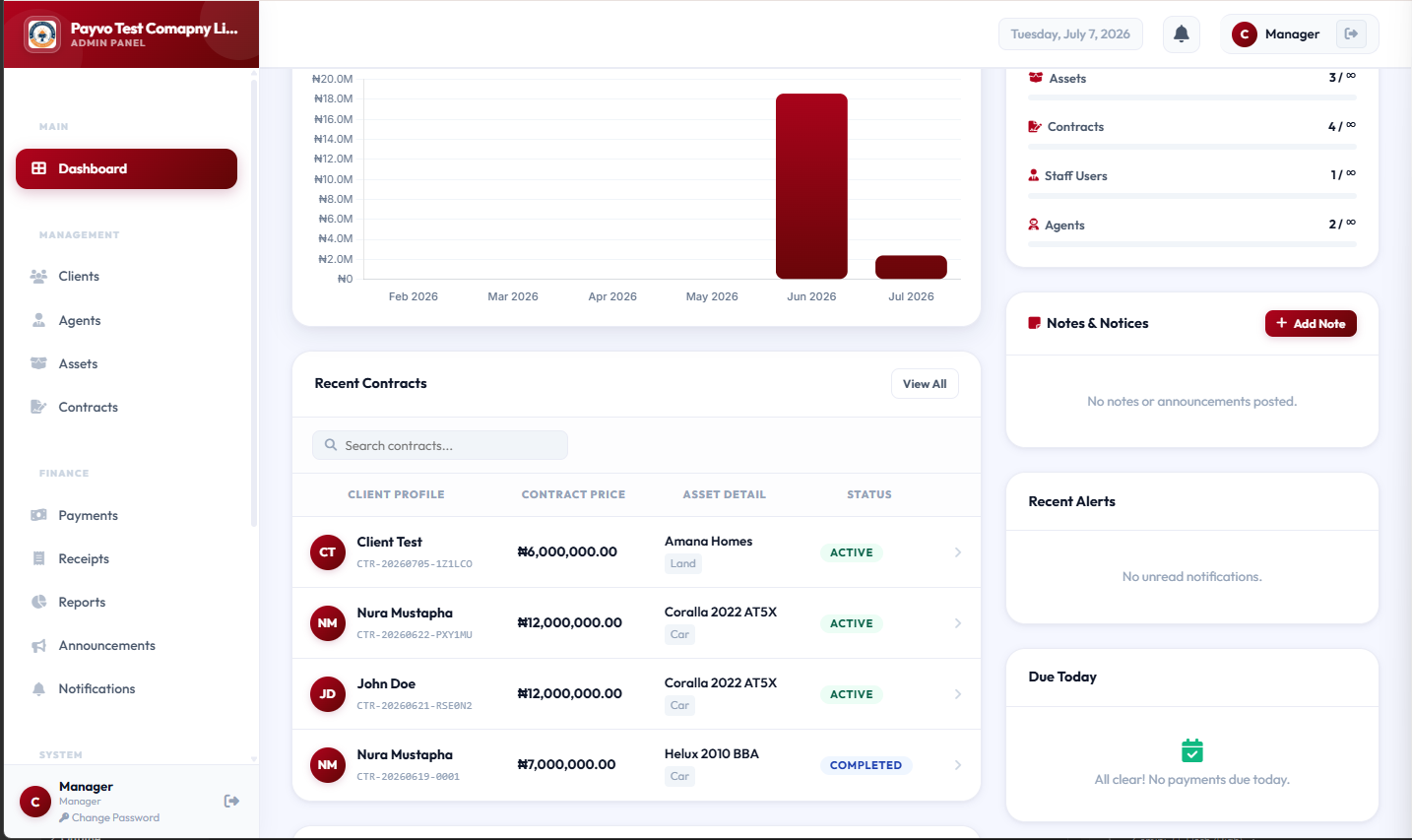 Dashobard (top)
Frequently Asked Questions
Q1: What is installment management software and who needs it?
Installment management software is a specialized business payment tracking app Nigeria designed to automate the process of selling goods or services on a payment plan. It tracks client details, contract terms, payment schedules, and collections. Businesses like real estate developers, car dealers selling on hire purchase, cooperative societies, equipment leasing companies, and building material suppliers selling on credit all benefit immensely from such a system to streamline operations and improve cash flow.
Q2: How does installment payment software help with cash flow?
By automating payment reminders and tracking overdue payments, installment software significantly improves collection rates. It provides real-time visibility into outstanding balances and upcoming payments, allowing businesses to forecast cash flow more accurately and take proactive measures to address potential shortfalls.
Q3: Can this software manage agent commissions effectively?
Yes, a key feature of advanced installment software is robust agent commission tracking. It allows you to assign agents to specific contracts, automatically calculates their commission based on payments received, and provides a clear history of their earnings and payouts. Some systems even offer agent self-tracking portals for transparency and efficiency. You can learn more about how this works on a dedicated agent tracking page.
Q4: Is it secure to store client and financial data on these platforms?
Reputable installment management software prioritizes data security. Look for platforms that offer features like role-based access control, audit logs (to track all system activities), and secure data encryption. Always check the privacy policy and terms of service of any software provider to understand their data handling practices.
Q5: How important are automated client notifications?
Automated client notifications are crucial. They ensure clients receive timely reminders for upcoming payments, confirmations for payments made, and updates on their contract status. This transparency builds trust, reduces defaults, and significantly cuts down on the manual effort required for customer service and follow-up calls, providing a superior client experience.
 Descriptive Alt Text
Q6: Can I customize the receipts and contracts with my company's branding?
Absolutely. A good installment management software will allow for extensive customization of client-facing documents. You should be able to upload your company logo, set brand colors, and even include a digital signature on receipts and contracts. This reinforces your brand identity and professionalism with every interaction.
Q7: What kind of reports can I expect from such software?
You can expect a wide range of reports, including payment history reports, outstanding balance reports, contract summaries, agent commission reports, and cash flow projections. These reports are often exportable in formats like PDF or Excel, making them easy to use for accounting, auditing, and strategic planning. A comprehensive contract management software Nigeria should offer detailed reporting capabilities.
Q8: How does a WhatsApp payment notification system integrate with this?
Many modern installment management systems offer direct integration with WhatsApp, allowing automated payment reminders, payment confirmations, and other critical alerts to be sent directly to your clients' WhatsApp numbers. This leverages a widely used communication channel to ensure messages are seen and acted upon promptly.
 Descriptive Alt Text
Ready to Streamline Your Installment Sales?
The right installment payment software can transform how you manage your business, from client acquisition to payment collection and agent management. Don't let manual processes hold you back. Explore how a comprehensive platform can revolutionize your operations and boost your bottom line. To see a detailed overview of features, visit our features page, or if you're ready to get started, you can register for an account today.