In Nigeria's dynamic market, where cash flow is king and customer relationships are paramount, businesses offering installment payments face a unique challenge. Juggling dozens, or even hundreds, of customer payment schedules, outstanding balances, and receipts can quickly overwhelm even the most organised entrepreneur. The question isn't if a mistake will happen with manual tracking, but when – leading to lost revenue, strained customer trust, and wasted time.
 Busy nigerian market scene with traders and customers
The Evolving Landscape of Installment Sales in Nigeria (2026)
The Nigerian economy in 2026 continues to see a rise in flexible payment options. From real estate developers in Abuja offering payment plans for new plots to electronics retailers in Lagos selling goods on hire purchase, installment sales are a lifeline for both businesses and consumers. This trend is driven by various factors: the need for affordability for high-value items, increasing access to credit, and a growing consumer base eager for quality products and services. Businesses that embrace this model can significantly expand their market reach. For instance, a property developer offering plots for ₦5,000,000 – ₦25,000,000 with a flexible payment plan can attract more buyers than one demanding an upfront lump sum. Similarly, a solar equipment leasing company might offer a ₦300,000 inverter system on monthly payments, making clean energy accessible to more households.
However, this accessibility comes with administrative complexity. Managing these arrangements manually with ledgers or basic spreadsheets often leads to errors, forgotten due dates, and disputes. According to a 2025 survey by a local business association, over 60% of Nigerian SMEs offering installment plans reported difficulties in accurately tracking payments and outstanding balances, impacting their cash flow projections and customer satisfaction. This highlights a critical need for more robust systems to handle the intricacies of installment-based transactions.
What You Need Before You Start
Before diving into installment management software, ensure you have these foundational elements in place:
- Clear Installment Policies: Define your payment frequencies (weekly, monthly, quarterly), late payment penalties, and default procedures.
- Customer Agreement Templates: Standardized contracts outlining terms, conditions, and payment schedules.
- Dedicated Personnel: Even with software, someone needs to oversee data entry, payment reconciliation, and customer communication.
- Reliable Internet Access: Essential for cloud-based software. Budget around ₦5,000 - ₦15,000/month for consistent internet data costs.
- Basic Hardware: A smartphone or tablet (₦60,000 - ₦180,000) for field agents or a basic laptop/desktop (₦150,000 - ₦400,000) for office use.
- Electricity/Power Backup: Uninterrupted power supply is crucial. Factor in ₦10,000 - ₦50,000/month for electricity or generator fuel.
Step-by-Step: Implementing Installment Management Software in Your Business
Implementing an installment management software effectively transforms how your Nigerian business handles flexible payments. It moves you from reactive problem-solving to proactive financial management.
Step 1: Define Your Business Needs and Objectives
Before choosing any software, clearly outline what you want to achieve. Are you a real estate developer in Kano looking to manage hundreds of land payment plans? A car dealer in Kaduna needing to track hire-purchase agreements? Or a cooperative society in Ibadan seeking to streamline member contributions? Your objectives might include reducing payment defaults, improving cash flow visibility, saving administrative time, or enhancing customer satisfaction. Understanding these goals will guide your software selection.
Consider the volume of transactions you handle and the complexity of your payment schedules. For a business with just a few installment contracts, a simple spreadsheet might suffice temporarily. However, as you grow to dozens or hundreds of customers, the limitations of manual tracking become apparent, making dedicated software a necessity.
Step 2: Research and Select the Right Software
This is a critical step. Look for an installment management software that specifically caters to the Nigerian market and its unique operational realities. The software should support Naira transactions, understand local payment frequencies, and ideally offer features relevant to your industry, whether it's real estate payment tracking Nigeria or car dealer installment software. Read reviews, check out feature lists, and consider starting with a basic plan to test functionality.
When evaluating options, prioritize ease of use, robust reporting features, and reliable customer support. A good software solution should simplify your daily operations, not complicate them further. Look for solutions that are specifically built to handle installment management rather than generic accounting software that requires extensive customisation.
Step 3: Set Up Your Business Profile and Import Existing Data
Once you've selected your software, the first task is to configure your business details. This includes your company name, contact information, and any branding elements you wish to incorporate into receipts or communications. Next, you'll need to migrate your existing customer, contract, and payment data into the new system. This can be a significant undertaking if you're moving from paper records or complex spreadsheets. Most reputable software providers offer tools for bulk data import, often via CSV files.
This is where a dedicated installment management software Nigeria like Payvo can prove invaluable. It provides a structured environment for adding new customers, products (assets), and contracts. For instance, you can easily add all your property listings, assign them unique IDs, and then link them to specific customer contracts. Many platforms also offer one-time setup and implementation services, which might cost between ₦50,000 - ₦200,000, especially if you require custom data migration or initial training.
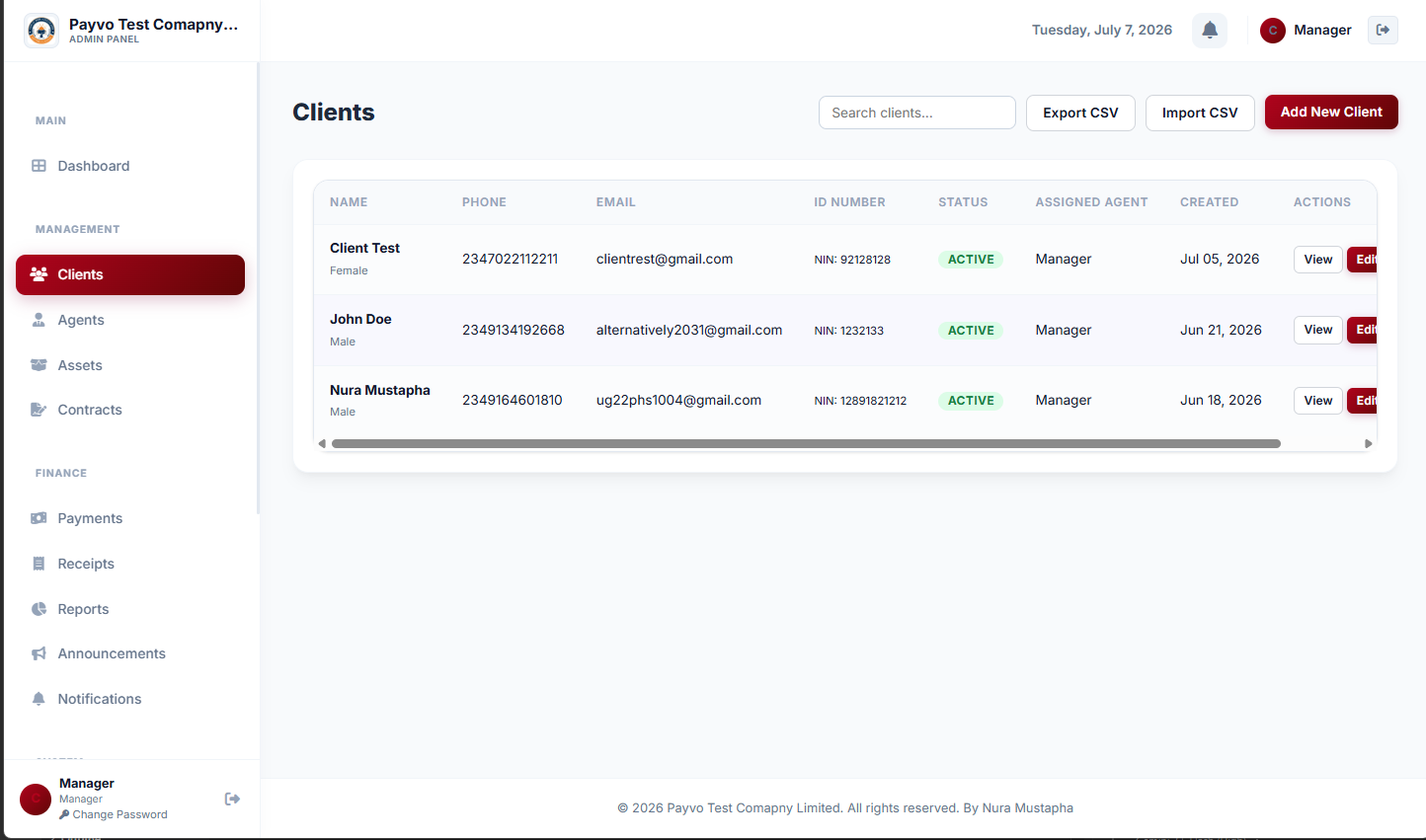 Client: Clients list page
Step 4: Register Customers and Define Assets
The core of any installment system is accurate customer and asset information. Start by registering each customer, capturing essential details like their name, contact information, and any unique identifiers. Then, add the assets or products they are purchasing. For a building material supplier selling on credit, this might be specific quantities of cement or roofing sheets. For a solar company, it's the solar panel system or inverter.
The goal here is to create a clear digital record that links the customer to the specific item they are paying for in installments. This prevents confusion, especially when managing multiple similar items or properties.
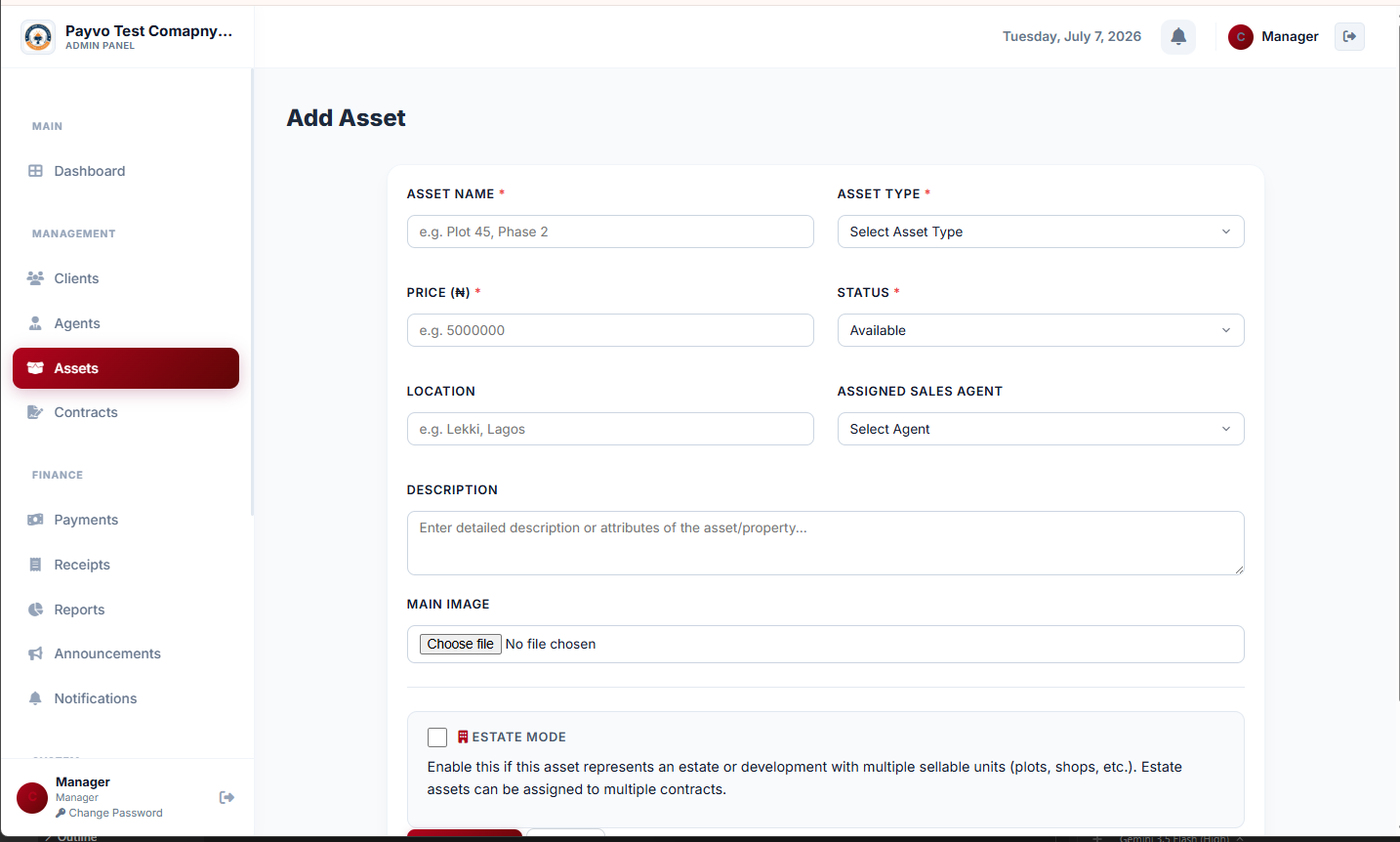 Assets: Add asset page
Step 5: Create Installment Contracts and Payment Schedules
This is where the software truly streamlines your operations. Instead of manually calculating payment dates and amounts, you'll use the software to generate contracts. Input the total agreed amount, the initial deposit, the payment frequency (e.g., weekly, monthly), and the duration of the installment plan. The software will then automatically generate a detailed payment schedule, showing each installment amount and its due date.
A good contract management software Nigeria will also allow you to include specific terms and conditions directly within the digital contract, ensuring transparency for both you and your customer. This feature is particularly useful for businesses like hire-purchase dealers, where precise terms are crucial.
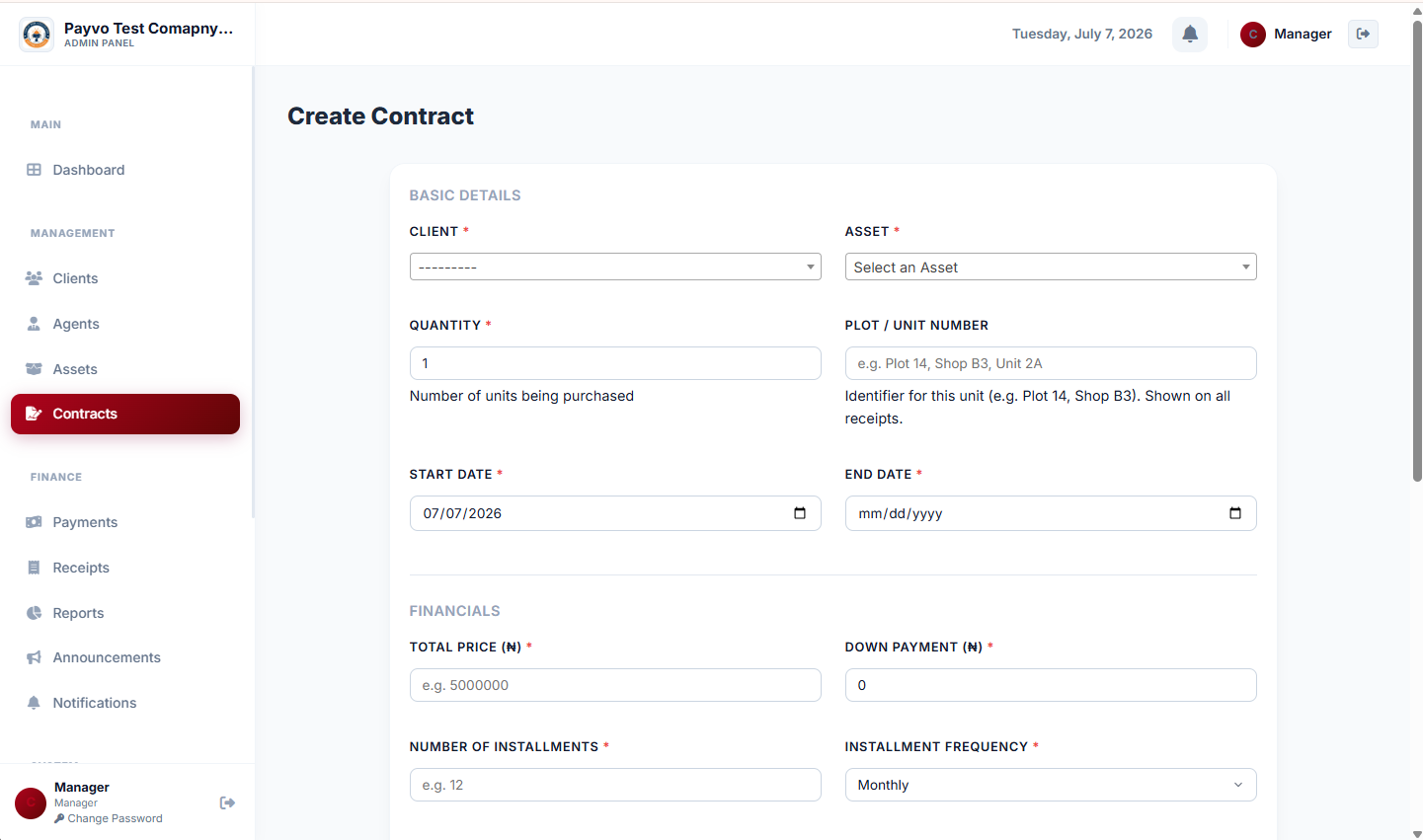 Management: Add contract (top)
Step 6: Record Payments and Generate Receipts
As customers make payments, you'll record these transactions within the software. Whether it's a cash payment, bank transfer, or POS transaction, accurately logging each payment is vital. The software will automatically update the customer's outstanding balance, providing a real-time view of their payment status.
Crucially, the system should also be able to generate professional digital receipts. This not only provides proof of payment for your customer but also maintains an organised audit trail for your business. Imagine being able to instantly generate a receipt for a customer who just paid ₦50,000 for their land installment, eliminating manual receipt books and potential errors. This functionality is a cornerstone of a reliable receipt generator app Nigeria.
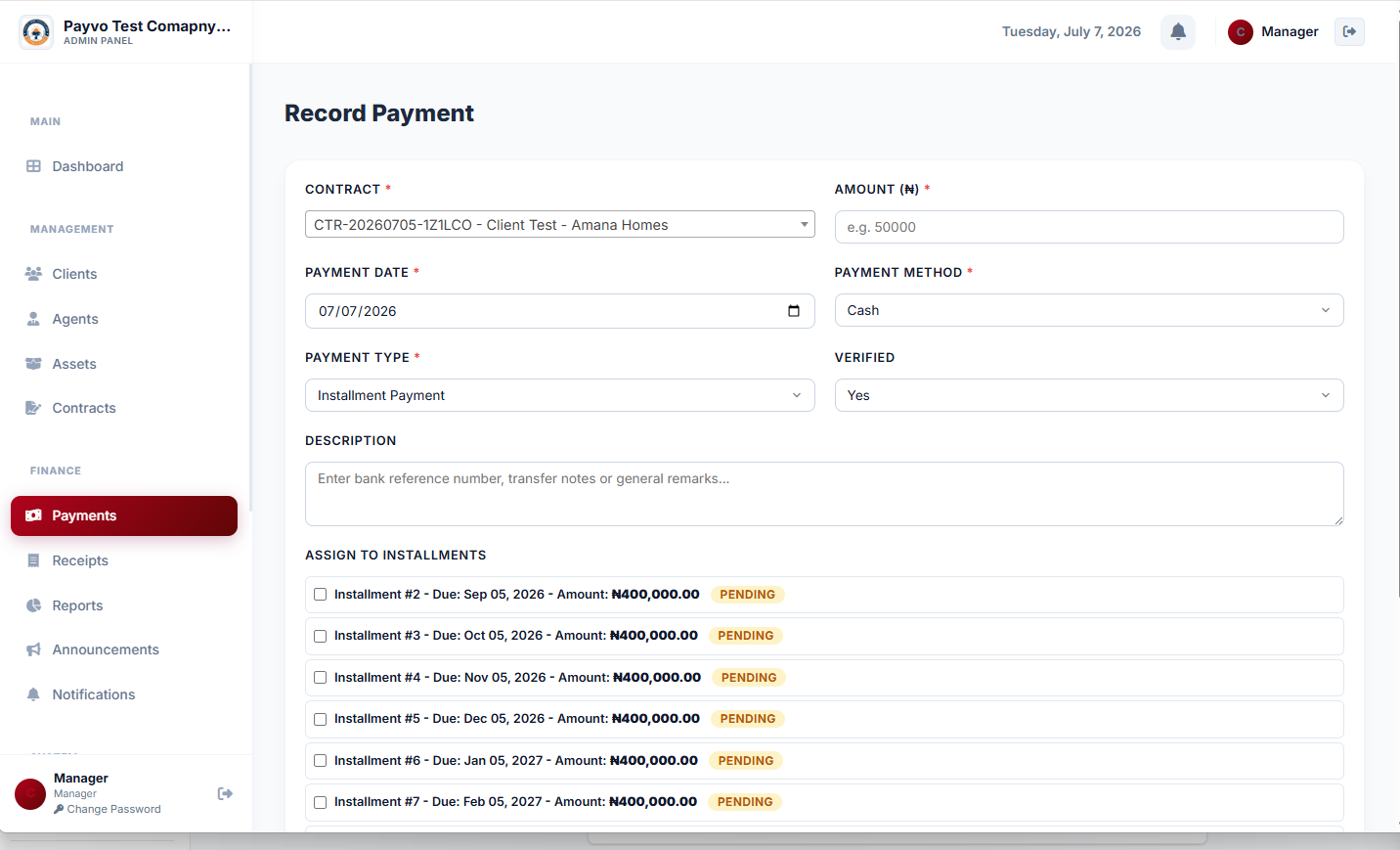 Finance: Record Payments Page
Step 7: Monitor Balances, Due Dates, and Overdue Accounts
One of the most significant benefits of installment management software is the ability to easily track who has paid, who is due to pay, and who is overdue. The dashboard should provide a clear overview of all active contracts, highlighting upcoming payments and flagging overdue accounts. This allows you to proactively follow up with customers, rather than discovering late payments after they've become a problem.
Some software solutions also offer automated WhatsApp payment notification system features, sending reminders to customers before a payment is due or alerting them about overdue amounts. This can significantly reduce the effort required for manual follow-ups and improve collection rates.
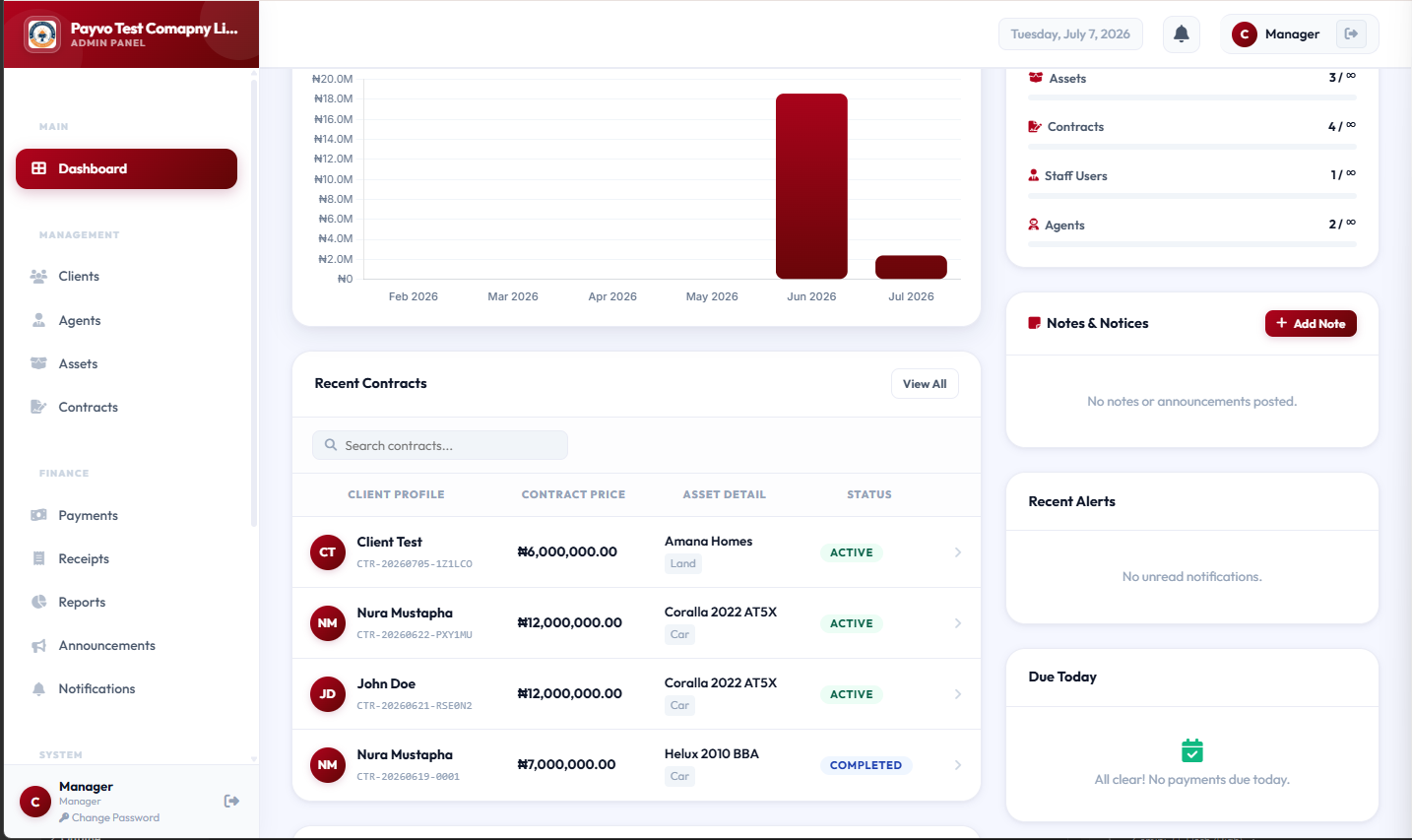 Dashobard (top)
Common Mistakes to Avoid
- Underestimating Setup Time: Migrating data and configuring settings takes time. Don't rush the initial setup, as errors here can cause long-term issues.
- Ignoring Staff Training: Even the best software is useless if your team doesn't know how to use it. Invest in training (which might cost ₦80,000 - ₦250,000 for an external consultant) to ensure smooth adoption.
- Neglecting Data Backup: While cloud software usually handles this, always understand your provider's backup policies. Data loss can be catastrophic.
- Over-reliance on Automation: While automation is great, regularly review automated reports and notifications to ensure accuracy and effectiveness.
- Choosing Feature Over Simplicity: Don't pick software with too many complex features you don't need. Focus on what solves your core problem of how to track installment payments.
- Disregarding Local Context: Ensure the software is adaptable to Nigerian business practices, such as specific payment methods or local reporting requirements.
How to Track and Grow After Launch
After successfully implementing your installment management software, the journey shifts to continuous monitoring and growth.
Key Performance Indicators (KPIs) to Watch:
- Collection Rate: What percentage of scheduled payments are you successfully collecting on time?
- Average Days Overdue: How long, on average, do payments remain outstanding after their due date?
- Customer Retention: Are customers happy with the payment process, leading to repeat business?
- Administrative Time Saved: How much time are your staff saving on manual tracking and reconciliation?
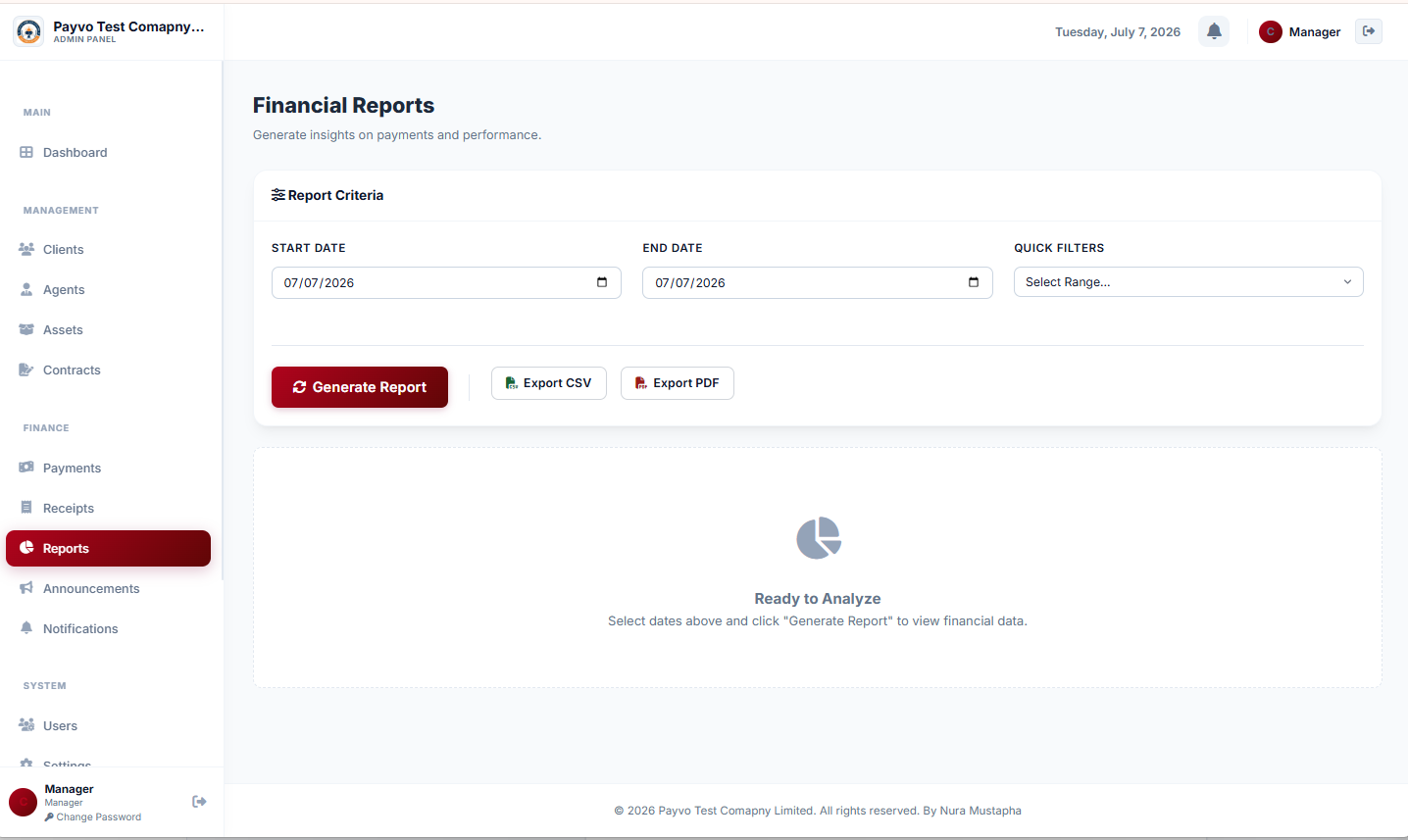 financial reports
Growth Tactics:
- Agent Performance Tracking: If you use sales agents, leverage the software's agent commission tracking software features to monitor their collections and reward top performers.
- Enhanced Customer Communication: Use automated notifications for payment reminders, promotions, and new product announcements. A well-timed WhatsApp message can significantly improve collection rates.
- Data-Driven Decision Making: Use your payment data to inform future sales strategies, credit policies, and product offerings. For instance, understanding payment patterns can help you structure more attractive installment plans.
- Scalability: As your business grows, ensure your chosen software can scale with you. A robust installment management system should handle an increasing number of customers and contracts without performance issues.
Frequently Asked Questions
What kind of businesses benefit most from installment management software?
Businesses that sell high-value products or services on credit or payment plans benefit immensely. This includes real estate developers, car dealers (especially for hire purchase), electronics and furniture retailers, solar equipment leasing companies, building material suppliers selling on credit, and cooperative societies managing member contributions. Essentially, any business that needs to track multiple scheduled payments from customers will find such software invaluable.
How much does installment management software cost in Nigeria?
Costs vary based on features and scale. A basic plan for a small business might range from ₦5,000 - ₦15,000/month. For growing businesses needing more robust features like agent management or advanced reporting, expect to pay between ₦25,000 - ₦70,000/month. There might also be one-time setup fees (₦50,000 - ₦200,000) for custom implementations or training.
Can installment management software integrate with WhatsApp for payment notifications?
Yes, many modern installment management solutions, including Payvo, offer WhatsApp payment notification system features. This allows businesses to send automated payment reminders, overdue notices, and receipts directly to customers via WhatsApp, improving communication and collection efficiency.
Is this type of software suitable for cooperative society management?
Absolutely. Cooperative societies often manage regular contributions and repayments from members. An installment management software can streamline the tracking of these payments, manage member accounts, generate statements, and provide clear financial oversight, acting as an effective cooperative society management software.
How does this software help with agent commission tracking?
For businesses that use sales agents, some installment management software includes features for agent commission tracking software. This allows you to link payments to specific agents, calculate commissions based on collected amounts, and provide agents with dashboards to track their own sales and collections, promoting transparency and accountability.
What if I only have a few installment customers? Do I still need software?
For a very small number of customers (e.g., less than 10), manual tracking with a simple spreadsheet might be manageable. However, as your customer base grows, or if the complexity of your payment schedules increases, manual methods quickly become prone to errors and consume significant time. Investing in basic installment management software early can prevent future headaches and lay a strong foundation for growth.
Ready to Streamline Your Installment Sales?
Managing installment payments doesn't have to be a headache. With the right tools, you can transform a complex process into a smooth, efficient operation that enhances customer satisfaction and boosts your bottom line. If you're ready to move beyond manual tracking and gain clear insight into your business's payment landscape, explore how a dedicated installment management software can help. Visit Payvo's official website today to learn more about its features and how it can be tailored to your business needs, or register for an account to see it in action.