"Just use a notebook!" "Excel is enough!" "Whatsapp groups are all you need!" If you run a business in Nigeria selling products or services on installment, you've probably heard this advice a hundred times when trying to figure out how to track overdue installment payments. Everyone means well, but let's be honest: in 2026, relying solely on these methods for overdue payment tracking is like trying to cross Lagos traffic in a wheelbarrow. It might work for a minute, but you'll get stuck, frustrated, and probably lose money. This article is going to show you why that common advice is actually setting you up for failure and, more importantly, give you a real, step-by-step guide to managing overdue payments effectively.
 Nigerian small business owner reviewing ledgers with a
The Reality Check: What Nobody Tells You About Overdue Payments
We all know the dream: sell an item, customer pays installments, everyone is happy. But the reality? Some customers will inevitably miss payments. It's not always malice; sometimes it's forgetfulness, a sudden expense, or genuine hardship. The problem isn't if payments will be overdue, but how you handle them when they are. Most business owners in Nigeria, from the car dealer in Kaduna selling hire purchase vehicles to the real estate developer in Abuja offering land on installment, underestimate the hidden costs of poor overdue payment management.
Think about it. Each time you have to chase a customer for an overdue payment, that's time spent. Time that could be used making new sales, improving your product, or strategizing. If you're manually sifting through notebooks or complicated Excel sheets to identify who owes what, you're not just wasting time; you're actively losing money. A small business owner might spend ₦500 to ₦3,000 on transportation for a single follow-up visit, or ₦300 to ₦800 for 100 SMS reminders. Multiply that by dozens of customers, and you see the problem. Even the cost of a basic feature phone for calls and SMS, which runs about ₦10,000 to ₦25,000, becomes an inefficient expense if you're not tracking smartly.
Here's the kicker: manual tracking often leads to errors. A misplaced payment entry, a miscalculated balance, or a forgotten due date can escalate a minor delay into a full-blown dispute. I've seen businesses in Onitsha Main Market lose loyal customers over ₦5,000 discrepancies because their records were a mess. That's not just a lost payment; it's a damaged reputation and lost future sales.
What You Actually Need to Get Started
Before we dive into the steps, let's be honest about what's truly essential for effective overdue installment payment tracking. Forget the fancy jargon for a moment.
Non-Negotiables (You absolutely need these):
- A Clear Record-Keeping System: This is paramount. Whether it's a basic smartphone (₦45,000 - ₦90,000 for a decent one that can run apps) or dedicated installment management software Nigeria offers, you need a central place for every customer, every contract, every payment, and every due date. Scattering information across WhatsApp chats and physical ledgers is a recipe for disaster.
- Internet Access: For any modern solution, you'll need a reliable data plan. Expect to spend between ₦2,500 and ₦7,000 monthly, depending on your provider and usage. It’s a small price for the efficiency it brings.
- Communication Channels: You need to be able to reach your customers. A basic feature phone (₦10,000 - ₦25,000) for calls and SMS is a must, but integrating WhatsApp payment notification system capabilities will significantly improve your reach.
- Defined Payment Terms: Before you even sell, you must have clear, written installment agreements. What's the payment frequency? What are the penalties for late payment? No ambiguity, please.
- Patience and Persistence: Collecting overdue payments is not a one-and-done task. It requires consistent follow-up and a firm but understanding approach.
- A Dedicated Business Payment Tracking App Nigeria Offers: While a simple accounting/tracking software subscription might run you ₦1,500 to ₦5,000 monthly, the return on investment in saved time and reduced losses is significant. This moves you beyond just tracking to actual installment collection management.
- Automated Reminders: Imagine your system sending an SMS or WhatsApp message automatically when a payment is due or overdue. That's a game-changer.
- Agent Commission Tracking Software: If you have agents on the field, especially in real estate or hire purchase, knowing their performance and commissions helps motivate them for collections. Payvo offers agent tracking features to help with this.
- Digital Receipt Generator: Professional, instant receipts build trust and prevent disputes. A receipt generator app Nigeria businesses can use saves printing costs (₦1,000 - ₦3,000 per 100 slips) and provides an undeniable record.
The Complete Step-by-Step Breakdown: How to Track Overdue Installment Payments
Right, so you're ready to get serious about overdue payment tracking. This isn't just about finding out who owes you money; it's about building a system that minimizes future defaults and maximizes your cash flow.
Step 1: Centralize Your Customer and Contract Data
This is the foundation. You cannot effectively track overdue payments if your customer details, what they bought, and their payment schedule are scattered across notebooks, WhatsApp chats, and random files. Every single piece of information needs to live in one accessible place.
Start by gathering all existing customer information: names, contact details, products purchased, agreed prices, initial deposits, and the full payment schedule. For real estate developers in Kano or building material suppliers, this means every plot, every bag of cement, and every payment plan. If you're using spreadsheets, ensure they are meticulously updated. For a more robust solution, consider a dedicated contract management software Nigeria businesses can rely on.
Step 2: Define and Input Clear Payment Schedules
Once your customer and contract data is centralized, the next critical step is to accurately define each customer's payment schedule. This isn't just about the total amount; it's about breaking it down into specific installment amounts and due dates.
For a car dealer, this means the monthly hire purchase payment and the exact date it's expected. For a cooperative society, it's the weekly contribution and its deadline. Input these schedules into your chosen system. This clarity is what allows you to identify overdue payments at a glance.
Step 3: Meticulously Record Every Payment Received
This might sound obvious, but it's where many businesses falter. Every single payment, no matter how small, needs to be recorded immediately and accurately against the correct customer and contract. This includes cash, bank transfers, POS payments, and even mobile money.
A small provision shop owner in Surulere might take in ₦187,500 in payments over a week, and if even one ₦5,000 installment isn't recorded, it throws off the entire balance. Always issue a receipt – digital or physical. This not only serves as proof for the customer but also for your own records.
Step 4: Systematically Identify Overdue Accounts
Now, with all your data in one place and payments recorded, you can easily identify overdue installment payments. This is where the magic of a good system comes in. Instead of manually checking each customer's file, your system should highlight who is late and by how much.
For businesses with many customers, like a solar equipment leasing company with hundreds of clients across different states, manually identifying overdue accounts is a nightmare. A good business payment tracking app Nigeria offers will generate an "overdue" report or flag these accounts automatically. This gives you a clear list to work from.
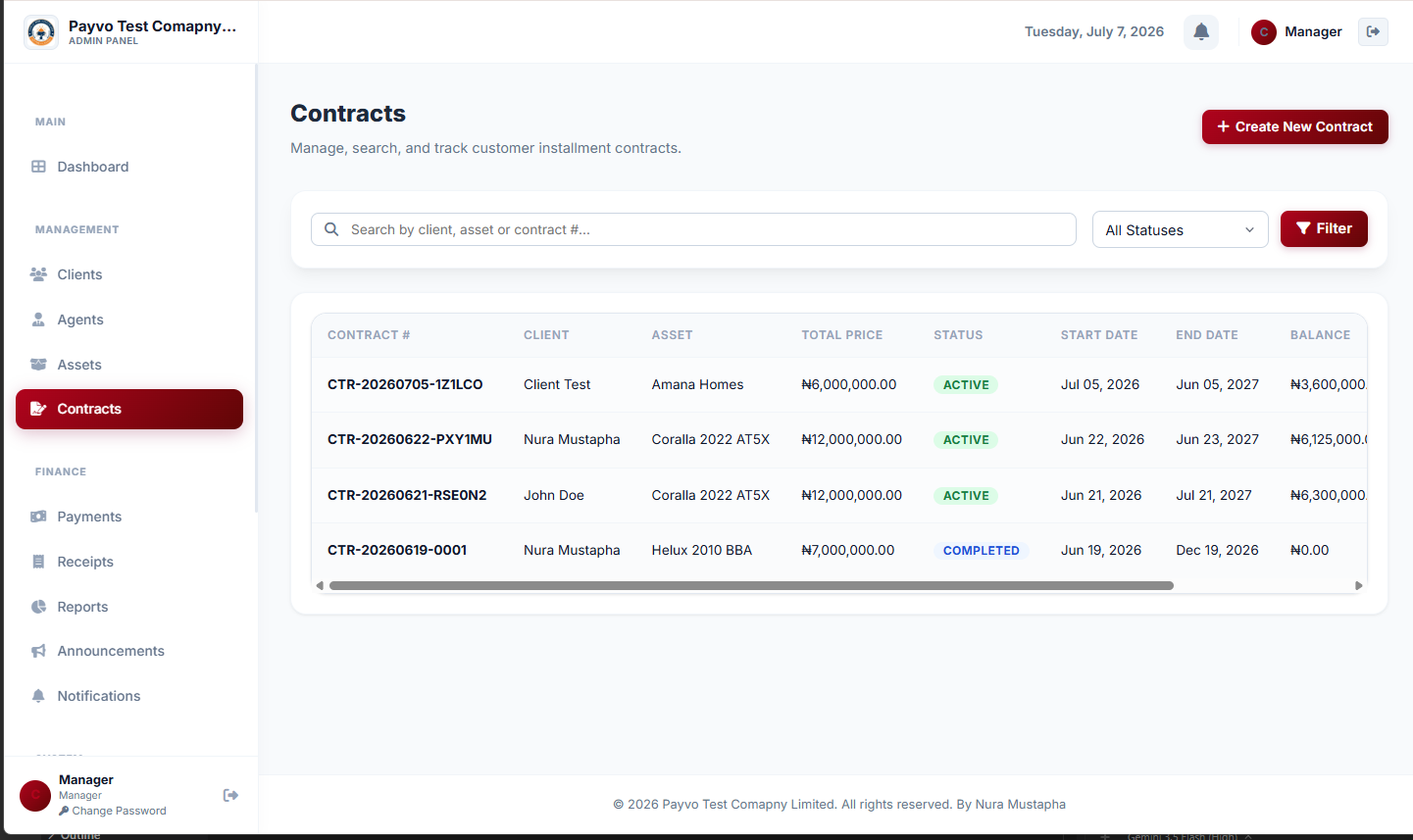 Contracts list page in Payvo showing overdue payments
Step 5: Implement a Multi-Channel Follow-Up Strategy
Simply knowing who is overdue isn't enough; you need to act. Your follow-up strategy should be structured and consistent. Start with gentle reminders and escalate if payments remain uncollected.
- Automated Reminders (Day 1-3 overdue): The moment a payment is overdue, send an automated SMS or WhatsApp message. Something simple like, "Dear [Customer Name], Your installment of ₦[Amount] for [Product] was due on [Date]. Please make payment soon. Thank you." A WhatsApp payment notification system can handle this efficiently.
- Personalized Calls (Day 3-7 overdue): If no payment is received, a personal call is next. Be polite but firm. Understand their situation, but also reiterate their commitment.
- Escalated Reminders (Day 7-14 overdue): If still no payment, send a more direct message, perhaps mentioning the next steps as per your contract terms.
- In-Person Visits/Agent Follow-up (Day 14+ overdue): For significant amounts or persistent defaults, an in-person visit by you or an agent might be necessary. This is especially common for real estate payment tracking Nigeria where larger sums are involved. If you use agents, make sure you have an agent commission tracking software in place to incentivize their collection efforts.
Step 6: Document All Communication and Actions
Every call, every message, every promise made, and every action taken regarding an overdue payment must be documented. This is your shield against future disputes and your roadmap for further collection efforts.
If a customer promises to pay by Friday, note it down. If they claim they already paid, you have your records to cross-reference. This meticulous documentation is crucial, especially if you ever need to involve legal counsel (which could cost ₦20,000 - ₦70,000 for an initial consultation).
Step 7: Review and Adjust Your Collection Process Regularly
Collection is not a static process. What worked last month might not work this month. Regularly review your overdue payment tracking reports. Which customers are consistently late? Are certain agents more effective at collections? Are there patterns in when payments become overdue?
Perhaps you need to adjust your payment terms, offer different payment methods, or refine your follow-up scripts. This continuous improvement ensures your installment collection management process remains efficient and effective.
5 Mistakes That Cost Nigerian Business Owners the Most
I've seen these errors play out countless times, from the bustling markets of Balogun to the quiet streets of Aba. These mistakes don't just cost you money; they drain your energy and damage your business's reputation.
- Relying Solely on Memory or Scattered Notes: This is probably the biggest culprit. A shoe seller in Aba market, juggling dozens of customers, can't possibly remember every single payment due. When you can't quickly identify who owes what, you miss collection opportunities, leading to increased overdue installment payments and eventually, write-offs. This lack of a clear business payment tracking app Nigeria businesses can trust is a major hurdle.
- Lack of Clear Contract Terms: If your customers aren't crystal clear on the payment schedule, due dates, and consequences of late payments before they sign, you're setting yourself up for disputes. Ambiguity is a collector's worst enemy. I've seen car dealers lose cases because their hire purchase agreements were vague.
- Inconsistent Follow-Up: Sending one reminder and then forgetting about it is as bad as not sending any. Customers who know you're not serious about collections will prioritize other payments. Consistency, even if it's just a simple WhatsApp payment notification system, is key.
- Not Documenting Every Interaction: "But he promised he'd pay last Tuesday!" "She said she transferred the money!" Without documented communication – call logs, message timestamps, payment receipts – it's your word against theirs. This makes overdue payment tracking incredibly difficult and legal action almost impossible.
- Failing to Analyze Overdue Trends: Are most of your overdue payments from a specific product line? Do customers in a particular area struggle more? Ignoring these patterns means you're not addressing the root cause. This is where cooperative society management software or real estate payment tracking Nigeria tools that offer reporting can be incredibly insightful.
How to Know If You're on Track (Success Metrics)
So, how do you measure if your efforts to track overdue installment payments are actually working? It's not just about getting money in; it's about efficiency and reducing future headaches.
- Reduced Days Sales Outstanding (DSO): This is a key metric. It measures the average number of days it takes for your business to collect revenue after a sale has been made. If your DSO is consistently dropping, it means you're collecting faster.
- Lower Delinquency Rate: Calculate the percentage of your total outstanding receivables that are currently overdue. A declining percentage means fewer customers are falling behind.
- Improved Collection Efficiency: Look at how much of your overdue debt you manage to collect within a specific period (e.g., within 30 days of being overdue). A higher percentage here shows your collection efforts are effective.
- Fewer Disputes: If customers are less frequently disputing balances or claiming they've paid when they haven't, your record-keeping and communication are likely improving. This also means your receipt generator app Nigeria solution is working well.
- Agent Performance (if applicable): If you use agents, track their individual collection rates for overdue accounts. This allows you to identify top performers and areas for training. This is where an agent commission tracking software can shine, showing you which agents are most effective at bringing in those overdue funds.
- Cash Flow Consistency: Are you experiencing fewer unexpected cash flow gaps due to uncollected installments? Smoother cash flow is a direct indicator of effective overdue payment tracking.
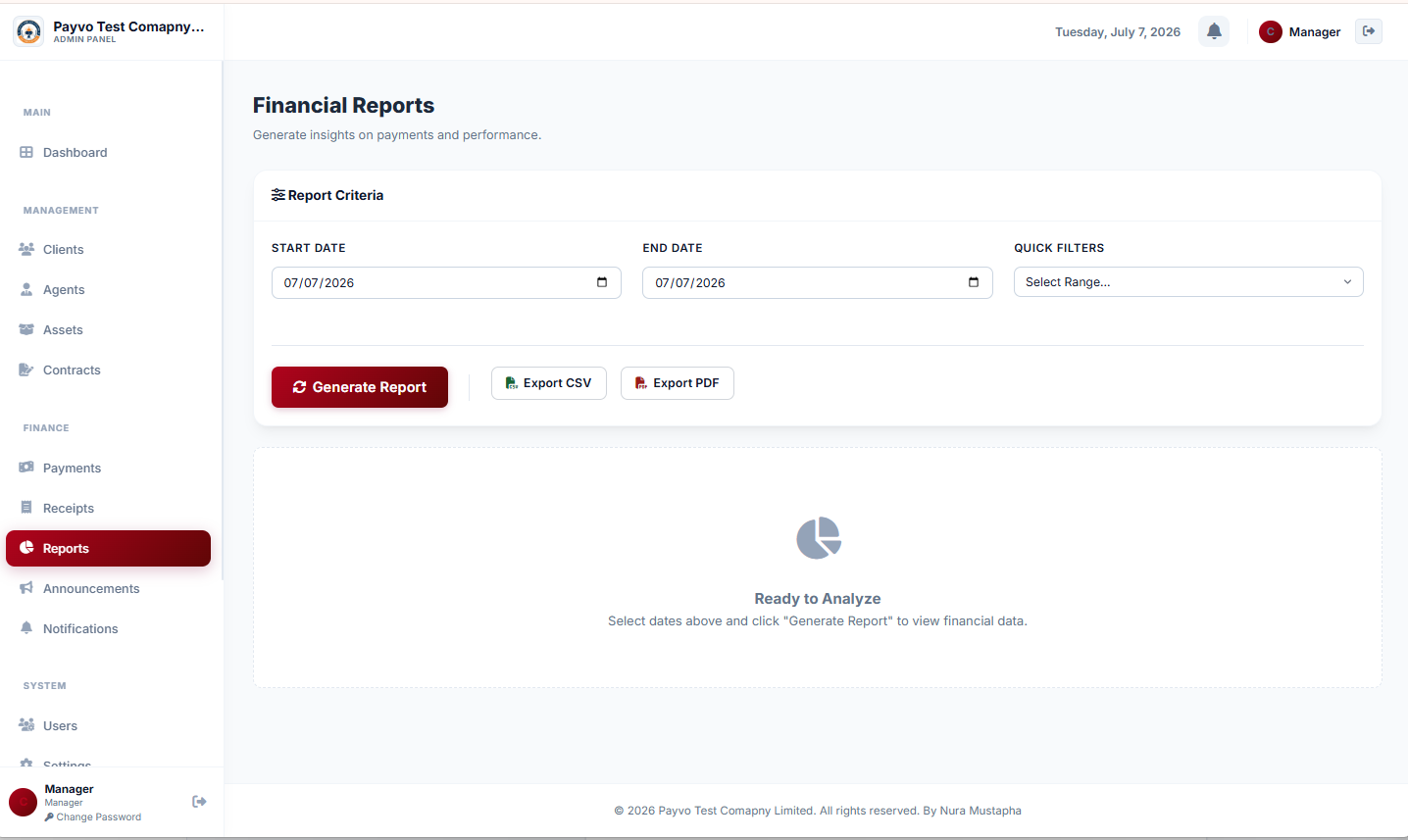 Finance: Financial Reports Page
Real Questions People Ask (FAQ)
How can I effectively track installment payments for my real estate business in Nigeria?
For real estate payment tracking Nigeria, the most effective way is to use a dedicated contract management software Nigeria solution. This allows you to centralize buyer details, plot information, initial deposits, detailed payment schedules, and all received payments. You'll get clear visibility on who is current, who is due, and who is overdue, preventing manual errors that often plague large-scale property sales.
What's the best way to manage overdue payments for hire purchase vehicles as a car dealer?
As a car dealer, managing hire purchase is all about meticulous record-keeping and consistent follow-up. The best approach involves using car dealer installment software that can automatically flag overdue accounts, send reminders via a WhatsApp payment notification system, and track all communication. This ensures you know exactly which customer needs a call or a follow-up visit.
Is there a good business payment tracking app Nigeria can use for my small business?
Absolutely! Many local solutions exist, but you need one that's designed for installment sales. Look for a business payment tracking app Nigeria offers that allows you to easily add customers, create payment plans, record payments, and generate a receipt generator app Nigeria businesses can trust. This moves you beyond complex spreadsheets and notebooks.
How can I use WhatsApp for installment collection management without losing track of payments?
WhatsApp is excellent for communication, but it's a terrible financial ledger. To use it effectively for installment collection management, you need a system that integrates with WhatsApp for sending notifications and reminders, but stores all payment data and contract details centrally. This way, the messages are just a tool, not your primary record.
What are the legal implications of overdue installment payments in Nigeria, and how can proper tracking help?
The legal implications of overdue installment payments in Nigeria can range from contract breach to potential asset repossession (depending on your agreement). Proper overdue payment tracking, with meticulously documented payment histories, clear contract terms, and records of all communication, is your strongest defense. It provides undeniable evidence if you ever need to pursue legal action, saving you significant legal consultation fees (₦20,000 - ₦70,000) and time.
Your Next Move
If managing overdue installment payments feels like a constant battle, it's time to equip your business with the right tools. Stop losing money and sleep over scattered records. Take the first step towards organized installment collection management today. Explore how Payvo can transform your payment tracking by visiting our public home page or register for an account to see it in action.