Everyone tells you that tracking monthly apartment payments is simple, right? Just a spreadsheet, maybe a notebook, and a good memory. That's the common advice you hear from consultants who've probably never managed a single property in Lagos or Abuja. But let me tell you, as someone who’s seen countless real estate developers and property managers struggle, that approach is a recipe for disaster. It's not simple at all; it's a constant battle against forgotten due dates, misplaced receipts, and mounting tenant complaints. I’m here to tell you why that conventional wisdom is flat-out wrong, and more importantly, to give you a practical guide on How to Track Monthly Apartment Payments: A Guide for Property Managers that actually works in Nigeria in 2026.
 A property manager reviewing payment records on a
The Reality Check: What Nobody Tells You About Apartment Installment Payments
Forget those glossy brochures showing smiling landlords. The reality of managing apartment installment payments in Nigeria is far more complex than just collecting rent. We're talking about significant sums, often ranging from ₦50,000 to ₦150,000 per unit in places like Ibadan or Enugu, and soaring to ₦250,000 – ₦800,000+ for prime spots in Ikoyi or Maitama. And these aren't just one-off payments; they're recurring commitments, sometimes for years, especially when you're selling apartments on installment.
Here's the thing: every single payment needs to be logged. Every balance calculated. Every reminder sent. And what happens when a tenant insists they paid, but your records say otherwise? Or when an agent disappears with a portion of the funds? I've seen property owners lose hundreds of thousands, sometimes millions, because their "simple" system couldn't handle the load. A developer I know in Kaduna, managing just 15 units, spent an average of ₦85,000 a month on generator fuel for common areas and security guards, yet couldn't tell you his exact outstanding balances without pulling out three different notebooks. That's a serious problem.
Managing property installment tracking effectively means you need to be on top of things, not just for your own sanity, but for your bottom line. Those bank transfer fees, which might seem small at ₦10-₦50 per transaction, add up when you're dealing with dozens of tenants. And don't even get me started on the legal fees for eviction notices, which can set you back anywhere from ₦50,000 to ₦150,000 if a dispute escalates. These are the hidden costs of poor tracking, and they eat into your profits faster than you can say "rent overdue."
What You Actually Need to Get Started
Before you even think about how to track monthly apartment payments, you need to lay a solid foundation. This isn't just about software; it's about process and mindset.
Non-Negotiables:
- Clear Contracts: This sounds obvious, but you'd be surprised. Every single tenant needs a signed, legally binding agreement detailing the payment schedule, amounts, due dates, grace periods, and penalties. No "verbal agreements" or "handshake deals." Trust me, you'll regret it.
- Dedicated Bank Account: Separate your property funds from your personal or other business accounts. This makes reconciliation infinitely easier and provides a clear audit trail.
- Defined Payment Channels: How will tenants pay? Bank transfers? POS? Cash? Make it clear and limit the options to what you can reliably track. If you're using a POS machine, factor in the purchase cost of ₦25,000–₦50,000 and transaction fees of 0.5%-1.5%.
A Reliable System for Record-Keeping: Whether it's a spreadsheet, a dedicated property installment tracking tool, or something else, it must* be consistent and accessible. This is where many property managers stumble.
- Communication Protocol: How will you remind tenants about upcoming payments? What’s your process for overdue notices? A simple WhatsApp payment notification system can save you a lot of headaches, but it needs to be structured.
Nice-to-Haves (but quickly becoming essential):
- Digital Receipt Generator: Stop with the paper receipts that fade or get lost. A receipt generator app Nigeria property managers can use provides instant, verifiable proof of payment.
- Agent Commission Tracking Software: If you work with agents, you know how tricky commission calculations can be. A system that automatically tracks sales and payments tied to agents helps avoid disputes. This is crucial for real estate payment tracking Nigeria-wide, especially with multiple agents.
- Automated Reminders: Imagine software that sends payment reminders automatically, freeing you from endless calls and messages. This is a game-changer for businesses managing monthly property payments.
The Complete Step-by-Step Breakdown
Now, let's get into the nitty-gritty of how to track monthly apartment payments. This isn't just theory; this is the practical roadmap I share with property managers and real estate developers across Kano, Kaduna, and Abuja.
Step 1: Document Every Single Detail of the Agreement
Before any money changes hands, get everything down in writing. This means beyond the basic contract, you need to capture all the specifics of the installment plan. Think of Mr. Emeka, who's buying a two-bedroom apartment in one of your developments in Enugu for ₦28,000,000. He paid an initial deposit of ₦5,000,000 and agreed to pay ₦500,000 monthly for the next 46 months. You need to record the full purchase price, the down payment, the exact installment amount, the frequency (monthly, weekly, quarterly), and the specific due date for each payment.
This isn't just about protecting yourself; it's about clarity for the tenant. When everything is crystal clear from the start, you minimise misunderstandings later. Use a template for your agreements, so no detail is ever missed.
Step 2: Set Up a Centralized Payment Tracking System
This is where your "simple" spreadsheet often falls apart. You need a robust system to handle property installment tracking. If you’re managing more than 5-10 units, manual tracking becomes a nightmare. Imagine trying to keep tabs on 30 different tenants, each with their own payment schedule and outstanding balance. It's not sustainable.
This is exactly where a tool like Payvo, an installment management software Nigeria businesses are adopting, becomes indispensable. It’s designed specifically for managing installment sales, whether it’s apartments, cars, or even building materials on credit. It gives you a single, organized platform to manage customer records, contracts, payment schedules, and track outstanding balances. You can log into your Payvo dashboard, see all your contracts, and know exactly who owes what, and when. This kind of contract management software Nigeria businesses need, especially when dealing with complex payment plans.
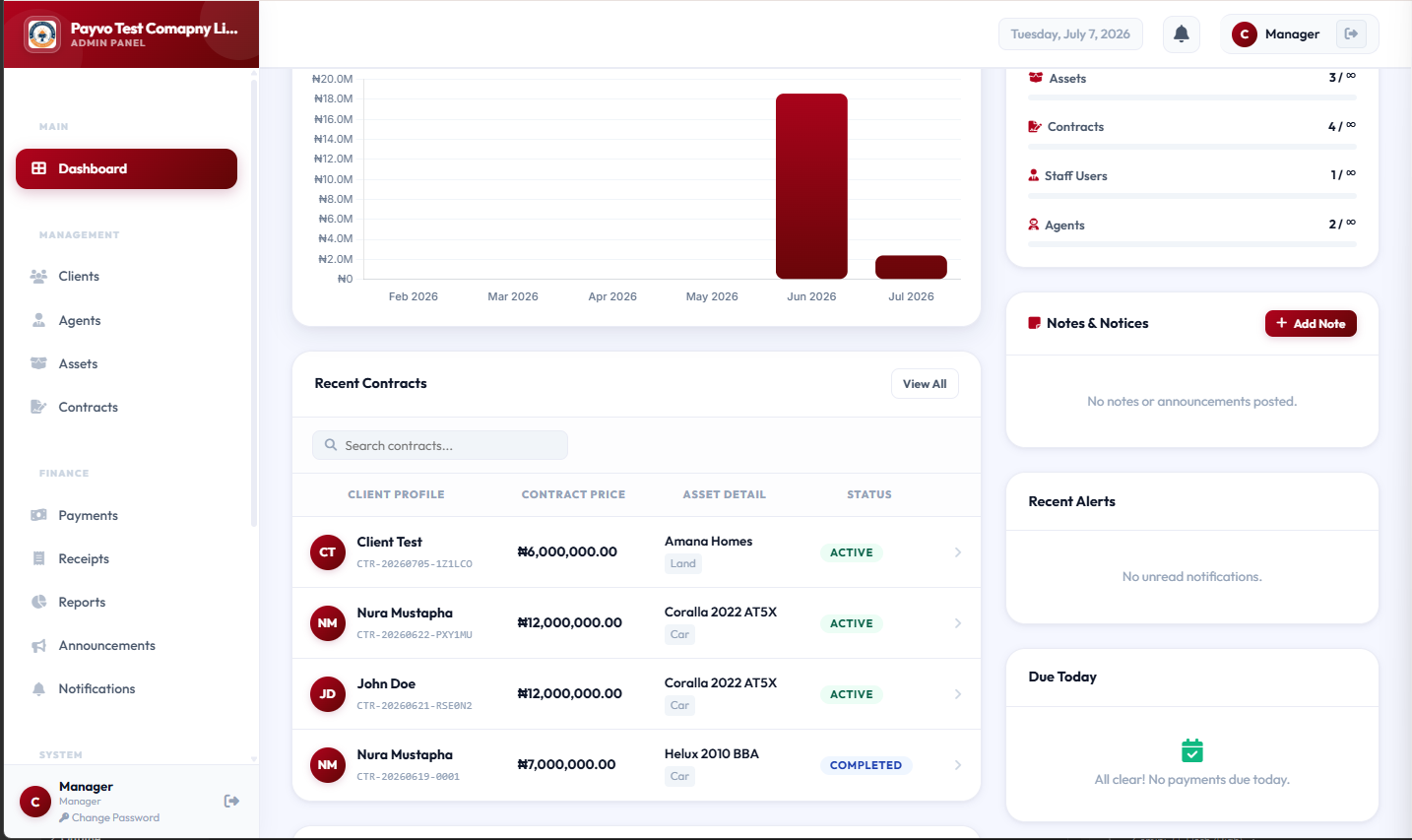 Payvo Dashboard displaying an overview of contracts and payments
Payvo's dashboard gives you a quick overview of your installment operations.
Step 3: Record Every Payment, Immediately and Accurately
When a payment comes in, don't delay recording it. Whether it's a bank transfer, a POS transaction, or cash, log it into your system right away. This is crucial for maintaining accurate records and avoiding discrepancies. If Mr. Emeka pays his ₦500,000 installment, you record that ₦500,000. Not ₦499,990 because of bank charges, and not ₦500,000 that you "remembered" to log a week later.
Make sure your system generates a digital receipt instantly. This provides proof of payment for the tenant and creates an unalterable record for your business. A good receipt generator app Nigeria property managers use will also show the remaining balance, which is a fantastic way to keep tenants informed and accountable.
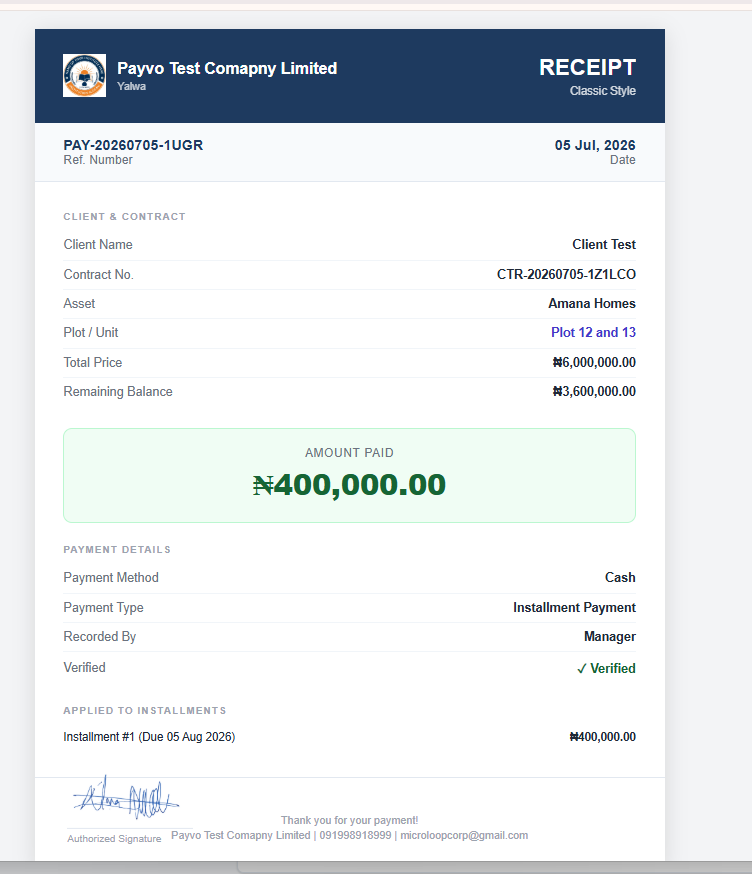 Sample of a payment receipt generated by Payvo
A professional payment receipt showing transaction details and remaining balance.
Step 4: Automate Reminders and Notifications
Chasing tenants for payments is tedious and time-consuming. It’s also one of the biggest drains on a property manager’s time. Instead, leverage technology. Set up automated payment reminders a few days before the due date. A simple WhatsApp payment notification system or an email reminder can drastically reduce late payments.
For example, Payvo allows you to configure automated notifications for upcoming payments, overdue payments, and even payment confirmations. This means less manual effort for your team and a more professional experience for your tenants. It’s a win-win.
Step 5: Regularly Reconcile and Review Your Accounts
Even with the best system, you need to regularly cross-check your records against your bank statements. This reconciliation process helps catch any errors, missed payments, or fraudulent activities. Set aside dedicated time each week or month for this.
Look at your financial reports. How much have you collected this month? How much is still outstanding? Which apartments have overdue payments? This data is invaluable for making informed business decisions and understanding your cash flow. A good business payment tracking app Nigeria developers use will provide clear financial overviews, giving you insights into your collections and outstanding obligations.
Step 6: Manage Agents and Their Commissions Transparently
If you employ agents to help sell or manage your apartments, their commission structure and payment tracking need to be just as robust. An agent commission tracking software ensures that agents are paid correctly and on time, based on the payments they've brought in. This prevents disputes and keeps your sales team motivated.
Imagine a scenario where an agent closes a deal for an apartment in your Gwarinpa estate, but the buyer pays in installments. How do you track the agent's commission fairly as payments come in? A system that links agent performance to collected payments makes this process seamless.
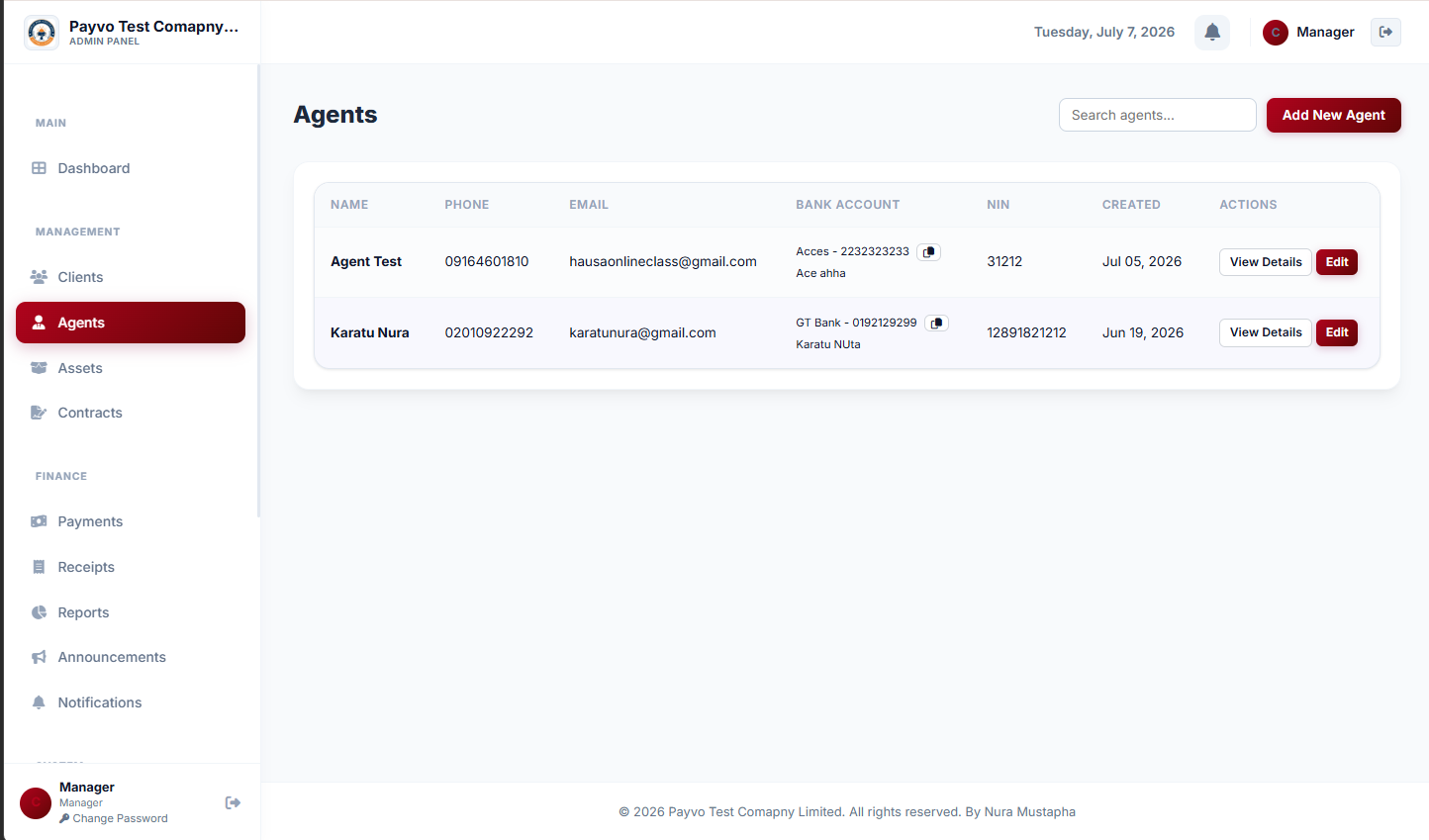 Payvo's Agent Management page showing a list of agents
Organise your sales team and track their performance with agent management features.
5 Mistakes That Cost Nigerian Business Owners the Most
I've seen these mistakes play out countless times, and they always lead to lost money and headaches. Don't fall victim to them.
- Relying Solely on Memory and WhatsApp Chats: This is perhaps the biggest culprit. A developer in Aba once showed me his "payment records"—a chaotic mix of scribbled notes in a diary, screenshots of WhatsApp chats, and faded bank alerts. When a tenant challenged an outstanding balance of ₦187,500, he couldn't produce a coherent payment history. He lost the dispute and the tenant. You cannot run a serious business like that.
- Inconsistent Record-Keeping: One month you use Excel, the next month it's a paper ledger, then you switch to a Google Sheet. This inconsistency makes it impossible to get a clear picture of your finances. It's like trying to build a house with different types of bricks and no mortar.
- Ignoring Small Overdue Payments: "Ah, it's just ₦15,000, they'll pay next month." This mentality is dangerous. Small, unaddressed arrears quickly snowball into large, unrecoverable debts. Be firm, but fair, and follow your protocols.
- Lack of Clear Communication Channels: Tenants often don't know who to contact when they have a payment query or want to confirm a due date. This leads to frustration, missed payments, and a poor reputation for your business. Make sure tenants know exactly how to reach you for payment-related issues.
- Not Reconciling Bank Statements: Just because money landed in your account doesn't mean it's correctly allocated to a tenant or contract. Without regular reconciliation, you could be understating outstanding balances or overstating collections, leading to significant financial discrepancies down the line. I once worked with a cooperative society management software client who found a ₦600,000 discrepancy over six months because they hadn't reconciled their bank statements properly.
How to Know If You're on Track (Success Metrics)
So, you've implemented a better system. How do you know if it's actually working? Here are the key performance indicators (KPIs) and benchmarks you should be tracking:
- Collection Rate: What percentage of your due payments are you actually collecting each month? A healthy rate should be consistently above 90-95%. If it's lower, you have a problem.
- Average Days Late: How many days, on average, are payments delayed? The goal here is zero. If tenants are consistently paying 5-7 days late, that's a sign your reminders or enforcement aren't effective enough.
- Number of Overdue Accounts: Keep a close eye on how many tenants have outstanding balances. If this number is growing, it's a red flag.
- Dispute Resolution Time: When a payment dispute arises, how quickly can you resolve it? With clear records, you should be able to resolve most disputes within 24-48 hours.
- Agent Performance (if applicable): Track the collection rate and new sales attributed to each agent. This helps you identify your top performers and those who might need additional training or support. An agent commission tracking software feature within your system makes this easy.
- Tenant Satisfaction (Payment Process): Believe it or not, a smooth payment process can actually improve tenant satisfaction. Are tenants complaining less about payment issues? Are they finding it easy to pay and get receipts?
- Time Spent on Payment Management: If your new system is working, your team should be spending significantly less time on manual payment tracking, reconciliation, and chasing overdue payments. You want to free up their time for more strategic tasks.
Real Questions People Ask (FAQ)
Q1: Can I really use Excel to track monthly apartment payments effectively?
Honestly, for one or two units, maybe. But the moment you hit 5, 10, or more units, Excel becomes a headache. It's prone to manual errors, difficult to share securely, and doesn't automate reminders or generate receipts. You'll spend more time fixing mistakes and chasing payments than actually managing your properties. A dedicated business payment tracking app Nigeria offers is a much better long-term solution.
Q2: What's the biggest challenge when tracking property installment payments in Nigeria?
From my experience, it's the sheer volume of transactions combined with inconsistent payment methods and the need for rigorous record-keeping. Many tenants still prefer cash or direct bank transfers, which require careful manual logging. Then there's the issue of network fluctuations affecting digital payments. All this means you need a system that can handle diverse inputs while maintaining a single, verifiable source of truth.
Q3: How do I handle partial payments from tenants?
This is a common scenario. Your system must be flexible enough to record partial payments accurately and automatically adjust the remaining balance and future payment schedules. If your property installment tracking system can't do this, you're setting yourself up for confusion. A good contract management software Nigeria businesses use will handle partial payments seamlessly, ensuring the correct outstanding balance is always displayed.
Q4: Is it worth investing in installment management software Nigeria property managers use, or can I build my own?
Building your own software is almost always a bad idea for a small or medium-sized business. The cost in time, money, and expertise far outweighs the benefits. You'd need to hire developers, maintain it, and constantly update it. Investing in a purpose-built installment management software like Payvo is far more cost-effective and reliable. It's already built, tested, and maintained by experts, allowing you to focus on your core business.
Q5: How can I use WhatsApp for payment notifications without it becoming overwhelming?
WhatsApp can be a powerful tool for customer communication, but it needs structure. Instead of manually sending messages, integrate it with a system that can send automated, templated payment reminders and confirmations. This way, your WhatsApp becomes a professional notification channel, not just a chaotic chat history. Payvo offers a WhatsApp payment notification system as an optional integration.
Your Next Move
You've learned that tracking monthly apartment payments isn't about "simple" solutions; it's about smart systems and consistent processes. If you're ready to move past the headaches of manual tracking, scattered records, and missed payments, it's time to explore a better way.
Take the first step towards organized property installment tracking. Visit the Payvo website today to see how our installment management software Nigeria businesses trust can transform your operations. You can also explore our dedicated solutions for real estate at https://payvo.ng/real-estate/.