₦350,000. That's a low-end estimate of what a small car dealer in say, Onitsha, could lose monthly in 2026 from just two or three customers who delay or outright default on their hire-purchase payments. This isn't even counting the time and stress you spend chasing them. When you're running a business that relies on customers paying over time, knowing exactly who owes you money, how much, and when it’s due, isn't just good practice; it's the difference between staying afloat and drowning. It's about how to track installment payments and know who owes you money so your business can thrive.
 A small business owner reviewing digital financial reports
The Reality Check: What Nobody Tells You About Tracking Debts
Look, most people starting out with installment sales, whether it’s land in Abuja or electronics in Computer Village, think a notebook or a simple Excel sheet will do the trick. And for the first five customers, maybe it does. But here’s the thing – does that actually work when you hit 20, 50, or even 100 customers?
I spent 12 years managing three retail shops, and let me tell you, the biggest headache wasn't sales; it was managing the money after the sale, especially from customers who paid in bits. I've seen businesses collapse not because they weren't selling, but because they couldn't keep track of their receivables. Imagine you're a building material supplier in Lagos. You've sold cement and roofing sheets on credit to 30 different contractors. Each has a different payment schedule. Some pay weekly, some monthly. Some pay cash, some do transfers. How do you track all that without losing your mind, or worse, losing money?
The cost of not tracking properly is huge. Beyond the direct loss from defaults, there's the hidden cost of wasted time. You or your staff spend hours poring over ledgers, trying to reconcile bank statements with scribbled notes. That's time you could be using to find new customers or improve your service. Then there's the customer relationship strain. Discrepancies lead to arguments, mistrust, and sometimes, you end up writing off a debt just to avoid the hassle. Legal fees for drafting a simple payment agreement or promissory note can range from ₦20,000 to ₦50,000 – imagine doing that for every dispute! Most guides will tell you to just "keep good records." That's the wrong way to think about it. You need a system for those records, not just a place to dump them.
What You Actually Need to Get Started
Before you even think about software, let's talk about the basics. This isn't about fancy gadgets; it's about practical tools to manage your installment receivables.
The Non-Negotiables (You absolutely need these):
- A Dedicated Record-Keeping Method: This is your primary tool for how to track installment payments. Forget scraps of paper. You need something consistent.
- Low-end: A sturdy ledger book or notebook. You can get one for ₦500 to ₦1,500. This works for very small operations, maybe 1-5 active installment contracts. But be warned, it gets messy fast.
- Mid-range: A simple spreadsheet software like Microsoft Excel. A subscription for a basic suite could cost you ₦5,000 to ₦10,000/year. This is a step up, but it demands discipline and good formula management.
- A Way to Communicate with Customers: You need to send reminders and confirmations.
- Low-end: Your phone and a strong data bundle (₦2,000 - ₦5,000/month). Manually sending WhatsApp messages or making calls.
- Mid-range: Bulk SMS service or a WhatsApp Business API, though that’s more advanced. Basic SMS can cost ₦5 - ₦15 per message, depending on volume.
- A Clear Payment Policy: Before you sell anything on installment, you need a written agreement. This doesn't have to be a legal document at first, but it must clearly state payment amounts, due dates, and what happens if payments are missed. This helps avoid disputes down the line when you're tracking customers with outstanding balances.
- A Basic Printer and Stationery: For printing receipts, agreements, or statements. A basic printer and ink can run you ₦35,000 - ₦70,000. Stationery like pens, staplers, and files will be about ₦2,000 - ₦5,000 per quarter.
- A Smartphone: For using mobile apps. An entry-level smartphone costs ₦40,000 - ₦80,000 these days. It’s essential for modern business payment tracking app Nigeria solutions.
- Basic Accounting Software: If you're doing more than just tracking installments, like managing expenses and taxes. A basic subscription could be ₦15,000 - ₦30,000/month.
- A Part-time Bookkeeper/Accountant: When your business gets complex, someone to reconcile accounts and chase payments can be a lifesaver. A monthly retainer could be ₦30,000 - ₦80,000, depending on their experience and your business volume. This is especially useful for managing installment receivables and ensuring your records are clean.
The Complete Step-by-Step Breakdown
Alright, so you've got your tools. Now, let's talk about the process. This is how you actually make sure you know who owes you what.
Step 1: Document Every Single Installment Agreement Properly
This is where it all starts. Don't just shake hands. Even if it's a small item in your shop in Balogun Market, make sure you have a clear, written agreement with your customer. This agreement should detail the full price, the down payment received, the installment amount, the frequency (weekly, monthly), the number of payments, and the exact due dates.
For a real estate developer selling plots in Kaduna, this means a formal contract. For a car dealer in Lagos selling on hire purchase, a comprehensive agreement is critical. This document is your bedrock for any future discussions about customers with outstanding balances. Without it, you're just guessing.
Step 2: Set Up a Centralized System for Tracking
This is perhaps the most crucial step. You need one place, and only one place, where all your installment data lives. No more scattered notes, no more "I think I put it in that green book."
If you're still small, that ledger book or a well-structured Excel sheet can work. Create columns for customer name, item purchased, total amount, down payment, each installment amount, due date, date paid, and remaining balance. If you're running a cooperative society and managing member contributions, this structure is vital for cooperative society management software. For growing businesses, especially those with multiple agents or a significant number of customers, a dedicated installment management software Nigeria solution is a game-changer. This is where a system like Payvo comes in. It helps you organize all your customer details, assets, contracts, and payment schedules in one central place, making debtor tracking much simpler.
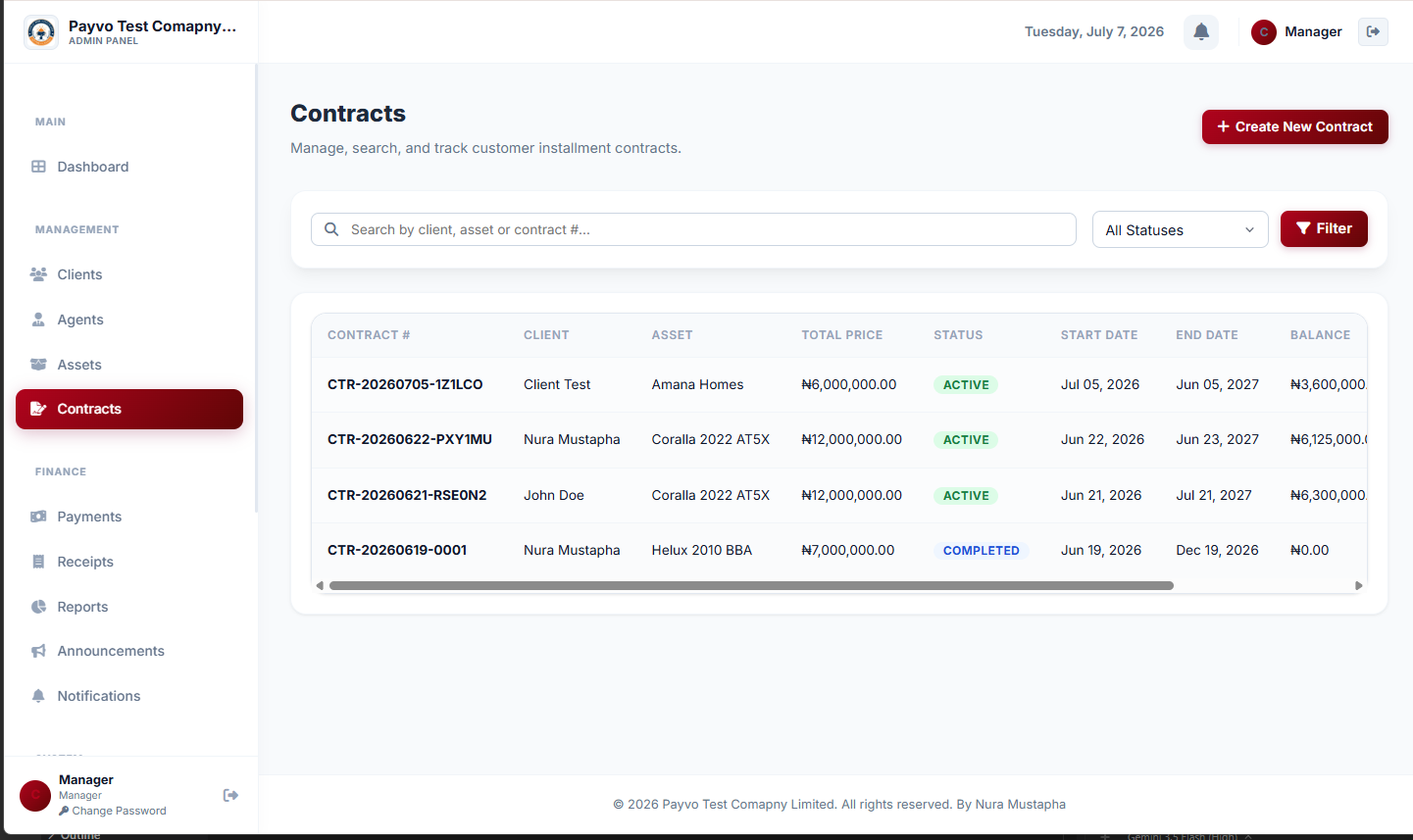 A dashboard view of a contract list page, showing various contracts with their status, customer names, and amounts
Step 3: Record Every Payment Immediately and Accurately
The moment money comes in, record it. Don't wait till the end of the day or week. If a customer pays ₦15,000 for their solar panel installment, log that ₦15,000 right away. Note the date, the amount, and the payment method (cash, transfer, POS).
Issue a receipt, always. A receipt generator app Nigeria can make this easy, or if you're using a system like Payvo, it can generate digital receipts automatically. This simple habit prevents so many headaches down the line and builds trust with your customers. It's how you maintain accurate installment receivables.
Step 4: Regularly Reconcile Your Records
This means comparing your payment records with your bank statements or cash box. Do this at least weekly, if not daily. Are there any payments in your bank that aren't recorded in your system? Any recorded payments that don't match what's in the bank? For a car dealer installment software user, this means cross-referencing your sales records with actual deposits.
This step helps catch errors early and ensures your outstanding balances are always correct. I remember one time, we found a ₦18,750 discrepancy in a week because a staff member forgot to log a cash payment. Imagine if that went unnoticed for months across multiple customers.
Step 5: Proactively Monitor Due Dates and Send Reminders
Don't wait for payments to become overdue. Be proactive. A few days before an installment is due, send a friendly reminder. This could be a simple WhatsApp message or an SMS. A WhatsApp payment notification system can automate this, saving you a lot of time.
This shows your customers you're organized and helps them remember their obligations. For businesses like solar equipment leasing companies, timely reminders are key to maintaining cash flow. This is a huge part of effective debtor tracking.
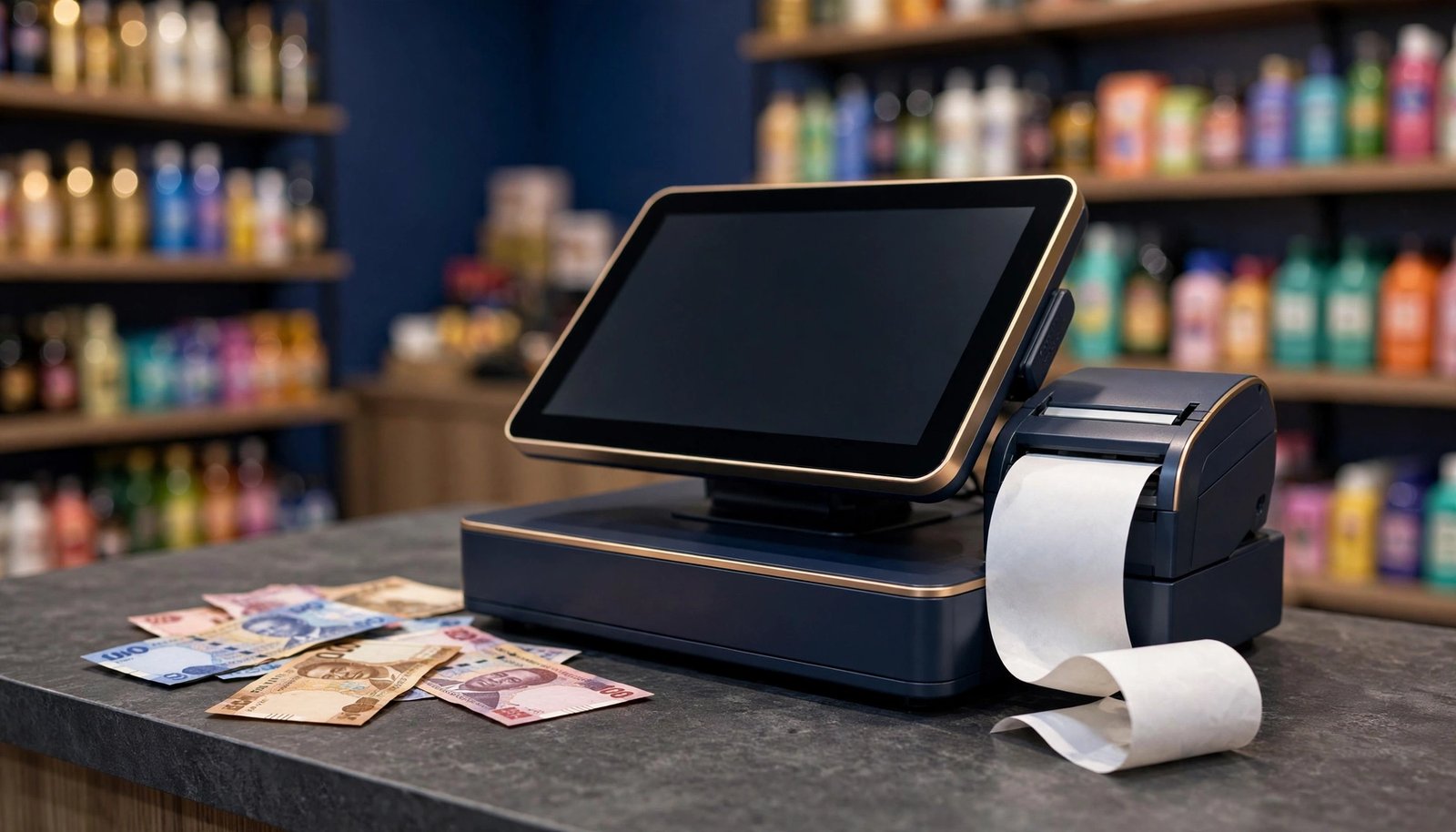 A sleek 3d illustration of a digital dashboard
Step 6: Identify and Follow Up on Overdue Payments Systematically
This is where you zero in on customers with outstanding balances. Your system should clearly flag overdue payments. Don't just call them up and demand money. Have a process. First, a polite reminder. If no response, a follow-up call. If still no payment, then escalate according to your policy.
For an agent commission tracking software, this also means knowing which agents are responsible for which accounts and empowering them to follow up. Keep a log of all communication regarding overdue payments. This documentation is crucial if you ever need to take further action.
Step 7: Analyze Your Data to Improve Your Process
Once you have all this data, use it! Which customers are consistently late? Are certain products or payment plans more prone to default? Is a particular agent struggling with collections?
If you're using a robust contract management software Nigeria, you can generate reports that give you insights into your payment trends. This helps you refine your sales policies, adjust your payment terms, or even identify training needs for your agent commission tracking software users. Understanding these patterns can save you from future losses.
5 Mistakes That Cost Nigerian Business Owners the Most
I've seen these mistakes play out repeatedly, and they always hit the bottom line.
- Relying on Memory or "Trust": You deal with dozens, maybe hundreds, of customers. You can't possibly remember who paid what, when. "Ah, Madam Ngozi will pay when she has it" isn't a business strategy. It's a recipe for lost money and strained relationships. This is the number one reason businesses fail at debtor tracking.
- Mixing Business and Personal Accounts: When you're constantly transferring money between your personal and business accounts, or accepting payments into a personal account, it becomes nearly impossible to reconcile. You lose track of what's truly business income and what's outstanding. This is a fundamental flaw in business payment tracking app Nigeria.
- Inconsistent Record Keeping: One day it’s a notebook, the next it’s a WhatsApp chat, then a random Excel sheet. This chaos guarantees you'll miss payments, miscalculate balances, and spend endless hours trying to piece things together. Your installment receivables become a nightmare.
- Lack of a Clear Follow-Up Strategy: You send one reminder, and if the customer doesn't pay, you just hope they will. Hope isn't a strategy. You need a tiered approach, from friendly reminders to firmer communication, and finally, escalation, all documented. Without this, your customers with outstanding balances will only grow.
- Ignoring the Small Debts: "It's just ₦5,000, I'll chase it later." Those small debts add up. If 20 customers owe you ₦5,000 each, that's ₦100,000. Many small businesses operate on thin margins, and that ₦100,000 could be the difference between paying your staff or not.
How to Know If You're on Track (Success Metrics)
So, how do you measure if your new system for how to track installment payments is actually working? You need to look at a few key things.
- Collection Rate: This is the percentage of due payments you actually collect within the agreed timeframe. If you're consistently collecting 90% or more, you're doing well. If it's dropping below 70%, you have a problem.
- Average Days to Collect: How long, on average, does it take for a customer to pay after their due date? The lower this number, the better. If it's consistently high, your follow-up process needs work.
- Number of Overdue Accounts: Keep this number as low as possible. A sudden spike means something is off – either your sales team is bringing in risky customers, or your tracking and follow-up are failing.
- Dispute Resolution Time: How quickly can you resolve a payment dispute with a customer? If you have clear records, this should be fast. If it takes days to figure out who's right, your system isn't efficient.
- Agent Performance (if applicable): If you have agents managing sales and collections, an agent commission tracking software can help you monitor their individual collection rates. Are some agents consistently better at bringing in payments? What can you learn from them?
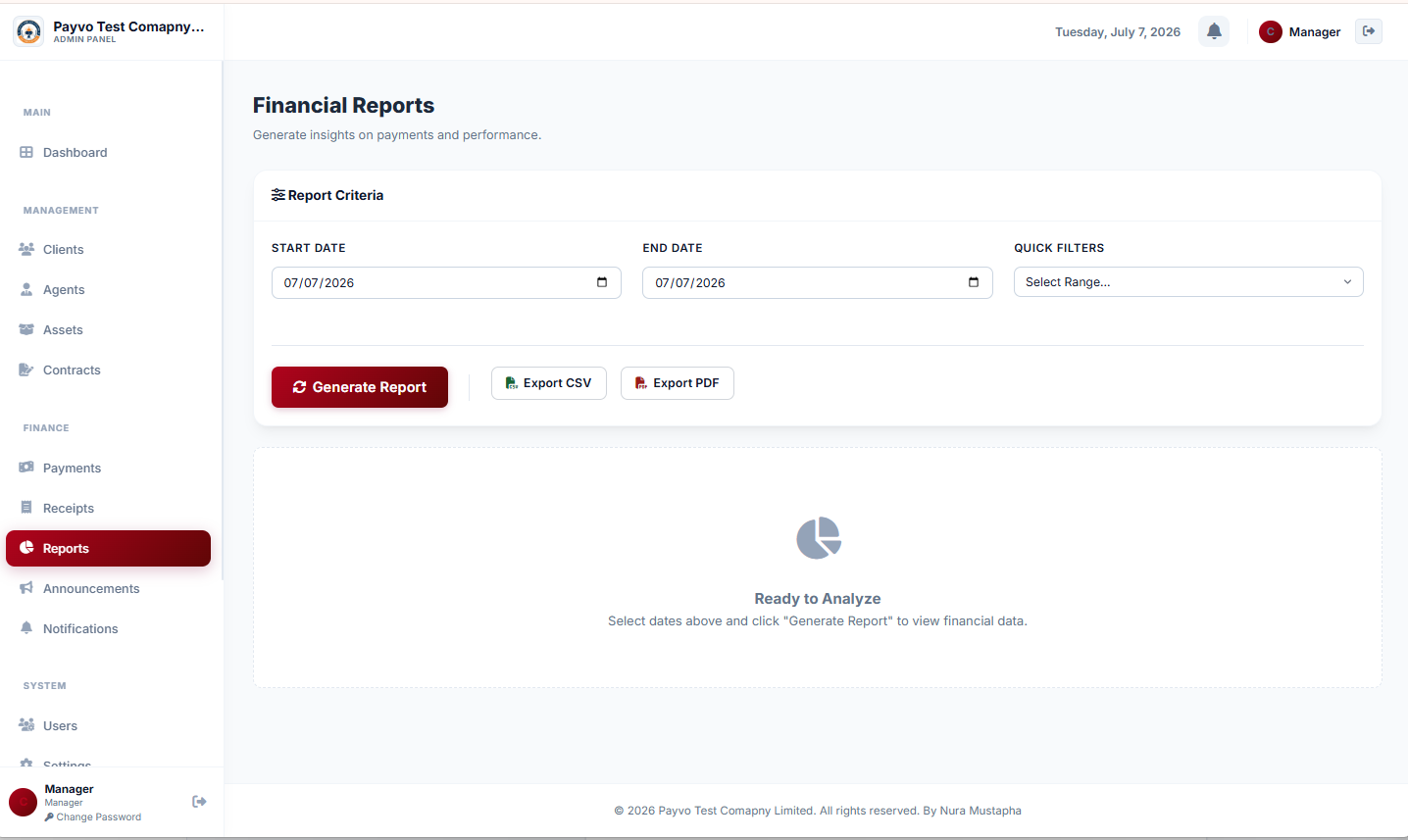 A dashboard view of a financial reports page, showing various financial summaries, charts, and payment statuses
Real Questions People Ask (FAQ)
Q1: Can I really track installment payments effectively with just Excel?
A1: You can, for a very small number of customers. Maybe 10-15 active contracts. But it's time-consuming, prone to manual errors, and doesn't scale well. As your business grows, you'll spend more time managing the spreadsheet than managing your business. Plus, sharing it with agents or staff without messing up formulas is a nightmare. For serious growth, you'll need a proper contract management software Nigeria solution.
Q2: What's the best way to remind customers without annoying them?
A2: Timing and tone are everything. Start with a friendly reminder a few days before the due date. A simple WhatsApp message or SMS works well. If payment is missed, follow up promptly but politely. Frame it as a service, "Just reminding you about your upcoming payment for [item] due on [date]." A WhatsApp payment notification system can automate these friendly nudges, which is much better than manual, inconsistent reminders.
Q3: How do I handle customers who consistently pay late?
A3: First, review your agreement. Are there late fees? If so, apply them consistently. Second, communicate. Ask why they are consistently late. Is it a cash flow issue for them? Can you adjust their payment plan (e.g., smaller amounts more frequently) to help them catch up? Sometimes, a slightly modified plan and consistent follow-up are better than a full default. For a cooperative society management software, understanding these patterns can help you support members better while still collecting funds.
Q4: My agents are supposed to collect payments. How do I track their performance and ensure they're remitting correctly?
A4: This is a common challenge. You need an agent commission tracking software that ties payments directly to the agent responsible. Each payment recorded should clearly show which agent facilitated it. Regularly reconcile agent collections against your central payment records. Tools that allow agents to record payments directly into a system, while you retain oversight, are ideal. This prevents "leakage" and gives you visibility into their collection efficiency.
Q5: What if a customer disputes an outstanding balance even after I've shown them my records?
A5: This is exactly why detailed, consistent record-keeping is non-negotiable. If you have clear records of the original agreement, every payment made (with dates and amounts), and every receipt issued, you have a strong case. Show them their payment history from your system. If you're using a digital installment management software Nigeria, you can even generate a statement for them. If the dispute persists and the amount is significant, you might need to involve legal counsel, but your robust records will be your biggest asset.
Your Next Move
Knowing how to track installment payments and precisely who owes you money is foundational to any business selling on credit. If you're tired of chasing payments with notebooks and spreadsheets, or you're struggling to keep track of your customers with outstanding balances, it's time to upgrade your system.
Take the first step towards better organization and clearer financial oversight. Check out Payvo's features and see how it can help you manage your installment receivables more efficiently. Visit https://payvo.ng/ to learn more or register for an account today and start tracking your payments like a pro.