For many Nigerian businesses, selling on installment is a lifeline, making high-value goods and services accessible to more customers. Yet, the joy of a new sale can quickly turn into a headache of lost records, forgotten due dates, and endless manual calculations. This isn't just about inconvenience; it's about real money left on the table and strained customer relationships.
 Nigerian market trader organizing payment ledgers
The Evolving Landscape of Installment Sales in Nigeria (2026)
The Nigerian economy in 2026 continues to see a significant reliance on installment payments, particularly for big-ticket items like real estate, vehicles, solar energy systems, and even household appliances. This payment model fuels growth by expanding market access, but it also introduces complex administrative challenges. Businesses, from real estate developers in Abuja to car dealers in Lagos, and even cooperative societies, are increasingly aware that inefficient tracking can lead to substantial losses. A recent study indicated that Nigerian SMEs offering installment plans lose an estimated 15-20% of potential revenue annually due to poor payment tracking and reconciliation issues. This isn't just about missing a payment; it's about the cumulative effect of miscalculated balances, unrecorded payments, and disputes that erode trust.
Many businesses still rely on traditional methods. Basic ledger books, costing between ₦1,000 and ₦3,000, are common for small stall owners. For those trying to digitize, a basic spreadsheet software subscription might run from ₦25,000 to ₦35,000 annually. However, these tools often fall short when managing a growing number of installment contracts, leading to the very problems we aim to solve: lost records and disorganization. The demand for a robust payment tracking system that understands the Nigerian market is higher than ever.
> "In the competitive Nigerian market, the ability to offer flexible payment plans is a differentiator, but only if you can manage them effectively. Manual systems are no longer sustainable for growth."
What You Need Before You Start
Before diving into effective installment payment tracking, ensure you have these fundamental elements in place:
- Clear Payment Terms: Each installment agreement must clearly state the total price, down payment, installment amount, frequency, and due dates. Ambiguity is the enemy of good record-keeping.
- Dedicated Record Keeper: Whether it's you, a part-time clerk, or a digital system, someone or something needs to be responsible for recording every transaction. A part-time clerk might cost between ₦30,000 - ₦60,000 per month.
- Basic Communication Channel: A reliable way to contact customers for reminders or queries, often a mobile phone with a data bundle (₦3,000 - ₦10,000 monthly) or even a simple SMS service.
- Secure Storage: For physical records, a small filing cabinet (₦10,000 - ₦25,000) or a secure box is crucial. For digital, understand your backup strategy.
- Understanding of Your Business Flow: Map out how a customer goes from inquiry to full payment. This helps identify where records are generated and where they need to be stored.
Step-by-Step: How to Track Installment Payments Effectively
Effective installment payment tracking is a systematic process that combines clear policies with reliable tools. Here's how to ensure you avoid losing records and stay organized.
Step 1: Formalize Your Installment Agreements
Every installment sale must begin with a clear, written contract. This document is the foundation of your payment tracking system. It should detail the product or service, the total cost, the initial deposit, the installment amount, the payment frequency (e.g., weekly, monthly), and the exact due dates. For real estate developers, this would include plot numbers and property specifics. Car dealers must list vehicle identification numbers.
Ensure both parties sign the agreement, and each receives a copy. This minimizes disputes later on. Without a formal agreement, tracking becomes guesswork, and any payment tracking system will struggle to provide accurate information.
Step 2: Set Up a Centralized Customer Database
Scattershot customer details across different notebooks, phones, or even WhatsApp chats are a recipe for disorganization. You need one central place where all customer information resides. This includes contact details, next of kin, and any unique identifiers. This database should be easily searchable and accessible to authorized personnel.
For growing businesses, a dedicated system provides a significant advantage. It allows you to quickly pull up a customer's history, preventing errors and improving customer service.
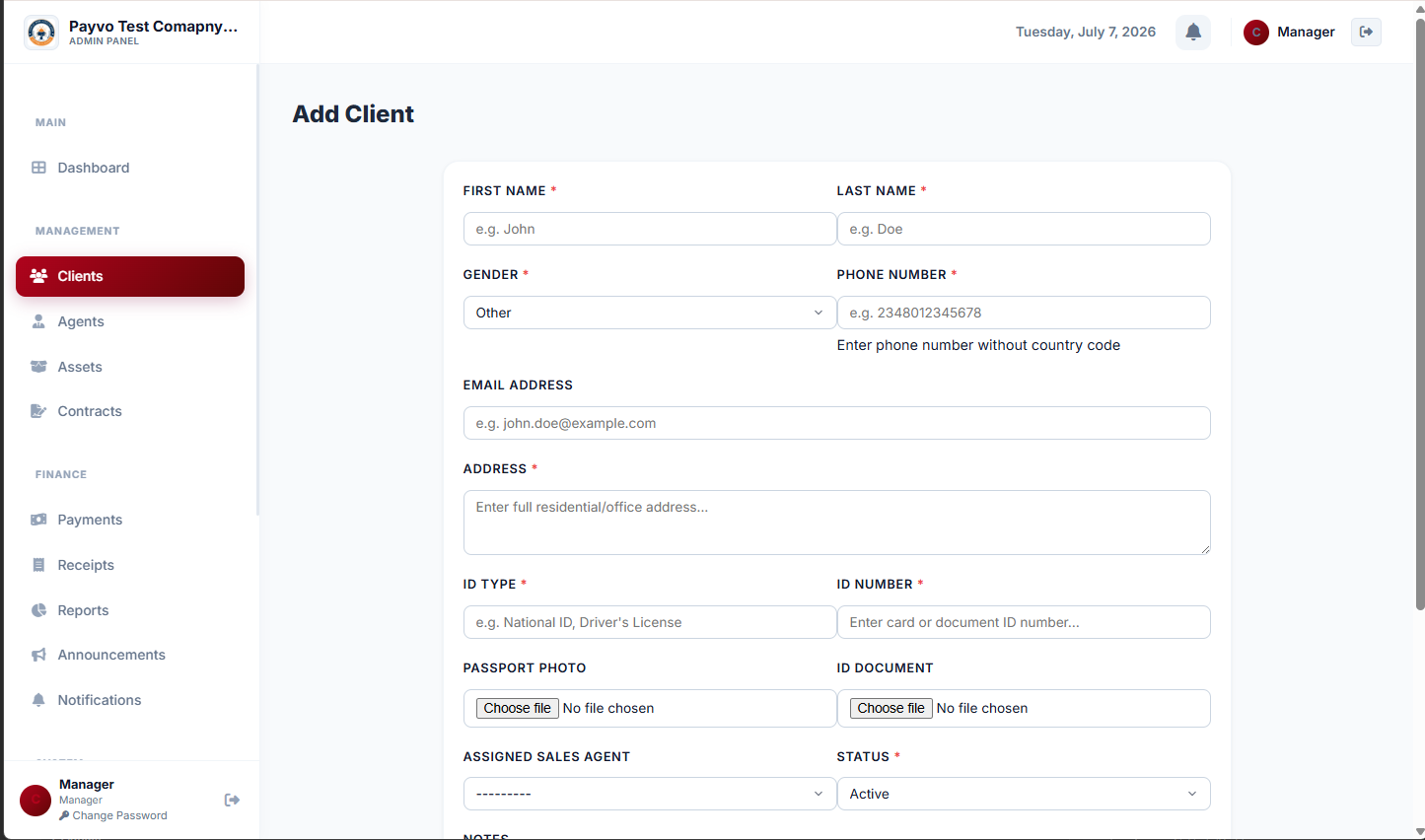 Client: Add Client page
Step 3: Create a Structured Payment Schedule
Once the contract is signed, immediately translate the agreed payment terms into a structured payment schedule. This schedule should list every expected payment, its due date, and the amount. This is your roadmap for tracking. For cooperative societies, this means outlining member contributions and loan repayments. For solar companies, it's the monthly payment for the installed system.
Manual methods like spreadsheets can work for a few clients, but as your client base expands, managing multiple schedules manually becomes overwhelming and prone to errors. This is where a robust contract management software Nigeria solution becomes invaluable, automating schedule generation.
Step 4: Implement a Consistent Payment Recording Process
Every single payment received, regardless of how small or how it was made (cash, bank transfer, POS), must be recorded immediately and accurately. This is perhaps the most critical step. Include the date of payment, the amount received, the payment method, and who received it. Cross-reference it with the customer's payment schedule.
A good system will allow you to record payments efficiently and automatically update the outstanding balance. This consistency is vital for maintaining accurate records and avoiding discrepancies.
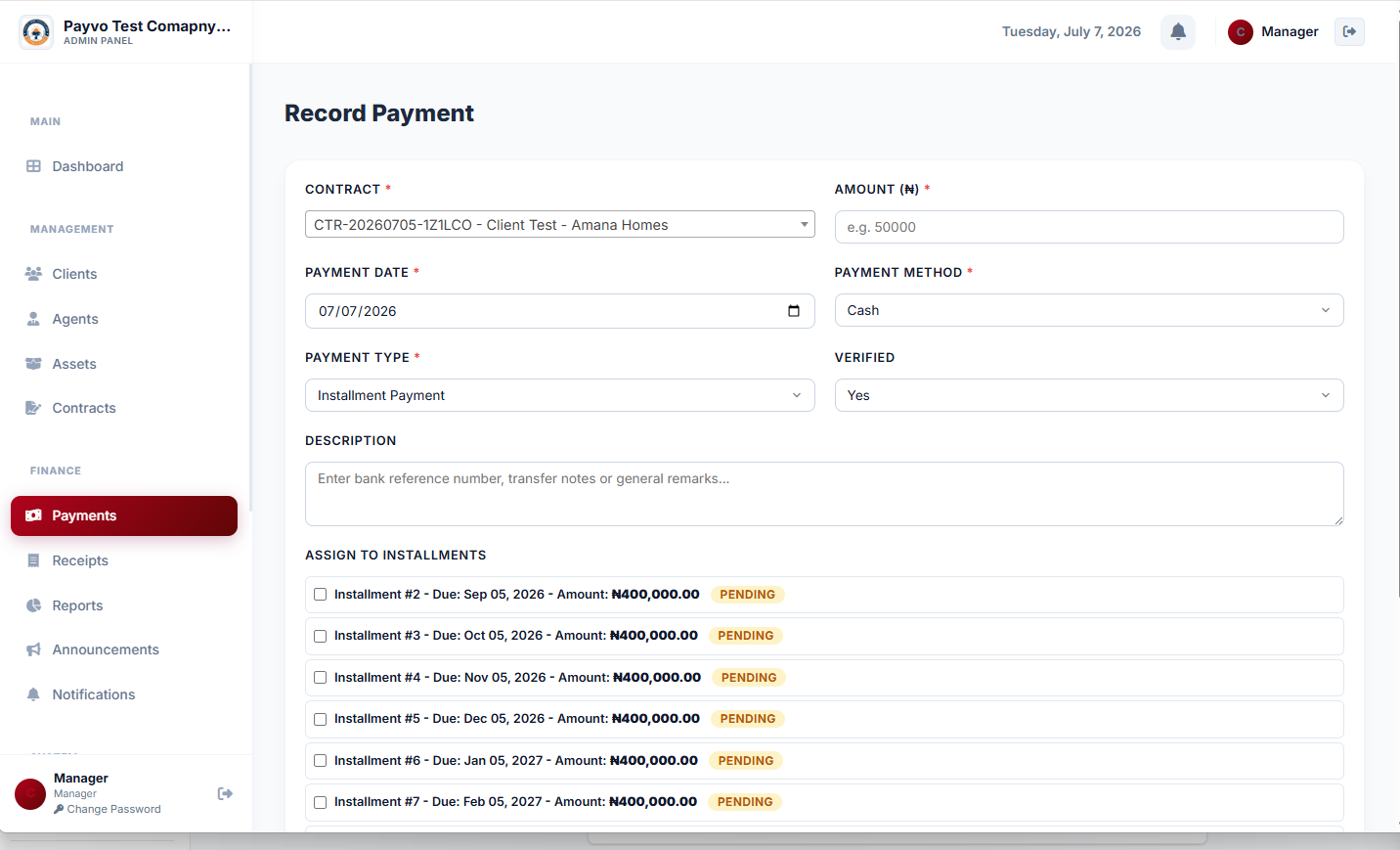 Finance: Record Payments Page
Step 5: Issue Digital Receipts for Every Transaction
After recording a payment, immediately issue a receipt to the customer. This serves as proof of payment for the customer and as an additional record for your business. Physical receipts can be printed, but digital receipts are often more convenient and harder to lose. A receipt generator app Nigeria can streamline this.
Digital receipts also facilitate a smoother customer experience and reduce the likelihood of disputes over payments made. Ensure your receipts are clear, professional, and contain all necessary transaction details.
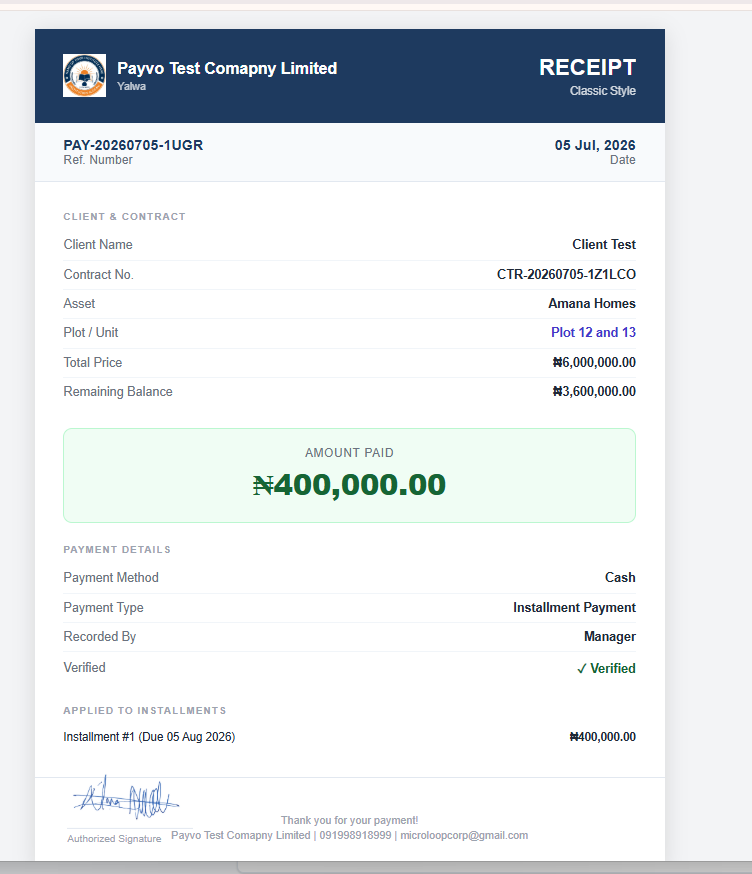 Finance: Paymnet Receipt Sample
Step 6: Monitor Outstanding Balances and Due Dates Regularly
Don't wait for payments to become severely overdue. Regularly review your payment schedules to identify upcoming due dates and outstanding balances. This proactive approach allows you to send timely reminders and follow up with customers before issues escalate. For businesses with agents, an agent commission tracking software can also help link payments to sales performance.
A good installment management software Nigeria solution can automate these reminders and provide a quick overview of your financial health. This helps you maintain healthy cash flow and minimize payment defaults.
Step 7: Leverage Technology for Streamlined Tracking
While notebooks and spreadsheets might seem cost-effective initially, they introduce significant risks as your business grows. Manual calculations are prone to human error, and scattered records make it difficult to get a complete financial picture. This is where a specialized payment tracking system shines.
Modern solutions allow you to manage contracts, track installment payments, send automated WhatsApp payment notification system messages, and generate comprehensive reports from a single platform. For example, Payvo helps real estate developers, car dealers, and cooperative societies centralize their records, automate schedules, and track every payment, significantly reducing administrative burden and errors. Such a system offers a clearer overview of your financial position, helping you make informed decisions and maintain strong customer relationships. You can explore its capabilities for real estate, hire purchases, and even fintech and modern credit operations by visiting their dedicated pages.
Common Mistakes to Avoid
Even with the best intentions, businesses often stumble in their installment payment tracking. Here are some common pitfalls to steer clear of:
- Relying Solely on Memory or Informal Agreements: Assuming you'll remember every payment or relying on verbal agreements is a fast track to disputes and lost revenue. Always formalize and record.
- Inconsistent Recording: Recording payments sporadically or using different methods for different customers leads to confusion and inaccurate balances.
- Neglecting Follow-Up: Failing to send timely reminders or follow up on missed payments allows small issues to snowball into significant arrears.
- Lack of Centralized Records: Keeping customer data, contract details, and payment history in separate places makes it impossible to get a unified view, wasting time and increasing errors.
- Manual Calculation Errors: Even simple arithmetic can go wrong, especially when dealing with many contracts and complex payment structures. This is a common flaw with spreadsheet-based systems.
- Ignoring Digital Tools: Sticking to purely manual methods when your customer base expands will inevitably lead to an unsustainable administrative load and lost opportunities.
How to Track and Grow After Launch
Once you've implemented a robust payment tracking system, the next step is to leverage it for growth and continuous improvement. Monitoring key performance indicators (KPIs) will give you insights into your business's health.
- Payment Collection Rate: Track the percentage of scheduled payments actually collected. A low rate indicates potential issues with customer eligibility, payment terms, or follow-up processes.
- Average Days Overdue: Measure how long payments typically remain outstanding. Shorter periods mean better cash flow.
- Customer Retention Rate: For businesses with recurring installment plans (like cooperative society management software users), retaining customers is crucial. Good payment tracking can improve customer satisfaction and reduce churn.
- Agent Performance: If you utilize sales agents, track their collection rates and success in managing client relationships. An agent tracking page can provide this insight.
- Financial Reports: Regularly review reports on total collections, outstanding balances, and overdue accounts. This gives you a bird's-eye view of your financial standing and helps in forecasting.
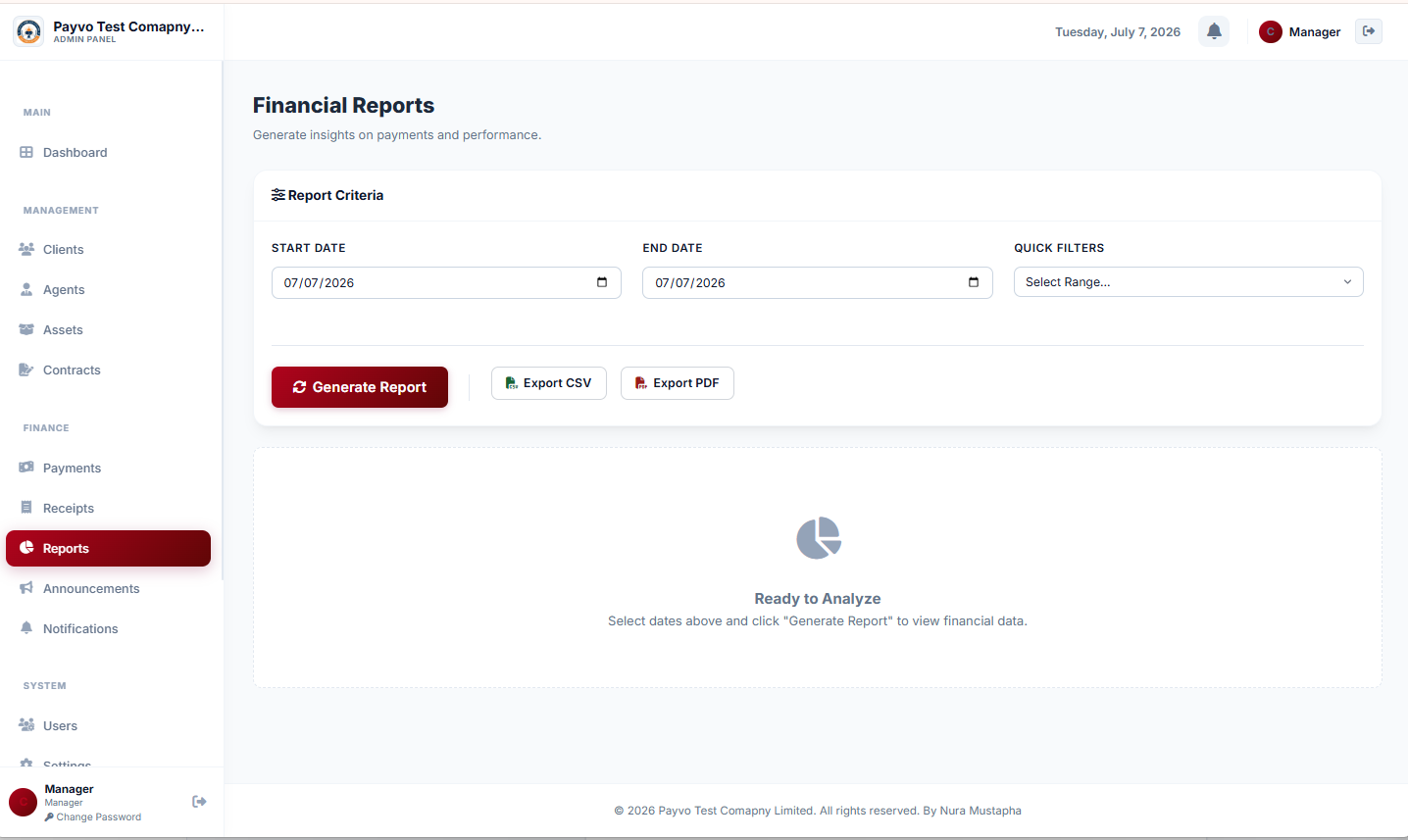 Financial Reports Page
 Business owner looking at digital financial dashboard
Frequently Asked Questions
Q1: Is it expensive to set up a digital payment tracking system in Nigeria?
A1: The cost varies. For basic digital tracking, an entry-level smartphone might cost ₦45,000 - ₦80,000. An annual subscription for basic accounting software, often including payment tracking features, can range from ₦50,000 - ₦150,000 for local Nigerian solutions. Compared to the potential losses from manual errors and missed payments, a digital system is often a sound investment that pays for itself. Solutions like Payvo offer different pricing tiers, making them accessible for various business sizes.
Q2: Can I use WhatsApp for payment notifications and tracking?
A2: WhatsApp is excellent for communication, and many businesses use it for payment reminders. Some installment management software in Nigeria even integrate a WhatsApp payment notification system. However, WhatsApp itself is not a structured payment tracking system. Relying solely on chat histories for financial records is risky and prone to errors. You need a dedicated system to log payments and track balances, then use WhatsApp as a communication tool.
Q3: What if my customers prefer cash payments? How do I track those digitally?
A3: Even if customers pay in cash, the payment still needs to be recorded accurately in your digital system. When cash is received, immediately enter the details (amount, date, customer name) into your installment payment tracking software. Then, issue a digital receipt. The key is to ensure every transaction, regardless of the payment method, is captured within your centralized payment tracking system.
Q4: How can a small business with limited resources manage installment payments effectively?
A4: Start simple and scale up. Begin by formalizing all contracts and maintaining a single, organized ledger (physical or digital spreadsheet). As your business grows, consider transitioning to a dedicated business payment tracking app Nigeria. These solutions are designed to automate many of the tedious tasks, freeing up your time and reducing errors without requiring a large initial investment. Many offer affordable plans suitable for small businesses.
Q5: What are the biggest risks of not having a proper installment payment tracking system?
A5: The risks are significant. They include: losing track of outstanding balances, leading to revenue loss; payment disputes with customers due to inaccurate records, damaging your reputation; cash flow problems from uncollected payments; inability to make informed business decisions due to a lack of financial clarity; and increased administrative burden and stress from constant manual reconciliation. A proper system mitigates these risks, ensuring you can track installment payments reliably.
Ready to Streamline Your Installment Sales?
Don't let manual tracking hold your business back. Take control of your installment sales, improve cash flow, and build stronger customer relationships. Explore how a dedicated installment management software can transform your operations. Visit Payvo.ng today to learn more or register for an account and experience organized payment tracking firsthand.