Managing customer payments spread over weeks or months can quickly turn into a chaotic mess of notebooks, WhatsApp messages, and forgotten due dates. For many Nigerian businesses, especially those selling high-value items like land, cars, or solar systems, the promise of increased sales through installment plans often comes with the headache of complex payment tracking and reconciliation. This guide will walk you through the practical steps to not only start but also effectively manage an installment business in Nigeria, ensuring smooth operations and steady growth.
 Nigerian business owner reviewing financial documents
The Evolving Landscape of Installment Sales in Nigeria (2026)
In 2026, the Nigerian market continues its strong embrace of installment payment models. With economic realities making outright purchases challenging for many, businesses that offer flexible payment options are seeing significant competitive advantages. From real estate developers in Abuja offering payment plans for new estates to car dealers in Lagos providing hire-purchase options, and even solar companies making clean energy accessible, installment sales are a cornerstone of commerce. However, this growth also brings increased complexity. Businesses must contend with managing numerous contracts, tracking diverse payment schedules (weekly, monthly, quarterly), and mitigating the risk of defaults. The market demands efficiency, transparency, and robust systems to handle these intricacies. Without proper tools, what starts as a growth strategy can quickly become an administrative burden, leading to lost revenue and customer disputes.
What You Need Before You Start
Before diving into the world of installment payments, ensure you have these foundational elements in place:
- Sufficient Capital: Beyond your initial stock, you'll need working capital to cover operational costs while waiting for installment payments to mature. This includes funds for rent, staff salaries, and marketing.
- Clear Business Plan: Define your target market, product/service offerings, pricing strategy, and repayment terms. How long will your installment periods be? What down payment will you require?
- Legal Counsel: Crucial for drafting legally sound installment contracts and understanding consumer protection laws in Nigeria. This helps protect both your business and your customers.
- Reliable Suppliers: Especially for physical goods, ensure a consistent supply chain to meet demand and maintain product quality.
- Basic Business Infrastructure: This includes a physical location (if applicable), communication tools, and a reliable power source.
Step-by-Step: Starting & Managing Your Installment Payment Business
Launching and maintaining a successful installment business requires meticulous planning and execution. Here’s a detailed breakdown:
Step 1: Define Your Niche and Products
Identify what you will sell on installment. This could be anything from plots of land, vehicles, household appliances, building materials, or even educational services. Your product choice will dictate your target market and the scale of your operations. For instance, a real estate developer might focus on land sales in fast-developing areas, while a solar company might offer various inverter and panel packages. Understanding your niche helps you tailor your marketing and payment plans.
Consider the price point of your offerings. High-value items naturally lend themselves better to installment plans. Research your competitors to understand their offerings and identify gaps in the market you can fill.
Step 2: Register Your Business and Secure a Location
Formalize your business by registering with the Corporate Affairs Commission (CAC). A sole proprietorship might cost between ₦25,000 - ₦35,000, while a Limited Company could range from ₦50,000 - ₦70,000. This gives your business legal standing and builds trust with customers and suppliers.
Next, secure a suitable business location. Shop rent in Nigeria is typically paid annually. Expect to pay anywhere from ₦80,000 for a small market stall in a less commercial area to ₦2,500,000 for a prime commercial spot in Lagos or Abuja. Factor in a security deposit, usually 1-2 years' rent, which could range from ₦80,000 - ₦5,000,000. Initial shop renovation and setup could cost ₦100,000 for a basic setup to ₦1,000,000 for a modern showroom.
Step 3: Source Your Initial Inventory and Capital
This is where your business takes physical form. For an electronics or appliance business, initial stock capital could be ₦500,000 for a small-scale local vendor, going up to ₦5,000,000 for a larger distributor. If you're in real estate, this might involve securing land titles and initial development costs.
Beyond inventory, ensure you have sufficient operational capital. This includes funds for:
- Staff Salaries: For sales or administrative staff, expect to pay ₦60,000 - ₦150,000 per month, depending on experience and location.
- Generator Purchase: Essential in Nigeria. A small generator might cost ₦150,000, while a larger commercial unit could be ₦1,500,000.
- Fuel for Generator: Monthly fuel costs can range from ₦30,000 - ₦200,000, depending on usage and generator size.
- Marketing: Allocate ₦20,000 - ₦200,000 monthly for local flyers, social media campaigns, or targeted digital ads.
Step 4: Develop Clear Installment Policies and Contracts
This is the backbone of your installment business. Clearly define:
- Down Payment: What percentage or fixed amount is required upfront?
- Installment Period: How long will customers have to pay (e.g., 3 months, 6 months, 1 year, 5 years for property)?
- Payment Frequency: Weekly, bi-weekly, or monthly?
- Interest/Fees: Will you charge any late payment fees or interest? Be transparent.
- Default Policy: What happens if a customer misses payments? (e.g., repossess, penalties).
Step 5: Set Up Your Payment Tracking and Management System
This is arguably the most critical operational step. Manual methods like notebooks and spreadsheets become unwieldy as your customer base grows. You need a system to:
- Register customers and their details.
- Record product/asset information.
- Create installment contracts with specific payment schedules.
- Track every payment received.
- Automatically calculate outstanding balances.
- Generate accurate receipts.
- Monitor overdue payments.
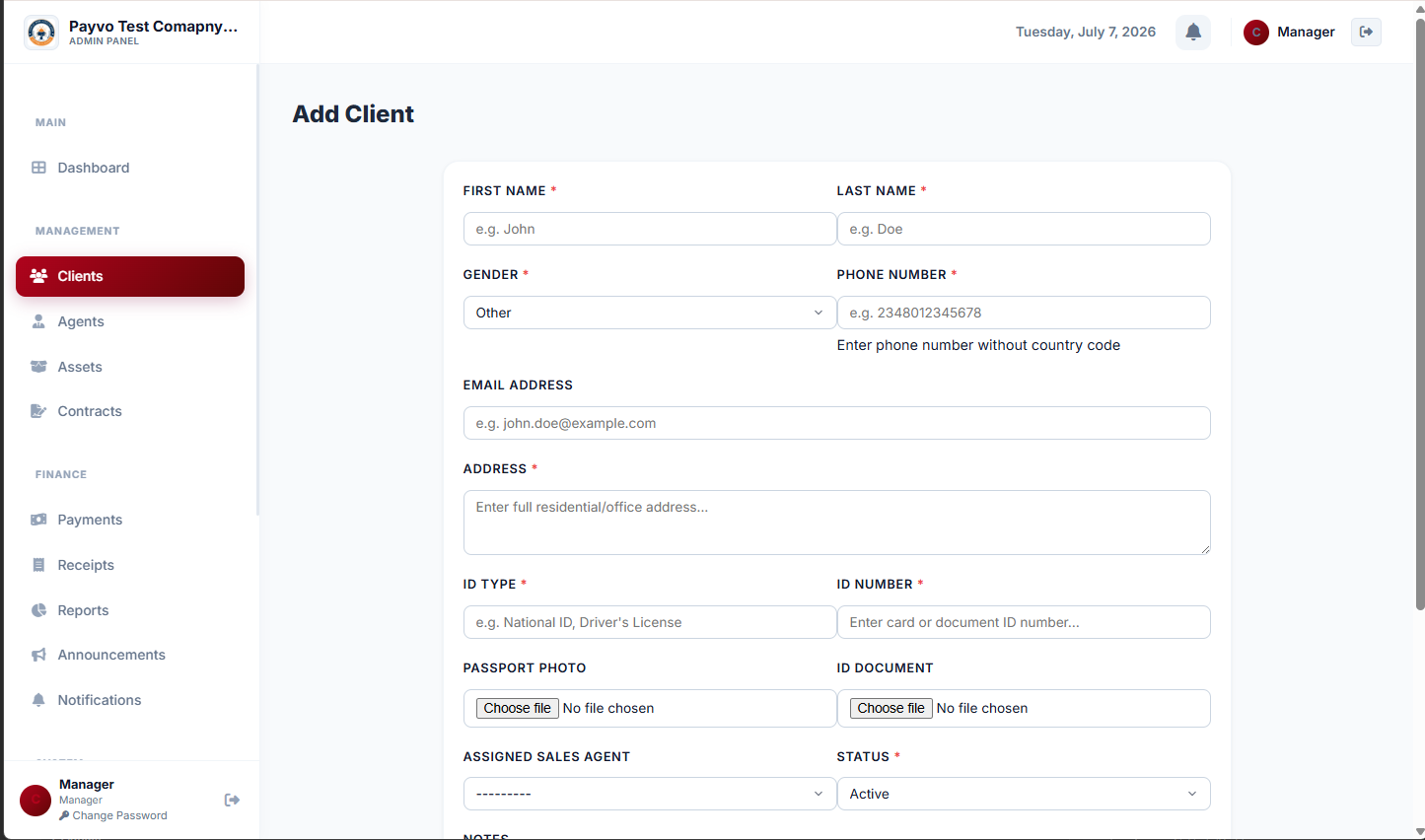 Client: Add Client page
With Payvo, you can easily add new clients, create detailed installment contracts, establish payment schedules, and record payments as they come in. This helps you track installment payments accurately and generate payment receipts instantly. For real estate developers tracking multiple property buyers, car dealers managing hire-purchase agreements, or cooperative societies overseeing member contributions, a robust contract management software Nigeria solution like this is indispensable.
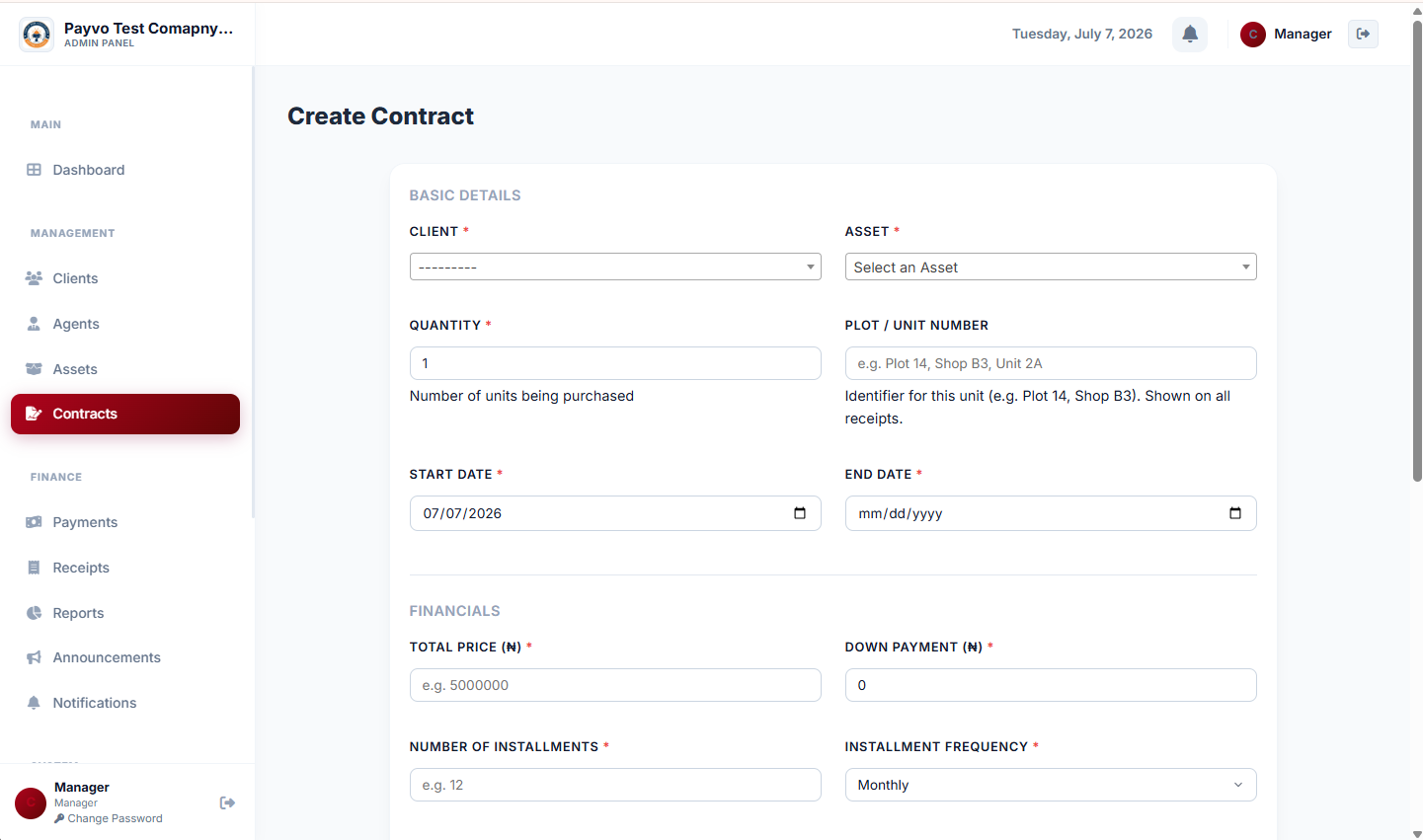 Management: Add contract (top)
Step 6: Implement Payment Collection and Reminder Procedures
Establish clear methods for customers to pay (bank transfer, POS, cash). For recurring payments, automate reminders. A WhatsApp payment notification system can be incredibly effective in Nigeria. You can set up automated messages to remind customers of upcoming due dates or confirm successful payments. This reduces late payments and improves customer communication.
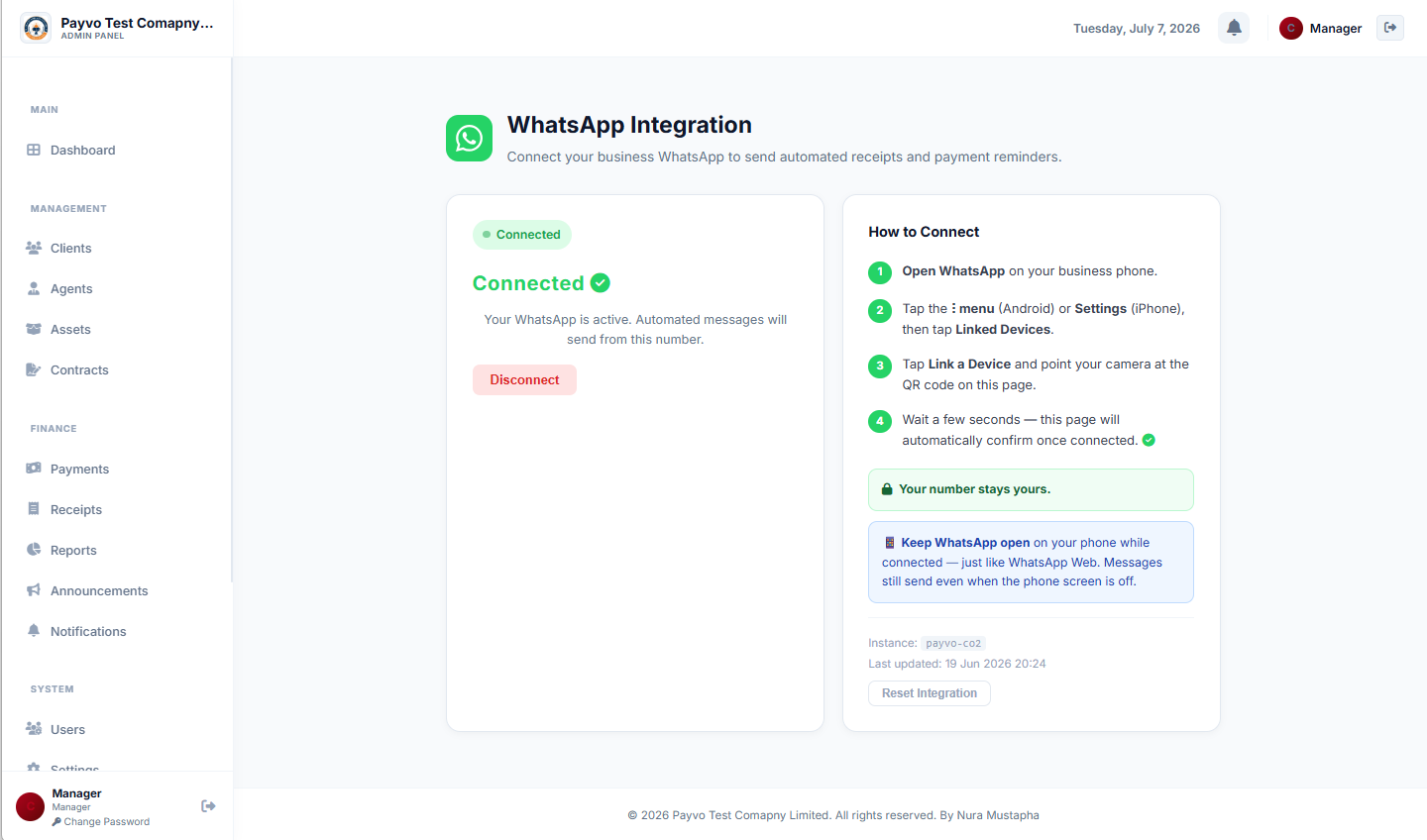 Admin: Whatsapp Integration
Regular follow-ups for overdue payments are also crucial. Your system should easily flag these to allow your team to act promptly.
Step 7: Manage Agents and Commissions (If Applicable)
If you use sales agents, especially common in real estate or direct sales models, you need a system to track their performance and commissions. An agent commission tracking software allows you to assign customers/contracts to specific agents, monitor their sales, and calculate their earnings accurately. This ensures transparency and motivates your sales team.
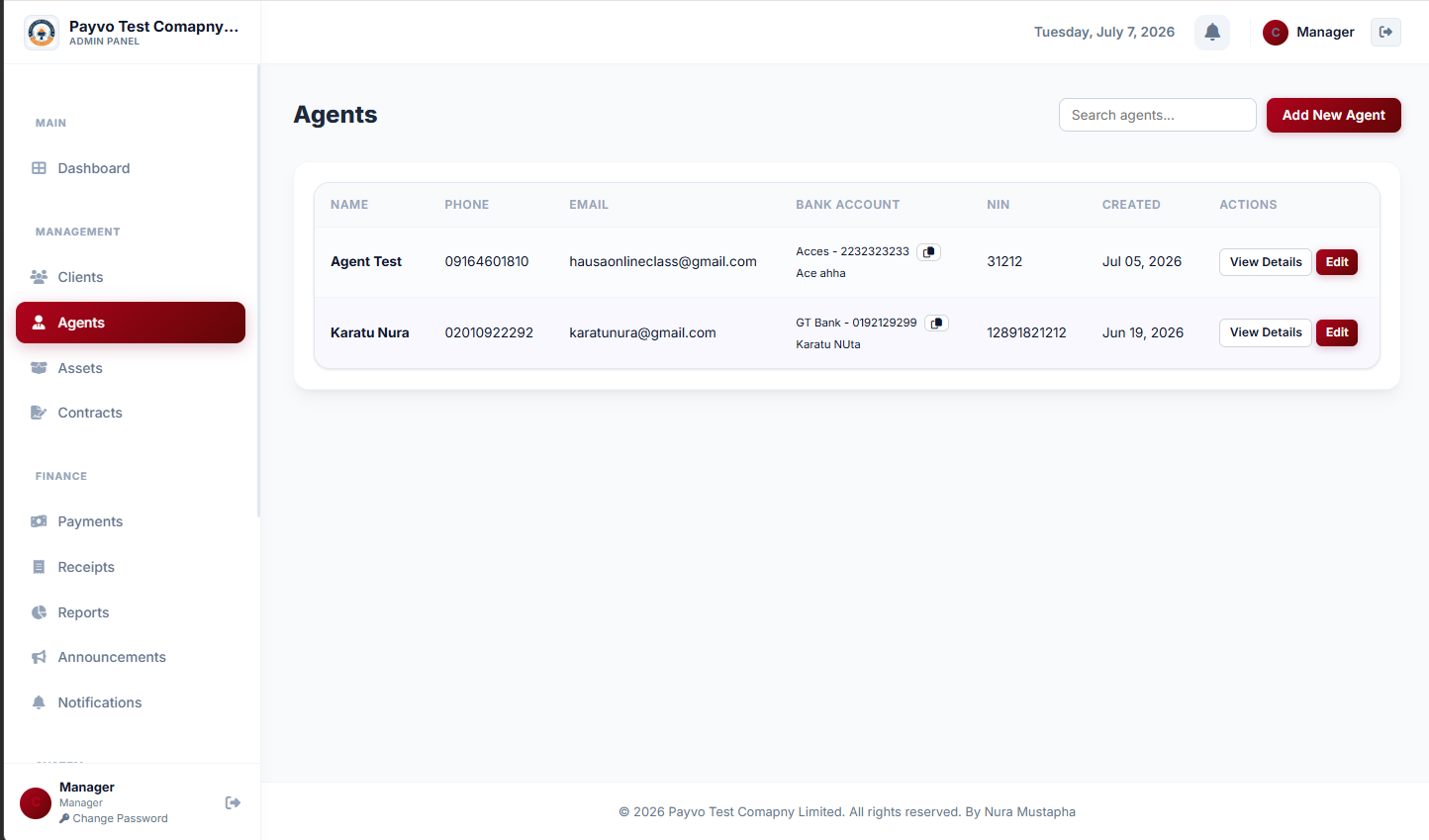 Agent: Agents list page
Step 8: Develop a Bad Debt Provision Strategy
Despite best efforts, some customers may default. It's crucial to account for this. Allocate a monthly budget as a "bad debt provision," perhaps ₦20,000 - ₦200,000, depending on your sales volume and risk profile. This helps absorb potential losses without crippling your cash flow. Your installment business software should help you identify at-risk accounts early.
> "In the Nigerian installment market, cash flow is king. Without meticulous tracking and a proactive approach to collections, even high sales figures can lead to liquidity crises."
Common Mistakes to Avoid
- Inadequate Legal Contracts: Relying on verbal agreements or poorly drafted contracts leaves you vulnerable to disputes and financial loss.
- Manual Tracking Overload: As your business grows, using notebooks or basic spreadsheets for payment tracking becomes error-prone, time-consuming, and unsustainable. This is a common pitfall that leads to customer dissatisfaction and lost revenue.
- Ignoring Follow-ups: Failing to send payment reminders or promptly follow up on overdue payments can significantly increase your bad debt rate.
- No Bad Debt Provision: Operating without an allowance for potential defaults can severely impact your business's financial health when defaults inevitably occur.
- Unrealistic Payment Plans: Offering installment terms that are too long or too small for your profit margins can tie up your capital for extended periods, hindering growth.
- Poor Customer Vetting: Not properly assessing a customer's ability to pay before entering into an installment agreement increases your risk of default.
How to Track and Grow After Launch
Once your installment business is operational, continuous monitoring and strategic growth are key.
Key Performance Indicators (KPIs) to Watch:
- Collection Rate: Percentage of due payments successfully collected.
- Default Rate: Percentage of customers who fail to complete their payments.
- Average Payment Period: How long it takes customers to pay off their installments.
- Customer Acquisition Cost (CAC): How much it costs to acquire a new customer.
- Customer Lifetime Value (CLTV): The total revenue you expect to generate from a customer over their relationship with your business.
- Profit Margin: Aim for 10% - 30% profit margin per item after all costs, though this can vary by product and volume.
- Optimize Payment Plans: Analyze your data to find the most effective down payment percentages, installment durations, and frequencies that balance customer affordability with your cash flow needs.
- Expand Product Offerings: Introduce complementary products or services that can also be sold on installment.
- Improve Customer Service: Happy customers are repeat customers and provide valuable referrals. Implement a robust business payment tracking app Nigeria that offers features like a receipt generator app Nigeria to provide professional payment proofs, enhancing customer trust.
- Leverage Digital Marketing: Use social media and targeted online ads to reach a wider audience for your installment offers.
- Agent Network Expansion: If applicable, recruit more agents and provide them with proper training and tools, including an efficient agent commission tracking software.
- Utilize Installment Management Software: A platform like Payvo offers detailed financial reports and analytics (like the Financial Reports Page at https://payvo.ng/media/bloguploads/financialreports_page.png) that provide insights into your payment trends, outstanding balances, and collection performance. This data is invaluable for making informed business decisions and identifying areas for growth.
 Nigerian market vendor arranging fresh produce
Frequently Asked Questions
Q1: What kind of businesses benefit most from offering installment payments?
A1: Businesses selling high-value items where customers might struggle with a one-time payment benefit greatly. This includes real estate payment tracking Nigeria for property developers, car dealer installment software for vehicle sales, solar energy providers, electronics retailers, furniture stores, and even cooperative societies offering credit. Essentially, any business dealing with significant purchase costs can thrive with installment options.
Q2: How can I minimize the risk of customers defaulting on payments?
A2: Thorough customer vetting is crucial. This includes verifying their identity, income source, and stability. Clear, legally binding contracts outlining penalties for default are also essential. Regular payment reminders (e.g., via a WhatsApp payment notification system) and prompt follow-ups on missed payments can significantly reduce defaults. Building a good customer relationship also helps.
Q3: Is it expensive to set up an installment business?
A3: The initial costs vary widely depending on your industry and scale. Factors like business registration (₦25,000 - ₦70,000), shop rent (₦80,000 - ₦2,500,000 annually), initial stock (₦500,000 - ₦5,000,000), and legal fees for contracts (₦50,000 - ₦250,000) are primary expenses. Investing in installment management software Nigeria is a cost-effective way to manage operations efficiently in the long run.
Q4: How does a cooperative society manage its members' contributions and loans on installment?
A4: Cooperative societies often manage regular contributions and issue loans that members repay in installments. A dedicated cooperative society management software or a flexible installment management system can track each member's contributions, loan disbursements, repayment schedules, and outstanding balances. This ensures transparency and accurate record-keeping for the cooperative.
Q5: What's the biggest challenge in managing an installment business in Nigeria?
A5: The biggest challenge is often the administrative burden of tracking numerous individual payment schedules, calculating outstanding balances, and managing collections efficiently. Without proper tools like installment business software, this can lead to errors, cash flow issues, and customer disputes. Maintaining consistent power supply for operations and managing fuel costs for generators are also significant operational challenges.
Ready to Streamline Your Installment Business?
Starting and managing an installment payment business in Nigeria offers immense growth potential, but only with the right systems in place. Move beyond manual tracking and embrace efficiency. Discover how Payvo can help you organize your customer contracts, automate payment tracking, and gain clear insights into your business financials. Visit our public home page to learn more about our features and how we can help you thrive, or register into Payvo page today to get started.