The ticking clock on overdue payments can feel like a direct drain on your business's lifeblood. Every late instalment isn't just a deferred income; it's a disruption to cash flow, a source of stress, and a barrier to growth. In Nigeria's dynamic market, effective instalment collection isn't just good practice—it's essential for survival and expansion.
 Nigerian business owner looking at an empty cash
The Cost of Late Payments in Nigeria's Economy (2026)
In 2026, many Nigerian businesses, especially those operating on instalment models like real estate developers, car dealers, and equipment leasing companies, grapple with the pervasive issue of late payments. This isn't merely an inconvenience; it significantly impacts profitability and operational stability. When clients delay payments, businesses often face a cascade of challenges:
- Cash Flow Disruptions: Delayed income means businesses might struggle to meet their own financial obligations, such as paying staff salaries (which could range from ₦80,000 - ₦180,000 for a collections officer) or suppliers, leading to operational bottlenecks.
- Increased Administrative Costs: Chasing late payments consumes valuable time and resources. This includes costs for sending bulk SMS reminders (₦3,000 - ₦6,000 per 1,000 messages), printing physical notices (₦2,000 - ₦5,000 per 100 copies), and potentially legal fees for drafting instalment payment agreements (₦50,000 - ₦150,000).
- Reduced Profitability: The longer an payment is outstanding, the higher the likelihood it becomes a bad debt. Businesses might also incur interest on short-term business loans (25% - 45% per annum) to cover immediate shortfalls caused by late payments. In extreme cases, engaging a debt recovery agency could cost 15% - 30% of the recovered debt.
- Damaged Customer Relationships: Aggressive collection tactics can strain client relationships, potentially leading to lost future business and negative word-of-mouth.
What You Need Before You Start
Before implementing strategies to reduce late payments, ensure you have these foundational elements in place:
- Clear Payment Policies: Documented, unambiguous terms for all instalment plans.
- Reliable Record-Keeping System: A method to accurately track all client details, payment schedules, and payment history.
- Communication Channels: Established ways to reach clients effectively (phone, SMS, WhatsApp, email).
- Dedicated Personnel/System: Someone or something responsible for monitoring payments and initiating follow-ups.
- Legal Counsel (Optional but Recommended): For drafting robust contract management software Nigeria agreements, especially for high-value items like property or vehicles.
Step-by-Step: 7 Proven Strategies for Instalment Businesses
Reducing late payments requires a proactive, systematic approach. Here are seven strategies to implement in your business:
1. Establish Crystal-Clear Payment Agreements
Ambiguity is the enemy of timely payments. Ensure every client understands their financial obligations from the outset.
- Detailed Contracts: Draft comprehensive contracts that clearly state the total amount, instalment amounts, due dates, acceptable payment methods, and consequences of late payments (e.g., late fees, repossession clauses). For real estate payment tracking Nigeria, this is non-negotiable. Legal fees for drafting a simple agreement can range from ₦50,000 to ₦150,000, a worthy investment to prevent future disputes.
- Onboarding Process: Dedicate time during client onboarding to walk them through the payment schedule. Answer all questions and ensure they sign off on understanding the terms. Provide a physical or digital copy of the agreement.
- Accessible Terms: Make your payment terms easily accessible, perhaps on your website or in a welcome packet. Transparency builds trust and reduces misunderstandings.
2. Automate Payment Reminders
Manual reminders are time-consuming and prone to human error. Automation is key to consistent follow-up.
- Multi-Channel Reminders: Send automated reminders via SMS, WhatsApp, and email a few days before a payment is due. A typical cost for sending bulk SMS reminders might be ₦3,000 - ₦6,000 per 1,000 messages.
- Personalised Messages: While automated, reminders should still feel personal, addressing the client by name and referencing their specific instalment.
- Include Payment Instructions: Make it easy for clients to pay by including clear instructions or a direct link to your payment portal in the reminder message.
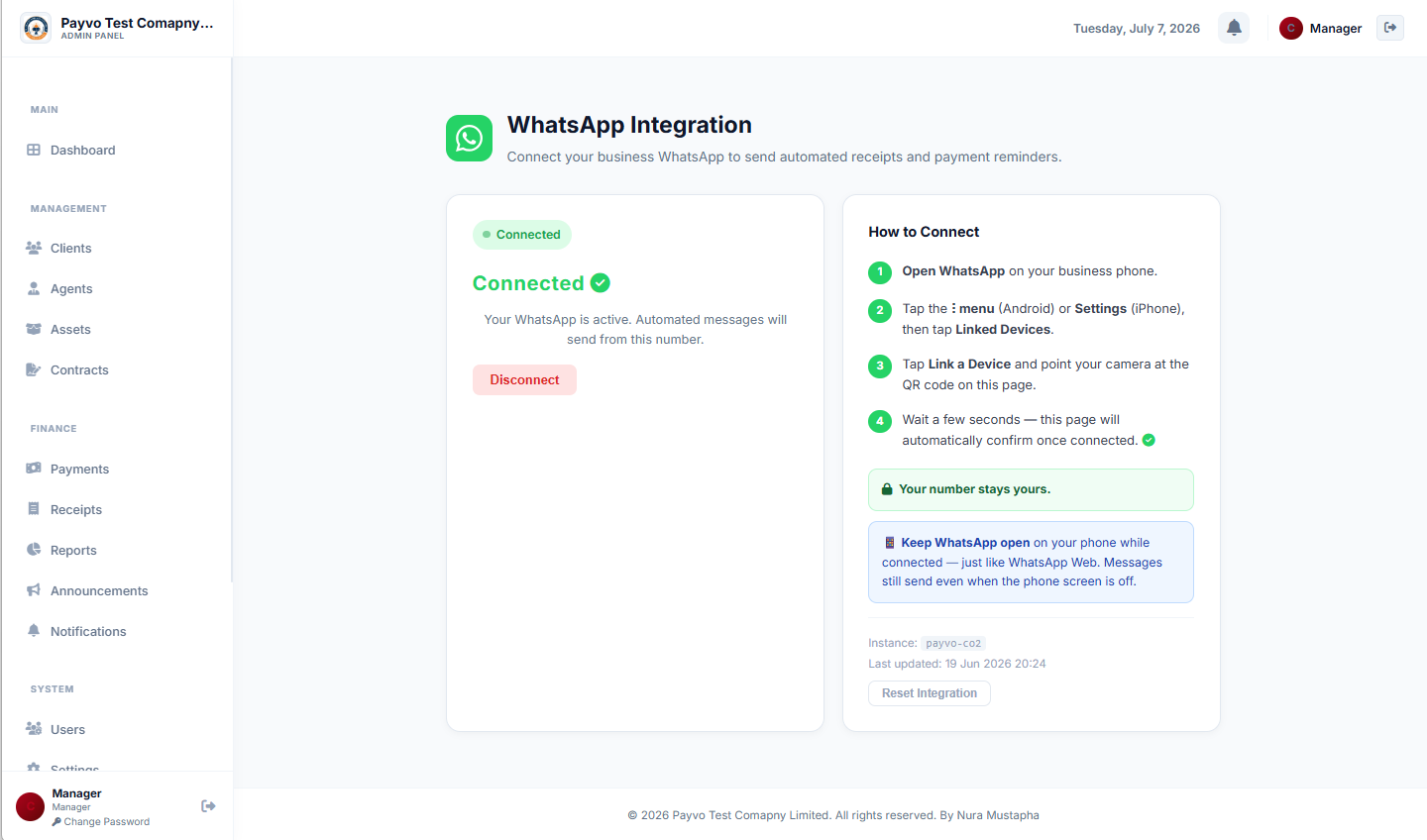 Admin: Whatsapp Integration
3. Offer Flexible Payment Options
Making it easier for clients to pay can significantly reduce late payments.
- Diverse Payment Channels: Accept payments through various channels, including bank transfers, POS terminals (which cost ₦35,000 - ₦70,000 for a basic model), mobile money, and online payment gateways. Transaction fees for online gateways typically range from 1.5% - 2.5% + ₦100 per transaction.
- Tailored Payment Plans: Where possible, offer slightly flexible payment plans upfront, especially for clients with irregular income patterns, while still maintaining strict due dates.
- Partial Payment Acceptance: Have a clear policy for accepting partial payments. While not ideal, it can keep clients engaged and prevent total default, often better than no payment at all.
4. Implement a Structured Follow-Up Process for Overdue Payments
When a payment is missed, a swift and consistent follow-up is crucial.
- Immediate Notification: As soon as a payment is overdue, send an automated notification. This should be firmer than a pre-due reminder but still polite.
- Tiered Follow-Up: Develop a tiered follow-up schedule:
- Day 1-3 Overdue: Gentle reminder via SMS/WhatsApp/email.
- Day 4-7 Overdue: A phone call to understand the situation and offer assistance if possible.
- Day 8-14 Overdue: A more formal communication, perhaps a letter or email, reiterating the contract terms and consequences.
- Beyond 14 Days: Escalation according to your contract terms, which might involve late fees or legal action.
- Document All Communication: Keep detailed records of every reminder sent and every conversation had regarding overdue payments. This is vital for audit logs and legal purposes.
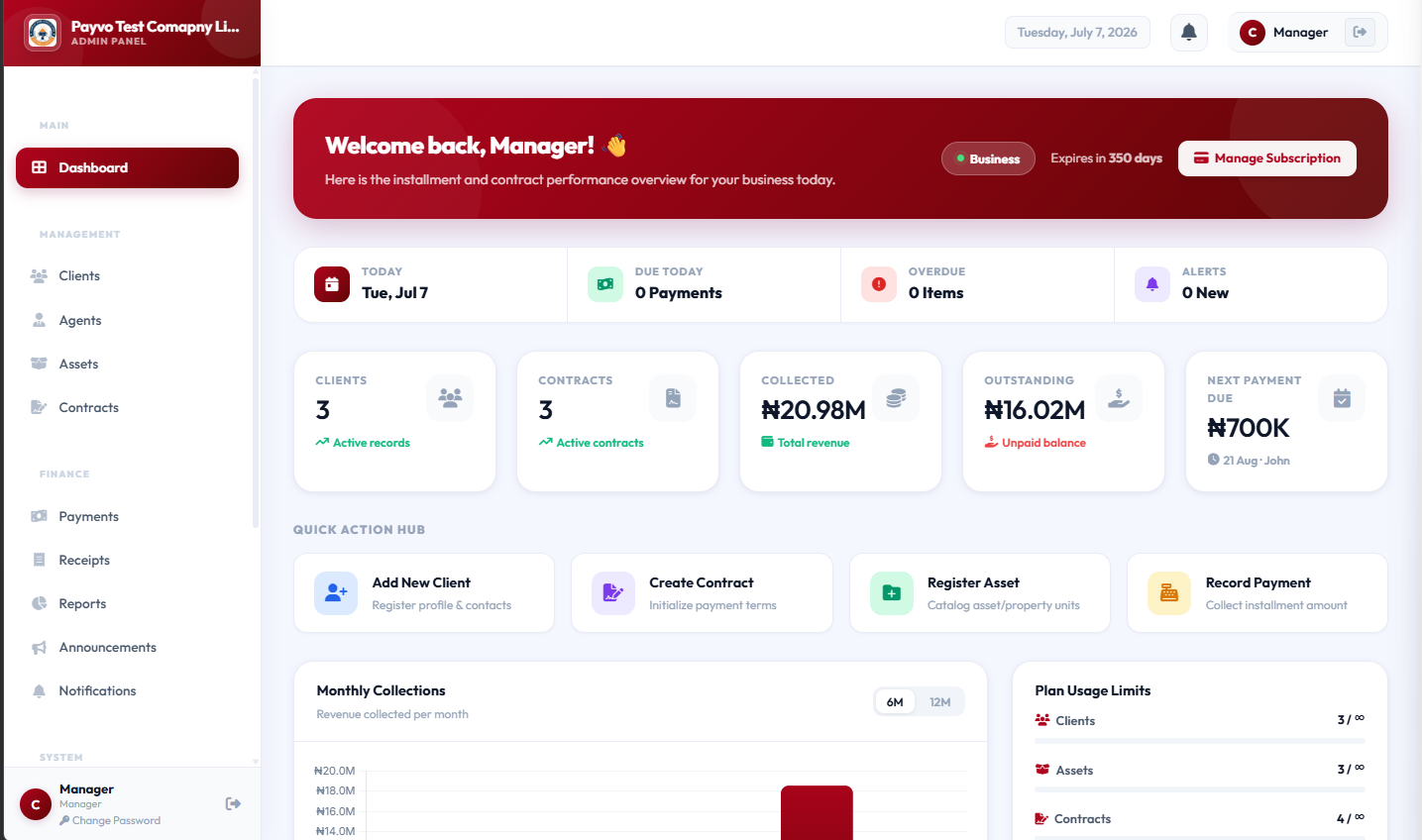 Dashboard (bottom)
5. Incentivize Early or On-Time Payments
Positive reinforcement can be a powerful motivator.
- Small Discounts: Offer a small discount for clients who pay several instalments in advance or consistently pay on time.
- Loyalty Programs: For long-term clients, consider a loyalty program that offers benefits for a good payment history, such as priority access to new products or services.
- Public Recognition: If appropriate for your business model, celebrate clients who maintain excellent payment records (with their permission, of course).
6. Leverage Technology for Instalment Collection and Management
Manual tracking with notebooks and spreadsheets is inefficient and error-prone, especially for businesses managing multiple contracts, clients, and agents.
- Integrated Platform: Adopt a comprehensive instalment management software Nigeria that centralizes client data, contract terms, payment schedules, and communication logs. This is particularly beneficial for car dealer instalment software needs or cooperative society management software.
- Automated Receipt Generation: Ensure your system automatically generates branded receipts (with company logo and signature) for every payment. This provides proof of payment for clients and simplifies your record-keeping.
- Agent Commission Tracking: If you work with agents, use a system that automatically calculates commissions per payment received and tracks their earnings, as offered by agent commission tracking software. This keeps agents motivated and transparent.
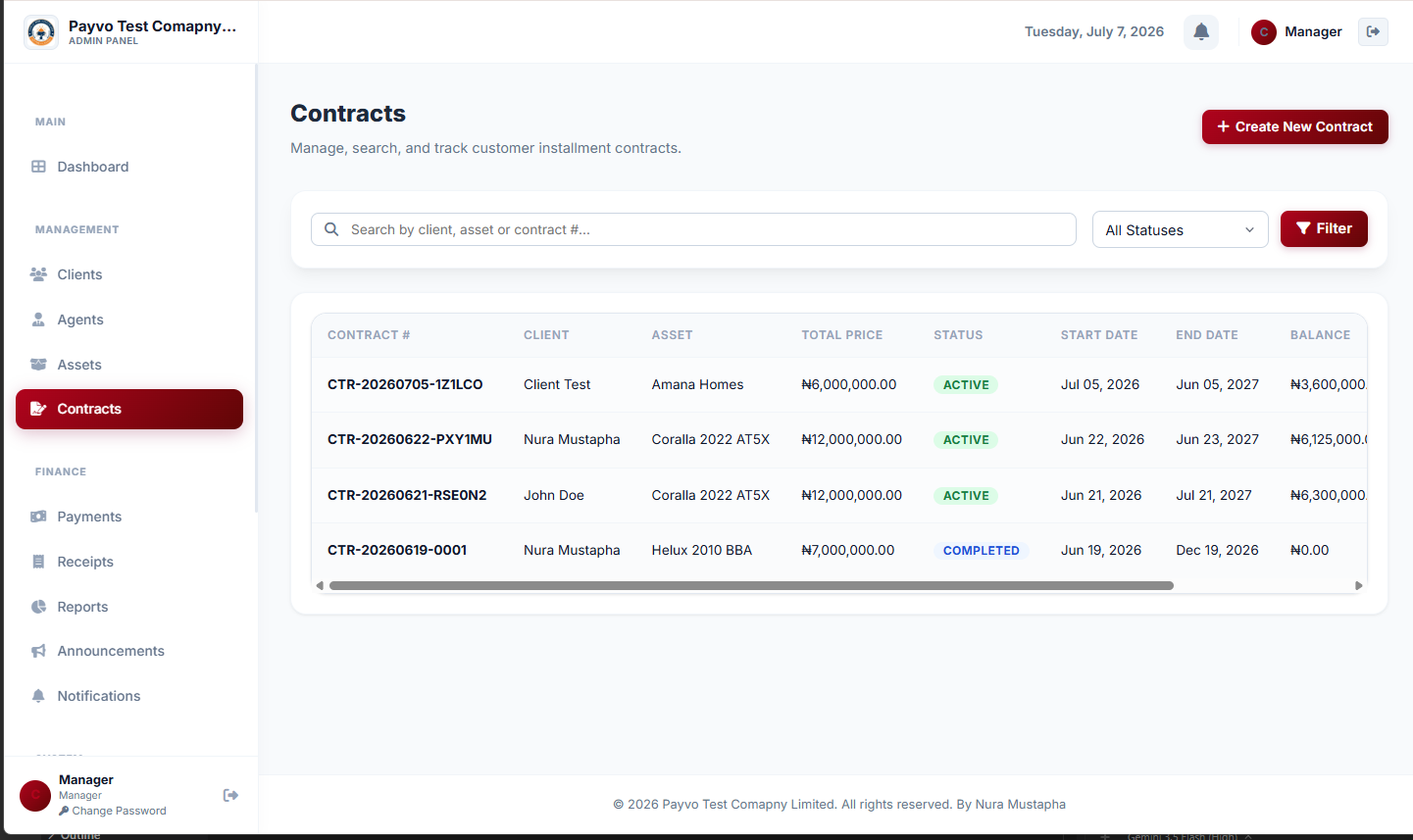 Management: Contracts list page
7. Understand and Address Root Causes of Late Payments
Sometimes, late payments stem from genuine difficulties, not just forgetfulness.
- Open Communication: Encourage clients to communicate if they anticipate difficulties. A quick phone call or message can prevent a missed payment from escalating.
- Temporary Payment Adjustments: In cases of genuine hardship, consider offering temporary, modified payment plans. This might involve extending a due date or temporarily reducing the instalment amount, with clear terms for resuming the original schedule. This requires careful consideration and should be an exception, not a rule.
- Feedback Loop: Regularly review your late payment data. Are payments consistently late on certain days of the month? Is a particular product or service more prone to late payments? Use this information to refine your processes.
Common Mistakes to Avoid
- Inconsistent Follow-Up: Sending reminders sporadically or only when you remember sends a message that payment terms aren't strictly enforced.
- Aggressive Early Tactics: Immediately resorting to threats or harsh language can alienate clients and damage your reputation.
- Lack of Documentation: Failing to record communications or payment history can lead to disputes and make debt recovery challenging.
- Ignoring the "Why": Not attempting to understand why a client is late can prevent you from finding a mutually beneficial solution.
- Over-reliance on Manual Processes: Trying to manage hundreds of instalment contracts with spreadsheets is a recipe for errors and missed payments.
- Unclear Contract Terms: Vague language in contracts leaves room for misinterpretation and makes enforcement difficult.
How to Track and Grow After Launch
Once you've implemented these strategies, ongoing monitoring and adaptation are essential.
- Key Performance Indicators (KPIs): Regularly track metrics such as:
- Days Sales Outstanding (DSO): The average number of days it takes to collect payments. A lower DSO is better.
- Collection Effectiveness Index (CEI): Measures the percentage of collectible receivables actually collected.
- Percentage of Overdue Accounts: Track the proportion of your client base with outstanding payments.
- Average Payment Delay: The typical number of days payments are delayed.
- Regular Reporting: Generate weekly or monthly reports on payment status. This allows you to identify trends, pinpoint problematic contracts or clients, and assess the effectiveness of your strategies.
- Client Feedback: Periodically solicit feedback from clients on your payment process. Are reminders helpful? Is the payment process easy?
- System Optimization: Continuously look for ways to optimize your instalment collection process. This might involve fine-tuning reminder schedules, adjusting payment options, or further leveraging technology.
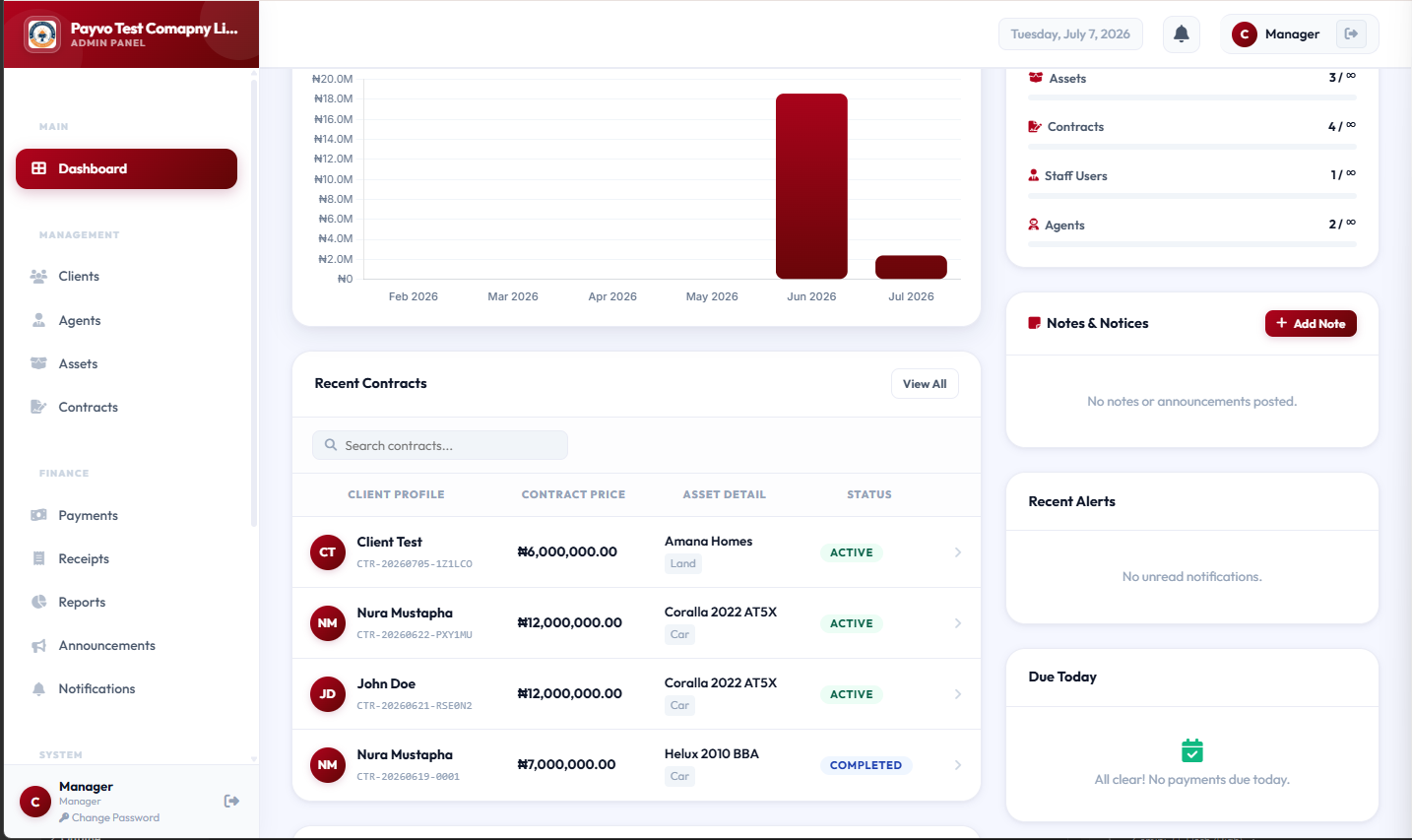 Dashobard (top)
Frequently Asked Questions
Q1: What is the most effective way to remind clients about upcoming payments?
A: Automated, multi-channel reminders sent a few days before the due date are most effective. Combining SMS, WhatsApp payment notification system, and email ensures broad reach. Personalize messages and include clear payment instructions to make it easy for clients to act.
Q2: How can I handle a client who consistently makes late payments?
A: First, review your contract for late payment clauses. Engage in direct communication to understand their challenges. If it's a persistent issue, consider a formal warning, implementing late fees as per your agreement, or, as a last resort, renegotiating terms or escalating to debt recovery if the contract allows. Document every step.
Q3: Is it worth investing in instalment management software in Nigeria?
A: Absolutely. For any business selling on instalment, from real estate to car dealers, an integrated system significantly reduces administrative burden, minimizes errors, improves cash flow through automated reminders, and provides critical insights into your financial health. The cost of basic accounting software, for example, is ₦5,000 - ₦15,000 monthly, which is a small price for operational efficiency.
Q4: What legal steps can I take for very overdue payments?
A: This depends on your contract. Typically, you would start with formal demand letters. If those fail, you might consider mediation, arbitration, or ultimately, legal action in court. It's crucial to consult with a legal professional early in the process to understand your options and ensure compliance with Nigerian law.
Q5: How can I track agent commissions effectively for instalment sales?
A: Manual tracking of agent commissions is complex and prone to errors, especially when commissions are tied to collected instalments. An agent commission tracking software integrated into your overall instalment management system is ideal. It automatically calculates commissions as payments are received and provides agents with transparency on their earnings, which can be seen on Payvo's Agent Tracking Page.
 Nigerian small business owner reviewing financial reports on
Ready to Streamline Your Instalment Collections?
Don't let late payments hinder your business growth. Implementing these proven strategies, especially by leveraging powerful tools like instalment management software, can transform your cash flow and reduce stress. If you're ready to automate your contract management, send effective payment reminders, and gain clear visibility into your collections, explore how Payvo can help. Register with Payvo today to start building a more financially stable and efficient business.