Collecting weekly or monthly payments from customers can feel like a constant chase, a whirlwind of phone calls, scattered WhatsApp messages, and endless calculations. Many Nigerian businesses lose precious hours, and sometimes even money, trying to reconcile payments that come in drips and drabs rather than a single lump sum. This administrative burden often distracts from core business growth.
 Nigerian market vendor counting naira notes
The Reality of Installment Payments in Nigeria in 2026
In Nigeria, installment payments are more than just a payment option; they're a cornerstone of commerce, making everything from a plot of land to a new refrigerator accessible to a wider customer base. From real estate developers in Abuja offering flexible payment plans for housing units to car dealers in Lagos selling vehicles on hire purchase, businesses thrive by allowing customers to pay weekly or monthly. Even cooperative societies and microfinance operators rely heavily on structured repayment schedules.
However, this flexibility comes at a cost. Managing hundreds, or even thousands, of individual payment schedules can quickly overwhelm manual systems. Consider the typical costs involved:
- Staff Salary: A dedicated cashier or accountant to track these payments could cost between ₦40,000 and ₦120,000 per month, depending on their experience and location.
- Internet Data: Relying on online payment tracking or communication means a monthly data spend of ₦5,000 to ₦15,000.
- Cash Handling/Security: For businesses dealing significantly in cash, transport to the bank and security can add ₦1,000 to ₦5,000 weekly.
- SMS Alerts: If you're sending manual payment reminders or confirmations, each SMS can cost ₦5 to ₦15. Multiply that by hundreds of customers, and costs add up quickly.
- POS Machine & Transaction Fees: While convenient, acquiring a POS machine costs ₦20,000 to ₦60,000, and transaction fees range from 0.5% to 1.5% (capped at ₦1,000-₦2,000) per transaction.
What You Need Before You Start
Before diving into managing weekly and monthly customer payments, ensure you have these foundational elements in place:
- Clear Payment Terms: Define exact payment amounts, due dates (weekly/monthly), and any late payment policies.
- Dedicated Bank Account: A separate business account simplifies reconciliation.
- Communication Channels: Reliable ways to reach customers (phone numbers, WhatsApp, email).
- Initial Capital: To cover setup costs like a POS machine or initial data subscriptions.
- Staff Training: Ensure anyone handling payments understands the process and system.
- Legal Agreements: Formal contracts signed by customers outlining their payment obligations.
Step-by-Step: Managing Weekly & Monthly Customer Payments
Effective management of recurring customer payments requires a structured approach. This guide breaks down the process into actionable steps, focusing on both manual and automated methods to keep your business running smoothly.
Step 1: Define Your Installment Structure and Agreement
Before any payment is made, a clear agreement is paramount. For real estate developers, this means outlining the initial deposit for a land plot, the number of weekly or monthly installments, and the exact amount for each. Car dealers on hire purchase must detail the down payment, the duration of the repayment, and the fixed weekly or monthly sums.
Your contract management software should clearly stipulate:
- Total Purchase Price: The full cost of the product or service.
- Initial Payment/Down Payment: The upfront amount paid by the customer.
- Installment Amount: The fixed sum to be paid weekly or monthly.
- Payment Frequency: Clearly state whether it's weekly, bi-weekly, or monthly.
- Number of Installments: The total count of payments required to complete the purchase.
- Due Dates: Specific dates or days of the week when payments are expected.
- Late Payment Penalties: Any charges for missed or delayed payments.
Step 2: Onboard Customers and Record Initial Payments
When a customer makes their first payment, whether it's a down payment for a new solar system or the first weekly payment for electronics, it's crucial to record it accurately. This step involves collecting all necessary customer information and linking it to their specific contract and the asset they are acquiring.
For cooperative societies, this might mean registering a new member and their contribution schedule. For a building material supplier selling on credit, it's setting up the customer's account with their credit limit and repayment plan. Ensure all customer details – name, contact information, ID – are captured.
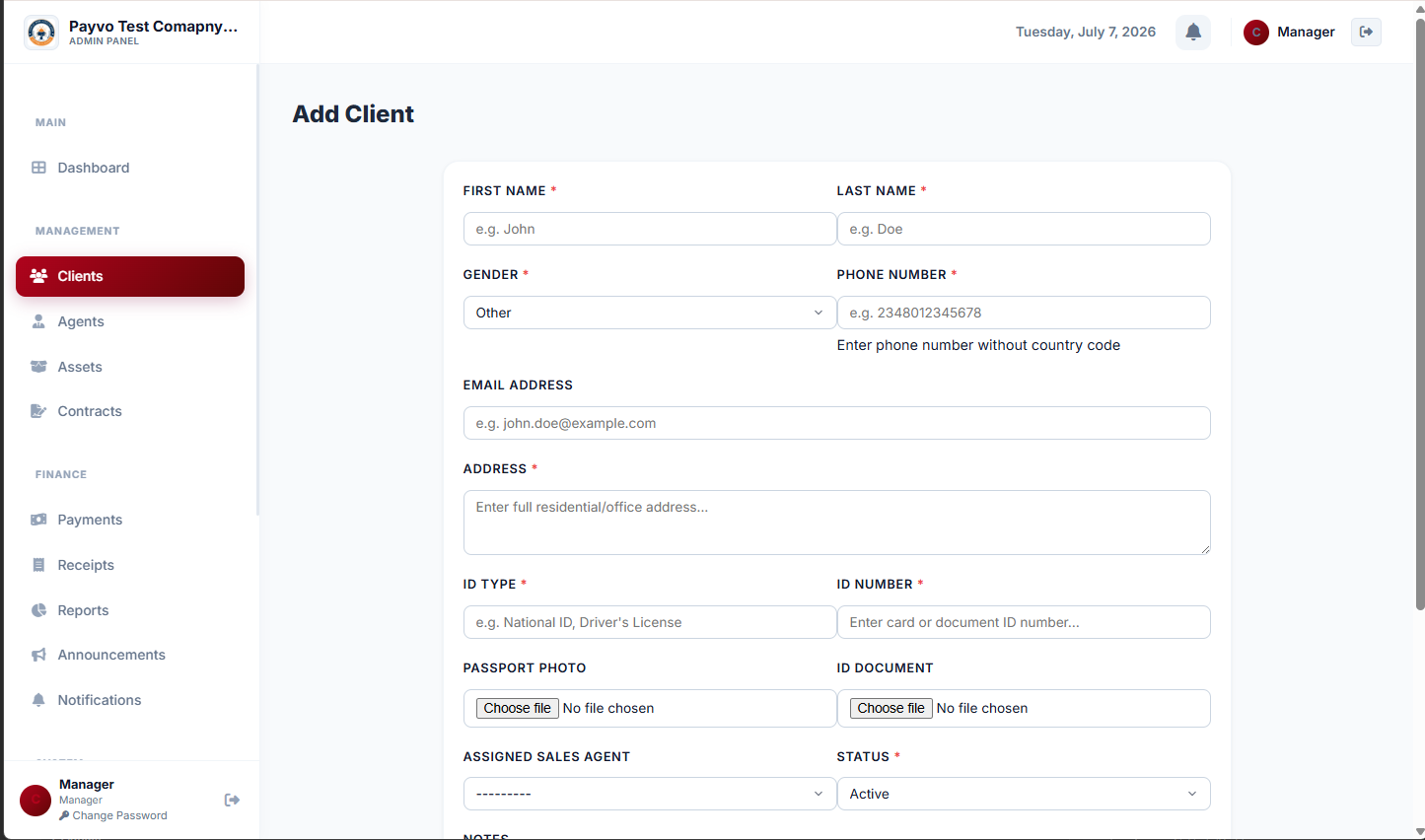 Client: Add Client page
This initial recording forms the baseline for all future payment tracking. A robust business payment tracking app Nigeria can streamline this process, allowing you to quickly add new clients and their contract details.
Step 3: Establish a Centralized Payment Tracking System
This is where many businesses struggle. Relying on notebooks, scattered WhatsApp chats, or complex Excel sheets for how to track installment payments becomes unsustainable as your customer base grows. A centralized system is essential for effective weekly and monthly payment tracking.
Consider these options:
- Manual Ledger: Suitable for very few customers, but prone to errors and difficult to audit.
- Spreadsheets (Excel/Google Sheets): Better than paper, but still requires manual updates, formula maintenance, and lacks automation for reminders or reporting.
- Dedicated Installment Management Software: This is the most efficient solution for businesses with multiple customers. It centralizes customer records, contract details, payment schedules, and payment history in one place. It eliminates manual calculations and provides real-time insights into who has paid and who hasn't.
Step 4: Systematically Record All Incoming Payments
Every single payment, regardless of how small or frequent, must be recorded against the customer's contract. Whether it's a cash payment, a bank transfer, or a POS transaction, log it immediately.
When recording:
- Date of Payment: Crucial for calculating outstanding balances and late fees.
- Amount Paid: The exact sum received.
- Payment Method: Cash, bank transfer, POS, etc.
- Reference Number: For bank transfers or POS transactions, note the transaction ID.
- Agent (if applicable): If you use agents, attribute the payment to the responsible agent for commission tracking.
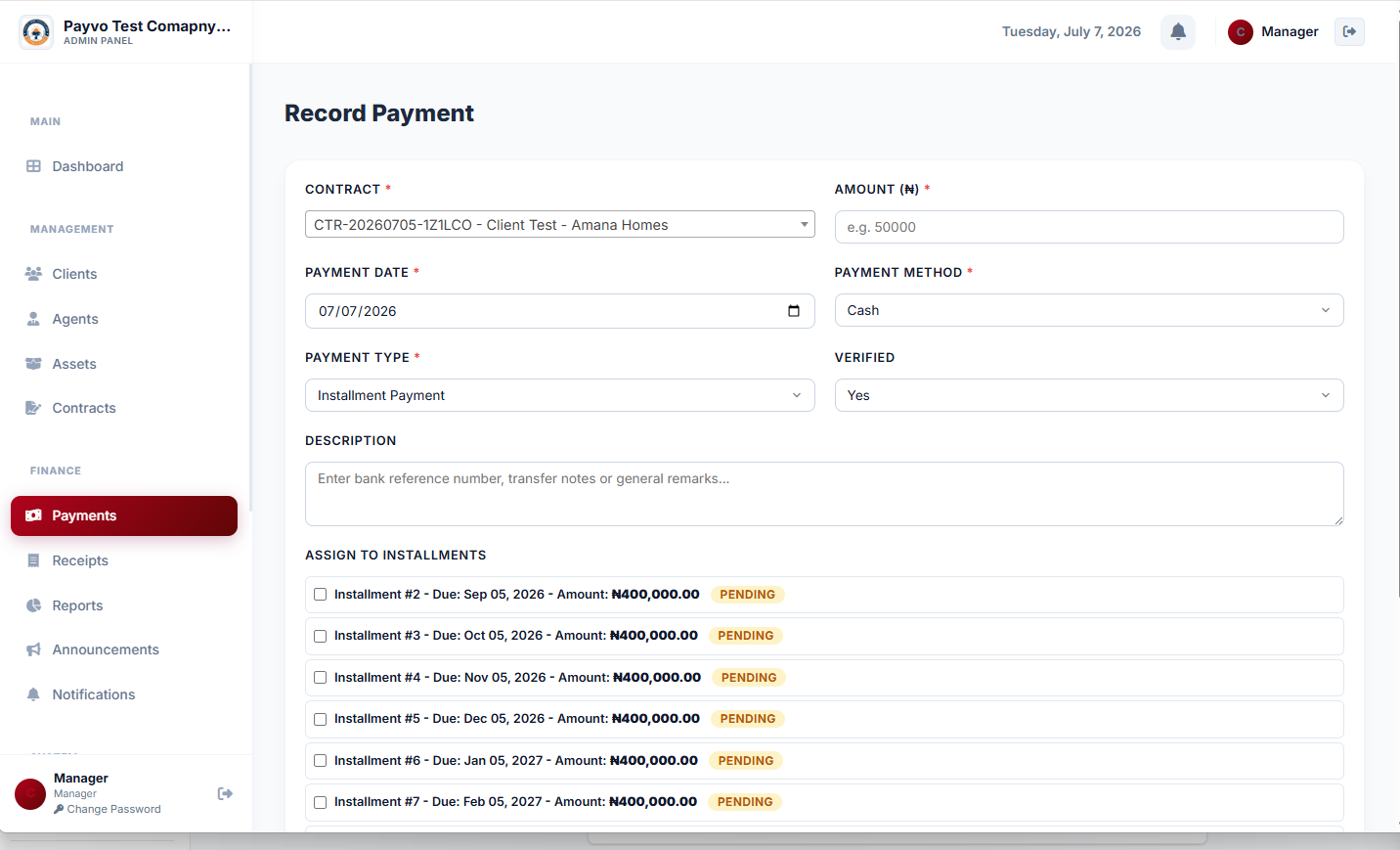 Finance: Record Payments Page
Step 5: Automate Reminders and Notifications
One of the biggest challenges in managing installment customers is keeping them on schedule. Manual follow-ups are time-consuming and often inconsistent. Automating payment reminders significantly improves collection rates.
- Pre-Due Reminders: Send a notification a few days before a payment is due.
- Due Date Reminders: Send a reminder on the actual due date.
- Overdue Notifications: Follow up promptly when a payment is missed.
Step 6: Track Outstanding Balances and Generate Reports
Knowing exactly how much each customer owes and when their next payment is due is critical. Your system should provide a clear overview of all active contracts, their payment status, and total outstanding amounts. This is particularly important for real estate payment tracking Nigeria, where large sums are involved over long periods.
Regularly generate reports to:
- Identify Overdue Accounts: Pinpoint customers who have missed payments.
- Monitor Collection Rates: Track how successful you are at collecting payments.
- Assess Financial Health: Understand your expected incoming revenue.
- Calculate Agent Commissions: If you work with agents, easily calculate their earnings based on collected payments using agent commission tracking software.
> "In the Nigerian market, trust is built on transparency and consistent communication. A clear record of payments isn't just good business; it's the foundation of lasting customer relationships."
Step 7: Manage Agent Performance (If Applicable)
For businesses like real estate companies or car dealers, agents play a crucial role in sales and collections. Effective agent commission tracking software is vital to ensure fair compensation and motivate your sales force.
Your system should allow you to:
- Assign Customers/Contracts to Agents: Clearly link each contract to the responsible agent.
- Track Agent Collections: Monitor how much each agent brings in.
- Calculate Commissions: Automatically determine commissions based on collected payments, not just sales.
- Provide Agent Access: Give agents controlled access to their assigned customer's payment status and schedules.
Common Mistakes to Avoid
Managing weekly and monthly payments is complex. Here are pitfalls to steer clear of:
- Relying Solely on Memory or WhatsApp: Information gets lost, payments are forgotten, and disputes arise. This is a recipe for administrative chaos and financial loss.
- Inconsistent Follow-up: Sporadic reminders or calls lead to customers delaying payments, as they don't perceive urgency. Consistency is key.
- Lack of Clear Contracts: Vague agreements lead to misunderstandings about payment amounts, due dates, and penalties. Get everything in writing.
- Poor Record-Keeping: Inaccurate or incomplete payment records make it impossible to know who owes what, leading to lost revenue and customer frustration.
- Ignoring Small Overdue Amounts: Even small missed payments, if left unaddressed, can accumulate and signal to other customers that your payment terms are not strictly enforced.
- Over-reliance on Cash: While common, cash transactions are harder to track and pose security risks. Encourage bank transfers or POS payments where possible.
How to Track and Grow After Launch
Once you've implemented a system for managing weekly and monthly payments, the journey doesn't end. Continuous tracking and analysis are crucial for growth.
- Monitor Key Performance Indicators (KPIs):
- Collection Rate: Percentage of due payments successfully collected.
- Average Days Overdue: How long, on average, customers delay payments.
- Default Rate: Percentage of contracts that go into severe arrears.
- Agent Performance: For businesses using agents, track their individual collection efficiency.
- Analyze Payment Trends: Identify peak collection times, common reasons for late payments, or specific customer segments that require more attention. This data can inform your sales strategies and payment term adjustments.
- Refine Your Communication Strategy: Based on what works best (SMS, WhatsApp, calls), optimize your reminder messages and follow-up cadence.
- Leverage Data for Future Decisions: Insights from your payment data can help you assess risk for new installment contracts, adjust pricing, or even identify opportunities for new installment-based products. For businesses like car dealer installment software users, understanding repayment patterns can influence inventory decisions.
- Utilize Reporting Features: A robust installment management software Nigeria provides comprehensive financial reports. These reports offer a clear picture of your cash flow, outstanding receivables, and overall financial health, allowing you to make data-driven decisions for sustainable growth. You can explore how Payvo's reporting features can help you gain these insights by visiting their features page.
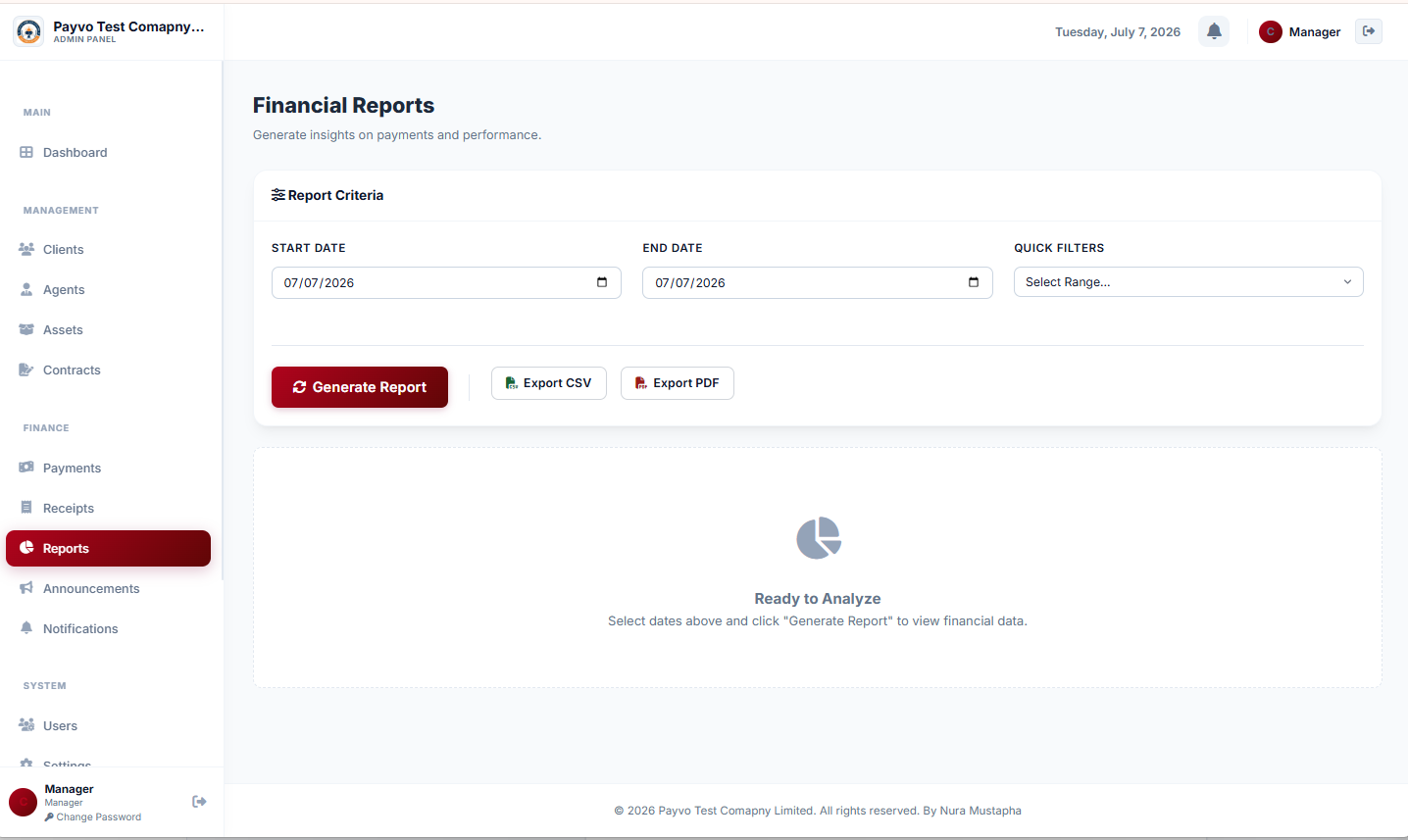 Finance: Financial Reports Page
Frequently Asked Questions
What is the best way to track weekly customer payments?
The best way to track weekly customer payments is through a dedicated installment management software. While spreadsheets can work for a very small number of customers, a specialized system automates calculations, sends reminders, generates receipts, and provides real-time insights, making weekly payment tracking efficient and error-free.
How can I send automated payment reminders to my customers in Nigeria?
You can send automated payment reminders using a WhatsApp payment notification system or integrated SMS alerts, often available through business management software. These systems allow you to schedule reminders before and on due dates, and follow-up messages for overdue payments, significantly reducing manual effort.
What are the risks of managing installment payments manually?
Managing installment payments manually carries several risks, including lost or incorrect records, miscalculated outstanding balances, forgotten due dates, inconsistent customer follow-up, and potential disputes with customers. These issues can lead to financial losses, strained customer relationships, and significant administrative overhead.
Is there a specific software for cooperative society management in Nigeria?
Yes, some installment management software solutions are well-suited for cooperative society management. They help track member contributions, loan repayments, and other scheduled payments, ensuring accurate record-keeping and transparent financial operations. You can learn more about solutions for fintech and modern credit and micro-lending which includes cooperatives.
How much does it cost to implement a payment tracking system for a small business?
The cost can vary. Basic cloud-based accounting software might start from ₦5,000 to ₦25,000 per month. Dedicated installment management software might have different pricing tiers depending on features and customer volume. Beyond software, consider one-time costs like a POS machine (₦20,000 - ₦60,000) and ongoing operational costs like internet data (₦5,000 - ₦15,000/month). Many platforms offer free trials or basic plans to get started.
How can I track agent commissions based on collected payments?
To track agent commissions effectively, you need a system that links each customer contract to the responsible agent and records payments against that contract. Agent commission tracking software then automatically calculates commissions based on the actual payments collected, rather than just sales made, ensuring accurate payouts and motivating agents. Explore agent tracking features for more details.
Ready to Streamline Your Payment Collections?
Managing weekly and monthly customer payments doesn't have to be a source of stress. By adopting a structured approach and leveraging the right tools, you can transform your payment collection process from a chaotic chore into an efficient, transparent, and growth-driving operation. If you're a real estate developer, car dealer, cooperative society, or any business managing installment sales, consider how a dedicated system can benefit you.
Take the first step towards better financial control and improved customer relationships. Learn more about how to manage installment customers and organize your payment processes by visiting Payvo's official website or registering for an account today.