Managing installment sales for land and property in Nigeria is notoriously complex. One missed payment, a misplaced receipt, or an unclear contract can quickly spiral into disputes, lost revenue, and damaged reputations. In a market where trust is currency, precise record-keeping and transparent communication aren't just good practices – they are essential for survival and growth.
 Nigerian real estate agent showing land plot to
The Evolving Landscape of Nigerian Land Sales in 2026
The Nigerian real estate sector, particularly land sales, continues to be a cornerstone of investment and wealth creation. However, the dynamics have shifted significantly, making installment payments an increasingly popular and necessary option for buyers and sellers alike. In 2026, with fluctuating economic conditions, more Nigerians are looking to acquire assets through flexible payment plans. This trend has pushed many developers and property sellers to offer installment options, opening up the market to a broader demographic.
According to recent market analyses, the cost of an undeveloped 500sqm plot of land can range from ₦800,000 in rural areas to ₦5,000,000 in peri-urban zones. For developed estate plots with basic infrastructure, prices can soar from ₦3,000,000 in suburban areas to a staggering ₦25,000,000 in prime Lagos or Abuja locations. Such figures make outright purchases challenging for the average Nigerian, whose monthly income typically falls between ₦50,000 and ₦150,000. This disparity fuels the demand for structured payment plans.
The complexity lies not just in the high value of transactions but also in the long-term nature of these agreements. A typical installment plan might involve an initial deposit of 10% - 30% of the total land cost, followed by monthly payments spread over 24 to 36 months. For example, a ₦5,000,000 plot, after a 20% deposit, could require monthly payments of around ₦166,667 over two years. A ₦15,000,000 plot with a 25% deposit might see monthly payments of ₦312,500 over three years. Managing these ongoing payments, tracking client communication, and ensuring legal compliance demands robust systems, far beyond what manual ledgers or scattered spreadsheets can offer. Companies that master this process are better positioned to thrive in this competitive market, attracting more clients and reducing payment defaults. This shift highlights the urgent need for efficient land installment management and property installment software solutions for real estate developers and property sellers across Nigeria.
What You Need Before You Start
Before diving into installment sales, preparation is key to avoiding future headaches. Here’s a checklist of what you’ll need:
- Legally Verified Land Titles: Ensure all your land has clear, verifiable titles (e.g., C of O, Excision, Gazette). This is paramount for buyer confidence and legal security.
- Structured Pricing and Payment Plans: Define your pricing clearly for different plot sizes and locations. Develop flexible installment plans, including initial deposit percentages, payment frequencies (monthly, quarterly), and maximum payment durations.
- Standardized Contracts: Draft comprehensive Deed of Assignment/Sale of Land agreements that clearly outline terms, conditions, payment schedules, default clauses, and transfer of ownership procedures. Consult with a property lawyer to ensure legal soundness.
- Financial Projections: Understand your cash flow requirements. How will installment payments impact your ability to develop the estate or acquire new land?
- Marketing Strategy: How will you reach potential buyers looking for installment options?
- Robust Management System: A reliable system to manage client data, track payments, generate receipts, and automate communication. This is non-negotiable for scale and efficiency.
- Customer Service Framework: A plan for handling client inquiries, payment reminders, and potential disputes professionally.
Step-by-Step: Managing Plot Sales & Land Payments on Installment
Effectively managing installment sales for land requires a systematic approach. Here's a breakdown of the crucial steps:
Step 1: Client Onboarding and Documentation
The first interaction sets the tone. When a client expresses interest, gather all necessary personal identification documents (e.g., National ID, driver's license, passport, utility bill) and financial information. This is critical for Know Your Customer (KYC) compliance and building a client profile. During this stage, clearly explain the various plot options, their prices, and the available installment plans. Provide a detailed breakdown of the total cost, including the land price, survey plan fees (ranging from ₦150,000 - ₦400,000), Deed of Assignment/Conveyance fees (₦100,000 - ₦500,000), and any development levies (₦500,000 - ₦2,000,000 common in estates).
For effective client management, you need a system to store this information securely and accessibly. A good installment management software Nigeria solution will allow you to register and manage clients, storing their full details and payment history in one place. This foundational step ensures you have a comprehensive record of every buyer from day one.
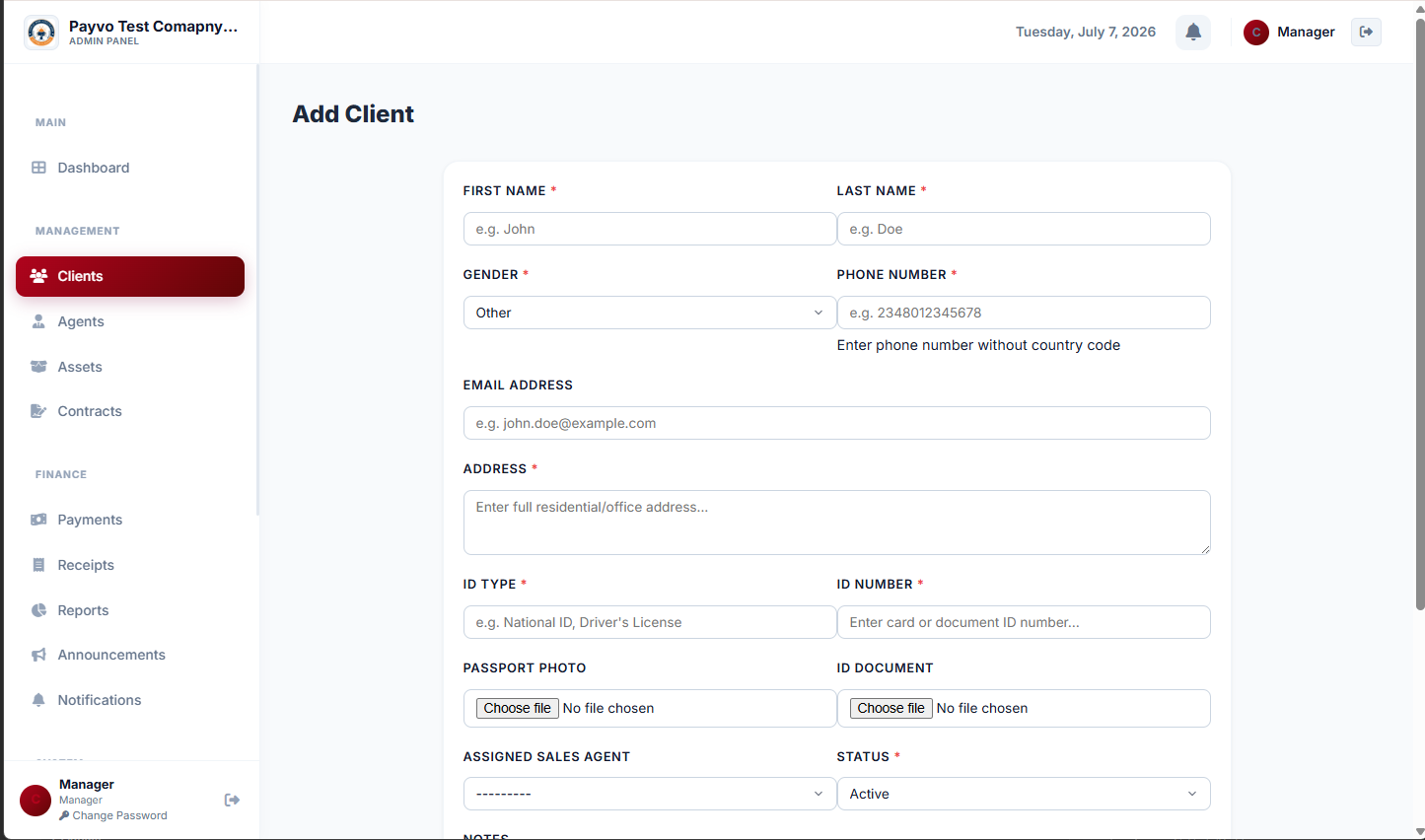 Client: Add Client page
Step 2: Plot Allocation and Contract Creation
Once a client commits, the specific plot is allocated. This involves recording the unique plot number, size, and location within your inventory. Immediately after allocation, a formal contract (Offer Letter and subsequently, a Deed of Assignment) is drafted. This document legally binds both parties and details the agreed-upon payment schedule, including the initial deposit, subsequent installment amounts, due dates, and any applicable interest rates (which typically range from 5% - 15% per annum for longer payment plans, though many short-term plans are interest-free).
Creating contracts and managing payment schedules manually can be prone to errors and consume significant time. A robust contract management software Nigeria helps automate this process. You can set payment terms once, and the installment schedules are generated automatically, ensuring accuracy and consistency across all your sales. This also links the specific asset (the plot) directly to the client and their contract, preventing double allocations or confusion.
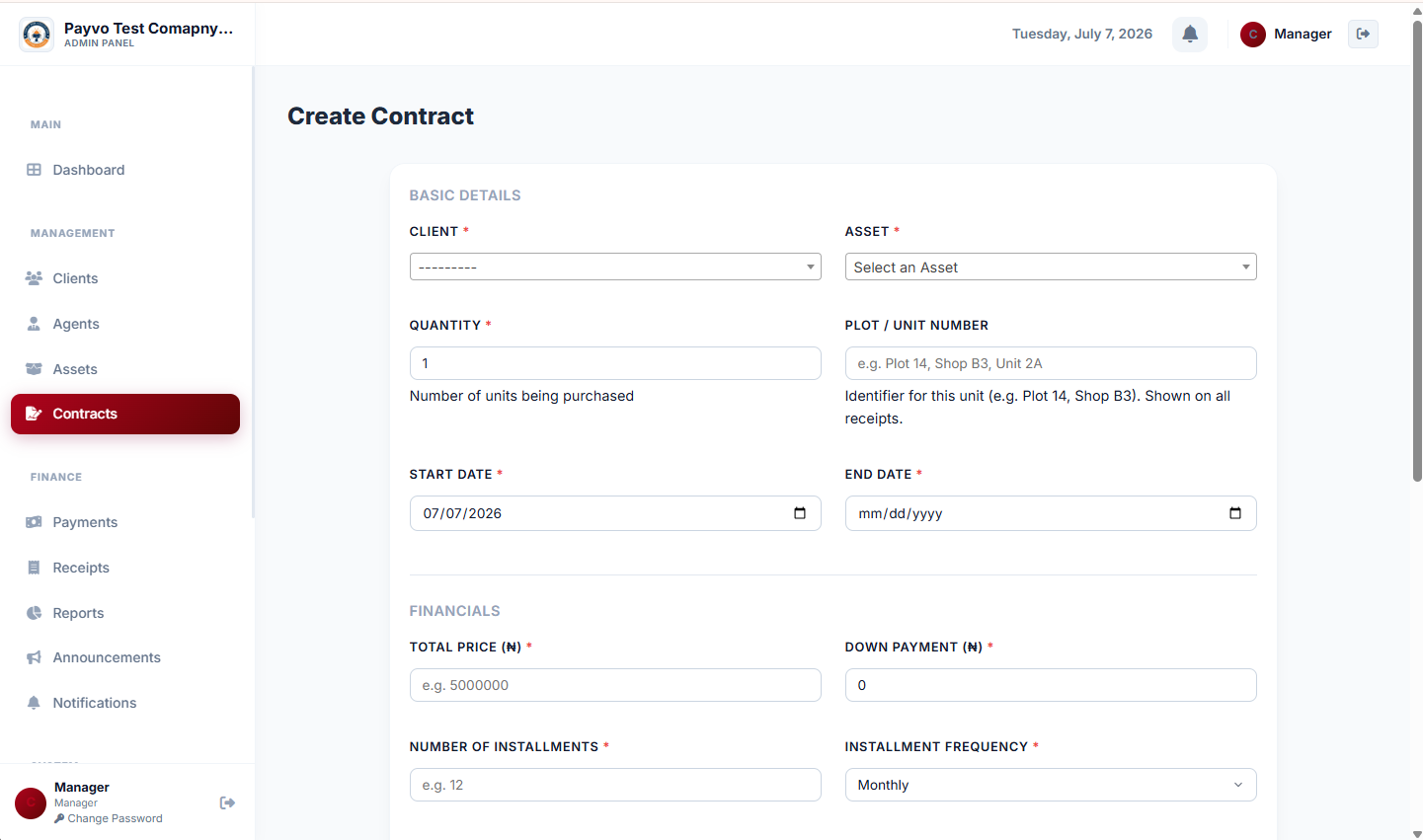 Management: Add contract (top)
Step 3: Payment Collection and Recording
This is the core of installment management. As clients make their scheduled payments, it's crucial to record each transaction accurately and promptly. Whether payments are made via bank transfer, POS, or cash, a detailed ledger must be maintained. Each entry should include the date, amount received, payment method, and the specific installment it covers.
Without a dedicated system, tracking installment payments becomes a significant challenge, especially as your client base grows. The ideal business payment tracking app Nigeria will allow you to record payments efficiently, with a full history tracked against each contract. This ensures transparency and provides an undeniable record for both you and your client.
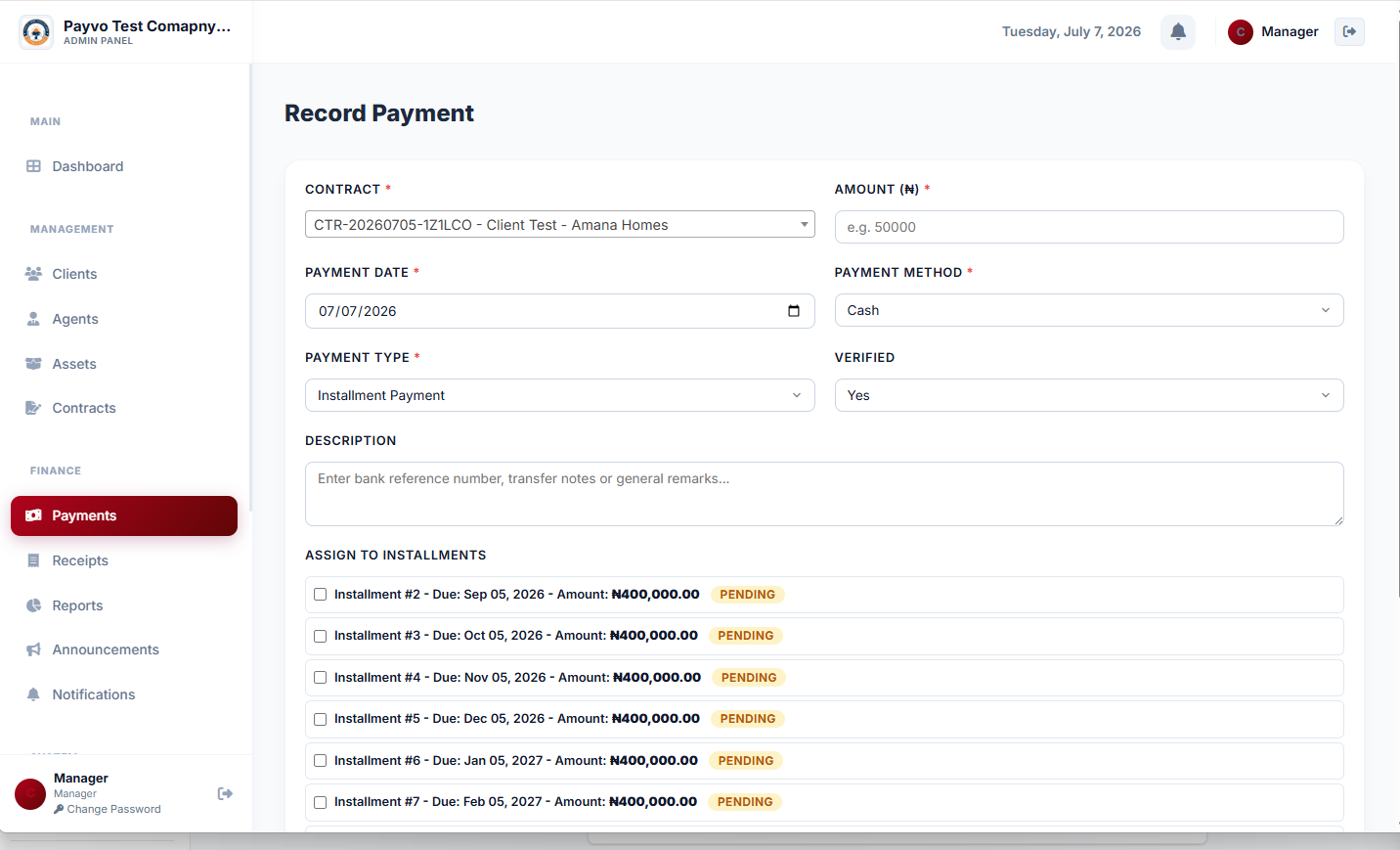 Finance: Record Payments Page
Step 4: Receipt Generation and Distribution
Every payment received must be acknowledged with a formal receipt. This is not just good business practice but a legal requirement and a critical trust-builder in the Nigerian market. Receipts should clearly state the amount paid, the outstanding balance, and the next payment due date. They should also carry your company's branding, including your logo and a digital signature.
Generating branded receipts manually for every payment is tedious and error-prone. A receipt generator app Nigeria designed for installment sales automates this. It creates professional, branded receipts (with your company logo, colors, and signature) automatically for every payment, and even a master receipt upon full payment. These can be instantly sent to clients via email or WhatsApp, complete with a public link they can access, save, or share, enhancing transparency and client satisfaction.
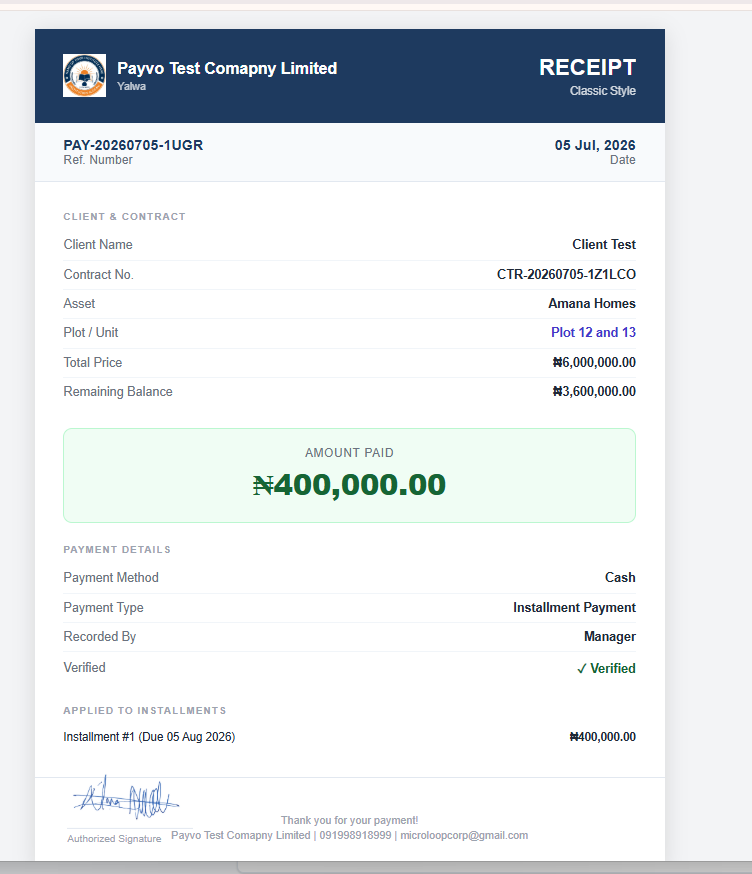 Finance: Paymnet Receipt Sample
Step 5: Automated Reminders and Follow-ups
Even the most diligent clients can forget a payment due date. Manual follow-ups are time-consuming and can strain client relationships. Proactive, automated reminders are far more effective. These can be sent a few days before a payment is due, and immediately after a payment is missed. This significantly reduces default rates and keeps communication clear.
This is where a WhatsApp payment notification system becomes invaluable. An automated system can send payment reminders and notifications via email and WhatsApp for new clients, new contracts, and payment receipts. This ensures clients are always informed, reducing the need for manual calls and freeing up your staff for other tasks.
Step 6: Agent Management and Commission Tracking
If you work with real estate agents, managing their commissions can add another layer of complexity. Agents are typically paid a percentage of the sale price, often upon receipt of installment payments. Tracking which agent is assigned to which contract, calculating their commission per payment, and recording their earnings requires precision.
A dedicated agent commission tracking software simplifies this. You can assign agents to contracts, automatically calculate commission per payment received, and track their full earnings and payout history. Some systems even offer agent self-tracking, allowing agents to log in, view their own earnings, and submit withdrawal requests directly, streamlining the entire process. This is particularly useful for real estate payment tracking Nigeria, where agents are often central to sales.
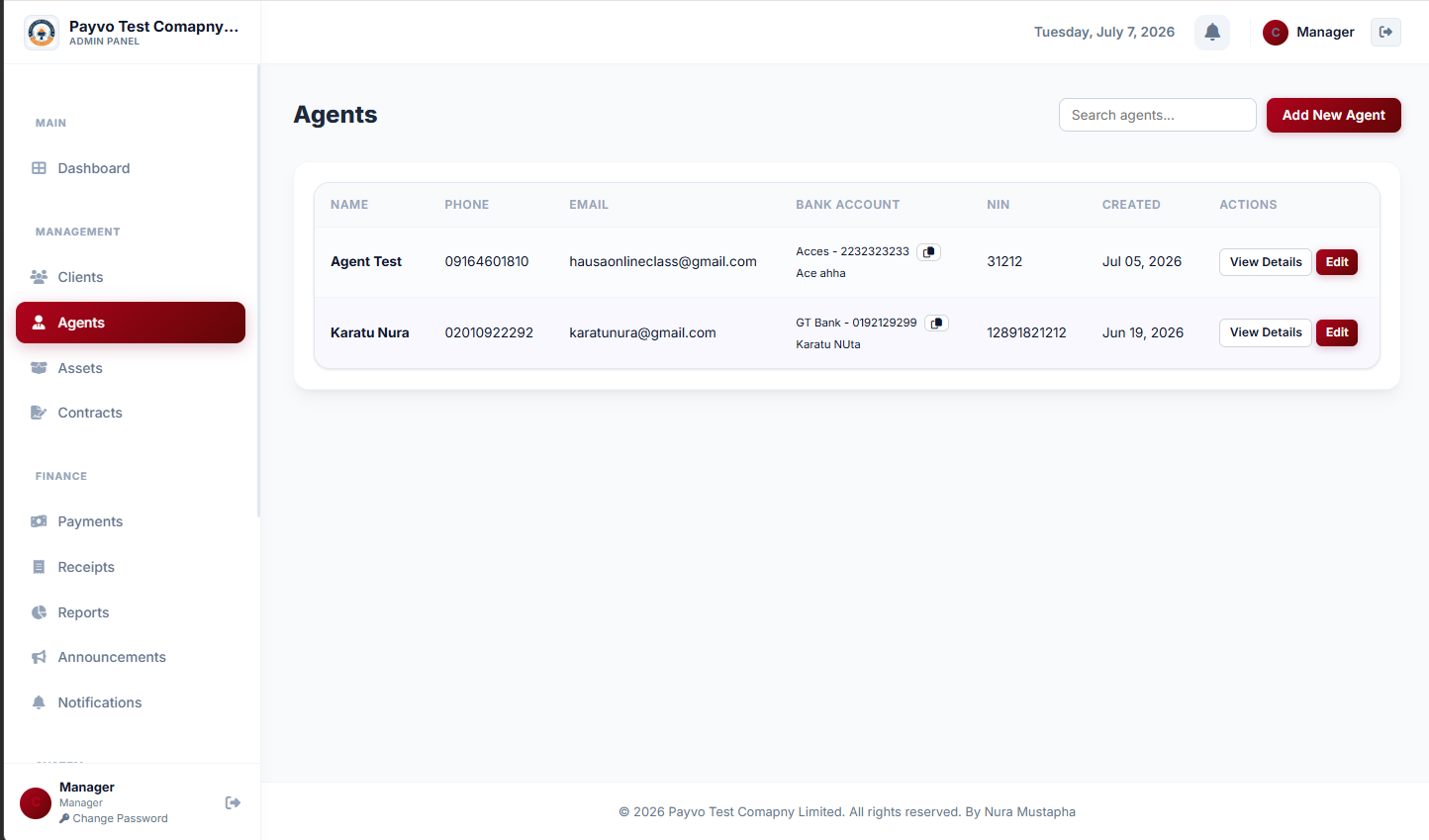 Agent: Agents list page
Step 7: Regular Reporting and Analytics
To understand the health of your installment sales, regular reporting is essential. You need to know your total clients, active contracts, amount collected, outstanding balances, and next payment due. These insights help you make informed business decisions, identify potential issues, and forecast cash flow.
A real estate payment tracking system or property installment software should provide real-time dashboards that give you an at-a-glance overview of these key metrics. Furthermore, the ability to generate reports – exporting payment and contract data as PDF or Excel – is crucial for accounting, audits, and strategic planning. Weekly company reports delivered directly to your email can provide a consistent summary of your business performance.
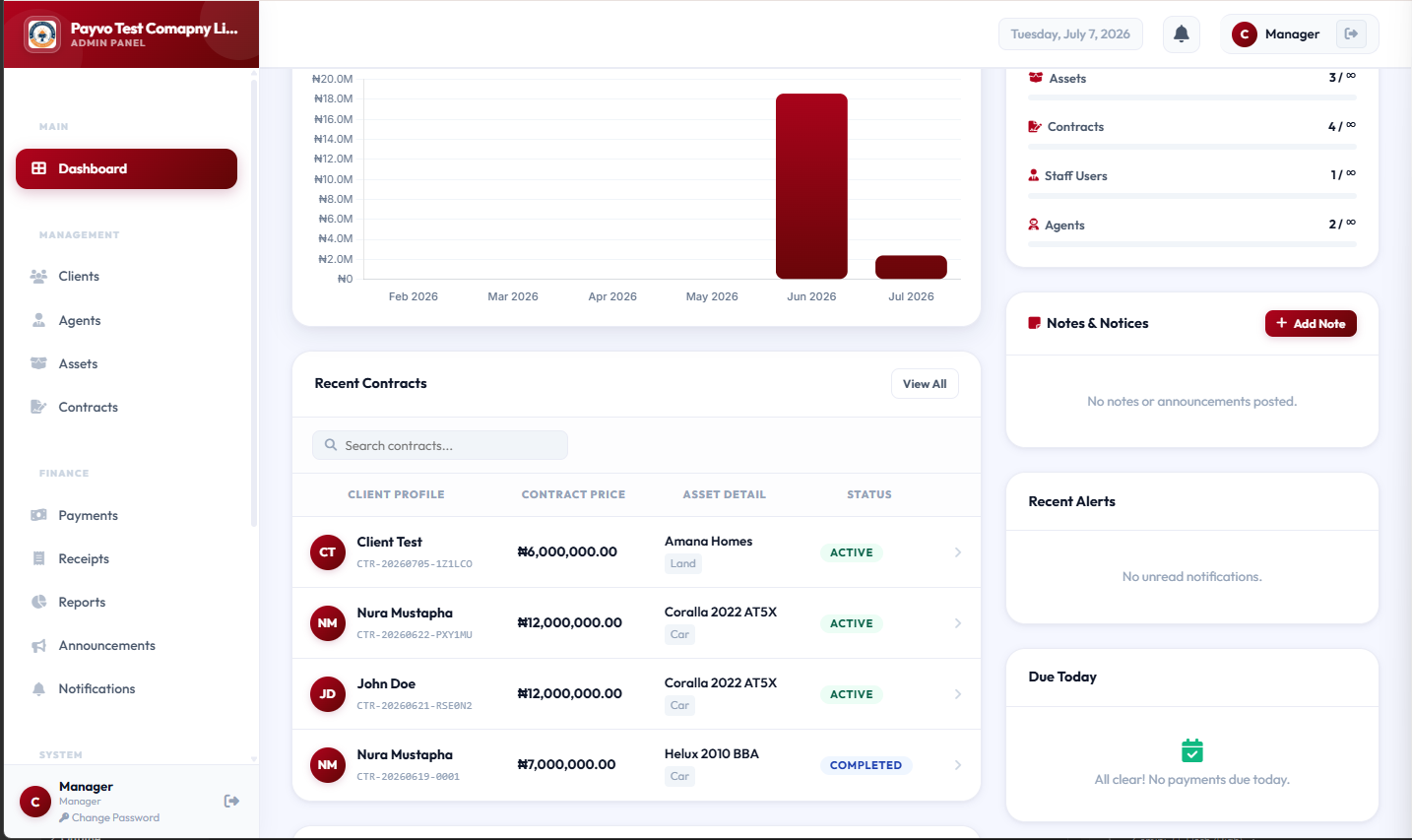 Dashobard (top)
Common Mistakes to Avoid
Navigating land installment sales can be tricky. Here are some common pitfalls Nigerian businesses often encounter:
- Inadequate Documentation: Relying on verbal agreements or incomplete paperwork is a recipe for disaster. Every agreement, every payment, and every communication must be documented.
- Poor Payment Tracking: Manual ledgers or scattered spreadsheets are difficult to reconcile, prone to errors, and can lead to disputes over payments. This is a major challenge for plot payment tracking.
- Lack of Communication: Failing to send timely payment reminders or provide clear receipts can frustrate clients and increase default rates.
- Ignoring Legalities: Not having proper contracts, clear land titles, or understanding local land laws can lead to severe legal and financial repercussions.
- Underestimating Operational Costs: Beyond the land cost, remember to factor in survey plan fees, Deed of Assignment, development levies, and annual Land Use Charge (₦10,000 - ₦150,000) into your pricing and cash flow. Don't forget the cost of clearing a 500sqm plot (₦50,000 - ₦150,000) or basic fencing (₦400,000 - ₦800,000).
- No Contingency for Defaults: Not having clear procedures for dealing with clients who default on payments can leave you in a difficult position.
How to Track and Grow After Launch
Once your installment sales system is in place, the focus shifts to monitoring performance and scaling your operations.
Key Performance Indicators (KPIs) to Watch:
- Default Rate: The percentage of clients missing payments. A high rate indicates issues with client vetting, payment plans, or reminder systems.
- Collection Rate: The percentage of due payments successfully collected.
- Average Payment Duration: How long it takes clients to complete their installment plans.
- Client Acquisition Cost (CAC): How much it costs to acquire a new client.
- Client Lifetime Value (CLTV): The total revenue expected from a client over their relationship with your business.
- Agent Performance: Track sales generated and commissions earned by individual agents.
- Optimize Payment Plans: Based on your data, refine your installment options to better suit market demand and reduce default risks.
- Enhance Client Communication: Use automated systems to send personalized updates, new plot announcements, and value-added content.
- Agent Incentives: Develop commission structures and bonuses that motivate agents to drive more sales. Explore how agent tracking software can boost productivity.
- Leverage Data for Marketing: Use insights from your sales data to target new client segments or expand into new locations.
- Automate Everything Possible: The more you automate routine tasks – from payment reminders to receipt generation – the more time your team has for sales and high-value client engagement.
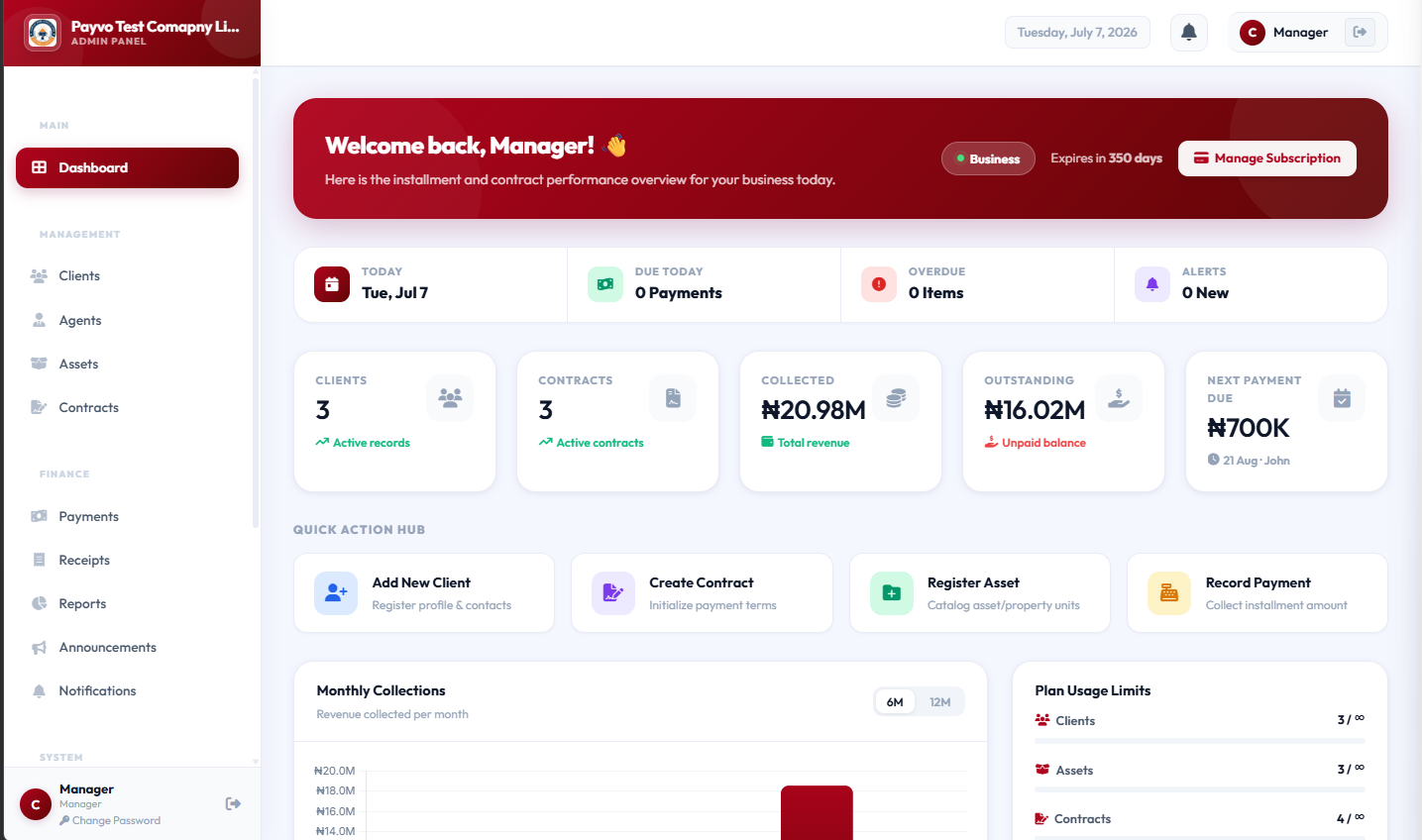 Dashboard (bottom)
Frequently Asked Questions
Q1: What are the typical costs associated with buying a plot of land on installment in Nigeria?
A1: Beyond the land cost itself, buyers typically pay an initial deposit (10-30%), then monthly installments. Additional fees include Survey Plan (₦150,000 - ₦400,000), Deed of Assignment/Conveyance (₦100,000 - ₦500,000), Development Levy (₦500,000 - ₦2,000,000 for estates), and potentially an agency fee (5% - 10%). Annual Land Use Charge (₦10,000 - ₦150,000) is also a recurring cost.
Q2: How can I ensure my clients don't default on their installment payments?
A2: While defaults can't be entirely eliminated, you can minimize them by thoroughly vetting clients, clearly outlining contract terms, sending automated payment reminders (via email and WhatsApp), and maintaining open communication. A robust plot payment tracking system helps identify potential issues early.
Q3: Is it necessary to use a specialized software for managing land installment payments?
A3: For any business serious about scale and efficiency, yes. Manual tracking is prone to errors, time-consuming, and difficult to audit. Specialized property installment software or a car dealer installment software (applicable to asset sales) automates contract creation, payment tracking, receipt generation, and reminders, significantly reducing administrative burden and improving accuracy.
Q4: How do I handle agent commissions when selling land on installment?
A4: Ideally, use an agent commission tracking software. This allows you to assign agents to specific contracts, automatically calculate their commission as payments are received, and track their earnings. This ensures transparency and accurate payouts, a critical feature for real estate payment tracking in Nigeria.
Q5: What legal documents are essential for land installment sales?
A5: Key documents include a formal Offer Letter, the Sale of Land Agreement or Deed of Assignment, and a clear payment schedule. Ensure all land titles (e.g., Certificate of Occupancy, Excision, Gazette) are verified and accessible. Consulting a property lawyer is crucial to draft legally sound contracts.
 Business owner looking at financial reports on laptop
Ready to Streamline Your Installment Sales?
Managing plot sales and land payments on installment doesn't have to be a manual nightmare. With the right tools and strategies, you can transform a complex process into a smooth, efficient, and profitable operation. If you're a real estate developer, property seller, or any business managing installment sales in Nigeria, explore how a dedicated platform can simplify your operations. Discover a better way to handle client management, contract creation, payment tracking, automated reminders, and comprehensive reporting. Learn more about how to manage your business with precision and ease by visiting our features page or registering for an account today.