Every year, Nigerian businesses lose billions of Naira to unpaid debts, with many struggling to recover even a fraction. The headache of chasing down customers for overdue payments isn't just frustrating; it directly impacts your cash flow, stunts growth, and can even threaten your business's survival. Effective debt collection isn't about aggression; it's about strategy, consistency, and maintaining customer relationships while securing your deserved income.
 Business owner looking stressed at stacks of unpaid
The Cost of Unpaid Debts in Nigeria's Installment Economy
In Nigeria, especially within sectors like real estate, car dealerships, solar installations, and cooperative societies, installment payments are the backbone of many business models. However, this reliance also exposes businesses to significant risks from overdue accounts. As of 2026, the economic landscape means many customers face fluctuating incomes, making consistent payments a challenge. This directly translates to increased operational costs for businesses.
Consider the hidden expenses: a single follow-up call can cost between ₦50 and ₦200 in airtime, while an SMS reminder costs ₦4 to ₦15. Multiply this by dozens or hundreds of overdue accounts, and these costs quickly add up. If manual efforts fail, engaging a lawyer for a professional debt collection letter can set you back ₦15,000 to ₦50,000 per instance. For businesses that hire dedicated collections staff, monthly salaries range from ₦60,000 to ₦180,000. Even a physical visit to a customer for collection can cost ₦500 to ₦5,000 in transport within a city.
Beyond these direct costs, there's the opportunity cost. Funds tied up in overdue invoices cannot be reinvested, hindering growth and expansion. The loss of potential profit from bad debt can range from 10% to 100% of the invoice value, severely impacting margins. Businesses need robust strategies for overdue payment tracking to mitigate these financial drains and ensure sustainable operations in a market where credit sales are prevalent.
What You Need Before You Start
Before you embark on a systematic approach to managing overdue payments, ensure you have the following in place:
- Clear Payment Terms: All contracts must explicitly state payment due dates, grace periods, and any penalties for late payments (e.g., interest charges of 2% - 5% per month on outstanding amounts).
- Accurate Records: A reliable system for tracking every client, every asset sold, every contract, and every payment made. This is foundational.
- Communication Channels: Up-to-date contact information for all clients, including phone numbers (primary and alternative), email addresses, and even WhatsApp numbers.
- Designated Personnel: Clearly define who is responsible for collections, from initial reminders to more escalated actions.
- Legal Counsel (Optional but Recommended): Access to legal advice for drafting demand letters or understanding the legal recourse available for persistent defaulters.
- Policy for Escalation: A predefined process outlining steps to take as an account becomes increasingly overdue.
Step-by-Step: How to Manage Overdue Payments & Follow Up with Customers
Effective management of overdue payments requires a structured, empathetic, yet firm approach. Here’s a step-by-step guide to help your business recover what’s owed.
Step 1: Proactive Prevention Through Clear Communication
The best defense against overdue payments is a good offense. From the very beginning, ensure your clients fully understand their payment obligations. When creating contracts, clearly outline the payment schedule, due dates, and consequences of late payments. For instance, if you're a real estate developer selling plots on installment, ensure the payment plan is broken down into manageable, understandable segments. For car dealers selling on hire purchase, emphasize the importance of timely monthly remittances.
During contract signing, verbally review key terms with the client and provide them with a detailed, written copy. Automated systems that generate contracts with built-in installment schedules can significantly reduce errors and ensure consistency. This initial clarity sets expectations and reduces future disputes.
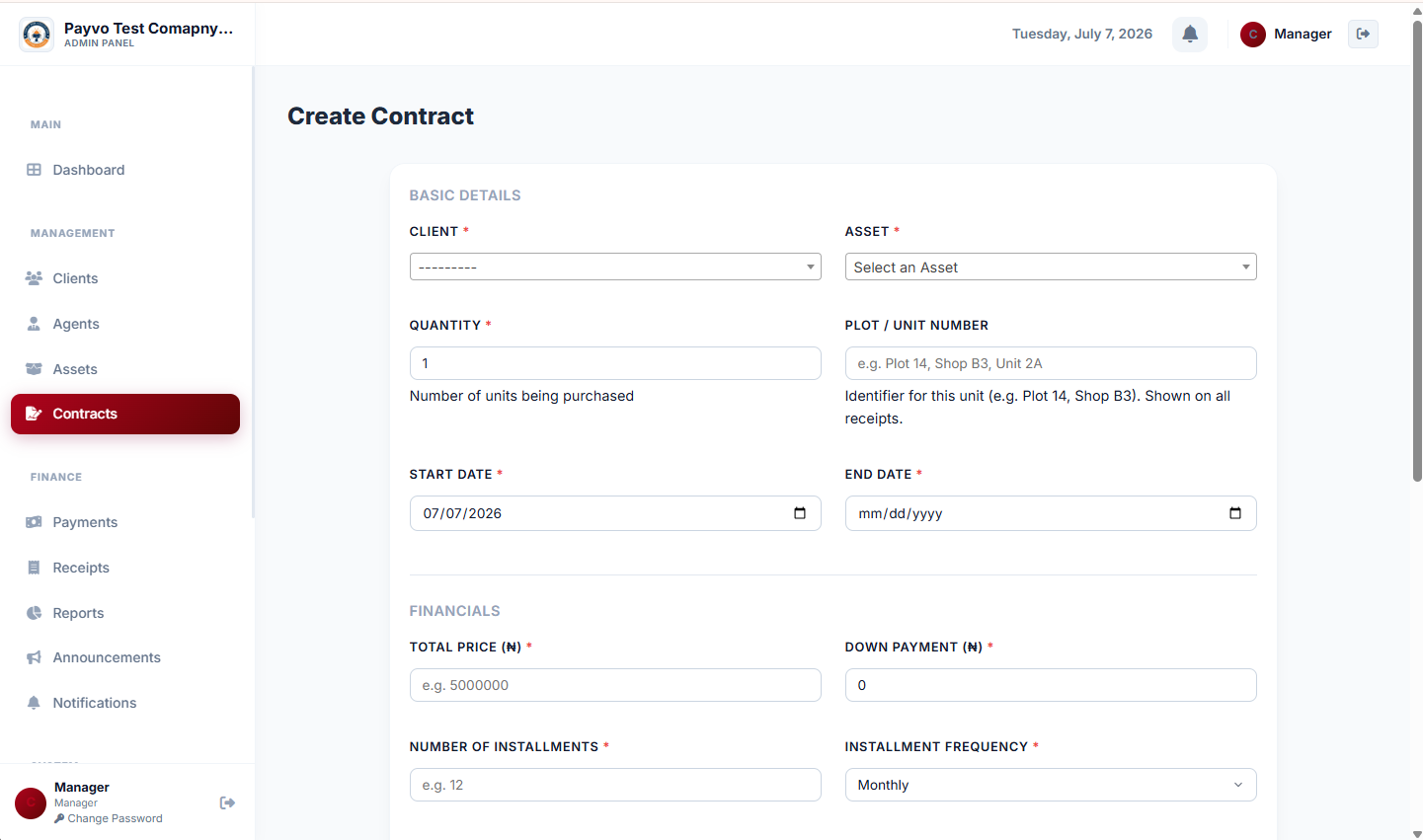 Management: Add contract (top)
Step 2: Early Identification and Automated Reminders
The moment an payment becomes overdue, early identification is crucial. Manual tracking through ledgers or spreadsheets is prone to human error and can delay follow-up, increasing the likelihood of default. Instead, leverage technology to automatically flag overdue accounts.
Modern installment management software Nigeria can monitor payment schedules and automatically send reminders before and immediately after a payment is due. Automated payment reminders via SMS and WhatsApp are highly effective in Nigeria, as they reach clients directly on their most used communication platforms. A well-timed reminder a day or two before the due date can prevent an account from becoming overdue, while an immediate notification on the due date can prompt a quick payment. This proactive approach significantly reduces the need for costly manual follow-up calls.
Step 3: Professional and Consistent Follow-Up Communication
Once an account is overdue, your follow-up needs to be professional, consistent, and documented. Start with a gentle reminder, assuming the client may have simply forgotten.
- Day 1-3 Overdue: Send a polite SMS or WhatsApp message. "Dear [Client Name], just a friendly reminder that your payment of ₦[Amount] for [Contract/Asset] was due on [Date]. Please make arrangements for payment soon. Thank you."
- Day 7 Overdue: Follow up with a phone call. Be polite and ask if there's an issue preventing payment. Offer solutions if possible (e.g., partial payment arrangements). Document the call details, including date, time, who you spoke with, and the outcome.
- Day 14 Overdue: Send a more formal email or letter, referencing previous communications and reiterating the amount due and original terms. This is also a good time to mention any late fees as per the contract.
- Day 30+ Overdue: At this stage, consider a more serious communication, perhaps a formal letter or an in-person meeting if feasible, to discuss the outstanding balance and potential next steps.
Step 4: Offer Flexible Payment Solutions (Where Appropriate)
Sometimes, clients genuinely face temporary financial difficulties. Being rigid can alienate customers and make collection harder. Consider offering flexible solutions if it makes business sense:
- Partial Payments: Allow clients to pay a portion of the outstanding amount immediately and set a new, revised schedule for the remainder.
- Payment Plans: Restructure the payment schedule over a longer period, perhaps with a small administrative fee.
- Temporary Suspension: In rare, extreme cases, a temporary suspension of payments might be considered, with clear terms for resumption.
Step 5: Escalation and Legal Recourse
If polite reminders and flexible solutions fail, you'll need to escalate.
- Formal Demand Letter: A professional debt collection letter drafted by a lawyer can often prompt action. This letter typically outlines the debt, the history of non-payment, and the intention to pursue legal action if payment isn't received by a specific date. The cost for such a letter can range from ₦15,000 to ₦50,000.
- Debt Collection Agency: For persistent defaulters, engaging a debt collection agency might be an option. They typically work on a commission basis, taking a percentage of the recovered amount.
- Legal Action: As a last resort, small claims court or other legal avenues can be pursued. This is often costly and time-consuming, so it should be weighed carefully against the amount owed.
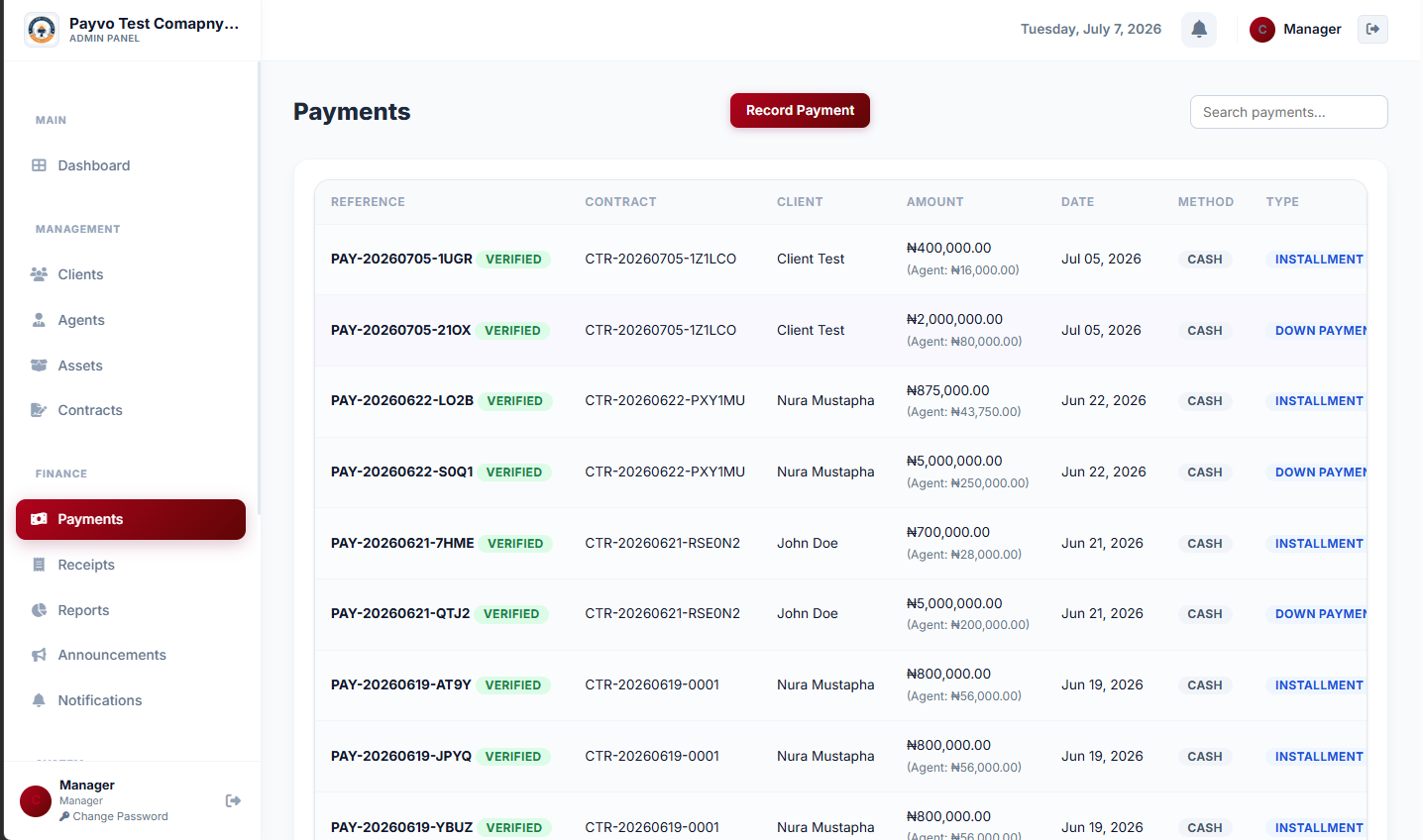 Finance: Payment List Page
Step 6: Leveraging Technology for Efficient Management
Managing contracts, payments, and follow-ups manually for a growing business selling on installment is nearly impossible. This is where a dedicated installment management software Nigeria comes in. A system like Payvo streamlines the entire process, from contract creation to automated reminders and agent commission tracking software.
With Payvo, you can register and manage clients, track assets, create contracts with automated installment schedules, and record payments with ease. It generates branded receipts automatically for every transaction and sends out automatic notifications for new clients, contracts, and payments received. Crucially, it sends payment reminders before due dates via email and WhatsApp, drastically reducing the burden of manual follow-up. This not only improves your overdue payment tracking but also frees up your team to focus on sales and growth. Moreover, features like agent commission tracking and staff account management with role-based permissions ensure everyone is aligned and accountable. Businesses can explore the full range of features on the Payvo Features Page.
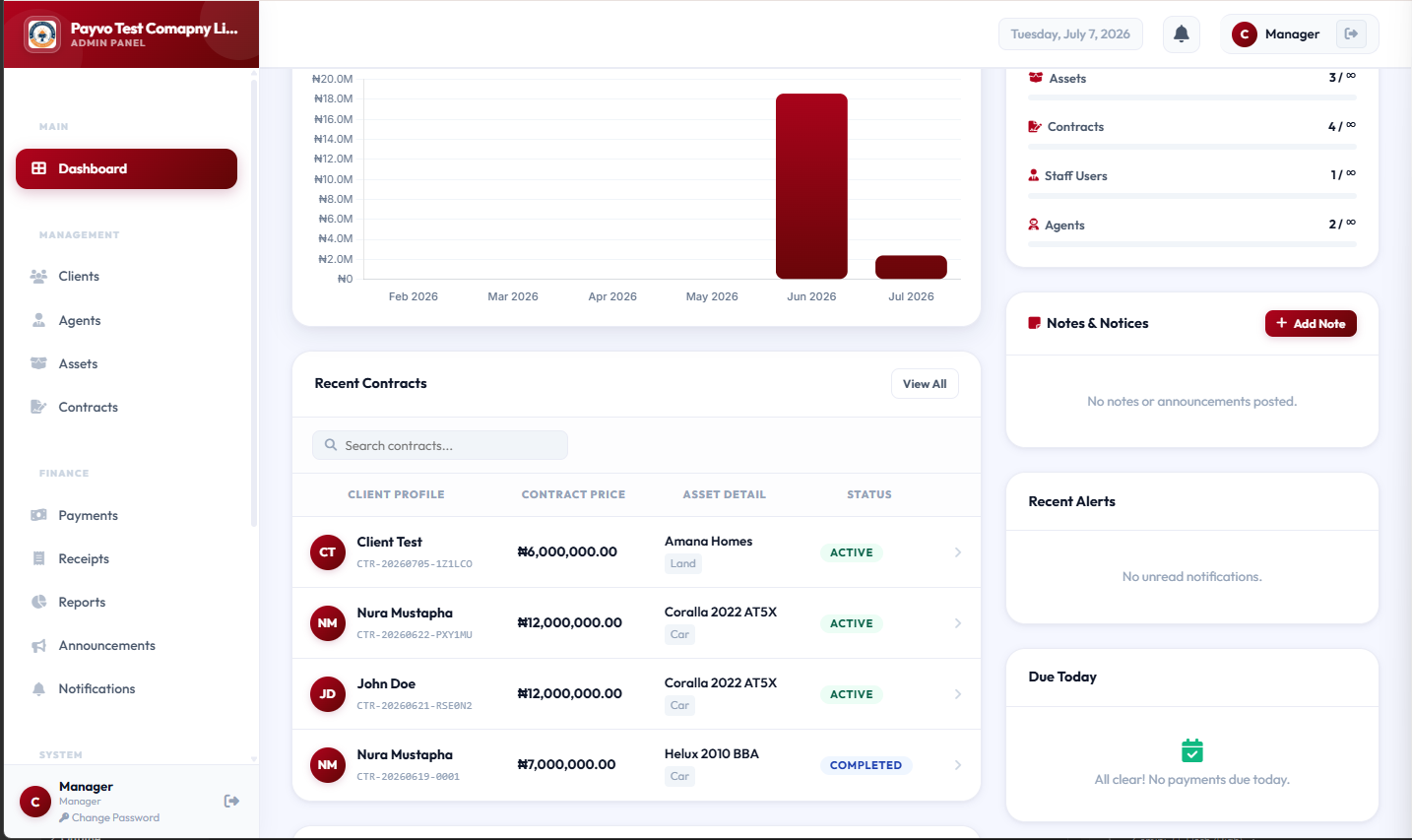 Dashobard (top)
Common Mistakes to Avoid
Navigating overdue payments can be tricky. Here are some common pitfalls Nigerian businesses should steer clear of:
- Lack of Clear Payment Terms: Failing to explicitly state payment due dates, grace periods, and late fees in contracts leads to confusion and makes collection harder.
- Inconsistent Follow-Up: Sporadic or delayed follow-up sends the message that late payments are acceptable, encouraging further delays.
- Poor Record Keeping: Relying on notebooks or scattered WhatsApp messages makes it impossible to track payment history, communication logs, or outstanding balances accurately. This is a major hurdle for effective debt collection software.
- Emotional Responses: Allowing frustration to lead to aggressive or unprofessional communication can damage customer relationships and even create legal liabilities.
- Ignoring Early Warning Signs: Not acting quickly when an account first becomes overdue increases the chances of it becoming a bad debt.
- Underestimating the Cost of Manual Processes: The time, airtime, and human effort spent on manual collections can quickly outweigh the cost of an automated solution.
How to Track and Grow After Launch
Successfully implementing a robust payment collection strategy isn't a one-time event; it requires continuous monitoring and adaptation. Key Performance Indicators (KPIs) are essential for measuring success and identifying areas for improvement.
- Days Sales Outstanding (DSO): This measures the average number of days it takes for your business to collect revenue after a sale has been made. A lower DSO indicates more efficient collections.
- Aging Report: Regularly review an aging report that categorizes overdue invoices by the length of time they've been outstanding (e.g., 1-30 days, 31-60 days, 61-90 days, 90+ days). This helps prioritize follow-up efforts.
- Collection Effectiveness Index (CEI): This metric assesses how effective your collection efforts are over a specific period.
- Bad Debt Percentage: Track the percentage of your total receivables that are written off as uncollectible. Aim to keep this as low as possible.
 Business owner looking at a tablet displaying financial
Frequently Asked Questions
Q1: How can I politely ask for an overdue payment without offending the customer?
A1: Start with a gentle reminder, assuming they may have forgotten. Use phrases like "just a friendly reminder" or "we noticed your payment for [item] was due on [date]." Be empathetic and offer assistance, asking if there's any issue preventing payment. Always maintain a professional and respectful tone.
Q2: What is the ideal frequency for sending payment reminders?
A2: A good strategy is to send a reminder a few days before the due date, another on the due date if payment isn't received, and then follow up at intervals (e.g., 3 days, 7 days, 14 days) with increasingly formal communications. Automated systems are excellent for managing this schedule.
Q3: Should I charge late fees, and how do I communicate them?
A3: Yes, charging late fees (e.g., 2%-5% interest per month) can incentivize timely payments and compensate for collection costs. It's crucial that these fees are clearly stated in your initial contract terms and discussed with the client at the point of sale. When communicating an overdue payment, reference the agreed-upon late fee clause.
Q4: What if a customer refuses to pay or disappears?
A4: For persistent non-payment, escalate your approach. This may involve sending a formal demand letter (often drafted by a lawyer for ₦15,000 - ₦50,000), engaging a debt collection agency, or, as a last resort, pursuing legal action. Ensure all communication and attempts to collect are thoroughly documented.
Q5: Can technology really help with overdue payment management in Nigeria?
A5: Absolutely. Tools like installment management software Nigeria can automate reminders via SMS and WhatsApp, track all payments and contracts, generate receipts, and provide real-time dashboards. This significantly reduces manual effort, improves collection rates, and provides invaluable data for better decision-making, transforming your overdue payment tracking. Many businesses are already benefiting from a robust WhatsApp payment notification system.
Ready to Streamline Your Collections?
Don't let overdue payments drain your business's resources and energy. By implementing a structured approach and leveraging the right tools, you can significantly improve your cash flow and reduce the stress of debt collection. Explore how a comprehensive solution can transform your operations and help you recover what you're owed efficiently. To see how Payvo can help your business manage contracts, payments, and customer follow-ups seamlessly, Register into Payvo page today.