Managing a team of sales agents in an installment business can feel like juggling flaming torches while riding a unicycle. One agent misses a payment reminder, another miscalculates commission, and suddenly your carefully planned revenue stream springs a leak. In Nigeria's dynamic market, where installment sales drive everything from real estate to solar panels, effective agent management isn't just an advantage—it's essential for survival and growth.
 Nigerian business owner reviewing sales reports
The Evolving Landscape of Installment Sales in Nigeria
The Nigerian economy in 2026 continues to see a significant reliance on installment payment models, especially for high-value goods and services. From car dealerships offering hire purchase options to real estate developers selling plots in phases, and even cooperative societies providing asset financing, the ability to pay over time makes products accessible to a wider demographic. This accessibility, however, introduces complexity, particularly when managing the human element: sales agents.
Businesses are increasingly leveraging sales agents to reach customers in diverse geographical locations, from bustling Lagos markets to remote communities in Kano. These agents are the frontline, responsible for client acquisition, initial contract setup, and often, follow-ups on payments. A well-managed agent network can exponentially increase sales volume, but a poorly managed one can lead to significant revenue loss through missed payments, miscalculated commissions, and a lack of accountability. For instance, default rates on installment plans can range from 5% to 25%, heavily influenced by initial customer vetting and consistent follow-up, much of which falls on the agent. Effective sales agent management software is no longer a luxury but a necessity for businesses aiming to thrive in this environment. For a deeper dive into market trends, explore our insights on the Payvo Blog Page.
What You Need Before You Start
Before you can effectively manage multiple sales agents in your installment business, ensure you have these foundational elements in place:
- Clear Sales Policies & Commission Structures: Define how sales are made, what constitutes a successful deal, and how commissions are calculated (e.g., ₦2,000 - ₦15,000 per sale, or a base salary of ₦30,000 - ₦70,000 plus commission).
- Standardized Contract Templates: Ensure all agents use approved, legally sound contract documents for every sale.
- Dedicated Communication Channels: A reliable way to communicate with your agents (e.g., WhatsApp groups, dedicated email).
- Basic Digital Literacy: Agents should be comfortable using smartphones and basic applications for reporting and communication.
- Initial Capital for Agent Support: Budget for potential base salaries, transportation allowances (₦10,000 - ₦30,000 monthly), and mobile data (₦3,000 - ₦10,000 monthly).
- A Centralized System for Tracking: This is crucial for managing clients, contracts, payments, and agent performance, which we'll explore in detail.
Step-by-Step: Managing Multiple Sales Agents in an Installment Business
Effectively managing a sales force requires a systematic approach. Here’s how to do it:
Step 1: Define Roles, Responsibilities, and Targets
Clearly outline what each sales agent is expected to do. Are they solely focused on new client acquisition, or do they also handle payment collection and follow-ups? Set clear, measurable sales targets. For example, an agent might be expected to secure 5-10 new installment contracts per month, or collect ₦500,000 in overdue payments.
- Job Description: Create a detailed outline for the sales agent role, including daily tasks, reporting lines, and expected outcomes.
- Target Setting: Establish realistic yet challenging sales quotas. These could be based on the number of units sold, total revenue generated, or the value of collected installments. Tie these targets to performance bonuses, which can range from ₦10,000 - ₦100,000 monthly or quarterly for high performers.
- Key Performance Indicators (KPIs): Beyond sales volume, consider KPIs like client retention rate, average contract value, and default rate for their assigned clients.
Step 2: Onboard and Train Your Agents Thoroughly
Even experienced sales agents need to understand your specific products, pricing, policies, and company culture. Proper training reduces errors, boosts confidence, and ensures consistent messaging to clients.
- Product Knowledge: Agents must be experts on what they are selling. For real estate, this means understanding property locations, legal documents, and payment plans. For solar equipment, it means knowing specifications, warranty details, and installation processes.
- Sales Techniques: Provide training on effective prospecting, objection handling, negotiation, and closing installment deals. Consider investing in a sales training workshop, which can cost ₦15,000 - ₦50,000 per agent for basic to specialized training.
- System Training: If you use any software for client or contract management, ensure agents are fully trained on how to use it for data entry, client registration, and payment tracking.
- Ethical Guidelines: Emphasize the importance of transparency, honesty, and adherence to company policies to maintain trust with customers and avoid future disputes.
Step 3: Implement a Centralized Client and Contract Management System
Manual tracking with notebooks or scattered spreadsheets is a recipe for disaster when managing multiple agents. You need a robust system to keep all client data, contract terms, and payment schedules in one secure place. This is where specialized software becomes invaluable.
- Client Database: Every client’s details (contact information, KYC documents, purchase history) should be easily accessible.
- Contract Repository: All installment contracts, including terms, due dates, and payment amounts, must be stored digitally and linked to the respective client and asset.
- Automated Schedules: The system should automatically generate payment schedules based on contract terms, reducing manual errors.
- Agent Assignment: Clearly assign clients and contracts to specific agents so everyone knows who is responsible for what.
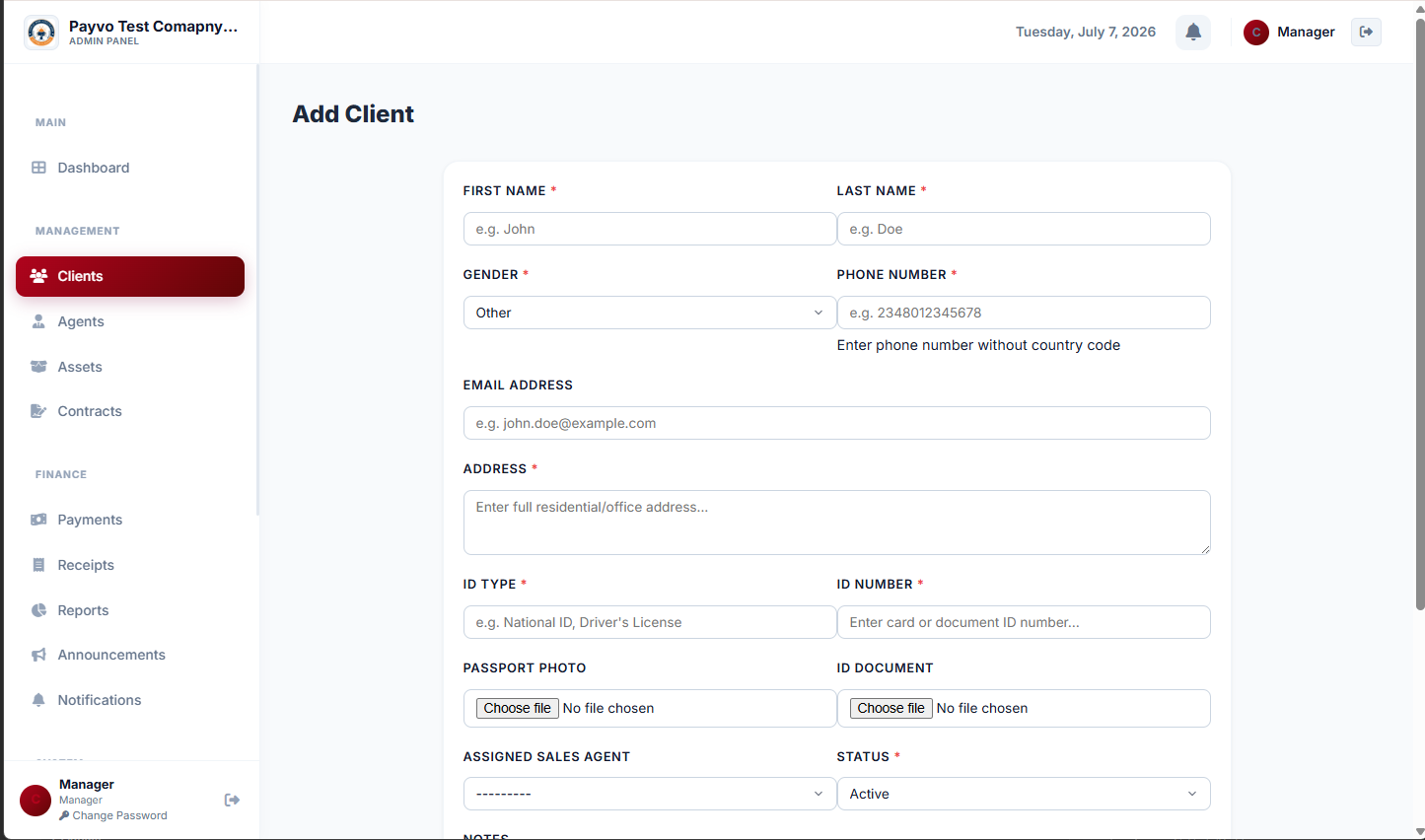 Client: Add Client page
Step 4: Streamline Payment Collection and Tracking
One of the biggest challenges in installment businesses is ensuring timely payments and accurately recording them. Your system should make this process seamless for both agents and management.
- Multiple Payment Options: Offer various ways for clients to pay (bank transfer, POS, direct debit) and ensure agents know how to guide clients through these options.
- Real-time Payment Recording: As payments come in, they need to be recorded instantly against the correct contract. This prevents disputes and provides an up-to-date financial picture.
- Automated Receipts: Every payment should generate a professional receipt, automatically. This builds client trust and provides proof of payment.
- Automated Reminders: Reduce the burden on agents for manual follow-ups. A system that sends automated payment reminders is a game-changer.
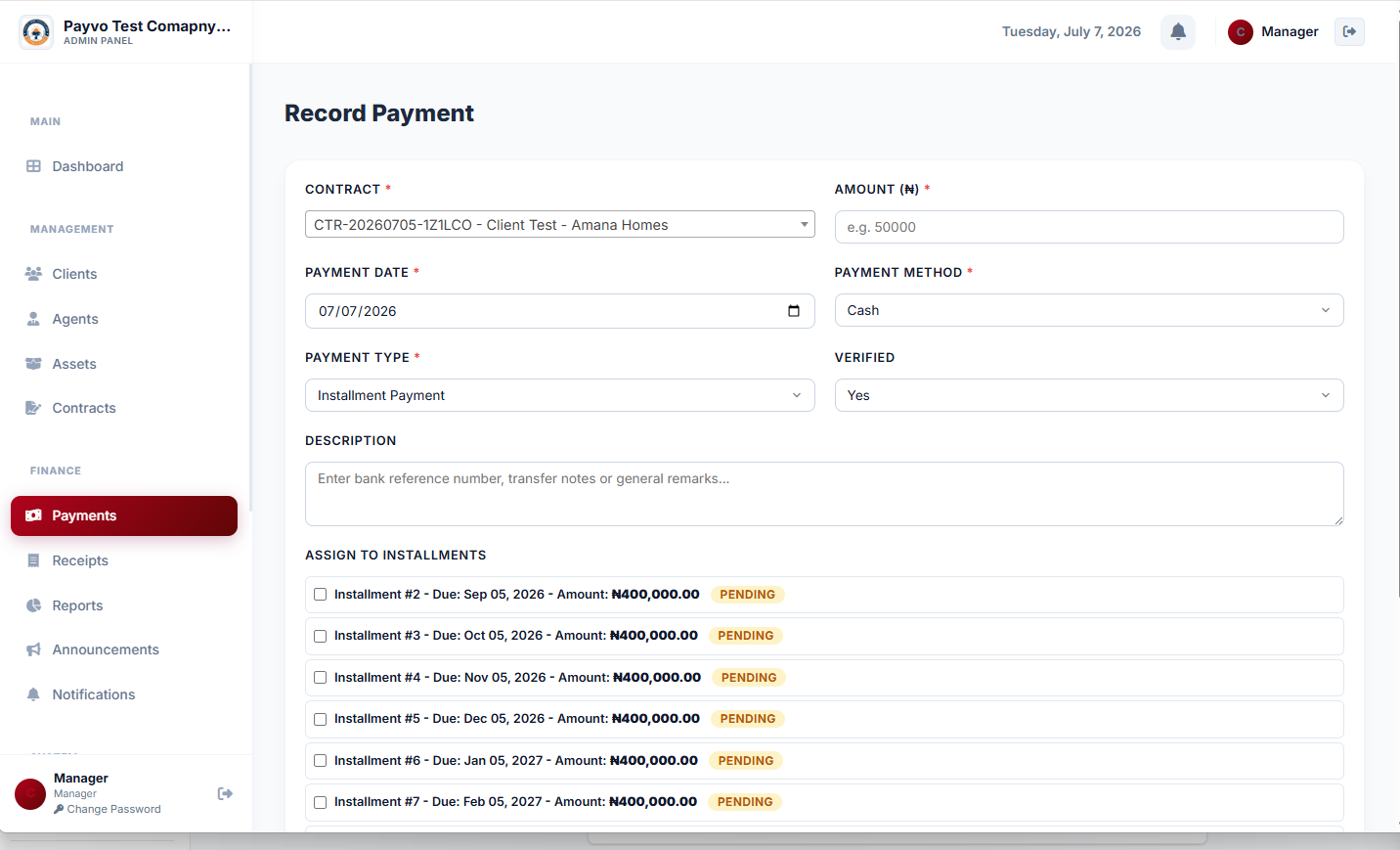 Finance: Record Payments Page
Step 5: Implement Transparent Commission Tracking
Fair and accurate commission calculation is vital for agent motivation and retention. Manual calculations are prone to errors and can lead to distrust.
- Clear Commission Rules: Define when commission is earned (e.g., upon down payment, upon full payment, or pro-rata with each installment).
- Automated Calculation: The system should automatically calculate commissions based on recorded payments and predefined rules.
- Agent Visibility: Agents should be able to see their earnings in real-time, fostering transparency and motivation.
Payvo allows you to manage agents and commissions by assigning agents to contracts and automatically calculating commission per payment, tracking full earnings and payout history. Agents can even use a self-tracking feature to view their own earnings and submit withdrawal requests, promoting transparency and reducing administrative overhead.
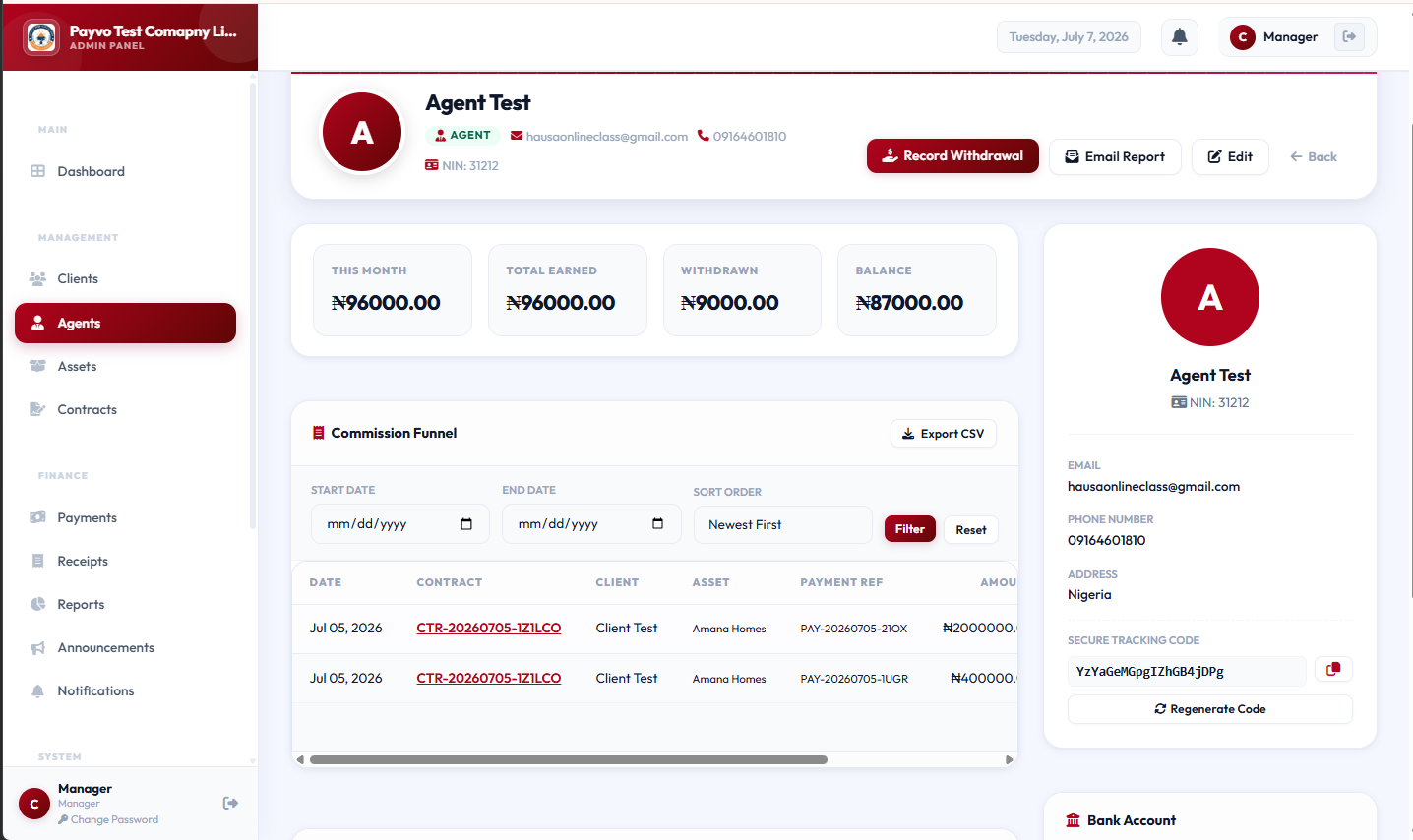 Agent: Agent details page
Step 6: Monitor Performance and Provide Feedback
Regularly review agent performance against their targets and KPIs. This isn't just about accountability; it's about identifying areas for improvement and recognizing success.
- Performance Dashboards: Use a system that provides real-time insights into individual and team performance.
- Regular Check-ins: Schedule weekly or bi-weekly meetings with agents to discuss progress, challenges, and provide support.
- Coaching and Development: Offer ongoing training or coaching to help agents improve their skills and overcome obstacles.
- Incentives: Beyond commissions, consider bonuses, recognition programs, or other incentives for top performers.
Step 7: Ensure Accountability and Security
With multiple agents handling sensitive client and financial data, security and accountability are paramount.
- Role-Based Access: Grant agents access only to the information and functions relevant to their role. For example, an agent might see their own clients and contracts but not sensitive financial reports.
- Audit Trails: Maintain a log of all actions performed within your system (who did what, when). This is crucial for dispute resolution and security.
- Data Protection: Ensure your system complies with data protection best practices to safeguard client information.
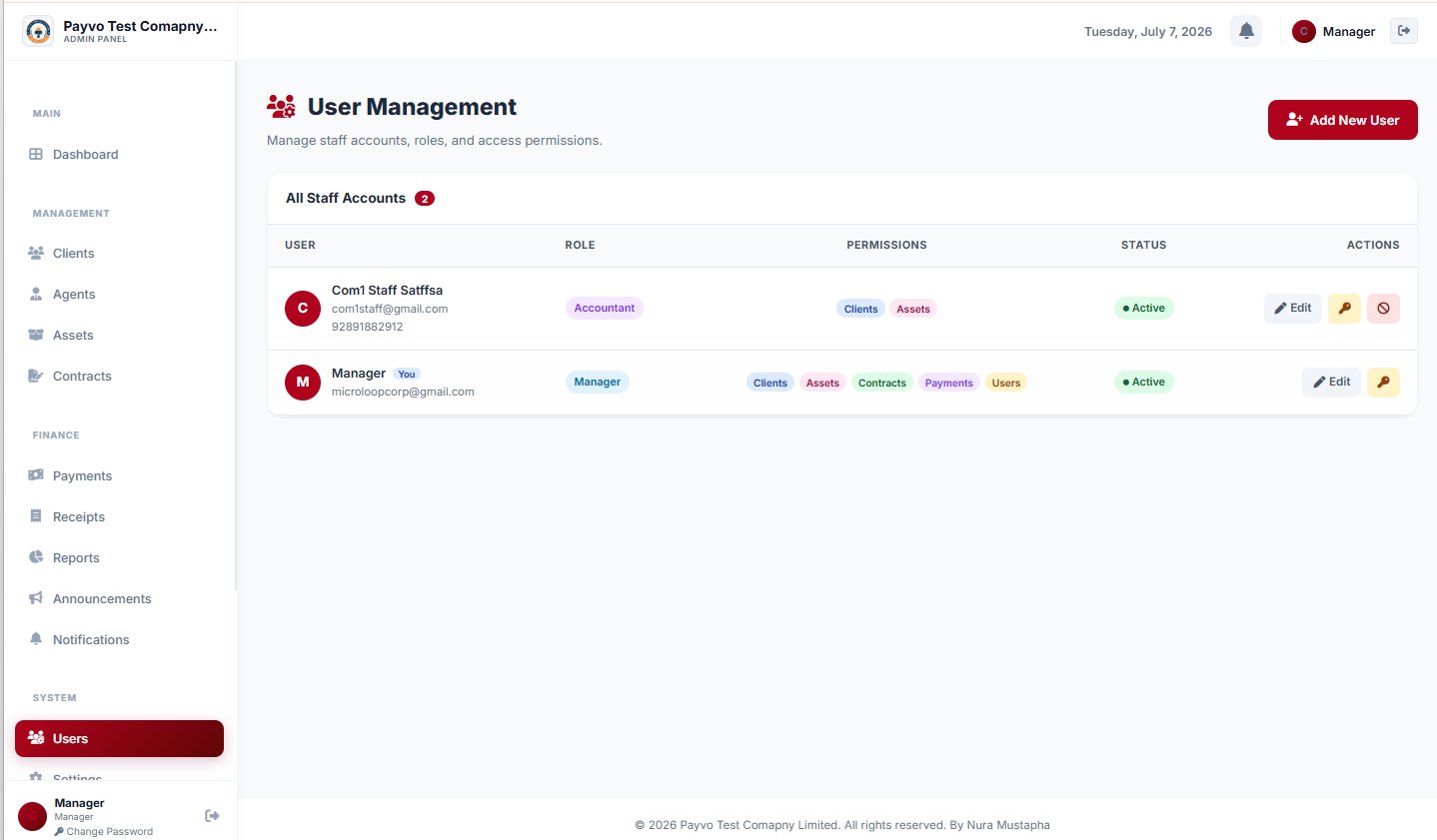 Admin: User Management Page
Common Mistakes to Avoid
Managing sales agents can be tricky. Here are some pitfalls to steer clear of:
- Lack of Clear Communication: Ambiguous instructions or irregular updates can lead to confusion, errors, and demotivation. Ensure a consistent flow of information.
- Inconsistent Commission Payouts: Delays or errors in commission payments quickly erode trust and lead to high agent turnover. Pay accurately and on time.
- No Centralized Tracking System: Relying on manual records or individual agent spreadsheets makes it impossible to get a clear overview of sales, collections, and agent performance.
- Ignoring Agent Feedback: Your agents are on the front lines. Their insights into customer needs and market challenges are invaluable. Listen to them.
- Poor Client Vetting: Allowing agents to sign up clients without proper vetting can lead to high default rates, costing your business significant revenue and legal fees (₦50,000 - ₦200,000 per case for extreme recovery).
- Over-reliance on Manual Follow-ups: Expecting agents to manually call every client for payment reminders is inefficient and prone to human error. Automate this process.
How to Track and Grow After Launch
Once your agent management system is in place, continuous tracking and analysis are key to sustainable growth.
- Key Performance Indicators (KPIs): Regularly review KPIs such as:
- Sales Volume per Agent: How many new contracts are each agent closing?
- Collection Rate: What percentage of due installments are being collected by agents?
- Default Rate per Agent: Are certain agents consistently bringing in higher-risk clients?
- Average Contract Value: What is the typical value of deals closed by each agent?
- Agent Churn Rate: How often are agents leaving your team? High churn can indicate underlying issues.
- Regular Reporting: Generate weekly or monthly reports to assess overall team performance, identify top performers, and pinpoint areas needing improvement. A good system should provide real-time dashboards and allow you to generate reports (PDF or Excel) for accounting and record-keeping. Payvo also sends weekly company reports via email, summarizing key business performance metrics.
- Feedback Loops: Establish a system for agents to provide feedback on products, client challenges, and system usability. Use this feedback to refine your strategies.
- Incentivize Growth: Introduce tiered commission structures or bonuses for hitting higher sales milestones. Consider team-based incentives to foster collaboration.
- Market Expansion: As your agent management becomes more efficient, you can confidently expand into new territories or introduce new products, knowing your sales force can be effectively managed. Explore how Payvo's features can support your growth by visiting our Features Page.
 Nigerian marketplace bustling with activity
Frequently Asked Questions
Q1: How do I ensure agents are not making unauthorized deals or giving unofficial discounts?
A: Implement a robust contract management system where all deals must be approved by management before activation. Use standardized pricing and contract templates that agents cannot alter. Regular audits of contracts and payments against approved terms can also flag discrepancies. Role-based permissions in your system prevent agents from accessing or modifying sensitive pricing or approval workflows.
Q2: What's a reasonable commission structure for installment sales agents in Nigeria?
A: This varies widely. For high-value items like property or cars, a percentage of the down payment or a fixed fee per sale (e.g., ₦10,000 - ₦15,000) is common. For smaller electronics or cooperative loans, it might be a lower fixed amount per successful client acquisition (e.g., ₦2,000 - ₦5,000). Some businesses offer a small base salary (₦30,000 - ₦70,000) plus commission, especially for new agents or those in smaller towns. Always tie commission to actual collected payments to mitigate default risks.
Q3: How can I track agent activity when they are out in the field?
A: While direct GPS tracking can be intrusive, you can track agent activity through their sales output and system usage. Monitor how many clients they register, how many contracts they initiate, and their collection rates. Many modern sales agent management software, like Payvo's agent tracking feature, allow agents to log activities and view their performance dashboards, providing transparency without micromanagement. You can learn more about this on our Agent Tracking Page.
Q4: What's the best way to handle agent disputes over commissions or client ownership?
A: Clear policies are paramount. Define rules for client ownership (e.g., first agent to register a lead, or specific territory assignments). For commission disputes, a system with detailed audit logs and automated calculations provides undeniable proof. All communication and agreements should be documented. Fair and consistent arbitration by management is crucial to maintain team morale.
Q5: What should I do if an agent consistently underperforms?
A: First, identify the root cause. Is it a lack of training, motivation, or external factors? Provide additional coaching, resources, or adjust targets if necessary. If performance doesn't improve after a defined period and support, a performance improvement plan with clear consequences should be implemented, up to and including termination, always adhering to your employment policies.
Ready to Streamline Your Installment Business and Empower Your Agents?
Managing multiple sales agents in an installment business doesn't have to be a constant struggle. With the right strategies and tools, you can build a high-performing, accountable sales team that drives consistent revenue. Explore how Payvo can transform your operations by centralizing client, contract, and payment management, automating commissions, and providing the insights you need to grow. Register for Payvo today and take the first step towards a more efficient and profitable installment business.