You know that feeling, right? That knot in your stomach when a client calls asking for their exact outstanding balance on a plot, and you have to start digging through piles of old ledgers, WhatsApp chats, and faded bank alerts just to piece it together? It's enough to make you wonder if selling land on installment is even worth the headache, especially when you're trying to manage multiple land buyers & track plot payments across an entire estate project. You're not alone. Many Nigerian real estate developers and property sellers in places like Kano, Kaduna, and Abuja face this exact frustration daily.
 Busy real estate office in lagos with agents
The Reality Check: What Nobody Tells You About Tracking Land Payments
Here’s the thing: most people jump into land sales on installment because they see the market opportunity. And it’s huge, no doubt. Many Nigerians, earning between ₦50,000 and ₦150,000 monthly, can only afford land through flexible payment plans. You're giving people a chance at ownership, which is fantastic. But what they don't prepare you for is the sheer administrative weight that comes with it.
You might think a few notebooks and an Excel sheet will cut it. That's what I thought too, back when I was managing my first retail shop. Then the client base grew, and suddenly, those "simple" tools became a tangled mess. For real estate, the stakes are even higher. We're talking about plots of land, significant investments, and long-term contracts. A single error in calculation or a forgotten payment can lead to serious disputes, loss of trust, and even legal battles.
Consider the cost of manual errors: if you miscalculate an outstanding balance by just ₦15,000 for 20 different buyers, that's ₦300,000 in potential revenue lost or disputes waiting to happen. Then there are the hidden costs of your time. How many hours do you or your staff spend each week trying to reconcile payments, answer client queries, or chase down overdue installments? If you’re paying a part-time administrative assistant, say, ₦60,000 a month just to handle these records manually, and they spend half their time fixing errors, you're essentially paying ₦30,000 to manage a problem you could avoid.
The average land survey and documentation alone can run you between ₦150,000 and ₦500,000 per plot, depending on whether it's a rural area or prime urban land in Lagos. Legal fees for a simple agreement might be ₦100,000, but a complex one could hit ₦350,000. These are not small figures. When you're dealing with multiple buyers, you need a system that respects these investments and ensures every kobo is accounted for. Relying on scattered records is like building a skyscraper on a foundation of sand. It just won't hold.
What You Actually Need to Get Started
So, you want to effectively manage multiple land buyers and track plot payments? Let's talk brass tacks. You need more than just good intentions.
Non-Negotiables:
- Clear Contracts & Legal Framework: This is your foundation. Every single land sale, especially on installment, needs a solid, legally binding agreement. This should clearly state the plot number, buyer details, total purchase price, initial deposit, installment amount, payment frequency (weekly, monthly, quarterly), due dates, and consequences for late payments. Don't cheap out on legal fees here; a good lawyer might charge you ₦100,000 – ₦350,000 per transaction, but it saves you millions in future disputes.
Unique Plot Identifiers: Every plot of land, whether in an estate in Lekki or on the outskirts of Kaduna, needs a unique identifier. This could be a plot number, block number, or specific survey coordinates. You need to know exactly* which piece of land belongs to whom.
- Dedicated Payment Tracking System: This is where many businesses stumble. You need a system that centrally records every payment, automatically calculates outstanding balances, and tracks due dates. Forget the notebooks if you have more than five active clients. Manual ledger books and stationery will cost you ₦3,000 – ₦10,000 monthly, but the cost of inefficiency is far higher. An effective digital payment tracking software is a must, and thankfully, there are local solutions available, starting from around ₦50,000 annually for basic plans.
- Reliable Communication Channels: You need to be able to reach your buyers easily for reminders, updates, and confirmations. WhatsApp is king in Nigeria, but relying solely on chat history for financial records is a recipe for disaster. A system that can integrate with WhatsApp or email for automated notifications is a game-changer. Monthly internet data will set you back ₦10,000 – ₦30,000 for reliable connectivity.
- Financial Discipline: This isn't just about collecting money; it's about properly accounting for it. Separate business and personal finances. Reconcile bank statements regularly. Understand your cash flow. Bank charges, while seemingly small (₦50 – ₦5,000 per transaction or monthly, depending on volume), add up.
Nice-to-Haves (but quickly become necessities as you grow):
- Agent Management System: If you have sales agents on the ground in places like Abuja or Onitsha, you need to track their sales, commissions, and client portfolios. This helps you monitor their performance and ensure proper attribution.
- Dedicated Staff: As your portfolio grows, you'll need someone to manage the administrative load. A part-time administrative assistant might cost ₦45,000 – ₦80,000 monthly, while a full-time sales/client relations manager could be ₦100,000 – ₦250,000, depending on experience and location.
- Marketing Budget for New Plots: To keep the pipeline full, you need to advertise. This could range from ₦50,000 for local flyers and radio spots to ₦500,000 monthly for targeted online campaigns.
- Office Space: Even a small local office for client meetings and record keeping can make a difference. Rent can vary wildly, from ₦20,000 monthly in a smaller town to ₦200,000 in a prime commercial area in Lagos or Abuja.
The Complete Step-by-Step Breakdown for Managing Land Buyers
Right, so you've got the essentials in mind. Now, let’s break down the actual process of how to manage multiple land buyers & track plot payments, step by step. This isn't just theory; this is what works on the ground, what I've seen successful developers in Nigeria implement.
Step 1: Secure Your Land and Legal Documentation
Before you even think about selling, you need to ensure your land is legitimately acquired and fully documented. This means having your Certificate of Occupancy (CofO), Governor's Consent, or Deed of Assignment in order. Don't skip this.
Get your land surveyed and properly titled. The cost for land survey and documentation can range from ₦150,000 in a peri-urban area to ₦500,000 in a prime urban location. Make sure every plot within your estate has a clear, unique identifier. This could be "Block A, Plot 15" or simply "LP-007." This is crucial for accurate record-keeping and preventing future disputes. You don't want two buyers claiming the same plot because your records were fuzzy.
Step 2: Develop Standardized Contracts and Payment Plans
Consistency is key when you're dealing with multiple buyers. Create a standard land purchase agreement template that clearly outlines all terms and conditions. Your lawyer, who you've paid between ₦100,000 and ₦350,000 for their expertise, should draft this. It should cover: total purchase price (e.g., ₦1,875,000 for a 500sqm plot), initial deposit (e.g., 30% or ₦562,500), installment amount (e.g., ₦100,000 monthly), payment frequency, duration (e.g., 18 months), and penalties for defaults.
Offer a few structured payment plans (e.g., 6-month, 12-month, 18-month options) rather than custom plans for every buyer. This simplifies tracking significantly. For instance, a ₦2,500,000 plot might have a ₦500,000 down payment, then ₦100,000 monthly for 20 months. This clarity helps both you and the buyer.
Step 3: Implement a Robust Customer and Contract Management System
This is where the rubber meets the road. Trying to manage land buyer details, plot allocations, and payment schedules with notebooks and spreadsheets becomes a nightmare once you have more than 10-15 active contracts. You need a dedicated system.
This system should allow you to: register each buyer with all their details; assign them a specific plot (linking the buyer to the asset); create a contract that automatically calculates the payment schedule based on your terms; and track every single payment made against that contract. It needs to be your central source of truth for all your real estate customer tracking.
<br>
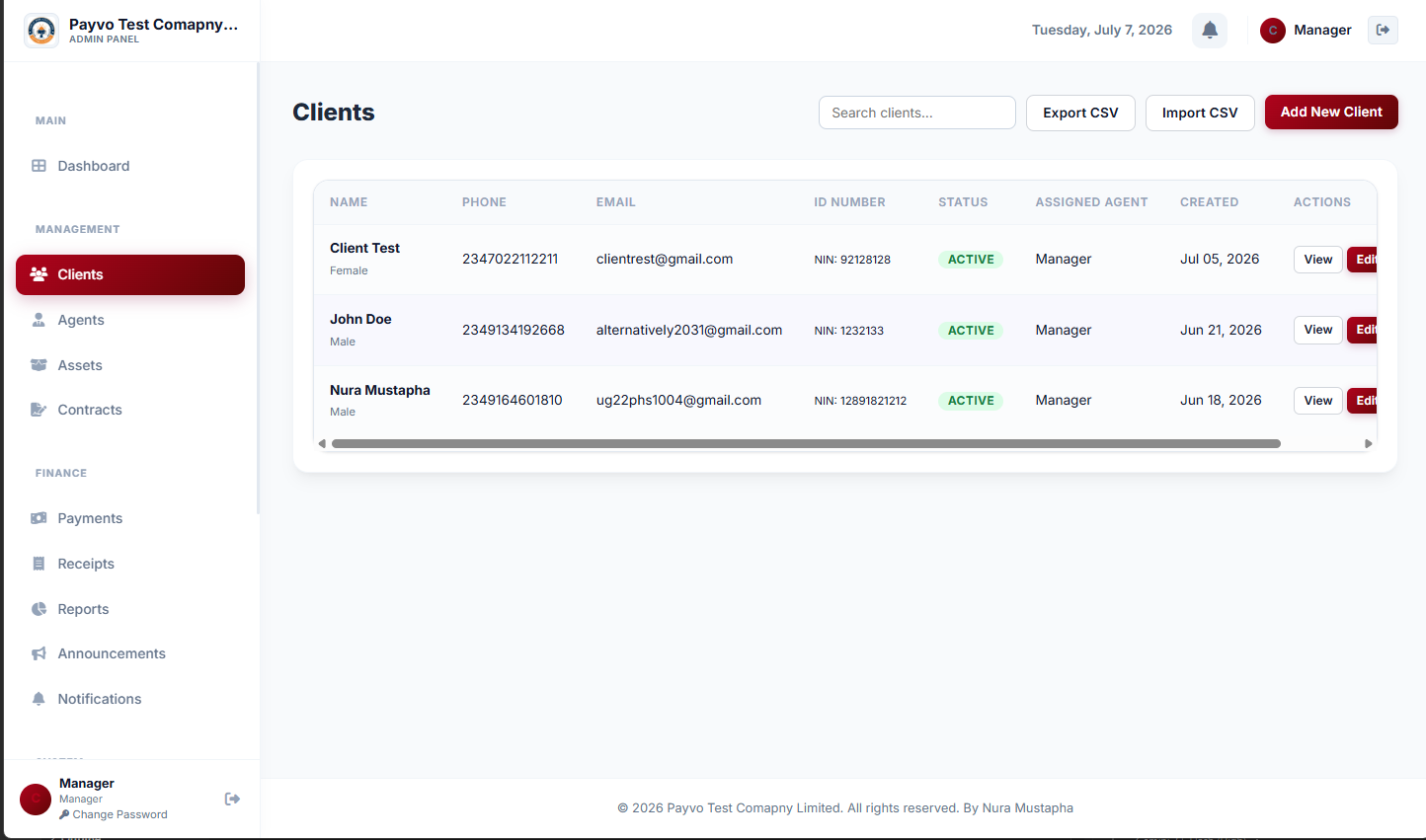 Client: Clients list page
<br>
A good installment management software Nigeria offers, like Payvo, is designed for exactly this. It helps you organize installment contracts, payment schedules, customer records, payments, outstanding balances, and financial records in one centralized system. Instead of flipping through various files, you get a clear, instant overview. This kind of digital payment tracking software becomes indispensable for real estate businesses.
<br>
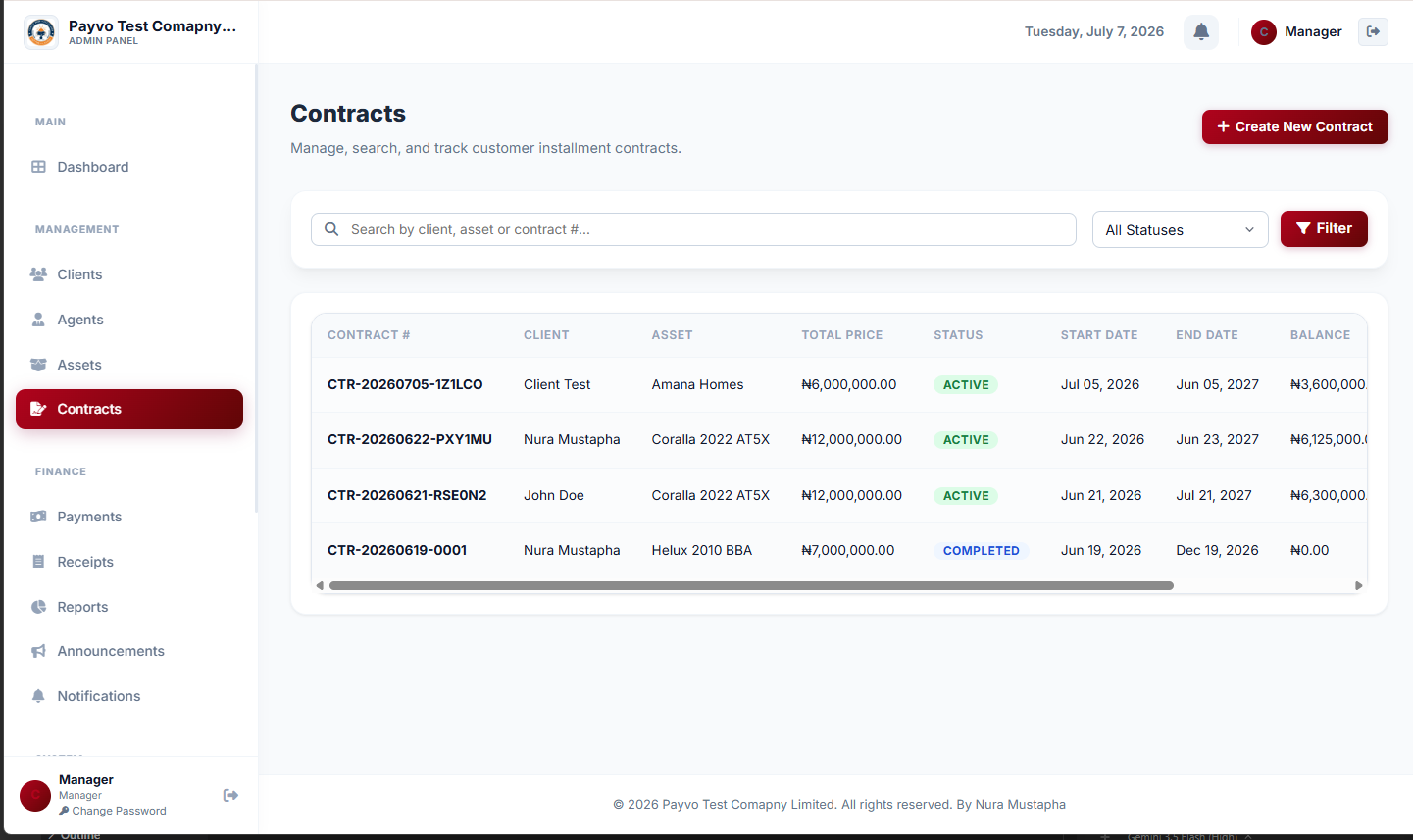 Management: Contracts list page
<br>
Step 4: Systematically Record All Payments
Every single payment, no matter how small, must be recorded promptly and accurately in your chosen system. Whether it’s a bank transfer, cash deposit, or POS payment, log it immediately.
Your system should then automatically update the outstanding balance. If you're using a tool like Payvo, it will handle this calculation for you. Generate a digital receipt for every payment and send it to the client. This builds trust and provides undeniable proof of payment for both parties. This process also helps you generate a receipt generator app Nigeria can rely on for professional documentation.
<br>
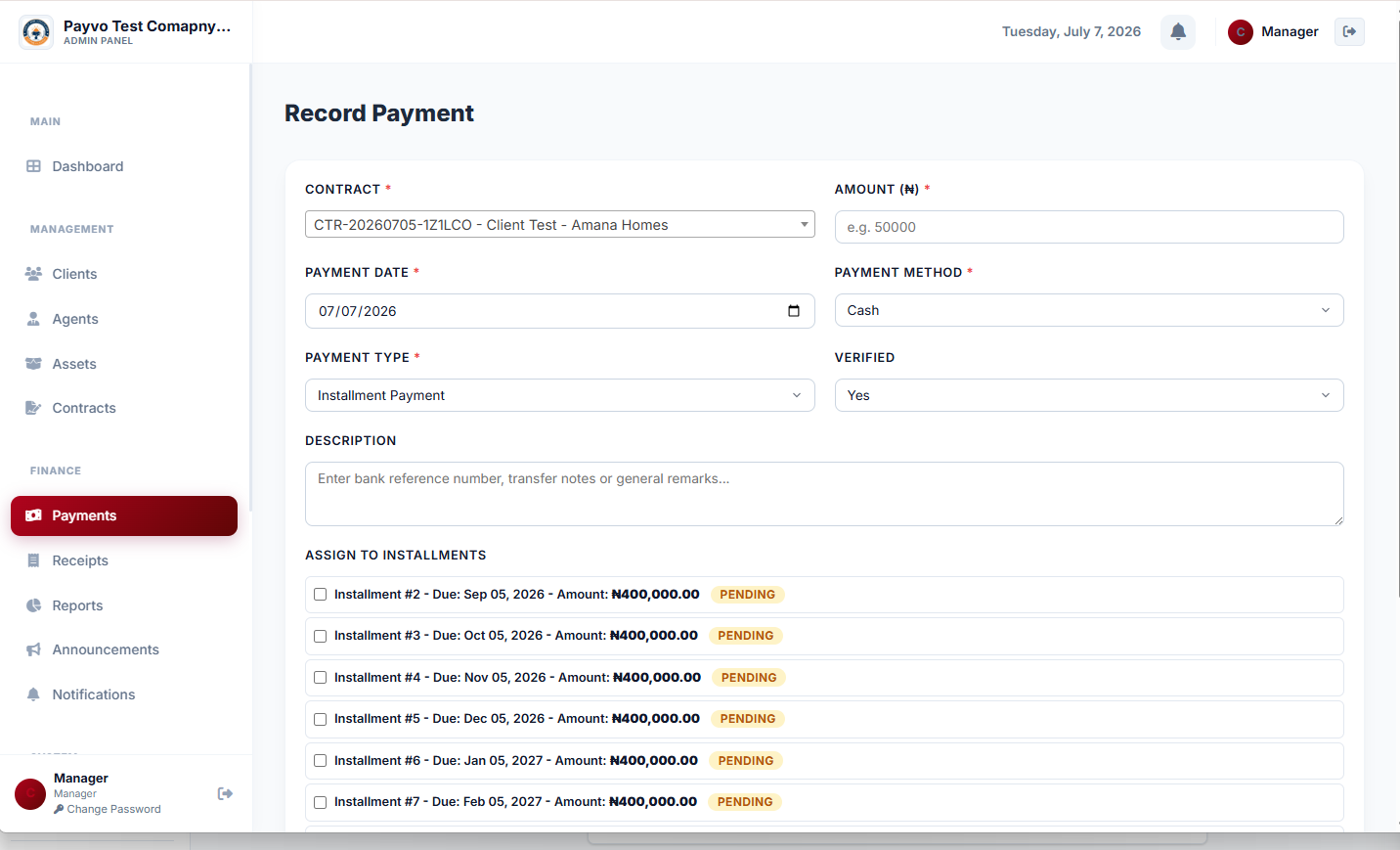 Finance: Record Payments Page
<br>
Step 5: Proactive Payment Reminders and Follow-ups
Don't wait for payments to be overdue. Proactivity is your best friend here. Set up automated reminders. A good installment management software Nigeria provides will have this feature built-in. This could be an SMS, email, or even a WhatsApp payment notification system that reminds clients a few days before their payment is due.
For overdue payments, have a clear follow-up process. A phone call from a dedicated client relations manager (who might earn ₦100,000-₦250,000 monthly) is often more effective than just an automated message. Document all communication within your customer tracking system. This comprehensive approach helps you manage multiple land buyers and track plot payments with minimal stress.
<br>
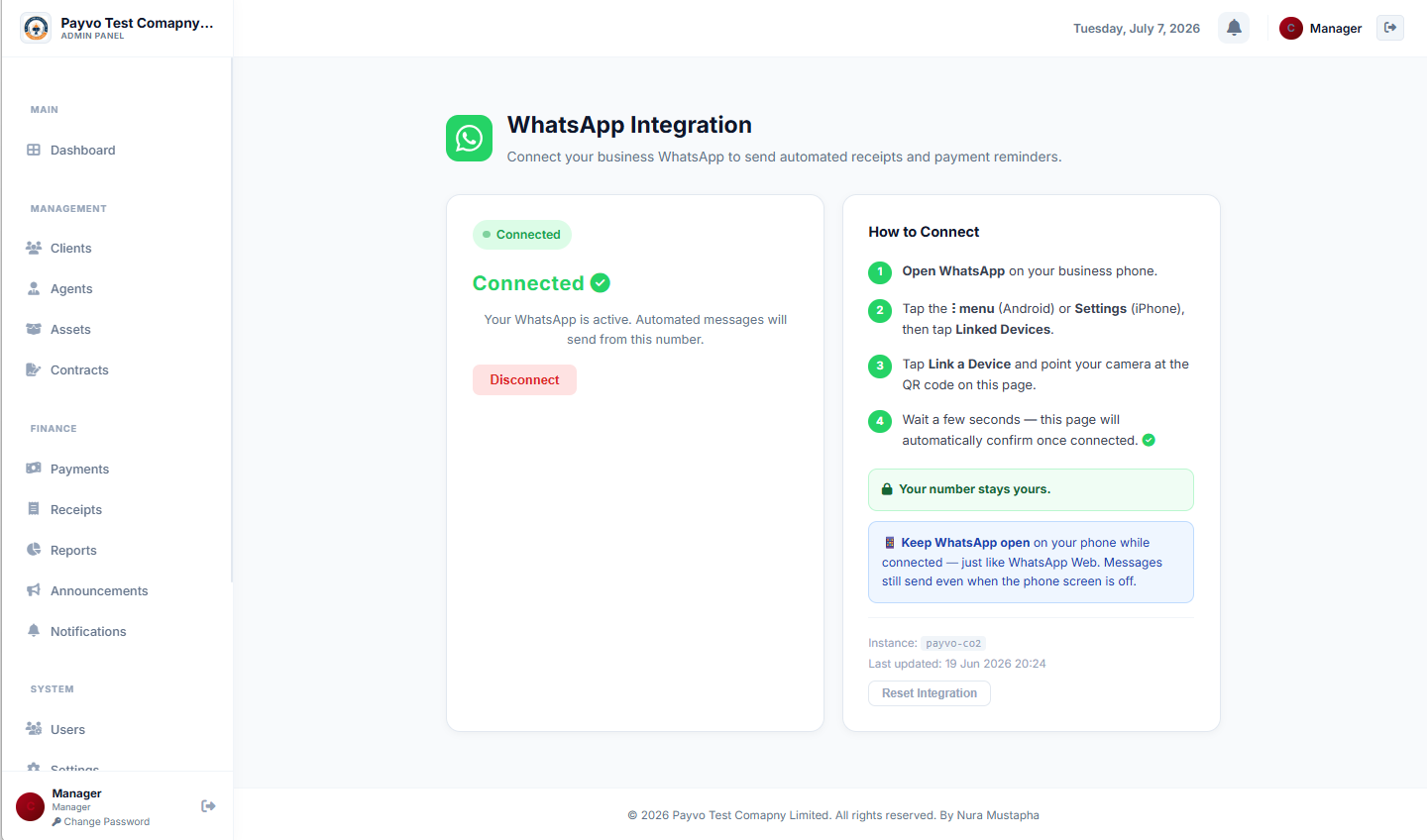 Admin: Whatsapp Integration
<br>
Step 6: Regular Reconciliation and Reporting
At least once a week, reconcile your payment records in your system with your actual bank statements. This ensures accuracy and helps catch any discrepancies early. This is a critical step in maintaining accurate plot payment records.
Generate reports from your system to see your overall financial health:
- Total payments collected for a period.
- Outstanding balances across all contracts.
- Overdue payments.
- Agent commission tracking software reports, if you have agents.
- Cash flow projections based on upcoming due dates.
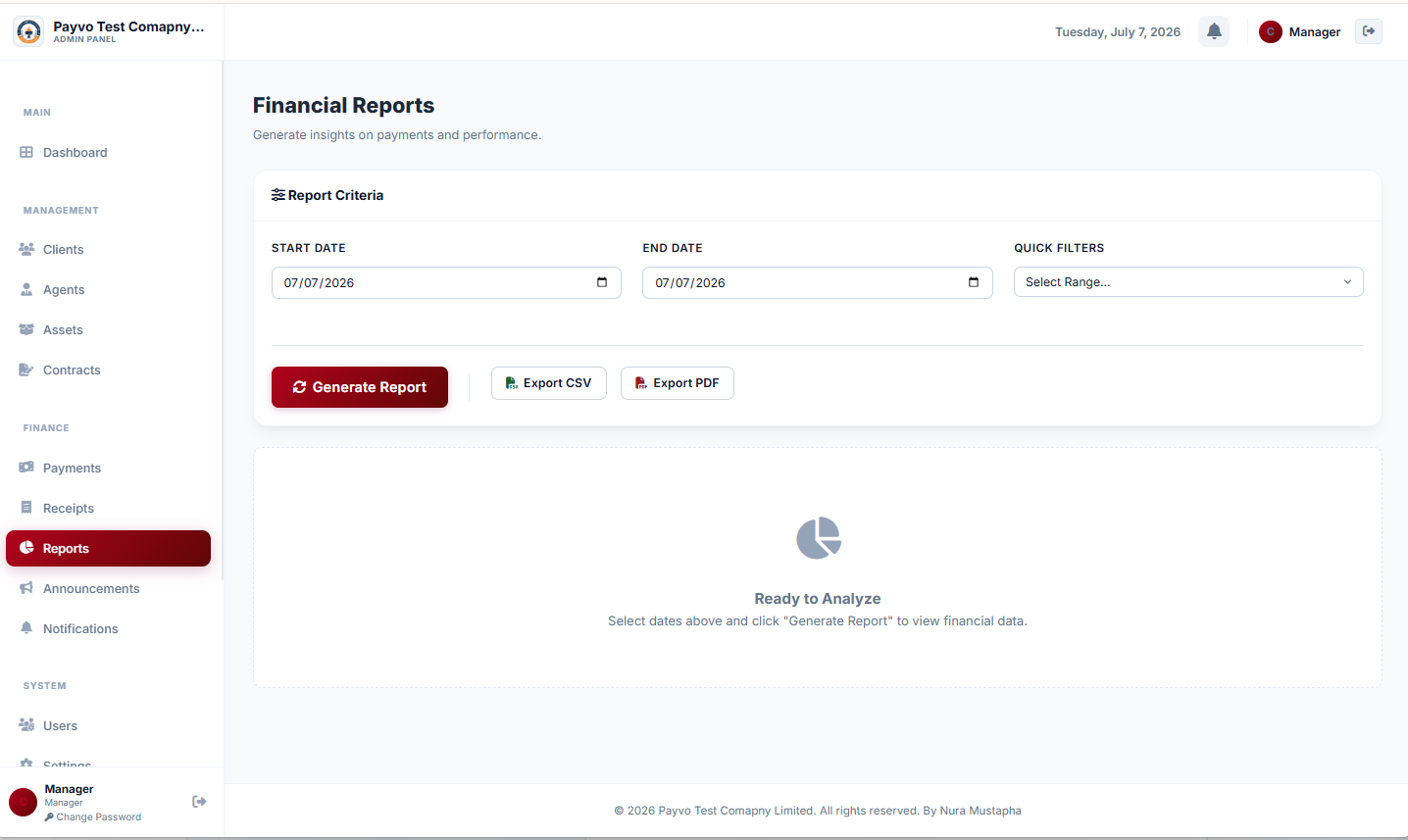 Finance: Financial Reports Page
<br>
This kind of reporting provides invaluable insight into your business payment tracking app Nigeria operations and helps you make informed decisions.
Step 7: Manage Agent Performance and Commissions
If you employ agents to sell your plots in different locations (say, an agent in Kano for your estate there, and another in Abuja), you need a transparent way to manage them. Your system should allow you to:
- Assign specific plots or buyers to agents.
- Track sales made by each agent.
- Calculate commissions based on collected payments, not just signed contracts.
- Provide agents with access to their client portfolio (without revealing sensitive financial data of other clients).
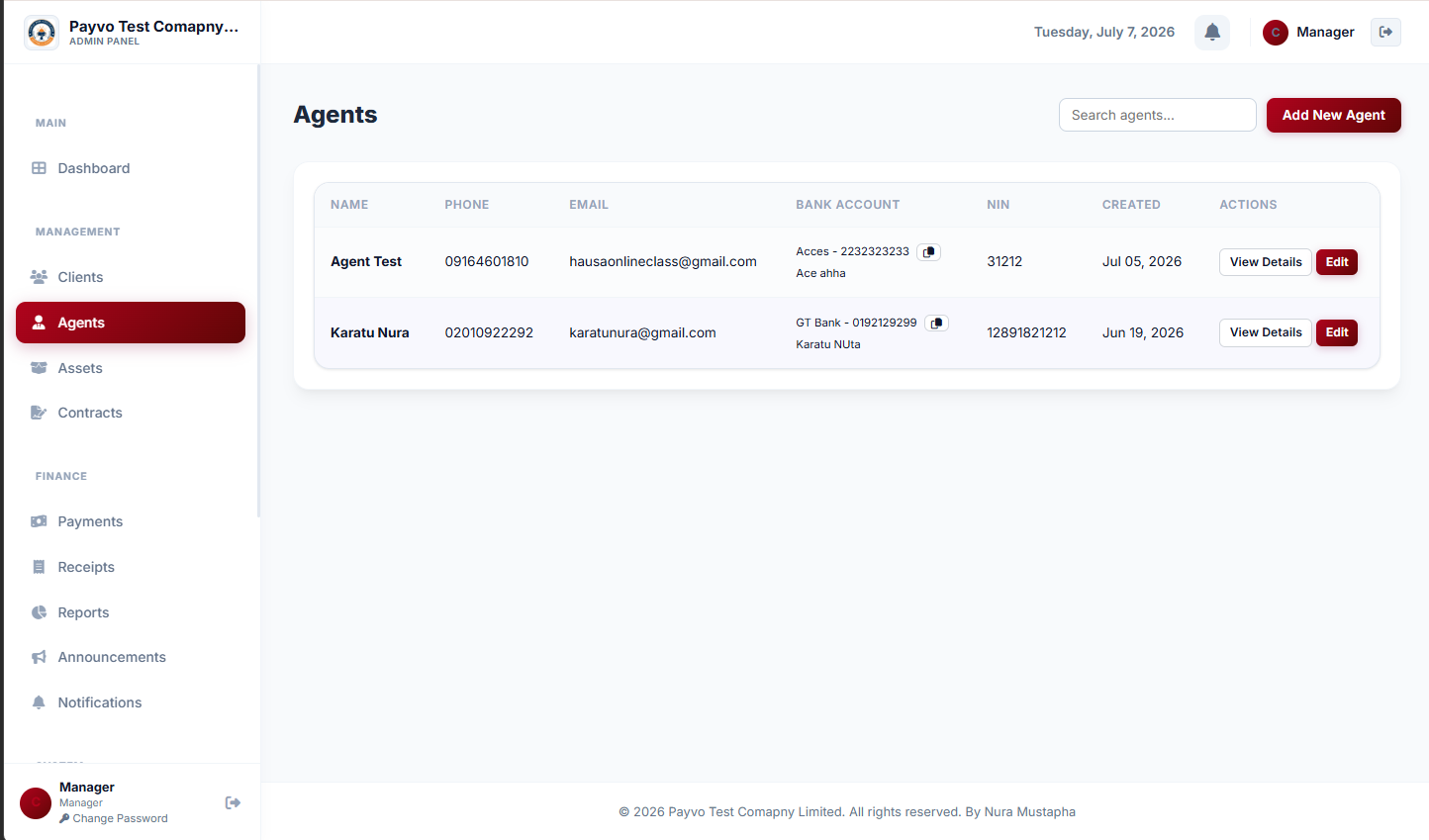 Agent: Agents list page
<br>
This ensures fairness, motivates your team, and reduces potential disputes over commission payments. An effective agent commission tracking software is vital for scaling your real estate operations.
5 Mistakes That Cost Nigerian Business Owners the Most
Look, I've made my fair share of mistakes, and I've seen countless others make them too. In the real estate installment business, these missteps can be incredibly costly.
- Relying Solely on Verbal Agreements or WhatsApp Chats: This is a huge one. "Ah, we agreed on WhatsApp" won't hold up in court when a payment dispute arises. Without a signed, written contract for every land sale, you are exposed. I once saw a developer lose a ₦3,000,000 plot sale because the 'agreement' was only in WhatsApp messages, and the client simply denied ever agreeing to the final payment schedule. The legal fees to try and resolve that were crippling.
- Inconsistent Record Keeping: Imagine having payment details spread across a manual ledger, an old Excel sheet, and three different WhatsApp groups. When a client asks for their complete payment history, you spend hours trying to reconcile it. This wastes time and often leads to errors. These errors can result in either losing money (undercharging) or infuriating clients (overcharging), both of which are terrible for business.
- No Clear Default Policy: What happens when a buyer misses two consecutive payments? Do you repossess the land? Do you charge a late fee? Is there a grace period? If these terms aren't explicitly stated in the contract and consistently enforced, you create ambiguity. This makes it harder to recover funds and encourages other clients to also delay payments. A clear, legally sound default policy is a must for any contract management software Nigeria businesses use.
- Ignoring Agent Mismanagement: If your agents are collecting cash payments directly without proper oversight and immediate logging into a central system, you're inviting trouble. Funds can go missing, payments can be delayed, and clients can be misinformed. Without an agent commission tracking software, you might pay commissions on uncollected funds or struggle to verify an agent's true sales.
- Lack of Financial Segregation: Mixing your personal funds with business funds is a common mistake, especially for smaller developers. This makes it impossible to accurately track your business's financial health, understand profitability for each estate project, or even file taxes correctly. Always maintain separate bank accounts for your business.
How to Know If You're on Track (Success Metrics)
So, how do you know if your efforts to manage multiple land buyers and track plot payments are actually working? It’s not just about collecting money; it’s about efficiency, client satisfaction, and growth. Here are some key performance indicators (KPIs) and benchmarks:
- Collection Rate: What percentage of your due installments are you actually collecting each month? Aim for 85-95%. If it's consistently below 80%, you have a problem with your follow-up, client vetting, or payment plans.
- Average Days Overdue: How long, on average, do payments remain outstanding after their due date? The lower, the better. If this number is high, your reminder system or follow-up process needs work.
- Client Dispute Rate: How many payment-related disputes or disagreements do you handle per month? A low number indicates clear contracts and accurate record-keeping. If this number is rising, your plot payment records might be messy.
- Agent Performance Metrics: For each agent, track their number of new sales, total value of sales, and the collection rate of their assigned clients. This helps you identify top performers and areas for training. This is where an agent tracking page like Payvo's can give you real-time insights.
- Time Spent on Reconciliation: How much time do you or your staff spend each week trying to reconcile payments? If you've implemented a good system, this time should drastically reduce, freeing you up for more strategic tasks.
- Customer Retention Rate: While land isn't usually a repeat purchase, client satisfaction from one purchase can lead to referrals. Happy clients are your best marketers.
<br>
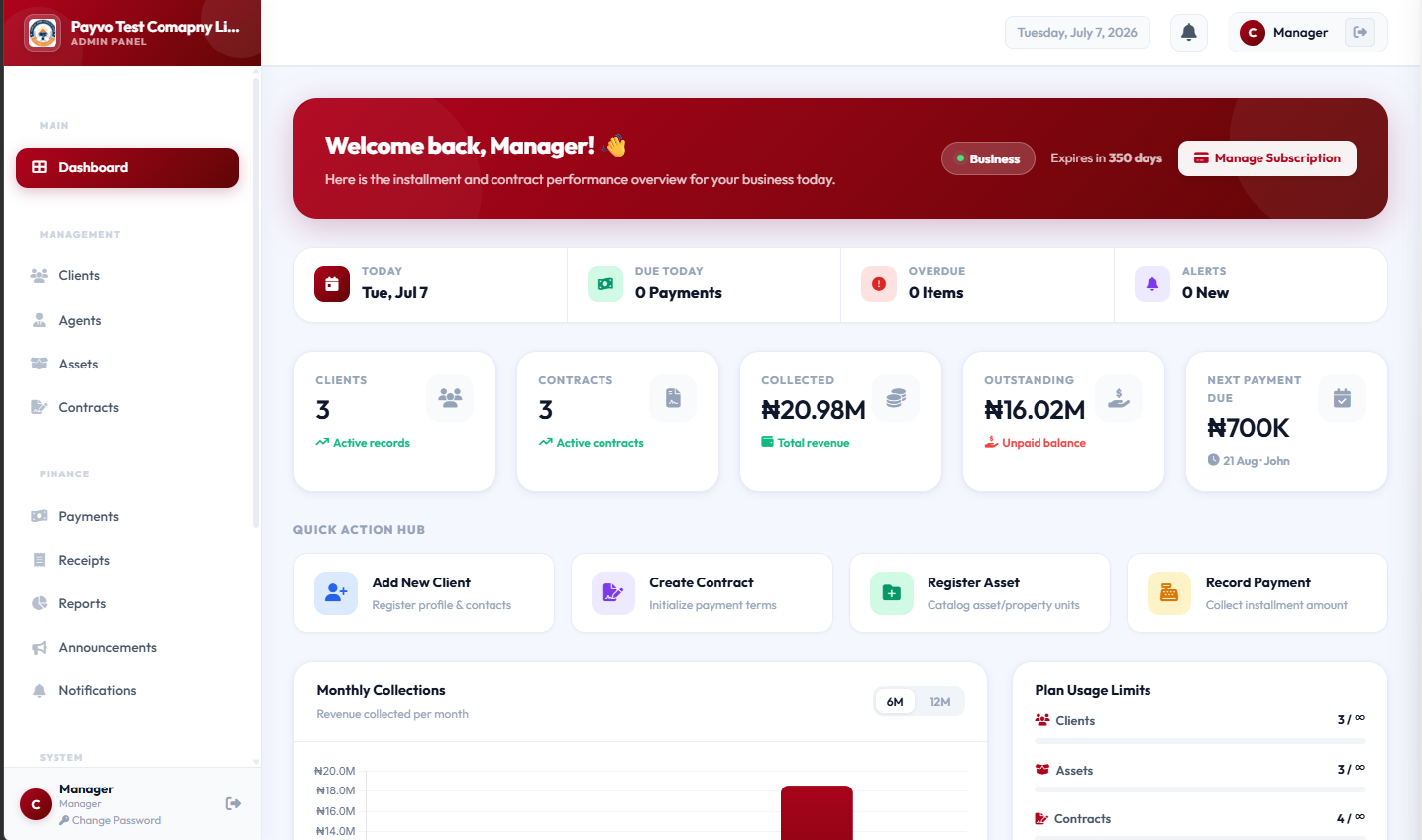 Dashboard (bottom)
<br>
<br>
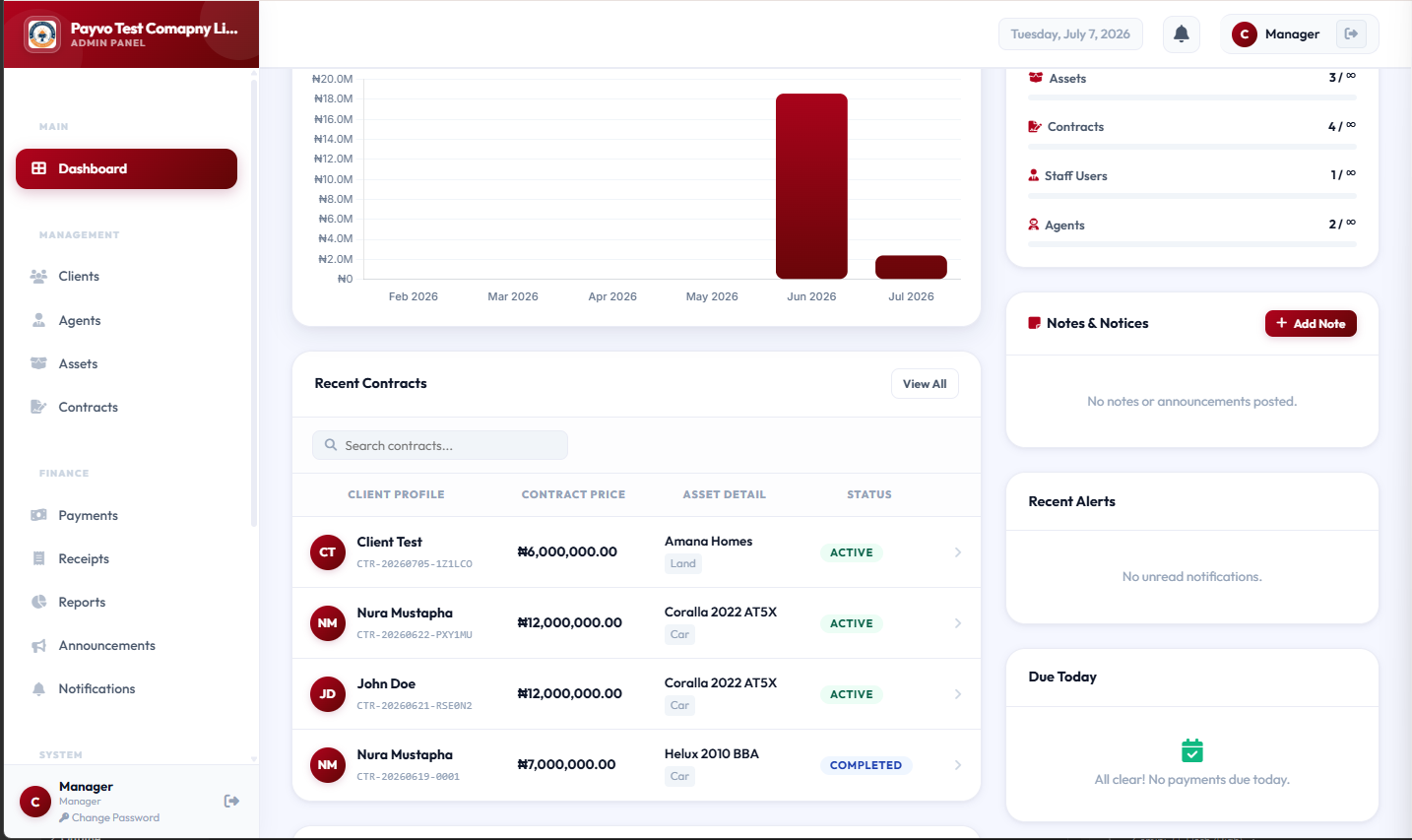 Dashobard (top)
<br>
---
> "The biggest challenge in installment sales isn't finding buyers; it's managing the payments afterwards. Without a system, you're building a house of cards."
---
Real Questions People Ask (FAQ)
Q1: How can I track land installment payments effectively without buying expensive software?
A: For very small operations (under 5-10 active contracts), a meticulously organized spreadsheet can work, but it requires extreme discipline. You'll need columns for buyer name, plot number, total price, deposit, installment amount, due date, payment date, amount paid, and remaining balance. You’d manually update each payment and calculate balances. However, this quickly becomes prone to errors and time-consuming as you scale. For even moderate growth, an installment management software Nigeria solution is significantly more reliable and cost-effective in the long run.
Q2: What's the best way to manage multiple land buyers and their specific plot details?
A: The best way is to centralize everything. Each buyer needs a unique profile, and each plot needs a unique identifier. Your system should link a specific buyer to a specific plot and then to their contract and payment history. This provides a clear, single source of truth for all your land buyer management. Using a digital asset management feature within a contract management software Nigeria offers is ideal for this, ensuring plot payment records are always accurate.
Q3: How do I handle agent commissions when payments come in installments?
A: You should pay agent commissions based on collected funds, not just signed contracts. Your agent commission tracking software should allow you to assign agents to specific contracts and automatically calculate their commission percentage as payments are received. This incentivizes agents to not just sell, but also to ensure clients pay on time. For instance, an agent gets 5% of every installment paid by their client, rather than 5% of the total contract upfront.
Q4: Can I use WhatsApp for payment notifications and still keep proper records?
A: You can use WhatsApp for sending payment reminders and confirmations, which is great for customer engagement. However, WhatsApp conversations alone are not a reliable record-keeping system for financial transactions. Integrate your WhatsApp payment notification system with a dedicated installment tracking software. This way, the official payment records are in your central system, while WhatsApp acts as a communication channel. This gives you the best of both worlds: good client communication and robust financial records.
Q5: What are the legal requirements for land installment contracts in Nigeria?
A: Your land installment contracts must comply with Nigerian property law. Key elements include: clear identification of parties, precise description of the land (plot number, size, location), total purchase price, payment schedule, interest rates (if any), default clauses, dispute resolution mechanisms, and clear clauses on transfer of ownership. It is absolutely critical to have a qualified legal practitioner draft and review all your contracts. This typically falls under the legal fees you'd pay for each transaction, ranging from ₦100,000 to ₦350,000.
Your Next Move
Look, managing multiple land buyers and tracking plot payments doesn't have to be a constant headache. You can build a more organized, efficient, and profitable real estate business. If you're serious about streamlining your operations, moving beyond scattered notebooks and error-prone spreadsheets, it's time to explore a dedicated solution.
Take the first step towards better organization and clearer financial oversight. Register into Payvo today and experience how easy it can be to manage your installment sales.