Selling land on installment in Nigeria is a goldmine, but most developers leave a huge chunk of that gold on the table because they can't properly track their payments. I've seen it countless times, businesses losing millions in potential revenue simply because their "system" is a mix of faded notebooks, scattered WhatsApp messages, and Excel sheets that give you a headache just looking at them. If you’re serious about how to manage land sales on installment in Nigeria: A Complete Guide, you need to understand that organization isn't just nice to have; it's the bedrock of your profit.
 Architectural concept for a modern nigerian housing estate
Why Most People Get This Wrong from Day One
The biggest mistake I see, especially with real estate developers in places like Kaduna or Port Harcourt, is underestimating the sheer complexity of managing multiple installment contracts. You start with a few plots, maybe ten buyers, and a simple ledger seems to work. But then you scale to fifty, a hundred, even two hundred plots, each with its own payment schedule, initial deposit, and agent commission tracking. That neat little ledger becomes a monster.
You've got Mr. Adebayo, who paid his ₦2,500,000 initial deposit for a plot in your new estate in Abuja suburbs. Then there's Mrs. Okafor, who bought two plots in Ibadan and is on a 24-month payment plan, with her first payment of ₦375,000 due next week. And don't forget the cooperative society that bought five plots in Kano, paying in quarterly lump sums. Trying to keep all these details straight in your head, or even in a basic spreadsheet, is a recipe for disaster.
I once worked with a developer in Lagos who swore by his Excel sheet. He was managing over 150 active land installment plans. One day, a client came to complain that they had overpaid by ₦187,500, showing their bank statements. My client, the developer, checked his sheet, and it showed the client still owed money. After three days of digging through bank alerts and handwritten receipts, they discovered a payment was recorded against the wrong plot. Imagine the damage to reputation, the wasted time, and the sheer frustration. That's why relying on manual processes for land payment management is a ticking time bomb.
Before You Do Anything: The Foundation Work
Before you even think about putting a shovel in the ground or printing a single flyer, you need to lay a solid foundation. This isn't just about the physical land; it's about your operational structure.
First, secure your land legally. This sounds obvious, but you'd be surprised. You need proper documentation. This includes the Land Acquisition Cost, which can range from ₦500,000 for a plot in a rural, peri-urban area to upwards of ₦100,000,000+ for prime locations in Lagos or Abuja city center. Don't forget the Survey Plan, which will set you back ₦150,000 to ₦350,000 per plot, and the Deed of Assignment/Conveyance, costing ₦100,000 to ₦500,000 for legal fees. These are non-negotiable. Without them, you're building on sand.
Next, plan your development. Are you fencing the perimeter? A basic block wall fence for a plot can cost ₦300,000 to ₦800,000. Will there be internal roads? If you're developing multiple plots, your contribution to road network construction could be ₦200,000 to ₦1,000,000 per plot. A shared gatehouse for security could add another ₦500,000 to ₦2,000,000 to the estate's overall cost, which you'll need to factor into your plot prices. These infrastructure costs are crucial for attracting buyers and justifying your pricing.
Finally, define your installment terms clearly. This means deciding on your initial deposit percentage (usually 20% to 50% of the total land value), the installment duration, and the frequency (monthly, quarterly, etc.). You also need to factor in an annualized interest rate for installment plans, typically 10% to 25%, depending on the duration and perceived risk. Transparency here builds trust.
Remember, the goal is not just to sell land, but to sell it smoothly and profitably. This groundwork saves you headaches and disputes down the line.
The Step-by-Step Path (What Actually Works)
Managing land sales on installment is a process, not a one-off transaction. You need a clear, repeatable system.
Step 1: Document Everything from Day One
When a client expresses interest, you need to capture their details, the specific plot they're interested in, and the agreed-upon price and payment terms. This isn't just for your records; it's for their peace of mind too.
Why it matters: A detailed record prevents disputes. I once saw a situation where a client claimed they were promised a corner plot, but the sales agent had written down an inner plot. Because the initial documentation was vague, it led to a long, messy argument.
Common shortcut that backfires: Relying on verbal agreements or scribbling notes on a piece of paper. You'll forget, they'll forget, and then everyone will be frustrated.
Action item: Create a standardized client intake form. This should capture full names, contact details, next of kin, specific plot number, agreed price, initial deposit, installment amount, frequency, and total duration.
Step 2: Formalize the Contract Agreement
Once the initial deposit is paid, a formal contract of sale or a Deed of Assignment draft is essential. This document legally binds both parties and outlines all the terms and conditions, including penalties for late payments.
Why it matters: This is your legal protection. It clarifies the expectations for both you and your buyer. If a buyer defaults, this document is what you take to court.
Common shortcut that backfires: Using a generic, one-size-fits-all contract. Each land sale might have unique clauses, especially regarding payment terms or specific plot features. Get a lawyer to draft a robust contract that covers all eventualities for your plot installment plan.
Action item: Have a legal professional prepare a comprehensive contract. Ensure it clearly states the Land Information Certificate/C of O processing fees (which can be ₦500,000 to ₦3,000,000+ in government fees and legal costs, highly variable by state and land type), and who is responsible for these.
Step 3: Set Up a Reliable Payment Tracking System
This is where most businesses struggle, and it’s arguably the most critical step for land sales installment Nigeria. You need to track every single payment, every due date, and every outstanding balance.
Why it matters: Accurate payment tracking is the heart of your business. It tells you who owes what, when, and helps you forecast your cash flow. Without it, you're flying blind. Imagine you have a ₦5M plot over 12 months, and after an initial deposit, the monthly installment payment is ₦300,000 to ₦450,000. Multiply that by dozens of clients; you need precision.
Common shortcut that backfires: Using multiple, disconnected systems like a notebook for payments, WhatsApp for reminders, and a basic spreadsheet for totals. This is a recipe for errors and lost data.
Action item: Implement a dedicated installment management software. This is where a tool like Payvo comes in. It helps you organize your customer records, create installment contracts, set up payment schedules, record payments, and monitor outstanding balances all in one centralized system. For real estate payment tracking Nigeria, it's a game-changer. You can track your monthly profit margins directly.
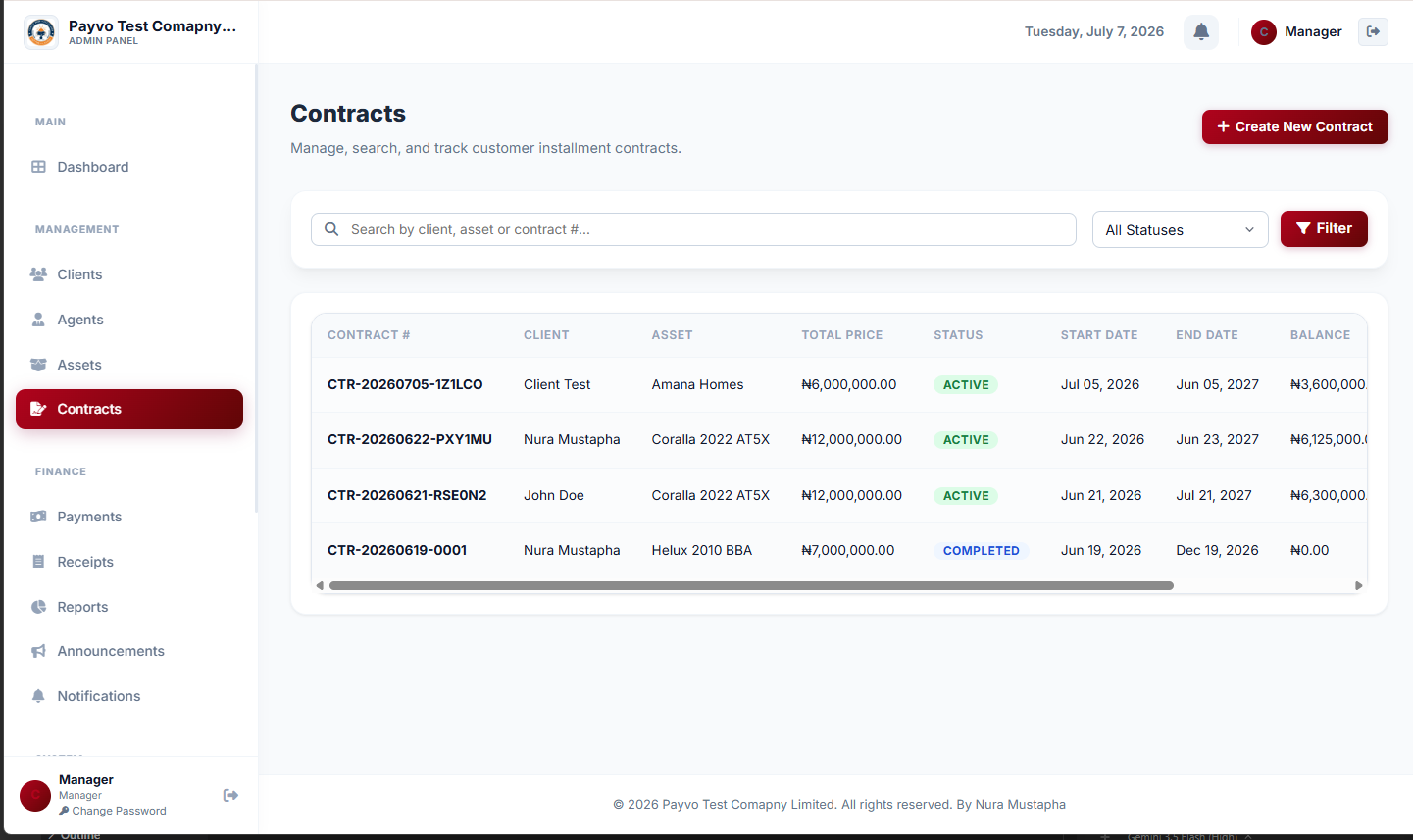 A clean dashboard showing client and contract lists
A dedicated system like Payvo allows you to see all your contracts at a glance, making land payment management much simpler.
Step 4: Issue Professional Receipts for Every Payment
Whether it's an initial deposit or a monthly installment, every payment must be acknowledged with a professional receipt. This isn't just good practice; it's proof of payment for the client and a record for you.
Why it matters: Receipts protect both you and your client. They prevent disputes over payments made and provide clear documentation for audits or legal matters.
Common shortcut that backfires: Handing out poorly designed, generic receipts or worse, just sending a "paid" message on WhatsApp. This lacks professionalism and makes it easy for issues to arise.
Action item: Use a receipt generator app Nigeria that integrates with your payment tracking system. This ensures consistency and accuracy.
Step 5: Implement a Proactive Communication Strategy
Don't wait for payments to become overdue before you communicate. Send reminders before due dates. Follow up promptly, but politely, on missed payments.
Why it matters: Proactive communication can significantly reduce late payments and improve customer relations. A simple reminder can be the difference between a timely payment and a default.
Common shortcut that backfires: Only contacting clients when they owe you money. This creates a negative perception and can make clients less responsive.
Action item: Set up automated reminders. A WhatsApp payment notification system or email alerts can be incredibly effective.
The Numbers That Will Make or Break You
Understanding the financial landscape is non-negotiable. You need to know your costs inside out to set realistic prices and manage your cash flow effectively.
Let's break down some crucial figures for land sales:
- Land Acquisition Cost: As we discussed, this is your biggest initial outlay. For a developing urban area like Ibadan or Abuja suburbs, you're looking at ₦3,000,000 to ₦15,000,000 per plot. In prime Lagos locations, it could easily hit ₦20,000,000 to ₦100,000,000+. This significantly impacts your selling price.
- Documentation & Legal Fees: Budget ₦250,000 to ₦850,000 per plot for Survey Plans and Deeds of Assignment. This is a fixed cost you can't escape.
- Infrastructure Development: If you're providing roads, fencing, and a gatehouse, factor in ₦500,000 to ₦1,800,000 per plot. These improvements increase the land's value but also your upfront investment.
- Marketing & Advertising: To get the word out, especially in competitive markets, you'll spend ₦50,000 to ₦500,000 monthly on online ads, flyers, and local radio spots. This is an ongoing expense.
- Sales Agent Commission: Your agents are crucial. Expect to pay them 5% to 10% of the sale price per plot. This is a variable cost tied directly to your sales.
- Installment Payment Interest Rate: When you offer installment plans, you're essentially providing financing. An annualized rate of 10% to 25% is typical, added to the base price to cover your deferred income and administrative costs.
<blockquote style="background-color: #f0f8ff; border-left: 5px solid #007bff; padding: 15px; margin: 15px 0;">
"In real estate, your profit isn't just in the sale; it's in the efficient management of every kobo, especially when dealing with long-term payment plans."
</blockquote>
Growth After Launch: The Next 90 Days
You've launched your estate, made your first sales, and now the real work begins: sustaining momentum and ensuring smooth operations. The first 90 days post-launch are critical for establishing trust and building your reputation.
- Monitor Payment Compliance Closely: Use your business payment tracking app Nigeria to identify clients who are consistently late or have missed payments. A quick call or a WhatsApp message can often resolve minor issues before they escalate. Don't wait until three payments are missed.
- Engage Your Sales Agents: Your agents are your frontline. Provide them with the right tools. An agent commission tracking software helps them see their earnings clearly, motivating them to close more deals and follow up effectively. Regularly review their performance and offer incentives.
- Gather Feedback: Talk to your early buyers. What do they like about the process? What could be improved? Their feedback is invaluable for refining your sales process and marketing strategy.
- Reinvest in Infrastructure (Strategically): If sales are good, consider using some of that capital to accelerate infrastructure development. Seeing progress on roads, drainage, or electricity poles can encourage more sales and reassure existing buyers.
- Leverage Testimonials: Happy customers are your best marketers. Ask satisfied buyers for testimonials or referrals. A short video testimonial from a land owner in your estate can be more powerful than any paid advertisement.
- Stay Organized with Your Data: As you grow, the volume of contracts and payments will only increase. Ensure your installment management software Nigeria is robust enough to handle the scale. You need to easily access client details, payment histories, and outstanding balances. This also applies to any car dealer installment software or cooperative society management software if you have other ventures.
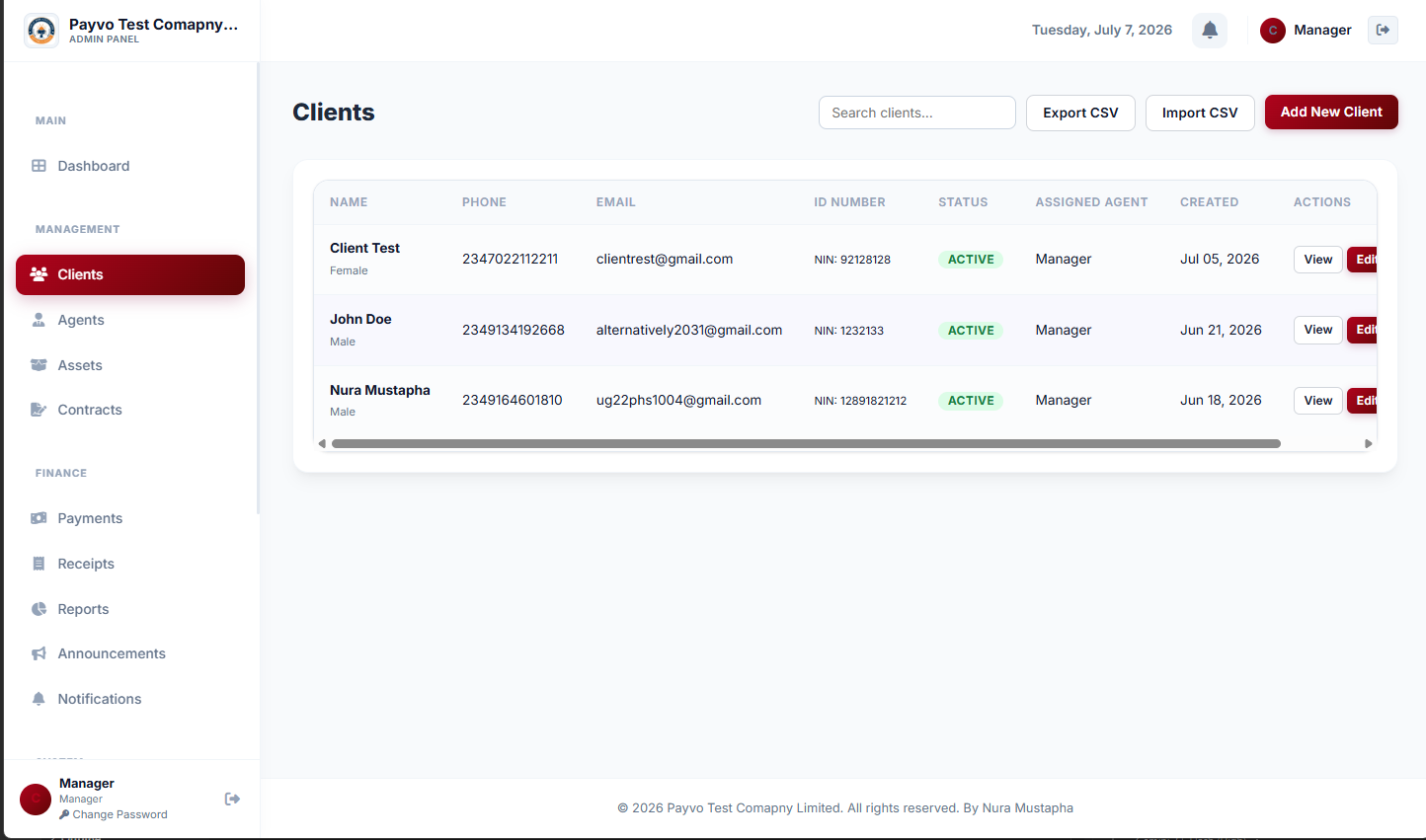 A dashboard showing a list of clients
Keeping track of all your clients and their associated contracts is simplified with a dedicated client list view.
FAQ: Answers to What You're Actually Googling
How do I track installment payments for multiple land buyers?
This is a common challenge. Manual tracking with notebooks or basic Excel sheets becomes unmanageable very quickly. The best way to track installment payments for multiple land buyers is to use a dedicated installment management software. These systems allow you to create individual client profiles, link them to specific plots, set up unique payment schedules, and record each payment as it comes in. This gives you a clear, real-time overview of who has paid, who is due, and who is outstanding. You can find more details on how to manage customers buying land on installment on our dedicated page.
What documents do I need for land sales on installment in Nigeria?
You need several key documents to protect both yourself and the buyer. These include:
- Offer Letter/Letter of Intent: Outlines the initial terms.
- Purchase Agreement/Contract of Sale: The main legal document detailing the plot, price, installment terms, and conditions.
- Survey Plan: Identifies the exact boundaries of the land.
- Deed of Assignment/C of O: Legal documents proving ownership and transfer.
- Payment Receipts: For every single payment made.
How much commission should I pay my land sales agents?
Sales agent commission for land sales in Nigeria typically ranges from 5% to 10% of the sale price. The exact percentage often depends on the agent's experience, the value of the land, and the complexity of the sale. Some developers also offer tiered commissions or bonuses for hitting certain sales targets. Having agent commission tracking software can help you manage these payouts transparently.
What's the best way to handle late payments from land buyers?
Consistency is key. First, ensure your contract clearly states the penalties for late payments. When a payment is missed, send an automated reminder immediately. If no response, follow up with a personal call or message. For persistent defaulters, you might need to explore options like restructuring the payment plan (if feasible), or as a last resort, contract termination as stipulated in your agreement. A WhatsApp payment notification system can be very effective for gentle reminders.
Can I manage land installment sales using just Excel?
While Excel can handle basic calculations, it's not ideal for managing complex land installment sales, especially as your business grows. It lacks automated reminders, proper receipt generation, secure record-keeping, and integration with other communication tools. It's prone to human error, difficult to audit, and doesn't provide a centralized view of your entire operation. For serious real estate payment tracking Nigeria, you need something more robust than an Excel sheet.
Ready? Here's Where to Start
Look, the Nigerian real estate market is booming, and land sales on installment are a fantastic way to make property ownership accessible while growing your business. But you can't build a sustainable empire on shaky administrative foundations. It's time to move past the notebooks and scattered spreadsheets.
If you're ready to bring order to your land sales, track every kobo, and ensure your business scales smoothly, then you need a system that works as hard as you do. Head over to Payvo to see how our installment management software Nigeria can transform your operations. You can explore our features, understand our pricing, or even register into Payvo directly. Don't let disorganized records hold your business back another day. Take control of your installment sales today.