The phone buzzed again, a harsh vibration against the mahogany desk. It was 11:47 PM in Ikeja, and another customer was calling, angry about a payment reminder that didn't quite match what he had scribbled in his tattered receipt book. Emeka sighed, rubbing his temples. This was the third such call this week, all stemming from mismatched records for vehicle installment buyers. He knew he needed a better way to manage installment sales for his vehicle business, especially with more and more customers opting for hire purchase tracking.
 Busy car dealership office at night
The Reality Check: What Nobody Tells You About Vehicle Installment Sales
Look, selling vehicles on installment is a goldmine in Nigeria, no doubt about it. You open up your market to so many more people who can't drop ₦4,000,000 cash for a used Toyota Corolla right away. But here’s the thing that most people gloss over: it’s not just about getting the customer to sign on the dotted line. The real work, and where most businesses bleed money, starts after that first payment.
You think you're just selling cars, but what you've actually become is a mini-finance company. You're now managing a portfolio of loans, essentially. And if you’re still using school notebooks, scattered WhatsApp chats, and a calculator to track everything, you're building your business on quicksand. I’ve seen this play out too many times. A dealer in Surulere, a good friend of mine, lost nearly ₦800,000 in just six months because he couldn't keep track of who paid what, when, and how much was still owed. Customers would claim they paid, he couldn't find the record, and rather than risk losing a client, he'd often just let it go. That's money out of your pocket, simple as that.
The average Nigerian vehicle installment buyer operates on tight margins. A delay of a few days can throw off their entire payment plan. Your ability to accurately track installment payments, send timely reminders, and have clear records for every single transaction is not just good practice; it’s the difference between profit and loss. We're talking about managing assets worth millions. If you're selling a few used Keke Napeps at ₦1,200,000 each, and you have 10 customers, that's already ₦12,000,000 in receivables you need to watch like a hawk. Without proper car dealer installment software or a solid system, it’s a nightmare waiting to happen.
What You Actually Need to Get Started with Installment Vehicle Sales
Alright, let's cut to the chase. You want to offer installment sales? Fantastic. But don't just jump in. Here’s what you really need, beyond just the cars themselves.
Non-Negotiables:
- Initial Vehicle Stock: You can't sell what you don't have. For a small-scale operation, starting with 2-3 used Keke Napeps or Okadas will set you back about ₦800,000 to ₦2,500,000. If you're aiming for slightly higher-end, say 1-2 used Toyota Corollas, prepare to spend between ₦3,500,000 and ₦7,000,000. Don't overextend here; start small and scale up.
- Legal Framework: This is huge. You absolutely need properly drafted installment sales agreements. Don't just download a template from the internet. Get a lawyer to draw up solid contracts that protect your interests. This will cost you anywhere from ₦50,000 to ₦150,000 per agreement, or a retainer if you plan to do many. This document is your shield when things go south.
- Clear Payment Schedule & Markup: You need a transparent system for how payments will work. How much is the down payment? What are the weekly/monthly installments? And what’s your markup? Remember, you're taking on risk and offering financing. A 25% to 60% markup over your cash price is standard to cover your costs, potential defaults, and make a profit.
Nice-to-Haves (but quickly become must-haves):
- Small Office/Showroom Space: Even a small space gives you credibility and a place to meet clients. Annual rent can range from ₦150,000 in a smaller town or less prime area to ₦800,000. In a high-traffic Lagos or Abuja spot, you're looking at ₦1,500,000 to ₦3,500,000 annually.
- Reliable Staff: Even one sales/admin assistant can make a world of difference, handling calls, follow-ups, and basic record-keeping. Expect to pay ₦60,000 to ₦120,000 per month for an entry-level person.
- Marketing Budget: People need to know you offer installments. Local flyers, social media boosts, and word-of-mouth incentives are crucial. Allocate ₦20,000 to ₦100,000 monthly.
- Refurbishment Budget: Unless you're selling brand new, your used vehicles will need some TLC. Budget ₦100,000 to ₦400,000 per unit for basic repairs, painting, and servicing.
- Insurance: Third-party insurance is a must for any vehicle on the road. Budget ₦15,000 to ₦30,000 per vehicle annually.
The Complete Step-by-Step Breakdown to Manage Installment Sales
Managing multiple installment buyers for vehicles isn't rocket science, but it requires discipline and a clear process. Here’s how you break it down:
Step 1: Source and Prepare Your Vehicles
Before you can sell anything, you need quality stock. This means knowing where to find reliable used vehicles – whether it’s direct from owners, auctions, or trusted dealers in places like Ladipo Market or parts of Alaba International.
Once you acquire a vehicle, don't just push it out. Invest in a thorough inspection and necessary refurbishment. A well-maintained vehicle reduces post-sale headaches and builds customer trust. Budget for a good mechanic, bodywork if needed, and a fresh coat of paint. This initial investment in quality can save you a lot in recovery costs down the line if a customer defaults due to a faulty vehicle.
Step 2: Set Your Pricing and Installment Terms
This is where you determine your profitability. First, establish your cash price for the vehicle, factoring in your acquisition cost, refurbishment, and a reasonable profit margin. Then, calculate your installment price. This typically includes a significant markup (25% to 60%) to cover the cost of financing, the risk of default, and administrative overhead.
Define your terms clearly:
- Down Payment: How much upfront? This should be substantial enough to show commitment from the buyer and cover some of your initial costs.
- Installment Frequency: Weekly, bi-weekly, or monthly? For vehicles like Keke Napeps, weekly payments are common due to daily earnings. For cars, monthly is more typical.
- Duration: How many months or weeks will the payment plan run?
- Late Payment Penalties: What happens if a payment is missed? Be clear about this from the start.
Step 3: Vet Your Customers Thoroughly
This is perhaps the most critical step to avoid future headaches. Don't just sell to anyone with a down payment. Implement a robust vetting process for your vehicle installment buyers:
- KYC (Know Your Customer): Collect valid ID (National ID, Driver's License), proof of address (utility bill), and next of kin details.
- Guarantors: For higher-value vehicles, demand one or two reliable guarantors who can be contacted if the buyer defaults. Verify their contact details and relationship to the buyer.
- Employment/Business Verification: For employed individuals, verify their place of work. For business owners, try to get a sense of their business stability. This isn't always easy in Nigeria, but even a quick visit to their business location can give you insights.
Step 4: Draft and Execute a Solid Installment Agreement
This is your legal backbone. Your lawyer-drafted contract management software Nigeria needs to be watertight. It should clearly state:
- The full purchase price (cash and installment).
- Down payment amount.
- Installment amounts and due dates.
- Penalties for late payments.
- Conditions for repossession.
- Responsibilities for maintenance, insurance, and roadworthiness.
- What happens in case of theft or accident.
Step 5: Implement a Reliable Payment Tracking System
This is where the rubber meets the road for how to manage installment sales for your vehicle business. You need a system that gives you a clear, real-time picture of every single contract. Spreadsheets can work for a very small number of clients, but they quickly become a mess. Trust me, I've been there. You'll spend hours trying to reconcile payments, calculate balances, and figure out who's due when.
This is where a dedicated solution like Payvo comes in handy. You can register each customer, link them to the specific vehicle, create the installment contract with all payment schedules, and then record every payment they make. This automatically updates their outstanding balance, flags overdue payments, and keeps all your records in one place. It’s like having a dedicated accountant just for your installment sales, but without the salary. This kind of vehicle installment tracking is non-negotiable for growth.
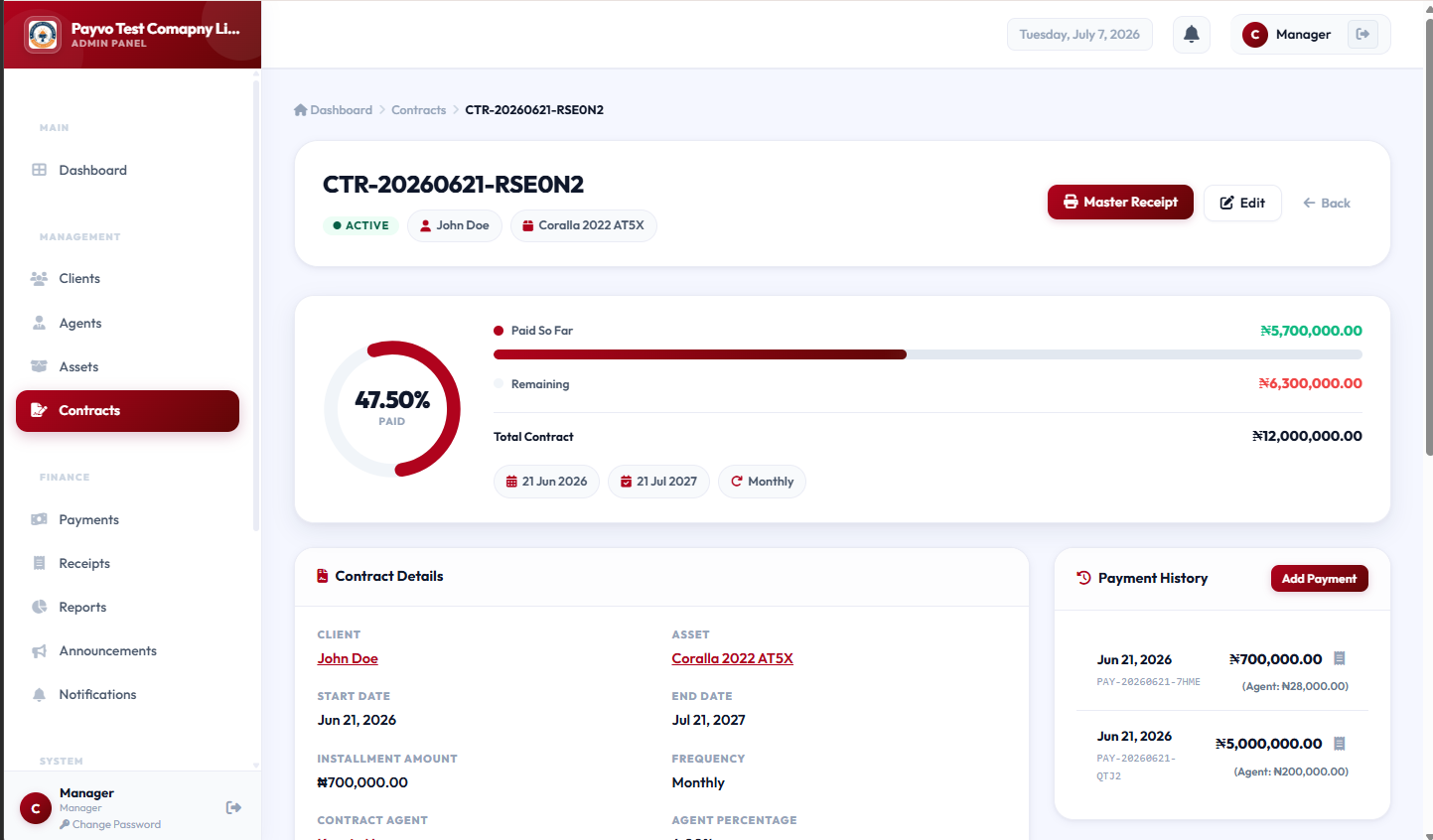 Contract Details View (top)
A clear view of contract details, showing payment schedules and due dates.
Actionable Tip: When a customer makes a payment, issue a professional receipt immediately. A receipt generator app Nigeria offers, integrated with your tracking system, makes this seamless and builds trust. Ensure it shows the amount paid, date, and remaining balance.
Step 6: Consistent Follow-up and Communication
Don't wait for payments to become overdue. Proactive communication is key.
- Reminders: Send friendly reminders a few days before a payment is due. A WhatsApp payment notification system can automate this, saving you time.
- Early Intervention: If a payment is missed, follow up immediately. Don't let it slide for weeks. Sometimes a customer just forgot, or they're facing a temporary issue. Early communication can help you work out a solution before it escalates.
- Clear Communication Channels: Make sure customers know how to reach you if they have a problem or need to discuss their payment.
Step 7: Handle Defaults and Repossession (When Necessary)
Despite your best efforts, some customers will default. This is where your solid contract and diligent tracking become invaluable.
- Follow Your Contract: Adhere strictly to the terms you both signed. Send official demand notices.
- Recovery Efforts: If communication fails and payments stop, you may need to initiate repossession. This can be costly (₦50,000 to ₦200,000 per vehicle for legal notices and recovery efforts) and time-consuming, but it’s crucial to protect your assets.
- Legal Counsel: Don't go it alone. Consult your lawyer during the repossession process to ensure you're acting within the law.
5 Mistakes That Cost Nigerian Business Owners the Most
I've seen these mistakes kill businesses or severely stunt their growth. Don't be that guy.
- No Proper Contracts: This is the biggest one. Relying on a handshake or a poorly drafted document is like building a house without a foundation. When a customer defaults, you have no legal standing, and your vehicle is gone. I knew a dealer in Aba who lost three new Keke Napeps this way. Total loss: over ₦3,500,000 in 2026 value.
- Inadequate Customer Vetting: Selling to anyone with a down payment is a recipe for disaster. You need to know who you're dealing with. Skipping background checks and guarantor verification means you're giving away a valuable asset to a stranger, hoping they pay. The default rate provision for businesses that don't vet properly can easily skyrocket from a manageable 5% to a crippling 15% of expected collections.
- Manual, Disorganized Payment Tracking: This is where the chaos lives. Notebooks get lost, Excel sheets get corrupted, and WhatsApp messages get deleted. You lose track of who paid what, when, and how much is still owed. This leads to disputes, missed payments, and ultimately, lost revenue. Imagine having 20 active contracts, each paying weekly. That's 80 transactions a month to track. Without a system, you're drowning. This impacts your ability to track agent commission tracking software too, if you use sales agents.
- Poor Communication and Late Follow-up: Ignoring missed payments for weeks sends a message that you're not serious. It makes it harder to recover the debt. Be proactive. A quick call or message on the due date can prevent a small delay from becoming a full default. Many business owners are too shy to chase payments, but that shyness costs them money.
- Underestimating Operational Costs: Beyond the vehicle cost, there are legal fees, staff salaries (₦60,000-₦120,000/month), marketing (₦20,000-₦100,000/month), generator fuel (₦30,000-₦150,000/month), internet (₦15,000-₦40,000/month), and the cost of potential repossession (₦50,000-₦200,000). If you don't factor these into your pricing and cash flow projections, you'll be profitable on paper but broke in reality.
How to Know If You're on Track (Success Metrics)
You can't manage what you don't measure, right? Here are some key performance indicators (KPIs) to tell you if your vehicle installment business is actually working:
- Collection Rate: This is king. Divide the actual amount collected in a month by the total expected collections for that month. Aim for consistently above 85-90%. If it's lower, you have a problem with vetting, follow-up, or both.
- Default Rate: How many customers are consistently missing payments or have stopped paying altogether? Track this as a percentage of your active contracts. A healthy rate is usually below 5-10%. If you're consistently above 15%, you need to re-evaluate your vetting process and recovery strategy.
- Average Payment Latency: How many days, on average, are payments late? If customers are consistently paying 5-7 days late, it indicates a cash flow issue for them, or a lax approach to your reminders.
- Customer Acquisition Cost (CAC): How much do you spend on marketing, sales commissions, etc., to acquire one new installment customer? Compare this to the profit you make from that customer over the contract term.
- Customer Retention Rate: While less direct for installment sales, if you have repeat customers or referrals, it's a good sign of satisfaction and trust.
- Outstanding Balance Growth: Are your total outstanding balances growing at a healthy rate, indicating business expansion, or are they stagnant or declining due to defaults?
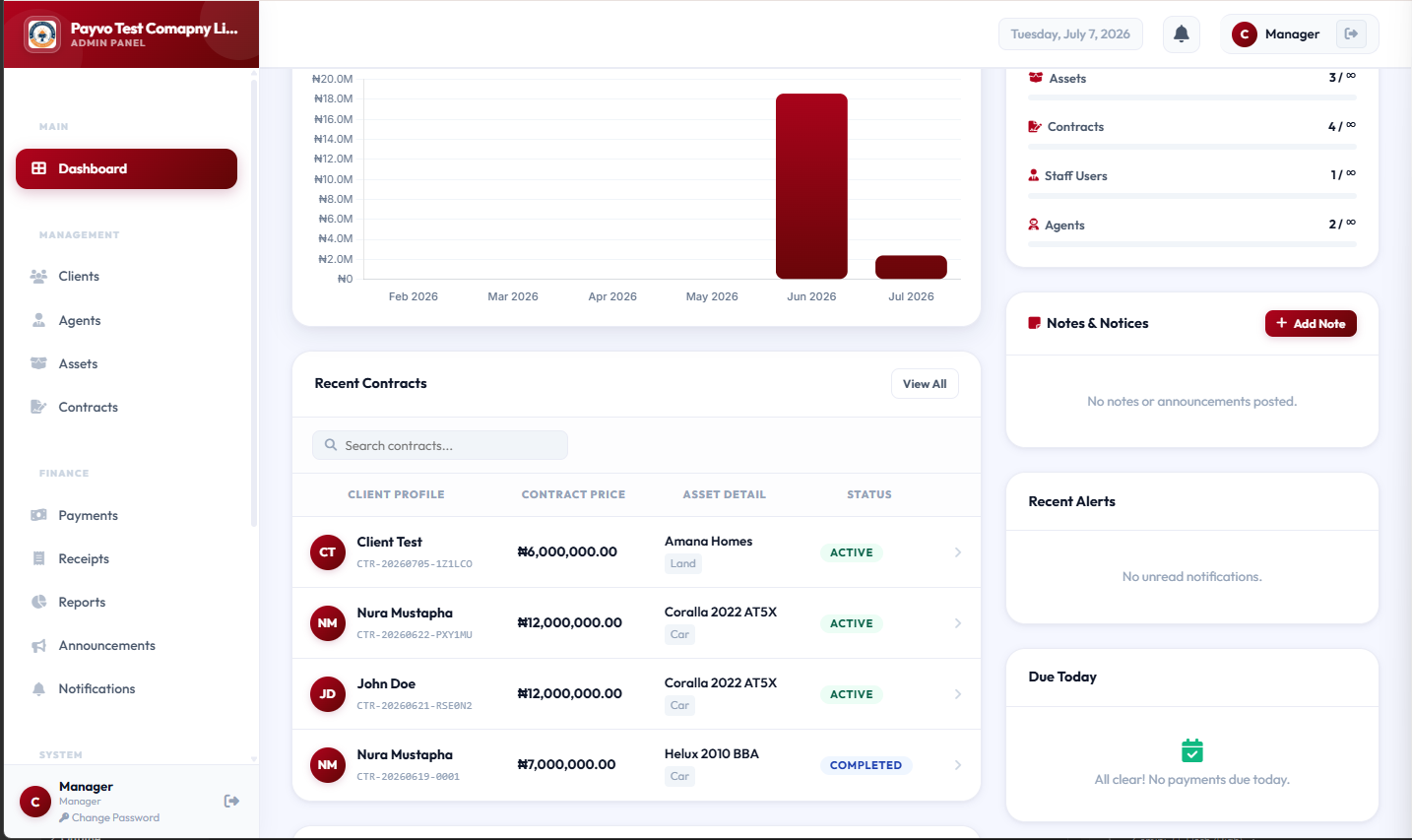 Dashobard (top)
A dashboard showing key financial metrics and recent activities.
Real Questions People Ask (FAQ)
Q1: How do I track installment payments effectively without getting confused between customers?
A1: The best way is to use a dedicated system. Trying to manage multiple customers with similar payment amounts and due dates using paper or generic spreadsheets is a recipe for confusion. Look for car sales customer management software or a business payment tracking app Nigeria offers that allows you to create a unique profile for each customer, link them directly to their specific vehicle and contract, and record all payments against that specific contract. This way, when Mr. Okoro pays, his payment is only recorded against his account, not mixed up with Mrs. Ade's.
Q2: What's the biggest challenge in managing hire purchase tracking for vehicles?
A2: The biggest challenge is often managing cash flow and defaults. You're effectively lending money, so you need consistent repayments to cover your own operational costs and vehicle acquisition. When customers default, it impacts your liquidity and profitability. This is compounded by the administrative burden of tracking each payment, sending reminders, and potentially pursuing recovery, especially if you don't have a reliable hire purchase tracking system in place.
Q3: How can I ensure my customers actually pay their installments on time?
A3: It's a combination of good upfront work and consistent follow-through. First, thorough vetting (Step 3 above) reduces your risk. Second, clear communication of terms and consequences (Step 4) sets expectations. Third, proactive reminders (Step 6) help prevent forgetfulness. Finally, swift action on missed payments shows you're serious. While you can't guarantee payment, these steps significantly increase your chances. A WhatsApp payment notification system can be very effective here.
Q4: Is it worth investing in a software solution for managing vehicle installment sales if I only have a few cars?
A4: Absolutely. Think of it as investing in prevention rather than cure. Even with a few cars, the complexity of managing contracts, payments, and customer communication can quickly become overwhelming. A system like Payvo helps you build good habits from day one, scales with your business, and prevents costly errors and disputes that can wipe out profits from those "few cars." It also gives you peace of mind and frees up your time to focus on sales, not reconciliation.
Q5: What legal steps should I take if a customer stops paying for their vehicle?
A5: First, refer to your installment sales agreement. It should outline the specific steps. Typically, this involves sending formal demand letters or notices of default, giving the customer a chance to rectify the payment. If they still fail to pay, you'd then proceed with legal action to repossess the vehicle, as stipulated in your contract. Always involve your lawyer at this stage to ensure all actions are legally sound and protect your business.
 Vehicle repossession scene
Your Next Move
Managing installment sales for your vehicle business doesn’t have to be a constant headache. You've got the roadmap now. The next step is to put it into action. Stop letting money slip through the cracks due to disorganized records or missed payments. If you're serious about growing your vehicle business with multiple installment buyers, it's time to get your house in order.
Ready to take control of your vehicle installment sales? Explore how Payvo can simplify your operations and help you manage your contracts, payments, and customers more effectively. Visit Payvo's website to learn more and register today.