Managing installment sales in Nigeria can feel like navigating a maze blindfolded. With fluctuating market conditions and the sheer volume of transactions, manually tracking payments, sending reminders, and reconciling accounts often leads to errors, lost revenue, and strained customer relationships. Many businesses lose a significant portion of their expected income simply due to inefficient payment collection and tracking.
 Nigerian business owner looking stressed while reviewing ledgers
The Installment Economy: Opportunities and Challenges in 2026
The Nigerian economy in 2026 continues to present unique opportunities for businesses offering goods and services on installment. With disposable incomes often stretched, customers increasingly rely on flexible payment plans to acquire high-value items like real estate, vehicles, solar equipment, and even building materials. This demand fuels growth for car dealers selling on hire purchase, real estate developers, solar leasing companies, and cooperative societies. However, this growth comes with significant operational challenges.
Businesses must contend with the realities of managing numerous micro-transactions over extended periods. For example, the initial stock purchase for a medium-sized electronics shop in a city can range from ₦150,000 to ₦750,000, while shop rent in a prime Lagos Island location might hit ₦180,000 monthly, or ₦2,160,000 annually. These substantial overheads demand efficient cash flow management. Furthermore, the cost of capital, with annual interest on loans for stock ranging from 18% to 35% for new businesses, means every uncollected payment directly impacts profitability. The expected default rate on installment sales can be as high as 20% for high-risk clientele, underscoring the critical need for robust tracking and recovery mechanisms. Businesses need reliable tools to navigate this complex landscape and ensure sustained profitability.
What You Need Before You Start
Embarking on installment sales requires careful preparation to minimize risks and maximize returns. Here’s a checklist of essential prerequisites:
- Sufficient Capital: Beyond initial stock, ensure you have working capital to cover operational costs and potential cash flow gaps.
- Clear Product/Service Offering: Define what you're selling on installment and its target market.
- Legal Framework: Draft legally sound installment sales agreements. This can cost between ₦50,000 and ₦250,000 for simple customization to bespoke legal advice.
- Pricing Strategy: Determine your pricing, including interest, late fees, and down payment requirements, ensuring it covers costs and yields a healthy profit margin (expected profit margin after costs on installment sales can be 15% to 40%).
- Customer Vetting Process: Establish clear criteria for assessing customer creditworthiness to mitigate default risks.
- Dedicated Staff: Allocate personnel for sales, customer service, and most critically, payment collections. Monthly salaries for such staff can range from ₦45,000 to ₦90,000.
- Reliable Tracking System: A system to monitor payments, contracts, and customer interactions is non-negotiable.
Step-by-Step: Managing Installment Sales & Customer Payments
Successfully managing installment sales involves a structured approach, from initial customer engagement to final payment collection.
Step 1: Define Your Installment Policy and Legal Framework
Before you even make your first sale, clearly outline your installment terms. This includes down payment percentages, installment duration, interest rates (if applicable), late payment penalties, and default procedures. It's crucial to have a legally binding contract that protects both your business and the customer. Engage a legal professional to draft or review these agreements, ensuring compliance with Nigerian consumer protection laws. A well-drafted agreement minimizes disputes and provides a clear path for recovery if issues arise.
Step 2: Onboard Clients and Register Assets
Once a customer agrees to your terms, the next critical step is to formally onboard them and register the asset being sold. This means capturing all necessary client details – name, contact information, identification, and guarantor details if required. Simultaneously, the specific asset (e.g., a car by VIN, a property by address, solar panel serial number) needs to be recorded and linked to the client. This ensures clarity on ownership, outstanding balances, and helps track inventory.
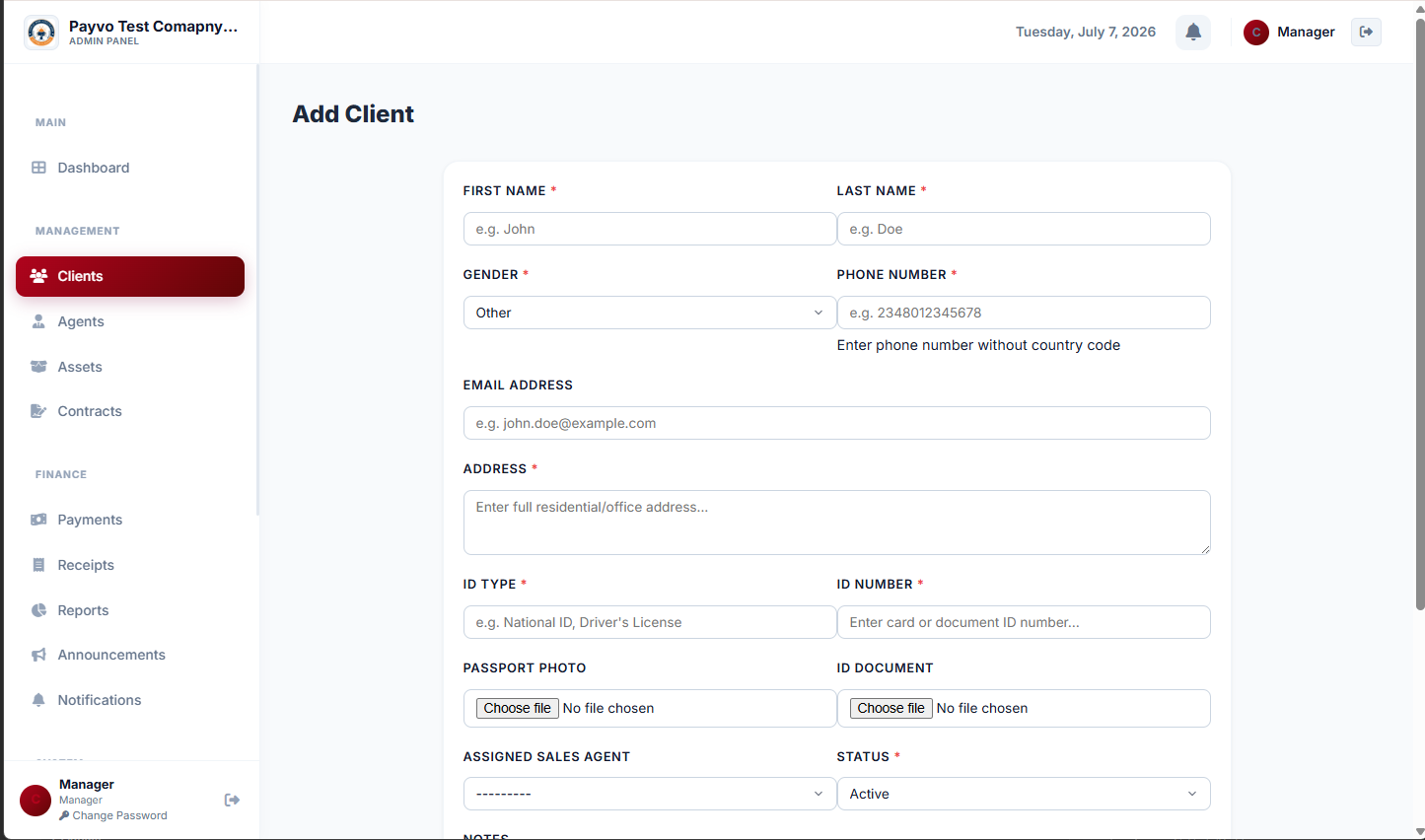 Client: Add Client page
For businesses using an installment management software Nigeria, like Payvo, this process is streamlined. You can register and manage clients by storing full client details and viewing their complete payment history. Similarly, you can
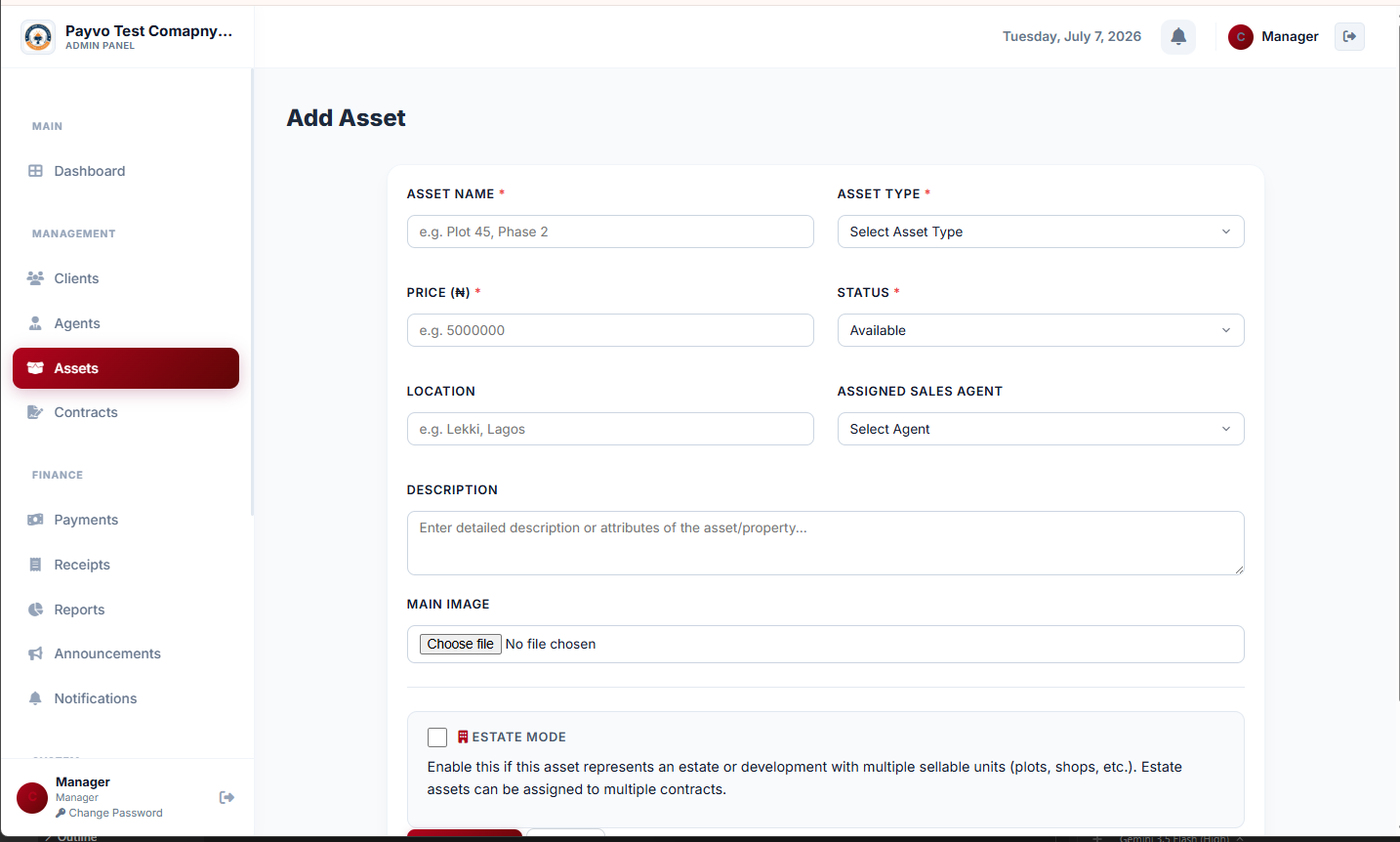 register and manage assets
Step 3: Create and Automate Installment Contracts
This is the core of your installment business. Instead of manually calculating payment schedules, a robust system should automate this. Input the total sale price, down payment, number of installments, and payment frequency, and let the system generate a clear, itemized payment plan. Each contract should clearly state the due dates and amounts for every installment.
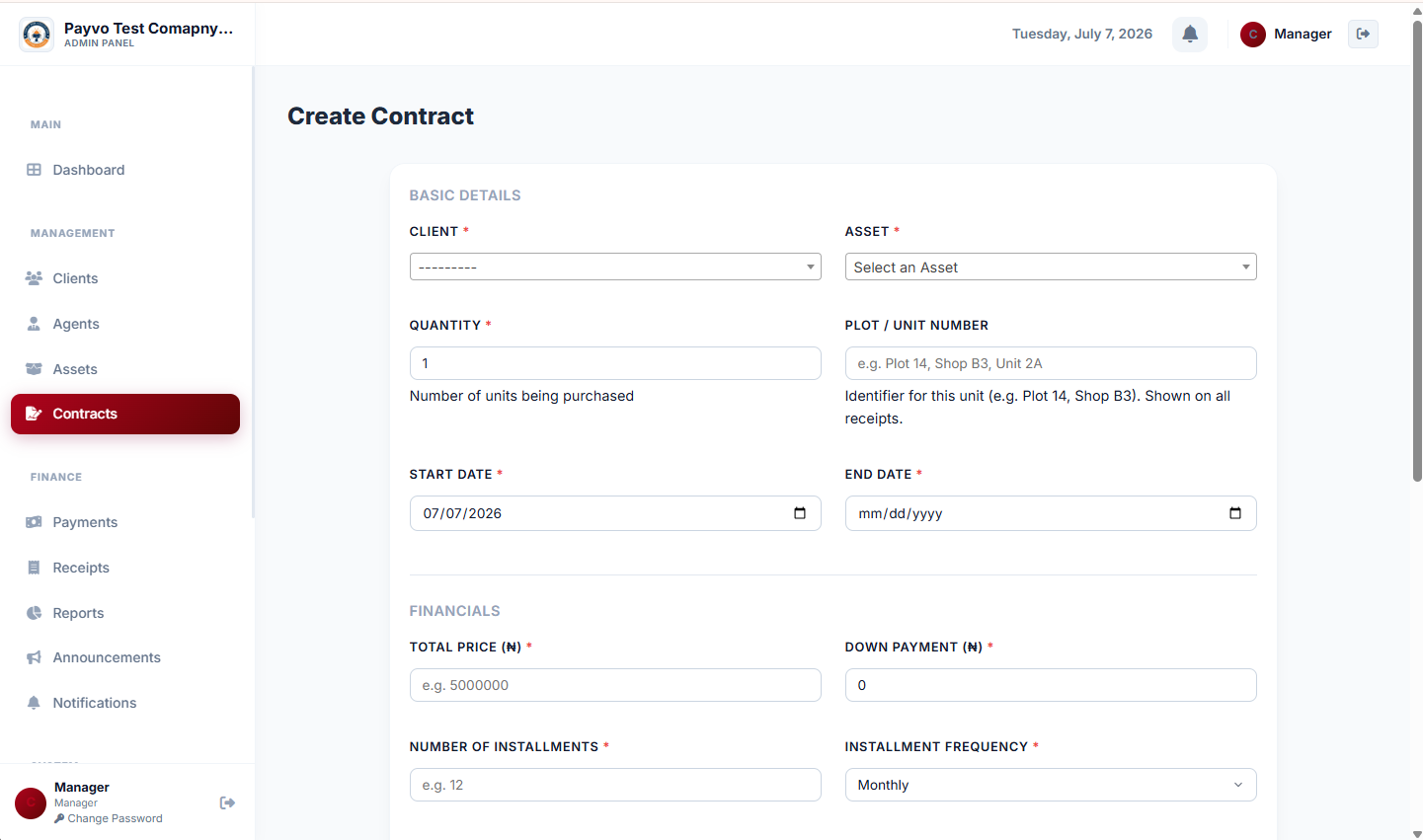 Management: Add contract (top)
With a contract management software Nigeria, you can set payment terms once, and installment schedules are generated automatically. This ensures consistency and reduces the chance of human error. A good system will also allow for customization of contracts to reflect your specific business terms.
Step 4: Record Payments and Generate Receipts
Prompt and accurate recording of payments is vital for maintaining up-to-date account balances and building customer trust. Every payment received, whether full or partial, must be logged immediately. Equally important is issuing a professional receipt for each transaction. This serves as proof of payment for the customer and an audit trail for your business.
Using a payment tracking software, you can
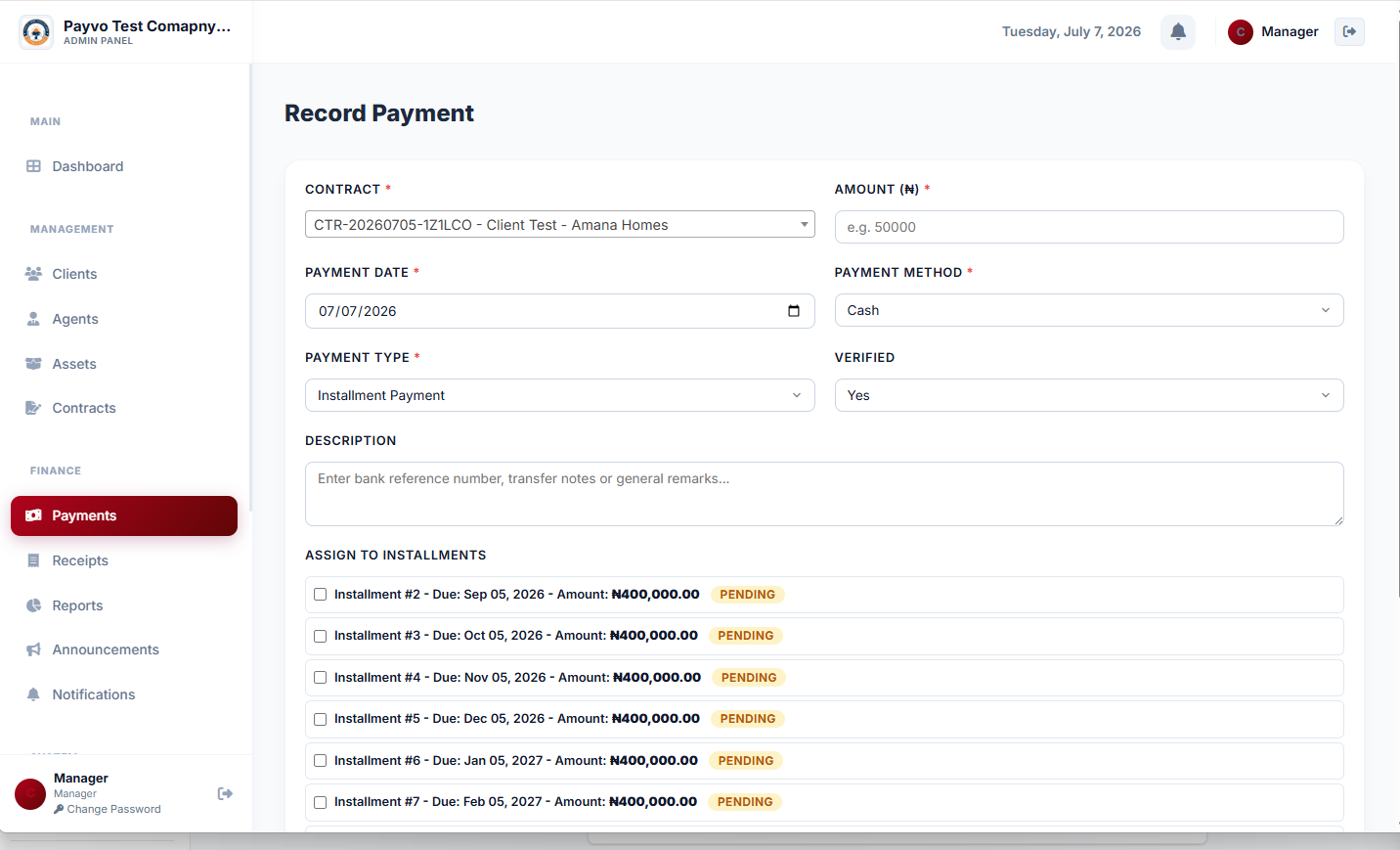 record payments
Step 5: Implement Automated Payment Reminders and Notifications
One of the biggest challenges in installment sales is ensuring timely payments. Manually calling or messaging every customer before their due date is time-consuming and inefficient. Automation is key here. Set up a system to send automatic reminders via SMS, email, or WhatsApp days before an installment is due. This proactive approach significantly reduces late payments and defaults.
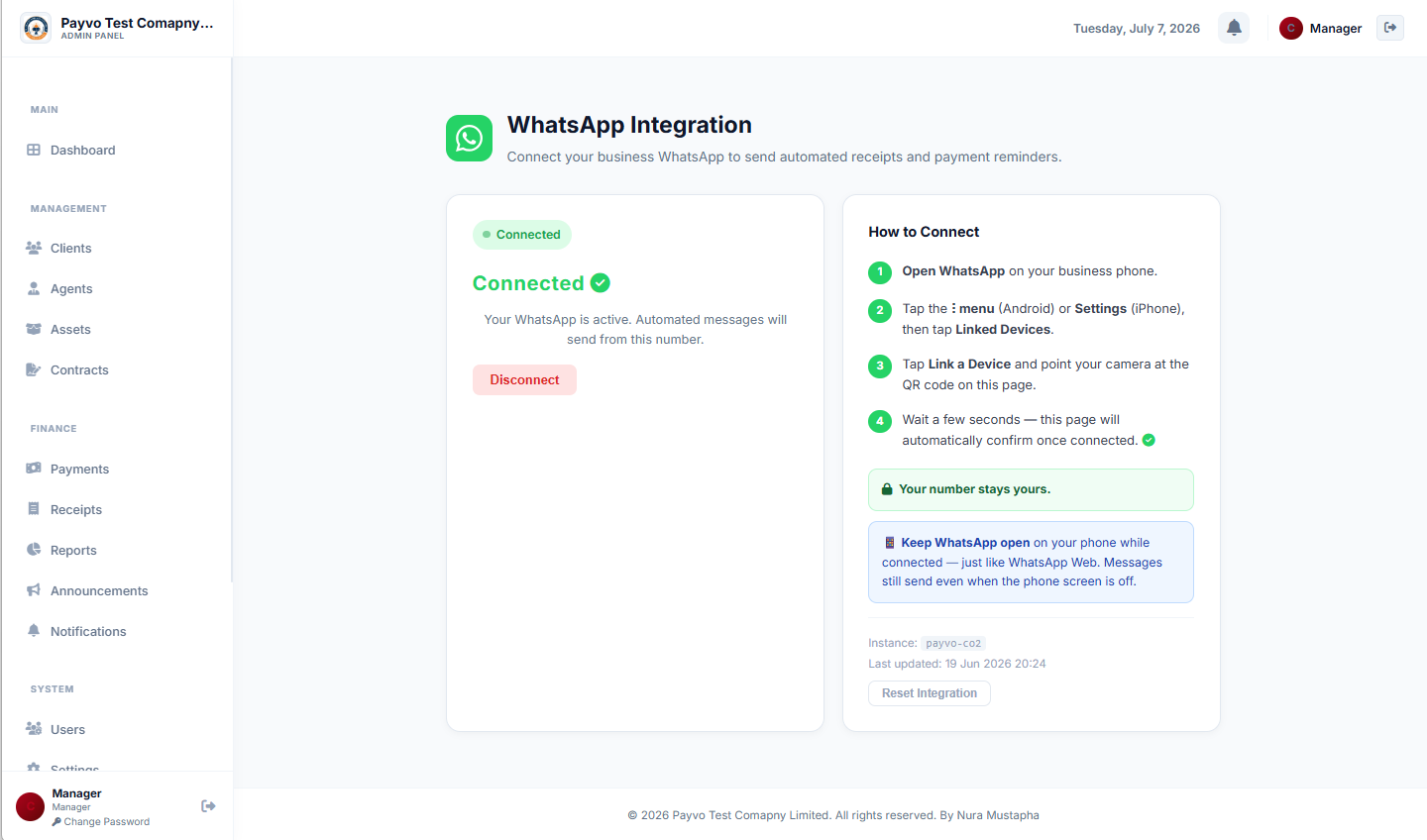 Admin: Whatsapp Integration
A WhatsApp payment notification system can send automated reminders before due dates, removing the need for manual follow-up calls. Beyond reminders, automatic notifications for new clients, new contracts, and payment received (including a public receipt link clients can view, save, or share) enhance customer communication and satisfaction. The cost for SMS notifications typically ranges from ₦1,500 to ₦8,000 monthly, depending on the volume of messages.
Step 6: Monitor Outstanding Balances and Manage Collections
Regularly review your dashboard to identify overdue payments and outstanding balances. This allows you to take timely action. For persistent defaults, your predefined recovery process (as per your legal agreement) should kick in. This might involve escalating reminders, engaging recovery agents (who typically charge 10% to 25% of the recovered amount), or legal action.
A robust installment business software provides real-time dashboards where you can see total clients, active contracts, amount collected, outstanding balances, and next payment due at a glance. This allows you to quickly identify potential issues and manage your cash flow effectively.
Step 7: Track Agent Commissions and Performance
If your business utilizes sales agents, tracking their commissions accurately and transparently is crucial for motivation and fair compensation. Each payment collected through an agent should automatically calculate their commission based on predefined rates. Agents should also have a way to track their own earnings.
With agent commission tracking software, you can assign agents to contracts, automatically calculate commission per payment, and track full earnings and payout history. Agents can even log in with a code given by their manager to view their own earnings and submit withdrawal requests directly, fostering transparency and trust. You can learn more about this on our Agent Tracking Page.
Step 8: Generate Reports and Analyze Performance
Regular reporting is essential for understanding the health of your installment sales operation. Generate reports on payment collections, outstanding debts, default rates, and agent performance. This data helps you make informed decisions, adjust your policies, and identify areas for improvement.
A good payment tracking software allows you to
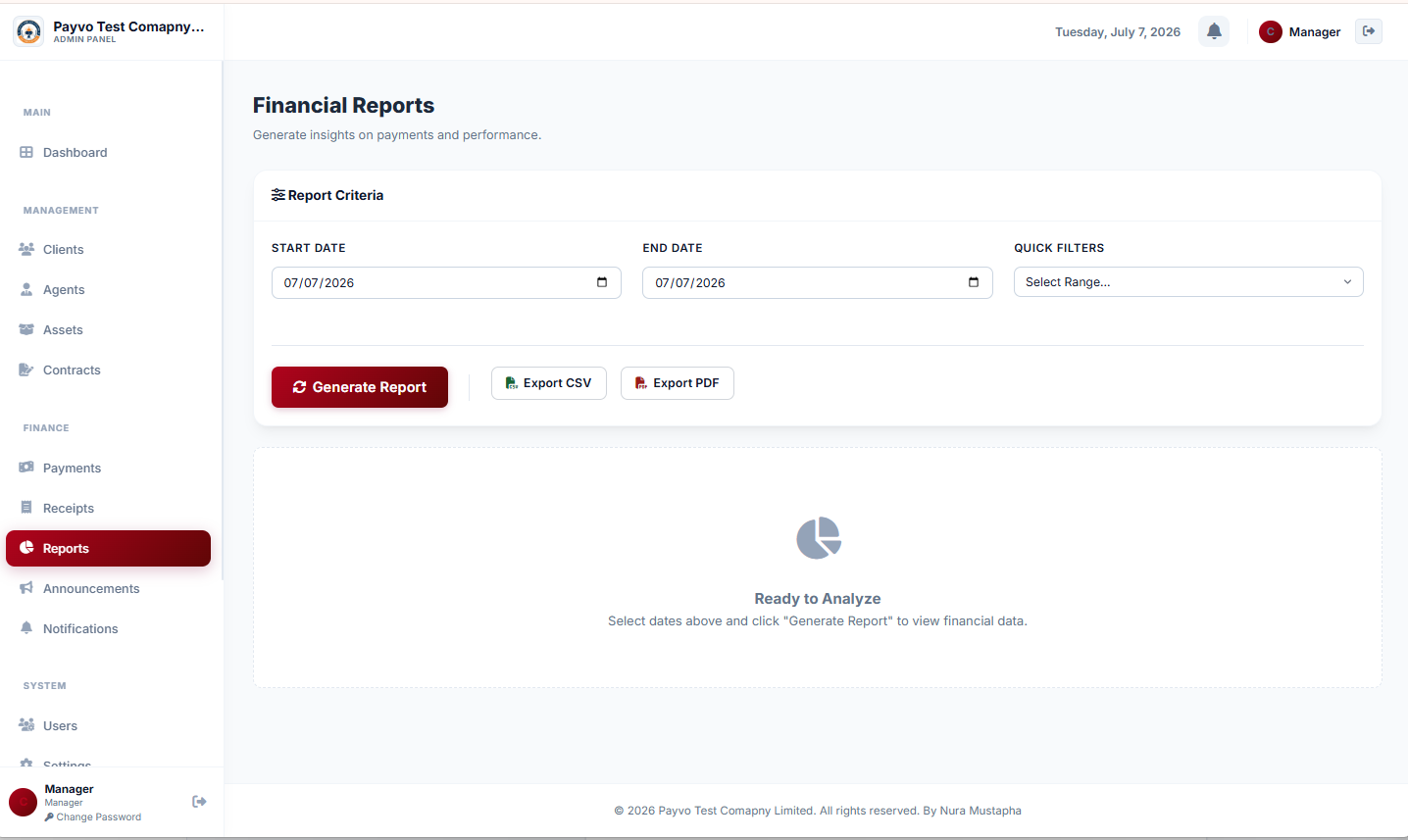 generate reports
Common Mistakes to Avoid
- Lack of Clear Contracts: Vague terms lead to disputes. Always have a clear, legally sound agreement.
- Manual Tracking: Relying on notebooks and spreadsheets is prone to errors, delays, and lost data. It's simply unsustainable for growth.
- Inconsistent Follow-up: Sporadic reminders or neglected overdue accounts will lead to higher default rates. Consistency is key.
- Poor Customer Vetting: Selling to high-risk customers without proper assessment increases your default exposure.
- Ignoring Cash Flow: Installment sales tie up capital. Without careful cash flow planning, even profitable sales can lead to liquidity problems.
- Neglecting Agent Transparency: If agents feel their commissions are not accurately tracked, it can lead to demotivation and high turnover.
How to Track and Grow After Launch
After setting up your installment sales system, continuous monitoring and strategic growth are paramount.
Key Performance Indicators (KPIs) to Watch:
- Collection Rate: Percentage of due payments successfully collected.
- Default Rate: Percentage of contracts that go into default.
- Average Collection Period: How long it takes to collect a full payment.
- Customer Acquisition Cost (CAC): Cost to acquire a new installment customer.
- Agent Performance: Track individual agent sales, collection rates, and commission earnings.
- Customer Lifetime Value (CLTV): The total revenue a customer is expected to generate over their relationship with your business.
- Refine Your Vetting Process: Continuously improve how you assess customer risk based on your collection data.
- Optimize Payment Reminders: Experiment with timing and channels (SMS, WhatsApp, email) to find what works best for your clientele.
- Offer Incentives for Early Payment: Small discounts or bonuses can encourage customers to pay on time or even early.
- Expand Product Offerings: Once your system is efficient, consider offering more products or services on installment.
- Leverage Data for Marketing: Use insights from your sales data to target new customers more effectively.
- Invest in Technology: As your business scales, upgrading to more comprehensive installment management software Nigeria, like Payvo, will be crucial. Its real-time dashboards and comprehensive reporting features provide the granular data needed to make informed growth decisions.
Frequently Asked Questions
Q1: How can I reduce default rates on installment sales?
A1: Reducing default rates starts with thorough customer vetting, clear contract terms, and consistent, automated payment reminders. For persistent issues, a well-defined recovery process, including engaging recovery agents, is essential.
Q2: Is manual tracking really that bad for installment sales?
A2: Yes, manual tracking using ledgers or basic spreadsheets is highly inefficient and prone to errors. It makes it difficult to get real-time insights, send timely reminders, and manage a growing customer base, often leading to significant revenue loss. Investing in a dedicated payment tracking software is crucial for scalability and accuracy.
Q3: What's the typical profit margin for businesses selling on installment in Nigeria?
A3: The expected profit margin on installment sales, after accounting for all costs, can range from 15% to 40%. This varies significantly based on the type of goods (high-volume low-margin vs. high-value electronics/appliances), operational efficiency, and default rates.
Q4: How much does it cost to implement a sales tracking software in Nigeria?
A4: Annual subscriptions for sales tracking software in Nigeria can range from ₦25,000 for basic local solutions to ₦120,000 for more robust cloud-based systems with advanced features like automated reminders and agent tracking. This cost is often quickly recouped through improved collections and reduced administrative burden.
Q5: Can I track agent commissions effectively without complex spreadsheets?
A5: Absolutely. Modern installment management software Nigeria includes dedicated features for agent commission tracking. You can assign agents to contracts, automatically calculate their commissions per payment, and provide them with a transparent way to view their earnings, streamlining the entire process.
 Sleek 3d illustration of a modern dashboard showing
Ready to Streamline Your Installment Sales?
Managing installment sales doesn't have to be a complex, error-prone ordeal. By adopting a structured approach and leveraging the right tools, you can transform your operations, improve cash flow, and foster stronger customer relationships. If you're ready to move beyond manual tracking and automate your entire installment sales process, explore how a comprehensive solution can benefit your business. Discover more about our features and how we can help you thrive in the installment economy by visiting our public home page or registering for an account today.