Missing a single installment payment can cost your business thousands of Naira in lost revenue and countless hours in frustrating follow-ups. In 2026, many Nigerian businesses still rely on outdated methods like notebooks and spreadsheets, leading to an average of 15% of payments being delayed or completely missed due to tracking errors. This isn't just about lost income; it's about damaged client relationships and stunted growth.
 Nigerian business owner looking stressed while reviewing scattered
The Real Cost of Manual Tracking in 2026
The Nigerian economy is dynamic, and businesses selling on installment, from real estate developers in Abuja to car dealers in Lagos, face unique challenges. The appeal of offering goods on credit is clear: it expands your customer base significantly. However, managing those payments manually, especially for a large number of clients, quickly becomes a nightmare.
Consider a small electronics shop that sells items ranging from ₦2,000 phone accessories to ₦50,000 small appliances on installment. If they manage payments for 50 clients using spreadsheets, the chances of errors are extremely high. A simple data entry mistake can lead to a client being wrongly flagged for non-payment, or worse, a payment going unrecorded. This isn't theoretical; a recent survey found that businesses relying solely on manual tracking spend up to 20% more time on administrative tasks than those using automated systems, directly impacting productivity and profitability. The average monthly staff salary for a sales assistant in a small town is between ₦40,000 and ₦80,000. Imagine paying staff to manually chase payments that could be automated.
For cooperative societies or microfinance operators, managing hundreds or thousands of small installment loans with average monthly payments of ₦5,000 to ₦30,000, manual tracking becomes virtually impossible to scale. The sheer volume of transactions, coupled with the need for accurate record-keeping for regulatory compliance, demands a more robust solution. The goal is to maximize the expected profit margin on installment sales, which can range from 15% to 40%, but this is eroded by inefficiencies and missed payments.
What You Need Before You Start
Before diving into a more efficient system for managing installment payments, ensure you have these foundational elements in place:
- Clear Contract Terms: Every installment sale must have a clearly written contract detailing payment amounts, due dates, penalties for late payments, and the total cost. This is your legal backbone.
- Initial Capital: While moving away from spreadsheets saves time, there might be an initial investment. For a small trader, initial stock purchase could be ₦50,000, while a larger electronics shop might need ₦500,000. Allocate a small portion for system setup, perhaps ₦70,000 to ₦150,000 for a basic POS system or a dedicated tablet.
- Reliable Internet Access: A consistent internet connection is crucial for any cloud-based tracking system. Budget ₦5,000 to ₦15,000 monthly for a reliable data plan.
- Dedicated Time for Setup: Transitioning from old methods requires a commitment of time to set up the new system, input existing client data, and train staff.
- Staff Buy-in: Ensure your team understands the benefits of the new system to facilitate a smooth transition and consistent usage.
Step-by-Step: How to Manage Installment Payments Without Spreadsheets
Moving away from the chaos of spreadsheets and manual ledgers to a streamlined, digital system is a strategic move for any business in Nigeria selling on credit. Here’s a step-by-step guide to achieving that.
Step 1: Centralize Client and Asset Information
The first hurdle with spreadsheets is scattered data. Your new system must consolidate all client details and the assets they are purchasing. This means moving beyond separate files for each client or asset.
Start by gathering all existing client information – names, contact details, addresses, and any identification numbers. For each item sold on installment, whether it’s a plot of land, a car, solar equipment, or building materials, ensure you have its unique identifier and all relevant specifications. This foundational step is critical. A robust platform allows you to register and manage clients, storing full client details and providing a complete payment history per client. Similarly, you should be able to register and manage assets, linking them directly to contracts.
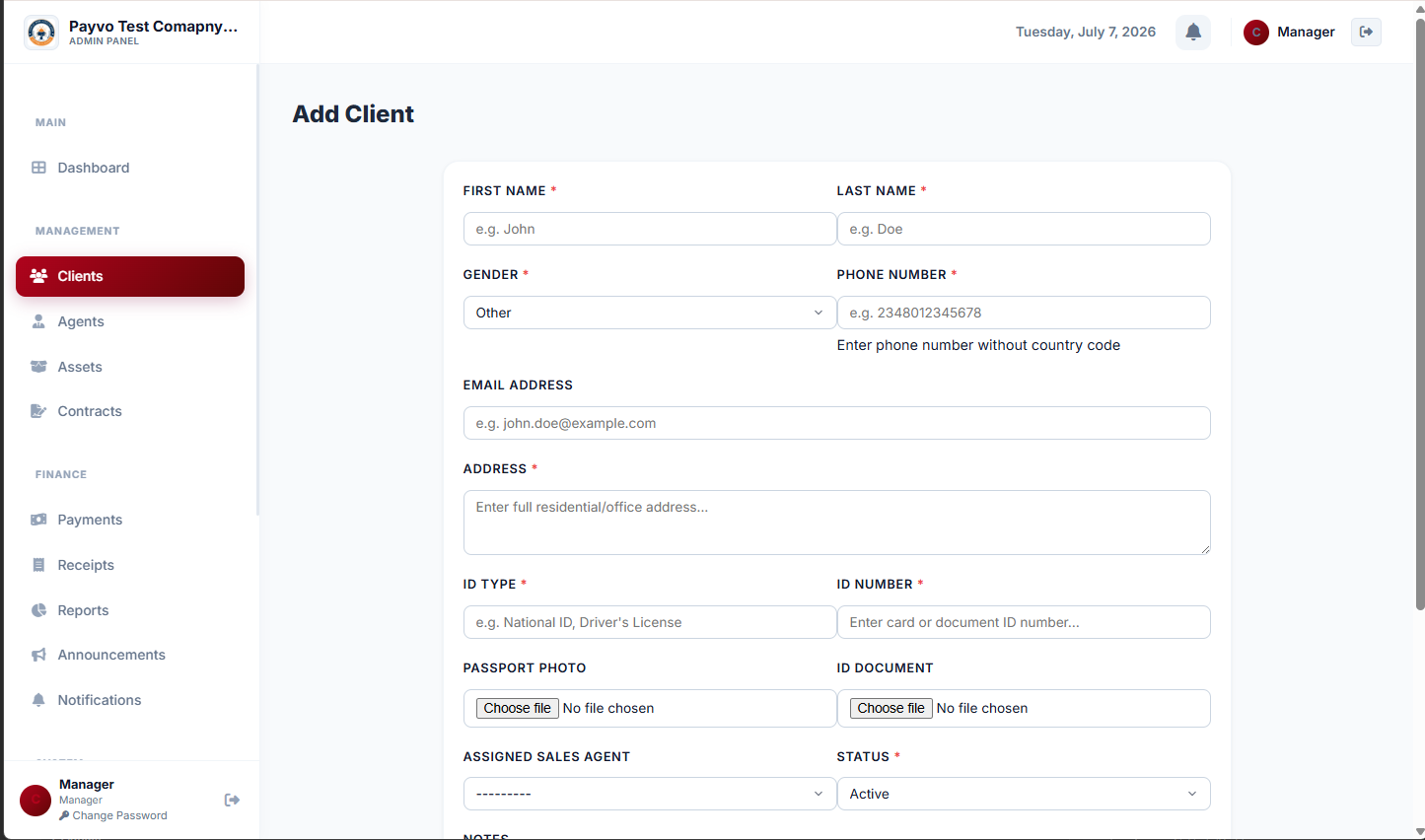 Client: Add Client page
Step 2: Digitize Your Contracts and Payment Schedules
One of the biggest time-sinks with manual tracking is creating and managing individual payment schedules. A digital system automates this. Instead of calculating each installment manually and entering it into a spreadsheet, you set the terms once.
Your chosen system should allow you to create contracts where you define the total amount, down payment, number of installments, and payment frequency. Once these terms are set, the installment schedule should be generated automatically. This eliminates calculation errors and ensures consistency across all contracts. For businesses like car dealers or real estate developers, this feature is invaluable for managing numerous varied contracts efficiently.
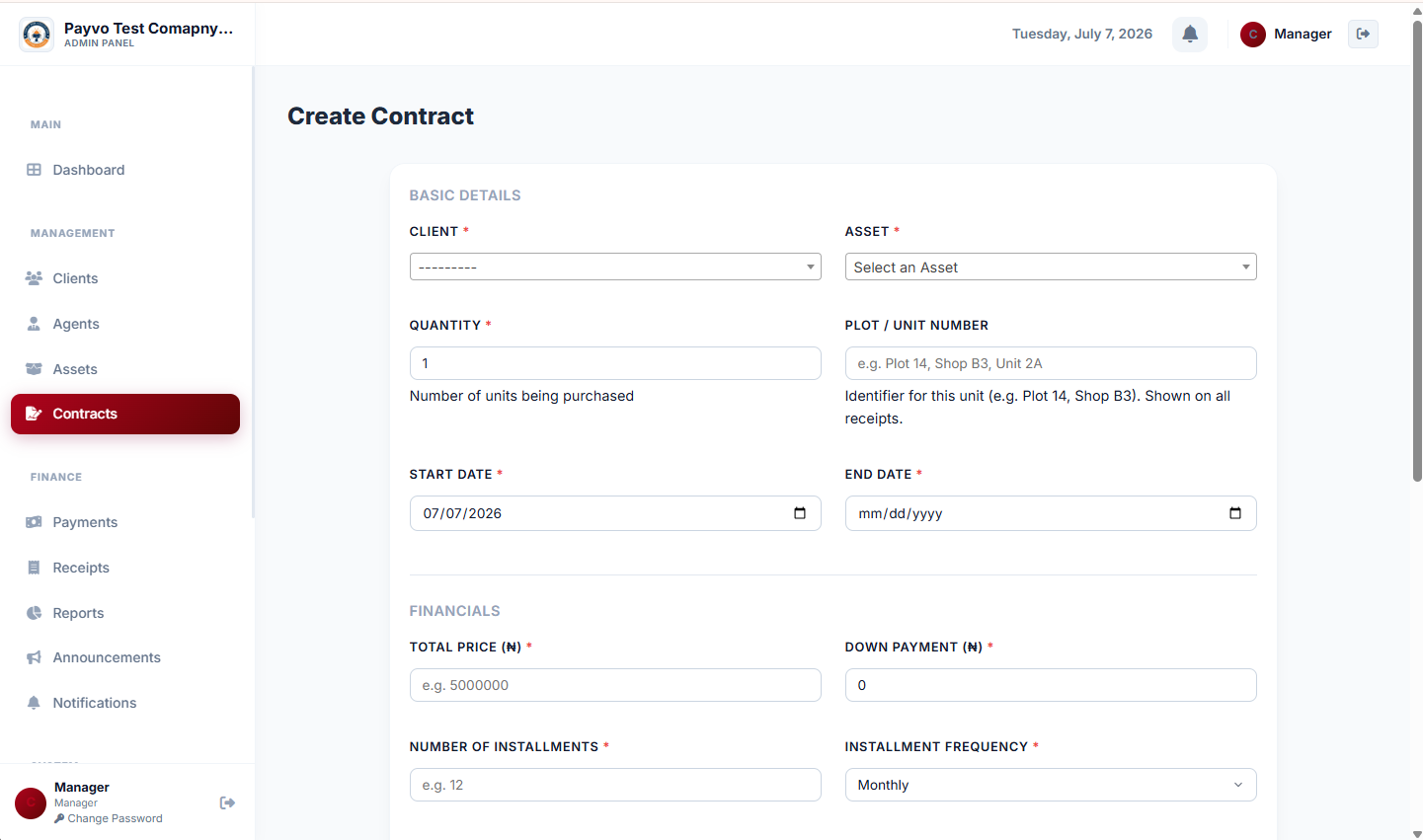 Management: Add contract (top)
Step 3: Implement a Robust Payment Recording System
Once contracts are digitized, the next crucial step is accurately recording payments as they come in. This is where many businesses struggle with spreadsheets, leading to missed payments or duplicated records.
A modern system allows you to log single payments against any contract with ease. Every payment should be recorded digitally, ensuring a full, auditable history is tracked. This means no more searching through notebooks or trying to reconcile bank statements with incomplete spreadsheet entries. Look for a system that provides a clear interface for recording payments and immediately updates the outstanding balance for the client.
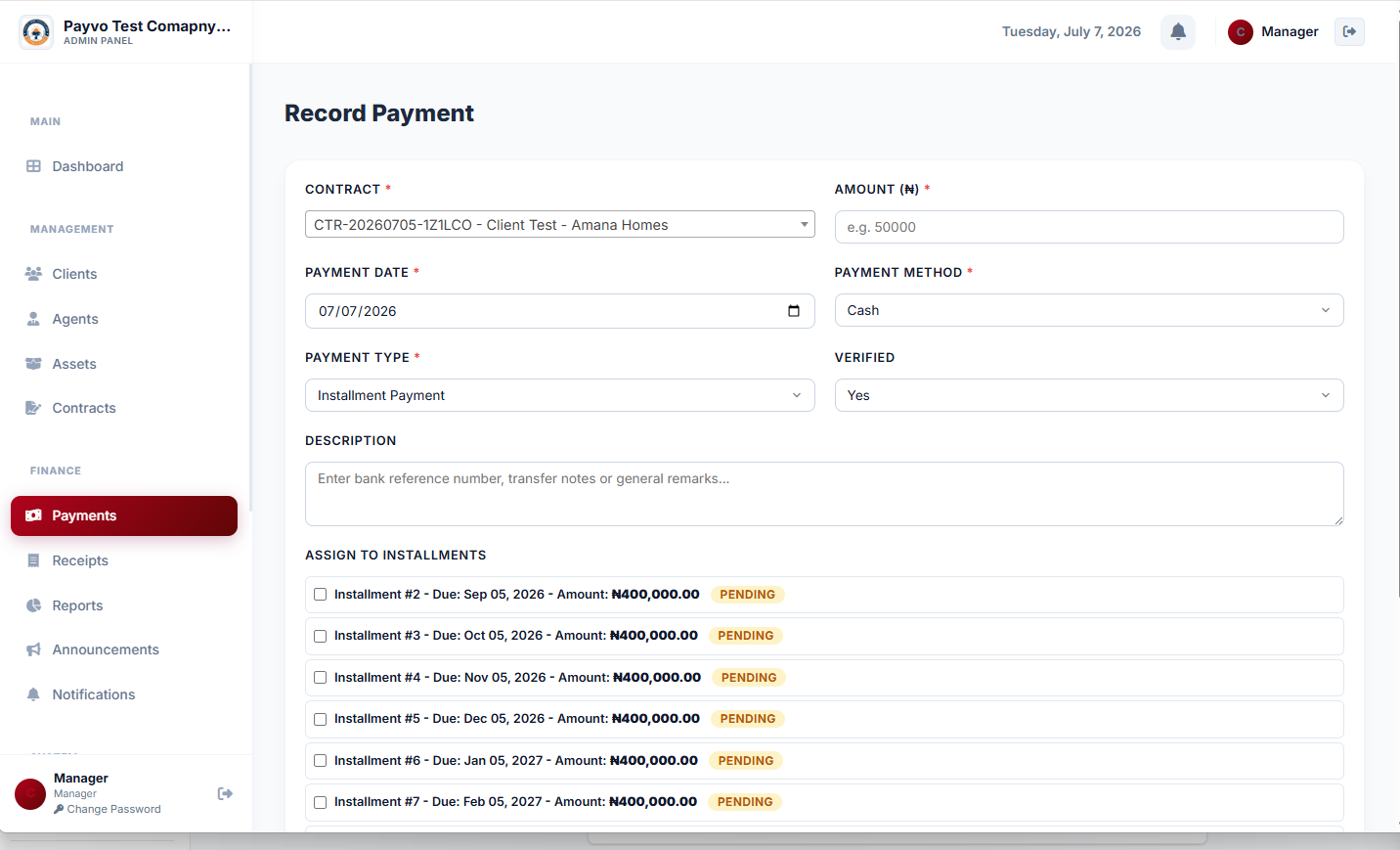 Finance: Record Payments Page
Step 4: Automate Receipts and Notifications
Manual receipt generation is tedious and prone to errors. Sending payment reminders individually is even more time-consuming. Automating these processes transforms your operational efficiency.
Your system should automatically generate branded receipts (with your company logo, colors, and signature) for every payment received. These receipts can then be sent automatically via email and WhatsApp. Crucially, the system should also send automatic notifications for new clients, new contracts, and payment received. Automated payment reminders sent before due dates significantly reduce the need for manual follow-up calls, saving staff time and improving collection rates. This feature also provides clients with a public receipt link they can view, save, or share, enhancing transparency and trust.
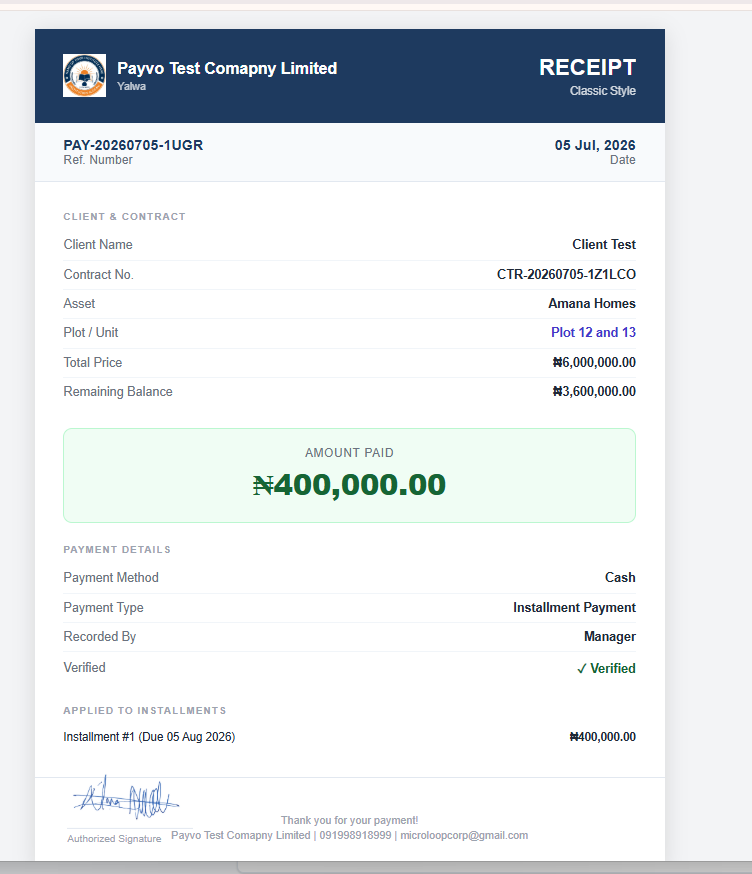 Finance: Paymnet Receipt Sample
Step 5: Empower Your Team with Role-Based Access
If you have staff or agents, managing access to sensitive payment data is critical. Spreadsheets often mean sharing entire documents, which is a security risk.
A professional installment management system allows business owners to add staff with role-based permissions. This means you can control exactly what each person can see and do within the system. For instance, a sales agent might only see their assigned contracts and commission data, while a finance officer has access to all payment records. This not only enhances security but also streamlines workflows. For businesses using agents, such as real estate firms or solar equipment leasing companies, the ability to manage agents and commissions, automatically calculating commission per payment and tracking full earnings and payout history, is indispensable. Agents can even use a code given by their manager to view their own earnings and submit withdrawal requests directly, fostering transparency and motivation.
Step 6: Gain Real-time Insights and Generate Reports
The true power of moving beyond spreadsheets lies in accessing real-time data and generating insightful reports that drive business decisions. Spreadsheets require manual aggregation and analysis, which is time-consuming and often outdated.
A digital solution provides real-time dashboards where you can see total clients, active contracts, amount collected, outstanding balances, and next payments due at a glance. This immediate overview helps you identify trends, address issues proactively, and make informed decisions. Furthermore, the ability to generate reports and export payment and contract data as PDF or Excel for accounting and record-keeping is vital. You should also receive weekly company reports via email, summarizing key business performance metrics. This level of insight is impossible with manual tracking.
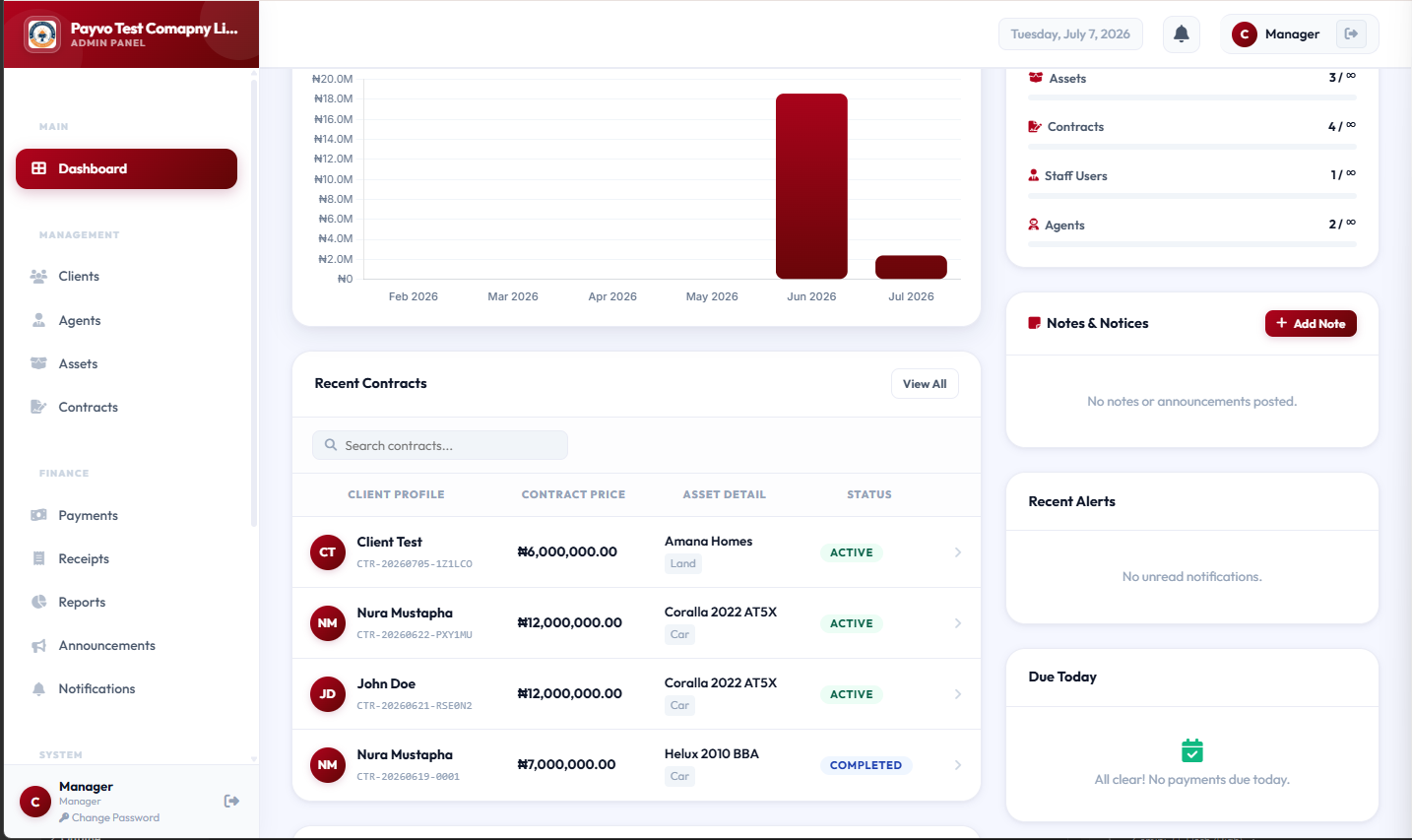 Dashobard (top)
Common Mistakes to Avoid
Transitioning to a new system can be challenging. Here are some common pitfalls to steer clear of:
- Underestimating Setup Time: Don't rush the initial setup. Properly migrating client data and configuring contract templates will save immense time later.
- Lack of Staff Training: Even the best system is useless if your team doesn't know how to use it. Invest in thorough training to ensure smooth adoption.
- Ignoring Data Security: Ensure your chosen platform has robust security measures. Client financial data is sensitive.
- Not Customizing: Take advantage of customization options for branding (logos, colors, digital signatures) to maintain a professional image across all client communications.
- Failing to Automate Reminders: One of the biggest benefits of a digital system is automated reminders. Ensure these are set up correctly to maximize collection rates.
- Sticking to Old Habits: Resist the urge to keep a "backup" spreadsheet. This defeats the purpose of centralizing data and often leads to discrepancies.
How to Track and Grow After Launch
Once your new installment management system is up and running, the real work of leveraging its capabilities for growth begins. Tracking success isn't just about recording payments; it's about understanding your business's financial health and identifying opportunities.
Key Performance Indicators (KPIs) to watch include:
- Collection Rate: What percentage of due payments are collected on time?
- Arrears Rate: How much outstanding debt is overdue?
- Client Retention: How many clients complete their payment plans and potentially return for new purchases?
- Average Contract Value: Are your installment contracts growing in value?
To grow, analyze your reports. Identify which products sell best on installment, which payment plans are most successful, and where your collection efforts need improvement. For businesses involved in real estate payment tracking Nigeria-wide, or those managing a large portfolio of assets, detailed financial reports can highlight profitable segments and areas requiring attention. This data, easily accessible through a platform that offers robust reporting and analytics, helps you refine your sales strategies, adjust payment terms, and even identify new market opportunities. For example, understanding payment patterns can help microfinance operators tailor loan products more effectively. The goal is to move from simply tracking payments to strategically managing growth, ensuring your business thrives in the competitive Nigerian market. You can explore a comprehensive overview of features on the Payvo features page to see how a dedicated platform can support your growth.
Frequently Asked Questions
Q1: How much does it cost to implement an installment payment tracking system?
The initial setup cost for a basic system, including a dedicated device like a tablet, can range from ₦70,000 to ₦150,000. Monthly operational costs include internet data (₦5,000 - ₦15,000) and potentially electricity/generator fuel (₦10,000 - ₦50,000). Many software providers offer subscription models, which might vary based on features and number of users.
Q2: Can these systems help with agent commission tracking?
Absolutely. Many modern contract management software Nigeria businesses use today include features for managing agents and commissions. They can automatically calculate commission per payment, track full earnings, and even allow agents to view their own KPIs and submit withdrawal requests. This is a significant upgrade from manual agent commission tracking software. You can learn more about this on the Payvo agent tracking page.
Q3: What if my clients prefer WhatsApp notifications?
Most advanced payment tracking software and business payment tracking app Nigeria solutions integrate with WhatsApp. They can send automated payment reminders, payment received notifications, and even share public receipt links directly via WhatsApp, catering to the preferred communication channel for many Nigerians.
Q4: Is my data secure with a cloud-based system?
Reputable installment management systems prioritize data security. They employ encryption, secure servers, and often offer features like audit logs for deeper system oversight. Always check the privacy policy and terms of service of any provider to understand their data handling practices. You can review Payvo's privacy policy and terms of service for an example.
Q5: How do these systems compare to just using my bank statements?
While bank statements show money received, they don't link payments directly to specific contracts, clients, or installment schedules. They don't provide automated reminders, generate branded receipts, or offer real-time dashboards of outstanding balances. A dedicated installment management system provides a complete, organized, and proactive solution far beyond what bank statements can offer.
Ready to Streamline Your Installment Sales?
Stop losing money to missed payments and manual errors. Take control of your installment sales process, empower your team, and gain the insights you need to grow. Discover how a dedicated contract and installment management system can transform your business. You can register into Payvo today to start your journey towards efficient and profitable installment sales.