Missed installment payments aren't just inconvenient; they erode trust, strain cash flow, and can quickly spiral into significant losses for businesses. In Nigeria's dynamic market, where credit sales are a lifeline for many, losing track of just a few payments can mean the difference between growth and struggle.
 Business owner looking at ledgers and laptop
The Reality of Installment Sales in 2026
The Nigerian economy in 2026 continues to present unique challenges and opportunities for businesses offering installment sales. From real estate developers in Abuja to car dealers in Kano and cooperative societies nationwide, the ability to offer flexible payment plans is crucial for attracting and retaining customers. However, this flexibility comes with the complex task of managing numerous contracts, tracking diverse payment schedules, and ensuring timely collections.
Many small and medium-sized enterprises (SMEs) still rely on manual methods – notebooks, Excel sheets, and WhatsApp messages – to manage their installment agreements. While seemingly cost-effective initially, this approach is fraught with risks. A single error can lead to disputes with customers, inaccurate financial reporting, and significant time wasted on reconciliation. For instance, a microfinance operator extending a ₦50,000 loan at a 5% monthly interest rate might deal with hundreds of such agreements. If just 10% of these accounts become overdue due to poor tracking, the cumulative late payment fees (which can range from ₦200 to ₦2,000 daily or weekly) and lost interest can severely impact profitability. The average monthly income of many target borrowers, ranging from ₦50,000 to ₦150,000, means that even small discrepancies can cause significant financial stress for both parties. Businesses selling high-value items like solar equipment or property, where contracts can run for years, face even greater complexities. The need for robust, reliable installment management software is no longer a luxury but a necessity for sustainable growth.
What You Need Before You Start
Before diving into the specifics of managing installment loans, ensure you have these fundamental elements in place:
- Clear Loan/Installment Policies: Define your terms, interest rates (e.g., 3% - 15% monthly for micro-loans), processing fees (₦500 - ₦5,000), late payment penalties, and collection procedures. Transparency is key.
- Dedicated Personnel: Even with automation, you'll need staff to handle customer inquiries, process initial applications, and manage exceptions.
- Basic Financial Understanding: Knowledge of cash flow, profit margins, and the impact of defaults is critical.
- Legal Counsel (Optional but Recommended): Especially for high-value assets like property or cars, understanding your legal standing in case of default is crucial.
- Reliable Communication Channels: Email, SMS, and WhatsApp are essential for sending reminders and notifications.
- Initial Capital: To cover operational costs, potential shortfalls from late payments, and the cost of goods sold (which could be ₦30,000 - ₦200,000 monthly for small retail).
Step-by-Step: How to Manage Installment Loans Effectively
Managing installment loans requires a systematic approach to ensure efficiency, accuracy, and customer satisfaction. Follow these steps to streamline your process and minimize risks.
Step 1: Standardize Client Onboarding and Contract Creation
The foundation of effective installment management lies in thorough client onboarding and crystal-clear contracts. When a client expresses interest, whether for a car on hire purchase or a plot of land, gather all necessary details accurately. This includes personal identification, contact information, and financial history where applicable.
Once the client is vetted, create a comprehensive contract. This document must clearly outline the item being sold (e.g., specific car model, land plot number), the total cost, the down payment required, the installment amount, the frequency of payments (e.g., weekly, monthly), the due dates, and any penalties for late payments. Manual contract generation is prone to errors and inconsistencies. Using a system that allows you to set payment terms once and automatically generate installment schedules can save immense time and prevent disputes. Such a system should also allow you to register and manage assets, linking each item directly to its respective contract.
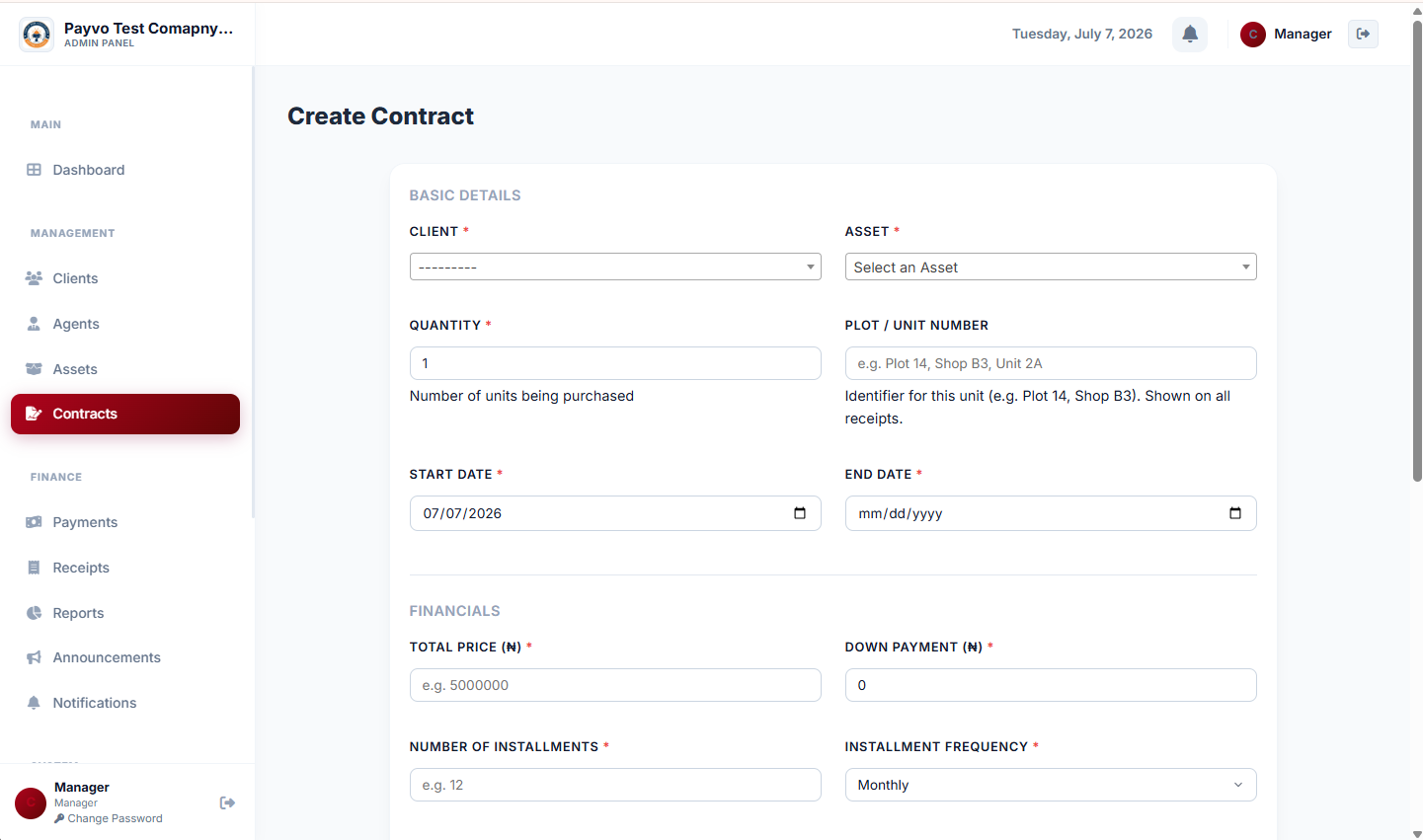 Management: Add contract (top)
Step 2: Implement Robust Payment Tracking and Recording
This is perhaps the most critical step. Every single payment, no matter how small, must be recorded instantly and accurately. Manual ledgers are easily misplaced or updated incorrectly, leading to discrepancies. When a customer makes a payment, whether via bank transfer or cash, you need a system to log it against their specific contract, showing the date, amount, and remaining balance.
A sophisticated system will not only record payments but also generate branded receipts automatically. These receipts, complete with your company logo and signature, provide proof of payment for the customer and an audit trail for your business. Imagine a car dealer with dozens of active hire purchase agreements; manually generating and sending receipts for each payment is a full-time job. An automated platform can handle this seamlessly, even sending public receipt links that clients can view, save, or share, enhancing trust and professionalism. This is where tools like Payvo shine, offering a robust solution for loan repayment tracking and a powerful receipt generator app Nigeria businesses can rely on.
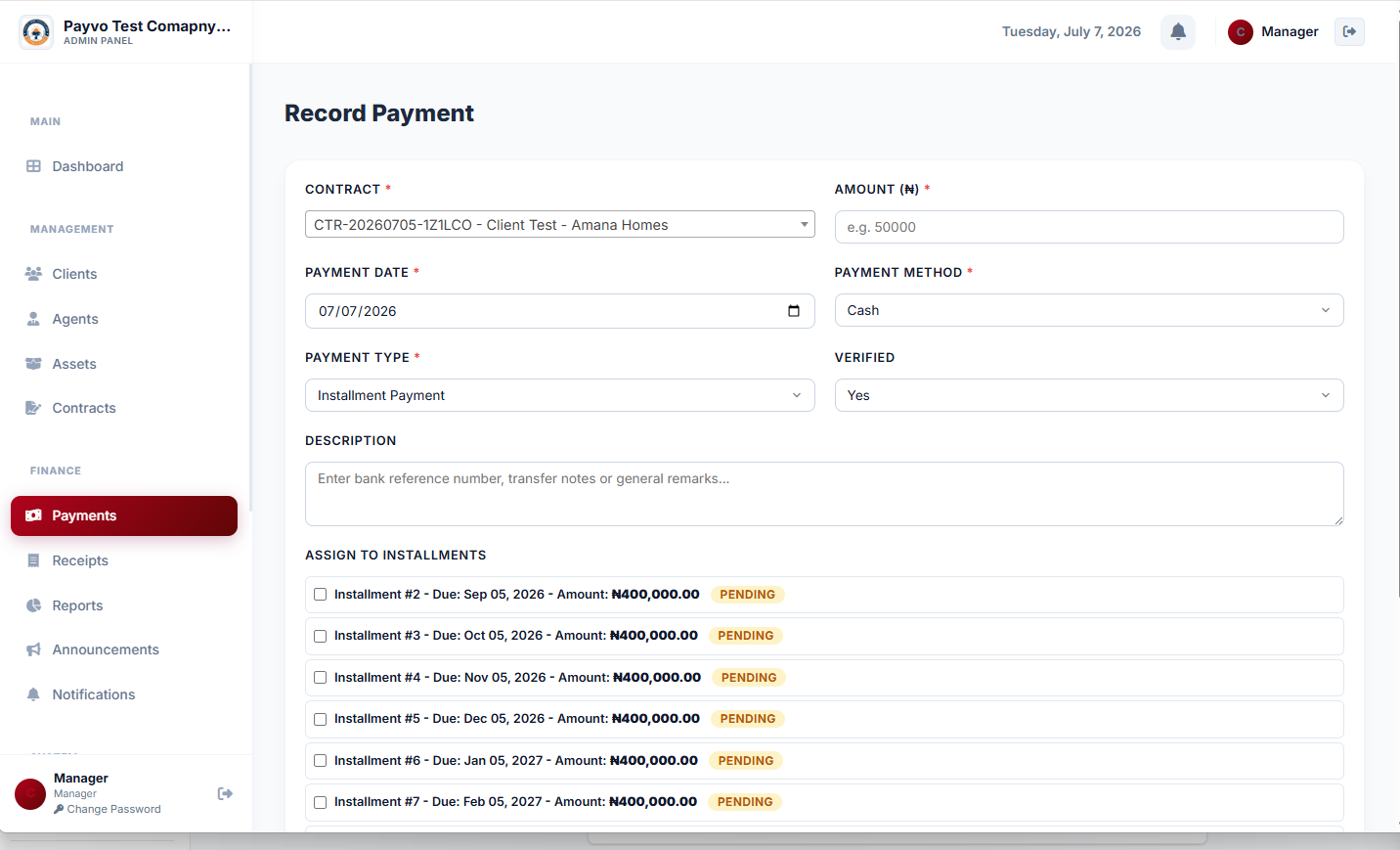 Finance: Record Payments Page
Step 3: Automate Payment Reminders and Notifications
One of the biggest reasons for missed payments isn't malicious intent, but simple forgetfulness or miscommunication. Proactive payment reminders can drastically reduce delinquency rates. Instead of manually calling or texting each client, automate this process. Set up reminders to go out a few days before the due date, on the due date, and a day or two after if payment hasn't been received.
These reminders should be sent through channels your clients actively use, such as SMS, email, and especially WhatsApp. A WhatsApp payment notification system can be incredibly effective in Nigeria, given the platform's widespread use. Automated notifications can also confirm new client registrations, contract creations, and successful payment receipts, keeping clients informed every step of the way. This pro-active communication is vital for maintaining a healthy relationship with your clients and is a cornerstone of effective instalment loan collection.
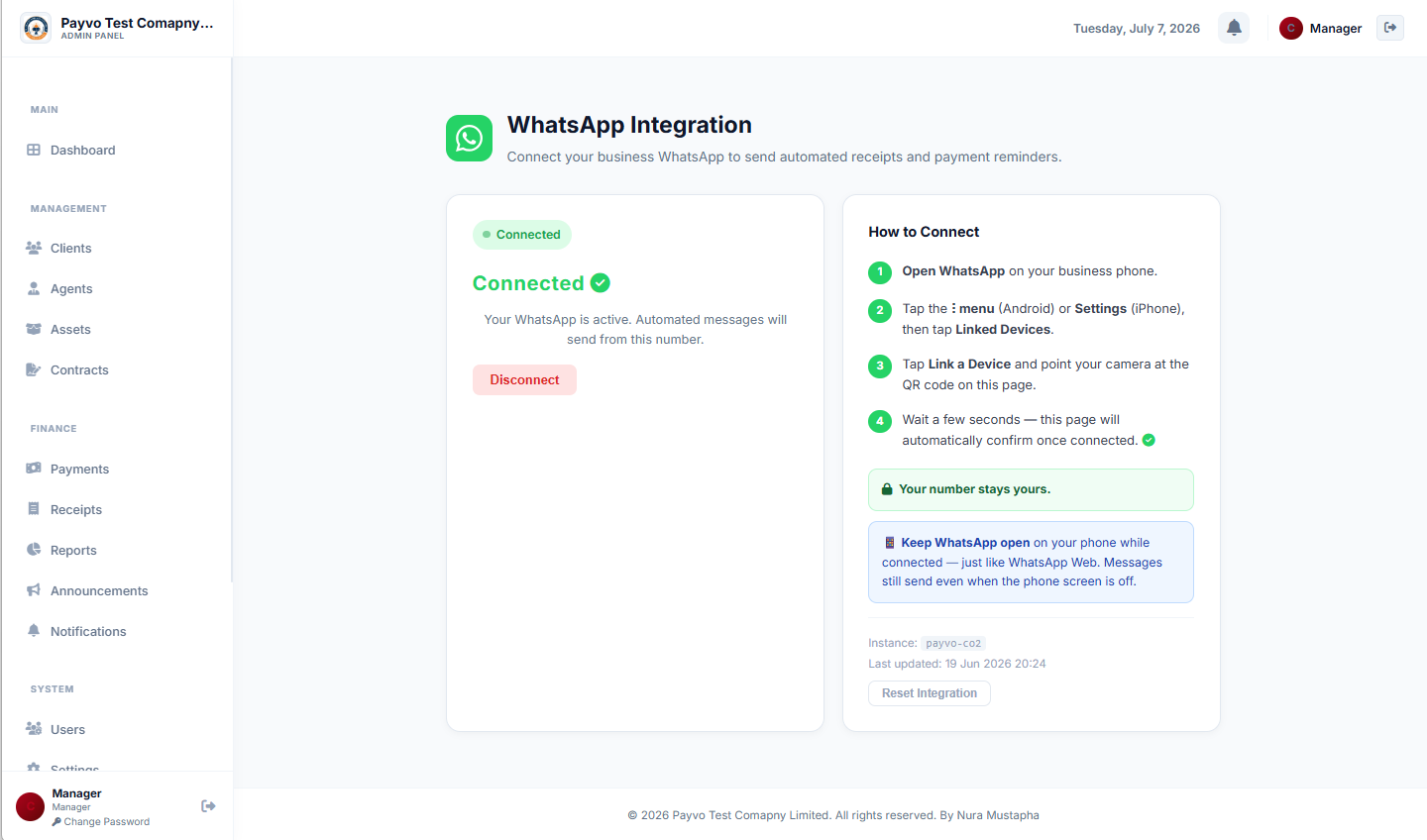 Admin: Whatsapp Integration
Step 4: Manage Staff and Agent Accounts Efficiently
For larger businesses, or those using agents to source clients, managing who does what and tracking commissions is crucial. Real estate agencies, for example, often rely on a network of agents to sell properties on installment. You need the ability to add staff accounts with role-based permissions, ensuring that each team member – from sales agents to accounts personnel – only accesses the information relevant to their role.
Furthermore, if you work with agents, an agent commission tracking software is indispensable. This system should automatically calculate commissions per payment received and track the agent's full earnings and payout history. Agents should ideally have the ability to log in and view their own performance (KPIs) and even submit withdrawal requests directly, streamlining the entire process. This level of transparency and automation fosters trust and motivates your sales force. You can learn more about how this works on our Agent Tracking Page.
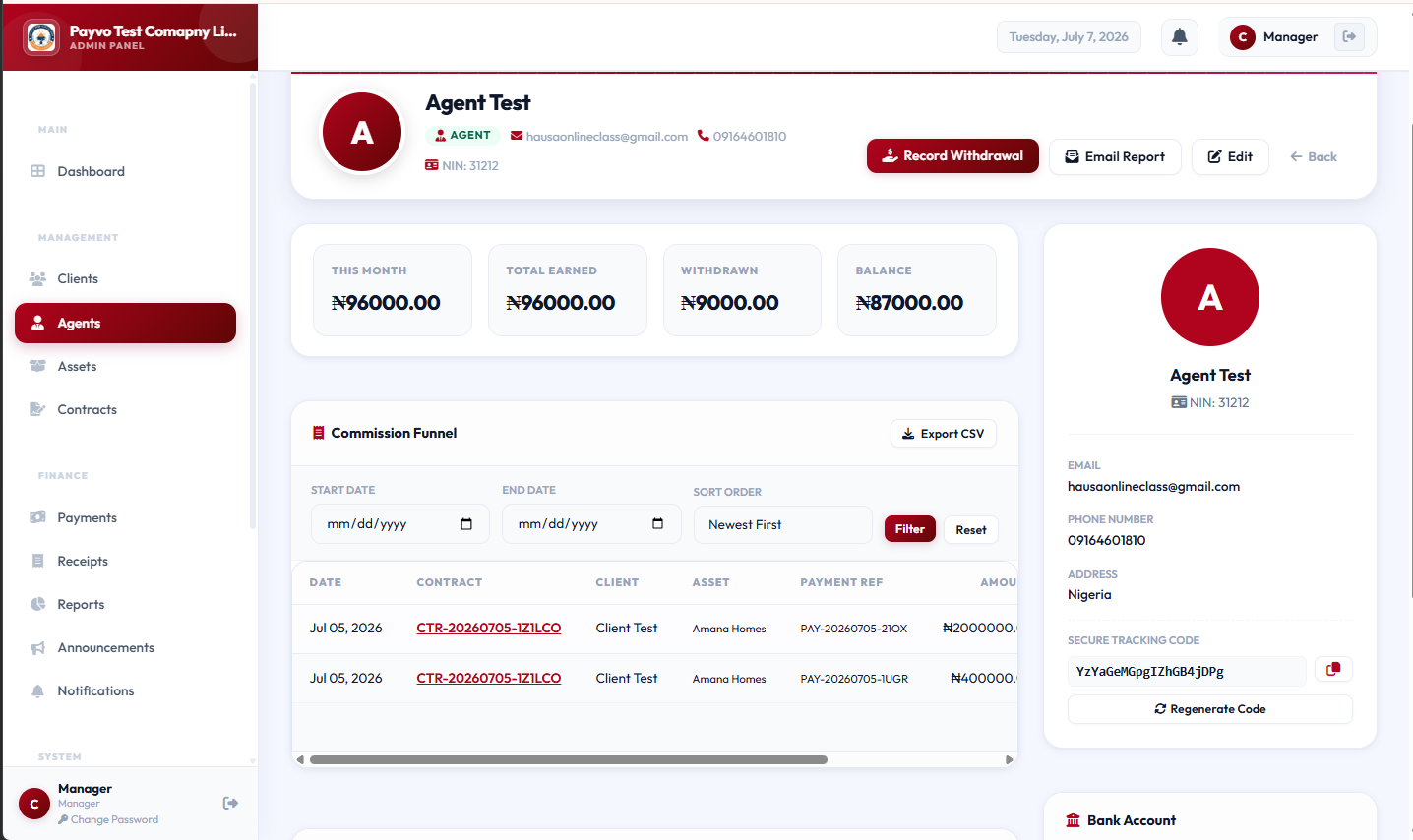 Agent: Agent details page
Step 5: Monitor Performance with Real-time Dashboards and Reports
To truly manage installment loans, you need a clear, up-to-the-minute overview of your business's financial health. Relying on end-of-month reports can mean reacting too late to problems. A real-time dashboard provides immediate insights into key metrics: total clients, active contracts, amount collected, outstanding balances, and next payments due.
These dashboards allow business owners – from solar equipment leasing companies to building material suppliers – to quickly identify trends, spot potential issues, and make informed decisions. Beyond daily monitoring, the ability to generate detailed reports (e.g., payment lists, contract summaries) for accounting and record-keeping is vital. This capability turns raw data into actionable intelligence, essential for any business payment tracking app Nigeria businesses adopt for growth. For a deeper dive into overall features, visit our Features Page.
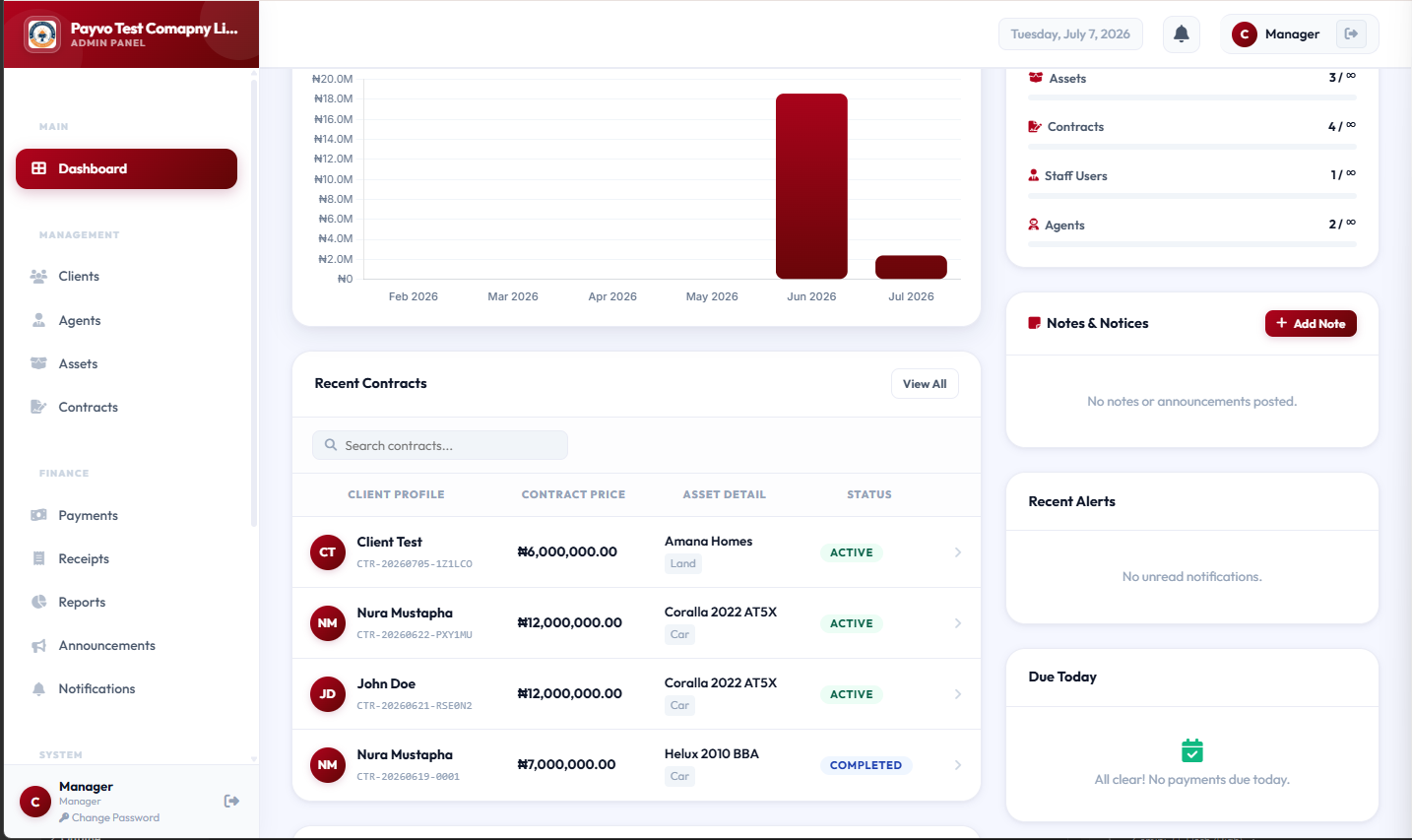 Dashobard (top)
> "In a market where trust is currency, clear communication and transparent tracking of installment payments are non-negotiable for sustainable business growth."
Step 6: Secure Your Data and Ensure Compliance
With sensitive client financial information, data security is paramount. Whether you're a cooperative society or a car dealer installment software user, ensure your chosen system offers robust security measures. This includes secure data storage, user authentication, and audit logs that track every action taken within the system.
Compliance with data protection regulations, though still evolving in Nigeria, is increasingly important. A system that maintains comprehensive records and provides audit trails protects your business from potential disputes and regulatory scrutiny. This secure tracking is crucial for maintaining the integrity of your instalment loan management software and for upholding your Privacy Policy Page.
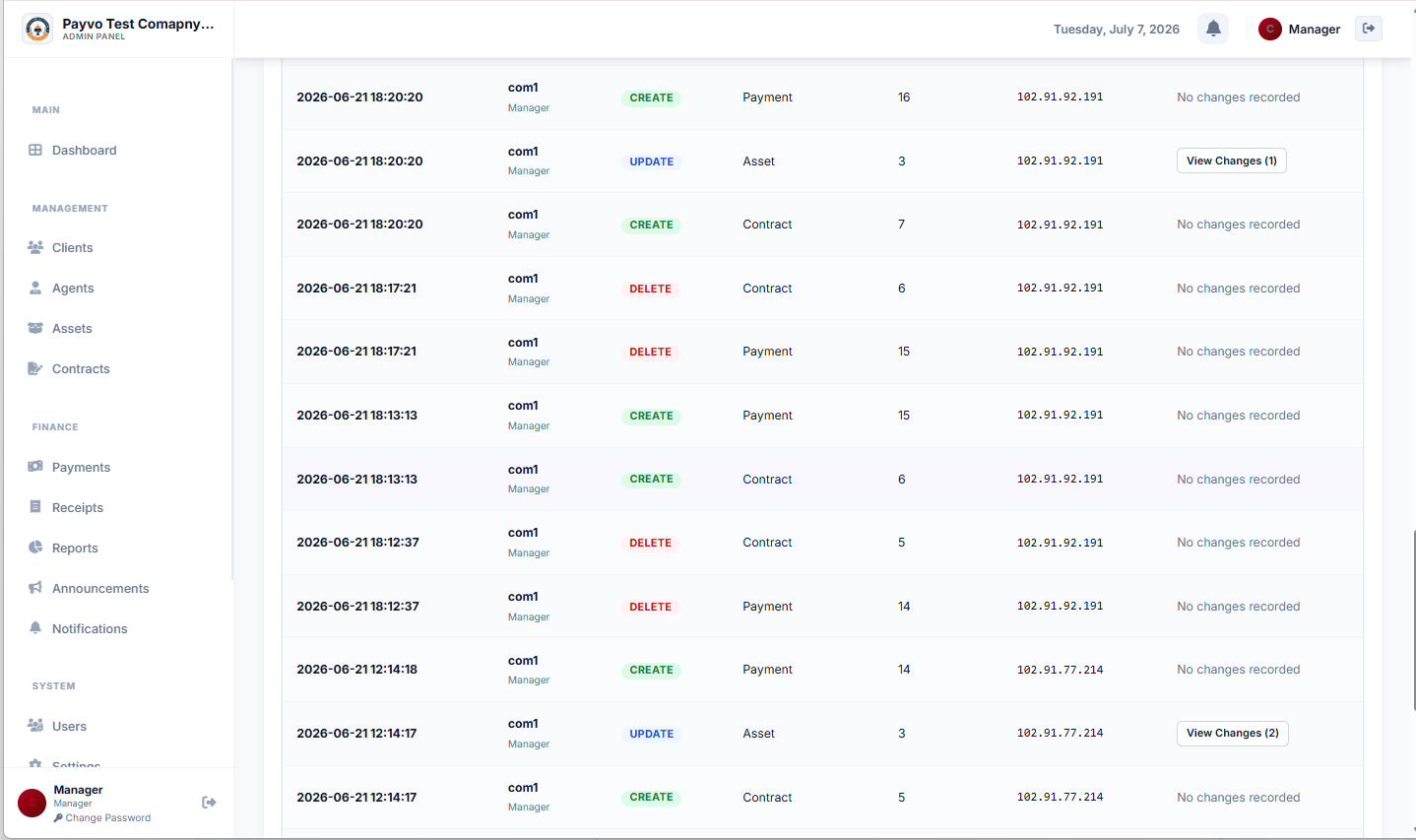 Admin: Audit Log Page
Common Mistakes to Avoid
Even with the best intentions, businesses can fall into common traps when managing installment loans.
- Relying Solely on Manual Tracking: This is the most prevalent and dangerous mistake. It leads to errors, forgotten payments, difficulty in reconciliation, and wasted time.
- Inconsistent Communication: Sporadic or unclear communication about payment due dates or arrears frustrates clients and can lead to higher default rates.
- Ignoring Late Payment Trends: Failing to identify and address patterns of late payments (e.g., a specific client, a particular product, or a certain period) means you're missing opportunities to intervene or adjust your policies.
- Lack of Clear Contract Terms: Ambiguous terms regarding payment amounts, due dates, or penalties can lead to disputes and legal challenges.
- Poor Data Security: Storing client financial information insecurely, whether physically or digitally, puts your business and clients at risk of fraud and data breaches.
- Underestimating Operational Costs: Beyond the loan amount, consider the costs of collection, communication (SMS/WhatsApp charges can be ₦10 - ₦50 per message), bank transfer fees (₦25 - ₦100), and potential legal fees.
How to Track and Grow After Launch
Once your installment management system is in place, the work doesn't stop. Continuous tracking and strategic growth are essential.
- Monitor Key Performance Indicators (KPIs): Regularly review metrics like:
- Collection Rate: Percentage of due payments successfully collected.
- Delinquency Rate: Percentage of overdue accounts.
- Average Payment Period: How long it takes clients to pay installments.
- Client Acquisition Cost vs. Lifetime Value: For businesses like real estate payment tracking Nigeria, understanding the long-term profitability of each client.
- Agent Performance: Track commission payouts against successful collections.
- Analyze Payment Patterns: Look for trends. Are certain days of the month better for payment? Do clients buying specific assets tend to default more? Use this data to refine your reminder schedules and sales strategies.
- Customer Feedback Loop: Encourage clients to provide feedback on the payment process. Their insights can reveal friction points and areas for improvement.
- Leverage Reporting for Strategic Decisions: Utilize the comprehensive reports generated by your instalment loan management software. Export payment and contract data as PDF or Excel for detailed financial analysis, investor presentations, or tax purposes. Weekly company reports, sent automatically to your email, provide a high-level overview of key business performance metrics, helping you stay informed without needing to log in daily. This comprehensive contract management software Nigeria businesses use can be a powerful tool for growth. You can explore more about Payvo's reporting capabilities on our Public Home Page.
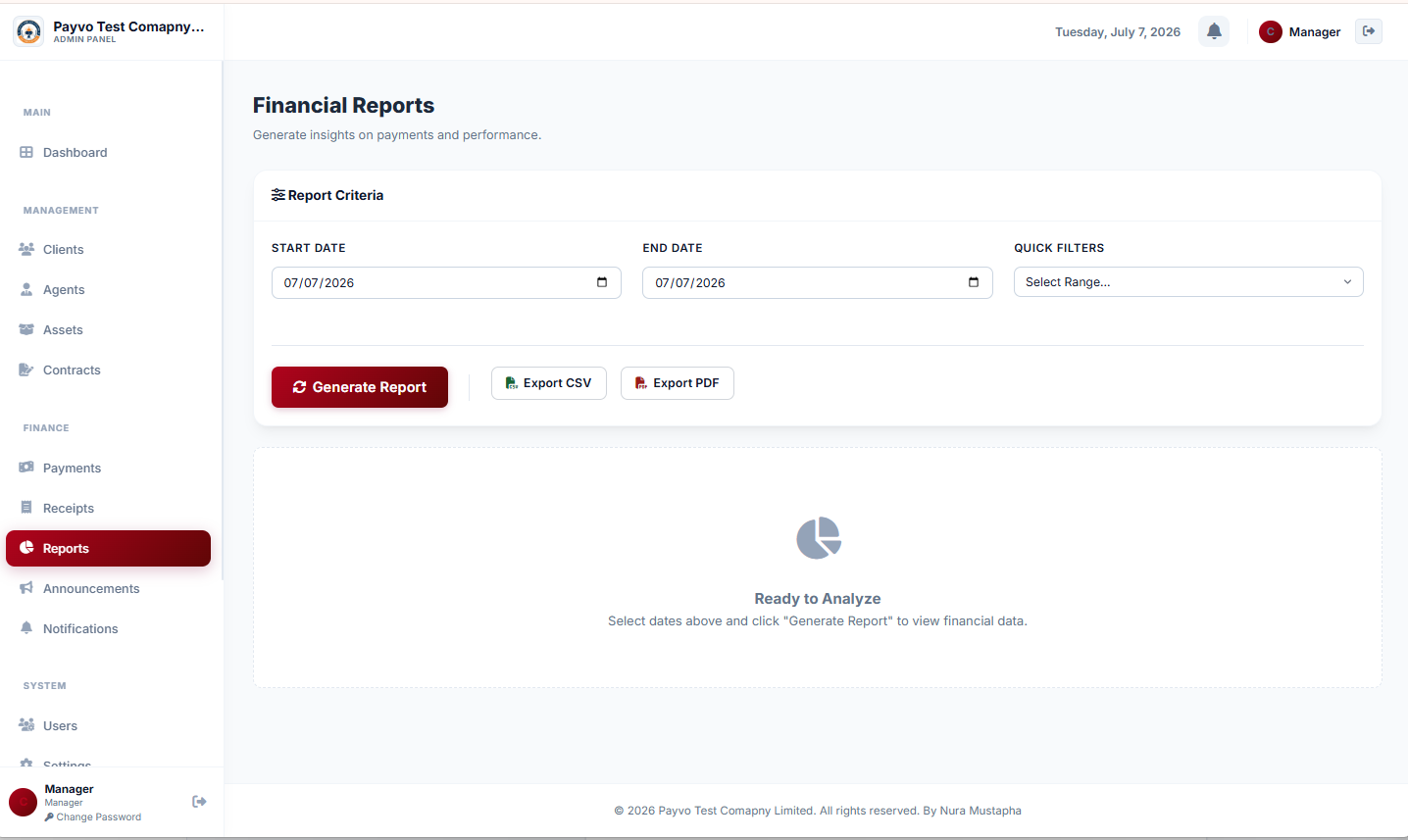 Finance: Financial Reports Page
- Scale with Confidence: As your business grows, your system should grow with it. Adding more clients, contracts, and staff should be seamless, not a bottleneck. A robust platform ensures that whether you’re managing 10 or 10,000 installment agreements, your operations remain efficient.
Frequently Asked Questions
Q1: How can I effectively track multiple installment loans from different clients?
A1: The most effective way is to use a dedicated installment management software. These systems allow you to register each client and their specific contract, automatically generate payment schedules, and record each payment against the correct loan. This eliminates manual errors and provides a centralized view of all active loans, making it easier to manage hundreds of accounts.
Q2: What's the best way to remind clients about upcoming payments without being too intrusive?
A2: Automated, multi-channel reminders are key. Schedule gentle reminders a few days before the due date via SMS, email, and WhatsApp. Follow up on the due date and then a day or two after if payment is still outstanding. Ensure the messages are polite, clear, and include payment instructions. This balance of persistence and professionalism is crucial for loan payment automation.
Q3: How do I handle late payments and defaults?
A3: First, ensure your contract clearly outlines late payment penalties. For late payments, automated reminders are the first line of defense. If a payment remains overdue, a personalized follow-up call or message may be necessary. For persistent defaults, refer to your established collection policy, which might include repossessing assets (for hire purchase) or pursuing legal action, always in accordance with your Terms of Service Page.
Q4: Can I track agent commissions accurately with an installment system?
A4: Yes, many modern installment management software solutions include agent commission tracking features. These allow you to assign agents to specific contracts, automatically calculate their commission based on payments collected, and track their earnings and payout history. Some even offer agent self-tracking portals, providing transparency and reducing administrative burden. This is vital for businesses using agent-based sales models, such as real estate or solar providers.
Q5: What kind of reports should I expect from an instalment loan collection system?
A5: A comprehensive system should provide real-time dashboards showing key metrics like total clients, active contracts, collected amounts, and outstanding balances. It should also generate detailed reports that can be exported in formats like PDF or Excel, covering payment histories, contract summaries, overdue accounts, and financial performance over time. These reports are invaluable for business analysis, accounting, and compliance.
 Nigerian market vendor counting cash
Ready to Streamline Your Installment Management?
Stop losing sleep over missed payments and scattered records. Take control of your installment sales with a system designed to automate tracking, reminders, and reporting. Visit our Register into Payvo page to explore how Payvo can transform your business operations, boost your collections, and provide the clarity you need to grow.