In Nigeria's bustling markets, furniture sales on installment are a lifeline for many, yet managing these agreements can feel like juggling hot coals. Missed payments, forgotten due dates, and manual record-keeping can quickly turn a profitable venture into a nightmare of bad debt and lost inventory. The difference between success and struggle often hinges on a robust system for tracking every naira and every agreement.
 A small furniture shop in a nigerian market
The Evolving Landscape of Furniture Sales in Nigeria
The demand for quality furniture is consistently high in Nigeria, but high upfront costs often make outright purchases prohibitive for the average household. This reality has fueled the growth of installment payment models, transforming the furniture sector. As of 2026, more and more Nigerians are opting for flexible payment plans to acquire essential household items, from sofas and dining sets to beds and wardrobes. This shift presents a massive opportunity for businesses willing to adapt. However, it also introduces significant operational complexities.
For instance, a typical furniture item that might cost ₦30,000 - ₦300,000 wholesale could retail for ₦45,000 - ₦450,000 for cash sales. When offered on installment, the price often increases to ₦55,000 - ₦600,000 to account for the financing risk and administrative overhead, yielding a 40-70% markup. This higher margin is attractive, but it's easily eroded by defaults or inefficient tracking. Many small and medium-sized enterprises (SMEs) struggle with managing these multiple payment schedules, leading to significant revenue leakage. Without proper tools, businesses risk losing track of who owes what, when, and for which specific piece of furniture. Effective management is not just about collecting payments; it's about maintaining customer relationships and ensuring business sustainability.
What You Need Before You Start
Embarking on a furniture installment sales business requires more than just a showroom and inventory. Here's a checklist of foundational elements:
- Initial Capital: Beyond the cost of acquiring stock, you'll need funds for operational expenses. Expect to allocate ₦500,000 - ₦2,500,000 for initial stock, depending on whether you're sourcing locally or importing.
- Shop Space: Rent is a significant annual expense, ranging from ₦150,000 for a suburban spot to ₦3,000,000 for a prime commercial location in Lagos or Abuja.
- Legal Framework: A robust installment agreement is non-negotiable. Invest in professional legal fees, typically ₦50,000 - ₦150,000, to draft a solid contract template that protects your interests and clearly outlines client obligations.
- Delivery Logistics: Furniture is bulky. A reliable delivery system is crucial. A used small van could cost ₦1,500,000 - ₦4,000,000. Factor in monthly fuel costs of ₦40,000 - ₦150,000 for deliveries and generator use.
- Power Stability: A generator (5-10 kVA) is essential, costing ₦300,000 - ₦800,000, to ensure consistent operations.
- Staffing: Even a small operation might need a sales or admin assistant. Budget ₦60,000 - ₦120,000 per month per staff member.
- Marketing Budget: Allocate ₦20,000 - ₦100,000 monthly for social media boosts, local flyers, or radio ads to attract customers.
- Contingency for Bad Debt: This is critical for installment sales. Always provision ₦10,000 - ₦100,000 monthly, representing 5-10% of installment sales, for potential defaults.
Step-by-Step: Managing Furniture Sales on Installment
Successful furniture installment sales rely on a meticulous process from customer engagement to final payment.
Step 1: Define Your Installment Terms Clearly
Before you even sell a single item, establish clear, non-negotiable terms. This includes the minimum deposit required (e.g., 20-30% of the installment price), the payment frequency (weekly, bi-weekly, monthly), the duration of the payment plan (e.g., 3-12 months), and the consequences of late or missed payments. Transparency builds trust and reduces disputes later. Ensure your legal counsel drafts an agreement that covers all these points, including clauses for repossession or penalties if payment terms are not met.
Step 2: Onboard Clients and Register Sales
When a customer expresses interest in an installment plan, the first critical step is to capture their complete details accurately. This goes beyond just names and phone numbers; you need verified addresses, next of kin, and perhaps even employment details to assess their creditworthiness and facilitate recovery if needed. Simultaneously, each furniture item sold must be registered and linked to the specific client and contract. This ensures you know exactly which item is with which customer and its outstanding balance.
For businesses managing multiple clients and diverse furniture items, manually tracking these details in ledgers or spreadsheets quickly becomes unmanageable. An effective installment management software Nigeria solution allows you to register and manage clients and register and manage assets, linking them directly to contracts.
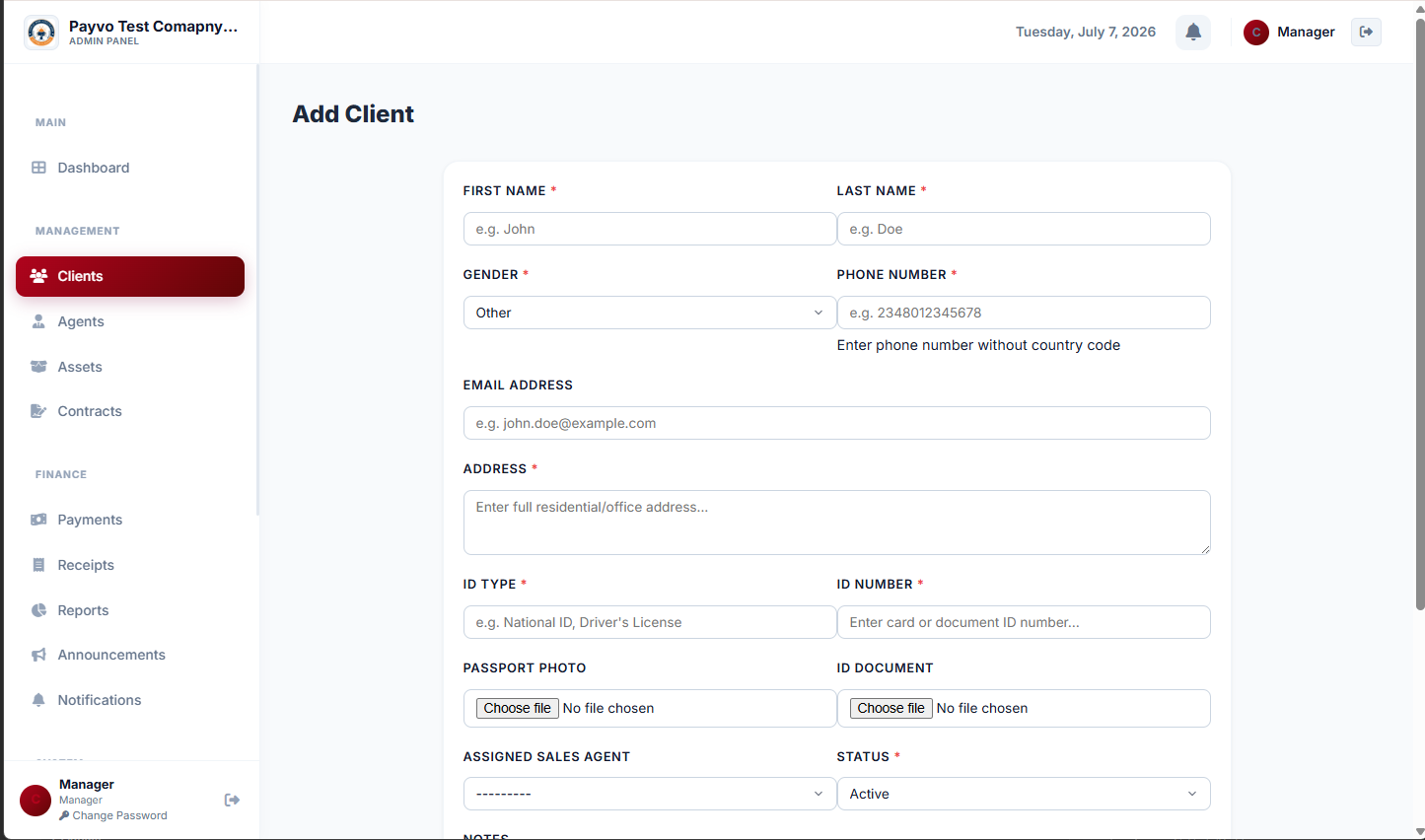 Client: Add Client page
Step 3: Create Robust Installment Contracts
Once client and asset details are logged, the next step is to formalize the agreement. This involves creating a contract that specifies the total installment price, the deposit amount, the number of installments, the exact due dates for each payment, and the remaining balance. Automating this process is key to avoiding errors and saving time. A good contract management software Nigeria system should allow you to set payment terms once, and it will automatically generate the entire installment schedule. This eliminates the need for manual calculations and reduces the risk of human error.
Step 4: Record Payments and Generate Receipts
Every payment received, whether a deposit or an installment, must be immediately and accurately recorded. This is non-negotiable for maintaining financial integrity and client trust. After recording, a professional receipt must be issued. These receipts should be branded with your company's logo, colors, and digital signature, providing a professional touch and serving as proof of payment for the customer.
Manually generating receipts for every payment can be time-consuming and prone to errors. Using a receipt generator app Nigeria or a comprehensive business payment tracking app Nigeria streamlines this. With the right tools, you can record payments effortlessly and have branded receipts (with company logo, colors, and signature) created automatically for every payment, plus a master receipt for full contracts. This also helps in accurately tracking your outstanding balances and collected amounts.
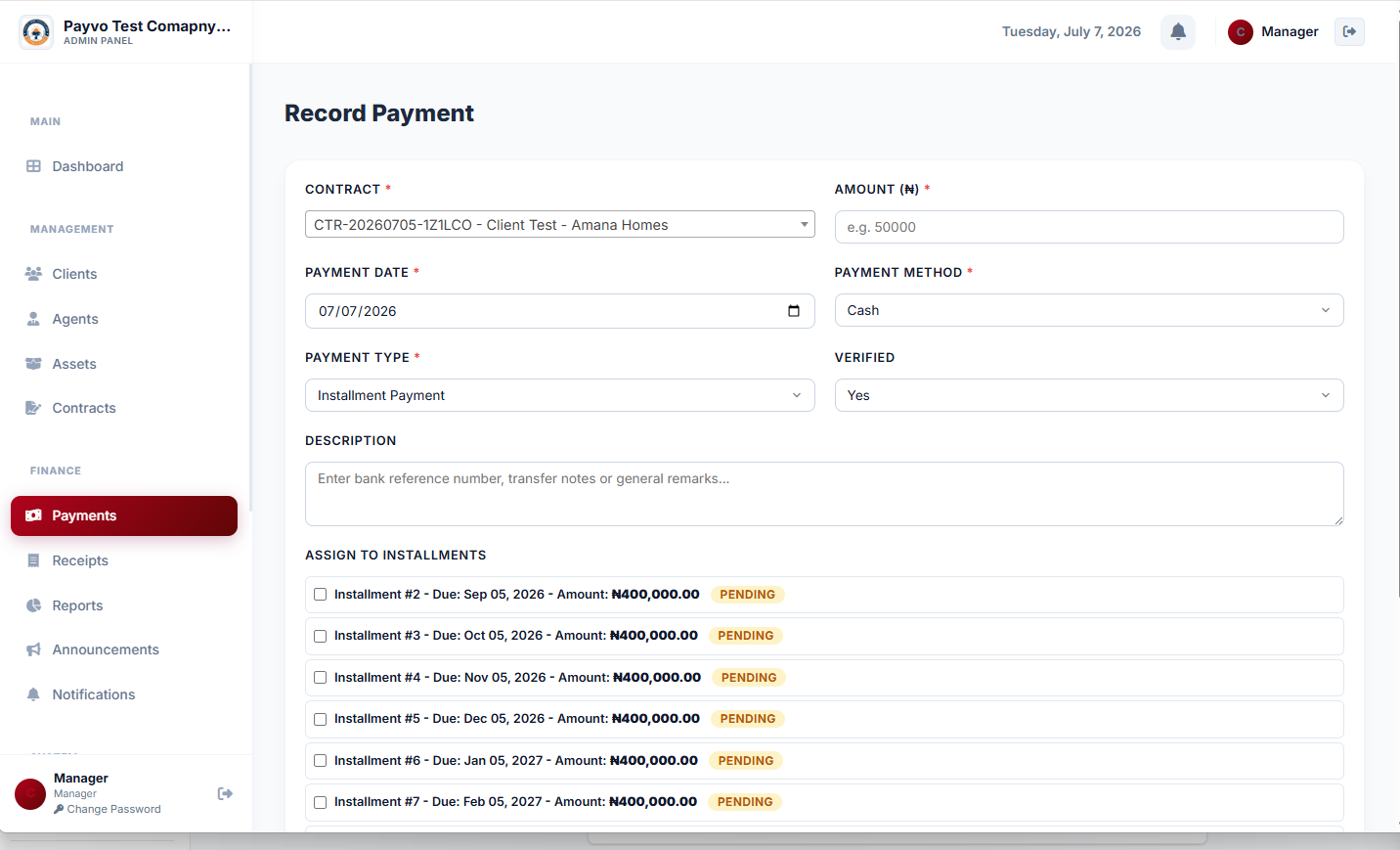 Finance: Record Payments Page
Step 5: Implement Automated Payment Reminders
One of the biggest challenges in installment sales is ensuring timely payments. Many defaults stem not from an unwillingness to pay, but from forgetfulness. Manual follow-up calls are labor-intensive and often ineffective. This is where automation becomes your best friend. Set up automated reminders that go out before due dates. These reminders can be sent via various channels, including email and WhatsApp, making it convenient for your clients.
A robust WhatsApp payment notification system can significantly reduce late payments. Imagine your system automatically sending a friendly reminder a few days before an installment is due, potentially including a public receipt link clients can view, save, or share. This proactive approach saves you countless hours of chasing payments and improves your collection rate.
Step 6: Manage Staff and Agent Commissions
As your furniture business grows, you might employ sales staff or engage agents to bring in new customers. Managing their performance, tracking their sales, and calculating their commissions accurately is crucial for motivating your team and preventing internal disputes. An effective system should allow business owners to add staff with role-based permissions, controlling what each person can see and do. Furthermore, for agents, it should allow you to assign agents to contracts, automatically calculate commission per payment, and track full earnings and payout history.
Some advanced systems even offer agent self-tracking, where agents can log in with a code given by their manager to view their own earnings (KPIs only) and submit withdrawal requests directly, which managers are notified of instantly. This level of transparency and automation fosters a more efficient and accountable sales force. For more insights on this, you can explore resources on agent commission tracking software.
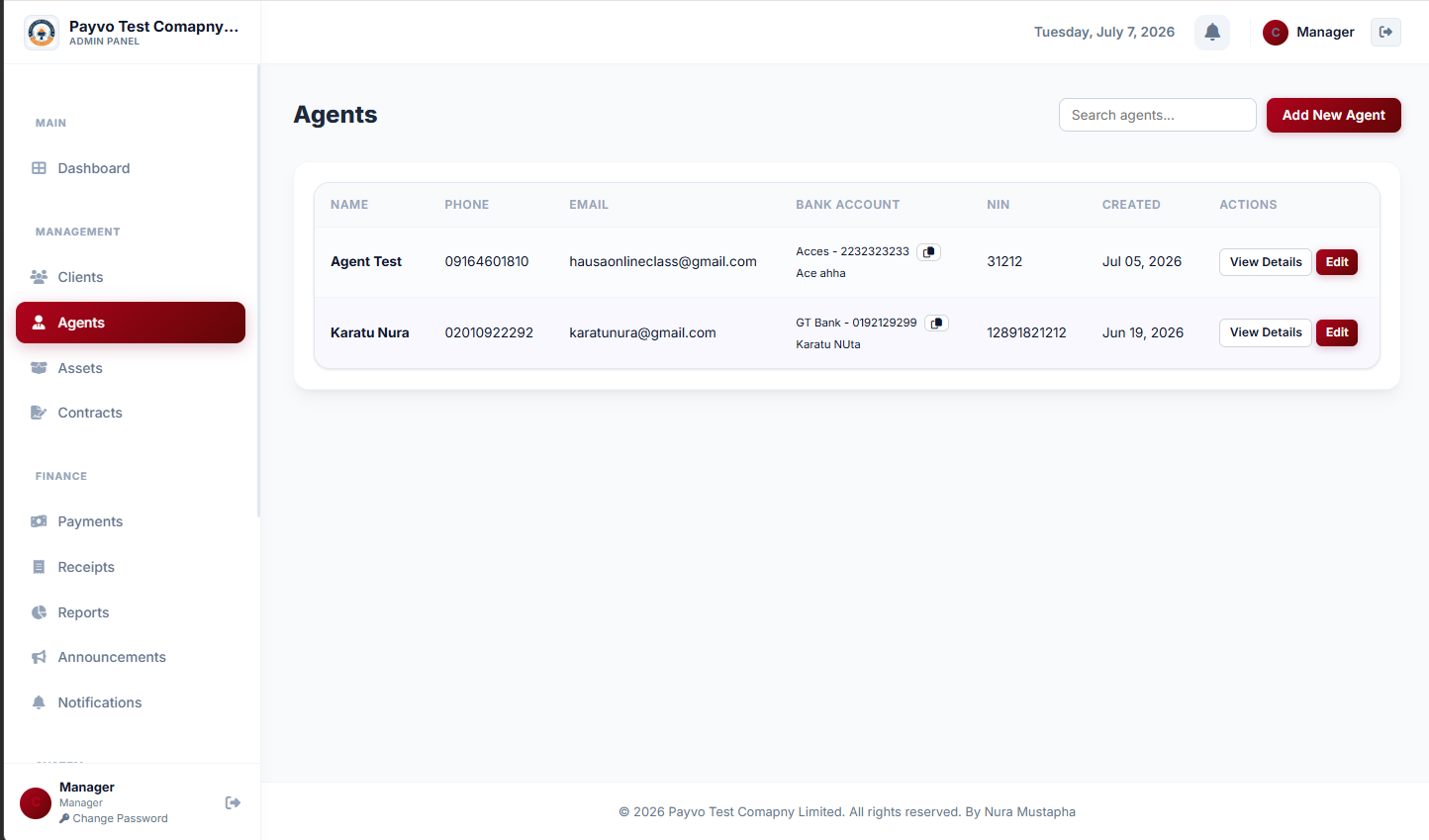 Agent: Agents list page
Common Mistakes to Avoid
Navigating the world of installment sales, especially in the furniture sector, comes with its unique set of pitfalls. Avoiding these can significantly improve your business's profitability and stability.
- Inadequate Client Vetting: Rushing into agreements without proper background checks or verification of client details is a recipe for high bad debt. Always verify addresses, employment, and next-of-kin information.
- Poorly Drafted Contracts: Using generic or incomplete contracts leaves you vulnerable. Ensure your legal agreement is comprehensive, explicitly stating all terms, conditions, and consequences of default.
- Manual Tracking Overload: Relying on notebooks, spreadsheets, or scattered WhatsApp messages for payment tracking is inefficient and prone to errors. This leads to missed payments, incorrect balances, and significant time wasted on reconciliation.
- Lack of Automated Reminders: Expecting clients to remember due dates without reminders is unrealistic. Manual follow-ups are time-consuming and often come too late. Automate your reminders to increase collection rates.
- Ignoring Bad Debt Provision: Failing to set aside funds for potential defaults is a critical error. Bad debt is an inherent risk in installment sales; provisioning for it allows you to absorb losses without crippling your cash flow.
- Inconsistent Enforcement of Terms: If you don't consistently apply your contract terms (e.g., penalties for late payment or repossession clauses), clients will learn they can delay payments without consequence, eroding your authority and increasing defaults.
How to Track and Grow After Launch
Once your furniture installment business is up and running, continuous tracking and strategic growth are paramount. Monitoring key performance indicators (KPIs) provides insights into what's working and what needs adjustment.
Start by regularly reviewing your sales figures, particularly the ratio of cash sales to installment sales. Track your collection rate – the percentage of due payments actually received. Keep a close eye on your bad debt rate, comparing it against your provision. Understand which furniture items sell best on installment and which payment plans perform most reliably.
A real-time dashboard can be invaluable here, showing you total clients, active contracts, amount collected, outstanding balances, and next payment due at a glance. This immediate visibility helps you make informed decisions. For deeper analysis, the ability to generate reports, exporting payment and contract data as PDF or Excel, is crucial for accounting and record-keeping. Some systems even provide weekly company reports, automatic email summaries sent to company notification emails, covering key business performance metrics.
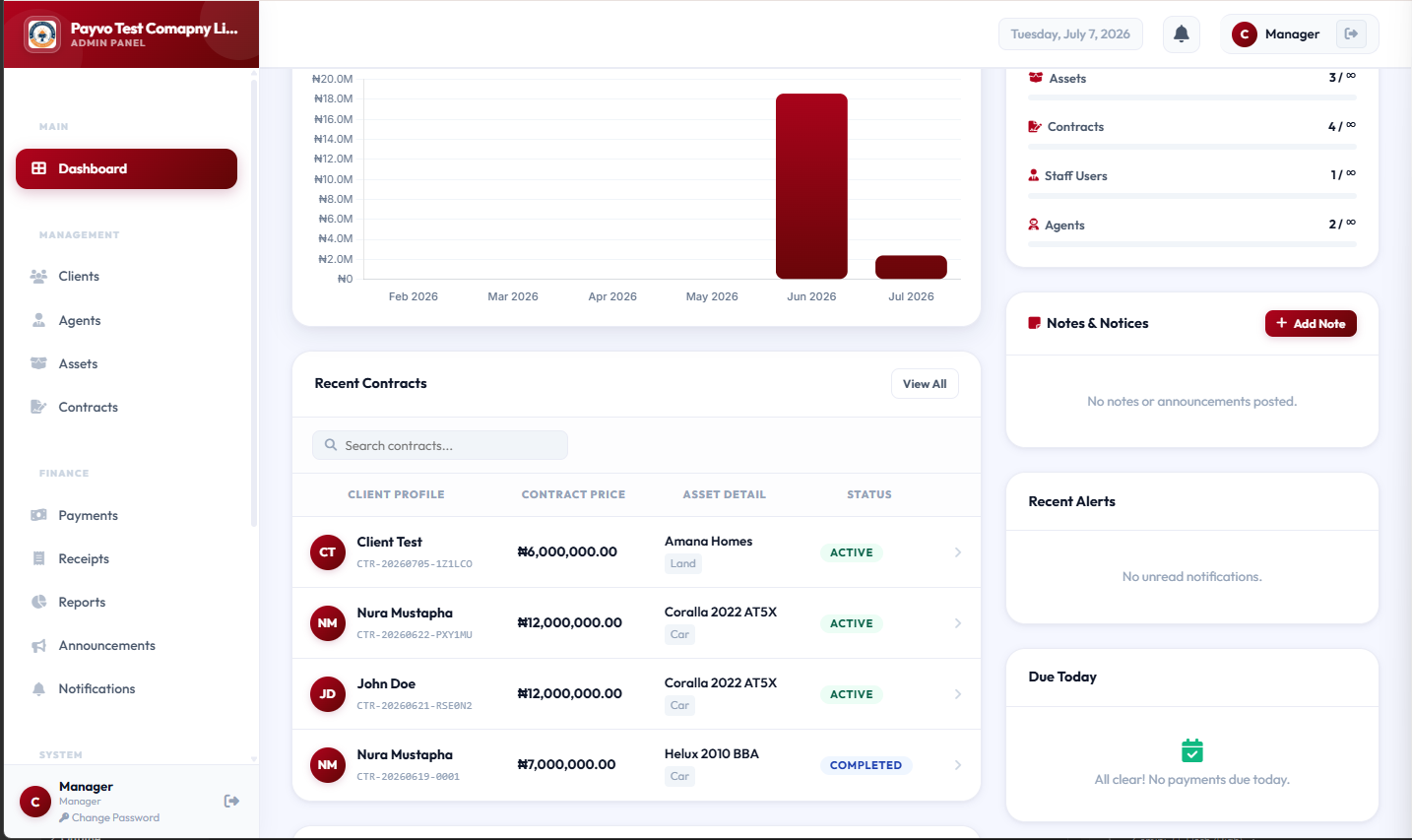 Dashobard (top)
For growth, consider expanding your product range based on demand, or exploring new marketing channels. Perhaps local community groups or online marketplaces could offer new client acquisition avenues. Continuously refine your credit assessment process to minimize risk. As your client base grows, consider how a robust installment management software Nigeria solution can scale with you, handling increased volumes of contracts and payments efficiently. This proactive approach ensures your furniture installment business remains profitable and sustainable in the long run.
> "In the installment sales business, your most valuable asset isn't your inventory; it's the integrity of your client data and the efficiency of your payment collection system. Without these, even the highest markups won't save you from the inevitable tide of defaults."
 A nigerian entrepreneur reviewing data on a tablet
Frequently Asked Questions
Q1: What's the biggest challenge in managing furniture installment sales?
A1: The biggest challenge is consistently tracking payments, managing due dates for numerous clients, and effectively following up on overdue accounts without overwhelming administrative resources. This often leads to significant bad debt if not handled efficiently.
Q2: How much capital do I need to start a furniture installment business in Nigeria?
A2: For initial stock, expect to need ₦500,000 to ₦2,500,000. Beyond that, factor in annual shop rent (₦150,000 - ₦3,000,000), a delivery vehicle (₦1,500,000 - ₦4,000,000), a generator (₦300,000 - ₦800,000), and monthly operational costs like staff salaries, fuel, and marketing, which can sum up to ₦120,000 - ₦370,000.
Q3: How can I minimize the risk of bad debt in installment sales?
A3: Minimize bad debt by thorough client vetting, clear and legally sound contracts, automated payment reminders, and consistent enforcement of terms. Also, always provision a percentage of your expected installment sales (e.g., 5-10%) for potential defaults.
Q4: Is there a specific type of software that helps with furniture credit sales?
A4: Yes, a dedicated installment management software Nigeria or business payment tracking app Nigeria is ideal. Look for features like client and asset registration, automated contract generation, payment recording, receipt generation, and especially automated payment reminders via channels like WhatsApp. This kind of software streamlines the entire process.
Q5: How do I handle agent commissions for furniture sales on installment?
A5: Implement a system that links agents to specific contracts and automatically calculates their commission as payments are received. The best solutions offer agent self-tracking portals where agents can monitor their earnings and submit withdrawal requests, ensuring transparency and reducing manual calculations. For a deeper dive, check out resources on agent tracking.
Ready to Streamline Your Installment Sales?
Managing furniture sales on installment doesn't have to be a constant struggle. By adopting structured processes and leveraging technology, you can transform your operations, reduce bad debt, and focus on growth. If you're ready to move beyond manual tracking and bring efficiency to your furniture credit sales, explore how a dedicated platform can help. You can learn more about Payvo's features and how it simplifies client, contract, and payment management by visiting our features page, or if you're ready to take the next step, you can register your business today.