In Nigeria, the dream of owning the latest smartphone, a reliable laptop, or a brand-new television is often constrained by upfront costs. This reality has fueled a massive demand for electronics on credit and installment plans, creating a golden opportunity for businesses. Yet, managing these sales effectively—tracking payments, chasing debtors, and avoiding losses—can quickly turn a promising venture into a logistical nightmare.
 Nigerian electronics shop owner discussing payment plans with
The Evolving Landscape of Electronics Sales in Nigeria
The Nigerian electronics market in 2026 is dynamic, driven by a young, tech-savvy population and increasing digital penetration. While outright cash purchases remain common, the rising cost of living and stagnant wages mean that a significant portion of consumers now prefer, or require, flexible payment options. This shift isn't just about affordability; it's about access. Businesses that adapt to this reality by offering well-managed credit and installment plans are poised for significant growth.
Consider the sheer volume: a basic smartphone might cost ₦80,000 – ₦150,000, while a mid-range laptop could be ₦250,000 – ₦600,000. For many Nigerians earning ₦50,000 – ₦150,000 monthly, these are substantial investments. Offering installment plans can expand your customer base dramatically. However, this opportunity comes with its own set of challenges, from managing cash flow to mitigating default risks. The profit margins on installment sales are typically higher (15% - 35% compared to 10% - 25% for cash sales), compensating for the increased administrative burden and risk. Businesses need robust systems to capitalize on this trend without succumbing to operational chaos.
What You Need Before You Start
Before diving into installment sales, preparation is key. Here's a checklist of essentials:
- Initial Capital: You'll need sufficient capital to purchase inventory. For a small electronics shop stocking basic phones and accessories, expect to allocate ₦500,000 - ₦2,500,000. For a more established shop with TVs, laptops, and higher-end phones, this could range from ₦5,000,000 - ₦15,000,000.
- Physical Location: A good shop location is crucial. Rent for a small stall in a local area might be ₦80,000 - ₦300,000/year, while a prime city spot in Lagos or Abuja could demand ₦1,500,000 - ₦5,000,000/year.
- Reliable Suppliers: Establish strong relationships with wholesalers for consistent stock and competitive pricing.
- Legal Counsel: Engage a lawyer to draft robust credit agreements and understand consumer protection laws. Expect initial legal fees between ₦50,000 - ₦200,000.
- Power & Connectivity: Reliable electricity (often requiring a generator with monthly fuel costs of ₦30,000 - ₦100,000) and internet (₦10,000 - ₦25,000/month) are non-negotiable for running POS systems and communication.
- Dedicated Staff: Even a small operation might need sales staff. A sales assistant typically earns ₦45,000 - ₦80,000/month.
- Payment Tracking System: This is arguably the most critical tool. You need a system to manage client details, contracts, payment schedules, and reminders.
Step-by-Step: Managing Electronics Sales on Credit & Installment Plans
Implementing a successful installment sales model requires a structured approach. Follow these steps to set up and manage your electronics credit business effectively.
Step 1: Define Your Installment Policy & Terms
Before selling, clearly outline your terms. What's the minimum down payment? What are the payment intervals (weekly, bi-weekly, monthly)? What's the maximum installment period? How much interest or service charge will you apply? A typical default rate provision of 5% - 15% of total credit sales should be factored into your pricing to cover potential losses.
- Down Payment: A higher down payment (e.g., 20-30% of the item's value) reduces your risk and ensures the customer has some skin in the game.
- Installment Period: Keep it realistic. For phones, 3-6 months might be ideal. For laptops or larger appliances, 6-12 months could work. Longer periods increase risk and administrative burden.
- Pricing: Price your installment items to reflect the higher risk and administrative costs. While cash sales might yield 10-25% profit, installment sales should aim for 15-35%.
- Late Payment Penalties: Clearly state the consequences of delayed payments in your agreement.
Step 2: Implement a Robust Customer Vetting Process
This is where you mitigate risk. Not every customer is suitable for an installment plan.
- KYC (Know Your Customer): Collect comprehensive client details: full name, address, phone numbers, valid ID (National ID, Driver's License, Voter's Card), guarantor details, and proof of employment or stable income.
- Guarantor Requirement: Always require a guarantor with verifiable income or assets. This provides an additional layer of security.
- Credit Checks: While formal credit bureaus are emerging, informal checks are still vital. Verify employment, call references, and even visit the customer's home or business where feasible.
- Initial Interview: Conduct a brief interview to gauge the customer's seriousness and ability to pay.
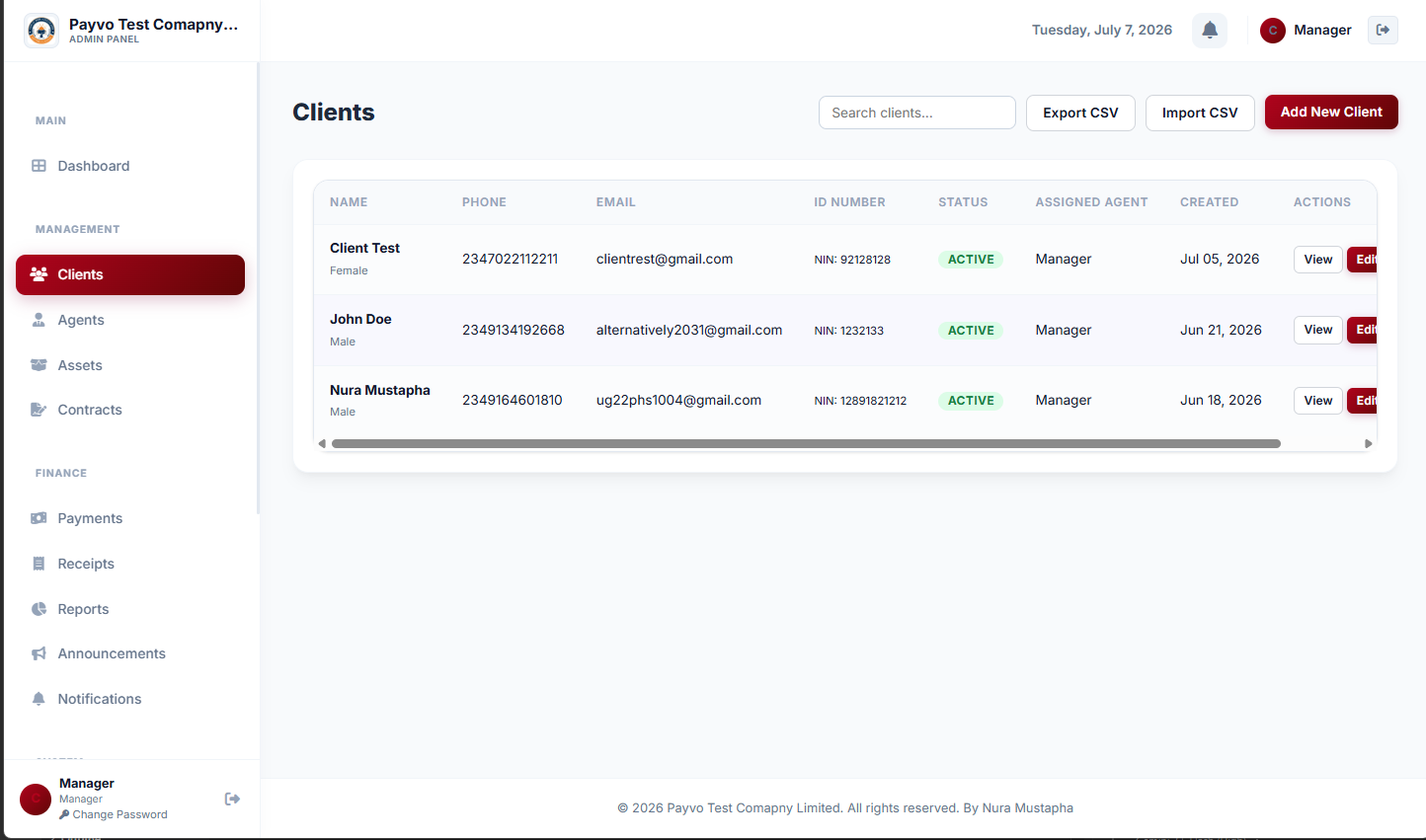 Client list view in Payvo
Step 3: Draft Clear and Legally Sound Contracts
A well-drafted contract is your best defense against disputes and defaults.
- Key Clauses: Include details of the item sold (serial number, model), total cost, down payment, installment amount, payment schedule, late payment penalties, repossession clauses, and guarantor obligations.
- Asset Tracking: For high-value items like laptops or TVs, ensure your contract explicitly links the payment plan to the specific asset.
- Signatures: Ensure both the customer and their guarantor sign the agreement, with witnesses present. Provide copies to all parties.
- Legal Review: Have your lawyer review your standard contract template to ensure it complies with Nigerian law and adequately protects your business.
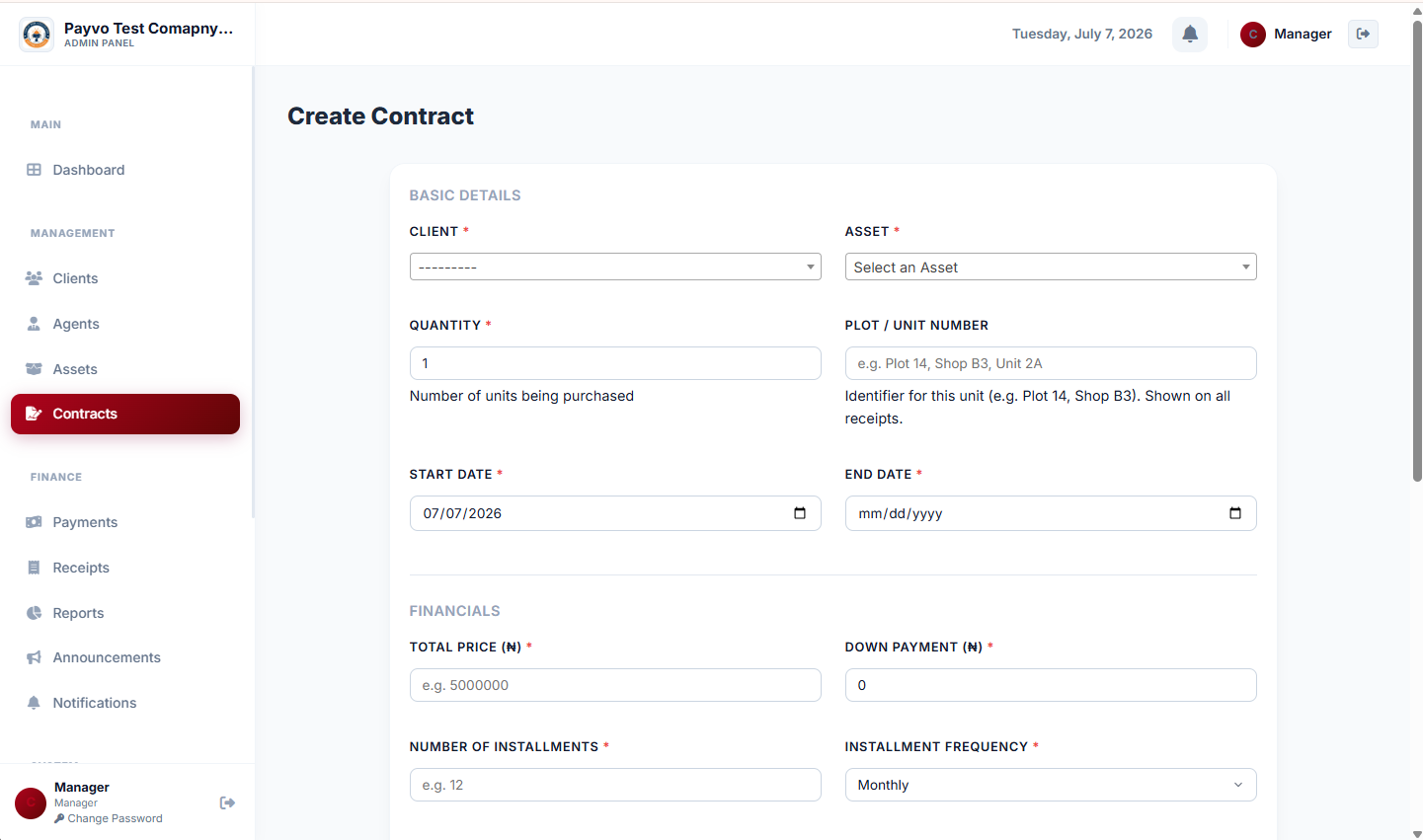 Add new contract page in Payvo
Step 4: Track Inventory and Link to Sales
When selling electronics on credit, you need to know exactly which item went to which customer.
- Unique Identifiers: Assign a unique internal SKU or use the manufacturer's serial number for every item.
- Asset Registration: Register each item sold on installment, linking it directly to the customer's contract. This is crucial for tracking outstanding debt and for potential repossession if a default occurs.
- Inventory Management: Maintain accurate inventory records to avoid stockouts and ensure you know what's available for cash vs. installment sales.
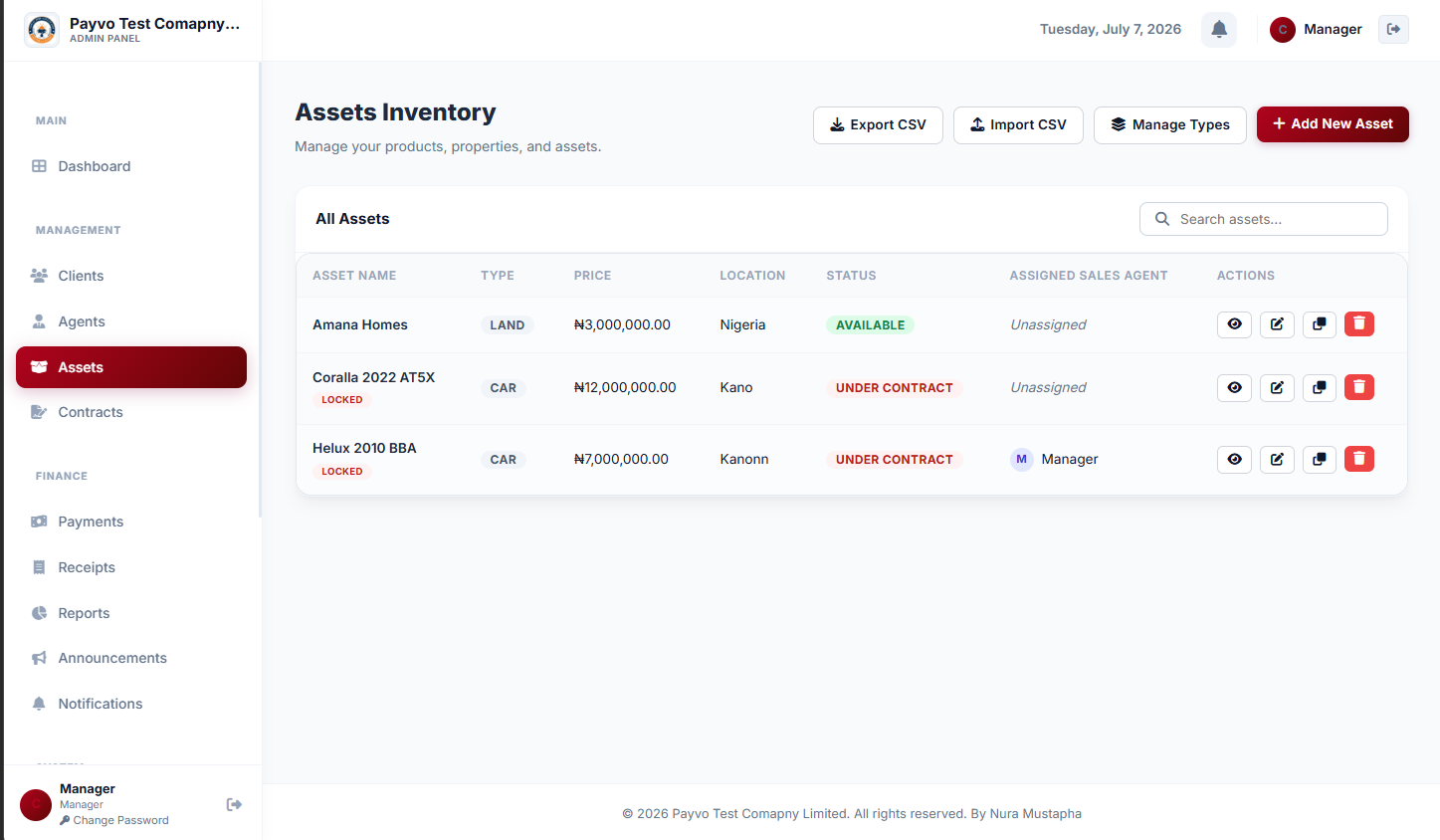 Assets list view in Payvo
Step 5: Set Up Your Payment Tracking and Reminder System
This is the backbone of your installment sales operation. Manual tracking with notebooks or spreadsheets is prone to errors and becomes unsustainable as your business grows.
- Automated Schedules: Your system should automatically generate and track payment schedules based on the contract terms.
- Payment Recording: Every payment received must be accurately recorded against the specific contract.
- Receipt Generation: For every payment, a professional receipt is essential. This builds trust and provides proof of payment for both parties. A receipt generator app Nigeria that can create branded receipts (with your company logo, colors, and signature) automatically for every payment is invaluable.
- Automated Reminders: This is critical for reducing defaults. Set up automated reminders to be sent before due dates. These can be via SMS, email, or even WhatsApp. A WhatsApp payment notification system can significantly improve collection rates.
- Payment History: Maintain a clear, accessible history of all payments made by each client.
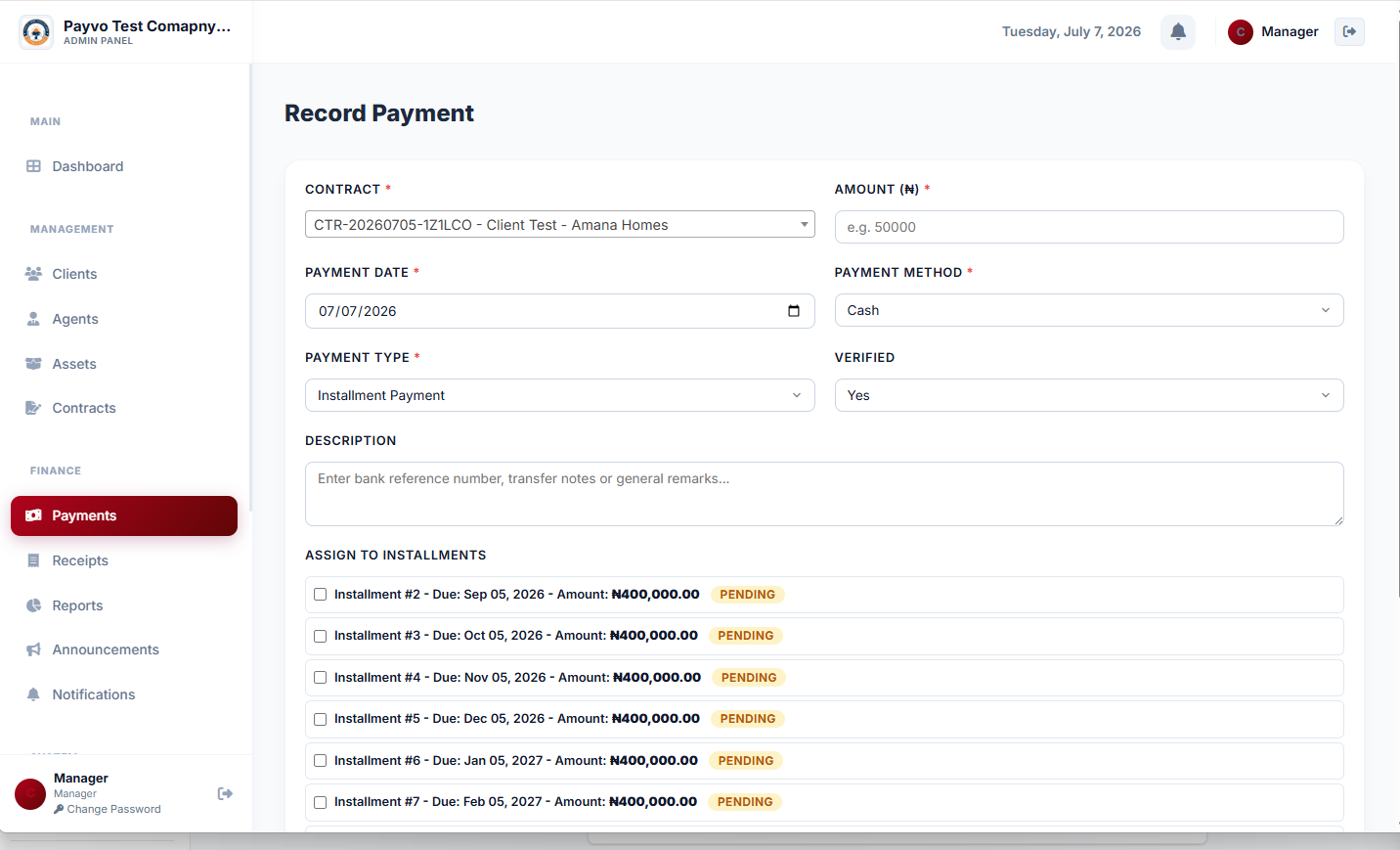 Record payment page in Payvo
Step 6: Manage Staff and Agents Effectively
As your business scales, you might employ sales staff or commission-based agents.
- Role-Based Access: Grant staff access to the payment tracking system with permissions appropriate to their role (e.g., sales staff can record payments but not alter contract terms).
- Commission Tracking: If you work with agents, automate commission calculations. This reduces disputes and motivates agents. An agent commission tracking software feature allows you to assign agents to contracts, automatically calculate commission per payment, and track full earnings and payout history. Agents can even use agent self-tracking features to view their earnings and submit withdrawal requests.
- Training: Train your staff on the installment sales process, customer vetting, and the use of your payment tracking system.
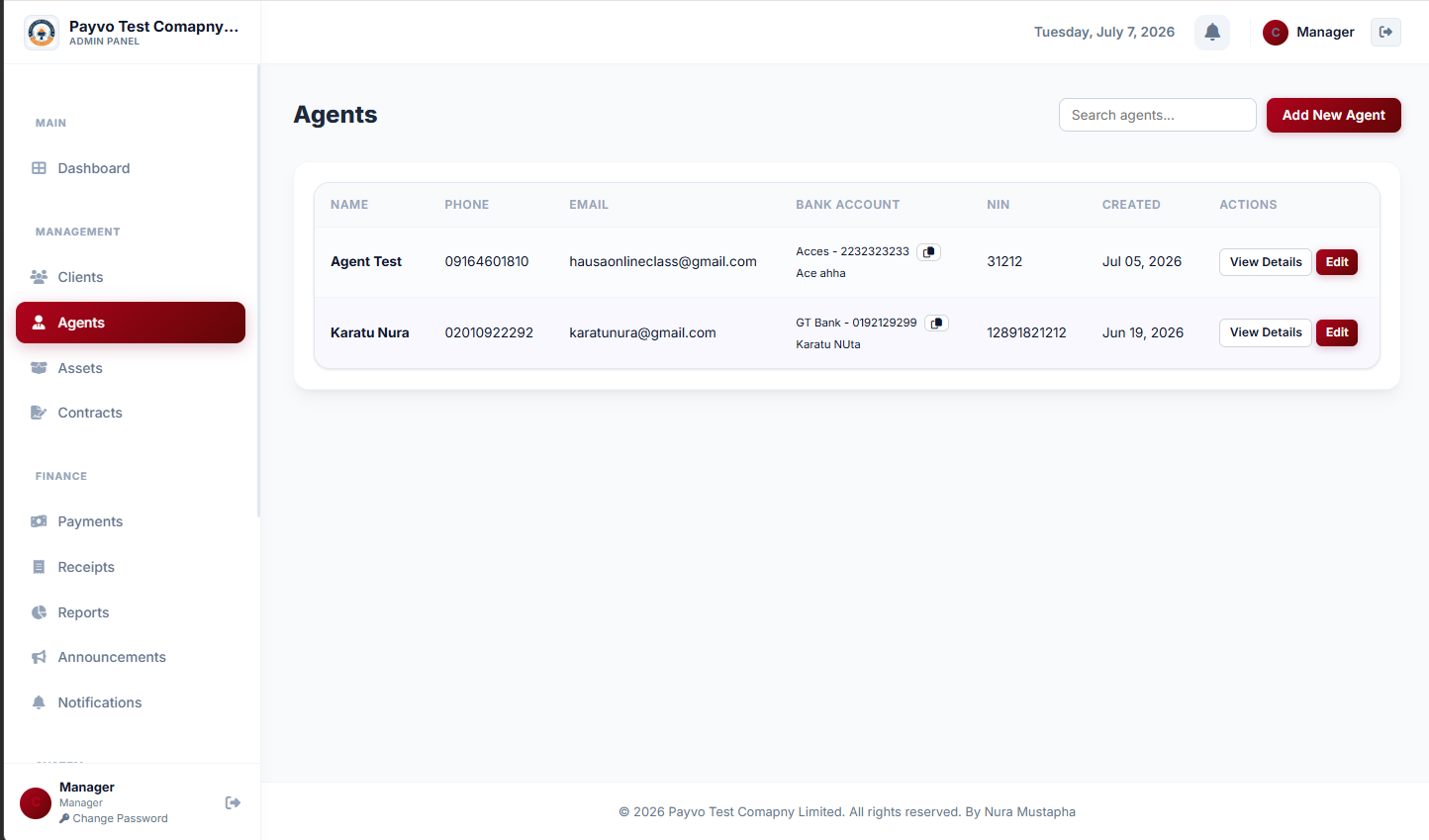 Agents list page in Payvo
Step 7: Handle Defaults and Collections Proactively
Even with thorough vetting, some customers will default. Your approach to collections is crucial.
- Early Intervention: As soon as a payment is missed, follow up. Automated reminders are a good first step, but a personalized call or message can be more effective.
- Negotiation: Be open to negotiating new payment terms if a customer genuinely faces hardship. It's often better to get some payment than none.
- Guarantor Contact: If the customer remains unresponsive, contact their guarantor as per your agreement.
- Repossession: As a last resort, if the contract allows, you may need to repossess the item. This should be done legally and carefully.
- Collection Agents: For persistent defaulters, you might consider external collection agents. Their fees can range from ₦10,000 - ₦50,000 per default, so weigh this against the item's value.
Common Mistakes to Avoid
- Insufficient Vetting: The biggest mistake. Lending to customers without proper background checks is a recipe for high default rates.
- Poor Documentation: Relying on verbal agreements or incomplete contracts leaves you vulnerable.
- Manual Tracking: Trying to manage dozens or hundreds of installment plans with notebooks or basic spreadsheets is inefficient and prone to errors, leading to lost payments and missed follow-ups.
- Lack of Communication: Not sending payment reminders or failing to follow up promptly on missed payments.
- No Default Provision: Failing to account for a realistic percentage of defaults in your business model.
How to Track and Grow After Launch
Once your installment sales system is operational, continuous monitoring and strategic growth are essential.
- Key Performance Indicators (KPIs): Track critical metrics like:
- Default Rate: Percentage of customers missing payments. Aim to keep this below your provisioned rate (5-15%).
- Collection Rate: Percentage of due payments successfully collected.
- Average Collection Period: How long it takes to collect full payment on an installment.
- Customer Acquisition Cost (CAC): How much it costs to bring in a new installment customer.
- Lifetime Value (LTV): The total revenue generated from a customer over their relationship with your business.
- Regular Reporting: Generate weekly or monthly reports on sales, collections, and outstanding balances. This provides a clear picture of your business's financial health.
- Customer Feedback: Solicit feedback from your installment customers. What works well? What could be improved? This can help refine your processes and build loyalty.
- Optimize Processes: Regularly review your vetting, contract, and collection processes. Are there bottlenecks? Can anything be automated further?
- Leverage Data: Use the data from your payment tracking system to identify trends. Which products sell best on installment? Which customer segments are most reliable? This insight can inform your marketing and inventory decisions.
- Expand Product Offerings: As your system matures, consider offering a wider range of electronics on installment, from home appliances to solar equipment.
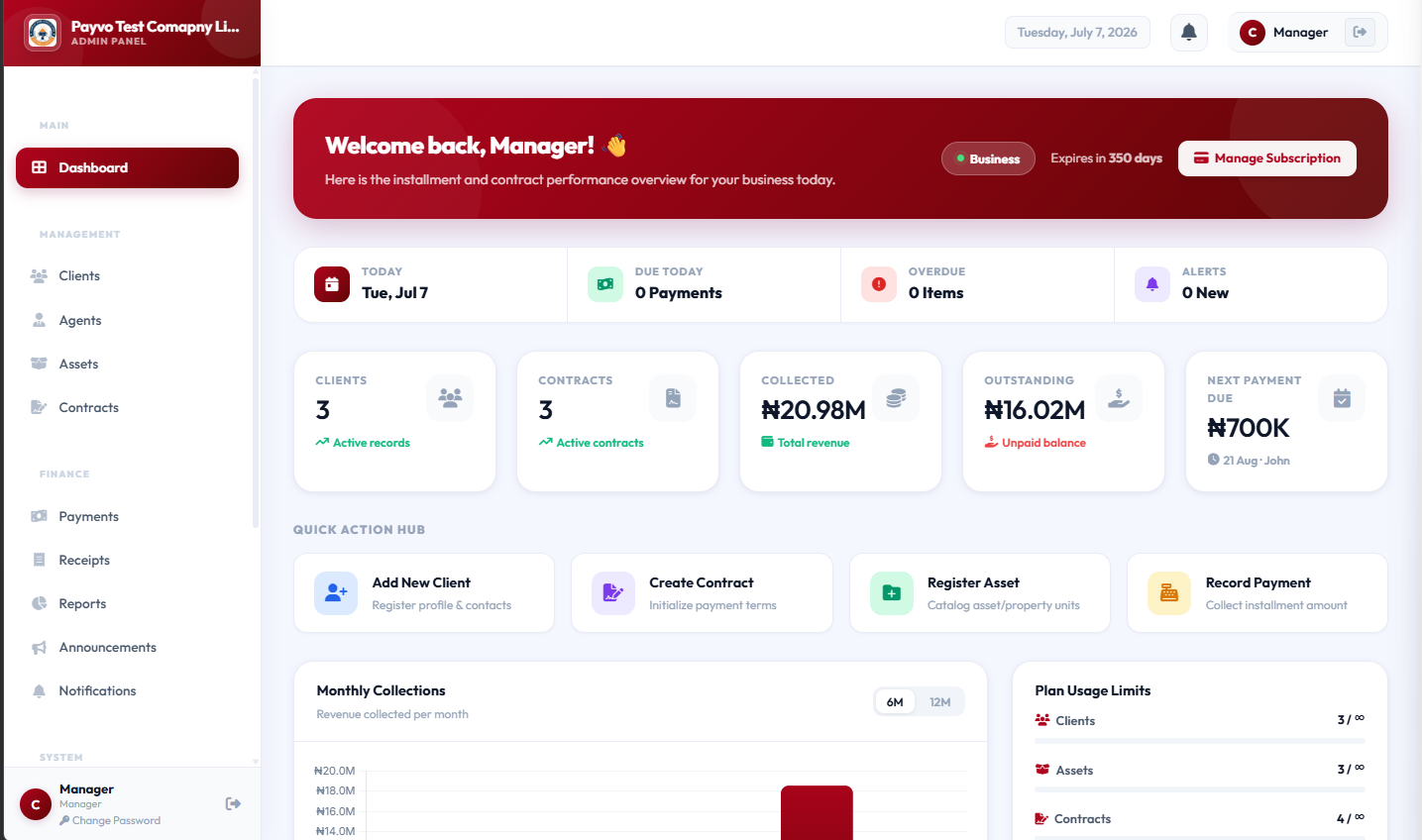 Dashboard overview showing key metrics
Frequently Asked Questions
Q1: What's the biggest challenge in running an electronics installment business in Nigeria?
The primary challenge is managing risk and ensuring consistent collections. High default rates can quickly erode profits. This is why thorough customer vetting, legally sound contracts, and an efficient payment tracking system are non-negotiable.
Q2: How can I minimize the risk of defaults?
Implement a stringent vetting process, including detailed KYC, guarantor requirements, and informal credit checks. Clearly communicate all terms and conditions, and use automated reminders to prompt payments before they become overdue.
Q3: Do I need a physical shop to sell electronics on installment?
While a physical shop builds trust and allows customers to inspect products, it's not strictly necessary. Many businesses operate successfully online or through agent networks, especially with a robust system for managing contracts and payments remotely. However, a physical presence can simplify asset recovery if a default occurs.
Q4: What kind of electronics are best suited for installment sales?
High-demand, mid-to-high value items like smartphones, laptops, televisions, refrigerators, and small generators are excellent candidates. These items are often desired but expensive for outright purchase, making installment plans attractive.
Q5: How does an installment management software help my business?
An effective installment management software Nigeria solution automates critical processes like contract generation, payment scheduling, receipting, and reminders. It centralizes client and asset data, provides real-time insights into your business's financial health, and reduces the manual effort and errors associated with tracking payments, ultimately improving cash flow and profitability.
Ready to Streamline Your Installment Sales?
The opportunity in Nigeria's electronics installment market is immense, but seizing it requires precision and efficiency. Ditch the notebooks and scattered WhatsApp messages. Discover how a dedicated contract and installments management system can transform your operations, allowing you to focus on growth while Payvo handles the complexities of tracking and collections. Visit Payvo.ng to learn more and register your business today.