Chasing late payments, sifting through stacks of paper receipts, and trying to reconcile conflicting customer records can feel like a full-time job on its own. For car dealers, real estate developers, or any business selling on installment, manual tracking isn't just inefficient—it's a direct threat to cash flow and customer relationships. In 2026, relying on notebooks and scattered spreadsheets means leaving money on the table.
 Nigerian car dealer showing vehicle to customer
The Evolving Landscape of Installment Sales in Nigeria
The Nigerian market for hire purchase and installment sales is booming, driven by a growing middle class and the need for flexible payment solutions for high-value assets. From vehicles to properties and even solar equipment, businesses are increasingly offering structured payment plans. This shift, while opening vast opportunities, also introduces significant complexities. In 2026, businesses operating on installment plans face unique challenges: managing a high volume of recurring payments, ensuring timely collections, and maintaining accurate, accessible customer records.
Consider the car dealership sector. A used vehicle, crucial for many small business owners or ride-hailing services, might require an initial deposit ranging from ₦500,000 to ₦2,500,000. New entry-level vehicles could demand deposits between ₦4,000,000 and ₦10,000,000. These are substantial investments for clients, making flexible monthly installments—from ₦80,000 to ₦350,000—a necessity. However, manually tracking these diverse payment schedules, sending reminders, and generating receipts for hundreds of clients quickly becomes overwhelming. Without robust systems, businesses risk losing track of payments, damaging customer trust, and even facing significant financial losses from defaults. The need for efficient contract management software Nigeria and installment management software Nigeria has never been more critical.
What You Need Before You Start
Before diving into managing installment payments, ensure you have these foundational elements in place:
- Clear Business Model: Define your installment terms, interest rates (if applicable), and repayment periods. Understand your target market and their financial capabilities.
- Legal Framework: Draft a legally sound hire purchase agreement template. This is crucial for protecting your assets and ensuring compliance. Expect legal fees for drafting a robust agreement to range from ₦100,000 to ₦300,000.
- Initial Capital: Beyond the cost of acquiring the assets you'll sell, factor in operational expenses. This includes vehicle registration and licensing (₦30,000 - ₦100,000 annually per vehicle), comprehensive insurance (₦150,000 - ₦600,000 annually), or at least third-party insurance (₦15,000 - ₦30,000).
- Asset Tracking Essentials: For vehicles, GPS trackers are non-negotiable for security and repossession scenarios. Installation costs range from ₦35,000 - ₦80,000 per vehicle, with monthly tracking services at ₦3,000 - ₦10,000.
- Basic Digital Infrastructure: Reliable internet access (₦5,000 - ₦15,000 monthly for data) and a basic accounting software subscription (₦5,000 - ₦20,000 monthly) are essential for modern operations.
- Dedicated Personnel: Even with automation, you'll need staff to handle customer inquiries, manage inventory, and oversee the payment collection process.
Step-by-Step: Managing Car Hire Purchase Payments & Customer Records
Effectively managing a car hire purchase business requires a structured approach to client acquisition, contract creation, payment tracking, and relationship management.
Step 1: Client Onboarding and Verification
The first step is to thoroughly vet your potential clients. This involves collecting comprehensive personal and financial information, conducting background checks, and assessing their repayment capacity. A robust client onboarding process minimizes risk.
- Information Gathering: Collect details like full name, address, valid ID, employment details, and references. For businesses, gather registration documents and financial statements.
- Credit Assessment: While formal credit scores are less common for small-scale hire purchase, you can create an internal scoring system based on employment stability, income, and verifiable references.
- Documentation: Ensure all collected documents are securely stored and easily retrievable.
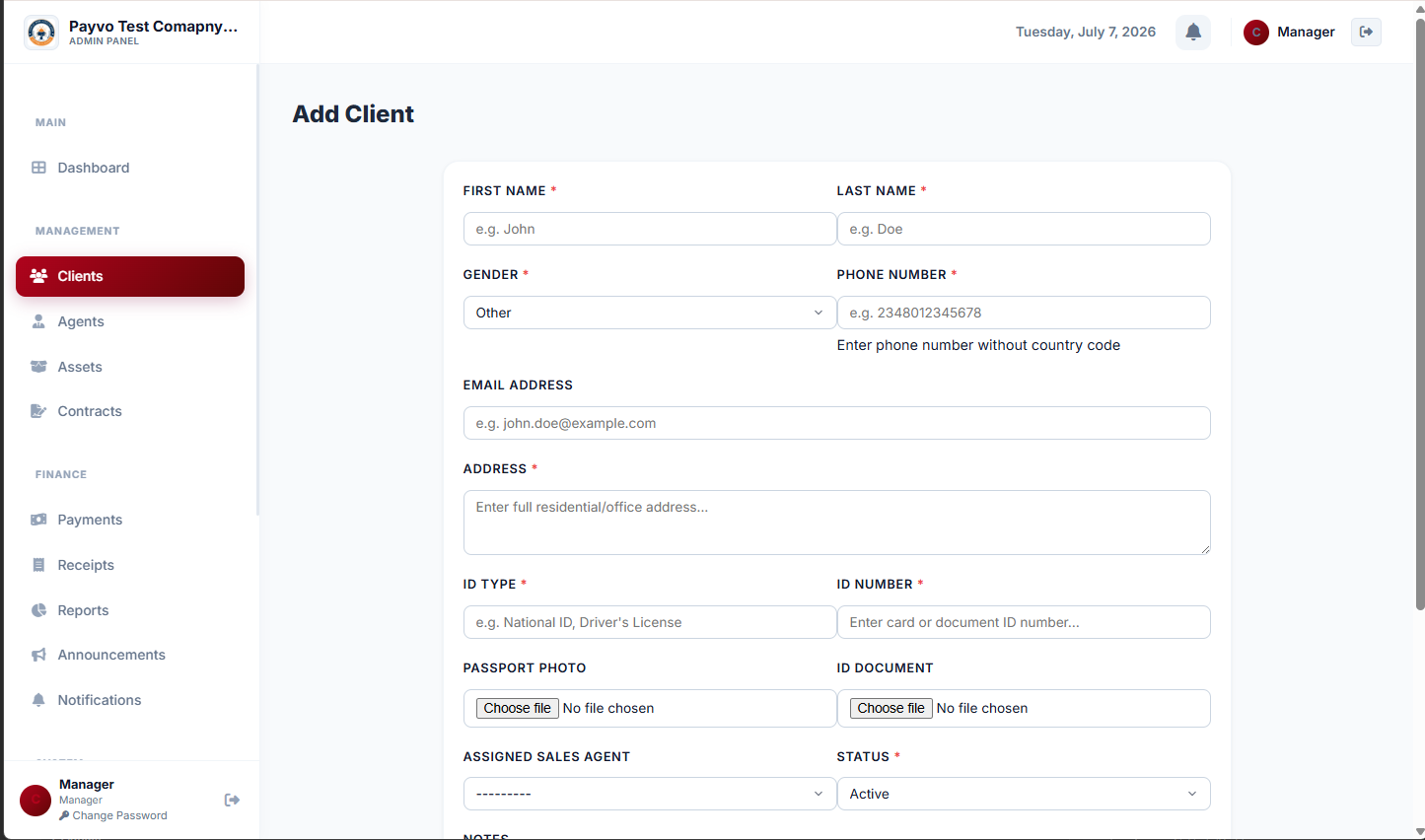 Client: Add Client page
With a system like Payvo, you can easily register and manage clients, storing full client details and viewing their complete payment history in one centralized location. This replaces physical folders and scattered notes, ensuring every piece of client information is at your fingertips.
Step 2: Asset Management and Allocation
Before a contract is even drafted, you need a clear system for managing your inventory of assets. For car dealers, this means tracking each vehicle's details, status, and availability.
- Detailed Inventory: Record the make, model, year, VIN, engine number, chassis number, and current condition of every vehicle.
- Pricing and Valuation: Establish clear pricing structures, including the cash price, hire purchase price, and any associated fees.
- Asset Assignment: Link specific vehicles to specific contracts and clients once a sale is agreed upon.
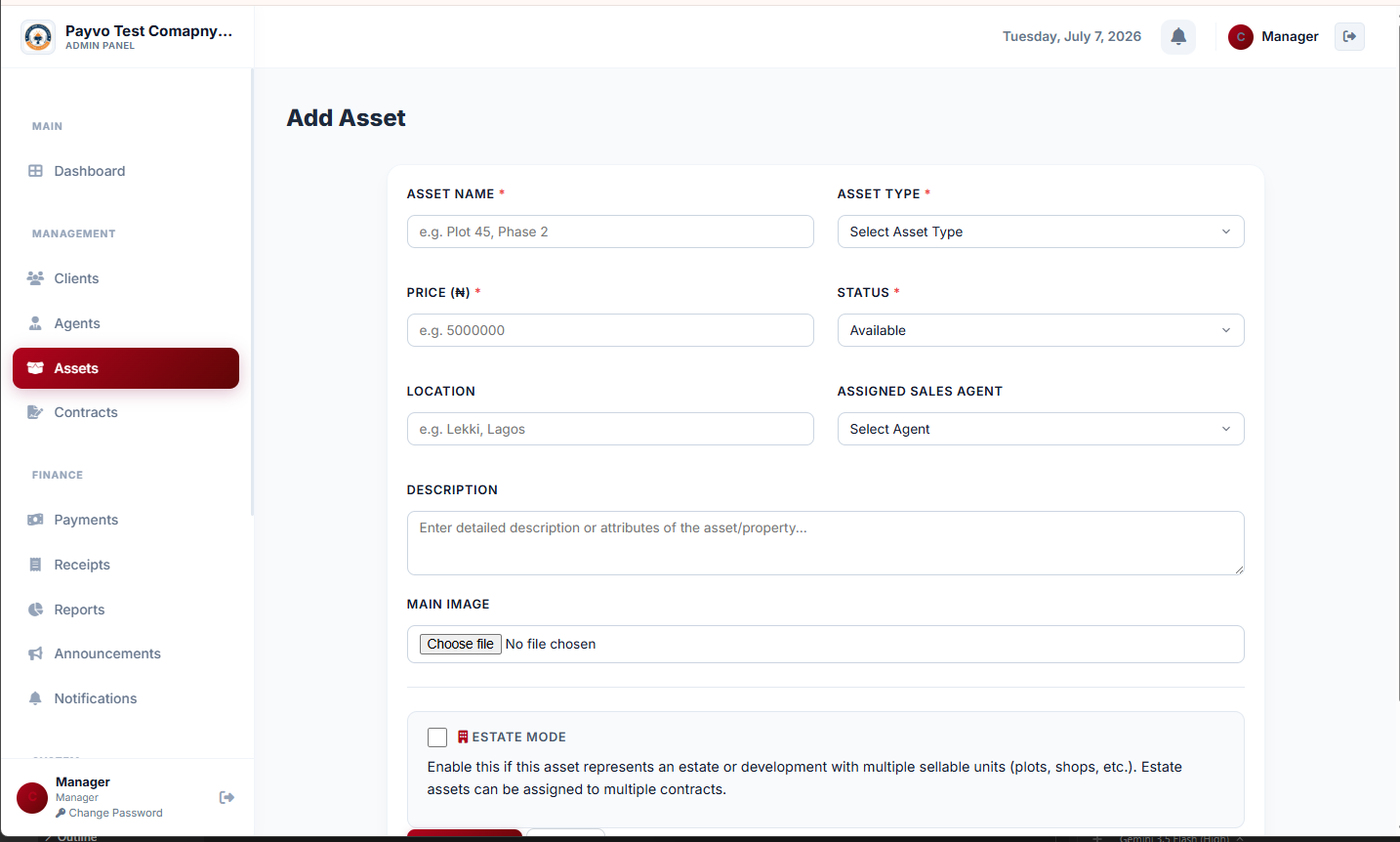 Assets: Add asset page
A good vehicle installment tracking system allows you to register and manage assets, whether they are cars, properties, or equipment. This ensures you always know which asset is tied to which contract and client.
Step 3: Contract Creation and Payment Schedule Generation
This is the core of any hire purchase operation. A well-defined contract outlines all terms and conditions, protecting both the business and the client.
- Drafting Agreements: Use your legally approved template. Clearly state the total hire purchase price, initial deposit, monthly installment amount, due dates, late payment penalties, and terms for repossession.
- Automated Scheduling: Manually calculating installment schedules for multiple clients can be error-prone and time-consuming. An automated system simplifies this.
- Client Communication: Ensure the client fully understands all terms before signing. Provide them with a copy of the contract.
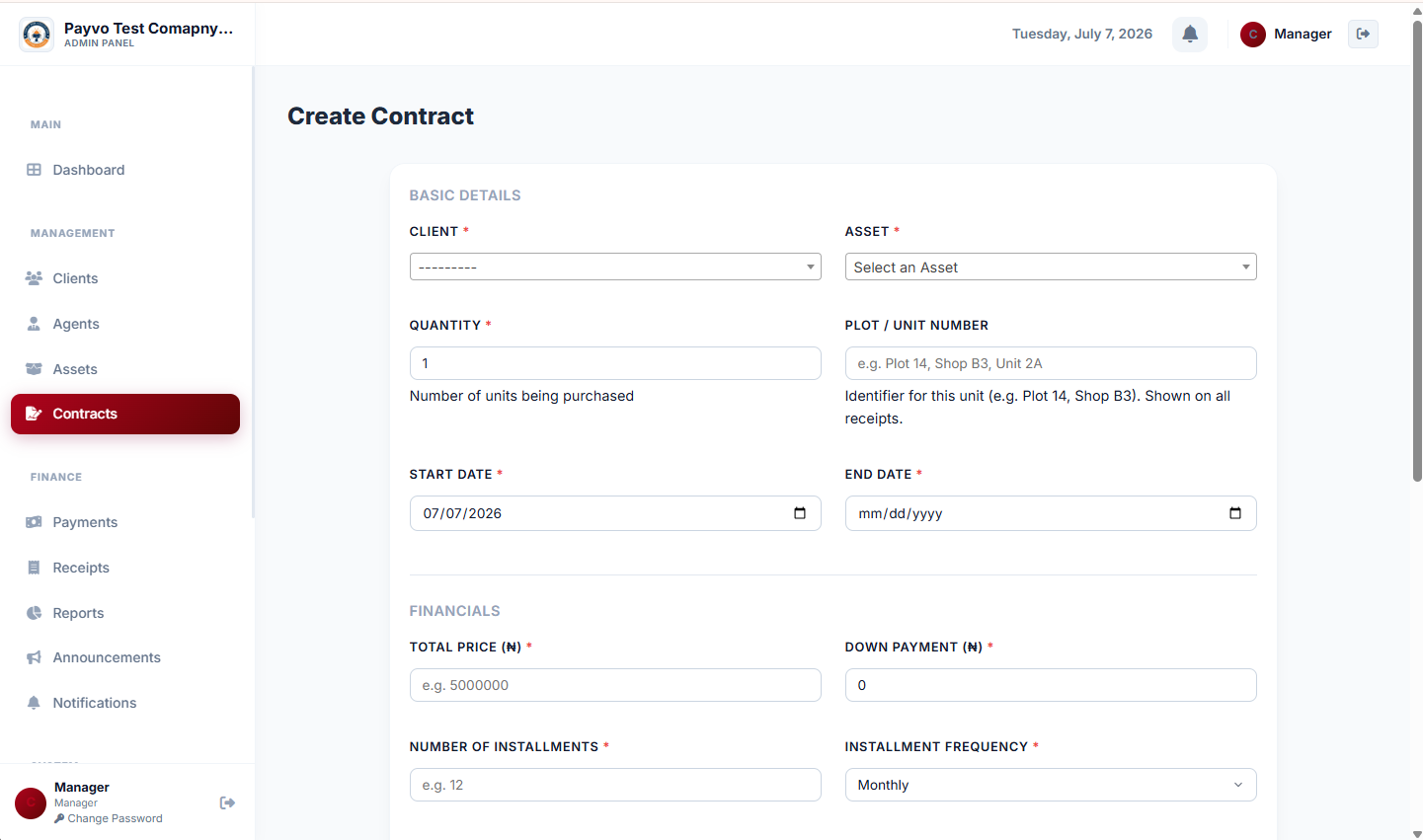 Management: Add contract (top)
Platforms designed for car loan management allow you to create contracts by setting payment terms once, and the installment schedules are generated automatically. This eliminates manual calculation errors and provides clarity for both parties.
Step 4: Payment Collection and Receipting
Efficient payment collection and accurate record-keeping are paramount for cash flow and dispute resolution.
- Multiple Payment Channels: Offer various payment options (bank transfer, direct deposit, mobile money) to make it convenient for clients.
- Instant Receipt Generation: Every payment must be acknowledged with an official receipt. Manual receipts are prone to loss and difficult to track.
- Automated Notifications: Keep clients informed about their payments.
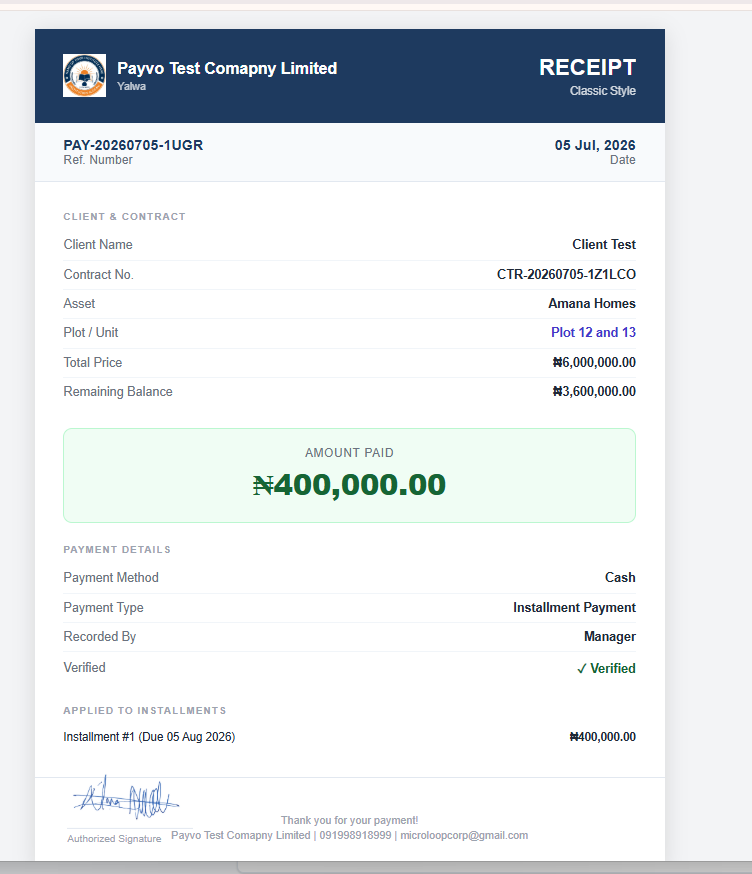 Finance: Paymnet Receipt Sample
Step 5: Proactive Payment Reminders and Follow-ups
Even with the best intentions, clients can forget due dates. Proactive reminders significantly reduce late payments and the need for aggressive follow-ups.
- Scheduled Reminders: Send automated reminders a few days before a payment is due.
- Late Payment Notifications: Follow up promptly when a payment is missed, clearly stating the amount due and any penalties.
- Communication Channels: Utilize popular communication methods like SMS and WhatsApp for reminders.
Step 6: Managing Agents and Commissions
For many businesses, agents play a crucial role in client acquisition. Tracking their performance and commissions accurately is essential for motivation and fair compensation.
- Agent Assignment: Link agents to the contracts they facilitate.
- Commission Calculation: Automate the calculation of commissions based on collected payments.
- Transparent Tracking: Provide agents with visibility into their earnings.
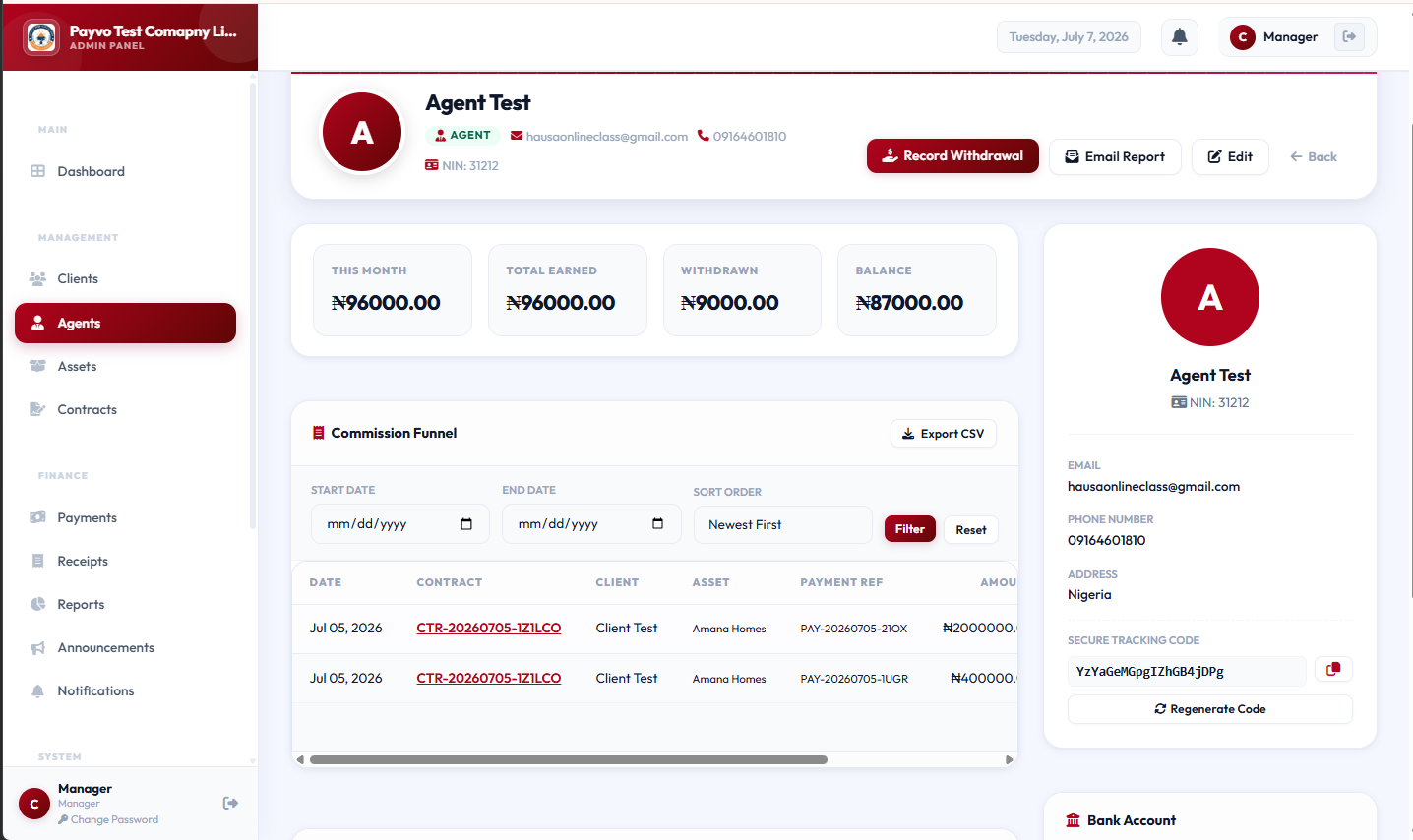 Agent: Agent details page
Step 7: Performance Monitoring and Reporting
To grow your business, you need to understand its health. This means regularly reviewing key metrics.
- Real-time Dashboards: Get an immediate overview of your business performance.
- Financial Reports: Generate detailed reports on payments, outstanding balances, and collections.
- Audit Trails: Maintain a complete history of all transactions and system activities.
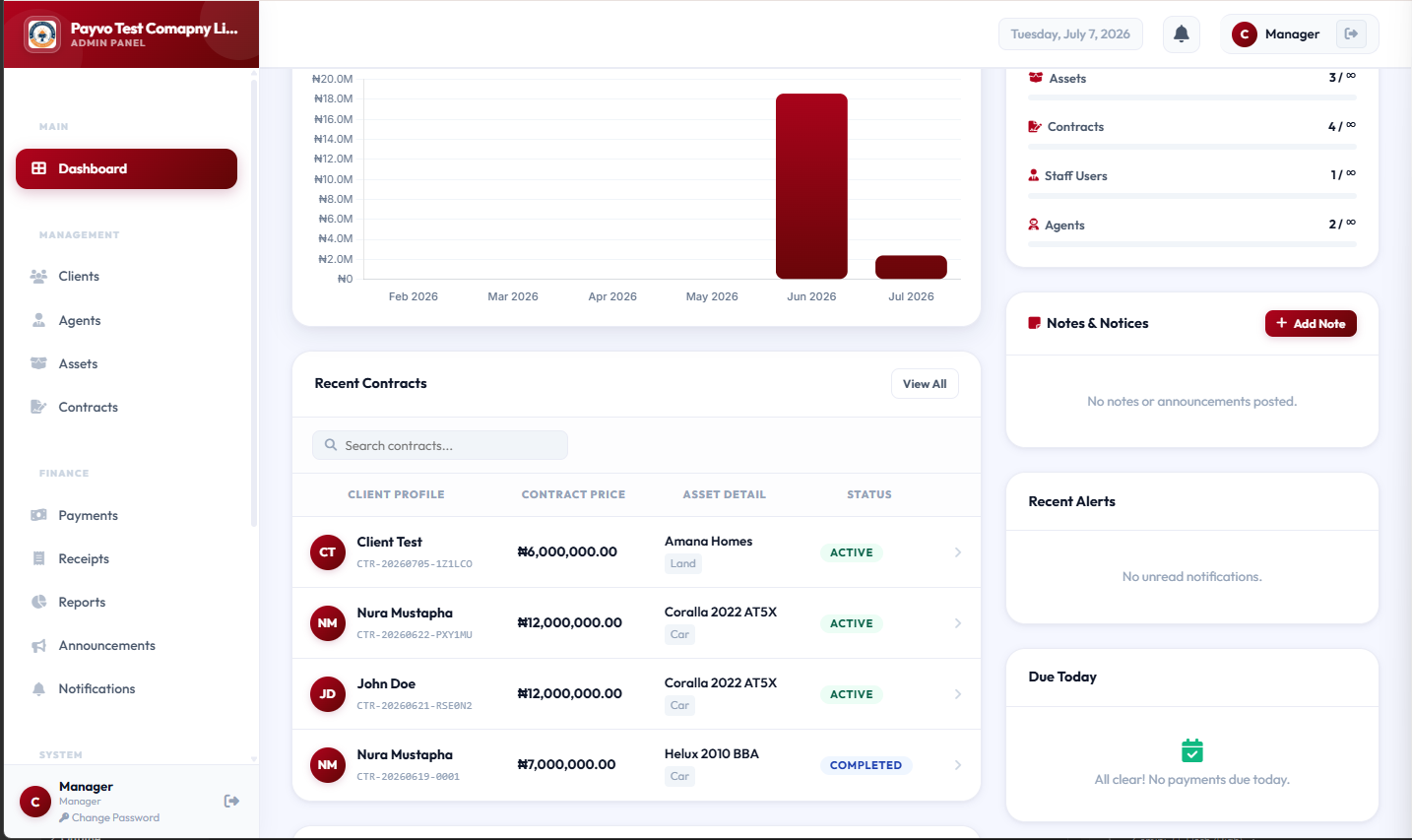 Dashobard (top)
A comprehensive system will offer real-time dashboards showing total clients, active contracts, amount collected, outstanding balances, and next payment due at a glance. It also allows you to generate reports (PDF/Excel) for accounting and record-keeping, and even receive weekly company reports via email, covering key business performance metrics.
> "In the Nigerian installment market, trust is built on transparency and consistency. A clear record-keeping system isn't just about managing money; it's about safeguarding relationships and ensuring long-term business viability."
Common Mistakes to Avoid
Navigating the complexities of hire purchase requires vigilance. Avoiding these common pitfalls can save your business significant headaches and financial losses:
- Inadequate Client Vetting: Rushing the client onboarding process without thorough background checks is a recipe for defaults. Always verify identity, income, and references.
- Vague Contract Terms: Ambiguous language in your hire purchase agreement can lead to disputes. Ensure all terms, especially payment schedules, penalties, and repossession clauses, are crystal clear and legally sound.
- Manual Record Keeping: Relying on physical ledgers, notebooks, or fragmented spreadsheets is inefficient and highly prone to errors, data loss, and fraud. This makes real estate payment tracking Nigeria or cooperative society management software impossible to scale.
- Poor Communication: Failing to send timely payment reminders or neglecting to follow up on late payments can escalate issues and damage client relationships. Consistency is key.
- Ignoring Asset Tracking: For vehicles or equipment, not implementing robust GPS tracking and regular maintenance checks leaves your assets vulnerable and complicates repossession if necessary.
- Lack of Staff Training: Even with advanced software, untrained staff can make mistakes. Ensure everyone handling contracts and payments understands the system and procedures.
How to Track and Grow After Launch
Once your hire purchase operation is up and running, consistent tracking and strategic growth are your next steps.
- Monitor Key Performance Indicators (KPIs):
- Collection Rate: Percentage of due payments successfully collected.
- Default Rate: Percentage of clients who fail to meet payment obligations.
- Average Payment Duration: How long it takes clients to complete their contracts.
- Client Acquisition Cost: How much it costs to bring in a new hire purchase client.
- Agent Performance: Track which agents bring in the most reliable clients and their commission earnings.
- Regular Reporting: Generate monthly or quarterly reports on your financial performance. This helps identify trends, forecast cash flow, and make informed business decisions. Look for a system that allows you to export payment and contract data as PDF or Excel for accounting and record-keeping.
- Client Feedback Loop: Actively solicit feedback from your clients. Understand their challenges with the payment process and use this information to improve your services.
- Optimize Reminders: Fine-tune your automated reminder schedule based on what works best for your client base. Some clients might respond better to WhatsApp reminders, others to email.
- Expand Your Offerings: Once you've mastered car hire purchase, consider diversifying into other installment-based sales, such as solar panels, household appliances, or even small business equipment.
- Leverage Technology: A robust platform for how to track installment payments can provide the insights needed to fuel growth. For example, Payvo offers real-time dashboards to see total clients, active contracts, amount collected, outstanding balances, and next payment due at a glance, enabling data-driven decisions. Its audit logs also provide secure tracking of all activities.
 Business owner counting naira notes at desk
Frequently Asked Questions
What is the typical initial deposit for a car on hire purchase in Nigeria?
The initial deposit for a used car can range from ₦500,000 to ₦2,500,000, depending on the vehicle's condition and model. For a new entry-level car, expect deposits between ₦4,000,000 and ₦10,000,000. These figures vary based on the dealership and the specific car.
How much does vehicle insurance cost annually for a hire purchase car?
Comprehensive vehicle insurance typically costs between ₦150,000 and ₦600,000 annually for a single vehicle, depending on its value and the insurance provider. Third-party insurance, which is the minimum legal requirement, is much cheaper, usually ranging from ₦15,000 to ₦30,000 per year.
Is it necessary to use a GPS tracker for hire purchase vehicles?
Yes, it is highly recommended. For car dealers selling on hire purchase, a GPS tracker is essential for security, asset recovery in case of default, and even for monitoring vehicle usage if part of the contract. Installation costs are typically ₦35,000 to ₦80,000, with a monthly service fee of ₦3,000 to ₦10,000.
What kind of software can help manage installment payments?
Software designed for contract management software Nigeria or installment management software Nigeria can streamline the entire process. These platforms allow you to manage clients, track assets, create contracts, record payments, generate receipts, and send automated reminders. They are crucial for businesses like car dealerships, real estate firms, and cooperative societies.
How can I track agent commissions effectively?
To track agent commissions, you need a system that links agents to specific contracts and automatically calculates their commission based on collected payments. Dedicated agent commission tracking software allows you to manage agent profiles, assign them to contracts, and provides them with a secure portal to view their earnings and withdrawal requests, ensuring transparency and accuracy.
Ready to Streamline Your Installment Sales?
Managing car hire purchase payments and customer records manually is a relic of the past. Embrace efficiency, transparency, and growth by adopting a robust system designed for installment sales. Discover how Payvo can transform your operations, from client onboarding to automated payment reminders and comprehensive reporting. Visit our Features Page to see how we can help your business thrive, or explore our Pricing Page to find a plan that fits your needs. Get started today and reclaim control of your installment business by Registering into Payvo.