A staggering 63% of Nigerian businesses offering installment payment plans struggle with accurate record-keeping, leading to an average ₦750,000 in lost revenue annually due to missed payments or disputes. If you’re a car dealer in Lagos, Kano, or even a smaller town like Warri, selling vehicles on hire purchase, that statistic should hit home. It’s not just a number; it’s your profit, your peace of mind, and the sustainability of your business. This is why knowing how to manage car hire purchase customers in Nigeria effectively is not just good practice, it's survival.
 Nigerian car dealer reviewing contracts
The Reality Check: What Nobody Tells You About Car Hire Purchase in Nigeria
Many aspiring car dealers, or even established ones looking to expand into hire purchase, often focus solely on the potential for higher profits. And yes, the margins can be attractive. When a customer can't afford a ₦7,500,000 car outright, offering them a structured payment plan of, say, ₦250,000 a month for 30 months (after a decent down payment) means you're potentially looking at earning ₦7,500,000 in principal plus a healthy interest of 25%-45% over the loan term. That's good money.
But here’s the thing: nobody really talks about the true cost and complexity. It’s not just about the car price. You’re looking at an initial vehicle purchase cost that could range from ₦4,500,000 for a reliable used sedan suitable for a small-scale operator, all the way up to ₦25,000,000 for a brand-new entry-level model if you’re a more established dealer. Then there's the one-time vehicle registration and licensing, which alone can set you back anywhere from ₦150,000 to ₦300,000 per vehicle, depending on your state and the car type.
And that’s just to get the car legally on the road. What about protecting your asset? Comprehensive insurance, a non-negotiable for hire purchase, will cost you an annual premium of ₦300,000 to ₦800,000 per vehicle. Then there’s the tracker installation – a one-time fee of ₦50,000 to ₦150,000 per vehicle. This isn’t optional; it’s your primary line of defense against loss. Legal fees for drafting a solid hire purchase agreement? Expect to pay ₦100,000 to ₦350,000 for a legally sound template. Most guides will tell you to just "get a lawyer," but they won't tell you the real cost of that essential document. It’s a significant upfront investment, and if you don't plan for it, you'll be caught off guard.
What You Actually Need to Get Started
Before you even think about handing over keys, let's talk about the foundational elements. This isn't a game for the faint-hearted or the disorganised.
Non-Negotiables (The Absolute Must-Haves):
- Capital: You need enough capital to acquire vehicles, cover initial registration, insurance, and trackers. Don't forget operating expenses for at least 3-6 months. We're talking a minimum of ₦5,000,000 if you're starting small with one or two used cars, and easily upwards of ₦20,000,000 for a more serious venture with newer models.
- Legal Expertise: A solid, iron-clad hire purchase agreement is your shield. This isn't a template you download from the internet. It needs to be drafted by a Nigerian lawyer experienced in commercial contracts, specifying terms, conditions, default clauses, and repossession rights. This is where your ₦100,000 - ₦350,000 investment truly pays off.
- Robust Tracking System: Forget notebooks and WhatsApp chats. For every vehicle you sell on installment, you need a way to track the customer, the payment schedule, amounts paid, amounts outstanding, and due dates. This is where a dedicated business payment tracking app Nigeria becomes indispensable.
- Vehicle Tracking Devices: GPS trackers are non-negotiable. If a customer defaults, you need to know where your asset is. Budget ₦50,000 to ₦150,000 per vehicle for installation.
- Insurance: Comprehensive insurance. Period. It protects your investment against accidents, theft, and other unforeseen events. Expect ₦300,000 to ₦800,000 annually per vehicle.
- Recovery Plan: What happens when someone defaults? You need a clear, legal, and safe plan for vehicle recovery. This might involve a recovery agent (₦50,000 - ₦150,000 per incident) and fuel costs (₦15,000 - ₦50,000).
- Dedicated Office Space: Even a small space in a good location helps build trust. A small office in Ibadan might cost ₦50,000/month, while in Abuja, you could be looking at ₦250,000/month.
- Customer Relations/Admin Staff: As you grow, you can't do it all. An entry-level staff member to handle calls, record payments, and follow up can earn ₦80,000 - ₦180,000 monthly.
- Marketing Budget: How will people know you offer hire purchase? Online ads, local flyers, or referrals.
The Complete Step-by-Step Breakdown: How to Manage Car Hire Purchase Customers in Nigeria
Managing car hire purchase customers is a marathon, not a sprint. Every step requires diligence and a clear system.
Step 1: Source Reliable Vehicles and Prepare Them for Sale
This is where your business reputation begins. Don't cut corners. Whether you're buying from auctions, direct importers, or local dealerships, ensure the vehicles are in excellent mechanical condition. A breakdown two weeks after delivery is a recipe for customer dissatisfaction and potential payment defaults.
Once acquired, get the vehicles thoroughly inspected, serviced, and detailed. Ensure all necessary documents (customs papers, previous registration, etc.) are in order. Budget ₦4,500,000 to ₦12,000,000 for a good used vehicle, or ₦15,000,000 to ₦25,000,000 for a new entry-level car. This initial quality check reduces future maintenance headaches for both you and your customer, building trust and encouraging timely payments.
Step 2: Establish Clear Terms and Draft a Solid Contract
This is the backbone of your operation. Your contract must explicitly state:
- Vehicle Details: Make, model, year, VIN, engine number.
- Purchase Price: The total price, including interest.
- Down Payment: Typically 20-30% of the vehicle value, so for a ₦7,500,000 car, expect ₦1,500,000 to ₦2,250,000.
- Monthly Installment: The exact amount, e.g., ₦187,500.
- Repayment Period: For example, 24 or 36 months.
- Interest Rate: Clearly stated, often 25% to 45% annualised.
- Late Payment Penalties: What happens if they miss a payment?
- Default Clauses: Conditions under which the agreement is breached and the vehicle can be repossessed.
- Maintenance Responsibility: Who pays for routine servicing? Usually the customer.
- Insurance Obligation: The customer must maintain comprehensive insurance throughout the term, with you as the loss payee.
Step 3: Conduct Thorough Customer Vetting
This is where many businesses fail. Don't just take anyone with a down payment. You are essentially lending money. Implement a robust vetting process:
- KYC (Know Your Customer): Collect valid IDs (National ID, Driver's License, Voter's Card), proof of address (utility bill), and employment details (letter of employment, payslips).
- Guarantors: Insist on at least two reliable guarantors with verifiable income and assets.
- Credit Checks: While formal credit bureaus are still developing in Nigeria, you can do informal checks. Call their employer, visit their business, speak to references. A quick visit to their home or business can tell you a lot about their stability.
- Interview: A face-to-face interview can reveal a lot about a customer's sincerity and ability to commit.
Step 4: Implement a Robust Payment Tracking and Management System
This is arguably the most critical operational step. Once the contract is signed and the vehicle is released, the real work of managing payments begins. You need a system that can accurately track every single transaction and send timely reminders.
Think about a car dealer in Aba, Mr. Emeka, who started with 5 cars on hire purchase. He used a big ledger book. By the time he had 20 cars, he was spending half his day trying to figure out who paid what, who was due, and who was late. He missed payments, argued with customers about balances, and his business was bleeding. This is where a dedicated installment management software Nigeria comes in.
You need to track:
- Customer details
- Vehicle details
- Original contract amount
- Down payment received
- Monthly installment amount and due date
- Date and amount of every payment received
- Outstanding balance
- Payment history
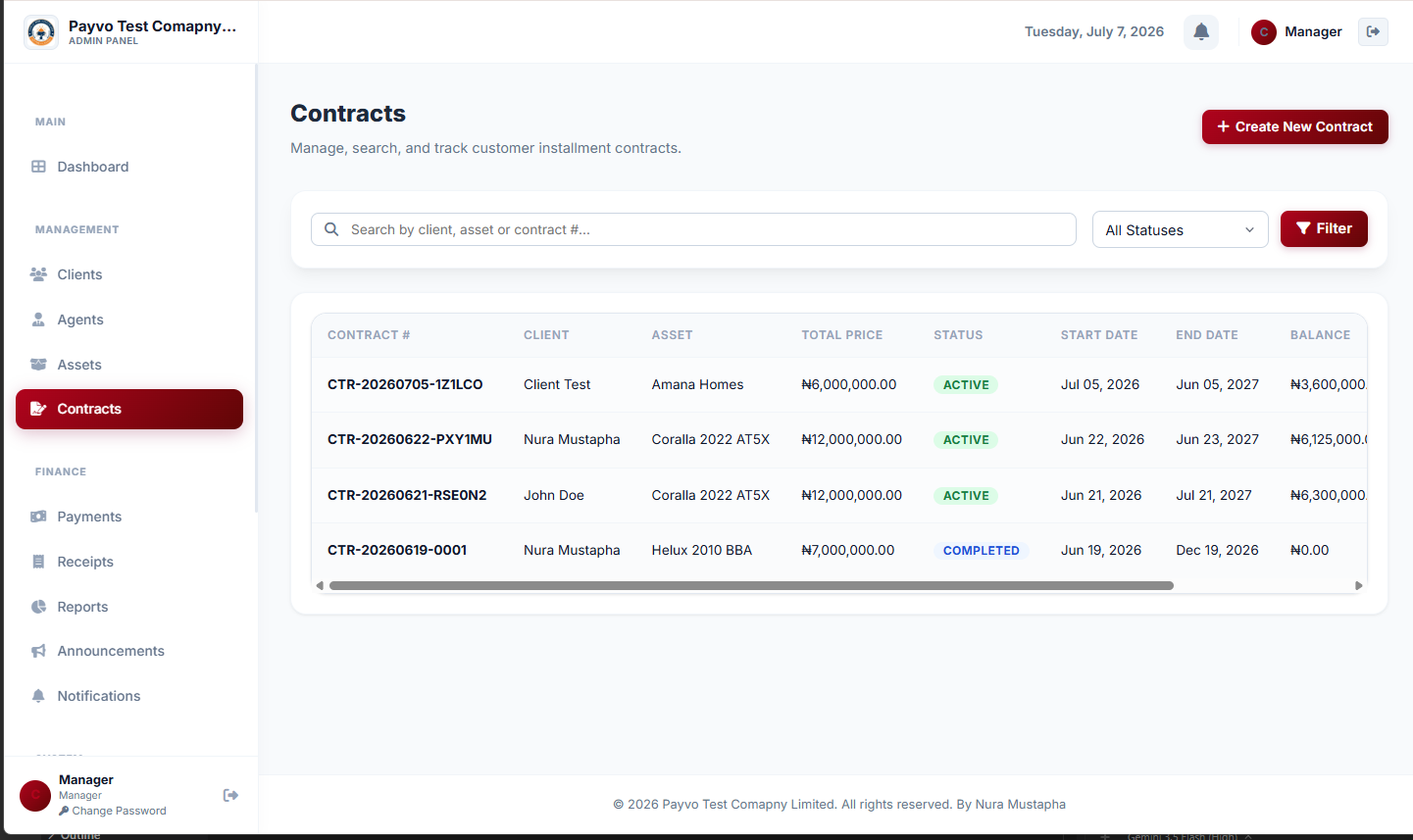 Payvo Contracts list page
A clear overview of all your active contracts is essential for effective management.
Step 5: Maintain Communication and Send Timely Reminders
Don't wait for a customer to miss a payment before you communicate. Proactive communication is key to preventing defaults.
- Payment Reminders: Send automated reminders a few days before a payment is due. A simple SMS or WhatsApp message can make a huge difference. Many modern platforms offer a WhatsApp payment notification system.
- Payment Confirmations: Send a confirmation message and a digital receipt generator app Nigeria as soon as a payment is received. This builds trust and provides proof for both parties.
- Check-ins: Occasionally call or message customers to ask how the vehicle is performing. A little customer service goes a long way.
Step 6: Handle Defaults Promptly and Professionally
Despite your best efforts, defaults will happen. How you handle them determines your financial losses and your reputation.
- Early Intervention: As soon as a payment is missed, follow up immediately. Don't wait a week. Sometimes, a customer just forgot or had a temporary cash flow issue. A quick call can resolve it.
- Grace Period & Penalties: Your contract should outline a grace period (e.g., 5-7 days) and the penalties for late payments. Enforce these consistently.
- Repossession: If the customer becomes unresponsive or shows no intention of paying, initiate repossession procedures as per your contract and the law. This is where your GPS tracker and legal counsel become vital. Engage a professional recovery agent. Avoid confrontation and ensure the process is documented. Fuel costs for vehicle recovery can be ₦15,000 to ₦50,000, plus a recovery agent fee of ₦50,000 to ₦150,000.
5 Mistakes That Cost Nigerian Business Owners the Most
I’ve seen businesses rise and fall, and usually, it's not the market that kills them, but internal operational flaws.
- Poor Customer Vetting (The "Any Customer is a Good Customer" Mentality): This is a killer. Assuming everyone who walks in with a down payment is reliable. You end up with defaulters who disappear with your asset, leading to losses in the millions. A single lost vehicle valued at ₦6,000,000 can wipe out the profit from several good contracts.
- Lack of a Written Contract (or a Weak One): Relying on verbal agreements or poorly drafted documents. When disputes arise, you have no legal leg to stand on. This often results in you losing both the car and the money. I’ve seen this happen in Computer Village with electronics, and it's even worse with cars.
- Manual, Disorganized Record-Keeping: Trying to manage 15, 20, or 50 customer accounts with notebooks and Excel sheets. You lose track of who paid what, miscalculate balances, forget due dates, and can’t generate accurate reports. This leads to customer disputes, missed follow-ups, and ultimately, significant financial leakage. Your business payment tracking app Nigeria is your friend here.
- No Vehicle Tracking Devices: Handing over a ₦8,000,000 asset without a reliable GPS tracker. This is like giving someone a blank cheque. When they default and disappear, you have no way to locate your vehicle, leading to a total loss.
- Delayed Action on Defaults: Waiting weeks or months to follow up on a missed payment. The longer you wait, the harder it becomes to recover the money or the vehicle. The customer might sell parts, relocate, or damage the car. Prompt action is crucial.
How to Know If You're on Track (Success Metrics)
So, how do you measure if you’re actually managing your car hire purchase customers effectively? It’s not just about how many cars you sell, but how well those sales perform.
- Default Rate: This is your most critical metric. Calculate the percentage of customers who default on their payments within a given period (e.g., monthly or quarterly). A low default rate (below 5-7%) indicates good vetting and effective management. If it's consistently above 10%, you have a serious problem with your vetting or collection process.
- Collection Rate: What percentage of expected monthly installments are you actually collecting? If you expect ₦5,000,000 in collections and only get ₦3,500,000, your collection rate is 70%. You want this as close to 100% as possible.
- Average Recovery Time: For defaulted vehicles, how long does it take you to repossess them? Faster recovery means less potential damage and quicker re-saleability.
- Customer Retention/Referral: Happy customers who successfully complete their payments are your best marketers. Do you get referrals from them? This indicates good customer service and fair dealings.
- Profitability Per Vehicle: After accounting for acquisition costs, interest, insurance, maintenance, and any recovery costs, are you actually making a healthy profit on each hire purchase agreement?
- Operational Efficiency: How much time do you or your staff spend manually tracking payments and chasing customers? If it's hours every day, your system is inefficient. A good installment management software Nigeria like Payvo can significantly reduce this time, freeing you up to focus on growth. It provides reports that let you track your monthly profit margins, overdue payments, and overall financial health at a glance.
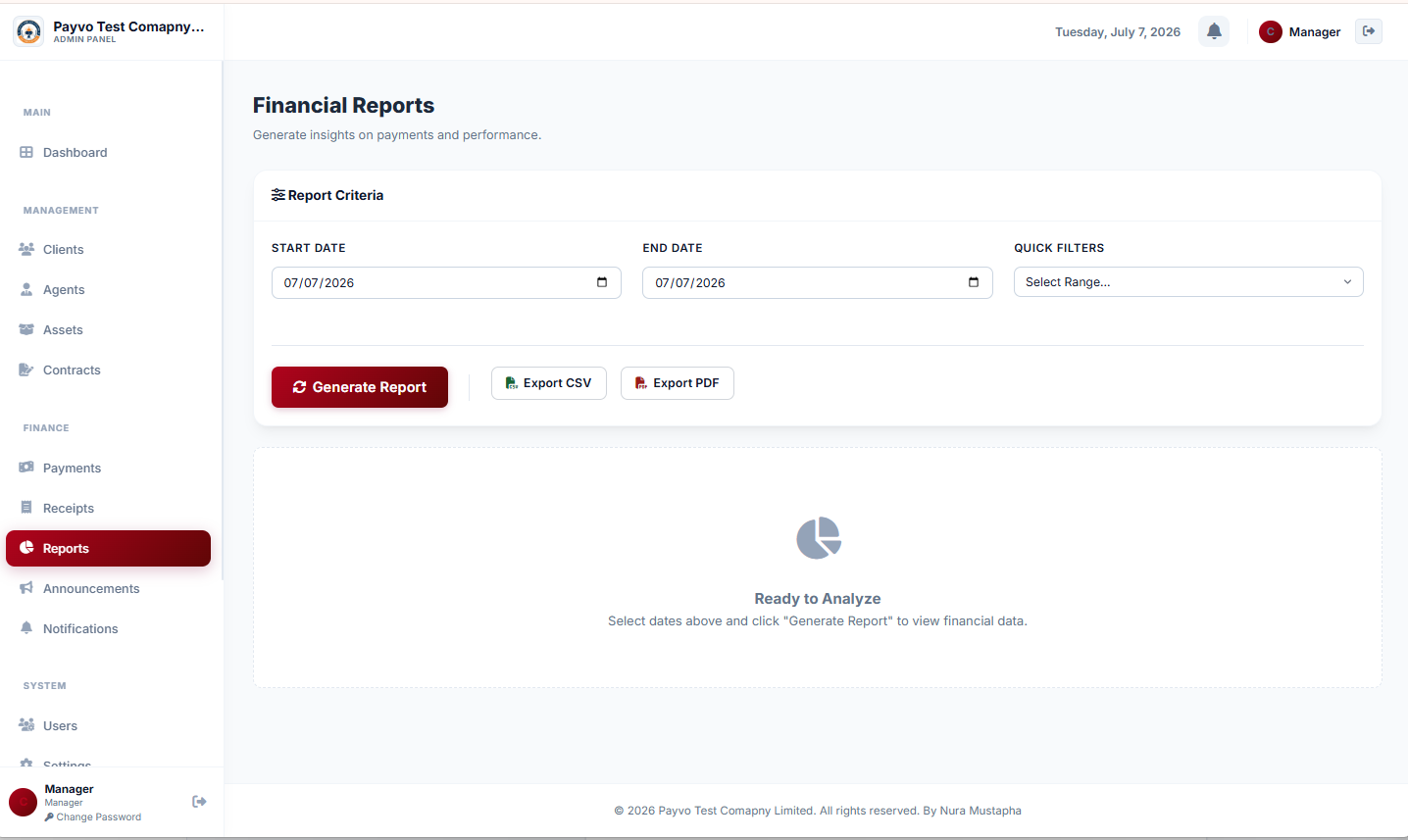 Payvo Financial Reports Page
Accessing financial reports quickly helps you understand your business's health.
Real Questions People Ask (FAQ)
Q1: What's the typical down payment for a hire purchase car in Nigeria?
A: Generally, car dealers ask for a down payment of 20% to 30% of the vehicle's total value. So, for a car worth ₦8,000,000, you'd be looking at an initial payment of ₦1,600,000 to ₦2,400,000. This helps cover some of your initial costs and ensures the customer has some skin in the game.
Q2: How do I track monthly car payments from customers effectively?
A: Forget manual ledgers or scattered WhatsApp messages. The most effective way is to use a dedicated car payment tracking system or installment management software Nigeria. These platforms allow you to input customer details, set up payment schedules, record every payment received, track outstanding balances, and even send automated reminders. It centralizes all your data, making it easy to see who has paid, who is due, and who is overdue.
Q3: What legal documents do I need for a car hire purchase agreement in Nigeria?
A: You absolutely need a comprehensive Hire Purchase Agreement drafted by a legal professional. This document should clearly state the terms of sale, payment schedule, interest rates, late payment penalties, default conditions, and repossession rights. You'll also need copies of the customer's valid ID, proof of address, employment details, and guarantor information. These documents protect both you and the customer.
Q4: Can I use agent commission tracking software for my sales team?
A: Yes, if you have sales agents bringing in hire purchase customers, using an agent commission tracking software is highly recommended. Many modern installment management systems (like Payvo) include features for agent management, allowing you to assign customers to agents, track their sales, and calculate commissions accurately based on collected payments. This ensures transparency and motivates your sales team.
Q5: What happens if a customer defaults on their car hire purchase payments?
A: Your hire purchase agreement should clearly outline the steps. Typically, after a grace period, you'd issue a formal default notice. If payments aren't resumed, you have the legal right to repossess the vehicle. This is where a GPS tracker is invaluable. It's crucial to follow the legal process for repossession to avoid issues. You might also engage a recovery agent if the customer is uncooperative.
Your Next Move
Managing car hire purchase customers in Nigeria is a serious business with serious rewards, but only if you approach it with discipline and the right tools. Stop losing money to disorganization and start building a robust system. Explore how a dedicated platform can transform your operations. If you're ready to bring order to your vehicle installment management and secure your profits, visit Payvo's hire purchase page to see how we can help your business thrive.