Every day, businesses across Nigeria lose countless hours and significant revenue to manual payment tracking, forgotten invoices, and mismanaged installment plans. From the bustling markets of Lagos to the thriving property developments in Abuja, relying on ledgers and WhatsApp chats for critical financial operations is a recipe for missed payments and frustrated customers. The question isn’t if you need better payment management; it’s how to find the right solution that fits your unique business.
 Business owner looking at a tablet with financial
The Evolving Landscape of Business Payments in 2026
The Nigerian business environment in 2026 demands efficiency and transparency. Gone are the days when a simple notebook could manage a growing portfolio of installment sales, especially for businesses dealing with high-value assets like real estate, vehicles, or solar equipment. Customers expect professional interactions, timely reminders, and clear records. Businesses, in turn, need reliable systems to manage cash flow, track inventory, and ensure compliance.
Consider the typical costs involved in payment processing today. While basic payment gateway setup fees can range from ₦0 to ₦50,000, transaction fees for local cards average 1.5% - 2.5% per transaction, often capped at ₦2,000. International card transactions typically incur higher fees, around 3.5% - 4.5%. For businesses that prefer physical payments, a POS terminal purchase can set you back anywhere from ₦45,000 to ₦120,000, or you could rent one for ₦3,000 - ₦8,000 monthly. Even virtual account transfers come with fees of ₦50 - ₦150 per transaction. These figures highlight that every transaction has a cost, making efficient management crucial to protect your margins. Beyond just processing, the administrative burden of tracking these payments manually, chasing debtors, and generating receipts adds significant hidden costs. Without proper systems, the risk of chargeback fees, which can be ₦2,500 - ₦5,000 per incident, also looms large.
What You Need Before You Start
Before diving into specific software solutions, ensure you have the following in place:
- Clear Business Processes: Document your current sales, payment collection, and client management workflows. Understanding your existing bottlenecks will help you identify the right software features.
- Defined Budget: Determine how much you are willing to invest. This includes not just subscription fees but potential setup costs, integration expenses, and training.
- Team Buy-in: Ensure your staff, from sales agents to finance personnel, are open to adopting new technology. Change management is crucial for successful implementation.
- List of Non-Negotiable Features: What are the absolute must-haves for your business? For instance, do you need a robust receipt generator app Nigeria, or a comprehensive agent commission tracking software?
- Understanding of Your Client Base: How do your clients prefer to pay? What communication channels do they use most often (e.g., WhatsApp for payment notification system)?
Step-by-Step: Choosing the Best Payment Software for Your Business
Selecting the ideal payment software isn't about picking the most expensive option; it's about finding the solution that perfectly aligns with your business model, particularly if you deal with installment sales.
Step 1: Assess Your Core Business Needs and Payment Structure
Start by deeply understanding your business operations. Are you a car dealer selling on hire purchase, a real estate developer managing staggered payments, a cooperative society collecting regular contributions, or an equipment leasing company? Each of these models has unique requirements.
For instance, a car dealer needs to track specific vehicles (assets), link them to contracts, and manage a series of recurring payments. A real estate developer requires robust client management, contract generation for property sales, and the ability to send automated payment reminders for long-term payment plans. Your chosen payment management software must be capable of handling these specific scenarios. Think about the volume of transactions, the average value of each installment, and the complexity of your contracts.
Step 2: Prioritize Essential Features for Installment Sales
Once you understand your business model, list the features that are non-negotiable. For businesses relying on installment payments, these typically include:
- Client Management: The ability to register and manage clients, storing full client details and viewing complete payment history per client. This is fundamental for building relationships and understanding client payment behavior.
- Asset Tracking: If you sell physical items like cars, property, or equipment, the software should allow you to register and manage these assets, linking them directly to specific contracts and clients.
- Contract Management Software Nigeria: This is crucial. You need a system to create contracts, set payment terms once, and automatically generate installment schedules. This eliminates manual errors and ensures consistency.
- Payment Recording & Receipt Generation: A robust system will allow you to log single payments against any contract, with full history tracked. It should also function as a reliable receipt generator app Nigeria, automatically creating branded receipts (with your company logo, colors, and signature) for every payment, and even a master receipt for full contracts.
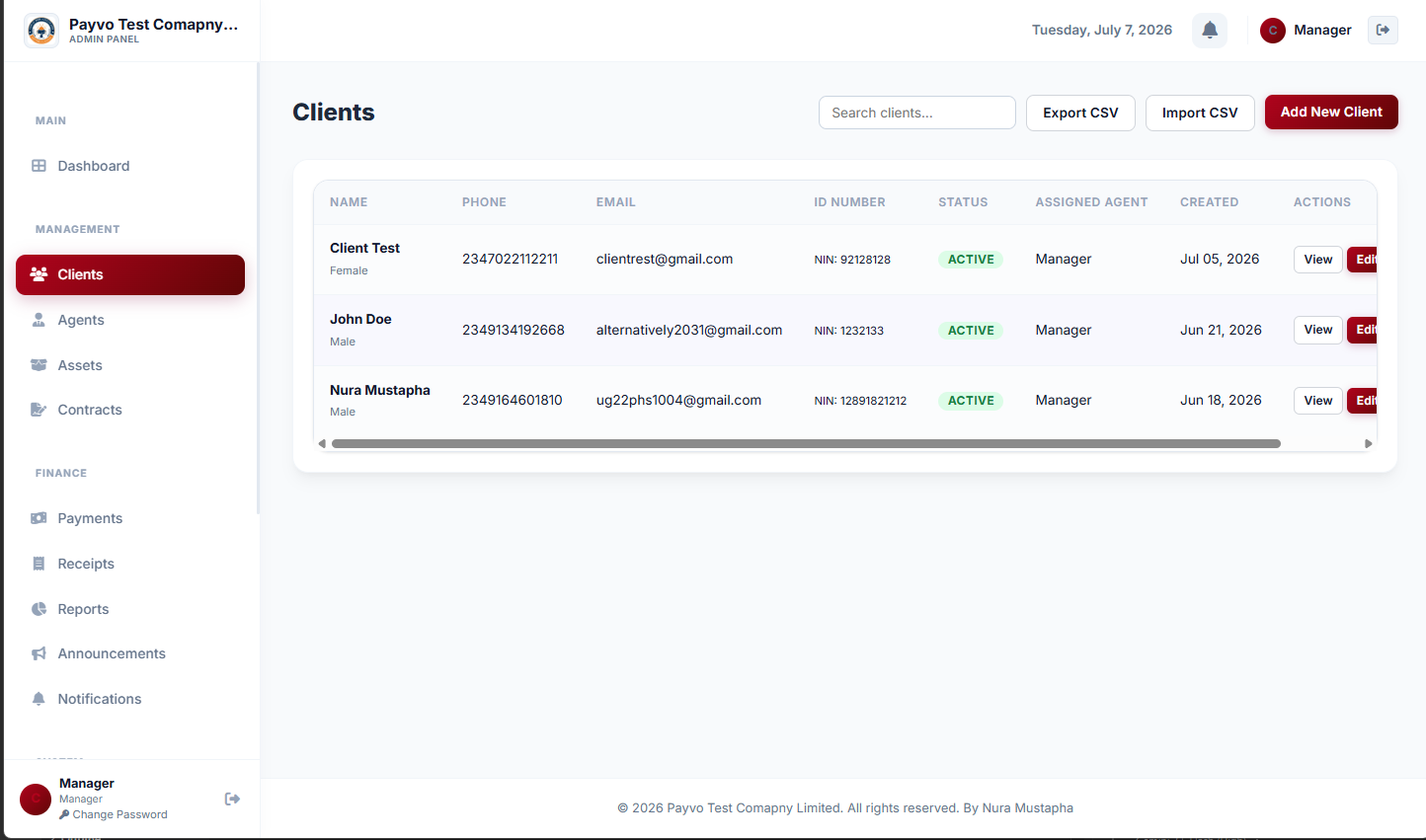 Client: Clients list page
Step 3: Evaluate Automation and Communication Capabilities
Manual follow-ups are time-consuming and prone to human error. Look for software that can automate repetitive tasks and streamline communication with your clients.
- Automated Notifications and Reminders: Can the system send automatic notifications for new clients, new contracts, payment received, and crucially, payment reminders via email and WhatsApp? A WhatsApp payment notification system can significantly reduce late payments and improve customer satisfaction.
- Agent and Staff Management: If you work with a team, especially sales agents, you'll need features for managing staff accounts with role-based permissions and robust agent commission tracking software. This ensures transparency and efficiency in how commissions are calculated and paid out. Agents should even be able to self-track their earnings.
Step 4: Consider Reporting and Analytics
Data is power. Without clear insights into your financial performance, it's difficult to make informed business decisions.
- Real-time Dashboards: The software should offer real-time dashboards where you can see total clients, active contracts, amount collected, outstanding balances, and next payment due at a glance. This provides an immediate snapshot of your business health.
- Comprehensive Reports: Look for the ability to generate detailed reports – exportable as PDF or Excel – for payment and contract data, essential for accounting, record-keeping, and strategic planning. Weekly company reports summarizing key performance metrics can also be invaluable.
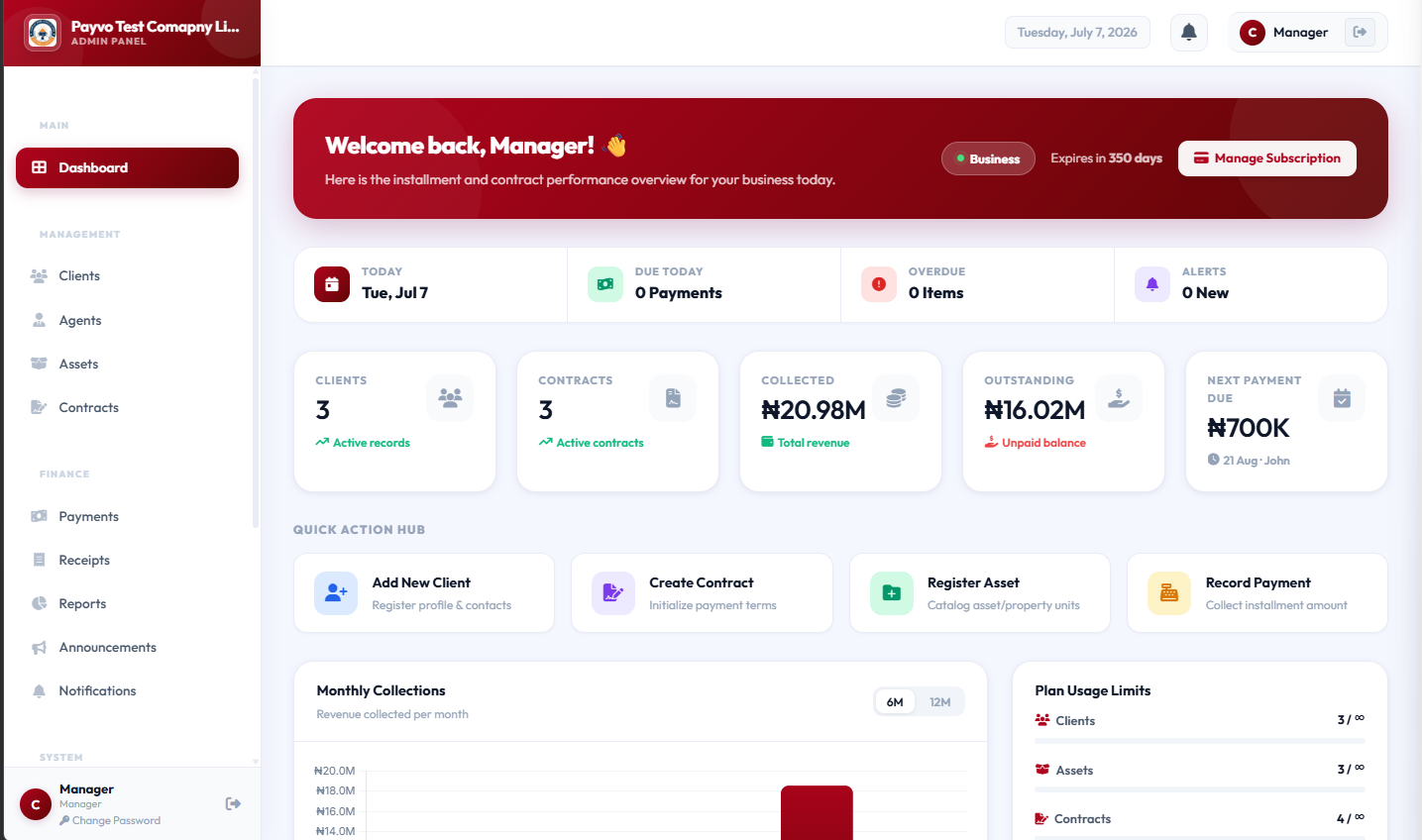 Dashboard (bottom)
Step 5: Evaluate Integration and Security
Your payment software shouldn't operate in a vacuum. It needs to fit seamlessly into your existing tech stack and protect your sensitive data.
- API Access: For businesses with specific needs or existing systems, API access can be critical for deeper system oversight and custom integrations. While custom integration costs with a freelance developer can range from ₦70,000 to ₦300,000, the long-term benefits of a connected system often outweigh the initial expense.
- Security and Audit Logs: Data security is paramount. Ensure the software offers robust security measures and audit logs to track all activities, providing accountability and compliance.
- Customization: The ability to customize company branding – setting your logo, brand colors, and digital signature – ensures all client-facing documents maintain a professional and consistent look.
Step 6: Test Drive and Review Pricing
Most reputable payment software providers offer demos or free trials. Take advantage of these to thoroughly test the system with your actual business scenarios. Pay attention to ease of use, customer support responsiveness, and the intuitiveness of the interface.
When reviewing pricing, look beyond the headline figure. Consider:
- Subscription Fees: These can range from ₦5,000 to ₦30,000 per month for advanced features like analytics or recurring billing.
- Transaction Fees: As mentioned, 1.5% - 2.5% for local cards and 3.5% - 4.5% for international.
- Payout Fees: Some gateways charge ₦25 - ₦100 per payout when transferring funds to your bank.
- Hidden Costs: Ask about setup fees, cancellation fees, or charges for exceeding certain transaction volumes.
Common Mistakes to Avoid
Choosing the wrong payment software can be costly. Here are some pitfalls to steer clear of:
- Prioritizing Price Over Features: Opting for the cheapest solution might save money upfront but could lack essential features, leading to more manual work and inefficiencies in the long run.
- Ignoring Scalability: A solution that works for 10 clients might crumble under the weight of 100 or 1000. Choose a system that can grow with your business.
- Overlooking User Experience (UX): If the software is difficult for your staff to use, adoption will be low, and you won't realize its full benefits.
- Neglecting Security: Data breaches can be devastating. Always ensure the platform has robust security measures and complies with relevant data protection standards.
- Skipping the Demo/Trial: Never commit to a software without thoroughly testing it with your actual business processes.
- Underestimating Customer Support: When issues arise, prompt and effective customer support is invaluable. Check reviews and inquire about support channels.
How to Track and Grow After Launch
Once your payment software is implemented, the journey doesn't end. Continuous monitoring and adaptation are key to maximizing its value and driving business growth.
- Monitor Key Performance Indicators (KPIs): Regularly check your dashboard for metrics like payment collection rates, outstanding balances, average payment delay, and client retention. This data, often found in the financial reports page of your software, will highlight areas for improvement.
- Leverage Automated Reminders: Fine-tune your automated payment reminder schedules. Experiment with different timings (e.g., 3 days before, on the due date, 2 days after) to see what yields the best results for your specific client base.
- Analyze Payment Trends: Use the reporting features to identify patterns. Are certain products or client segments more prone to late payments? This insight can inform your sales strategies and credit policies.
- Optimize Agent Performance: If you utilize agents, use the agent commission tracking software features to monitor individual and team performance. Identify top performers and provide additional training where needed. The agent tracking page can provide valuable insights here.
- Gather Client Feedback: Ask your clients about their experience with the new payment system. Their input can reveal areas for improvement in communication or ease of payment.
- Regularly Review Features: Payment software providers frequently update their platforms. Stay informed about new features that could further enhance your operations. A comprehensive payment tracking system like Payvo continually evolves to meet market demands, offering new tools to help businesses streamline operations and improve cash flow.
Frequently Asked Questions
Q1: What is the primary benefit of using payment management software for installment sales?
A1: The primary benefit is automation and organization. It eliminates manual errors, reduces the time spent on administrative tasks, ensures timely payment reminders, generates professional receipts automatically, and provides real-time insights into your financial health, ultimately improving cash flow and customer satisfaction.
Q2: How much does payment software typically cost in Nigeria?
A2: Costs vary widely. Basic payment gateway transaction fees are typically 1.5% - 2.5% for local cards. Subscription fees for advanced features can range from ₦5,000 to ₦30,000 per month. There might also be one-time setup fees (up to ₦50,000) or integration costs (₦70,000 - ₦300,000 for a freelance developer). It’s essential to look at the total cost of ownership, not just monthly fees.
Q3: Can this software help with managing agents and their commissions?
A3: Yes, many advanced payment management software solutions, especially those designed for installment sales, include robust agent commission tracking software. They allow you to assign agents to contracts, automatically calculate their commission based on payments received, and track their earnings and payout history, fostering transparency and motivation.
Q4: Is it secure to manage client and payment data through these platforms?
A4: Reputable payment software providers prioritize security. They employ encryption, access controls, and regular security audits to protect sensitive client and payment data. Always check for features like audit logs and data privacy policies to ensure compliance and protection.
Q5: What kind of businesses benefit most from this type of payment software?
A5: Businesses that rely heavily on installment payments benefit most. This includes real estate developers, car dealers selling on hire purchase, solar/equipment leasing companies, building material suppliers offering credit, cooperative societies, and microfinance operators. Essentially, any business that needs to track recurring payments over time will find immense value in a dedicated payment tracking system.
Ready to Transform Your Payment Management?
Stop letting manual tracking hinder your business growth. Discover how a dedicated contract and installments management system can streamline your operations, improve cash flow, and enhance client satisfaction. Visit Payvo.ng to explore a solution built for the unique demands of Nigerian businesses selling on installment.