Calculating sales commissions manually can feel like navigating a maze blindfolded, especially when dealing with installment payments. Errors are common, disputes arise, and valuable time that could be spent growing your business is instead lost to endless spreadsheets and reconciliations. For many Nigerian businesses relying on agents for sales, this manual burden is a significant drag on efficiency and agent morale.
 Business owner looking stressed at a desk full
The Evolving Landscape of Sales Commissions in Nigeria (2026)
In 2026, the Nigerian market for businesses operating on installment sales – from real estate to car dealerships and microfinance – continues its rapid expansion. This growth is largely fueled by an increasing middle class and innovative financing models. Consequently, the reliance on a robust sales agent network has never been higher. Agents are the lifeblood of these businesses, driving sales and customer acquisition, making efficient and transparent commission management crucial.
However, many businesses still struggle with outdated methods. A 2025 report indicated that over 60% of Nigerian SMEs using sales agents still rely on manual or semi-manual processes for commission calculations, leading to an average of 15% discrepancy rate in payouts and significant delays. This directly impacts agent motivation and retention, as transparent and timely compensation is a key driver for performance. Businesses that automate their commission processes report a 25% increase in agent satisfaction and a 10% reduction in operational costs related to payout administration. The drive towards digital transformation is no longer a luxury but a necessity for competitive advantage, especially with the rise of financial technology solutions tailored for the Nigerian market.
> "In a market where trust is currency, transparent and timely commission payouts are non-negotiable for agent loyalty and peak sales performance."
The cost of manual commission management extends beyond just time. Errors can lead to overpayments or underpayments, impacting cash flow and agent trust. Resolving disputes takes management bandwidth, and the lack of real-time data prevents businesses from understanding which agents are truly performing and which products are driving the most commissionable sales. This is particularly challenging for businesses that link commissions to actual customer collections rather than just sales, requiring intricate tracking of installment payments.
What You Need Before You Start
Before diving into automating your sales commission payments, ensure you have these foundational elements in place:
- Clear Commission Structure: Define your commission rates, payment triggers (e.g., first installment, full payment, percentage of each payment), and any tiers or bonuses. This needs to be in writing and understood by all agents.
- Sales Data: Access to accurate sales records, including client details, product/service sold, sale date, and total contract value.
- Payment Tracking System: A reliable method for tracking customer installment payments, noting dates and amounts received.
- Agent Data: Comprehensive records of all sales agents, including their contact details and bank account information for payouts.
- Internet Access: A stable internet connection is essential for cloud-based software solutions. Budget approximately ₦10,000 - ₦30,000 per month for a reliable business internet plan.
- Dedicated Personnel: Someone responsible for overseeing the system, even if part-time. This could be an existing accountant or a data analyst, costing between ₦40,000 - ₦100,000 per month for a part-time role.
Step-by-Step: How to Automate Sales Commission Payments
Automating your sales commission payments might seem daunting, but by breaking it down into manageable steps, you can transition from manual headaches to streamlined efficiency.
Step 1: Define Your Commission Rules and Policies
Before any automation, your commission structure must be crystal clear. This involves more than just a percentage. Consider:
- Commissionable Events: Is commission paid on the initial sale, upon receipt of the first installment, or as a percentage of each installment collected? For businesses selling on credit or installments, linking commissions to actual collections is crucial for financial health.
- Rate Tiers: Do commission rates change based on sales volume, product type, or agent performance?
- Payout Frequency: Will agents be paid weekly, bi-weekly, or monthly?
- Deductions: Are there any deductions for returns, cancellations, or administrative fees?
- Dispute Resolution: Establish a clear process for agents to query their commission statements.
Step 2: Choose the Right Commission Management Software
This is the most critical step. You need a system that can handle the complexities of installment sales and agent commissions specific to the Nigerian context. Look for software that offers:
- Integration with Payment Tracking: The system must be able to pull payment data directly from your customer payment records.
- Flexible Commission Rules: It should allow you to configure various commission structures, including those linked to partial payments or specific milestones.
- Agent Management: Features for adding, managing, and tracking individual agent performance.
- Reporting: Detailed reports on agent earnings, payouts, and sales performance.
- Scalability: The ability to grow with your business without needing a complete overhaul.
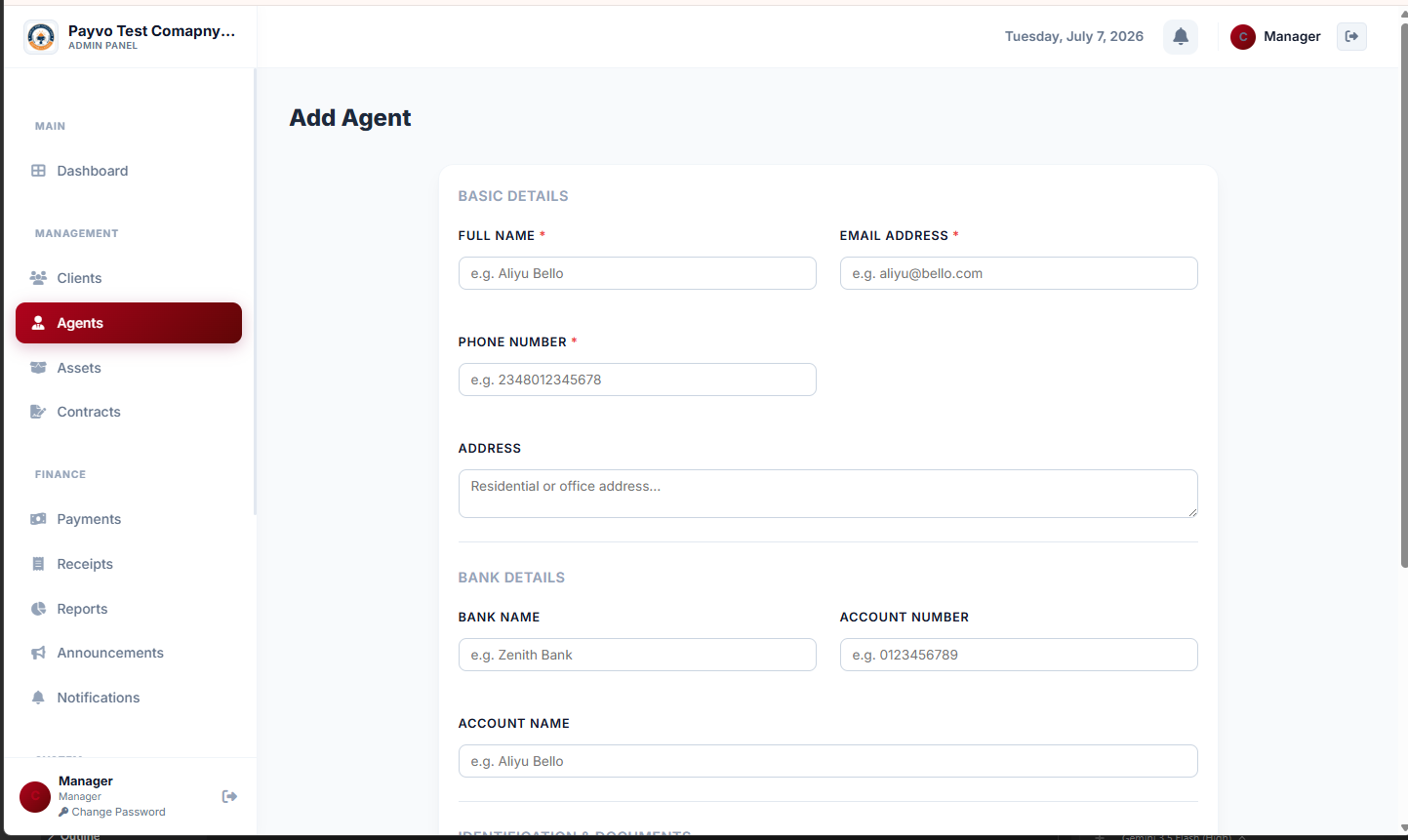 Agent: Add agent page
Step 3: Configure Your System with Agent and Commission Data
Once you've selected your software, the next step is to set it up.
- Input Agent Information: Add all your sales agents to the system, including their unique IDs, contact details, and bank account information.
- Define Commission Structures: Translate your defined commission rules (from Step 1) into the software's settings. This involves setting percentages, triggers, and any tiered rates. For instance, if you're a car dealer, you might set a 2% commission on the sale price, paid out once the client has made 50% of their hire purchase payments.
- Link Agents to Contracts/Sales: As new sales or contracts are generated, ensure the responsible agent is linked to that specific transaction. With a robust contract management software like Payvo, this is integrated directly into the contract creation process.
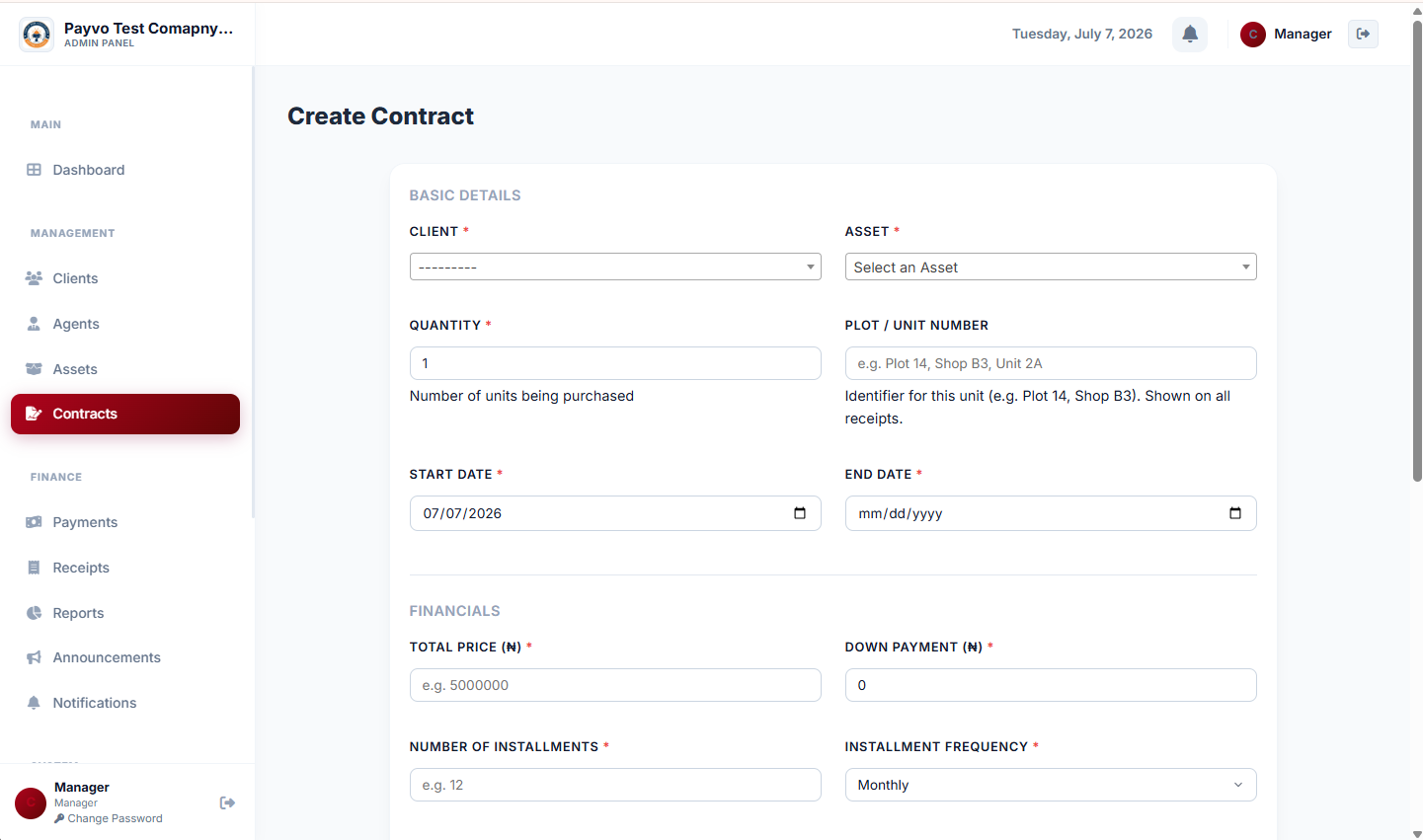 Management: Add contract (top)
Step 4: Automate Commission Calculation and Tracking
This is where the real efficiency gains happen. Your chosen system should automatically calculate commissions as payments are recorded.
- Automated Calculation: When a customer makes an installment payment, the system should recognize this payment, link it to the relevant contract and agent, and calculate the agent's commission based on the predefined rules.
- Real-time Tracking: Agents and management should have access to real-time dashboards showing earned commissions. This transparency builds trust and motivates agents. Payvo’s agent self-tracking feature allows agents to log in with a unique code to view their own earnings and submit withdrawal requests, providing them with immediate visibility.
- Payment Recording: Ensure every customer payment is accurately recorded in your system. This is the bedrock of accurate commission calculation. A good receipt generator app Nigeria will also automatically issue branded receipts for every payment.
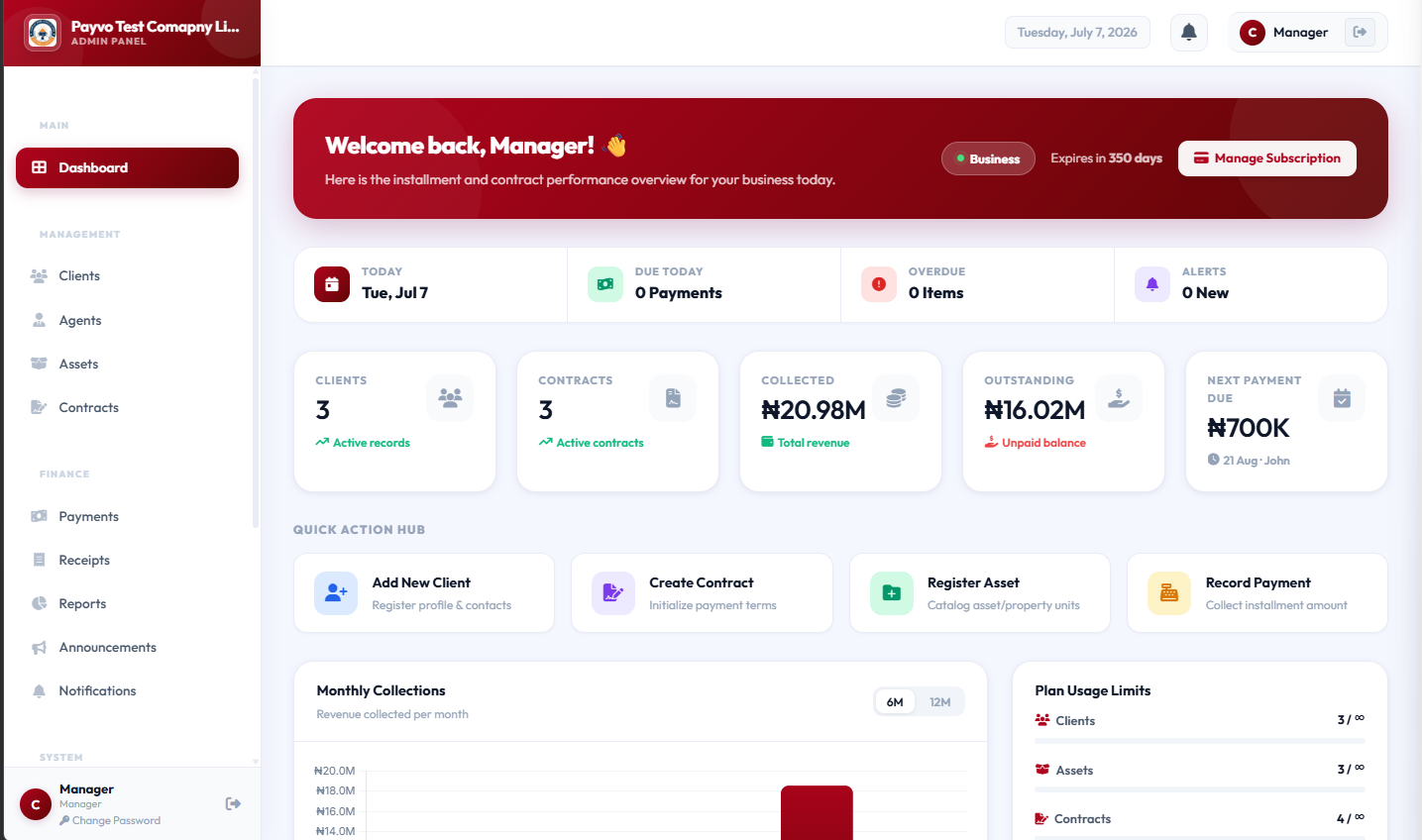 Dashboard (bottom)
Step 5: Streamline Commission Payouts
Automating payouts reduces administrative work and ensures agents are paid accurately and on time.
- Generate Payout Reports: The system should generate detailed reports of commissions due to each agent for a given period.
- Integrate with Payment Gateways (Optional but Recommended): For larger volumes, consider integrating with local payment processors or bulk bank transfer systems. Payment gateway transaction fees typically range from 1.5% - 2.5% per transaction, plus a fixed fee of ₦50 - ₦100. For direct bank transfers, bulk payout fees can be as low as ₦10 - ₦50 per transaction, depending on your bank and volume.
- Automated Notifications: Inform agents when their commissions have been processed and paid. This can be done via email or WhatsApp, which is a popular communication channel in Nigeria. A WhatsApp payment notification system can significantly improve communication efficiency.
Step 6: Monitor, Review, and Optimize
Automation isn't a "set it and forget it" process. Regular monitoring and review are essential.
- Regular Audits: Periodically audit commission calculations to ensure accuracy and compliance with your policies.
- Agent Feedback: Gather feedback from your sales agents on the clarity and fairness of the commission system.
- Performance Analysis: Use the data generated by the system to analyze agent performance, identify top performers, and refine your sales strategies. For example, you might notice that agents selling a particular type of property (for real estate businesses) consistently earn higher commissions due to higher demand.
- Policy Adjustments: Be prepared to adjust your commission policies as market conditions change or as your business evolves.
Common Mistakes to Avoid
Automating commission payments can significantly benefit your business, but watch out for these common pitfalls:
- Unclear Commission Structures: Entering automation without clearly defined, documented, and communicated commission rules is a recipe for disaster. This leads to agent disputes and system misconfigurations.
- Ignoring the "Collection" Aspect: For installment-based businesses, paying commissions solely on sales booking rather than actual payment collection can severely impact cash flow and lead to agents leaving once a sale is made, regardless of whether the customer pays. Ensure your system links commission to received payments.
- Lack of Agent Transparency: If agents cannot easily track their own earnings and pending payouts, trust erodes quickly. This is where agent commission tracking software with a self-service portal becomes invaluable.
- Poor Data Entry: "Garbage in, garbage out." If client details, contract terms, or payment records are inaccurate, your automated commission calculations will also be flawed. Emphasize data accuracy from the start.
- Choosing Unsuitable Software: Opting for generic accounting software that doesn't cater to installment sales or complex commission structures will create more problems than it solves. Look for specialized solutions like installment management software Nigeria.
- Neglecting Training and Support: Even the best system is useless if your team doesn't know how to use it. Budget for initial training (₦50,000 - ₦200,000 for a small team) and ongoing support.
How to Track and Grow After Launch
After successfully automating your sales commission payments, the real work of leveraging that efficiency begins. Tracking key performance indicators (KPIs) and using the data to inform growth strategies is paramount.
- Monitor Agent Performance: Track individual agent sales volumes, collection rates (crucial for installment businesses), and commission earned. This helps identify top performers who might need additional incentives or training opportunities, and those who might need support.
- Analyze Payout Trends: Observe patterns in commission payouts. Are payouts increasing in line with sales? Are there seasonal fluctuations? This data can inform budgeting and sales forecasting.
- Evaluate Commission Structure Effectiveness: Use the data to assess if your current commission structure is driving the desired agent behavior. For example, if you're a microfinance operator, is the commission structure encouraging agents to bring in reliable borrowers?
- Customer Payment Behavior: Beyond commissions, the system should give you insights into customer payment adherence. This helps refine your sales process and identify potential collection issues early. Payvo’s real-time dashboards provide a quick overview of total clients, active contracts, amount collected, outstanding balances, and next payment due, offering a holistic view of your business's financial health.
- Leverage Reporting: Regularly generate reports on sales, collections, and commissions. These reports can be invaluable for financial planning, investor updates, and strategic decision-making. Look for systems that allow you to export data as PDF or Excel for accounting and record-keeping, as offered by Payvo. For more insights, explore the various features available on the Payvo platform.
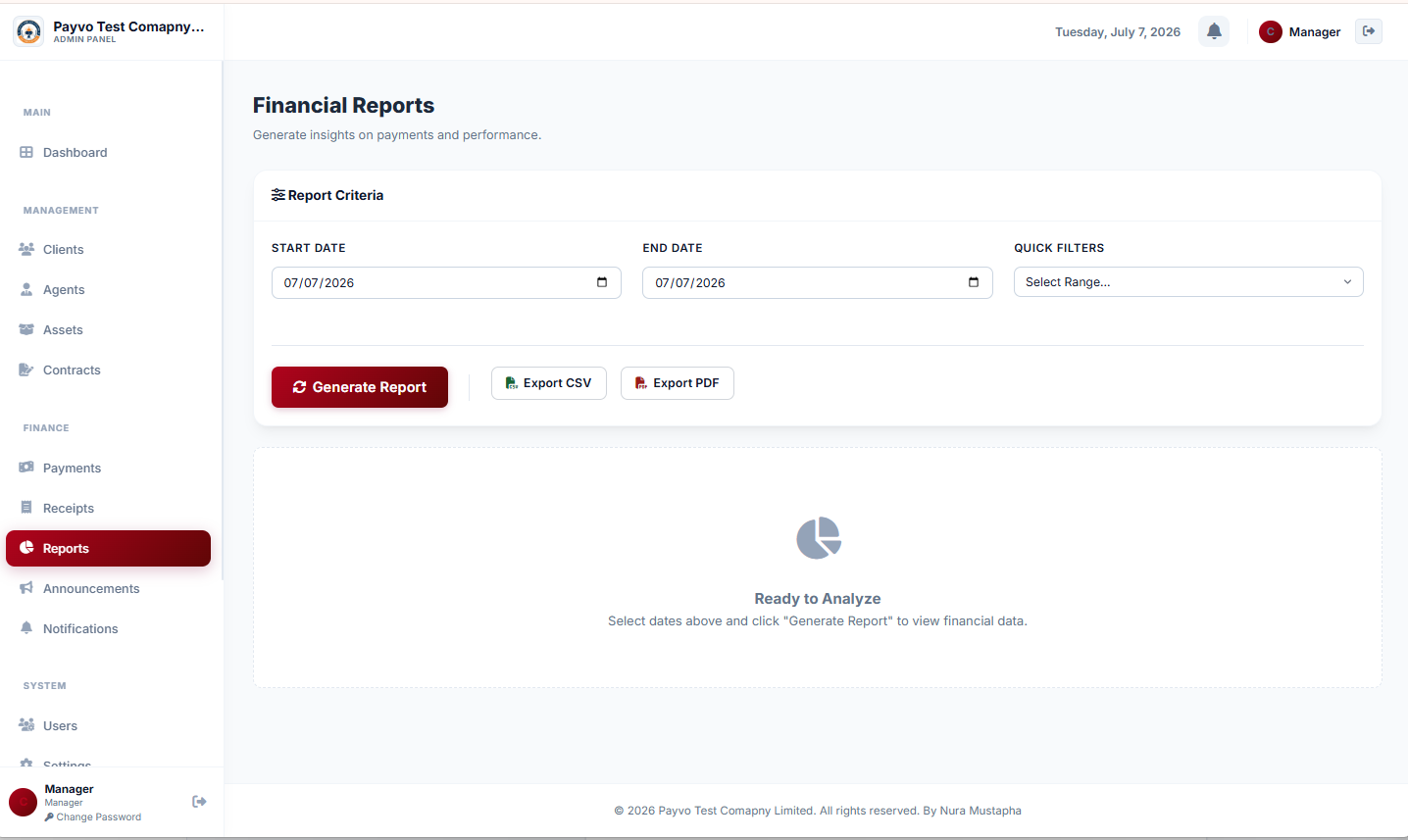 Finance: Financial Reports Page
By continuously monitoring these metrics, you can refine your sales strategies, optimize your commission structure, and foster a highly motivated and productive sales force, driving sustainable growth for your business.
Frequently Asked Questions
Q1: How much does it cost to implement an automated commission system in Nigeria?
A1: The cost varies significantly based on the complexity and features. Basic accounting software with limited commission functions might be ₦5,000 - ₦25,000/month. A comprehensive solution like an integrated ERP or specialized contract management software could range from ₦50,000 - ₦300,000/month. Custom development for very specific needs can be ₦500,000 - ₦2,500,000 (one-time). Don't forget operational costs like internet (₦10,000 - ₦30,000/month) and potentially a part-time data manager (₦40,000 - ₦100,000/month).
Q2: Can these systems handle commissions linked to installment payments?
A2: Absolutely. This is a crucial feature for businesses like real estate developers, car dealers on hire purchase, and solar/equipment leasing companies. Modern installment management software Nigeria is specifically designed to calculate commissions based on actual payments received, not just the initial sale, ensuring healthier cash flow for your business.
Q3: How do I ensure my agents trust the automated system?
A3: Transparency is key. Choose a system that offers agent self-tracking, allowing them to view their own earnings and payment history. Clear communication about the commission structure, regular and timely payouts, and a defined dispute resolution process will build trust. Tools that provide a WhatsApp payment notification system for both clients and agents also help keep everyone informed.
Q4: Is it possible to integrate this with my existing accounting software?
A4: Many modern commission management platforms offer integration capabilities, either directly or via APIs. It's important to check this during your software selection process. However, some specialized solutions, like those designed for installment sales, might offer a more comprehensive, all-in-one approach, reducing the need for multiple integrations.
Q5: What kind of support is available for these systems in Nigeria?
A5: Many software providers, especially those catering to the Nigerian market, offer local support. This can range from online chat and email to dedicated account managers. For custom solutions or complex integrations, you might need an annual IT support/maintenance retainer, which can cost between ₦150,000 - ₦500,000 per year. When evaluating options, inquire about their customer service and local presence.
 Nigerian business owner reviewing sales data on a
Ready to Streamline Your Commission Payouts?
Stop losing valuable time and money to manual commission calculations. Embrace automation to boost agent morale, improve financial accuracy, and gain critical insights into your sales performance. If you're ready to transform your sales commission process, especially for businesses dealing with installment sales, explore how a dedicated platform can simplify your operations. Visit our website to learn more and see how Payvo can help you automate agent commission tracking, manage contracts, and streamline your entire sales and collection process. You can even register for an account today and start experiencing the benefits firsthand.