Everyone tells you that offering "pay small small" is the secret to booming sales for your electronics shop in 2026. They say it makes big-ticket items like flat-screen TVs and expensive smartphones accessible to more Nigerians, bringing you a flood of customers. But here’s the honest truth: simply offering installment sales isn't enough. In fact, if you don't manage it properly, offering electronics installment sales can quickly turn into a nightmare of missed payments, lost records, and endless headaches. I've seen countless businesses try to implement this without a proper system, and it almost always ends in tears. This article will show you how electronics shops can manage customers paying in installments effectively, turning potential chaos into consistent cash flow.
 A busy electronics shop in a nigerian market
The Honest Breakdown: What This Actually Costs
Let's cut to the chase: setting up an electronics shop, especially one offering "pay small small," requires significant capital. You need to understand these numbers inside out before you even consider opening your doors or expanding your credit offerings.
First, your initial stock purchase is where most of your capital goes. For a small neighborhood shop stocking basic phones and accessories, you’re looking at investing anywhere from ₦1,500,000 to ₦5,000,000. If you’re aiming for a medium-sized shop in a busy market like Computer Village in Lagos or Alaba International, stocking a wider range of TVs, laptops, and high-end smartphones, your initial stock could easily cost you ₦7,000,000 to ₦25,000,000. These are not small figures.
Then comes shop rent. This is an annual expense in Nigeria, so don't be fooled by monthly quotes. In a small town or local market, you might find a decent spot for ₦150,000 to ₦800,000 per year. But if your dream is a prime location in Lagos, Abuja, or Port Harcourt, prepare to shell out between ₦1,500,000 and ₦5,000,000 annually. That’s a massive upfront cost that eats into your working capital.
What about staff salaries? A good sales assistant, even entry-level, needs to be paid fairly to keep them motivated and reduce pilferage. Expect to pay between ₦45,000 and ₦80,000 per month, depending on your location and their experience. If you need an experienced technician or a shop manager, especially for handling complex repairs or managing a larger inventory, their salary could range from ₦90,000 to ₦180,000 monthly.
Don't forget monthly operating costs. This covers utilities, internet, transportation, and sometimes even generator fuel. For a small shop, budget ₦30,000 to ₦100,000. A larger shop, with more electricity consumption and potentially higher internet needs, could see these costs jump to ₦150,000 to ₦400,000 monthly. When you’re tracking every kobo, these add up quickly.
And if you're serious about managing electronics payment tracking, you'll need a proper POS system or inventory software. A basic system can cost you ₦50,000 to ₦150,000 as a one-time purchase. This is an investment, not an expense, because it saves you money and stress in the long run.
Finally, for installment sales, you must have legally sound installment agreement templates. Don't just download something generic online. Spend ₦80,000 to ₦250,000 on a lawyer to draft professional contracts that protect your business. This one-time cost can save you millions in legal battles and bad debts later.
The Income Side: What You Can Realistically Earn
Now, let's talk about making money. The beauty of electronics installment sales is that it opens your market to customers who can't afford a lump sum payment. A basic smartphone that costs you ₦40,000 to ₦80,000 wholesale can be sold with a markup. A mid-range TV, costing ₦120,000 to ₦250,000 wholesale, also presents a good opportunity.
Your typical markup on electronics will range from 10% to 30%. Fast-moving items like popular smartphones might have a lower markup of 10-15%, while accessories, unique gadgets, or less common goods could fetch a 25-30% margin. When you factor in installment payments, you might even add a slight premium to cover your administrative costs and the risk involved.
Let's imagine you sell 15 mid-range smartphones a month on installment.
- Wholesale cost per phone: ₦60,000
- Retail price with 20% markup: ₦72,000
- Profit per phone: ₦12,000
- Total monthly profit from these 15 phones: ₦180,000
- Wholesale cost per TV: ₦180,000
- Retail price with 15% markup: ₦207,000
- Profit per TV: ₦27,000
- Total monthly profit from these 5 TVs: ₦135,000
Your timeline to break even depends heavily on your initial investment and your sales volume. If your total setup cost (excluding initial stock, which you'll recover from sales) is, say, ₦2,500,000 for rent, legal fees, and basic software, and your net profit after all expenses (but before stock replenishment) is ₦200,000 per month, it would take you over a year to break even on just those fixed costs. This is why careful financial tracking is not just a good idea; it's essential.
The Hidden Costs Nobody Mentions
This is where many businesses get tripped up. It's not just about the obvious expenses; it's the things that sneak up on you.
One major hidden cost, especially with electronics installment sales, is the expected default rate. In Nigeria, a realistic risk for uncollateralized installment plans can be anywhere from 5% to 15%. Imagine selling a ₦200,000 TV on installment, and the customer disappears after paying ₦50,000. That ₦150,000 is a direct loss, impacting your profit margins significantly. How do you track these? How do you account for them? This is where a robust installment management software Nigeria solution becomes invaluable.
Then there are unplanned expenses. Your generator might pack up, requiring a ₦75,000 repair. A sudden surge in electricity tariffs could increase your utility bills by ₦15,000. Or perhaps a new phone model drops, making your current stock slightly less appealing, forcing you to offer discounts that eat into your profit.
Seasonal fluctuations also play a role. Sales might boom during festive periods like Christmas or Eid, but then dip significantly in quieter months. If you don't manage your cash flow and inventory carefully during the good times, you'll struggle when sales slow down. Many small businesses fail because they don't anticipate these ebbs and flows.
Another hidden cost is the sheer time and effort spent chasing payments and reconciling records manually. Picture this: it's month-end, and you're trying to figure out which customers have paid their weekly "pay small small" for their new sound system. You're sifting through WhatsApp chats, cross-referencing bank statements, and flipping through a tattered notebook. That's hours of your valuable time that could be spent on sales, marketing, or even just resting. This manual chaos is a cost in itself – a cost to your productivity, your peace of mind, and ultimately, your business's growth. This is why a business payment tracking app Nigeria is not a luxury, but a necessity for survival.
Consider a small shop owner in Dugbe market, Ibadan. She sells about 30 items a month on installment. Each item has a different payment schedule – some weekly, some monthly. She spends nearly two full days each week just trying to reconcile payments, follow up on overdue accounts, and issue handwritten receipts. That's almost half her working week consumed by administrative tasks that could be automated. This is the cost of not having a system.
How Successful Nigerian Business Owners Control These Numbers
So, how do the smart ones do it? They don't just hope for the best. They implement strategies and use tools to gain control.
- Clear Contracts and Vetting: Before any electronics installment sales, they ensure customers sign a comprehensive, legally binding contract. They also do a basic background check. Do they have a stable job? Can they provide a guarantor? This isn't about being overly strict; it's about mitigating the expected default rate we just discussed. A well-drafted contract management software Nigeria helps you standardize this process.
- Strict Payment Schedules and Reminders: They set clear payment schedules (e.g., weekly or monthly) and stick to them. More importantly, they use automated reminders. Imagine getting a WhatsApp payment notification system that automatically pings your customers a day before their payment is due. This drastically reduces late payments.
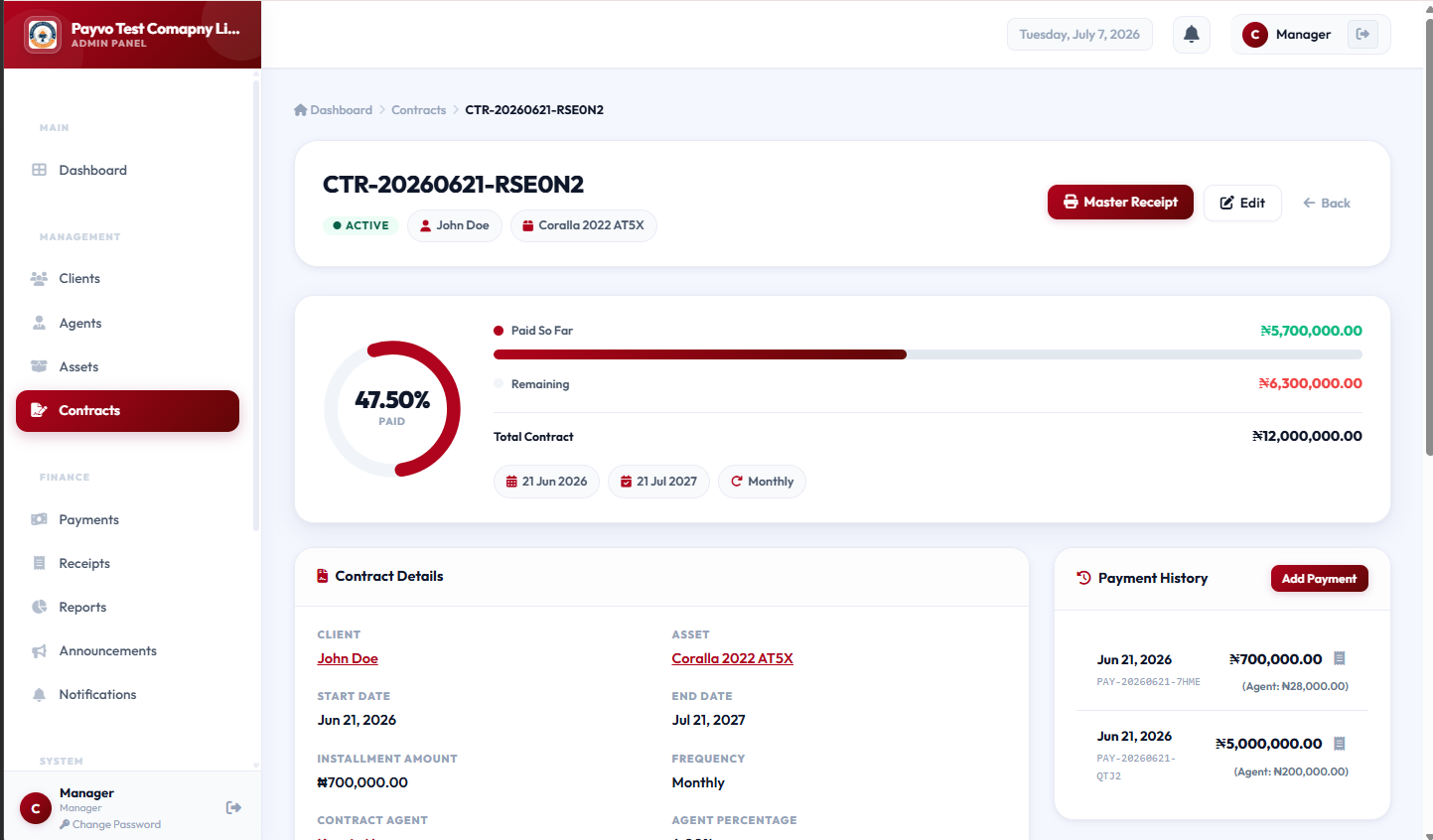 A screenshot of Payvo's contract details view, showing a payment schedule
- Centralized Record-Keeping: This is probably the most crucial step. Instead of scattered notebooks, WhatsApp chats, and random Excel sheets, they use a centralized system. This allows them to see, at a glance, who owes what, when the next payment is due, and how much has been paid so far. This is where a tool like Payvo comes in. It’s designed specifically for businesses like yours to manage customers, contracts, and payments in one place. You can easily track your monthly profit margins and outstanding balances without the guesswork.
- Inventory Management: They don't just stock up blindly. They track what's selling, what's slow-moving, and what needs to be restocked. This helps them optimize their initial stock purchase and avoid tying up capital in dead inventory.
- Agent Commission Tracking: If they use sales agents, they have a transparent system to track agent commissions. This motivates agents to bring in genuine customers and ensures accurate payouts. An agent commission tracking software ensures fairness and prevents disputes.
- Regular Financial Reviews: They regularly review their income and expenses, not just at the end of the year. This helps them spot trends, identify hidden costs, and make timely adjustments to their business strategy. They know exactly how much money has been collected during a particular period.
Real Comparison: Manual vs. Systemized Operations
Let's break down the tangible differences between managing your electronics installment sales manually versus using a system like Payvo.
| Feature / Cost Factor | Manual Operations (Notebooks, Excel, WhatsApp) | Systemized Operations (Using Payvo) | Cost/Time Difference (Approx. Monthly) |
|---|---|---|---|
| Record Keeping | Scattered, prone to errors, hard to search. | Centralized, accurate, easily searchable. | Time Saved: 15-20 hours/month |
| Payment Tracking | Cross-referencing bank alerts, WhatsApp, notebooks. Confusing. | Automated tracking, clear payment history. | Time Saved: 10-15 hours/month |
| Outstanding Balance Calc. | Manual calculations, often leading to errors and disputes. | Auto-calculated, real-time balances, reduced disputes. | Time Saved: 5-8 hours/month |
| Due Date Reminders | Manual calls or WhatsApp messages. Often forgotten. | Automated WhatsApp payment notification system. | Reduced Defaults: 5-10% (e.g., ₦50,000-₦100,000 in recovered payments) |
| Receipt Generation | Handwritten, time-consuming, easy to lose. | Digital, professional, instant receipt generator app Nigeria. | Time Saved: 5-10 hours/month |
| Default Rate Impact | Higher due to poor tracking and inconsistent follow-up (5-15%). | Lower due to proactive reminders and clear records (2-5%). | Money Saved: ₦50,000 - ₦250,000+ |
| Agent Management | Difficult to track sales, commissions, and customer allocation. | Clear agent commission tracking software, performance reports. | Improved Efficiency: ₦20,000 - ₦80,000 in better agent performance |
| Error Rate | High (miscalculations, missed payments, lost records). | Low (system-driven, automated checks). | Reduced Losses: ₦30,000 - ₦100,000+ |
| Overall Stress Level | High, constant worry about finances and customer disputes. | Significantly lower, clear overview of business health. | Immeasurable: Peace of mind is priceless. |
Just think about it. If you save ₦100,000 in recovered payments from reduced defaults and another ₦50,000 in staff time saved, that’s ₦150,000 in your pocket every month. That alone often covers the cost of a good installment management software Nigeria.
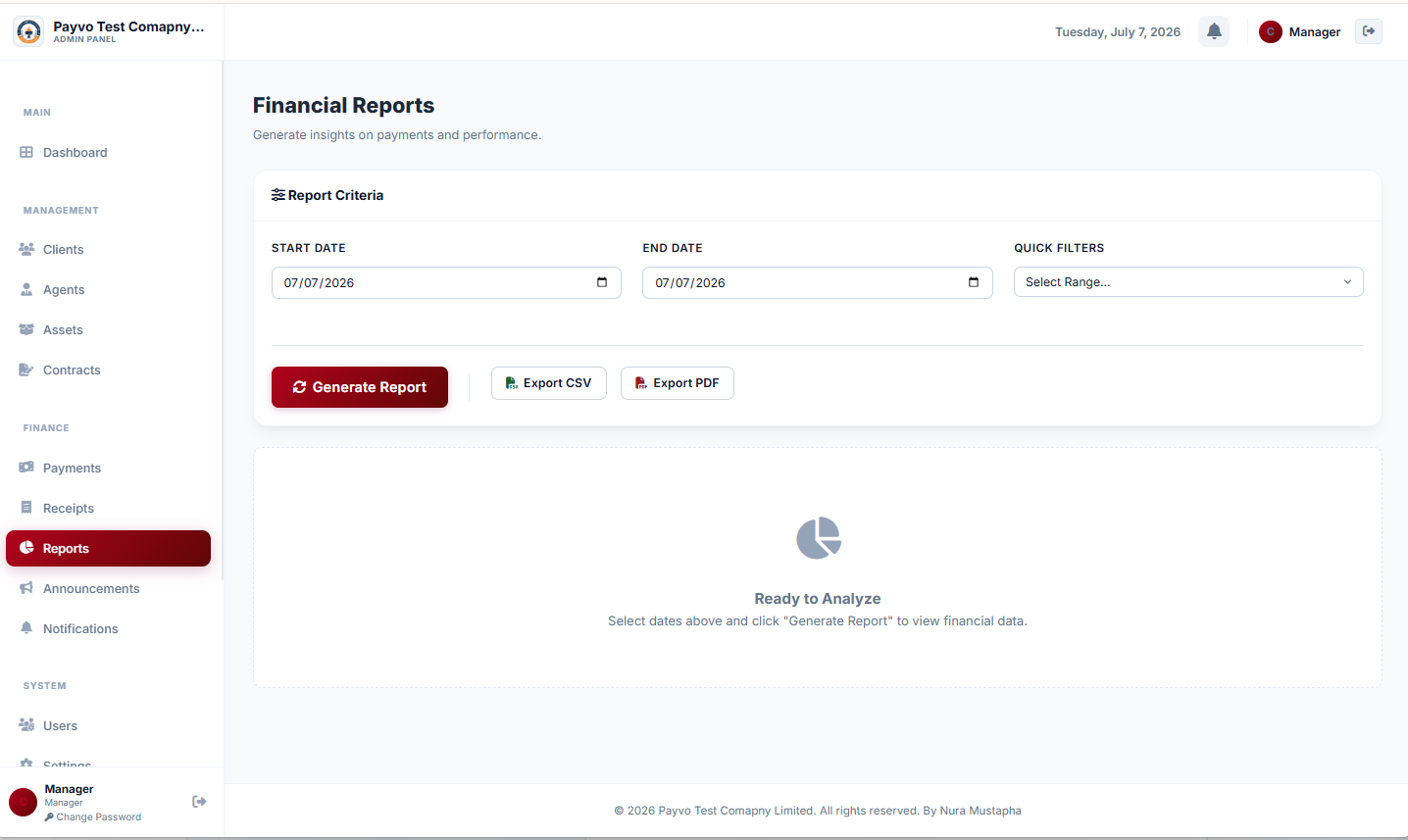 A screenshot of Payvo's financial reports page, showing graphs and data
Frequently Asked Financial Questions
Running an electronics shop with installment sales throws up a lot of questions, especially around money. Let's tackle some common ones.
1. How do I minimize the risk of customers defaulting on their payments?
This is a big one for anyone running a "pay small small" business. First, thorough vetting is key. Ask for proof of income, a stable address, and a reliable guarantor. Second, ensure your contract management software Nigeria provides clear, legally sound agreements. Lastly, and most importantly, use an automated system for payment reminders. A simple WhatsApp message or email reminder a day or two before the due date can significantly reduce late payments and defaults. Payvo, for instance, offers robust notification features to help you stay on top of this.
2. Is it worth the cost to invest in an installment management software Nigeria?
Absolutely. Think of it this way: how much is your time worth? How much money do you lose from missed payments, calculation errors, or customer disputes because your records are scattered? The cost of a basic POS system/software for managing your inventory and sales or a dedicated installment management system is usually a fraction of what you'd lose through manual inefficiency and bad debt. For many businesses, the return on investment (ROI) is almost immediate, not just in recovered funds but in reduced stress and improved customer relations.
3. How do I handle agent commissions fairly and transparently?
Transparency is crucial to keep your agents motivated and loyal. You need a system that accurately tracks each agent's sales, collected payments, and commissions due. Trying to do this manually with spreadsheets often leads to disputes and distrust. An agent commission tracking software within your main system allows agents to see their own performance and earnings, building trust and encouraging them to bring in quality leads for electronics installment sales. This is especially important if you have agents in different locations, perhaps selling solar systems or real estate payment tracking Nigeria.
4. What's a realistic profit margin for electronics installment sales?
While typical markups are 10-30%, your net profit margin after all operating costs and accounting for defaults will likely be lower. Aim for a net profit margin of 5-15% on your total sales. To achieve this, you need tight control over your inventory, aggressive follow-up on payments, and a keen eye on your operating expenses. Don't chase high markups if it means higher default rates; a steady flow of payments with a reasonable margin is always better than chasing a huge profit on a sale that never fully pays out.
5. How can I easily generate receipts for customers paying in installments?
Nobody likes a handwritten, smudged receipt that's easily lost. Your customers, especially those paying "pay small small," appreciate professionalism. A digital receipt generator app Nigeria is a game-changer. It allows you to issue professional, branded receipts instantly via email or WhatsApp, complete with payment details and remaining balance. This not only looks good but also provides a clear record for both you and your customer, reducing potential disagreements.
6. My business is small, with only a few installment customers. Do I still need a system?
Yes, even if you only have a handful of customers today. Why? Because you're building habits. Starting with a proper system from the get-go means you won't have to overhaul your entire operation when your business grows. Imagine trying to migrate 50 manual contracts to a system later – it's a nightmare. Start right, grow right. Plus, the discipline of using a system helps you understand your cash flow better, even on a small scale.
Your Next Step to Financial Clarity
Managing customers paying in installments doesn't have to be a constant struggle. You can move beyond scattered notebooks and endless WhatsApp messages. The key is to embrace a system that brings clarity, organization, and automation to your electronics installment sales.
If you're tired of the administrative headaches, the missed payments, and the constant worry about your outstanding balances, it's time for a change. Payvo is an installment management software Nigeria built specifically for businesses like yours. It helps you manage customers, products, contracts, payment schedules, and financial records all in one place. Whether you're a car dealer installment software user, a real estate developer, or an electronics shop owner, Payvo simplifies your operations.
Don't let the fear of complexity hold you back. Take control of your finances, reduce your stress, and empower your business to grow.
Ready to see how Payvo can transform your installment sales? Explore Payvo's features today or simply register into Payvo to get started. You can also book a demo if you'd like a guided tour. Your path to organized, profitable "pay small small" sales starts now.