<p>Chasing down overdue installment payments manually, sifting through stacks of paper receipts, and constantly wondering about your true outstanding balance can feel like a full-time job on its own. For Nigerian businesses operating on an installment or hire-purchase model, this administrative burden isn't just a nuisance; it directly impacts cash flow and growth. You're losing valuable time and potentially revenue to inefficient payment tracking.</p>
 A nigerian business owner looking stressed while reviewing
The Hidden Costs of Manual Installment Tracking in Nigeria
In 2026, relying on notebooks, spreadsheets, and scattered WhatsApp messages for managing installment sales is more than just outdated – it's a significant drain on your business resources. Consider the real, quantifiable costs:
Time is Money: The Productivity Sinkhole
Every hour spent manually reconciling payments, sending reminder messages, or generating receipts is an hour not spent on sales, client acquisition, or strategic planning. For a small business owner or a staff member earning, say, ₦80,000 to ₦150,000 monthly, even just 2-3 hours per day on administrative payment tasks translates to ₦10,000 to ₦25,000 lost monthly in productive capacity. This figure escalates dramatically for larger operations with multiple staff members.
Revenue Leakage: Missed Payments and Chargebacks
Without a robust system, late payments become the norm, and some debts may even be forgotten. The Central Bank of Nigeria (CBN) has been pushing for greater financial inclusion, but that doesn't eliminate the challenges of managing credit. Imagine a real estate developer in Abuja with 50 active installment contracts, each due on different dates. Without automated reminders, a significant percentage of those payments will be delayed, impacting project timelines and liquidity. Furthermore, manual systems are prone to errors, which can lead to disputes and even chargeback fees ranging from ₦2,500 to ₦5,000 per incident, eating directly into your profits.
Operational Overheads: The Cost of Doing Business the Old Way
Beyond direct financial losses, there are numerous hidden operational costs:
- POS Terminal Fees: While essential for accepting card payments, these come with costs. A basic GPRS POS machine can cost ₦60,000 - ₦150,000 to purchase, or ₦5,000 - ₦15,000 monthly to rent. Each card transaction incurs a fee of 0.5% - 1.5%, capped at ₦2,000 for debit cards.
- Internet Data: Reliable internet is crucial for any digital payment system. Monthly data costs for a business can range from ₦5,000 to ₦15,000, especially in areas where connectivity is a challenge.
- SMS Notifications: If you're manually sending transaction alerts, each SMS can cost ₦2 - ₦5, adding up quickly for a large client base.
- Printing and Stationery: Paper receipts, contract printouts, and filing systems all incur costs that, while small individually, become substantial over time.
- Security Risks: Manual records are vulnerable to loss, damage, or unauthorized access, posing significant data security and compliance risks.
Damaged Client Relationships
Constantly calling clients for overdue payments or resolving discrepancies can strain relationships. A smooth, professional payment process, on the other hand, builds trust and encourages repeat business. Clients appreciate clear communication and easy ways to track their payments, which is difficult to achieve with fragmented, manual systems.
 A sleek dashboard showing financial metrics and client
The Smarter Approach: Embracing Automated Payment Management Systems
The solution to these challenges lies in adopting a dedicated installment management software. This isn't just about collecting money; it's about streamlining your entire sales-to-payment lifecycle, enhancing client experience, and gaining critical insights into your business performance.
A robust payment management system in Nigeria should offer:
- Centralized Client & Contract Data: All client information, asset details, and contract terms in one secure location. This eliminates data silos and ensures everyone on your team has access to the most up-to-date information.
- Automated Payment Scheduling & Reminders: Set up installment plans once, and let the system handle due date tracking and automatic reminders via various channels like SMS, email, or even WhatsApp. This significantly reduces late payments and frees up staff time.
- Effortless Payment Recording & Receipt Generation: Log payments quickly, and have professional, branded receipts generated automatically. This not only saves time but also provides a consistent, trustworthy experience for your clients.
- Real-time Financial Overviews: Dashboards that show you exactly what's owed, what's collected, and what's upcoming. This visibility is crucial for cash flow forecasting and strategic decision-making.
- Agent and Commission Tracking: For businesses relying on agents, the ability to automatically calculate and track commissions based on collected payments is invaluable.
Consider the example of a car dealer selling on hire purchase. Managing hundreds of individual payment plans, each with unique terms and due dates, is a logistical nightmare without automation. A good system transforms this chaos into an organized, predictable process. Similarly, cooperative societies and microfinance operators can vastly improve their loan recovery rates and member satisfaction with automated tracking and notifications. You can learn more about how comprehensive features benefit businesses by visiting our features page.
How Payvo Helps Nigerian Businesses Thrive with Installment Sales
This is where Payvo steps in as a purpose-built solution for businesses in Nigeria that sell on installment. We understand the unique challenges faced by real estate developers, car dealers, solar equipment leasing companies, and building material suppliers operating in the Nigerian market. Payvo isn't just a payment tracker; it's a comprehensive contract and installments management system designed to automate and simplify your entire sales and collection process.
Imagine this: a new client walks into your office. With Payvo, you can
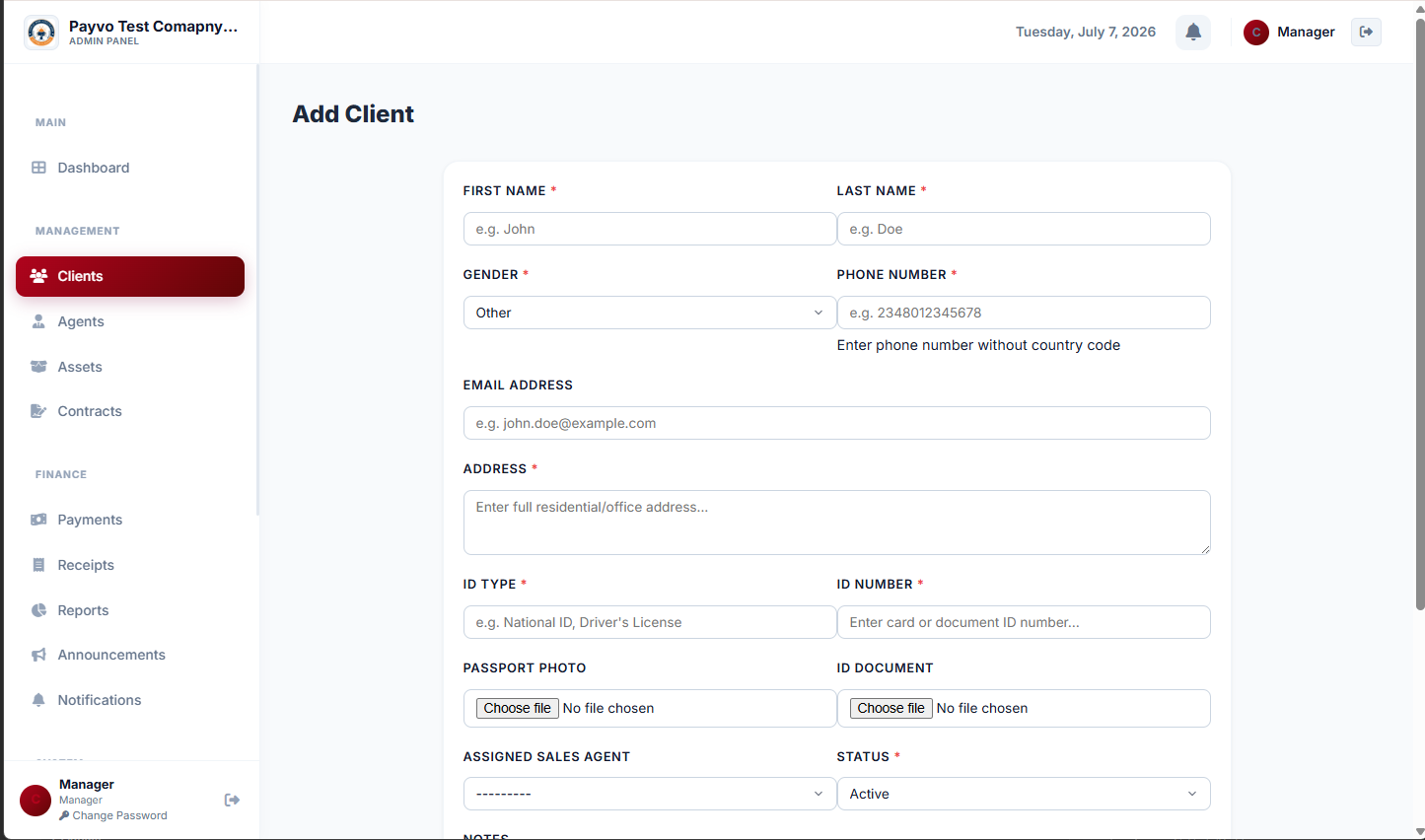 register and manage client details
seamlessly, capturing all necessary information and linking it to their assets and contracts. No more searching through physical files or disparate systems.
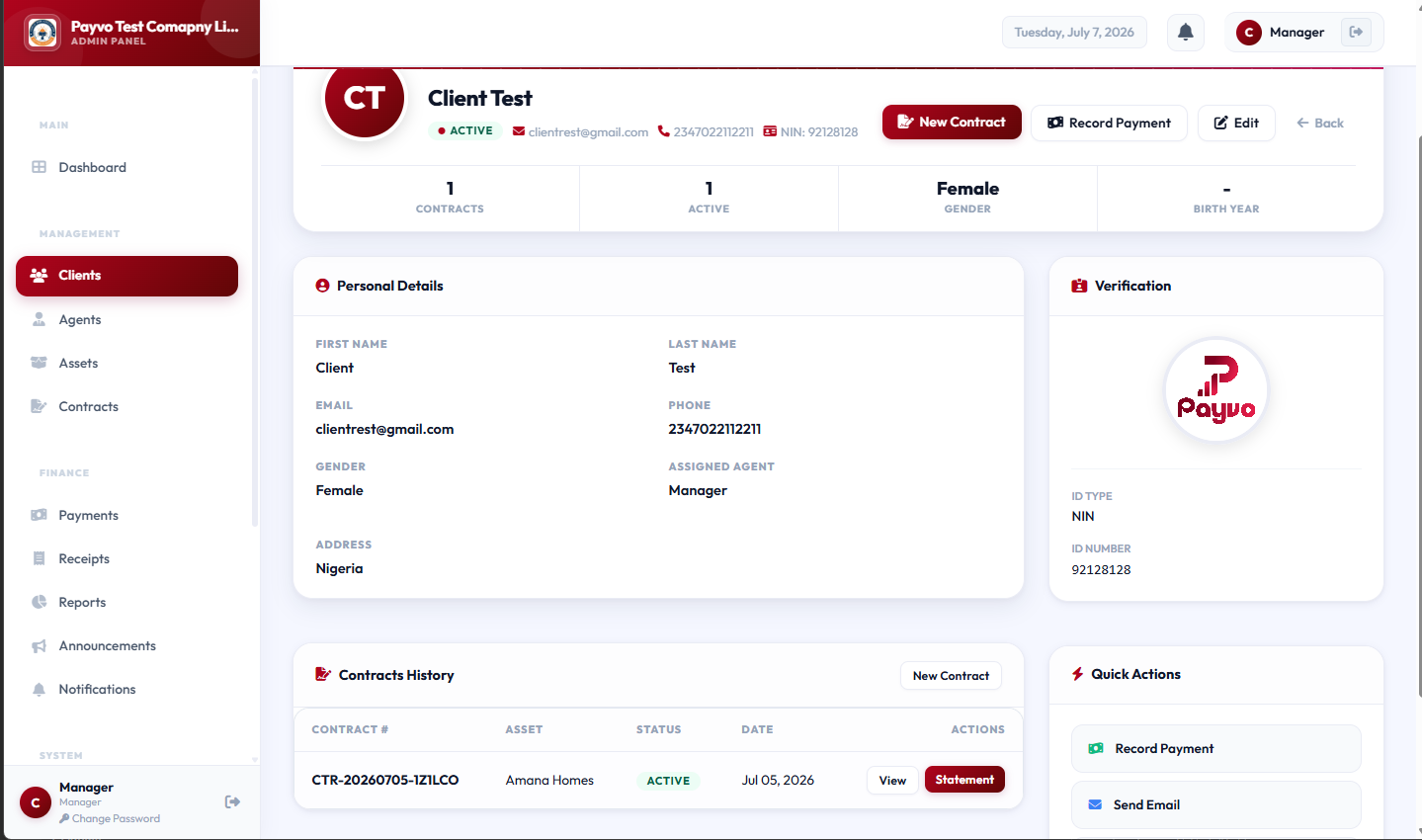 Cllient: Client Details page
Once a deal is made, whether it's a plot of land, a vehicle, or solar panels, you can
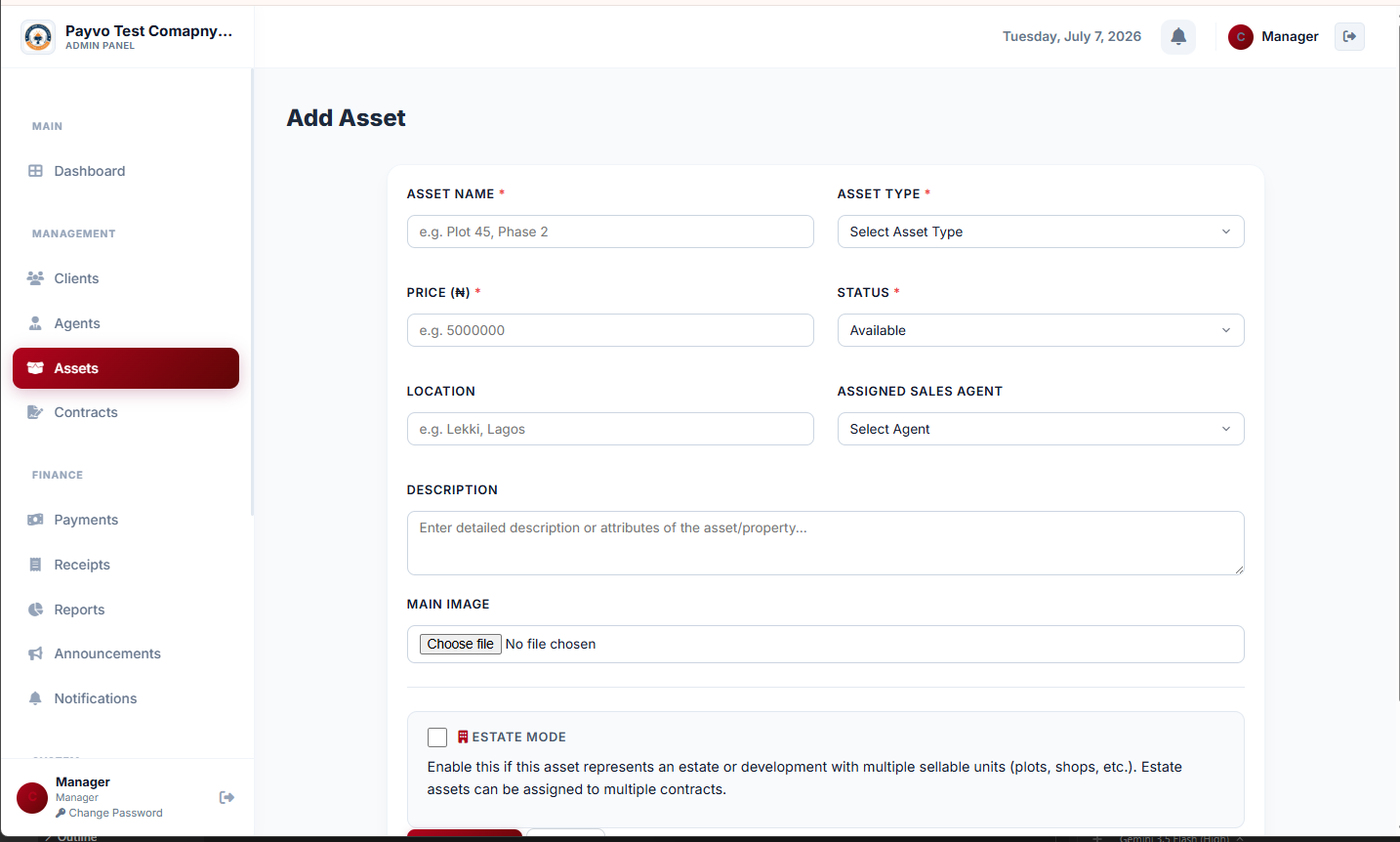 register and manage assets
within the platform, ensuring every item sold on installment is properly tracked. Our system allows you to
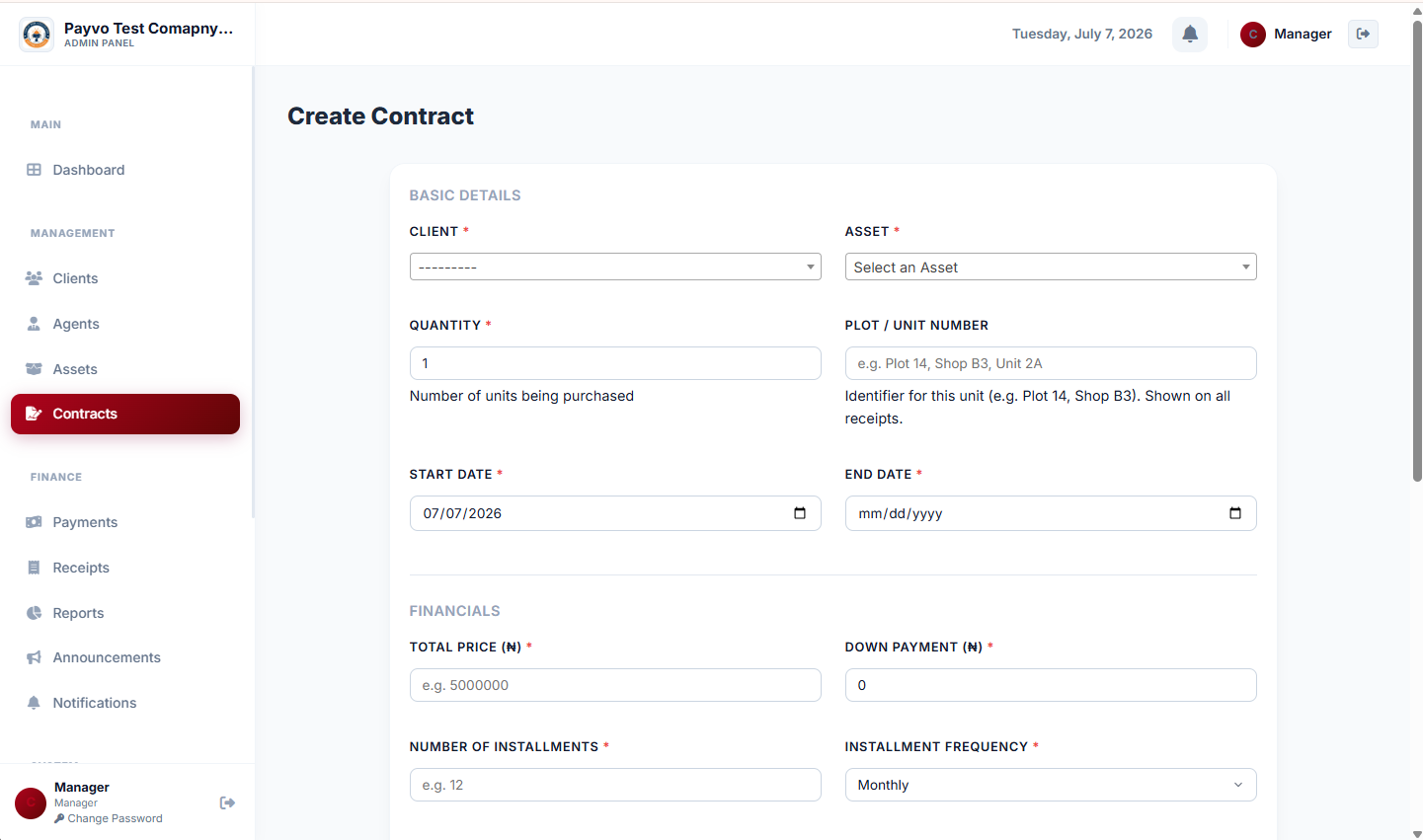 create contracts
with flexible payment terms, and the installment schedules are generated automatically, eliminating manual calculations and potential errors.
For every payment received, Payvo allows you to
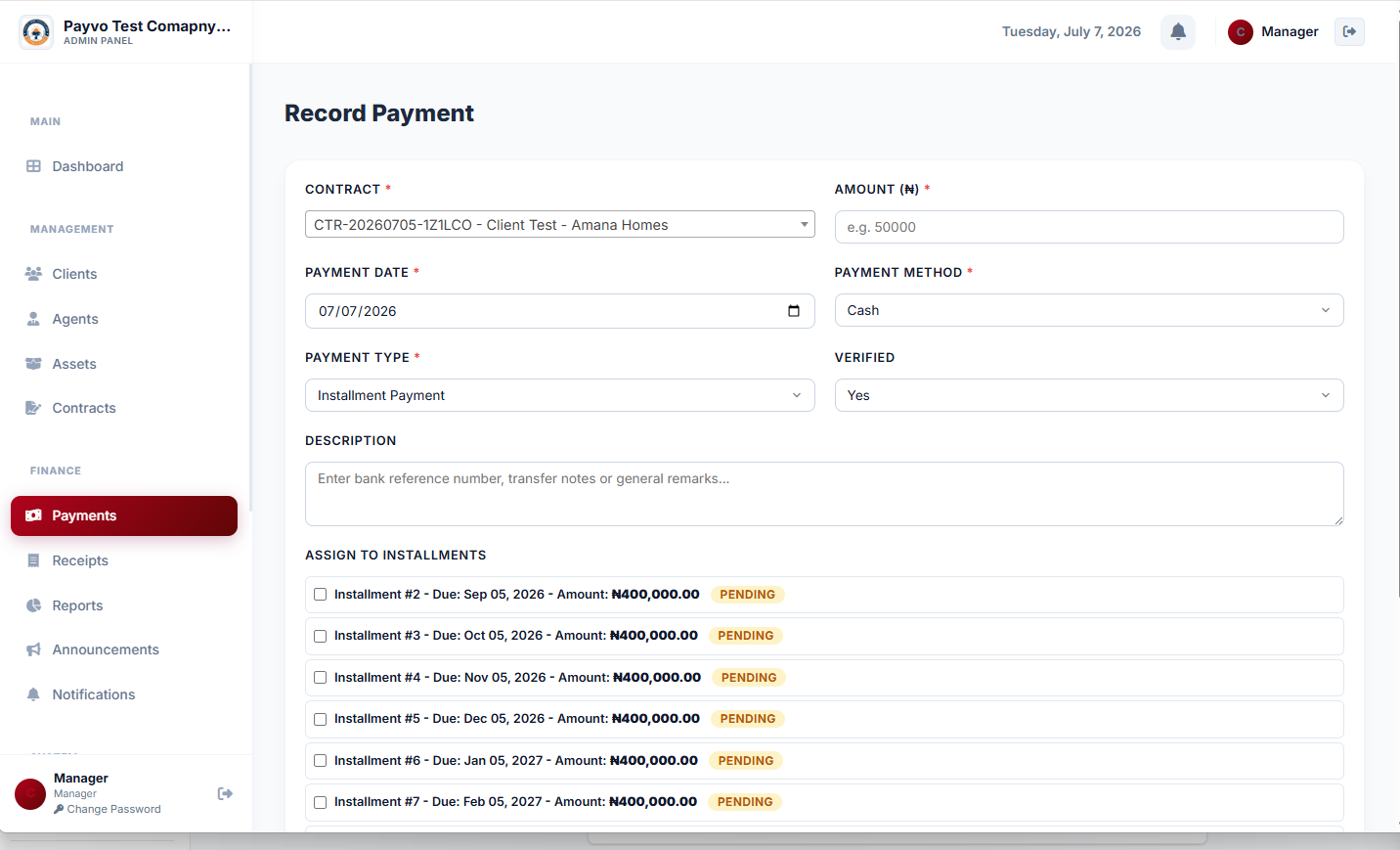 record payments
with ease, and immediately
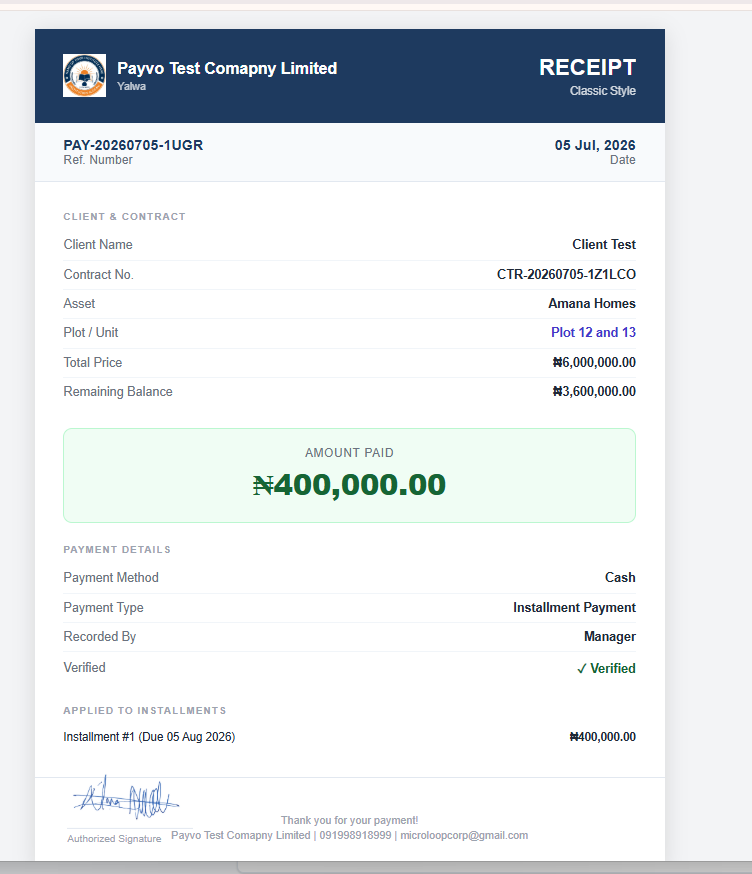 generate branded receipts
that reflect your company's logo and digital signature. These receipts can be sent automatically via email and WhatsApp, providing a professional touch and giving clients immediate proof of payment.
Finance: Paymnet Receipt SampleOne of Payvo's most powerful features is its
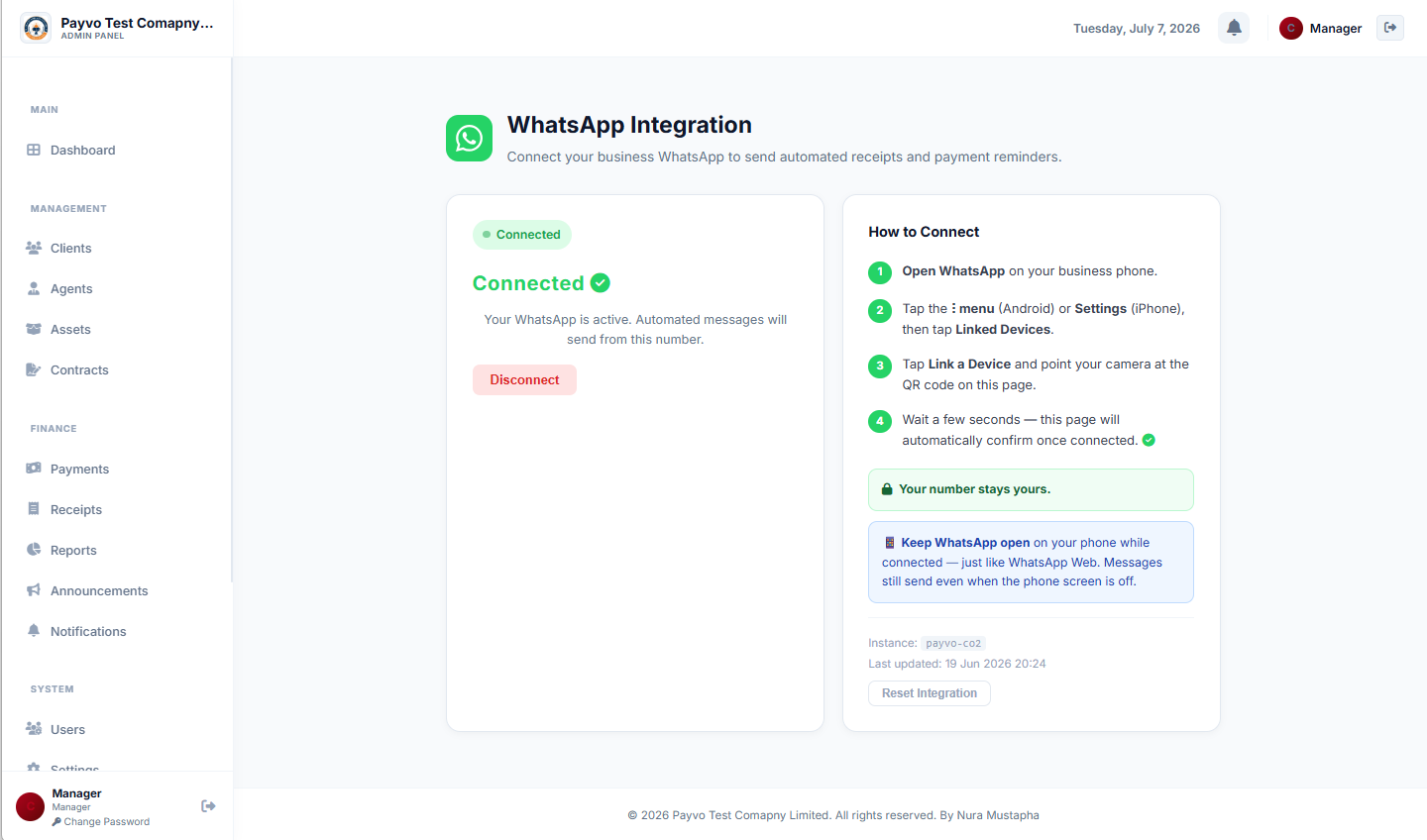 automated notification system
. It sends out payment reminders before due dates, significantly reducing the need for manual follow-up calls and improving collection rates. This WhatsApp payment notification system is a game-changer for businesses dealing with a large volume of clients.
For businesses with sales teams, Payvo offers robust agent commission tracking software. You can assign agents to contracts, automatically calculate their commissions per payment, and track their full earnings and payout history. Agents can even use a self-tracking portal to view their KPIs and submit withdrawal requests directly, streamlining the entire process.
Payvo provides
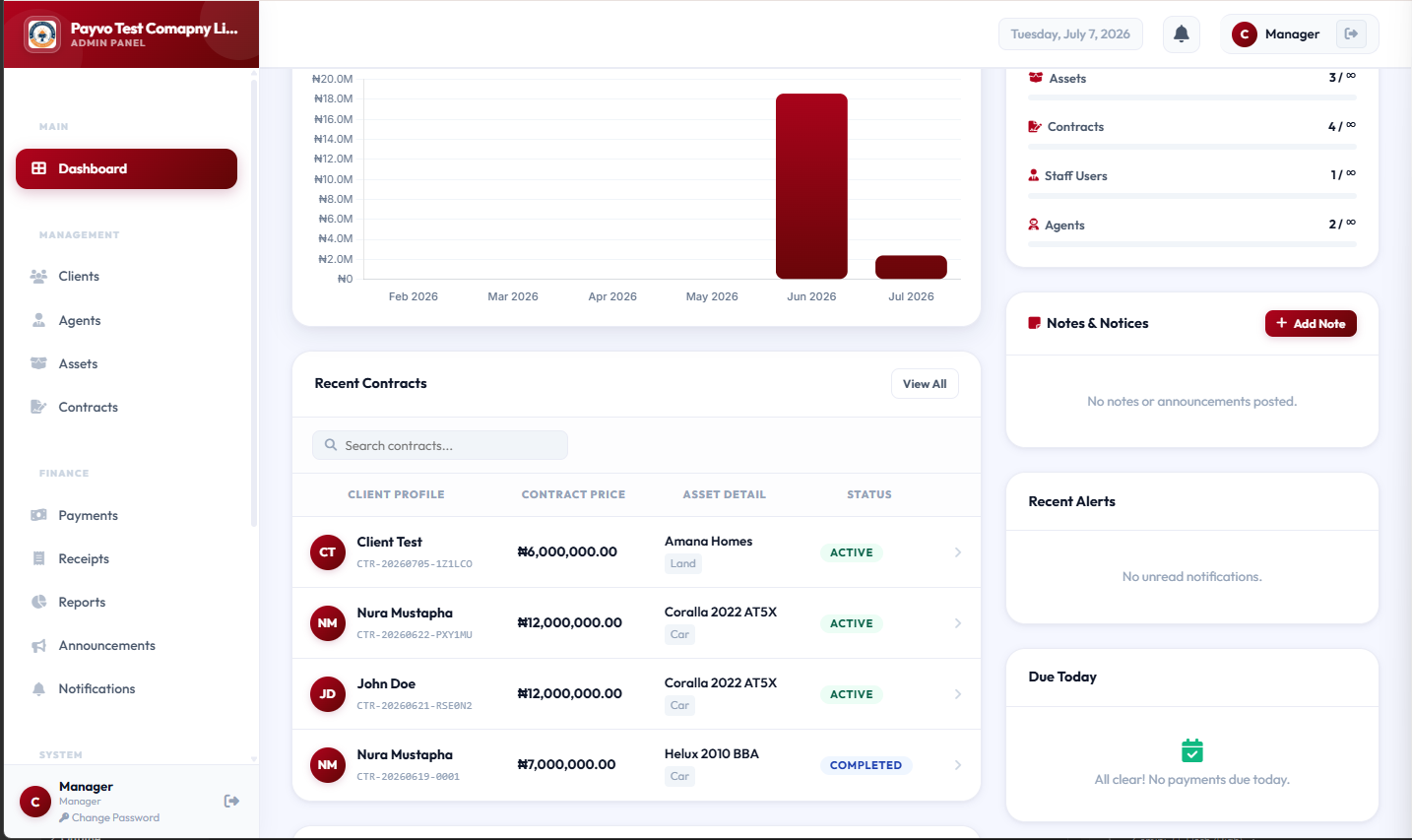 real-time dashboards
that give you an instant overview of your total clients, active contracts, amounts collected, outstanding balances, and next payment dues. This comprehensive business payment tracking app Nigeria businesses need helps you stay on top of your finances. You can also
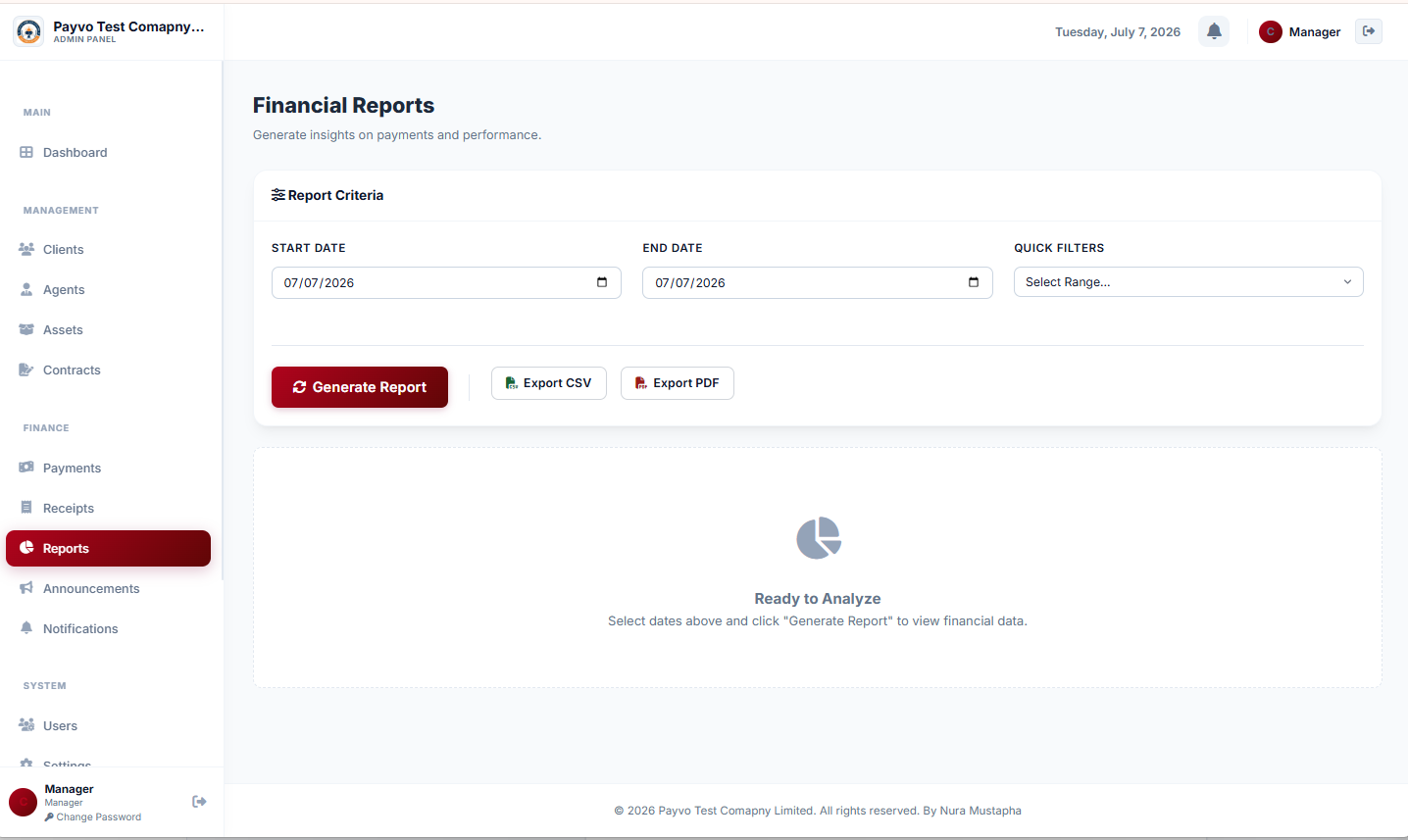 generate detailed reports
for accounting and record-keeping, ensuring full transparency and compliance. To see how Payvo can transform your operations, take a closer look at our about Payvo page.
> "In Nigeria's dynamic market, the ability to manage installment payments efficiently isn't a luxury; it's the backbone of sustainable growth for businesses selling high-value assets."
Proof: Side-by-Side Comparison
Let's look at how traditional manual methods stack up against a modern installment management software like Payvo.
| Feature / Aspect | Traditional Manual Methods | Modern Installment Management Software (e.g., Payvo)