Your desk is buried under stacks of paper contracts, a WhatsApp chat for every client, and a ledger that hasn't seen an update in weeks. You’re trying to manage hundreds of installment payments, track agent commissions, and keep clients happy, but the chaos feels overwhelming. In 2026, relying on manual processes for your installment-based business isn't just inefficient; it's a direct threat to your bottom line and reputation.
 Business owner looking overwhelmed by paperwork
The Evolving Landscape of Document Management in Nigeria (2026)
The Nigerian business environment is rapidly digitizing. What was once acceptable – paper contracts, manual ledgers, and fragmented communication – is now a significant competitive disadvantage. Businesses that thrive in 2026 are those embracing technology to streamline operations, especially in sectors dealing with installment payments like real estate, car dealerships, and equipment leasing.
According to a recent report, digital transformation spending in Nigeria is projected to grow by over 15% annually through 2028, with small and medium enterprises (SMEs) being key drivers of this adoption. This shift is fueled by the need for greater efficiency, transparency, and better customer service in a market where consumers expect instant updates and seamless interactions. For businesses selling on credit or installment, managing client data, contracts, and payment schedules manually is prone to errors, delays, and disputes. Imagine trying to reconcile hundreds of individual payments across multiple clients, each with their unique payment plan. The time wasted on administrative tasks could be spent on sales or business development.
Moreover, the regulatory landscape is becoming more stringent, requiring meticulous record-keeping and clear audit trails. A robust document management software isn't just about going paperless; it's about building a resilient, compliant, and customer-centric operation. This is particularly crucial for cooperative societies and microfinance operators who manage numerous member accounts and transactions daily. Without a centralized system, tracking contributions, disbursements, and loan repayments becomes a monumental task, often leading to discrepancies and loss of trust.
What You Need Before You Start
Before diving into the world of document management software, prepare your business for a smooth transition. Here's a quick checklist:
- Define Your Needs: Clearly list the specific challenges you want the software to solve (e.g., tracking installment payments, generating receipts, managing agents).
- Budget Allocation: Determine a realistic budget for software subscriptions, implementation, and potential training. Remember, this is an investment, not just an expense.
- Data Audit: Gather and organize your existing client data, contracts, and payment records. This will make data migration much smoother.
- Team Buy-in: Ensure your staff understands the benefits of the new system and are ready to embrace the change.
- Internet Connectivity: A reliable, high-speed internet connection is crucial for cloud-based solutions, costing roughly ₦15,000 - ₦50,000 per month depending on location and speed.
- Hardware (Optional): If you're digitizing physical documents, consider a professional document scanner, which can cost between ₦150,000 - ₦700,000 for a good model.
Step-by-Step: Choosing and Implementing the Best Document Management Software in Nigeria
Implementing a new system can seem daunting, but by breaking it down into manageable steps, you can ensure a successful transition.
Step 1: Assess Your Specific Business Requirements
The "best" software isn't a one-size-fits-all solution. Your unique business model dictates the features you'll need. Are you a car dealer selling on hire purchase, a real estate developer managing property sales, or a cooperative society handling member contributions? Each has distinct requirements. For instance, a car dealer needs robust asset tracking for vehicles, while a real estate developer might prioritize detailed contract management and payment scheduling.
Consider the volume of clients and contracts you handle. Do you need a system that can automatically generate installment schedules based on custom payment terms? What about automated payment reminders via WhatsApp or email? Identify your pain points: Is it lost documents, missed payment deadlines, or difficulties in tracking agent commissions? A clear understanding of these will guide your search for the right solution.
Step 2: Research Available Solutions and Their Features
Once your requirements are clear, begin researching available document management software solutions in Nigeria. Look for platforms that offer features critical to installment-based businesses. Key functionalities to prioritize include:
- Client Management: The ability to register and manage client details, including their payment history and contract information.
- Contract Management Software Nigeria: A system that allows you to create, store, and manage contracts digitally, setting payment terms and automatically generating installment schedules.
- Payment Tracking: A robust system for recording payments, generating receipts, and tracking outstanding balances. This is where a business payment tracking app Nigeria truly shines.
- Automated Notifications: Features like a WhatsApp payment notification system and email reminders for clients and internal staff.
- Agent Commission Tracking Software: If you work with agents, software that can automatically calculate and track their commissions per payment.
- Reporting and Analytics: Dashboards and customizable reports to give you real-time insights into your business performance.
Step 3: Evaluate Costs and Return on Investment (ROI)
Software costs can vary significantly. You'll encounter different pricing models:
- Subscription-based (SaaS): This is common for cloud-based solutions, with monthly or annual fees. A basic plan for a small business (1-5 users) might range from ₦15,000 - ₦50,000/month, while advanced plans for medium-sized enterprises (10-50 users) could be ₦70,000 - ₦250,000/month.
- One-time License: For on-premise solutions, a one-time license can cost ₦500,000 - ₦3,000,000, plus the cost of a dedicated server (₦800,000 - ₦3,500,000).
- Implementation/Setup Fees: Expect to pay ₦100,000 - ₦750,000 for initial setup and configuration.
- Data Migration: If you have a lot of existing data, migration services could cost ₦50,000 - ₦400,000.
- Training: Budget ₦10,000 - ₦30,000 per user for basic training.
- Customization/Integration: If you need specific features or integration with other systems, this can add ₦200,000 - ₦1,500,000.
- Annual IT Support: An ongoing support contract might cost ₦150,000 - ₦700,000 per year.
Step 4: Pilot Test and Data Migration
Before a full rollout, conduct a pilot test with a small group of users or a subset of your data. This helps identify any issues and allows your team to familiarize themselves with the new system. Once the pilot is successful, proceed with data migration. This involves moving your existing client, contract, and payment data into the new software. Ensure data integrity throughout this process.
Step 5: Staff Training and Rollout
Comprehensive training is vital for successful adoption. Ensure all relevant staff members, from sales agents to administrative personnel, are trained on how to use the software effectively. Focus on practical scenarios relevant to their daily tasks. After training, roll out the system across your entire organization. Provide ongoing support and encouragement during this transition period.
Step 6: Automate Your Installment Sales Process
This is where the real power of a dedicated system comes into play. Once your data is in and your team is trained, leverage the automation features. For businesses that sell on installment, a platform like Payvo can be transformative. It’s a full business management platform built specifically for companies that sell on installment.
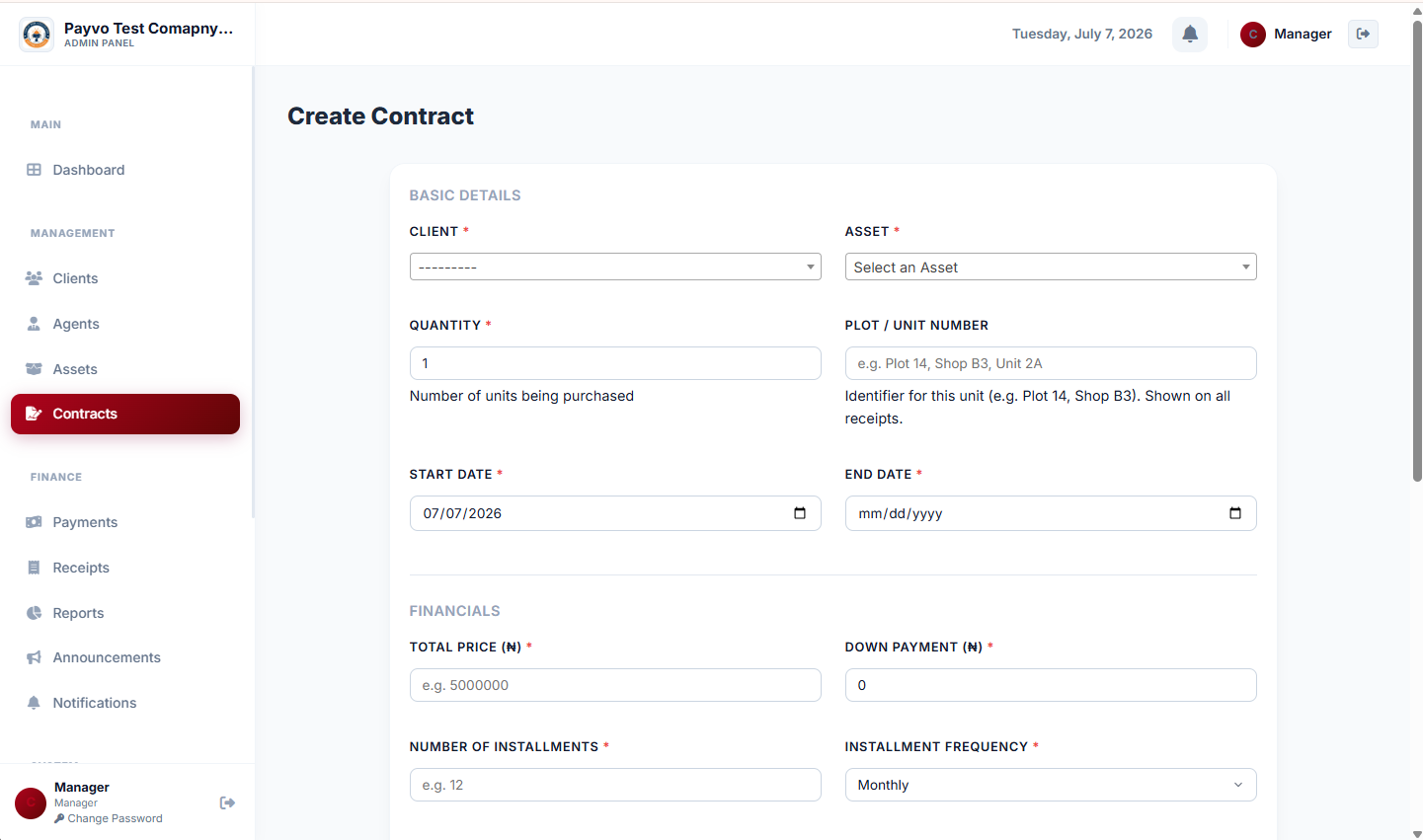 Admin: Add contract (top)
With Payvo, you can easily register and manage clients, storing their full details and viewing complete payment histories. You can register and manage assets – whether cars, property, or equipment – linking them directly to contracts. The system allows you to create contracts by setting payment terms once, and the installment schedules are generated automatically. This removes the manual burden of calculating due dates and amounts.
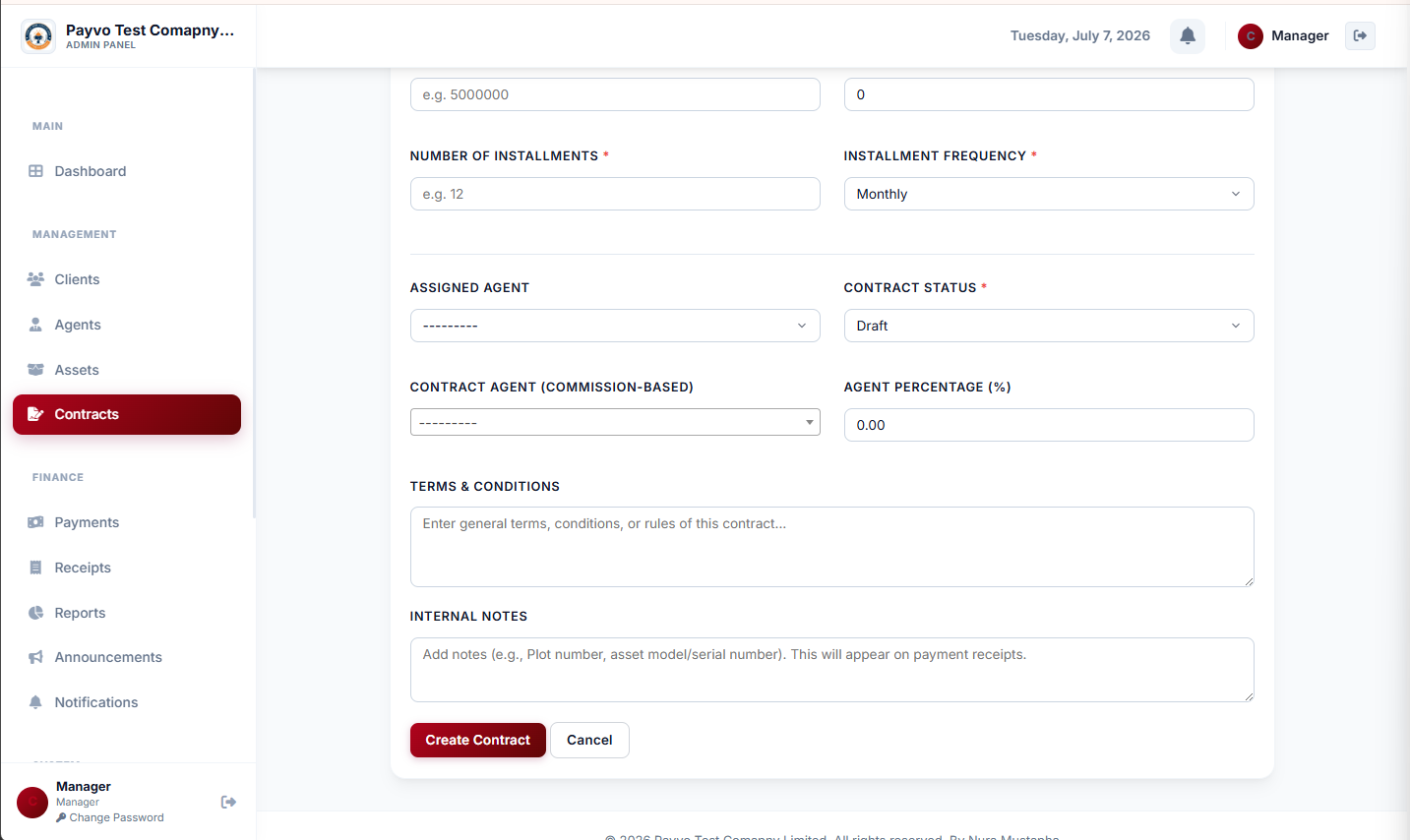 Admin: Add contract page (bottom)
When payments come in, you can record them efficiently, and the system logs every transaction. Payvo then automatically generates branded receipts (with your company logo, colors, and signature) for every payment. It also sends automatic notifications to clients via email and WhatsApp for new clients, new contracts, payments received, and payment reminders, including a public receipt link. This means less chasing for your team and more transparency for your clients. Furthermore, Payvo helps manage staff accounts with role-based permissions and offers agent commission tracking software, automatically calculating earnings per payment and tracking payout history. Agents can even log in to track their own earnings and submit withdrawal requests through the Agent Tracking Page.
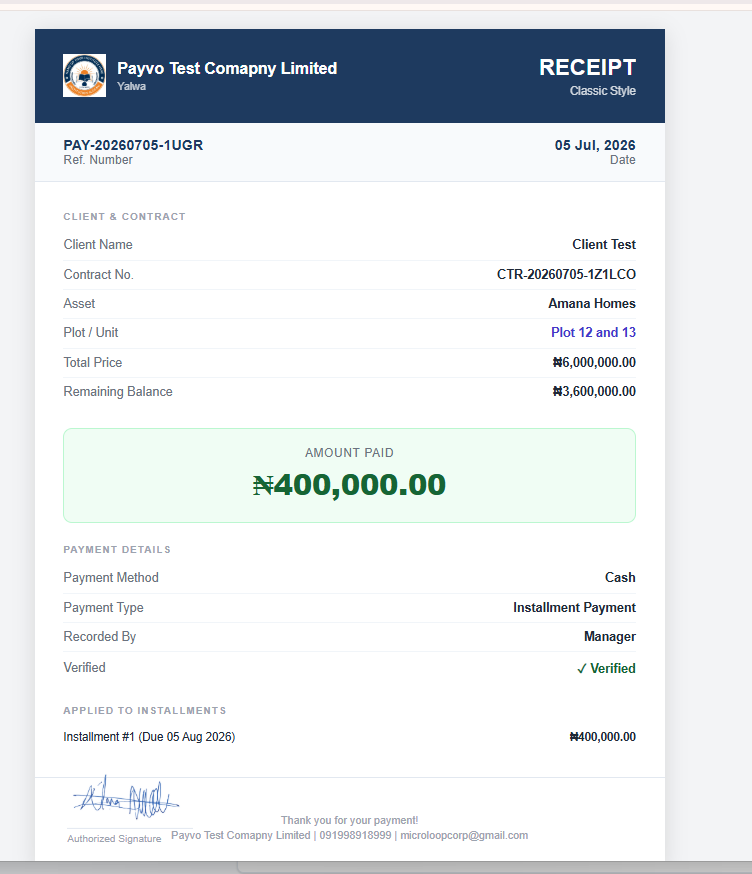 Finance: Paymnet Receipt Sample
By automating these processes, you free up valuable time, reduce errors, and ensure a consistent, professional experience for your clients.
Common Mistakes to Avoid
Navigating the implementation of new software can have pitfalls. Be mindful of these common mistakes:
- Underestimating Training Needs: Assuming staff will pick up the new system quickly without proper training can lead to frustration and low adoption rates.
- Ignoring Data Quality: Migrating dirty or incomplete data will only transfer existing problems to your new system. Clean your data thoroughly before migration.
- Over-customization: While some customization is good, trying to replicate your old, inefficient processes in the new software can negate its benefits and increase costs.
- Lack of Clear Leadership: Without a champion or dedicated project manager, the implementation can lose momentum and direction.
- Choosing the Cheapest Option Over the Best Fit: Prioritizing low cost over functionality that truly addresses your business needs often leads to dissatisfaction and the need for another software change down the line. A cooperative society management software needs specific features that a generic solution might lack.
- Neglecting Security: Ensure the chosen software has robust security features to protect sensitive client and financial data, especially important for any business payment tracking app Nigeria.
How to Track and Grow After Launch
Implementing new software is just the beginning. To truly leverage your investment, you need to continuously track performance and look for growth opportunities.
- Monitor Key Performance Indicators (KPIs): Track metrics such as payment collection rates, overdue payments, client retention, and agent performance. Your dashboard should provide a real-time overview of these.
- Utilize Reporting Features: Regularly generate reports on sales, payments, and client activity. This data is invaluable for making informed business decisions. For instance, Payvo offers real-time dashboards where you can see total clients, active contracts, amount collected, outstanding balances, and next payment due at a glance. You can also generate reports, exporting payment and contract data as PDF or Excel for accounting and record-keeping, and receive weekly email summaries covering key business performance metrics.
- Gather Feedback: Solicit feedback from your team and clients. Are there features they find particularly useful? Are there areas for improvement?
- Optimize Workflows: As your team becomes more familiar with the software, look for ways to further optimize your internal processes. Can you automate more tasks? Can you integrate with other tools you use?
- Stay Updated: Software providers regularly release updates and new features. Stay informed and leverage these enhancements to keep your operations efficient.
- Scale Your Operations: A robust system will allow you to take on more clients and contracts without a proportional increase in administrative burden. This is crucial for sustainable growth.
Frequently Asked Questions
What is the best document management software for small businesses in Nigeria?
The "best" depends on your specific needs, but for small businesses dealing with installment sales, a system that combines client management, contract tracking, and automated payment features is ideal. Look for user-friendly interfaces and strong local support. Payvo, for example, is designed specifically for these types of businesses, offering a comprehensive solution for managing contracts, payments, and clients efficiently.
How much does installment management software cost in Nigeria?
Costs vary widely. Basic cloud-based subscriptions can start from ₦15,000 – ₦50,000 per month. More advanced systems with extensive features and integrations can go up to ₦250,000 per month or more, plus potential one-time setup and training fees. It’s an investment that typically pays for itself through increased efficiency and reduced losses. For detailed pricing, check out the Payvo Pricing Page.
Can document management software help with agent commission tracking?
Absolutely. Many modern systems, especially those designed for installment sales, include features for agent management. They allow you to assign agents to contracts, automatically calculate their commission per payment, and track their full earnings and payout history. This eliminates manual calculations and disputes. Payvo specifically offers robust Agent Tracking capabilities.
Is a WhatsApp payment notification system necessary for my business?
In Nigeria, where WhatsApp is a primary communication channel, an integrated WhatsApp payment notification system is highly beneficial. It ensures clients receive timely payment reminders and transaction confirmations directly, improving communication and reducing missed payments. This feature can significantly enhance client satisfaction and reduce the manual effort of follow-up calls.
What should I look for in a receipt generator app in Nigeria?
A good receipt generator app should produce branded receipts with your company logo and details, automatically for every payment. It should also ideally provide a secure, shareable link for clients to access their receipts, and keep a master record of all transactions. This ensures professionalism and transparency.
What are the benefits of using contract management software Nigeria?
Using dedicated contract management software centralizes all your contracts, automates payment scheduling, reduces errors, and provides a clear audit trail. It helps businesses, especially those in real estate and equipment leasing, manage complex payment terms, track compliance, and ensure all parties adhere to agreements. This leads to better organization, fewer disputes, and improved financial oversight.
 Digital dashboard showing financial metrics
Ready to Streamline Your Installment Sales?
The future of installment-based businesses in Nigeria is digital. Stop wrestling with paperwork and embrace a system that automates your processes, enhances client satisfaction, and drives growth. Explore how a dedicated platform can transform your operations. Visit our Public Home Page to learn more about how Payvo can help you manage your contracts, payments, and clients with ease. Or, if you’re ready to get started, you can Register into Payvo page today.