Late payments, missed deadlines, and endless hours spent reconciling spreadsheets – if this sounds familiar, you're likely grappling with the hidden costs of manual installment management. For businesses relying on payment plans, from real estate developers in Abuja to car dealers in Kano, inefficient tracking isn't just an inconvenience; it’s a direct drain on profits and growth. The question isn't if you need a better system, but how much that system is truly worth.
The Hidden Drain: How Manual Installment Tracking Erodes Profitability
Many businesses focus solely on the upfront cost of software, overlooking the far greater expenses incurred by sticking with outdated, manual processes. These hidden costs manifest in several critical areas, directly impacting your bottom line and hindering scalability.
Time is Money: The Cost of Manual Labor
Imagine the hours your team spends each week on tasks that could be automated:
- Recording payments: Manually logging each payment, cross-referencing with client records, and updating ledgers.
- Generating receipts: Creating and distributing physical or digital receipts one by one.
- Sending reminders: Sifting through due dates, drafting individual messages, and following up on late payments.
- Reconciling accounts: Painstakingly matching transactions to contracts and identifying discrepancies.
 Manual ledger and calculator
The Staggering Impact of Late Payments and Defaults
Manual systems are inherently prone to human error and delays, which directly contribute to higher rates of late payments and defaults. When reminders aren't sent promptly or consistently, clients can easily forget due dates. Without a clear, real-time overview of outstanding balances, chasing payments becomes reactive rather than proactive.
A study published by the Central Bank of Nigeria in 2025 highlighted that businesses utilizing automated payment reminders experienced a 25-30% reduction in overdue receivables compared to those relying on manual follow-ups. For a car dealer selling vehicles on hire purchase, where each missed payment can lead to significant recovery costs and potential asset depreciation, this percentage translates into substantial lost revenue. The inability to quickly identify and act on defaulting contracts also ties up valuable assets and capital, limiting your ability to reinvest and grow.
Operational Inefficiencies and Lack of Transparency
Beyond direct financial costs, manual installment management creates a web of operational inefficiencies:
- Disputes: Clients challenging payment records or receipt authenticity due to fragmented documentation.
- Staff frustration: High turnover among administrative staff burdened by repetitive, error-prone tasks.
- Poor decision-making: Lack of real-time data prevents informed decisions on pricing, credit terms, or sales strategies.
- Compliance risks: Difficulty in maintaining accurate, auditable records for tax purposes or regulatory scrutiny.
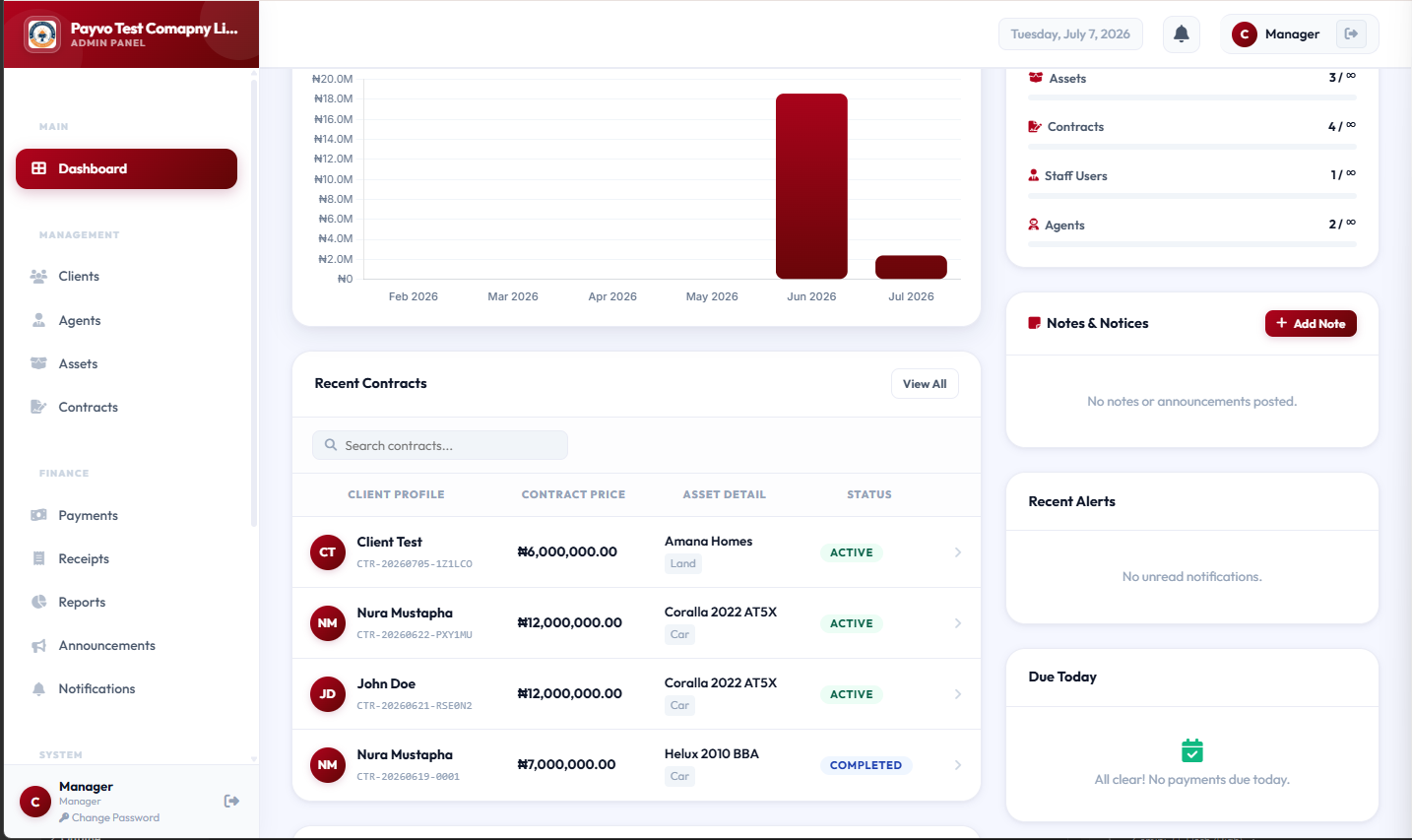 Dashobard (top)
The Smarter Approach: Centralized, Automated Installment Management
The solution to these challenges lies in adopting a centralized, automated system designed specifically for installment sales. This approach shifts from reactive problem-solving to proactive management, transforming how businesses handle contracts, payments, and client relationships.
A robust installment management system provides a single source of truth for all your sales on credit. It automates repetitive tasks, enforces payment schedules, and provides real-time insights into your financial health. This isn't just about digitizing existing processes; it's about fundamentally re-engineering them for efficiency, accuracy, and scalability.
Key components of this smarter approach include:
- Automated Contract Generation and Scheduling: Setting payment terms once and letting the system generate the entire installment schedule.
- Streamlined Payment Recording: Quickly logging payments and instantly updating client and contract records.
- Proactive Communication: Automated reminders and notifications for upcoming payments, successful transactions, and overdue amounts.
- Comprehensive Client and Asset Tracking: A unified database for all client information, payment history, and details of assets sold.
- Real-time Reporting and Analytics: Instant access to dashboards showing key metrics like total clients, active contracts, collected amounts, and outstanding balances.
Payvo: Your Partner in Streamlined Installment Management
This is where Payvo steps in as a comprehensive contract and installments management system, built to address the exact pain points detailed above. Payvo transforms the way businesses like yours manage sales on credit, moving you from manual chaos to automated clarity.
With Payvo, you can effortlessly register and manage clients, storing full details and viewing complete payment histories at a glance. For businesses like car dealers or real estate developers, the ability to register and manage assets – tracking cars, property, or equipment linked directly to contracts – is invaluable.
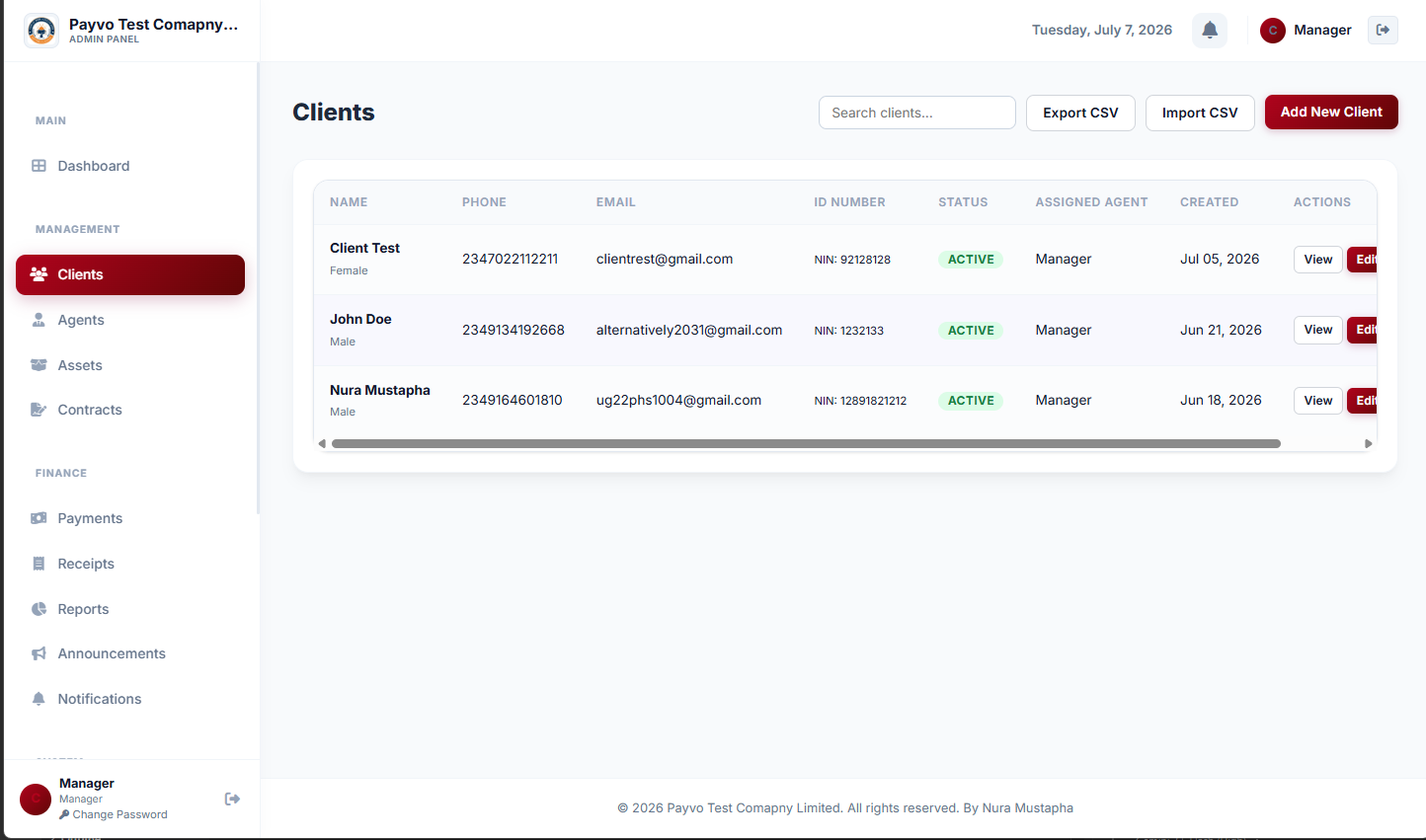 Client: Clients list page
Creating contracts becomes a breeze: simply set payment terms once, and installment schedules are generated automatically. Recording payments is quick and accurate, with every transaction logged and full history tracked. Crucially, Payvo automates the creation of branded receipts (complete with your company logo and digital signature) for every payment, and even a master receipt for full contracts.
Perhaps one of the most impactful features is the automated notification system. Payvo sends new client, new contract, payment received, and payment reminder notifications automatically via email and WhatsApp. This includes a public receipt link clients can view, save, or share, significantly reducing manual follow-up calls and improving client satisfaction. This WhatsApp payment notification system is a game-changer for businesses engaging directly with customers.
For businesses with sales teams, Payvo offers advanced agent commission tracking software. You can assign agents to contracts, automatically calculate commission per payment, and track full earnings and payout history. Agents can even log in to view their own KPIs and submit withdrawal requests directly, streamlining your agent tracking processes. This comprehensive approach to managing installment payments and sales teams is why businesses are turning to platforms like Payvo. Dive deeper into what Payvo offers at our Public Home Page.
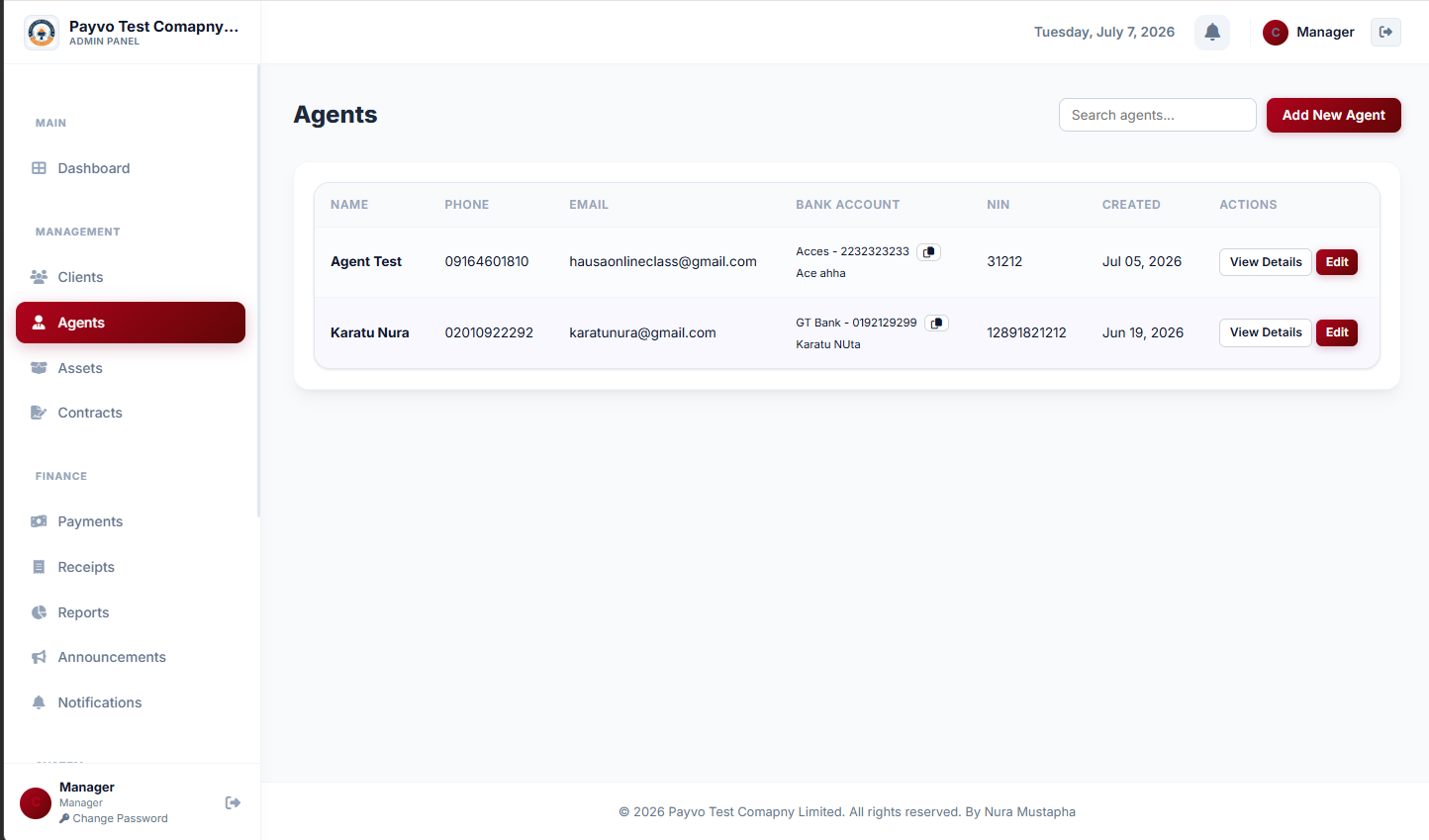 Agent: Agents list page
Proof: Side-by-Side Comparison
Let’s look at a clear comparison between the traditional, manual methods and an automated system like Payvo.
| Feature / Process | Traditional Manual Methods | Automated Installment Management System (e.g., Payvo) |
|---|---|---|
| Client Onboarding | Paper forms, disparate spreadsheets, manual data entry, prone to errors. | Digital client registration, centralized database, comprehensive client details and payment history in one place. |
| Contract Creation | Manual drafting, calculation of payment schedules, physical signatures, lengthy process. | Automated contract generation, payment terms set once, installment schedules automatically calculated, digital signing options. |
| Payment Collection & Tracking | Manual recording in ledgers/spreadsheets, difficult to track overdue payments, inconsistent follow-up. | Automated payment recording, real-time updates to client accounts, instant identification of overdue payments, automated reminders. |
| Receipt Generation | Manual writing, printing, and distribution; inconsistent branding. | Automated, branded digital receipts generated instantly for every payment, accessible via public link, consistent branding. |
| Reminders & Follow-up | Manual calls, text messages, or emails; inconsistent timing, high staff effort. | Automated payment reminders via email and WhatsApp, customizable schedules, significantly reduced staff effort, improved collection rates. |
| Agent Management | Manual commission calculations, often delayed payouts, lack of agent self-service. | Automated commission calculation per payment, real-time agent earnings tracking, agent self-service portal for KPIs and withdrawal requests. |
| Reporting & Insights | Tedious manual compilation from various sources, outdated data, limited visibility. | Real-time dashboards, instant reports (PDF/Excel), clear overview of total clients, active contracts, collected amounts, and outstanding balances. |
| Data Security & Audit | Vulnerable to data loss, difficult to audit, inconsistent record-keeping. | Secure cloud storage, audit logs, role-based access control, robust data integrity, easy compliance. |
| Scalability | Limited by human capacity, difficult to expand without proportional increase in staff. | Highly scalable, handles growing client base and contracts without significant increase in administrative overhead. |
| Error Rate | High due to human intervention, leading to disputes and reconciliation nightmares. | Significantly reduced due to automation, leading to higher accuracy and fewer client disputes. |
This comparison clearly illustrates how an installment management software Nigeria can provide immense value far beyond its subscription cost. For a real estate payment tracking Nigeria solution, the gains in efficiency and reduced risk are undeniable.
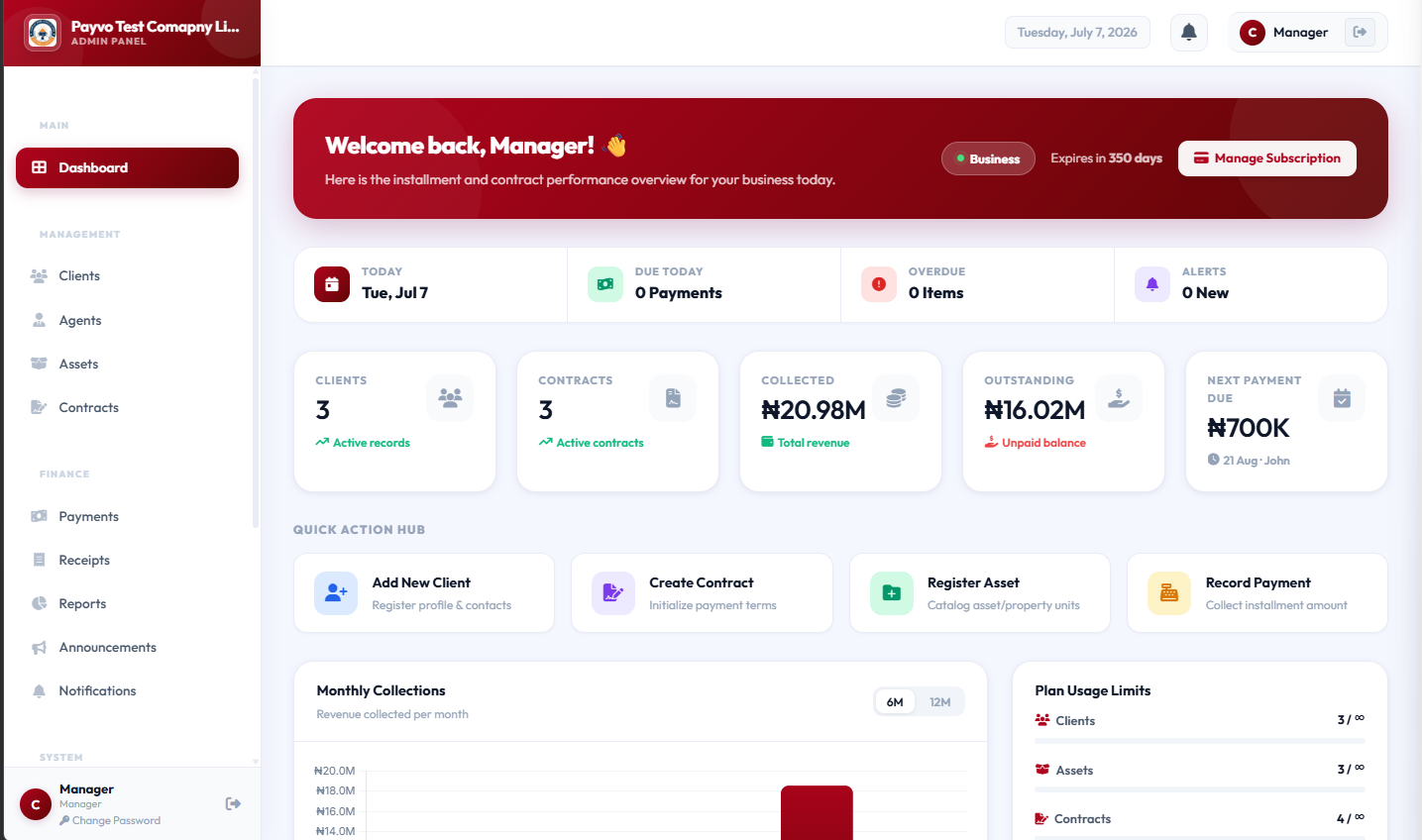 Dashboard (bottom)
> "In the rapidly evolving Nigerian economy, businesses that fail to adopt automation in their core financial operations risk being outpaced by more agile competitors. The competitive edge no longer comes from working harder, but from working smarter."
 Modern digital interface
Frequently Asked Questions
What is the primary benefit of an automated installment management system over manual tracking?
The primary benefit is a significant reduction in operational costs and errors, coupled with improved cash flow through more efficient payment collection. Automated systems like Payvo streamline client and contract management, generate receipts instantly, and send automated payment reminders, freeing up staff time and reducing late payments. This is crucial for any business, from a car dealer to a microfinance operator, needing to know how to track installment payments effectively.
How does an automated system help reduce late payments and defaults?
Automated systems reduce late payments by consistently sending timely reminders via email and WhatsApp before and on due dates. This proactive approach ensures clients are always aware of their payment obligations. Furthermore, real-time dashboards allow businesses to quickly identify overdue accounts and intervene early, preventing defaults. This consistent communication is a key feature of a robust business payment tracking app Nigeria.
Can an installment management system handle different types of assets and contracts?
Yes, a good installment management system is designed to be flexible. For example, Payvo allows you to register and manage various assets – be it properties for real estate developers, vehicles for car dealers, or equipment for leasing companies – and link them directly to specific contracts. This centralizes all relevant information, making it an ideal cooperative society management software or solution for any business with diverse credit sales.
Is staff and agent management integrated into these systems?
Absolutely. Modern installment management systems include features for managing staff accounts with role-based permissions, ensuring data security and controlled access. They also often incorporate robust agent commission tracking software, allowing businesses to assign agents to contracts, automatically calculate commissions based on payments, and provide agents with self-service portals to track their earnings. This comprehensive approach simplifies operations for companies with sales agents. You can find more details about agent tracking on our Agent Tracking Page.
How secure is my data in an automated installment management system?
Reputable automated systems prioritize data security. They employ secure cloud infrastructure, encryption, and regular backups. Features like audit logs and role-based permissions ensure that only authorized personnel can access or modify data, providing a high level of security and accountability. Payvo, for instance, offers robust security measures to protect your sensitive business and client information, including an audit log for transparency. Our Privacy Policy Page outlines our commitment to data protection.
Ready to Transform Your Installment Sales?
Stop letting manual processes drain your time and profits. Discover how Payvo can simplify your operations, boost your cash flow, and give you the clarity you need to grow your business.
Register for Payvo Today