
In Nigeria, a staggering 70% of small and medium-sized businesses still rely on manual methods like notebooks and spreadsheets to track installment payments. This outdated approach leads to missed payments, disputes, and significant revenue loss, especially for businesses dealing with high-value assets like real estate or vehicles. The complexity of managing diverse payment plans across multiple clients can quickly overwhelm even the most diligent business owner.
Why This Matters in 2026
The Nigerian economy is rapidly digitizing, and businesses that fail to adapt risk being left behind. In 2026, the demand for flexible payment options, such as installment plans, is higher than ever across sectors like real estate, auto sales, and equipment leasing. A recent report by the National Bureau of Statistics (NBS) indicates that consumer credit, often structured as installment payments, has grown by 15% year-on-year since 2023, reaching over ₦3 trillion in Q1 2026. This growth presents immense opportunities for businesses willing to offer structured payment solutions.
 A professional Nigerian real estate agent showing a property to a client.
However, offering installment plans without robust management systems can be a nightmare. Manual tracking is prone to human error, leading to inaccurate records, delays in follow-ups, and strained customer relationships. For instance, a single real estate developer in Abuja might manage hundreds of property sales, each with unique payment terms. Without an automated system, tracking down due dates, recording payments, and generating accurate receipts becomes a full-time job, diverting resources from core business growth. The Central Bank of Nigeria (CBN) has also emphasized the need for financial transparency and accurate record-keeping, making automated solutions not just convenient, but increasingly essential for compliance. Businesses looking to scale and maintain financial health must embrace efficient, digital methods for managing their installment sales.
What You Need Before You Start
Before diving into automating your installment schedules, ensure you have these foundational elements in place:
- Clear Payment Terms: Define your down payment requirements, interest rates (if any), payment frequency (weekly, monthly, quarterly), and the total duration of the payment plan.
- Client Information: Gather complete client details, including names, contact information (phone, email, WhatsApp), and any relevant identification documents.
- Asset Details: For businesses selling physical goods (cars, properties, solar panels), have detailed information about each asset, including its unique identifier, value, and any associated documents.
- Initial Capital: While automation saves time and reduces errors, there's always an initial investment, whether in software subscriptions or training. Budget for this.
- Legal Framework: Understand the legal implications of installment sales in Nigeria. Consult with a legal professional to draft robust contract templates that protect your business and your clients.
- Access to Communication Channels: Ensure you have reliable access to email and WhatsApp for automated client notifications and reminders.
Step-by-Step: Automate Payment Schedules for Any Contract
 A car dealer discussing a hire purchase agreement with a customer.
Automating your installment schedules transforms a complex, error-prone process into a streamlined operation. Here’s how to achieve it:
Step 1: Define Your Contract Parameters and Payment Structure
The first crucial step is to clearly outline the specifics of your installment contract. This includes the total amount due, the initial deposit, the number of installments, and the frequency of payments. Are payments due monthly, quarterly, or on a custom schedule? Will there be a grace period? For a real estate developer in Kano, this might mean setting up a ₦50 million property sale with a 20% down payment and 48 equal monthly installments.
Consider any unique terms, such as balloon payments or varying installment amounts over the contract period. Having these parameters well-defined is essential for the automation system to correctly generate the schedule. This initial setup is where you translate your business's financial policies into actionable data points.
Step 2: Register Clients and Assets
Efficient contract management begins with organized data. You need a system to register and manage all your client details, including their full names, contact information (phone numbers, email addresses, WhatsApp contacts), and any identification documents required for the contract. Simultaneously, if you're selling physical assets like cars, properties, or equipment, you must register these items with their unique identifiers, values, and any specific notes.
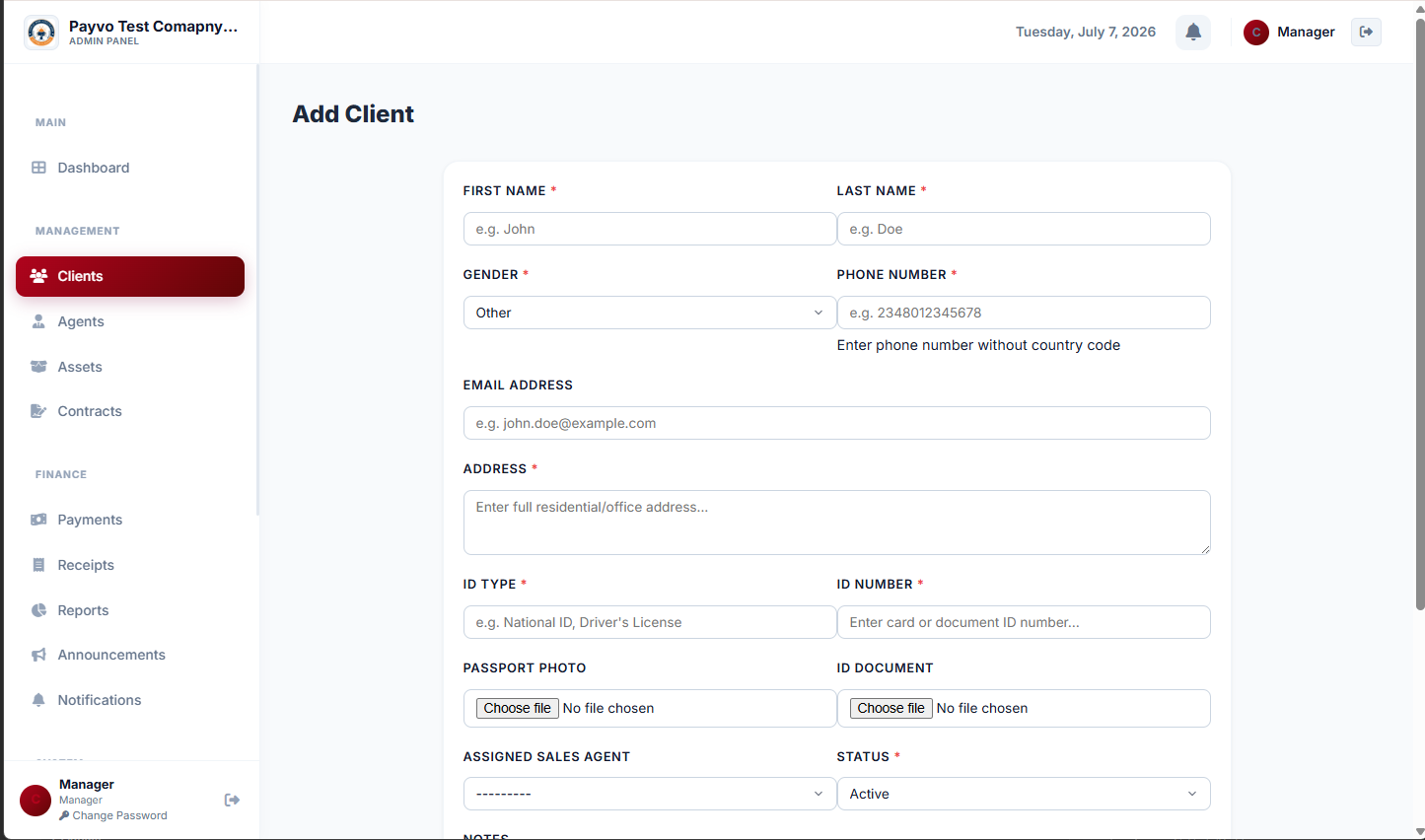 Client: Add Client page
For a car dealer in Kaduna, this means logging the vehicle's make, model, VIN, and current market value, linking it directly to the customer who is purchasing it on hire purchase. A robust installment management software Nigeria solution will allow you to store comprehensive client profiles and asset details, ensuring that all information relevant to a contract is easily accessible and correctly associated.
Step 3: Create the Contract and Generate the Schedule
This is the core of automation. Once your client and asset (if applicable) are registered, you can proceed to create the contract. Input the total contract value, the agreed-upon down payment, and the payment frequency and duration. The system should then automatically calculate and generate the full installment schedule, detailing each payment amount and its specific due date.
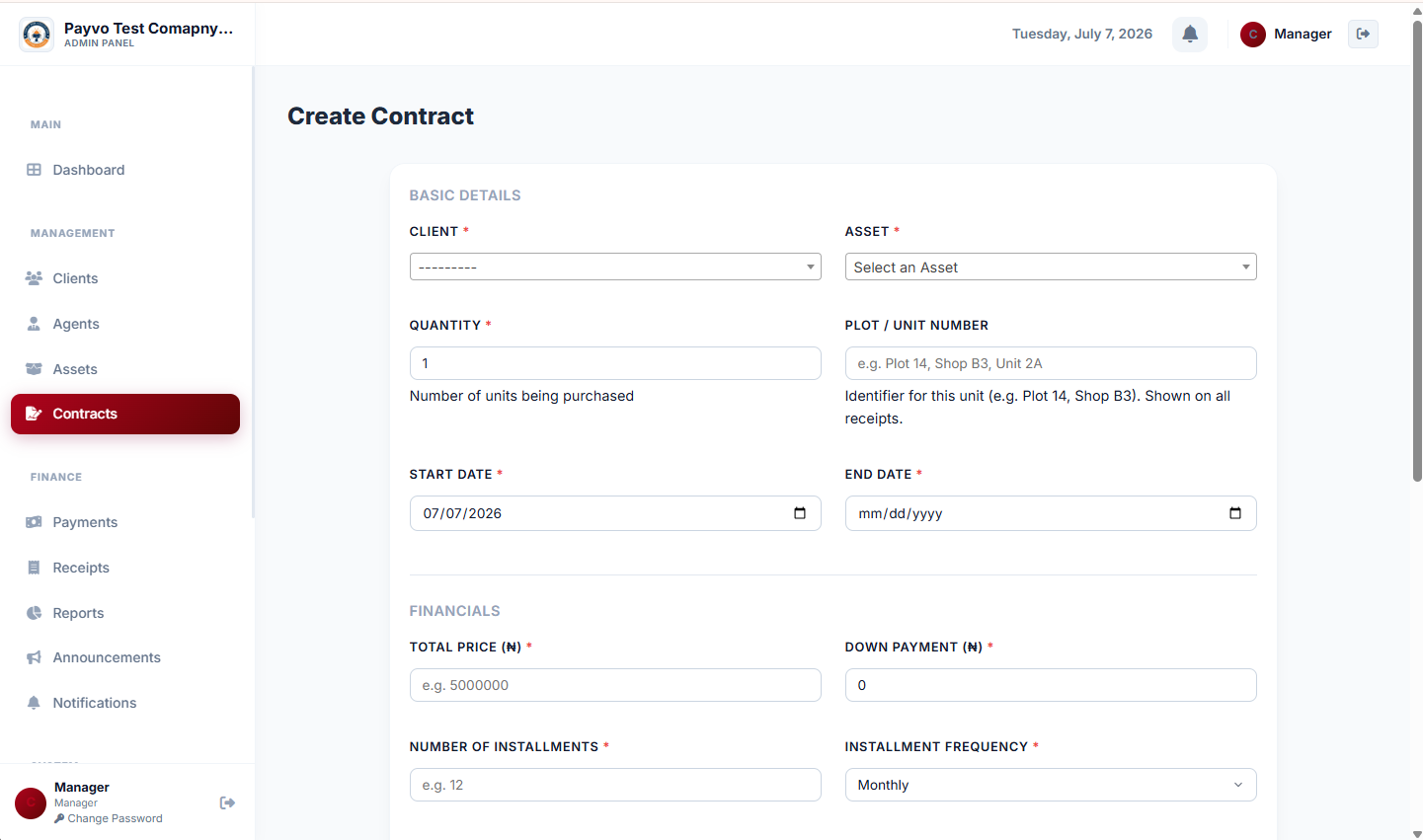 Management: Add contract (top)
For example, if you're a solar equipment leasing company, you would input the total lease value, the upfront fee, and select "monthly" for 24 months. The system, like a dedicated auto installment calculation feature, instantly populates all 24 payment entries. This eliminates manual calculation errors and provides a clear, transparent schedule for both your business and the client. This step is critical for any business using contract management software Nigeria to ensure accuracy and efficiency.
Step 4: Automate Notifications and Reminders
After the contract is created, automation truly shines in managing communications. Set up automatic notifications for contract creation, payment receipts, and, most critically, payment reminders. These notifications should be sent via multiple channels, including email and WhatsApp, to ensure maximum reach.
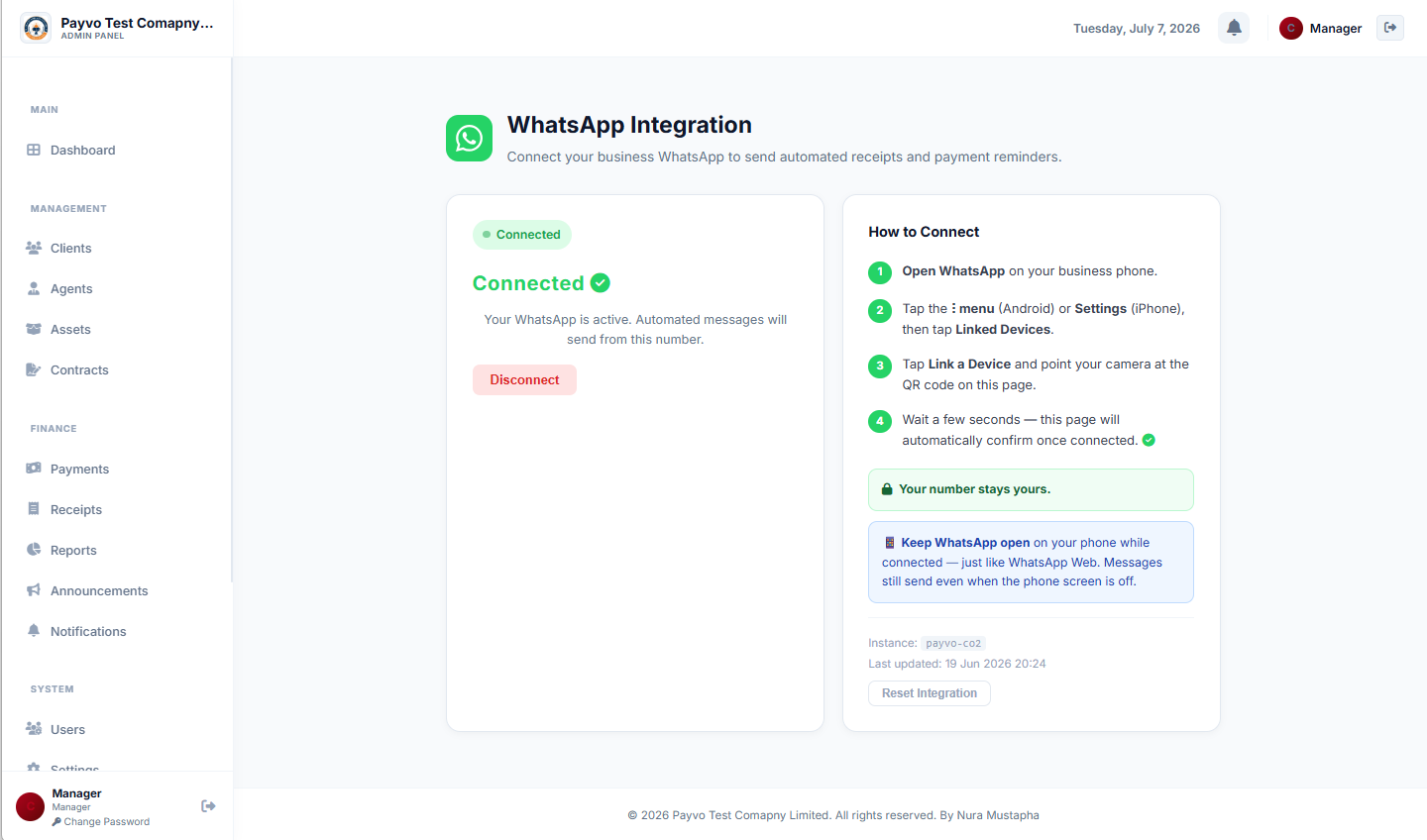 Admin: Whatsapp Integration
A WhatsApp payment notification system is particularly effective in Nigeria, given the widespread use of the platform. Automated reminders sent a few days before a payment is due can drastically reduce late payments. For cooperative societies, this means members receive timely alerts for their contributions, improving collection rates and reducing the burden on administrative staff. Look for a system that provides a public receipt link clients can view, save, or share, enhancing transparency.
Step 5: Record Payments and Generate Receipts
As payments come in, it’s essential to record them accurately and instantly. Your system should allow you to log single payments against any contract, automatically updating the client's payment history and outstanding balance. Immediately after a payment is recorded, an automated, branded receipt should be generated and sent to the client.
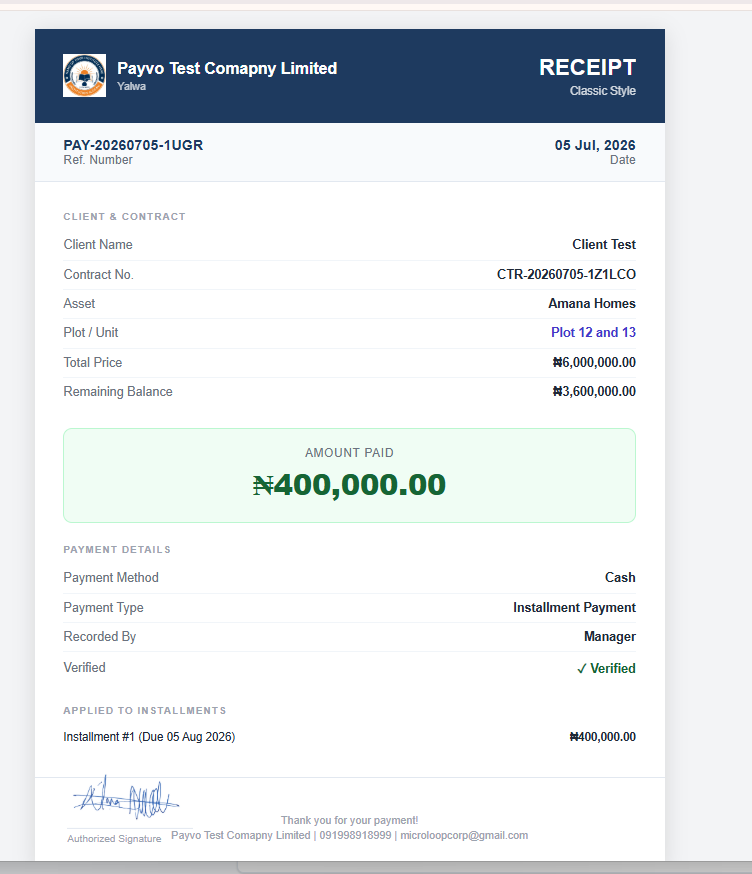 Finance: Paymnet Receipt Sample
This functionality is crucial for building trust and maintaining transparent records. A receipt generator app Nigeria will automatically apply your company logo, brand colors, and digital signature to every receipt. This not only professionalizes your operations but also provides clients with immediate proof of payment, reducing disputes. For a building material supplier selling on credit, this means customers receive instant confirmation for each installment paid, fostering a strong, reliable business relationship.
 A cooperative society meeting discussing financial contributions.
Step 6: Manage Staff and Agents
As your business grows, you'll likely have staff or agents involved in sales and collections. An effective installment management system allows you to add staff with role-based permissions, controlling what each person can see and do within the platform. This ensures data security and accountability.
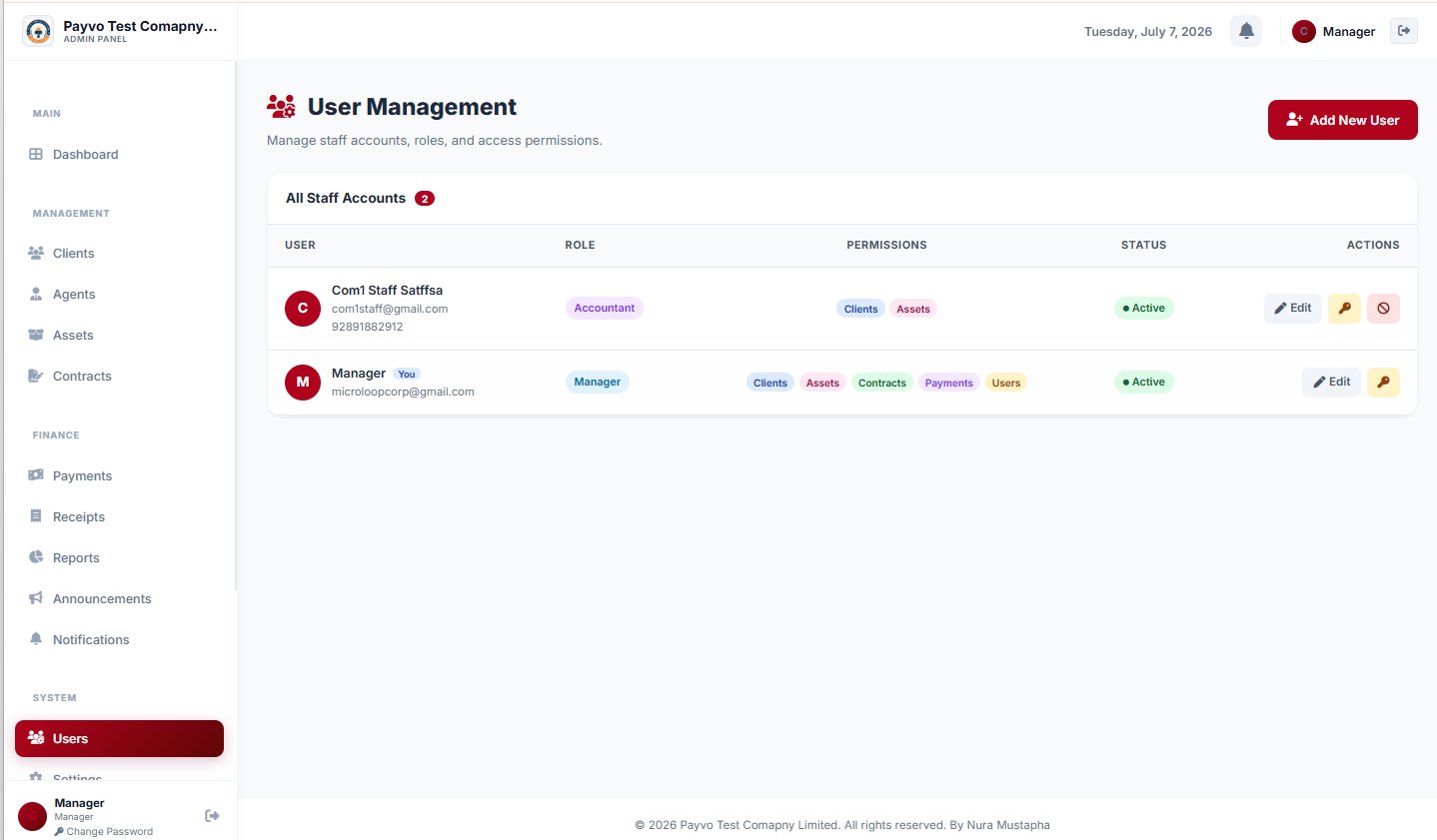 Admin: User Management Page
Furthermore, if you work with agents on commission, the system should allow you to assign agents to contracts and automatically calculate their commission per payment received. This agent commission tracking software capability ensures fair and accurate payouts, while also providing agents with self-tracking tools. Agents can log in to view their earnings and submit withdrawal requests directly, streamlining the commission process and improving agent motivation.
Step 7: Customize Branding and Reporting
Finally, personalize your client communications and ensure you have access to comprehensive business insights. Customize your company branding within the system by setting your logo, brand colors, and digital signature. These elements will automatically apply to all client-facing documents, such as receipts and contract confirmations, reinforcing your professional image.
For internal use, robust reporting features are indispensable. Your system should offer real-time dashboards displaying key metrics like total clients, active contracts, amount collected, outstanding balances, and next payment due. The ability to export payment and contract data as PDF or Excel files for accounting and record-keeping is vital. This level of detail is critical for strategic decision-making and financial planning for any business relying on business payment tracking app Nigeria solutions.
> "The shift from manual ledger books to automated installment management isn't just about efficiency; it's about unlocking growth, reducing financial risk, and building stronger, more transparent relationships with your customers."
Common Mistakes to Avoid
Automating your payment schedules is a powerful step, but it's not without potential pitfalls. Be aware of these common mistakes:
- Ignoring Initial Setup Details: Rushing through the definition of payment terms, interest rates, or grace periods can lead to inaccurate schedules and client disputes down the line. Take the time to configure every detail correctly.
- Neglecting Client Communication: While automation handles reminders, don't completely abandon human interaction. Clients appreciate a personal touch, especially for high-value contracts. A fully automated system without any human oversight can feel impersonal.
- Overlooking Data Security: Your client and payment data are highly sensitive. Ensure the chosen installment management software Nigeria has robust security measures, including data encryption, secure logins, and regular backups.
- Failing to Train Staff: Even the most intuitive system requires proper staff training. Ensure everyone who interacts with the software understands its functions, from creating contracts to recording payments.
- Not Customizing Notifications: Generic notifications can be easily ignored. Personalize your automated messages with client names and specific contract details to make them more impactful.
- Ignoring Analytics and Reports: The power of automation lies not just in executing tasks, but in providing insights. Don't just use the system for transactions; regularly review dashboards and reports to identify trends, potential issues, and growth opportunities.
How to Track and Grow After Launch
Once your automated installment schedule system is up and running, the real work of tracking performance and driving growth begins.
Key Performance Indicators (KPIs) to Watch:
- Collection Rate: The percentage of scheduled payments actually collected. A high collection rate indicates healthy cash flow and effective reminder systems.
- Arrears Rate: The percentage of outstanding payments past their due date. A rising arrears rate signals potential issues with client financial health or your follow-up process.
- Customer Retention Rate: For installment-based businesses, repeat customers or referrals are crucial. An efficient, transparent payment process contributes significantly to customer satisfaction and retention.
- Average Payment Duration: How long, on average, does it take for customers to complete their installment plans? This can inform future contract structuring.
- Agent Performance: If you utilize agents, track their individual collection rates, new contracts generated, and commission earned. This helps identify top performers and areas for training.
Growth Tactics:
- Leverage Data for Better Offers: Use the insights from your payment data to tailor future installment plans. If you notice certain payment frequencies perform better, adjust your standard offers.
- Personalized Follow-ups: While automation handles routine reminders, use the data to identify clients who consistently struggle with payments and offer personalized support or restructured plans where appropriate.
- Agent Incentives: Implement performance-based incentives for agents tied to collection rates and new contracts, using your agent commission tracking software to manage payouts accurately.
- Customer Feedback: Regularly solicit feedback from clients about their payment experience. Use this input to refine your processes and improve satisfaction.
- Expand Product Offerings: As your payment management becomes seamless, you can confidently expand your product or service offerings, knowing your backend can handle the increased volume of installment contracts.
- Harness Reporting for Strategic Decisions: Utilize the comprehensive reporting features, such as those found in Payvo, to export payment and contract data. This data can be invaluable for financial forecasting, auditing, and making informed business decisions, helping you scale efficiently.
Frequently Asked Questions
Q1: Can I customize the payment schedule for individual clients?
Yes, most modern installment management software allows for significant customization. While you can set standard templates, you should be able to adjust down payments, installment amounts, due dates, and frequencies for specific client agreements. This flexibility is crucial for businesses like real estate developers or car dealers who often negotiate unique terms.
Q2: How does the system handle late payments or missed installments?
A robust system will automatically flag overdue payments and can be configured to send a series of escalating reminders to the client. Some systems also allow you to apply late fees automatically, as per your contract terms, and generate updated statements reflecting the new outstanding balance. This is a key feature of effective how to track installment payments solutions.
Q3: Is it possible to integrate this with my existing accounting software?
Many advanced installment management platforms offer integration capabilities, often through APIs, to connect with popular accounting software. This streamlines your financial reconciliation process, preventing manual data entry and reducing errors. Always check the integration options when evaluating a contract payment schedule software.
Q4: What kind of reports can I expect to generate?
You should expect comprehensive reports covering various aspects of your installment sales. This typically includes reports on total collections, outstanding balances, payment arrears, client payment history, agent commission summaries, and detailed contract overviews. These reports are essential for financial analysis and compliance, making sure you have all the data you need for real estate payment tracking Nigeria or other industries.
Q5: How secure is my client and payment data?
Data security is paramount. Reputable installment management systems employ industry-standard security protocols, including data encryption, secure servers, and role-based access controls. Always look for platforms that prioritize data privacy and offer audit logs to track all system activities, ensuring your business payment tracking app Nigeria is secure. You can review Payvo's comprehensive approach to data protection on their Privacy Policy Page and Terms of Service Page.
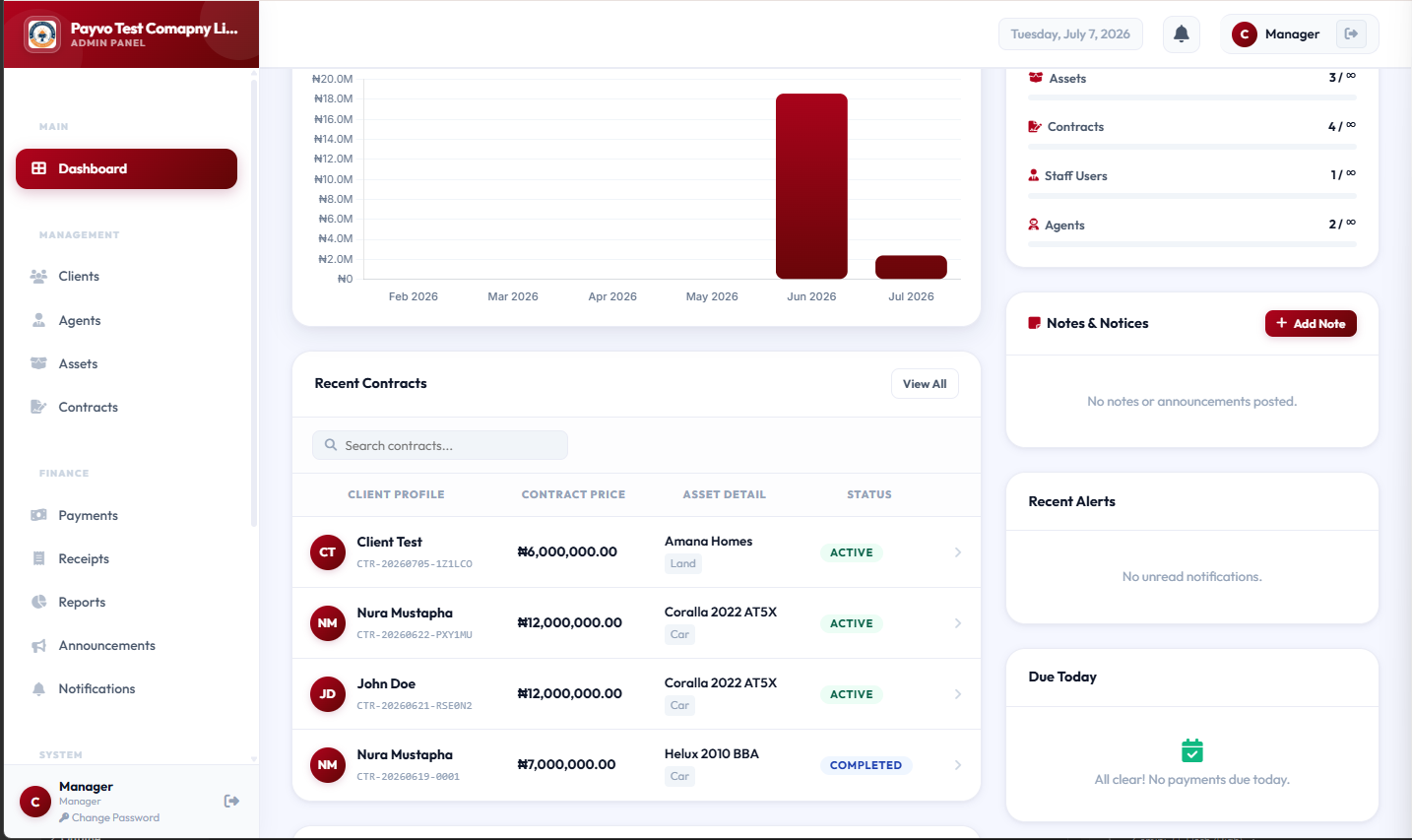 Dashobard (top)
Ready to Streamline Your Installment Sales?
Stop wrestling with spreadsheets and endless manual follow-ups. Embrace the power of automation to manage your installment contracts with precision and ease. Generate accurate payment schedules, send automated reminders, track agent commissions, and gain real-time insights into your business performance. Discover how a dedicated installment management software Nigeria can transform your operations. Visit Payvo.ng today to learn more and take the first step towards smarter installment sales management. You can explore all the features on the Features Page or directly Register into Payvo to get started.