Chasing down installment payments, reconciling spreadsheets, and manually generating receipts can consume hours each week, diverting precious time from core business growth. For businesses relying on installment sales, from real estate to car dealerships, inefficient tracking doesn't just create administrative headaches; it directly impacts cash flow and client satisfaction. Imagine the cost of lost payments or delayed follow-ups.
The Installment Economy in 2026: Challenges and Opportunities
The Nigerian economy in 2026 continues to see a significant reliance on installment payment models, particularly in sectors like real estate, automotive, and consumer goods. A recent report by the National Bureau of Statistics indicated that over 60% of property sales in major cities like Abuja, Kano, and Kaduna involved some form of installment plan in 2025, a trend expected to continue NBS Report on Property Sales. Similarly, the hire-purchase model remains dominant for vehicle acquisition, with car dealers constantly seeking more efficient ways to manage these complex payment schedules.
For cooperative societies and microfinance operators, the ability to effectively manage small, frequent payments is central to their operational success and financial stability. However, many businesses still grapple with outdated methods – from handwritten ledgers to a patchwork of spreadsheets and WhatsApp messages. This fragmented approach leads to errors, missed payments, and a significant drain on staff resources. The opportunity lies in leveraging technology to streamline these processes, improve accuracy, and enhance the customer experience, ultimately unlocking greater profitability and scalability. Businesses that embrace digital solutions for their installment sales are better positioned to capture market share and operate with greater transparency and efficiency.
 Photorealistic editorial photography of a diverse group of business owners in a modern office, looking at a digital dashboard displaying financial data, with a harmonious professional color palette, a trustworthy and modern mood, composed using the rule of thirds with a clean background and ample negative space, in a 16:9 landscape aspect ratio.
What You Need Before You Start
Before diving into automating your installment payment tracking, ensure you have the following in place:
- Clear Payment Policies: Define your installment terms, due dates, late payment penalties, and grace periods clearly for all contracts.
- Organized Client Data: A centralized list of all your clients, including contact information and any relevant identification details.
- Asset Inventory (if applicable): For businesses selling physical goods like cars, property, or equipment, a detailed inventory of items sold on installment.
- Dedicated Staff: Identify who will be responsible for overseeing the system, recording payments, and handling client communications.
- Reliable Internet Access: Essential for cloud-based solutions and automated notifications.
- Company Branding Elements: Your logo, preferred colors, and digital signature for professional receipt generation.
Step-by-Step: Automate Installment Payment Tracking and Receipt Generation
Automating your installment payment processes transforms a complex, error-prone task into a smooth, efficient operation. Follow these steps to implement a robust system for your business.
Step 1: Centralize Client and Asset Information
The foundation of any effective tracking system is a comprehensive and easily accessible database of your clients and the assets they are acquiring. Manual records are prone to loss or damage, and scattered digital files make it difficult to get a complete picture.
Begin by compiling all existing client details – names, contact information, addresses, and any identification numbers. For businesses like real estate developers, car dealers, or equipment leasing companies, also gather complete details about each asset, including its unique identifier, value, and any specific terms tied to it. A good system should allow you to link clients directly to the assets they are purchasing on installment. This central repository ensures that every piece of information is just a click away, providing a single source of truth for all your sales.
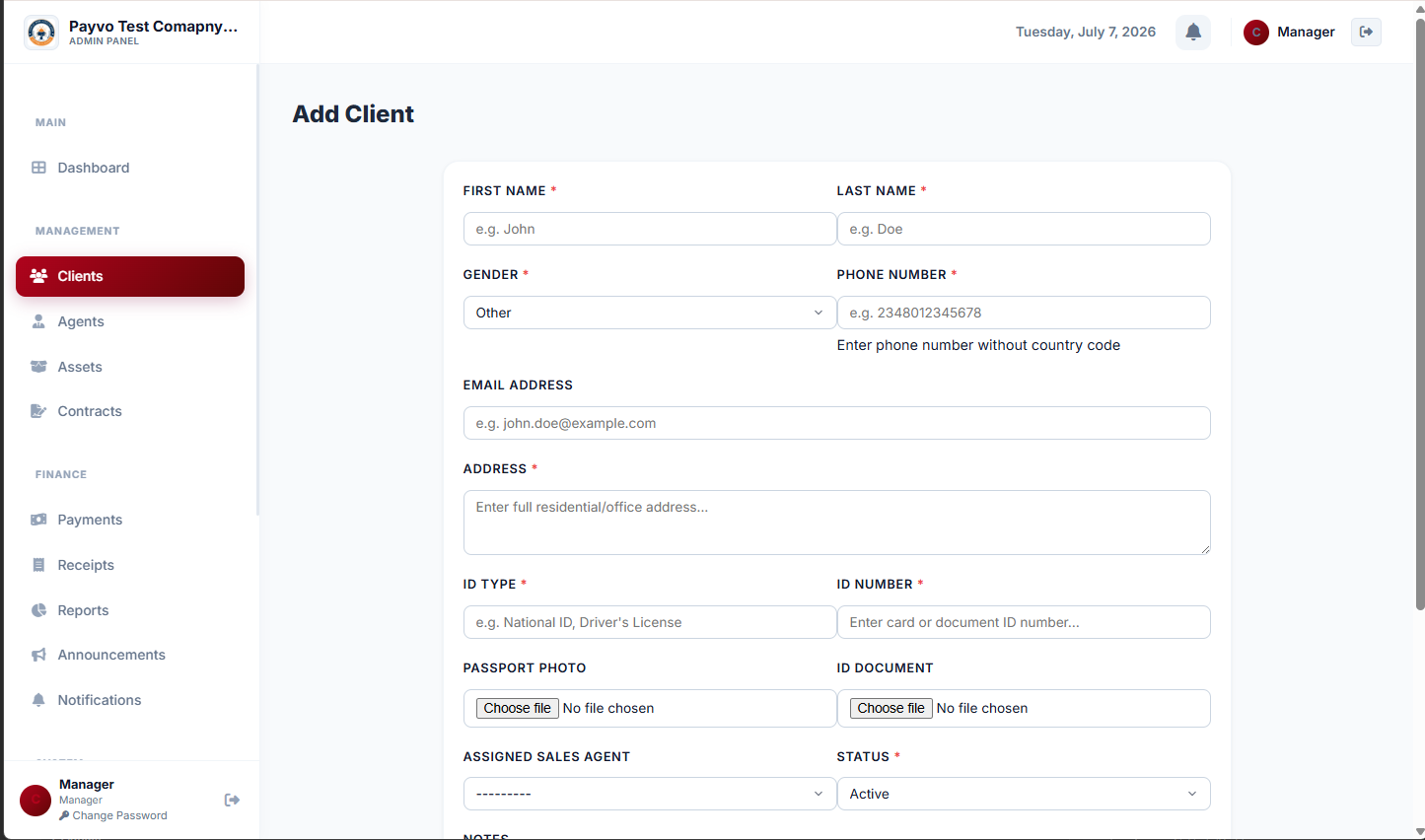 Client: Add Client page
Step 2: Define and Create Installment Contracts
Once your client and asset data is organized, the next crucial step is to formalize your installment agreements into digital contracts. This involves setting up the payment terms, schedule, and any associated fees. Manually calculating interest, down payments, and subsequent installment amounts for each client is time-consuming and increases the risk of calculation errors.
A robust contract management software Nigeria businesses can rely on will enable you to input the total sale price, down payment, installment frequency (e.g., weekly, monthly), and the number of installments. The system should then automatically generate a clear payment schedule, outlining each due date and amount. This not only saves time but also ensures consistency and accuracy across all your client agreements. For instance, real estate payment tracking Nigeria companies can set up complex payment milestones with ease.
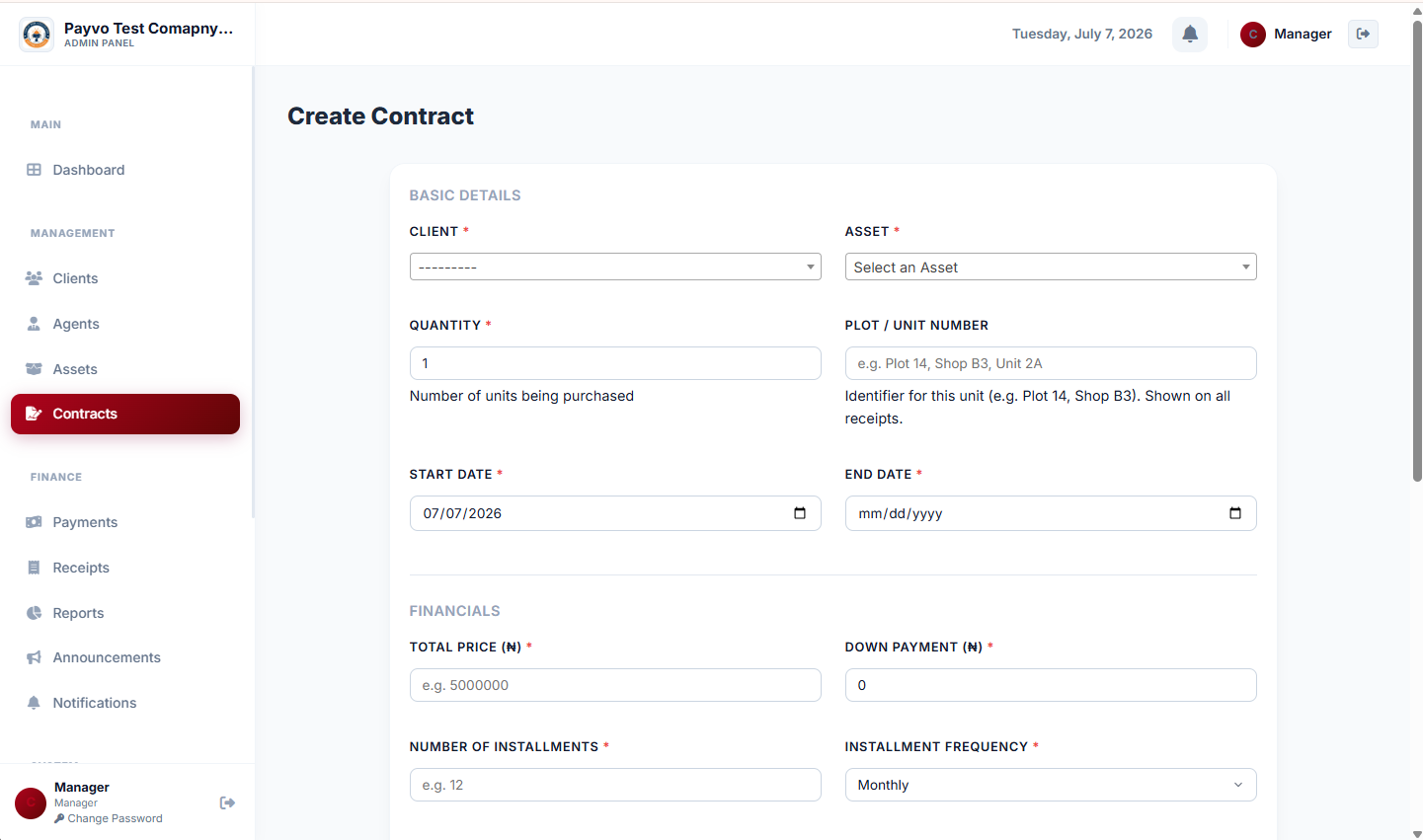 Management: Add contract (top)
Step 3: Streamline Payment Recording
The heart of installment management is the accurate and timely recording of payments. Without automation, this often involves cross-referencing bank statements, updating spreadsheets, and manually notifying clients. This is where an efficient business payment tracking app Nigeria can dramatically improve your operations.
When a client makes a payment, the system should allow for quick and easy logging of the transaction against their specific contract. This record should include the date, amount received, and the payment method. Crucially, the system should automatically update the client's outstanding balance and track their payment history. This real-time update capability is essential for businesses that need to maintain precise financial records.
Step 4: Automate Receipt Generation and Delivery
After a payment is recorded, providing a professional receipt is not just good practice; it's a legal requirement and builds client trust. Manually creating and sending receipts for every installment payment is a significant administrative burden, especially for businesses with a high volume of transactions.
With an automated system, once a payment is logged, a branded receipt generator app Nigeria can instantly create a professional, customized receipt. This receipt should include your company logo, colors, and digital signature. More importantly, the system should automatically send this receipt to the client via their preferred channel, such as email or WhatsApp. This not only saves staff time but also provides clients with immediate confirmation of their payment, enhancing their experience. A public receipt link that clients can view, save, or share adds another layer of convenience.
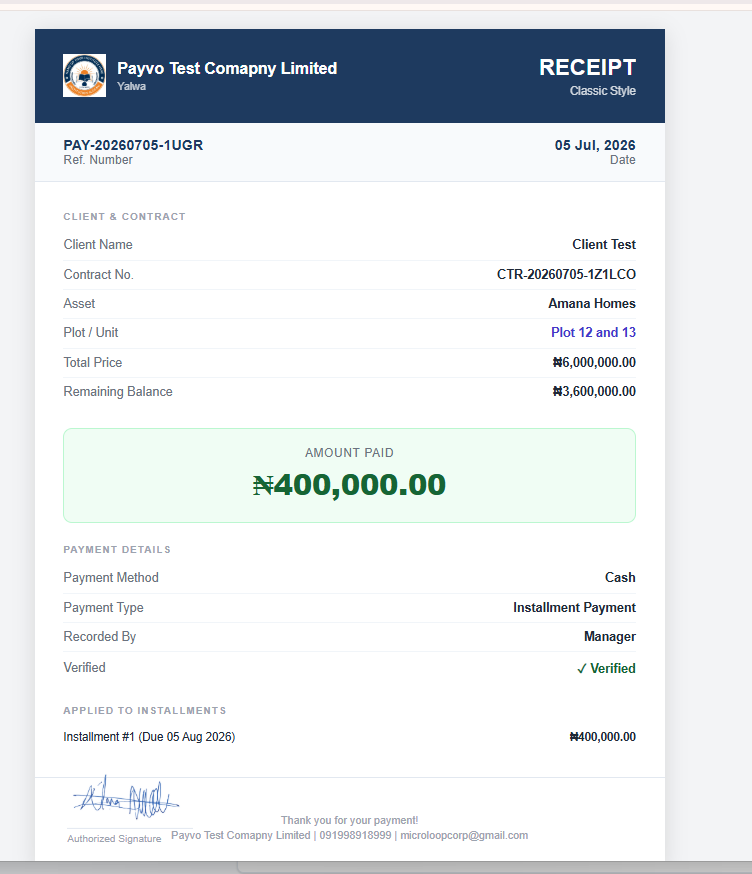 Finance: Paymnet Receipt Sample
Step 5: Implement Automated Payment Reminders and Notifications
One of the biggest challenges in managing installment sales is ensuring timely payments. Manual follow-ups are tedious, often inconsistent, and can strain client relationships. This is where a WhatsApp payment notification system or email reminder system becomes invaluable.
An automated system can send timely reminders to clients before their payment due dates. These reminders can be customized and sent via email or WhatsApp, significantly reducing the need for manual calls or messages. Beyond reminders, the system should also send automatic notifications for new clients, new contracts, and successful payment receipts. This proactive communication keeps clients informed and helps maintain a steady cash flow for your business. For cooperative society management software, this feature is critical for member engagement and payment adherence.
Step 6: Empower Staff and Agents with Role-Based Access
For growing businesses, managing a team of staff and sales agents introduces another layer of complexity. Ensuring everyone has access to the information they need without compromising data security is vital.
A comprehensive installment management software Nigeria offers allows business owners to add staff accounts with role-based permissions. This means you can control what each person can see and do within the system, from viewing contracts to recording payments or generating reports. Furthermore, for businesses that work with sales agents, the system can assign agents to specific contracts, automatically calculate their commission per payment, and track their full earnings and payout history. Agents can even log in with a unique code to track their own KPIs and submit withdrawal requests, streamlining the agent commission tracking software process. This level of control and transparency simplifies team management and incentivizes performance.
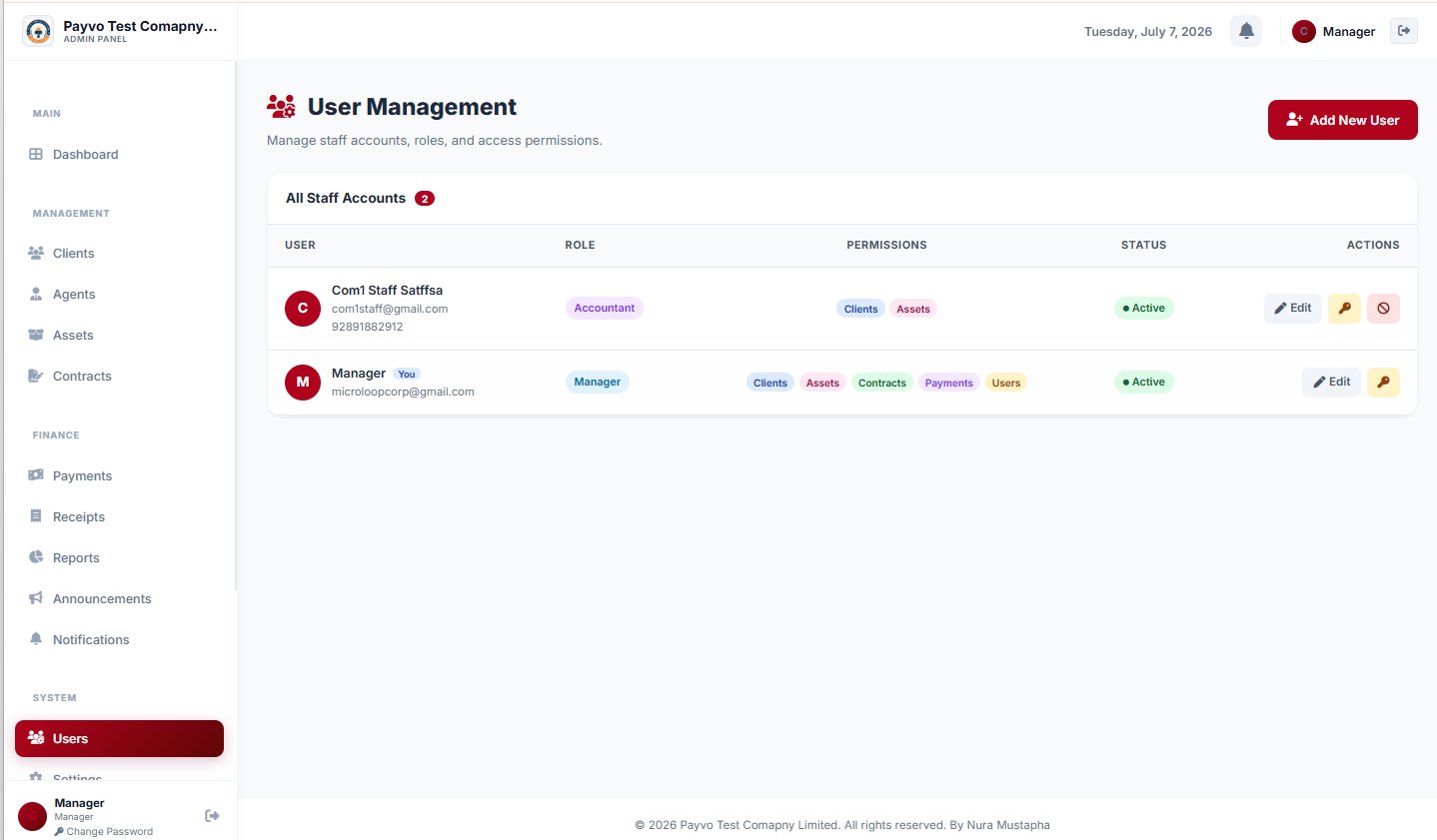 Admin: User Management Page
Common Mistakes to Avoid
Implementing a new system can be transformative, but watch out for these common pitfalls:
- Neglecting Data Migration: Rushing or improperly migrating existing client and contract data can lead to errors and confusion. Take your time to ensure accuracy.
- Skipping Staff Training: A powerful system is only as good as its users. Invest in thorough training for all staff who will interact with the platform.
- Ignoring Client Communication: While automation is great, don't completely depersonalize communication. Ensure clients know how to reach you if they have questions.
- Over-Complicating Initial Setup: Start with the core features you need most and gradually integrate more advanced functionalities as your team becomes comfortable.
- Not Customizing Notifications: Generic reminders can be ineffective. Tailor your automated messages to be clear, polite, and brand-consistent.
- Failing to Review Reports: Automation isn't "set it and forget it." Regularly review financial reports and performance dashboards to identify trends and areas for improvement.
How to Track and Grow After Launch
Once your automated system is up and running, the real work of leveraging its capabilities for growth begins. Tracking key performance indicators (KPIs) and analyzing data will guide your strategic decisions.
Regularly monitor metrics such as payment adherence rates, the average time to receive full payment, and the number of overdue accounts. Your system should provide real-time dashboards to give you an immediate overview of your financial health. For instance, you should be able to see total clients, active contracts, amount collected, outstanding balances, and next payment due at a glance. Many systems, like Payvo, offer robust reporting features, allowing you to export payment and contract data as PDF or Excel for accounting and record-keeping, and even receive weekly company reports via email summarizing key business performance. This data is invaluable for forecasting cash flow, identifying potential issues with specific clients or contract types, and optimizing your sales strategies. Use these insights to refine your terms, improve client onboarding, and even identify your most effective sales agents through their commission tracking. Continuous monitoring and adaptation are key to sustained growth in the installment sales market.
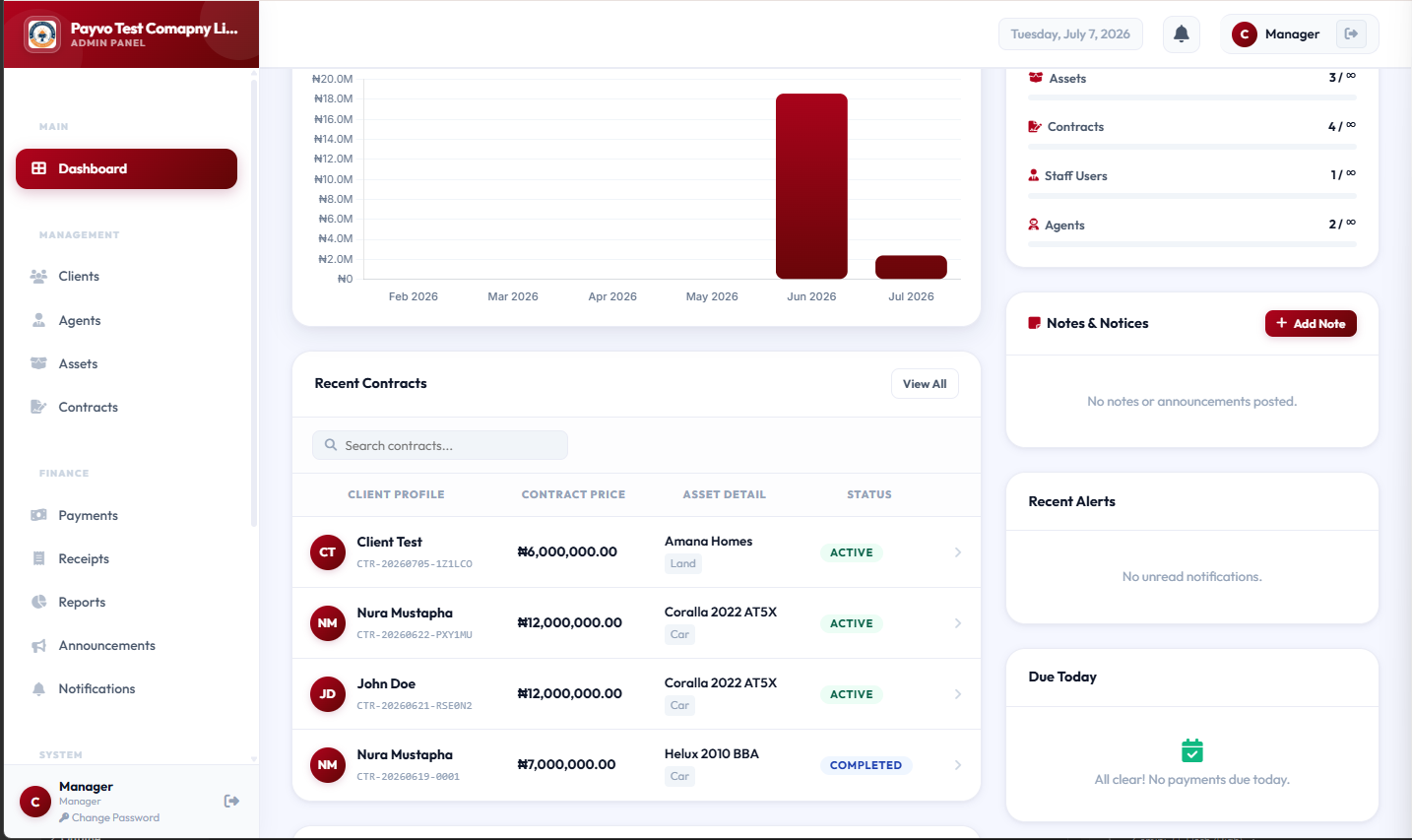 Dashobard (top)
> "In the installment economy, the true measure of efficiency isn't just about closing a sale, but about the seamless, consistent collection of every single payment. Manual processes are no longer a viable option for businesses aiming for scale and reliability."
 Sleek 3D illustration of a business dashboard with various financial charts and graphs, showing positive trends, professional harmonious color palette, trustworthy, modern, rule of thirds, clean background, ample negative space, 16:9 landscape aspect ratio.
Frequently Asked Questions
Q1: What kind of businesses benefit most from installment payment automation?
A1: Any business that sells products or services on a payment plan can benefit immensely. This includes real estate developers, car dealerships (especially for hire purchase), solar and equipment leasing companies, building material suppliers offering credit, cooperative societies, microfinance institutions, and small businesses selling high-value items on installment. If you need to track installment payments and generate receipts regularly, automation is for you.
Q2: Is it difficult to integrate an automated system with my existing business operations?
A2: Most modern installment management software Nigeria solutions are designed for ease of use and quick setup. While there might be an initial learning curve, especially for data migration, the long-term benefits far outweigh this. Look for platforms that offer clear onboarding processes and customer support. Some systems even provide API access for deeper integration with other tools you might use.
Q3: How secure is my client and payment data with an automated system?
A3: Reputable payment and contract management software Nigeria providers prioritize data security. They typically employ encryption, secure servers, and regular backups to protect sensitive information. Always check the privacy policy and terms of service of any platform you consider to ensure they meet industry standards for data protection. Audit logs are also a crucial feature for tracking all system activities.
Q4: Can an automated system handle different types of installment schedules (e.g., weekly, monthly, quarterly)?
A4: Yes, a robust installment management system should be flexible enough to accommodate various payment frequencies and structures. You should be able to define custom payment schedules, down payments, and even handle balloon payments or irregular installments, making it suitable for diverse business models from car dealer installment software to real estate payment tracking Nigeria.
Q5: What if a client misses a payment or requests a change in their schedule?
A5: A good automated system will flag overdue payments and allow you to easily adjust payment schedules or record partial payments. While automated reminders help prevent missed payments, the system should also provide tools for manual intervention when necessary, allowing you to maintain flexibility and strong client relationships. The ability to manage staff accounts with role-based permissions means the right team members can handle such exceptions efficiently.
Q6: How does an automated system help with agent commission tracking?
A6: For businesses with sales agents, an integrated agent commission tracking software simplifies the entire process. Agents can be assigned to contracts, and the system automatically calculates their commission based on payments received. It tracks their earnings history and allows for easy payout management, providing transparency and reducing manual calculations and disputes. Agents can even log in to view their own performance metrics, as highlighted on the Agent Tracking Page.
 Minimalist graphic design of a secure padlock icon overlaying a stylized payment schedule, professional harmonious color palette, trustworthy, modern, rule of thirds, clean background, ample negative space, 16:9 landscape aspect ratio.
Ready to Streamline Your Installment Sales?
Stop letting manual processes hold your business back. Embrace the power of automation to efficiently track, manage, and generate receipts for all your installment payments. Discover how a dedicated contract and installment management system can transform your operations, improve cash flow, and enhance client satisfaction. Register today to see the difference.