The handwritten ledger is a relic of the past, yet many businesses still grapple with manual processes for tracking installment payments. Missed payments, lost receipts, and endless hours chasing clients aren't just frustrating; they directly impact your bottom line and reputation. It's time to modernize.
The Shifting Landscape of Installment Sales in 2026
The Nigerian economy in 2026 continues to see a significant reliance on installment payment models across various sectors. From real estate developers in Abuja offering flexible property payment plans to car dealers in Kano selling vehicles on hire purchase, and even building material suppliers in Kaduna extending credit, the ability to spread costs remains a critical factor for customer acquisition and retention. A recent report by the National Bureau of Statistics (NBS) indicated that over 60% of consumer-facing businesses in key urban centers now offer some form of installment or credit purchase option, a 15% increase from just three years ago. This growth underscores the necessity for robust, automated solutions to manage these complex transactions efficiently. The era of relying on notebooks, scattered WhatsApp messages, and manual reconciliation is not only unsustainable but also a significant impediment to growth and financial transparency. Businesses that fail to adopt modern contract management software Nigeria risk falling behind competitors who leverage technology to streamline operations and enhance customer satisfaction.
What You Need Before You Start
Before diving into automating your installment payment tracking and receipt generation, ensure you have the following foundational elements in place:
- Clear Payment Terms: Define your installment plans, payment frequencies, grace periods, and late payment penalties explicitly.
- Customer Data: A centralized, organized list of your existing clients, including contact information and any historical payment data.
- Asset Inventory: For businesses selling physical assets (cars, properties, equipment), a comprehensive list of items, their unique identifiers, and pricing.
- Branding Elements: Your company logo, preferred brand colors, and an official digital signature for professional receipt generation.
- Designated Staff: Identify the team members responsible for contract creation, payment processing, and customer communication.
- Legal Compliance: Understand and adhere to local regulations regarding installment sales, consumer credit, and data privacy.
Step-by-Step: Automate Installment Payment Tracking & Receipt Generation for Businesses
Transitioning from manual tracking to an automated system for installment payments and receipt generation can revolutionize your business operations. This step-by-step guide walks you through the process, ensuring a smooth and efficient implementation.
Step 1: Centralize Client and Asset Information
The first crucial step is to consolidate all your client and asset data into a single, accessible system. Manual records often lead to discrepancies, duplicate entries, and difficulty in retrieving critical information. A robust system allows you to store comprehensive client details, including contact information, payment history, and associated contracts. Similarly, for businesses like car dealers or real estate developers, tracking individual assets (vehicles, properties, equipment) and linking them directly to specific contracts is paramount for inventory management and preventing errors.
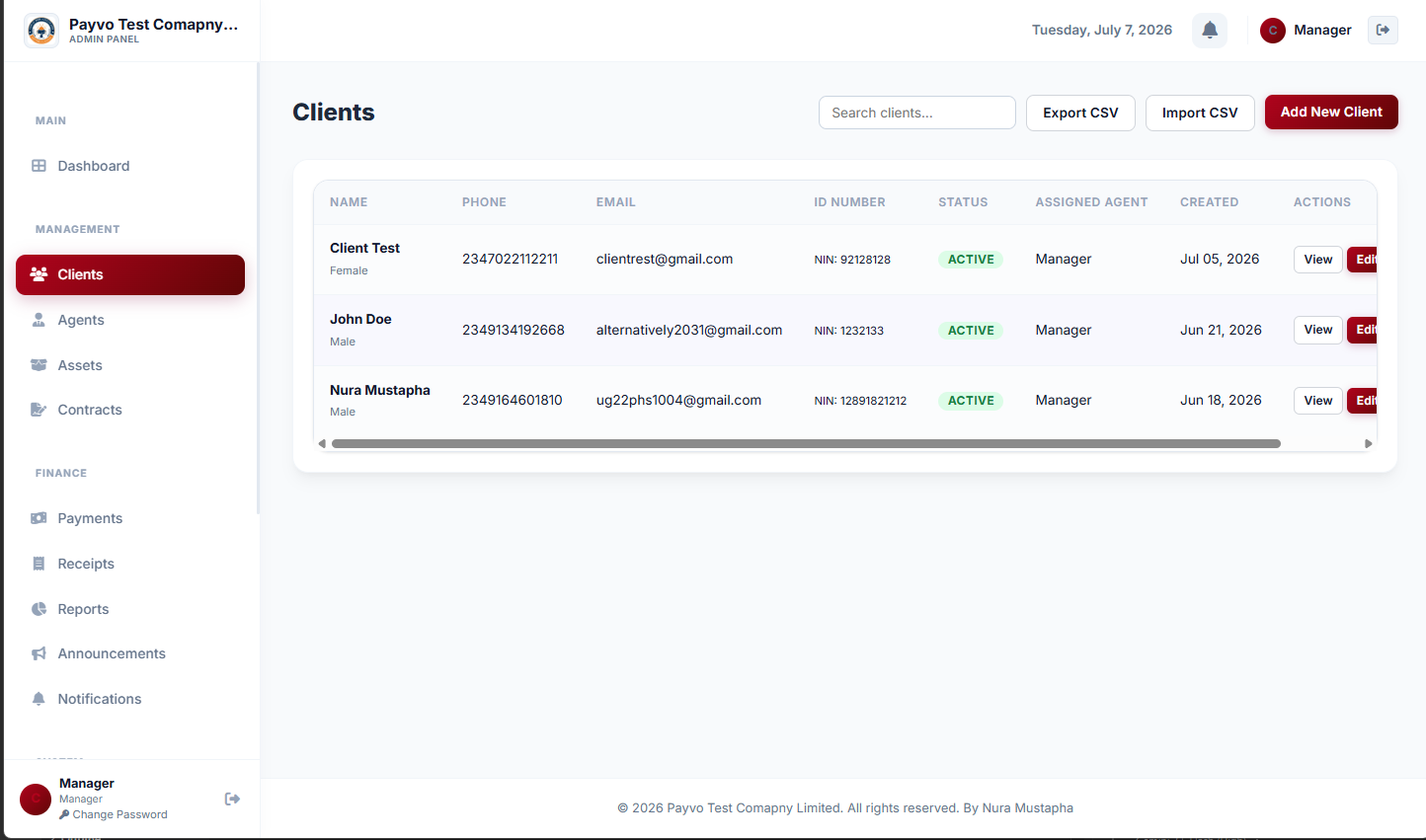 Client: Clients list page
Step 2: Define and Automate Contract Creation
Creating contracts manually is not only time-consuming but also prone to human error, especially when dealing with complex installment schedules. An automated system simplifies this process significantly. You should be able to input key contract parameters—such as the total sale amount, down payment, number of installments, interest rates (if applicable), and payment frequency—and have the system automatically generate the full installment schedule. This ensures accuracy and consistency across all your agreements.
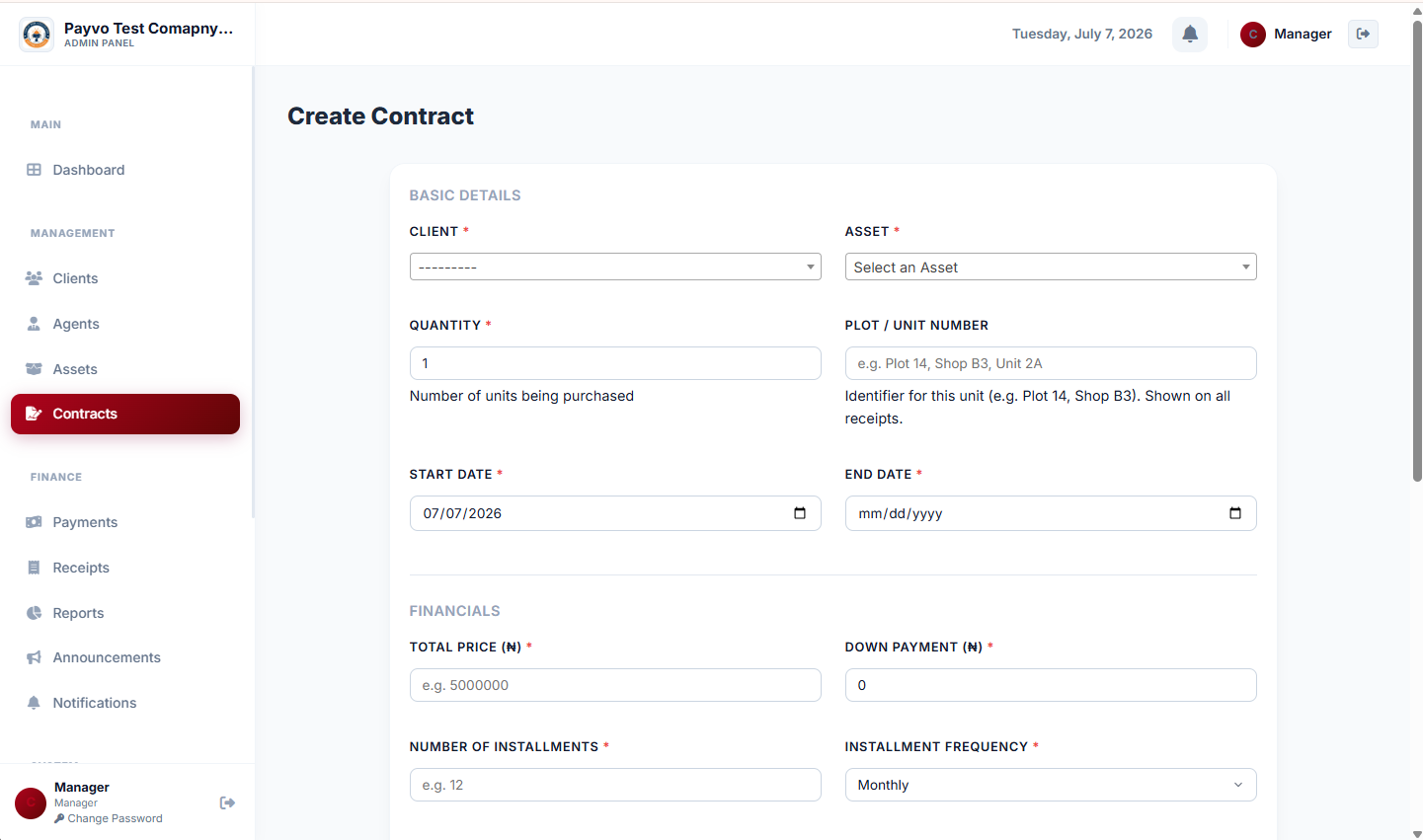 Management: Add contract (top)
Step 3: Streamline Payment Recording
Once contracts are active, the next challenge is accurately recording incoming payments. Manual systems often involve tedious data entry into spreadsheets or ledgers, which can be inefficient and delay reconciliation. An automated solution should provide a straightforward interface for logging single payments against any contract, instantly updating the client's balance and payment history. This process is critical for maintaining accurate financial records and providing clients with up-to-date information.
Step 4: Automate Receipt Generation and Delivery
One of the biggest pain points for businesses and clients alike is the manual generation and delivery of payment receipts. Clients expect prompt proof of payment, and businesses need auditable records. An automated system should instantly generate branded receipts with your company logo, colors, and digital signature for every payment recorded. Furthermore, it should facilitate automatic delivery of these receipts via email or WhatsApp, ideally including a public link that clients can use to view, save, or share their receipts easily. This significantly improves customer experience and operational efficiency. This functionality acts as a powerful receipt generator app Nigeria for businesses.
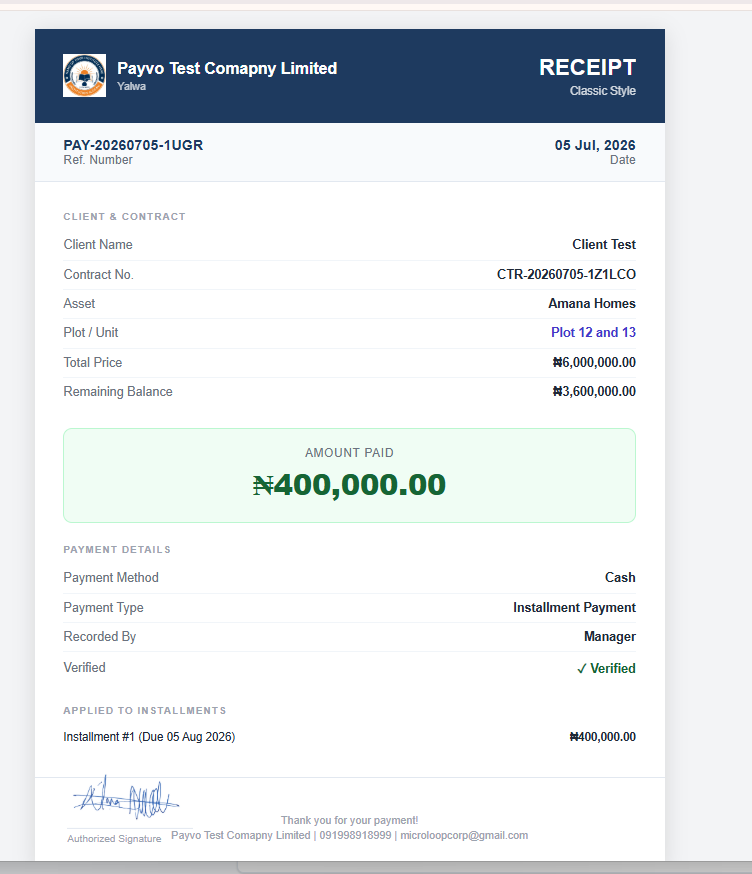 Finance: Paymnet Receipt Sample
Step 5: Implement Automated Payment Reminders and Notifications
Proactive communication is key to minimizing late payments and maintaining healthy cash flow. Manually sending payment reminders is a laborious task that often gets overlooked. An automated system can send timely payment reminders before due dates, reducing the need for manual follow-up calls. Beyond reminders, the system should also send automatic notifications for new client registrations, new contract creations, and successful payment receipts, keeping both your team and clients informed at every stage. This is where a robust WhatsApp payment notification system becomes invaluable.
 Descriptive Alt Text
Step 6: Set Up Staff and Agent Management
For businesses with multiple staff members or a network of sales agents, managing access and commissions can be complex. An automated system allows business owners to add staff with role-based permissions, ensuring each team member only accesses the information relevant to their role. For businesses leveraging agents, the system should automatically calculate agent commissions per payment received and track their full earnings and payout history. This provides transparency and streamlines the commission management process. Features like agent commission tracking software are essential for scaling operations.
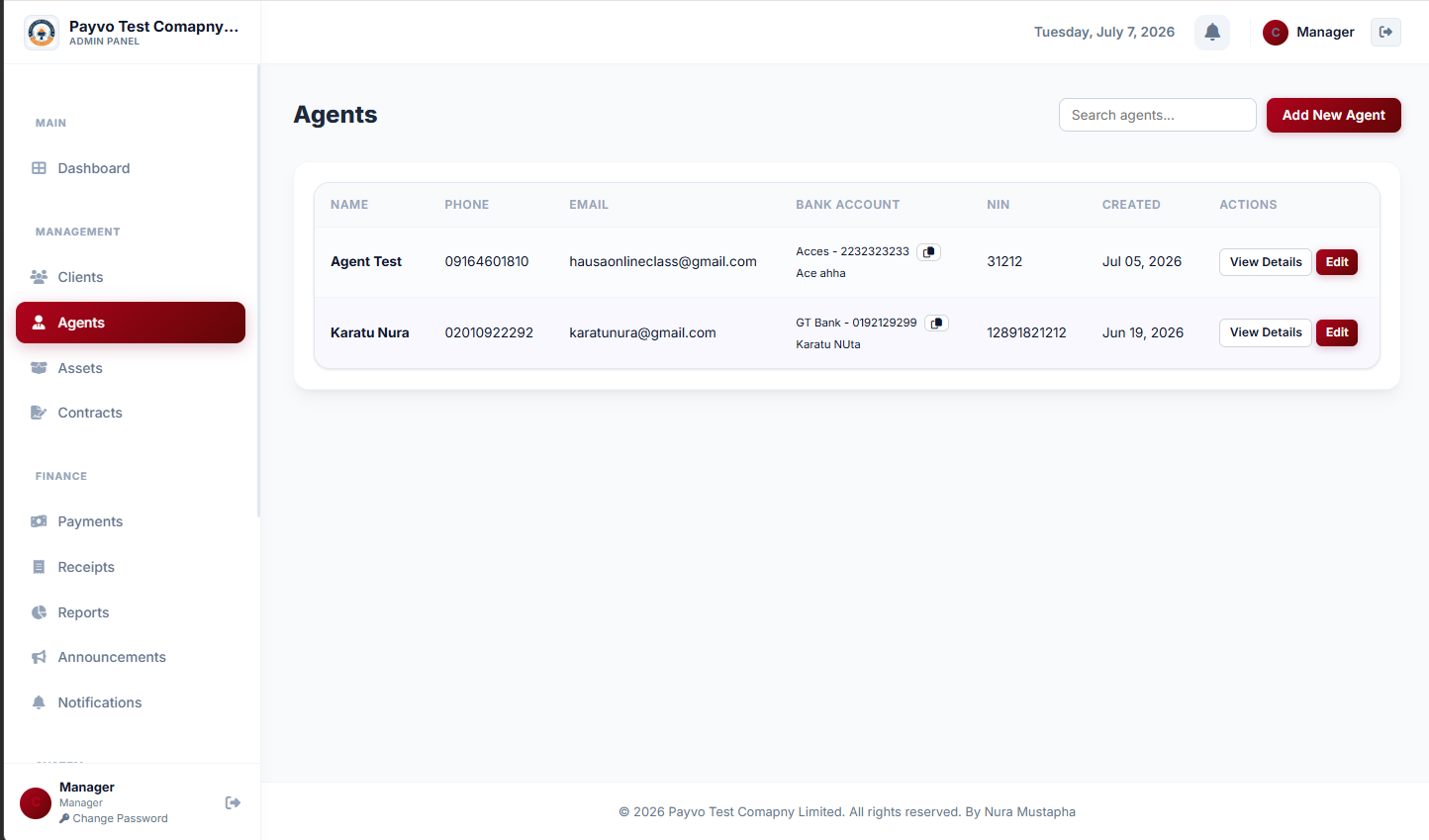 Agent: Agents list page
Step 7: Customize Branding and Reporting
Consistency in branding reinforces professionalism and trust. Your chosen system should allow you to customize company branding elements such as logos, brand colors, and digital signatures, ensuring all client-facing documents, especially receipts, reflect your business identity. Furthermore, access to real-time dashboards and comprehensive reports is vital for monitoring business performance. These reports should cover key metrics like total clients, active contracts, amount collected, outstanding balances, and next payment due, empowering you to make informed decisions. This comprehensive approach to business payment tracking app Nigeria streamlines operations.
> "The true cost of manual processes isn't just the time spent; it's the lost revenue from uncollected payments, the erosion of customer trust due to errors, and the missed opportunities for growth that come from a lack of clear financial oversight."
Common Mistakes to Avoid
Automating your installment payment tracking is a significant step forward, but pitfalls exist. Being aware of these common mistakes can help you ensure a smooth transition and maximize the benefits of your new system.
- Incomplete Data Migration: Rushing the transfer of existing client and contract data can lead to missing information, incorrect balances, and confusion. Dedicate ample time to ensure all historical data is accurately imported.
- Neglecting Staff Training: A powerful system is only as good as its users. Failing to adequately train staff on how to use the new platform can lead to errors, resistance, and underutilization of its features.
- Ignoring Customization Options: Many automated solutions offer branding and notification customization. Not leveraging these features means missing an opportunity to enhance your professional image and client communication.
- Overlooking Security Features: Ensure the chosen system has robust security measures, including audit logs and role-based permissions, to protect sensitive financial and client data.
- Lack of Clear Payment Policies: While automation handles the execution, clear, well-communicated payment terms are still fundamental. Ambiguity can lead to disputes even with the best system in place.
- Not Utilizing Reporting Tools: An automated system provides a wealth of data. Failing to regularly review dashboards and generate reports means you're missing out on critical insights into your business's financial health and performance.
 Descriptive Alt Text
How to Track and Grow After Launch
Implementing an automated installment management software Nigeria is just the beginning. Continuous tracking and strategic growth initiatives are essential for long-term success.
Key Performance Indicators (KPIs) to Watch:
- Collection Rate: The percentage of due payments successfully collected within a period. This is a direct measure of your system's effectiveness and client compliance.
- Arrears Rate: The percentage of outstanding payments that are overdue. A high arrears rate indicates issues that need addressing, possibly through revised reminder strategies or stricter payment terms.
- Client Churn Rate: The rate at which clients terminate their contracts prematurely. High churn can signal dissatisfaction or unmanageable payment plans.
- Average Payment Cycle: The average time it takes for clients to make their installment payments. A shorter cycle is generally better for cash flow.
- Agent Performance (if applicable): Track commissions earned, contracts initiated, and collection rates per agent using your agent tracking page to identify top performers and areas for improvement.
- Optimize Payment Reminders: Continuously analyze the effectiveness of your automated reminders. Experiment with timing, messaging, and channels (WhatsApp, email) to find what works best for your client base.
- Leverage Data for Insights: Use the data from your system's dashboards and reports to understand client behavior. For example, identify common reasons for late payments or popular installment plans. This insight can inform new product offerings or contract adjustments.
- Enhance Customer Communication: Beyond reminders, use your automated communication tools to send personalized updates, special offers, or even anniversary greetings to build stronger client relationships.
- Expand Agent Network: If you use agents, provide them with tools like the agent self-tracking feature to empower them, which can motivate them to bring in more business and improve their collection efforts.
- Refine Contract Terms: Based on your collection data, periodically review and refine your contract terms to minimize risk and maximize collection efficiency.
- Seek Feedback: Regularly solicit feedback from clients and staff about their experience with the installment process. This input is invaluable for continuous improvement.
Frequently Asked Questions
Q1: What kind of businesses can benefit most from automating installment payment tracking?
A: Any business that sells goods or services on credit or through installment plans stands to benefit significantly. This includes real estate developers and property sellers, car dealerships operating on hire purchase, cooperative societies and microfinance institutions, solar energy or equipment leasing companies, and building material suppliers offering credit terms. Essentially, if you need to manage recurring payments from clients over time, automation is crucial.
Q2: Is it difficult to migrate existing client and contract data to a new automated system?
A: The ease of migration largely depends on the system you choose and the format of your existing data. Reputable installment management software Nigeria providers often offer tools or support to help import data from spreadsheets (like Excel or CSV files). While it requires careful planning and execution to ensure accuracy, the long-term benefits of having all your data centralized and organized far outweigh the initial effort.
Q3: How do automated payment reminders work, and can they be customized?
A: Automated payment reminders are typically configured to send notifications (via email, SMS, or WhatsApp) to clients a set number of days before a payment is due. They can also be set up to send reminders for overdue payments. Most modern systems allow for extensive customization, letting you tailor the message content, sender details, and the frequency of these reminders to align with your brand and client communication strategy. This feature is a core component of an effective WhatsApp payment notification system.
Q4: What about generating receipts? Are they professional and legally compliant?
A: Automated systems are designed to generate professional-looking receipts instantly. These receipts typically include all necessary details such as your company's name and logo, the client's information, payment amount, remaining balance, and a unique transaction ID. Many systems also allow for the inclusion of a digital signature. While they are designed for business use, always ensure your chosen system's receipt format meets any specific local legal or accounting requirements for your region.
Q5: Can an automated system help me track agent commissions and performance?
A: Absolutely. Advanced contract management software Nigeria often includes robust features for managing agents. You can assign agents to specific contracts, and the system will automatically calculate their commission based on predefined percentages or structures as payments are received. It also tracks their overall earnings, payout history, and can even provide agents with a secure portal to view their own performance metrics, making it a comprehensive agent commission tracking software solution. For more details, you can explore the features on the Agent Tracking Page.
Ready to Streamline Your Installment Sales?
Stop losing valuable time and money to manual tracking and inconsistent record-keeping. Embrace the efficiency and clarity that automation brings to your business. Discover how a dedicated contract and installment management system can transform your operations, improve cash flow, and enhance customer satisfaction. Start your journey towards smarter business management today by visiting our Public Home Page or learn more about our comprehensive Features Page.