Manual tracking of customer loans and installment payments is costing Nigerian businesses millions of Naira annually in lost revenue, administrative overhead, and missed opportunities. Many entrepreneurs are still wrestling with ledgers, spreadsheets, and endless WhatsApp messages, leading to errors, delays, and frustrated customers. This year, 2026, the demand for efficient, automated solutions has never been higher, with businesses recognizing that outdated methods simply can't keep up with growth.
 Business owner looking at laptop screen with financial
The Shifting Landscape of Installment Sales in Nigeria (2026)
The Nigerian economy in 2026 continues its dynamic evolution, with installment sales and credit facilities becoming increasingly vital across various sectors. From real estate developers offering flexible payment plans in Abuja and Lagos to car dealers providing hire-purchase options in Kano, and even solar companies making renewable energy accessible, the ability to manage credit effectively is a cornerstone of success. A recent market analysis by the National Bureau of Statistics (NBS) indicates a significant uptick in consumer credit uptake, highlighting both opportunity and challenge for businesses. While this growth signals a robust market for goods and services sold on credit, it also intensifies the need for sophisticated loan management system and installment management software Nigeria solutions.
Businesses that fail to adapt risk being left behind. Relying on manual processes for customer loan tracking and loan payment tracking is no longer sustainable. It leads to discrepancies, disputes, and a poor customer experience. Imagine a customer waiting days for their payment history or a business losing track of an overdue installment simply because a record was misplaced or a spreadsheet formula was incorrect. These inefficiencies directly impact profitability and reputation. Moreover, with the rise of digital literacy, customers expect instant notifications and transparent access to their payment information, making a WhatsApp payment notification system and automated receipts critical for customer satisfaction and retention.
> "In Nigeria's rapidly digitizing market, the businesses that thrive are those that embrace technology to build trust and efficiency, especially in the sensitive area of customer finance."
What You Need Before You Start
Before diving into automating your customer loan and installment tracking, ensure you have the following in place:
- Clear Business Processes: Define your existing loan or installment terms, payment schedules, and how you currently handle customer onboarding and communication. This clarity will guide your automation setup.
- Dedicated Device: A reliable laptop or desktop computer is essential. A basic, refurbished model might cost around ₦150,000, while a new, mid-range laptop could be up to ₦350,000.
- Stable Internet Connection: Automation relies on consistent connectivity. Budget around ₦10,000 to ₦25,000 per month for a reliable internet data plan, depending on your location and usage needs.
- Trained Staff: Even with automation, staff will need to understand the new system. Allocate funds for training, which could range from ₦20,000 for in-house training to ₦75,000 for external professional sessions for multiple staff.
- Initial Capital for Software Investment: Be prepared for software subscription costs, which can range from ₦5,000 to ₦50,000 per month depending on the features and scale. Some solutions might also have a one-time setup fee of ₦50,000 to ₦250,000 for customization or integration.
- Power Backup: Given the power situation in Nigeria, a reliable power source (like a generator or inverter) is crucial for consistent operation. Factor in ₦15,000 to ₦50,000 monthly for fuel and maintenance.
Step-by-Step: Automate Customer Loan & Installment Tracking
Automating your loan and installment tracking might seem daunting, but by breaking it down into manageable steps, you can transition smoothly from manual chaos to streamlined efficiency.
Step 1: Evaluate Your Current Tracking Methods
Begin by taking a critical look at how you currently manage customer loans and installment payments. Are you using paper ledgers, basic spreadsheets, or a combination of scattered notes and WhatsApp chats? Identify the bottlenecks, common errors, and areas where you spend the most time. This initial assessment will help you understand the specific problems an automated system needs to solve for your business, whether you're a real estate developer tracking property payments or a cooperative society managing member loans.
Consider your existing workflow for new clients, contract creation, payment collection, and overdue reminders. How are receipts generated? How do you track agent commissions? Documenting these processes will be invaluable when selecting and setting up your new system.
Step 2: Choose the Right Installment Management Software
This is the most crucial step. You need a robust contract management software Nigeria that can handle the complexities of your installment sales. Look for a system that isn't just a basic spreadsheet replacement but a comprehensive platform designed for businesses like yours – car dealers, solar leasing companies, or building material suppliers.
Key features to prioritize include:
- Client Management: Ability to store full client details and their complete payment history.
- Asset Tracking: If you sell physical items (cars, properties, equipment), the software should link these assets directly to contracts.
- Automated Contract Creation: A system that generates installment schedules based on your set payment terms.
- Payment Recording & Receipt Generation: Automatic recording of payments and instant, branded receipts. A good receipt generator app Nigeria is essential.
- Notification System: Automated reminders and payment confirmations via channels like email and WhatsApp.
- Reporting: Dashboards and exportable reports for financial oversight and accounting.
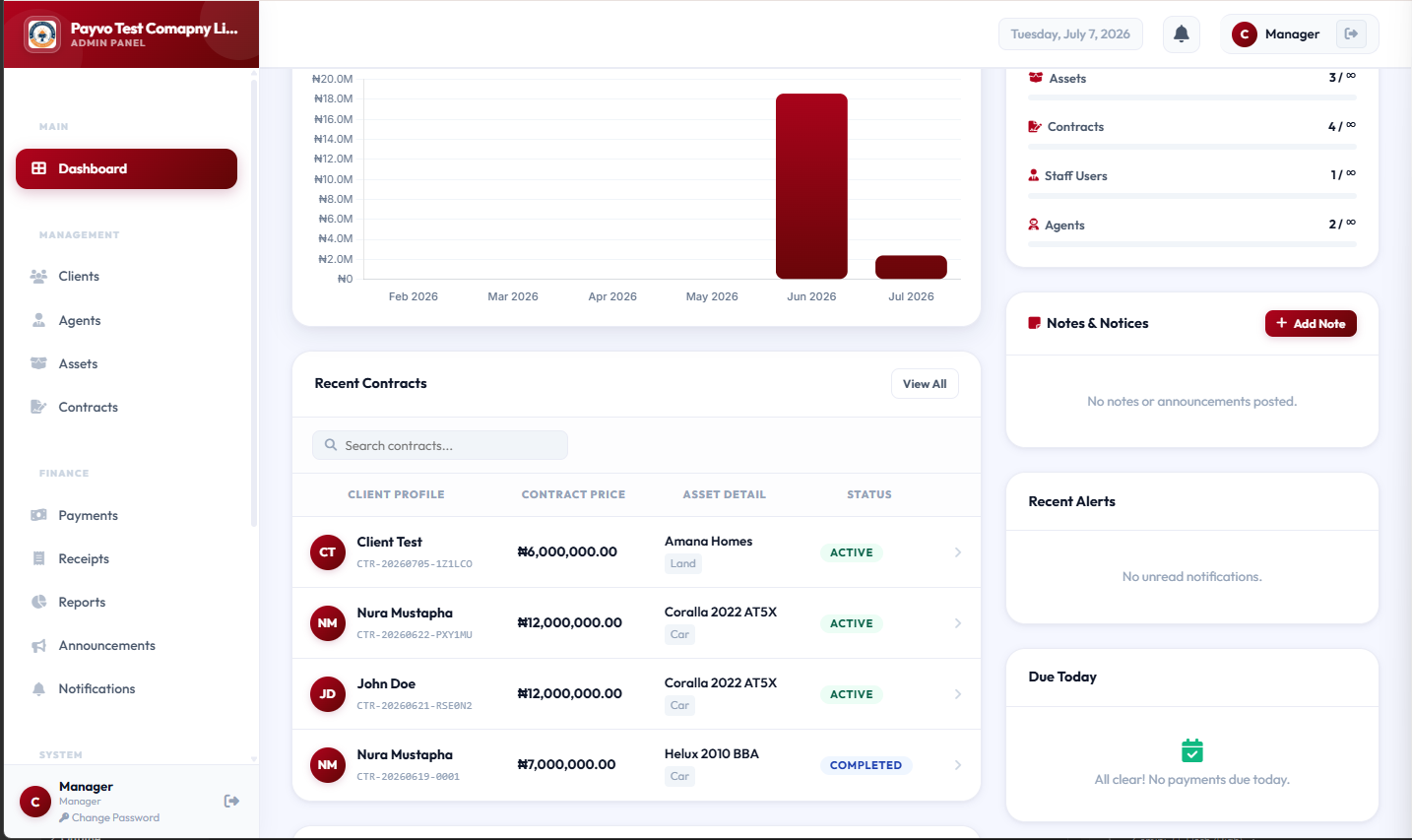 Dashobard (top)
Step 3: Configure Your Company and User Settings
Once you've selected your software, the next step is to set it up to reflect your business operations. This typically involves:
- Company Branding: Upload your company logo, set your brand colors, and configure your digital signature. This ensures all client-facing documents, like receipts and contracts, maintain a professional and consistent appearance.
- User Management: If you have staff or agents, set up individual user accounts with appropriate permissions. For example, your sales agents might only need access to their contracts and commission tracking, while your finance team needs access to payment recording and reporting. This ensures data security and accountability.
- WhatsApp Integration: Integrate your business WhatsApp for automated notifications. This is a game-changer for customer communication, providing instant payment confirmations and reminders.
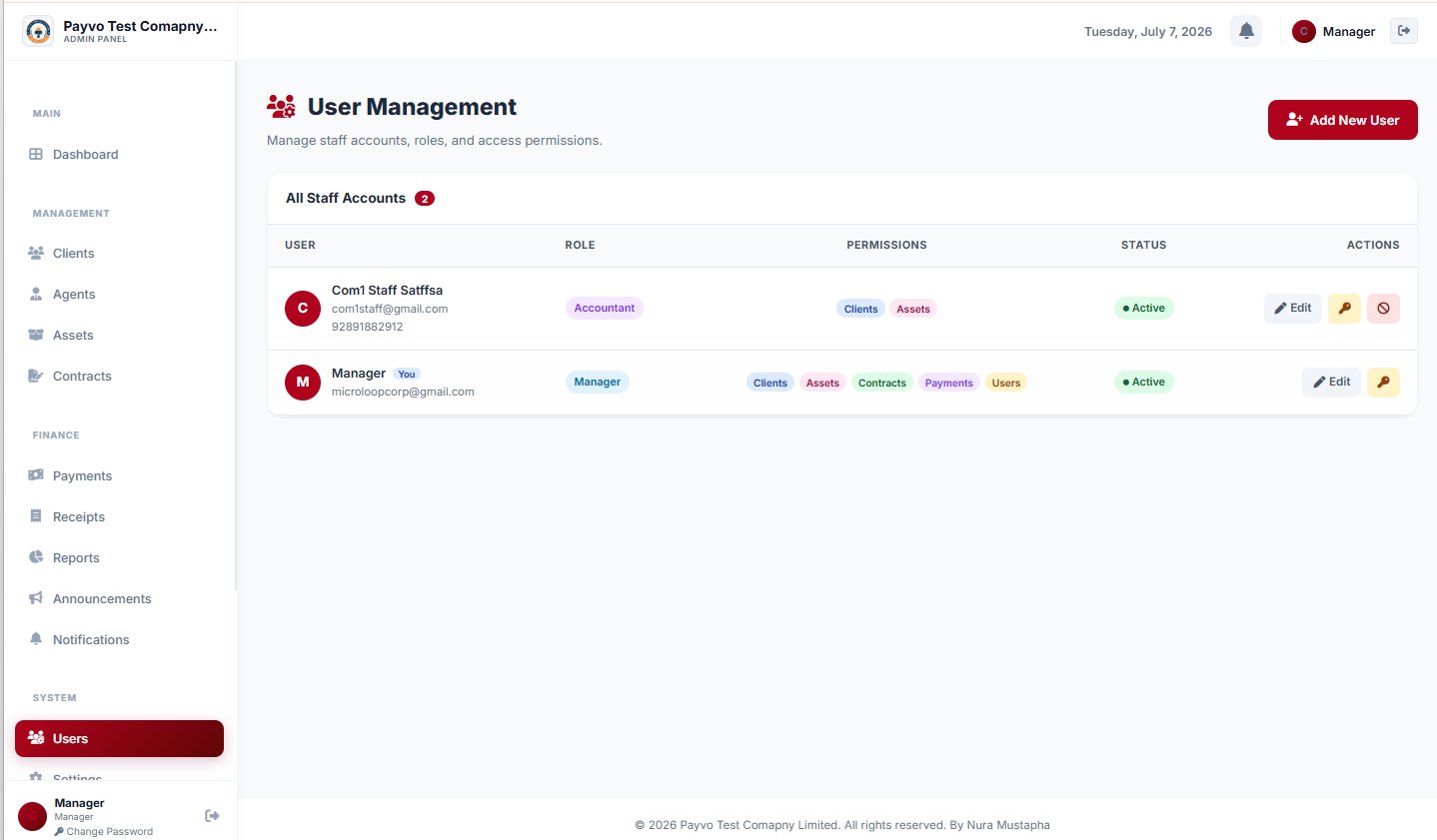 Admin: User Management Page
Step 4: Import Existing Client and Asset Data
If you have an existing client base and active contracts, you'll need to migrate this data into your new system. This can be a time-consuming step, but it's critical for a smooth transition. Most robust platforms will offer tools for bulk data import, or you might need to manually enter information if your previous records are not in a digital format.
For each client, ensure you capture:
- Full contact details
- Existing contracts, including original loan amounts, deposits, interest rates, and current outstanding balances
- Associated assets (e.g., car VIN, property address, equipment serial number)
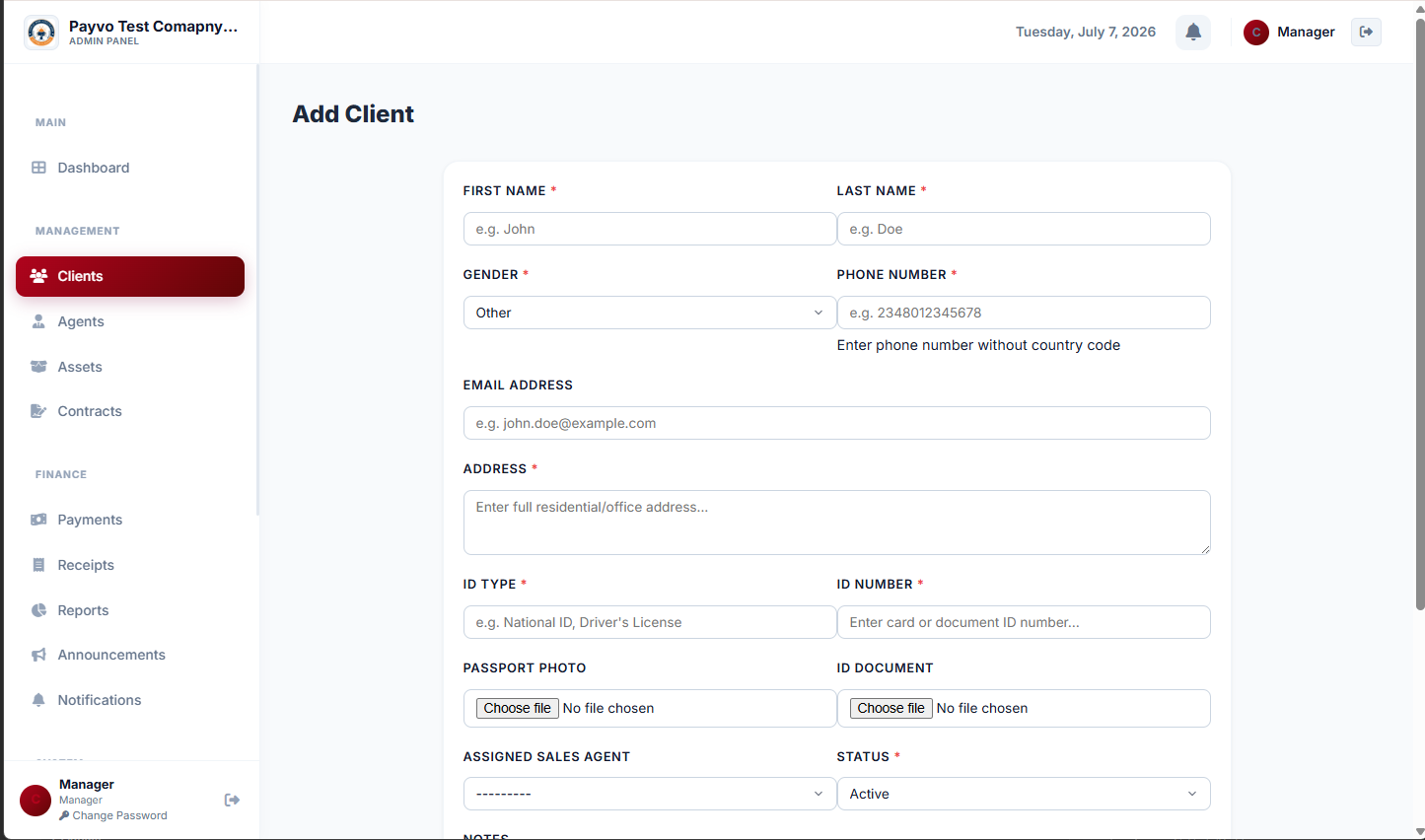 Client: Add Client page
Step 5: Create and Manage Contracts
With your system configured and data imported, you can now create and manage contracts efficiently. This is where the automation truly shines, replacing tedious manual calculations with precise, system-generated schedules.
For each new contract:
- Client Selection: Link the contract to an existing client or create a new client profile.
- Asset Assignment: Associate the contract with a specific asset, whether it's a property, vehicle, or equipment. This is vital for businesses like car dealers using car dealer installment software.
- Define Terms: Input the total loan amount, initial deposit, interest rate (if applicable), payment frequency (e.g., weekly, monthly), and duration. The system should automatically generate the full installment schedule, calculating each payment amount and due date.
- Generate Contract: The system should then allow you to generate a professional contract document.
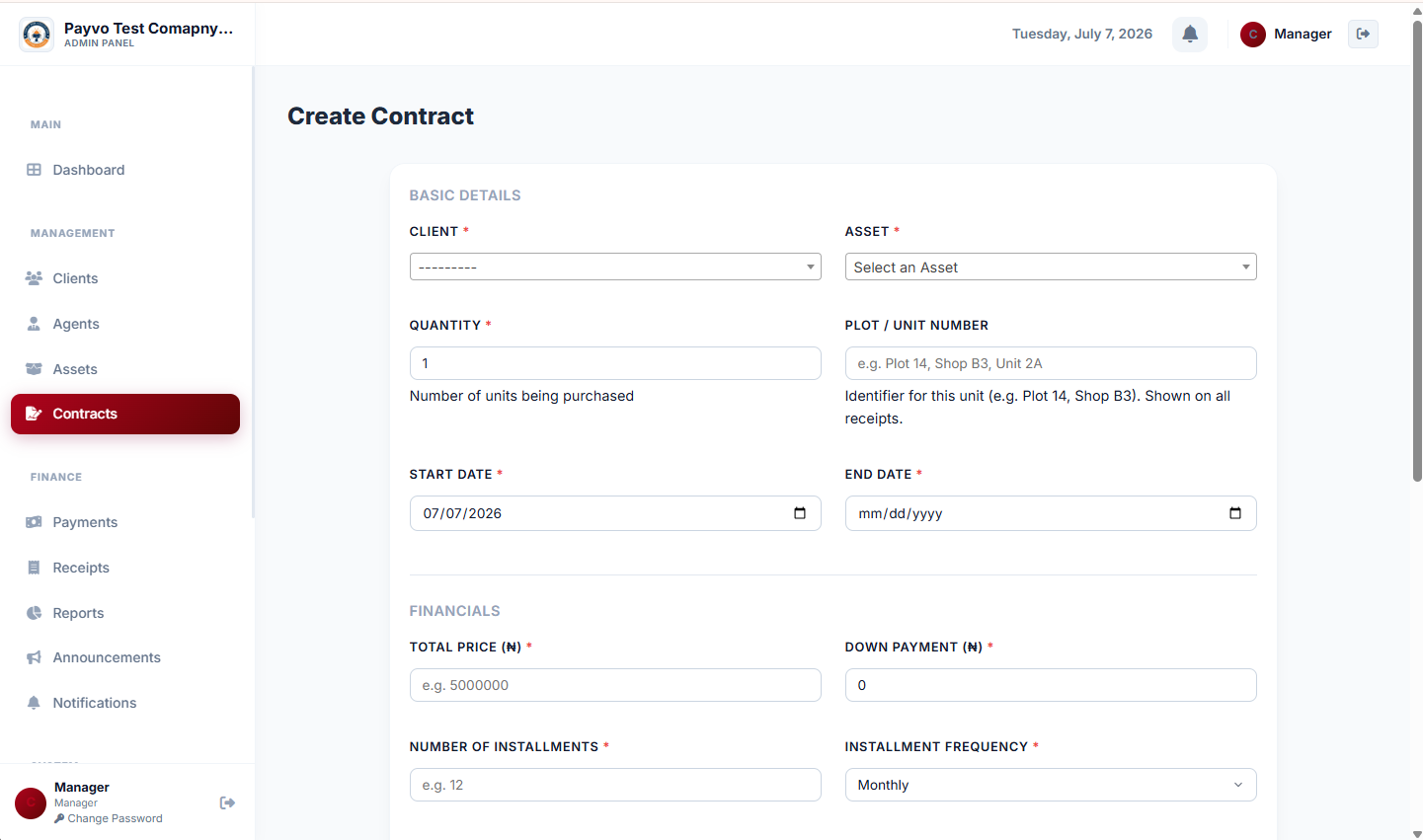 Management: Add contract (top)
Step 6: Automate Payment Recording and Notifications
This is arguably the most impactful automation for daily operations. Instead of manually logging payments and sending reminders, your system will handle it all.
- Record Payments: When a payment is received, simply log it against the specific contract. The system will automatically update the outstanding balance and payment history.
- Automated Receipts: For every payment recorded, a branded receipt generator app Nigeria feature should instantly create and send a receipt to the client via email or WhatsApp. This not only saves time but also builds customer trust and provides verifiable proof of payment.
- Payment Reminders: Set up automated reminders to go out days before a payment is due, and follow-up reminders if a payment is missed. This significantly reduces delinquencies and the need for manual follow-up calls, which can be a major burden for businesses with many active contracts. The cost of SMS notifications can be as low as ₦2 to ₦5 per message for bulk providers.
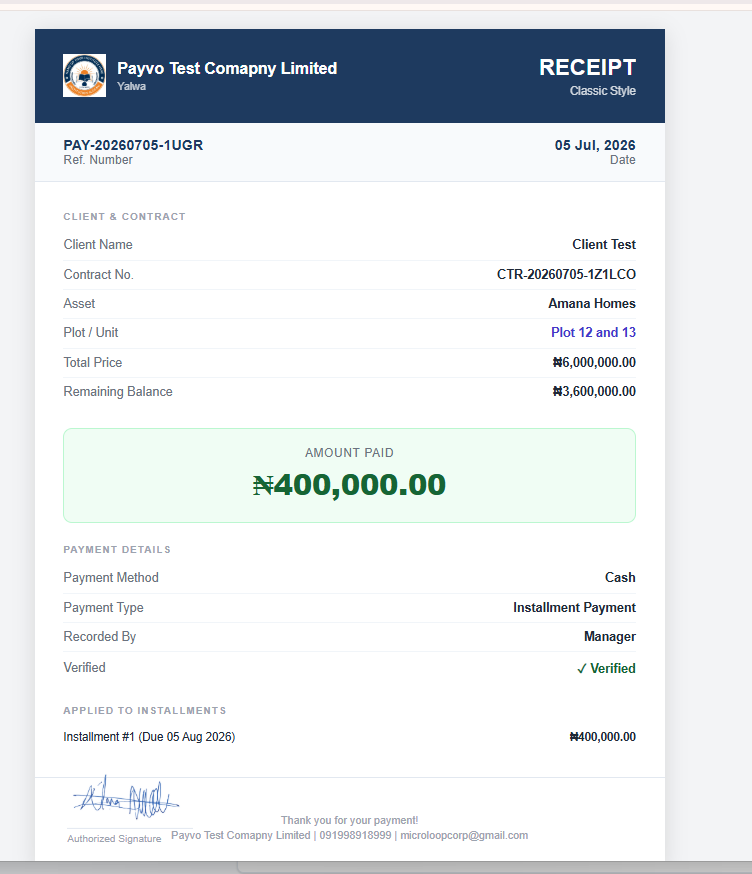 Finance: Paymnet Receipt Sample
Step 7: Track Agents and Commissions
For businesses that rely on sales agents, automating commission tracking is a huge time-saver and motivator. A good agent commission tracking software should be integrated into your installment management system.
- Assign Agents: Link agents to specific contracts they facilitate.
- Automated Commission Calculation: As payments are made on contracts, the system should automatically calculate the commission due to the agent based on predefined rates.
- Agent Self-Tracking: Empower your agents by allowing them to log in (with specific permissions) to view their own earnings and track their KPIs. This fosters transparency and reduces administrative queries.
- Payout Management: Easily track and manage commission payouts to agents, ensuring accurate and timely compensation.
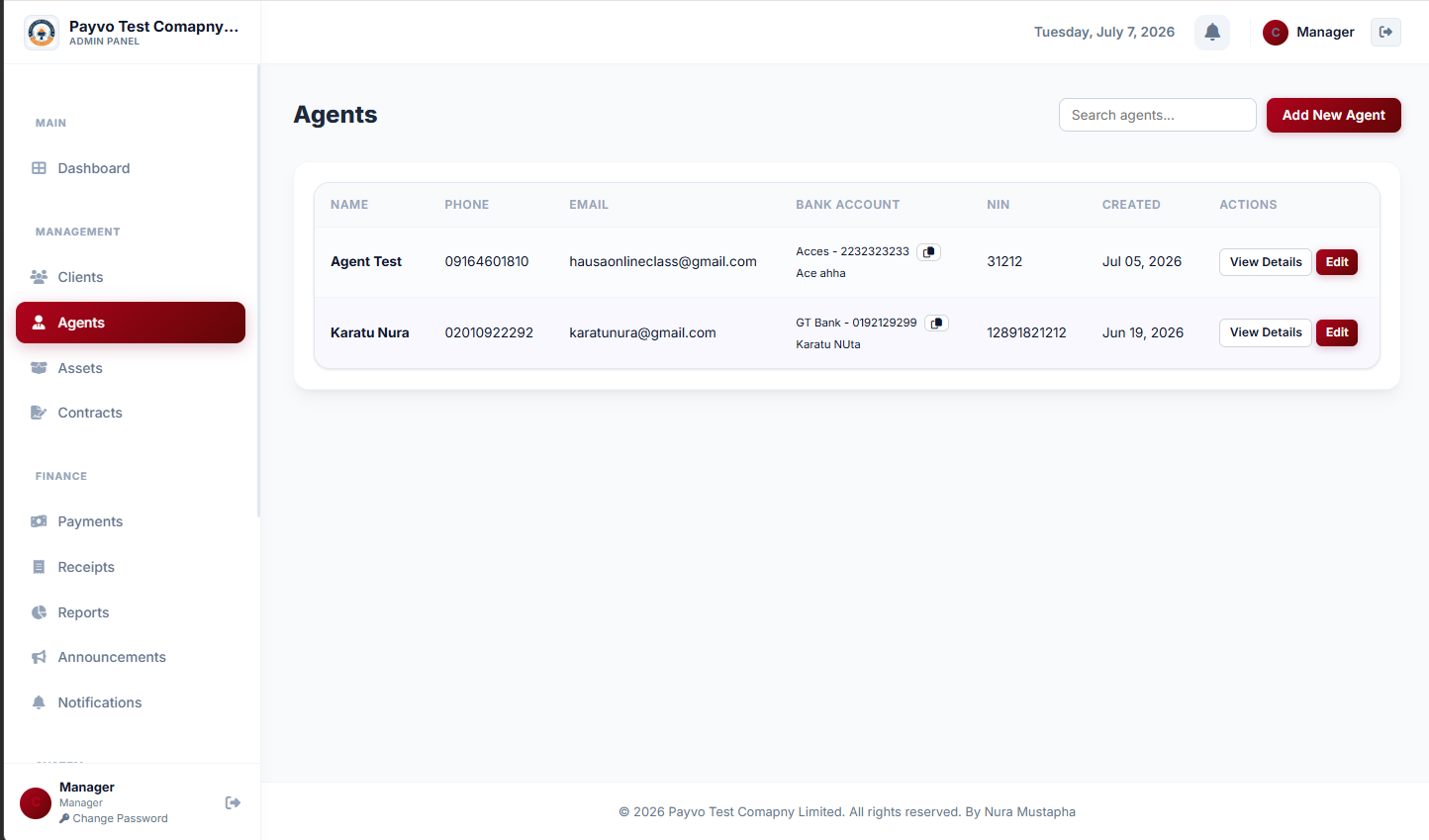 Agent: Agents list page
Common Mistakes to Avoid
Transitioning to an automated system for how to track installment payments can have pitfalls if not approached carefully.
- Underestimating Setup Time: Don't rush the initial setup. Properly configuring your system, importing data, and training staff takes time. Rushing leads to errors down the line.
- Ignoring Staff Training: Even the most intuitive software requires training. Without it, staff may revert to old habits or make mistakes, undermining the automation's benefits. Budget for adequate training, whether in-house or external.
- Neglecting Data Accuracy: "Garbage in, garbage out." Ensure all data entered, especially historical client and contract information, is accurate. Inaccurate data will lead to incorrect calculations and frustrated customers.
- Overlooking Customer Communication: While automation sends reminders, don't completely abandon personalized communication. Automated messages should be professional and clear, but a human touch is still valuable for complex issues.
- Choosing the Wrong Software: Opting for a generic accounting tool instead of a specialized instalment loan management software designed for installment sales can lead to significant limitations and workarounds. Ensure the software meets the unique needs of your business model.
- Ignoring Power and Internet Stability: In Nigeria, consistent power and internet are not guaranteed. Ensure you have backup solutions to avoid disruptions to your automated system.
How to Track and Grow After Launch
Launching your automated system is just the beginning. Continuous monitoring and strategic growth are key to maximizing your investment.
- Monitor Key Performance Indicators (KPIs): Regularly review your dashboard for critical metrics. How many active contracts do you have? What's your total outstanding balance? What's the collection rate? How many payments are overdue? These insights are crucial for understanding business health.
- Leverage Reporting: Use the system's reporting features to generate financial reports, payment histories, and client statements. These reports are invaluable for accounting, auditing, and making informed business decisions. For instance, detailed reports can help a cooperative society management software user understand their members' payment behavior.
- Analyze Payment Trends: Identify patterns in payment behavior. Are certain times of the month more challenging for collections? Are there specific types of contracts that have higher delinquency rates? This data can inform your sales strategies and payment terms.
- Optimize Client Communication: Review the effectiveness of your automated notifications. Are clients responding positively? Adjust the timing and wording of your payment reminders and confirmations to improve engagement and reduce defaults.
- Agent Performance Review: If you use agents, regularly check their performance data. Which agents are bringing in the most consistent payments? Use this information for performance reviews and commission adjustments.
- Scale with Confidence: As your business grows, your automated system should scale with you. Adding new clients, contracts, and even staff should be a seamless process, not a bottleneck. A system that provides real-time dashboards and comprehensive reports, like Payvo, allows you to track everything securely and gain deep insights into your operations, facilitating informed growth decisions. You can view these insights on your dashboard, which provides an overview of your total clients, active contracts, and outstanding balances.
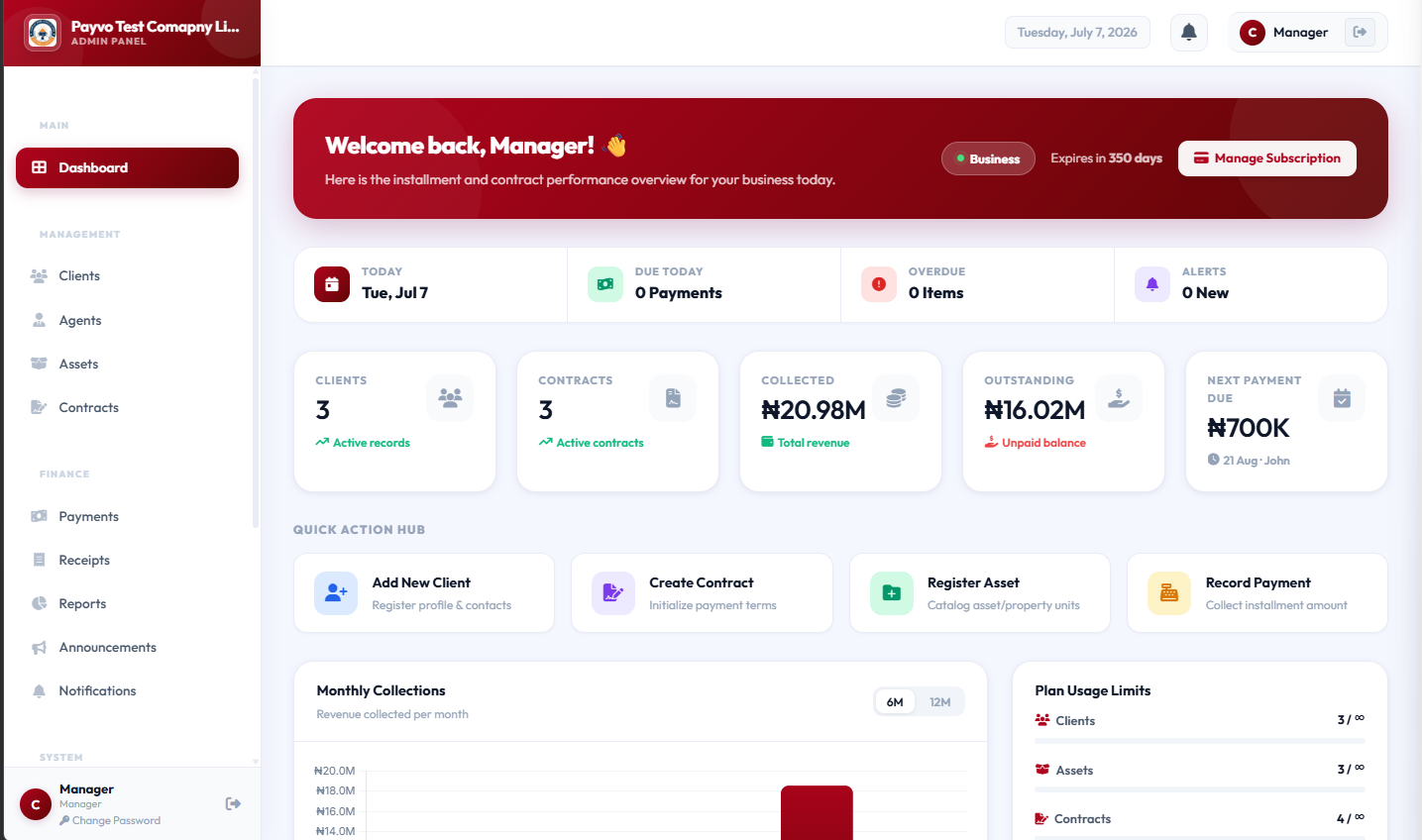 Dashboard (bottom)
Frequently Asked Questions
Q1: How much does it cost to implement an automated loan tracking system in Nigeria?
A1: The costs vary based on the software's features and your business size. You should budget for a software subscription (₦5,000 - ₦50,000/month), potential one-time setup fees (₦50,000 - ₦250,000), a reliable laptop (₦150,000 - ₦350,000), internet data (₦10,000 - ₦25,000/month), and staff training (₦20,000 - ₦75,000). Don't forget ongoing costs like generator fuel/maintenance (₦15,000 - ₦50,000/month) and SMS notification costs (₦2 - ₦5 per message).
Q2: Can these systems handle interest calculations for loans?
A2: Yes, most specialized loan management system software, especially those designed for installment sales, can automatically calculate interest based on the terms you set during contract creation. They handle complex amortization schedules, ensuring accurate outstanding balances and payment histories.
Q3: Is it possible to integrate a WhatsApp payment notification system with the tracking software?
A3: Absolutely. Modern installment management software often includes built-in integrations or allows for easy setup of WhatsApp notifications. This feature is crucial for sending automated payment reminders, confirmation receipts, and other important communications directly to your clients, improving engagement and reducing manual effort.
Q4: How secure is my customer data on these automated platforms?
A4: Reputable platforms prioritize data security. Look for features like secure logins, role-based access permissions for staff, data encryption, and regular backups. Many also offer audit logs, allowing you to track every action taken within the system, ensuring transparency and accountability for your business payment tracking app Nigeria. Always review the privacy policy and terms of service of any software provider, such as the comprehensive details found on Payvo's privacy policy page.
Q5: Can I track agent commissions accurately using this software?
A5: Yes, a key benefit of advanced installment management software is the ability to track agent performance and commissions. You can assign agents to specific contracts, and the system will automatically calculate their commission based on payments received. Features like agent self-tracking also empower your agents to monitor their own earnings, as detailed on Payvo's agent tracking page.
 Office worker reviewing financial reports on a tablet
Ready to Streamline Your Operations?
Automating your customer loan and installment tracking is no longer a luxury but a necessity for growth in Nigeria's competitive market. If you're ready to move beyond manual ledgers and scattered records, explore how a dedicated platform can transform your business. Visit Payvo's public home page to see how their comprehensive system can help you register clients, manage contracts, automate payments, and track everything securely, allowing you to focus on growing your business. For specific features, check out Payvo's features page or get started by registering into Payvo today.