Every month, countless Nigerian businesses lose thousands, sometimes millions, of Naira to missed payments, reconciliation errors, and the sheer drudgery of manual tracking. Picture this: a car dealer chasing down dozens of customers for overdue installments, a real estate agent manually updating spreadsheets, or a cooperative society drowning in paper receipts. The time spent on these tasks isn't just wasted; it's actively costing you money and stunting your growth.
 Nigerian business owner looking stressed at desk with
The Evolving Landscape of Nigerian Business Payments in 2026
The Nigerian business environment in 2026 demands efficiency. With inflation pressures and tight margins, every minute and every Naira counts. Businesses that rely on installment sales – from real estate developers in Abuja to solar equipment leasing companies in Kano – are particularly vulnerable to inefficiencies in payment collection and tracking. Manual processes, which once seemed manageable, are now significant bottlenecks.
A recent survey indicates that Nigerian SMEs spend an average of 10-15 hours per week on manual financial reconciliation and payment follow-ups. This translates to a substantial operational cost, especially when considering the potential for human error. Incorrectly recorded payments, forgotten reminders, and lost receipts can lead to disputes with customers, damaged relationships, and ultimately, lost revenue. For businesses dealing with hire purchase agreements, credit sales, or recurring payments, streamlining these operations is no longer a luxury but a necessity for survival and growth. The shift towards digital payments and increased customer expectations for instant, accurate communication means that businesses must adapt or risk being left behind.
What You Need Before You Start
Before diving into payment automation, a few foundational elements will ensure a smoother transition and maximize your benefits:
- Clear Understanding of Your Current Process: Document how you currently manage payments, from client onboarding to receipt generation and follow-up. This helps identify pain points.
- Reliable Internet Access: For cloud-based solutions, consistent internet connectivity is crucial. Budget around ₦5,000 - ₦15,000 monthly for reliable data.
- Basic Digital Literacy: You or your staff should be comfortable with using computers or smartphones.
- Initial Investment Budget: Be prepared for costs associated with software subscriptions (₦5,000 - ₦25,000/month), potential one-time setup fees (₦50,000 - ₦300,000), and possibly a basic laptop or tablet (₦120,000 - ₦350,000).
- Staff Buy-in: Ensure your team understands the benefits of automation to foster adoption.
Step-by-Step: Automate Business Payments, Reduce Manual Work & Boost Efficiency
Automating your payment processes might seem daunting, but by breaking it down into manageable steps, any business can achieve significant improvements.
Step 1: Assess Your Current Payment Workflow and Identify Bottlenecks
Before you can automate, you need to understand what you're currently doing. Map out every step of your payment process:
- How do you onboard a new client?
- How are contracts created and terms set?
- How do clients make payments (cash, transfer, POS)?
- How are payments recorded?
- How are receipts issued?
- How do you track outstanding balances and send reminders?
- What happens when a payment is missed?
Step 2: Choose the Right Payment Automation Software
This is the core decision. For businesses managing installment sales – whether it's real estate, vehicles, solar panels, or building materials on credit – you need more than just a simple payment gateway. You need a robust installment management software Nigeria businesses can rely on. Look for systems that offer:
- Client Management: A centralized database to store client details and their entire payment history.
- Contract Management: The ability to create contracts, define payment terms, and automatically generate installment schedules.
- Payment Recording & Reconciliation: Easy ways to log payments, track them against specific contracts, and automate reconciliation.
- Automated Receipts: Instant, branded receipts for every payment.
- Communication Automation: Automated payment reminders and notifications via email and WhatsApp.
- Reporting: Clear dashboards and exportable reports for financial oversight.
Step 3: Digitize Client and Asset Records
Once you've selected your platform, the next crucial step is migrating your existing client and asset data into the system. This means moving away from physical ledgers, scattered notes, and disparate spreadsheets.
- Client Data: Input full client details, including contact information, identification, and any relevant notes.
- Asset Data: For businesses selling physical assets (cars, properties, equipment), register each item. Link these assets directly to client contracts within the software. This ensures you have a clear record of who owns what and under what terms.
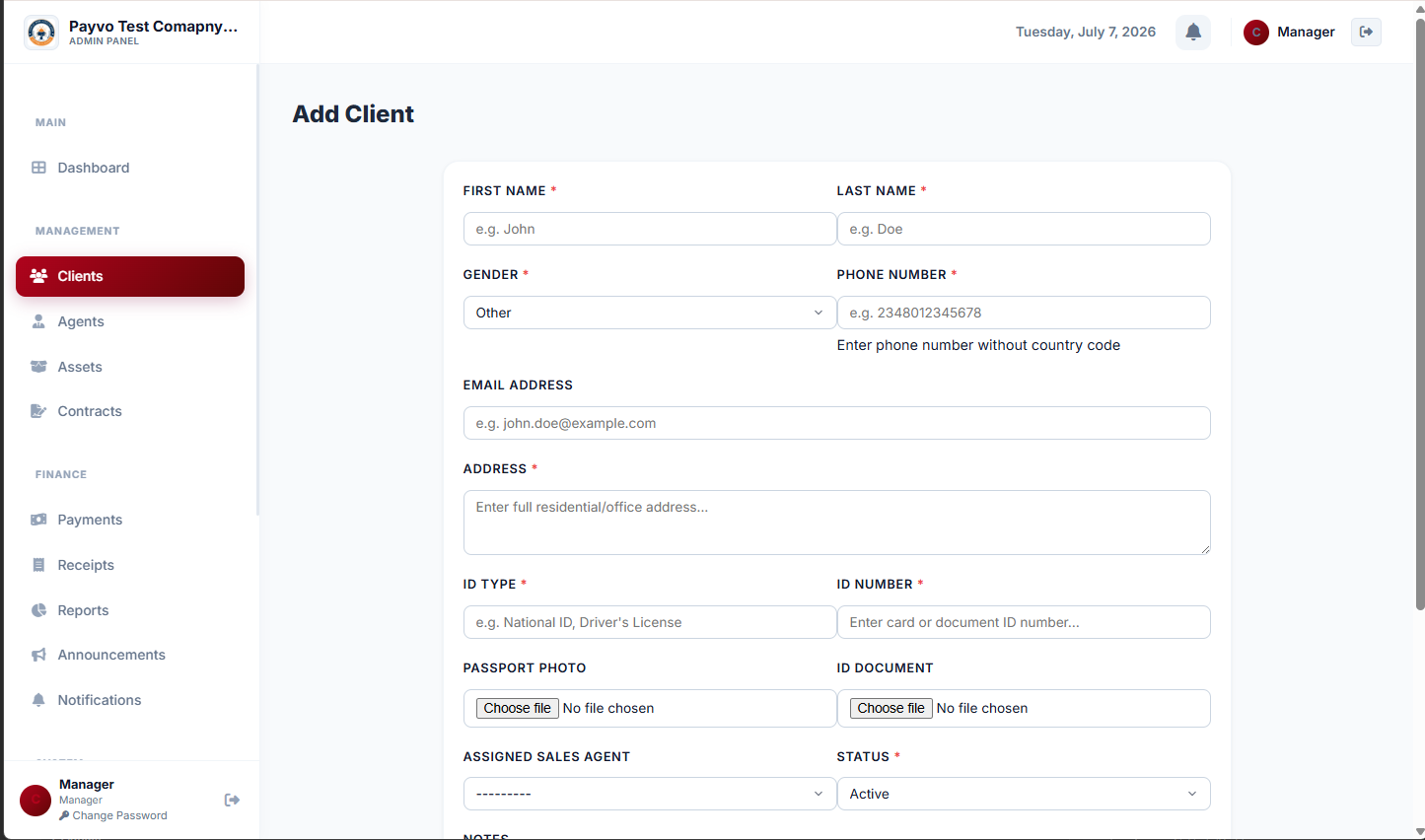 Client: Add Client page
Digitizing client records is the first step towards streamlined management.
Step 4: Create and Automate Contract Terms
This is where the power of automation truly shines for installment-based businesses. Instead of manually calculating payment schedules for each new sale, your chosen software should handle this.
- Define Terms: Input the total sale price, down payment, number of installments, interest rates (if applicable), and due dates.
- Automatic Scheduling: The system should automatically generate the full installment schedule, making it clear to both you and your client when payments are due.
- Contract Generation: Some platforms can even generate digital contracts based on these terms.
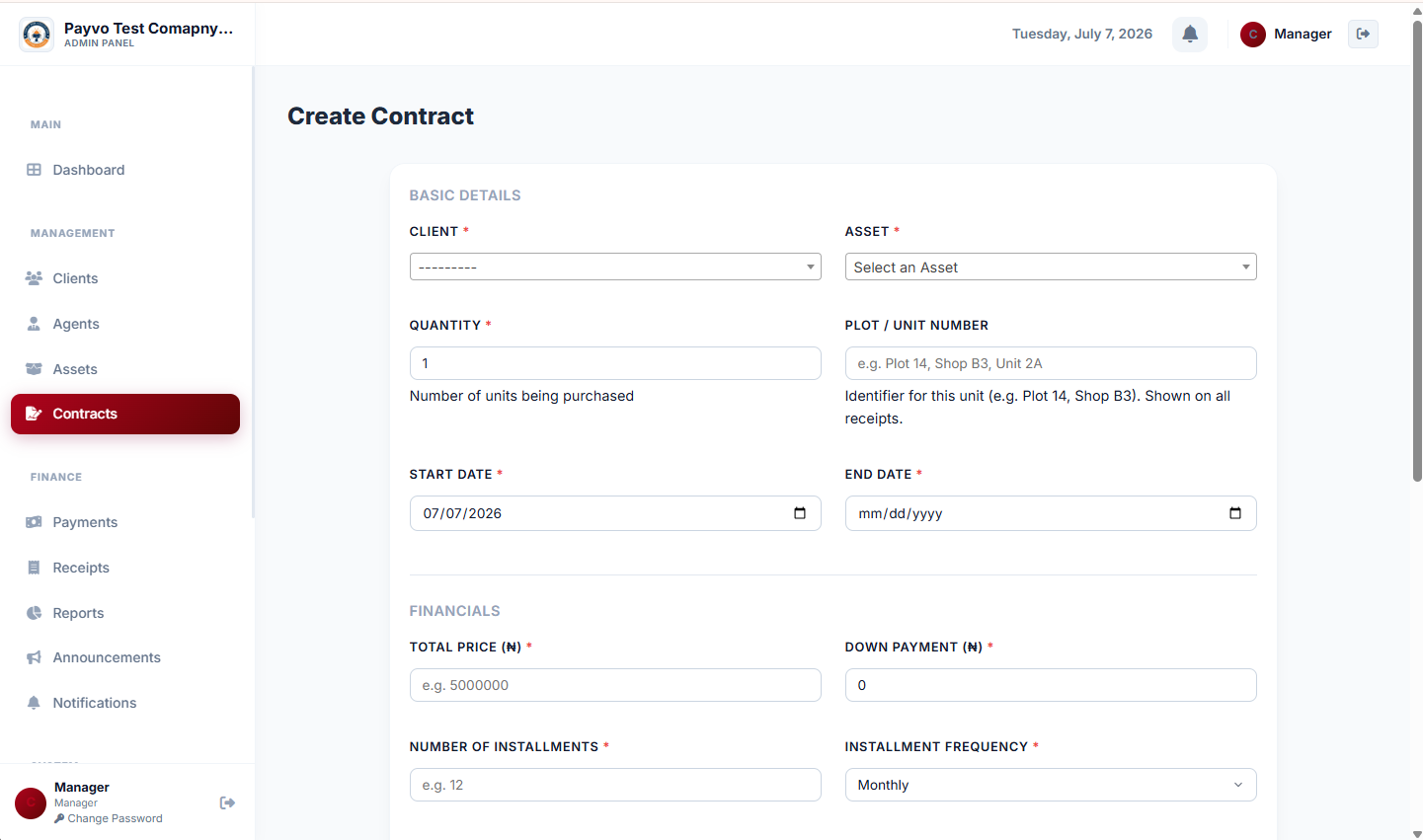 Management: Add contract (top)
Creating contracts with automated installment schedules.
Step 5: Implement Automated Payment Recording and Receipt Generation
Gone are the days of handwritten receipts and manual ledger entries. With an automated system, every payment is logged accurately and immediately.
- Record Payments: When a client pays, simply record the payment in the system. It should automatically update their outstanding balance and payment history.
- Instant Receipts: The system should automatically generate a professional, branded receipt (with your company logo and details) that can be instantly shared with the client via email or WhatsApp. This not only saves time but also builds customer trust and professionalism.
- Payment Automation: For businesses that integrate with payment gateways, some systems can even automatically record payments received digitally, further reducing manual input.
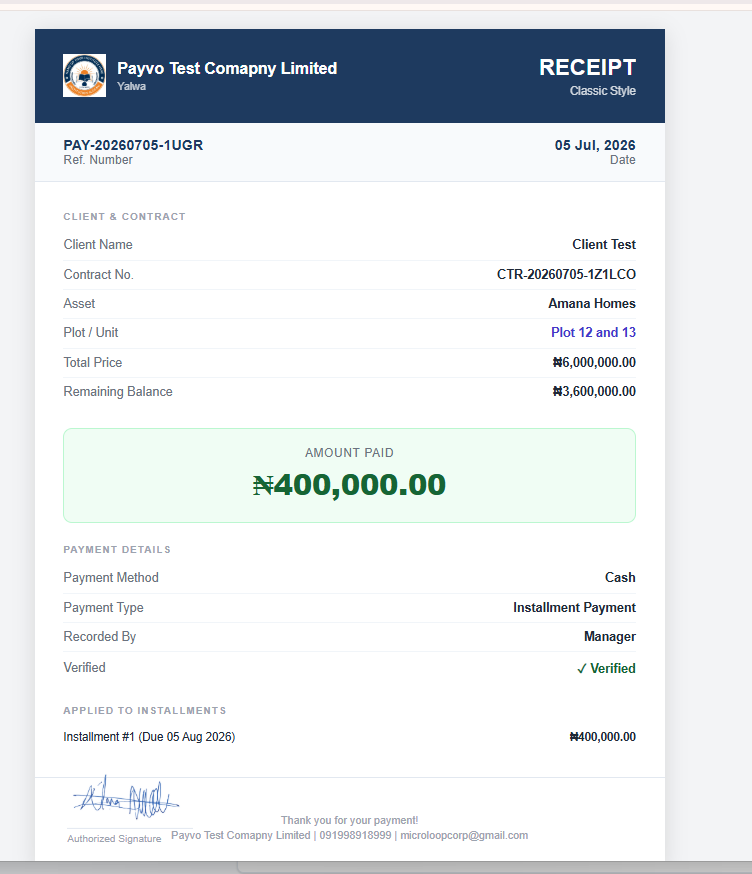 Finance: Paymnet Receipt Sample
Automated, branded receipts enhance professionalism and record-keeping.
Step 6: Set Up Automated Payment Reminders and Notifications
One of the biggest time-sinks for businesses managing installments is chasing overdue payments. Automation solves this.
- Pre-Due Date Reminders: Configure the system to send automated reminders a few days before a payment is due. This proactive approach significantly reduces late payments.
- Overdue Notifications: If a payment is missed, the system can automatically send polite but firm notifications to the client.
- Communication Channels: Utilize email and WhatsApp payment notification system features for maximum reach, as these are widely used in Nigeria. This frees up your staff from tedious follow-up calls.
Step 7: Streamline Agent and Staff Management
For businesses that rely on agents or have multiple staff members handling sales and collections, automation extends to internal processes.
- Role-Based Access: Grant different staff members access levels based on their roles (e.g., sales agents can view their contracts, accountants can access financial reports).
- Agent Commission Tracking: If you pay commissions, the system can automatically calculate commissions per payment received and track agent earnings, eliminating manual calculations and potential disputes. This is crucial for real estate payment tracking Nigeria companies need.
- Agent Self-Service: Some advanced systems allow agents to log in to view their own performance metrics and submit withdrawal requests, further reducing administrative burden on management.
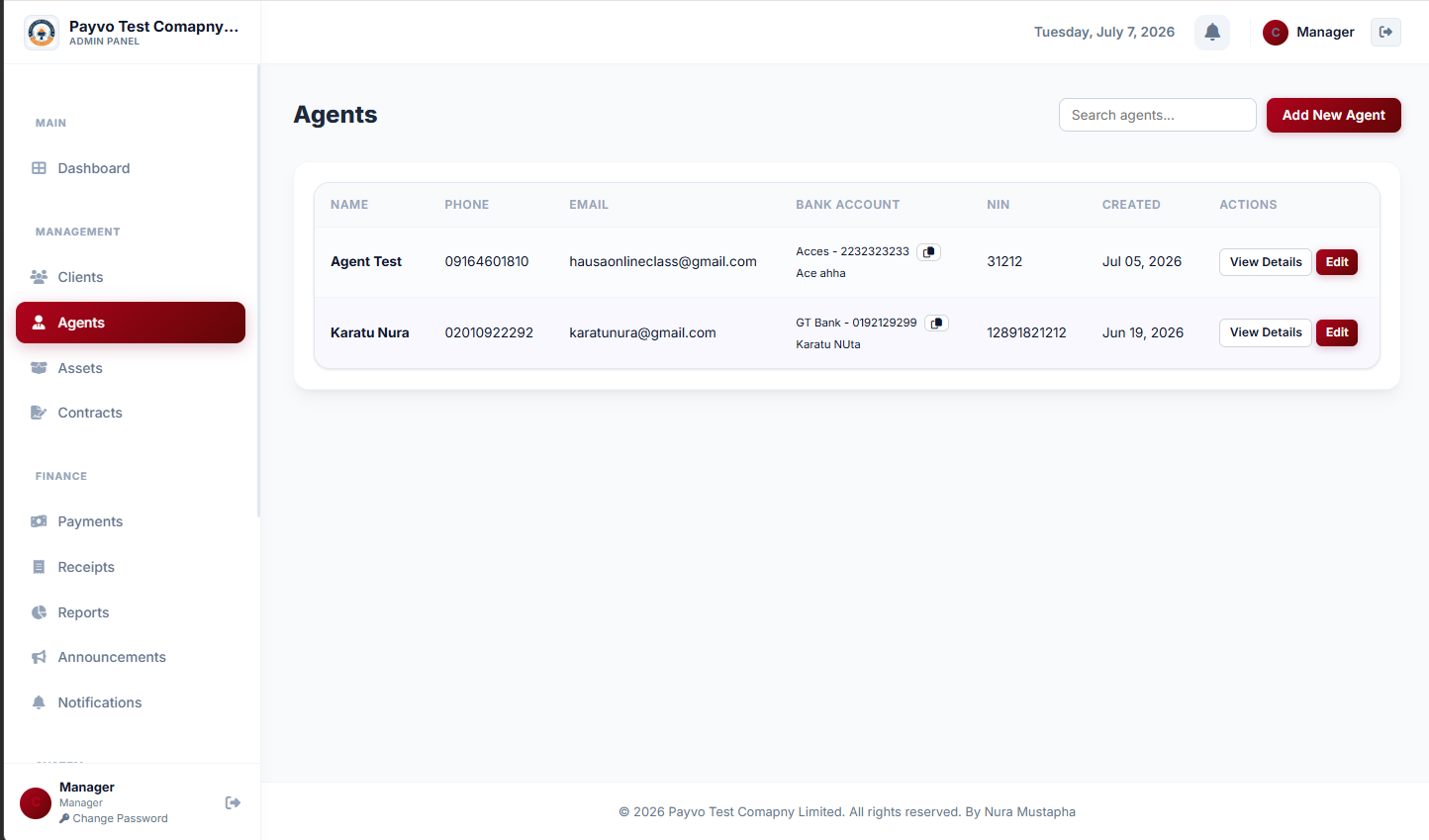 Agent: Agents list page
Effectively manage agents and track commissions with dedicated features.
Step 8: Leverage Dashboards and Reporting for Insights
Automation isn't just about reducing manual work; it's about gaining better control and insights into your business.
- Real-time Dashboards: Your system should offer a dashboard that provides an instant overview of key metrics: total clients, active contracts, amount collected, outstanding balances, and next payments due.
- Financial Reports: Generate detailed reports on payments received, overdue payments, client statements, and agent commissions. These reports are invaluable for accounting, financial planning, and identifying trends.
- Weekly Summaries: Many systems offer automated weekly reports sent directly to your email, giving you a snapshot of your business performance without even logging in.
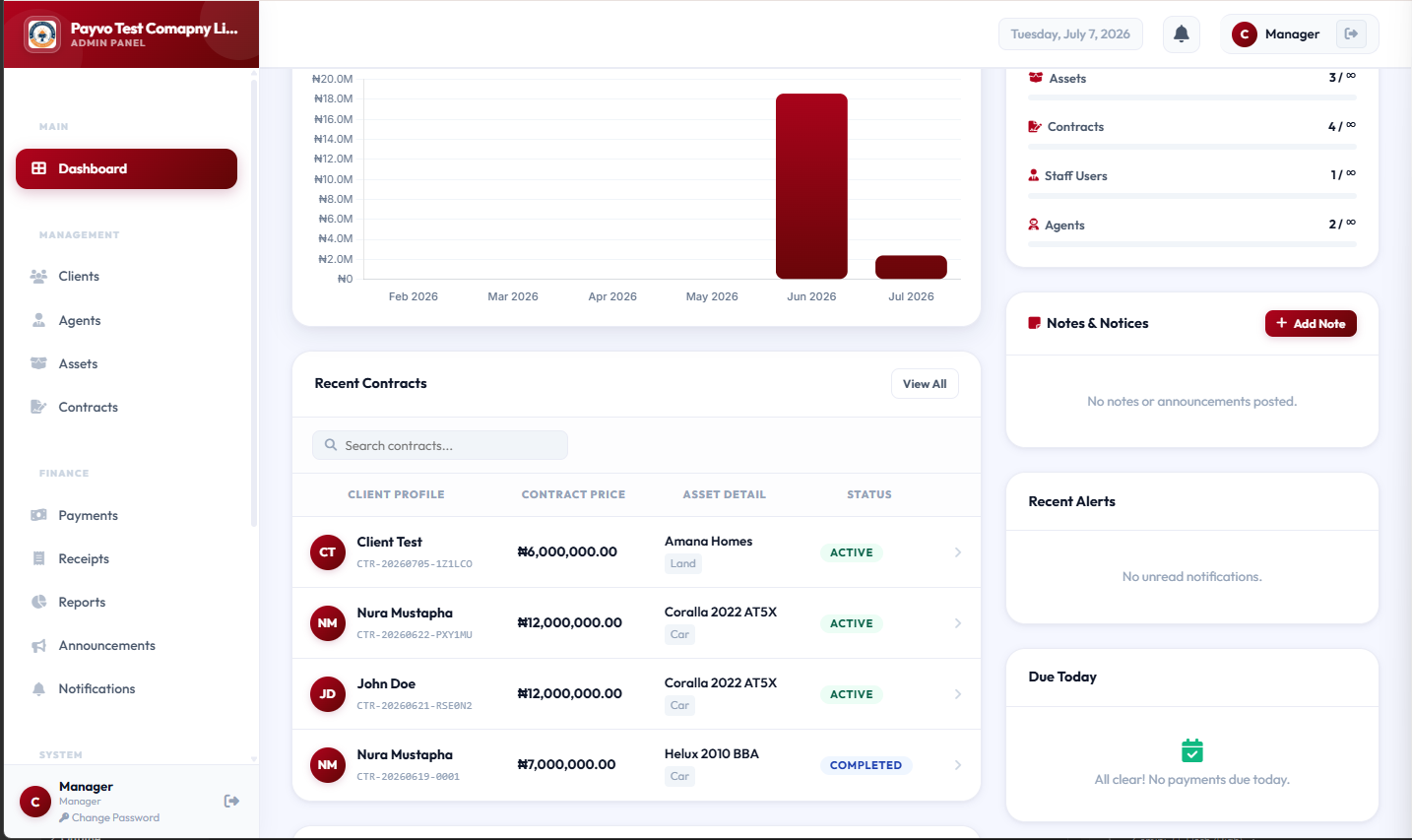 Dashobard (top)
Real-time dashboards provide critical business insights at a glance.
Common Mistakes to Avoid
Automating your payment processes can transform your business, but watch out for these pitfalls:
- Not Training Staff Adequately: A powerful system is useless if your team doesn't know how to use it. Invest in proper training.
- Ignoring Data Migration: Rushing or neglecting the accurate transfer of old client and contract data can lead to chaos and distrust in the new system.
- Over-Complicating the Setup: Start with the core features you need and gradually explore advanced functionalities. Don't try to implement everything at once.
- Not Communicating Changes to Clients: Inform your clients about the new system, especially how they will receive receipts and reminders. Transparency builds trust.
- Choosing the Wrong Software: Opting for a generic accounting tool when you specifically need robust contract management software Nigeria businesses rely on for installment sales will lead to frustration. Ensure the software fits your unique business model.
- Neglecting Internet and Hardware: Underestimating the need for stable internet and basic, functional hardware (laptop/tablet) can cripple your automation efforts.
How to Track and Grow After Launch
Once your payment automation system is up and running, the work isn't over. Continuous monitoring and optimization are key to sustained growth.
- Monitor Key Performance Indicators (KPIs):
- Collection Rate: Percentage of due payments successfully collected.
- Average Days to Collect: How long it takes to receive payments after they are due.
- Number of Overdue Accounts: Track this trend to identify issues.
- Customer Retention Rate: Improved payment processes often lead to happier customers.
- Staff Time Saved: Quantify the hours your team now saves on manual tasks.
- Gather Feedback: Regularly solicit feedback from your staff and clients. Are the reminders helpful? Is the receipt process smooth? Use this feedback to refine your processes.
- Leverage Reporting: Dive deep into the financial reports generated by your system. Identify peak collection periods, common reasons for late payments, and opportunities for process improvement. For example, Payvo's robust reporting features allow you to export payment and contract data as PDF or Excel, providing invaluable insights for your accounting and strategic planning.
- Optimize Communication: A/B test different reminder messages or timings to see what yields the best collection rates.
- Scale Your Operations: With manual burdens lifted, you can now focus on acquiring more clients, expanding your product offerings, or entering new markets. The efficiency gained allows you to handle a larger volume of business without proportionally increasing your administrative staff.
 Nigerian business owner smiling while looking at tablet
Frequently Asked Questions
Q1: How much does it cost to implement payment automation in my Nigerian business?
A1: The costs vary. Software subscriptions typically range from ₦5,000 to ₦25,000 per month. You might also incur a one-time setup fee of ₦50,000 to ₦300,000 for complex integrations. Don't forget potential hardware costs (₦120,000 - ₦350,000 for a laptop/tablet) and internet data (₦5,000 - ₦15,000/month). However, the potential savings from reduced manual errors (₦10,000 - ₦100,000/month) and increased efficiency often outweigh these costs.
Q2: What kind of businesses benefit most from installment management software Nigeria offers?
A2: Businesses that frequently sell on credit or offer installment plans benefit immensely. This includes real estate developers, car dealers (especially hire purchase), solar/equipment leasing companies, building material suppliers, cooperative societies, and microfinance operators. Any business with recurring payments or contract-based collections will find significant value.
Q3: Can these systems help with agent commission tracking?
A3: Absolutely. Many modern installment management software solutions include dedicated features for agent commission tracking. You can assign agents to contracts, have the system automatically calculate commissions based on payments received, and even provide agents with a portal to track their own earnings, as detailed on our agent tracking page.
Q4: Is it secure to manage client data and payments through an automated system?
A4: Reputable payment automation platforms prioritize security. Look for features like role-based permissions, data encryption, and audit logs. Always choose a provider with a strong privacy policy and terms of service that outline their data protection measures.
Q5: How long does it take to set up and start using a new payment automation system?
A5: For smaller businesses with straightforward needs, initial setup can be as quick as a few days to a week. For larger businesses with more data to migrate or complex integrations, it might take a few weeks. The key is to dedicate time to data entry and staff training for a smooth transition.
Ready to Streamline Your Business Payments?
Stop letting manual processes drain your time and profits. Embrace the efficiency of automated payment management. Explore how Payvo can transform your operations, from client onboarding to automated receipts and payment reminders. Register for Payvo today and take the first step towards a more efficient, profitable business.