For businesses relying on sales agents, tracking commissions can feel like navigating a maze blindfolded. Discrepancies, delayed payouts, and endless manual calculations don't just frustrate agents; they erode trust and directly impact your bottom line.
Why This Matters in 2024
In Nigeria's dynamic market, where installment sales drive growth for sectors from real estate to solar power, efficient agent management is not just an advantage—it's a necessity. The Nigerian real estate market, for instance, is projected to grow by 9.3% in 2024, reaching an estimated value of NGN 7.5 trillion, according to Statista. Much of this growth is fueled by agent networks facilitating property sales on flexible payment plans. Similarly, the automotive sector, with a significant portion of sales occurring through hire purchase, heavily relies on effective commission structures to motivate its sales force.
However, the traditional manual methods of tracking agent performance and calculating commissions are fraught with inefficiencies. A report by PwC Nigeria highlighted that operational inefficiencies cost Nigerian businesses billions annually, with manual processes being a significant contributor. Without a robust system, businesses face:
- High administrative burden: Manually calculating commissions for numerous agents, especially for installment-based sales, consumes countless hours.
- Errors and disputes: Human error in spreadsheets leads to incorrect payouts, fostering distrust and requiring time-consuming reconciliation.
- Lack of transparency: Agents often feel in the dark about their earnings, leading to demotivation and high turnover.
- Delayed payments: Slow processing of commissions impacts agent morale and their ability to sustain themselves, potentially driving them to competitors.
- Poor performance visibility: Without real-time data, businesses struggle to identify top performers or areas needing improvement within their sales teams.
What You Need Before You Start
Before diving into automating your sales agent and commission management, ensure you have the following in place:
- Clear Commission Structure: Define your commission rates and rules (e.g., percentage per sale, tiered commissions, payment upon down payment vs. full payment, or per installment received).
- Agent Contracts: Formalize agreements with your sales agents, outlining their roles, responsibilities, and the agreed-upon commission terms.
- Sales Data Access: Ensure you have a reliable way to access all sales data, including client details, contract terms, payment schedules, and actual payments received.
- Understanding of Your Sales Cycle: Map out the typical journey from lead generation to contract closure and final payment for your products or services.
- Basic Digital Literacy: While automation simplifies much, a foundational understanding of using digital tools is beneficial for your team.
Step-by-Step: Automate Sales Commission Tracking & Agent Management
Implementing an automated system for managing your sales agents and their commissions can transform your business operations. This step-by-step guide will walk you through the process.
Step 1: Define and Document Your Agent Program
Before any technology comes into play, clearly articulate your agent program. This involves defining the specific roles of your sales agents, their target markets, and the products or services they will be selling. For real estate developers in Abuja, this might mean agents focusing on specific property types or districts. For car dealers, it could be agents specializing in particular vehicle models or financing options. Documenting these roles provides clarity and sets expectations.
Next, establish a comprehensive commission structure. This is the cornerstone of agent motivation. Will agents earn a flat fee per sale, a percentage of the sale price, or a percentage of each installment payment received? For installment-based businesses, a common practice is to pay commissions proportionally as clients make their payments. For example, if a property agent earns a 5% commission on a NGN 50,000,000 property, and the client pays in 10 installments, the agent might receive 0.5% of the property value with each installment. Clearly state any thresholds, bonuses, or clawback clauses. This detailed documentation will serve as the blueprint for configuring your management system.
Step 2: Onboard Your Sales Agents and Define Their Access
Once your program and commission structure are clear, the next step is to bring your agents into the system. This involves creating individual profiles for each sales agent, capturing essential information such as contact details, bank account information for payouts, and their unique agent ID. During this onboarding phase, it's crucial to assign them to relevant contracts or sales opportunities. For example, a real estate agent responsible for a specific housing estate would be linked to all property sales within that development.
The system should also allow you to define what each agent can see and do. An agent might need access to their personal sales performance, commission earnings, and the status of their clients' payments, but not necessarily sensitive company financial data or other agents' performance. This role-based access ensures data security and maintains focus. A robust agent management system Nigeria offers features for efficient agent onboarding and role definition.
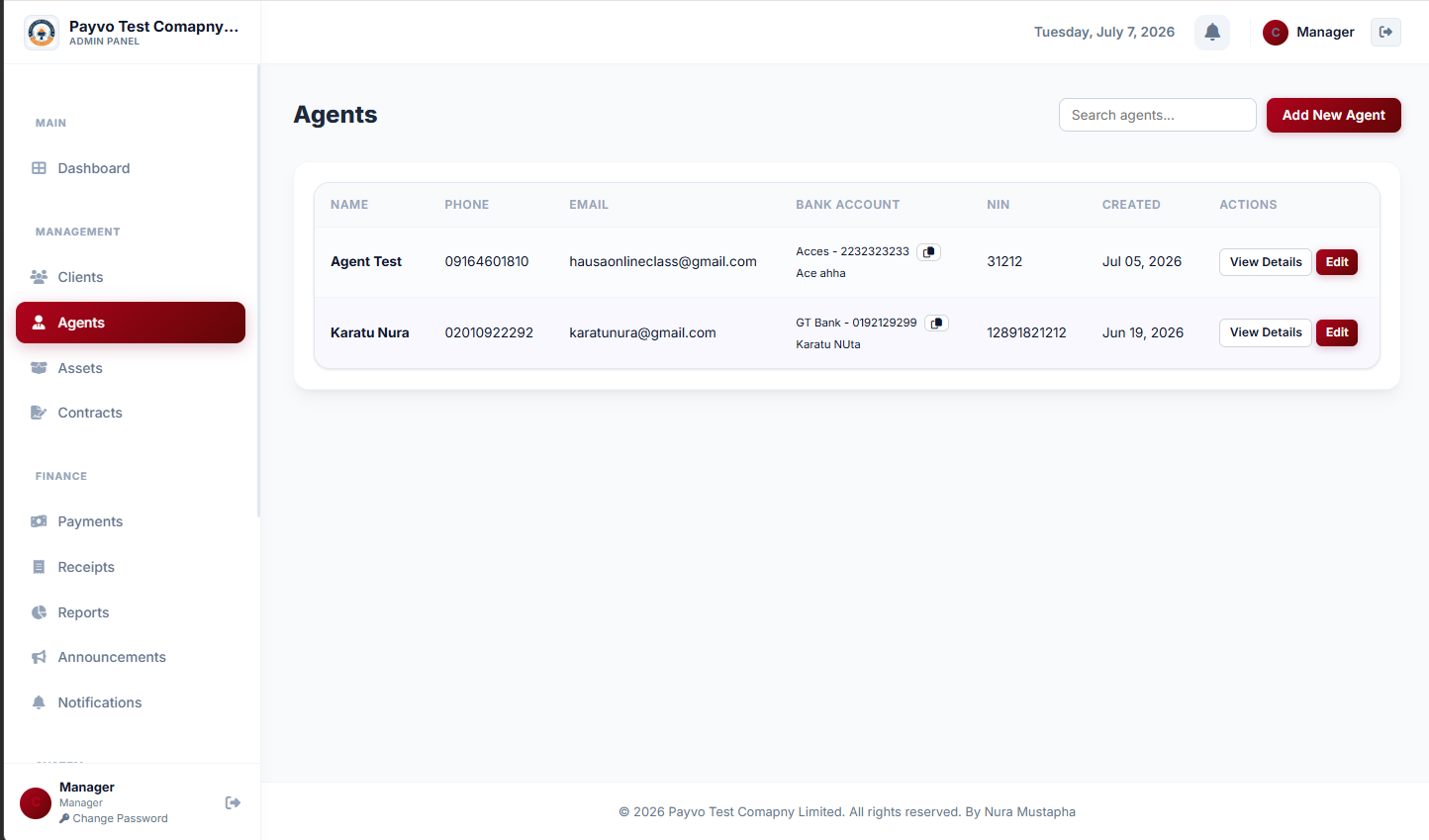 Agents list page
Step 3: Integrate Sales Contracts and Payment Schedules
At the heart of accurate commission tracking for installment sales is the seamless integration of your sales contracts. Each contract should detail the product or service sold (e.g., a specific car model, a plot of land, a solar panel system), the client's information, the total agreed-upon price, and the precise installment payment schedule. This schedule should include due dates and amounts for each payment. For car dealer installment software users, this means tracking the vehicle VIN, client loan terms, and monthly payment dates.
As contracts are created, the system should automatically link them to the responsible sales agent. This connection is vital because it triggers the automated commission calculation later on. Any changes to a contract, such as revised payment terms or early settlements, must be reflected in the system to ensure commission accuracy. This step lays the groundwork for precise commission calculation tied directly to sales performance and payment collection.
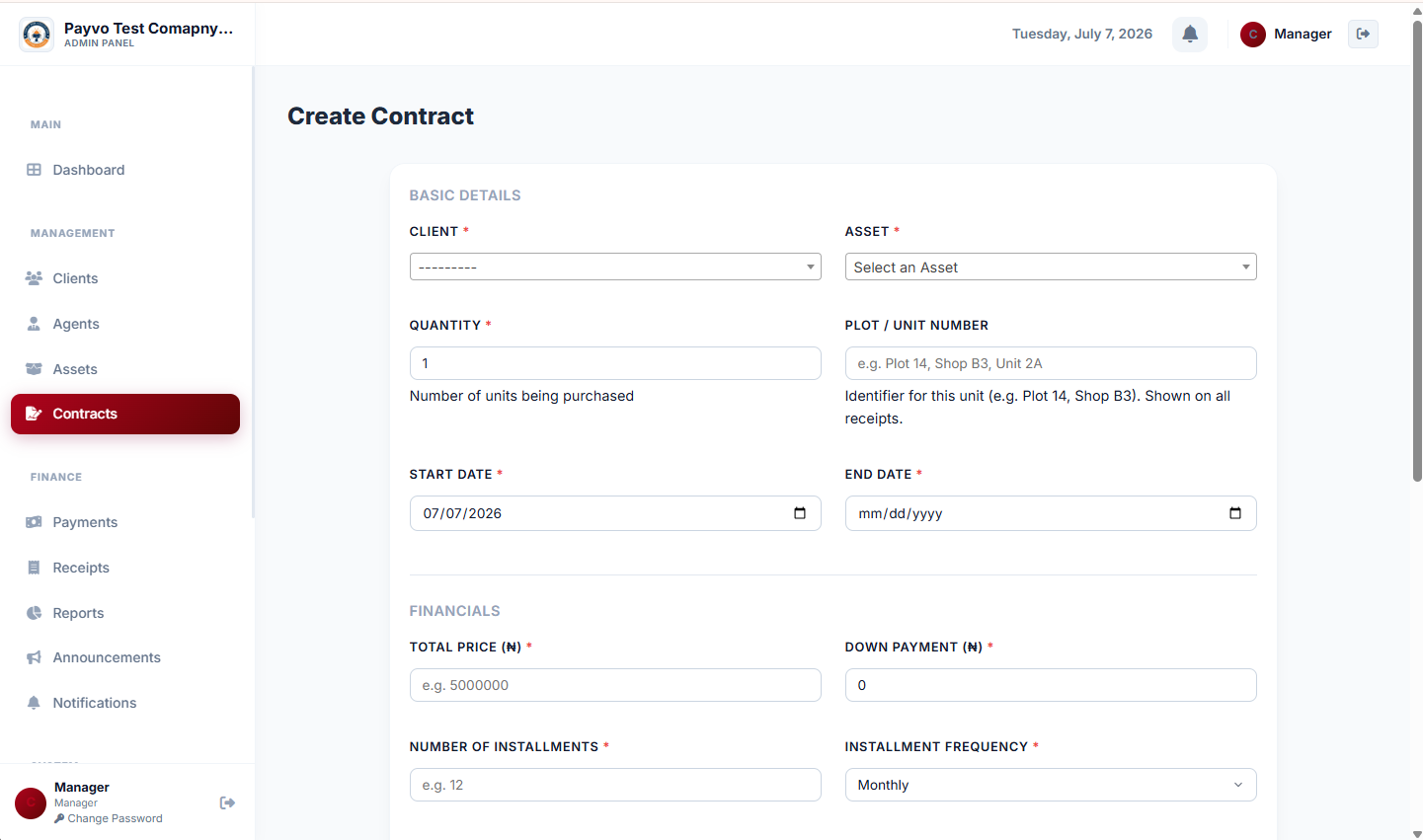 Management: Add contract (top)
Step 4: Automate Commission Calculation Upon Payment Receipt
This is where the power of automation truly shines. Instead of manually calculating commissions after each payment, the system automatically processes it. When a client makes an installment payment, the system records it against their contract. Instantly, based on the predefined commission structure, the corresponding commission amount for the assigned agent is calculated and allocated. This means if an agent earns 5% of each installment, and a client pays NGN 100,000, the system automatically credits the agent with NGN 5,000.
This real-time calculation eliminates manual errors and significantly reduces administrative overhead. It ensures that commissions are always accurate and directly tied to actual revenue collected. For businesses like cooperative societies or solar leasing companies managing hundreds of installment plans, this automated commission calculation is a game-changer. It provides real-time visibility into what agents are earning, removing the need for complex spreadsheets and reconciliation efforts.
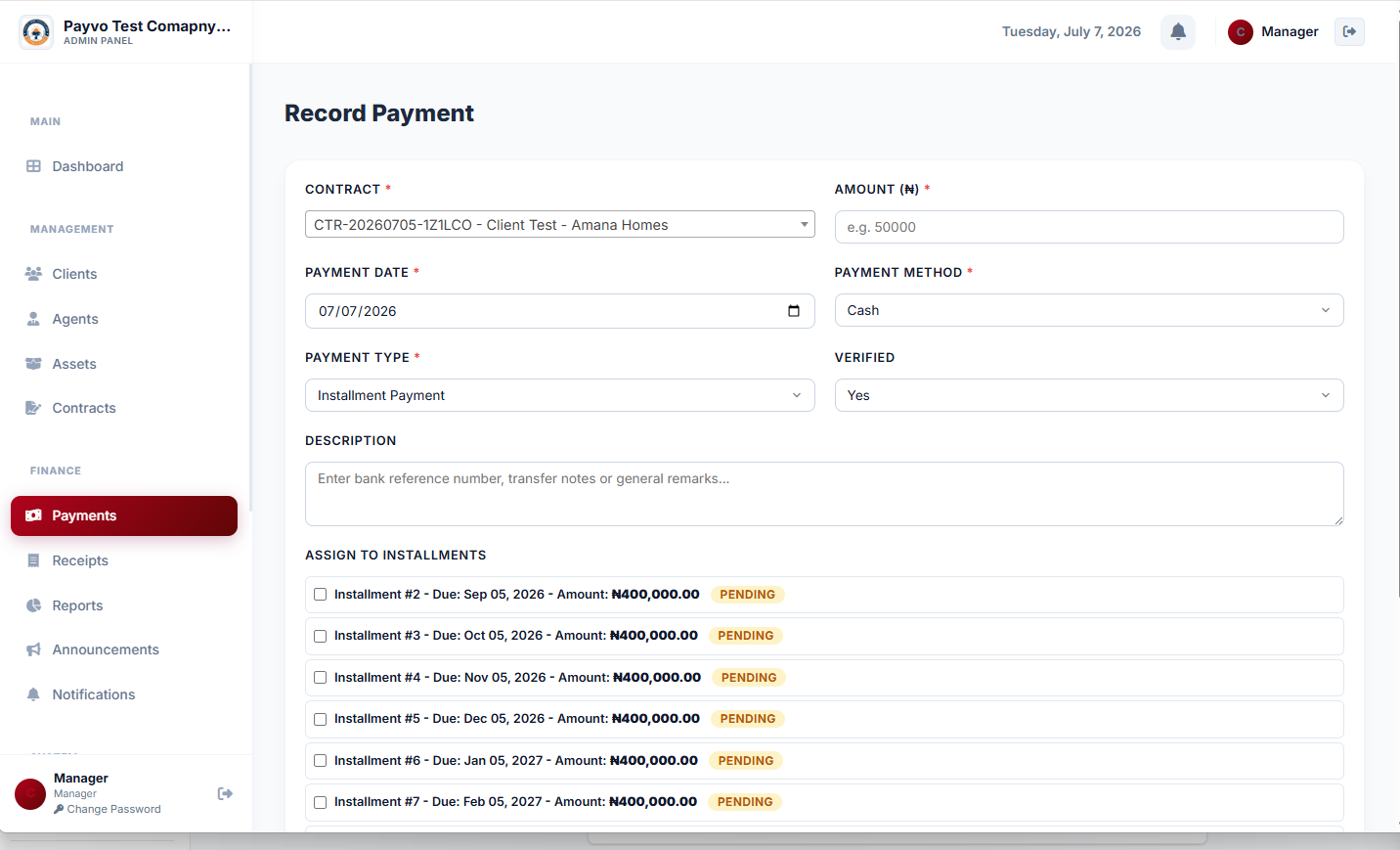 Record Payments Page
Step 5: Implement Agent Self-Tracking and Transparency
One of the biggest motivators for sales agents is transparency regarding their earnings. An effective system allows agents to log in securely and view their own performance metrics and commission earnings in real-time. This includes details like active contracts they are managing, the status of client payments, and their accrued and pending commissions. This feature empowers agents, reduces inquiries to management, and builds trust.
Furthermore, agents should be able to submit withdrawal requests directly through the system. This streamlines the payout process, as managers are instantly notified of these requests. This self-service capability fosters a sense of ownership and accountability among agents. For businesses using a comprehensive platform like Payvo, agents can log in with a unique code to track their KPIs and submit withdrawal requests, ensuring that they are always aware of their financial standing and can initiate payouts efficiently, all while reducing manual communication back and forth. This agent self-tracking feature is a core component of a modern agent management system Nigeria.
 Descriptive Alt Text
Step 6: Automate Notifications and Reminders
Communication is key in managing a sales force, especially when dealing with installment payments. Automated notifications can keep both agents and clients informed. For clients, this includes automatic payment reminders sent via email or WhatsApp before due dates, significantly reducing missed payments. These reminders can include a public receipt link clients can view, save, or share, enhancing convenience and professionalism.
For agents, automated notifications can alert them to new contracts assigned, payments received from their clients (triggering commission allocation), or changes to contract terms. This proactive communication minimizes misunderstandings and ensures everyone is on the same page. A robust WhatsApp payment notification system can dramatically improve client payment adherence and agent awareness.
Step 7: Generate Comprehensive Reports and Analytics
Data is invaluable for optimizing your sales strategy. Your system should be capable of generating a variety of reports:
- Agent Performance Reports: Track individual agent sales volumes, conversion rates, and total commissions earned over specific periods. This helps identify top performers and areas for improvement.
- Commission Payout Reports: Detailed reports on all commissions paid out, pending commissions, and historical payout data for accounting and financial reconciliation.
- Client Payment Status Reports: Overview of all active contracts, payment statuses, overdue payments, and upcoming payments, allowing managers to follow up proactively.
- Asset Tracking Reports: For businesses selling physical assets like cars or equipment, reports tracking assets linked to contracts, their status, and payment progress.
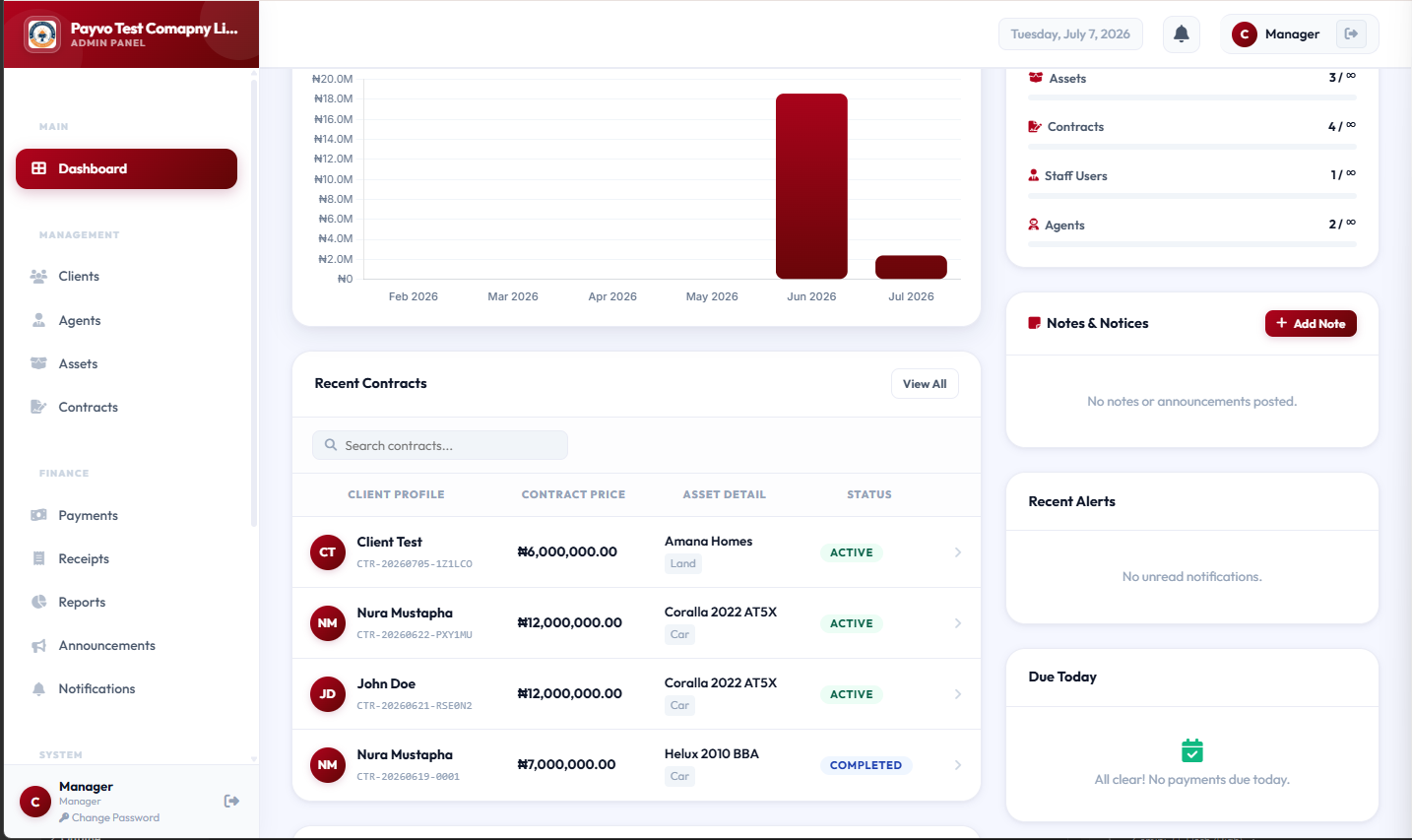 Dashobard (top)
> "The difference between success and failure in sales often boils down to how effectively you empower and reward your sales force. Manual commission tracking is a relic that hinders growth."
Common Mistakes to Avoid
When implementing an automated agent and commission management system, steer clear of these pitfalls:
- Overly Complex Commission Structures: While flexibility is good, overly intricate commission rules can make automation difficult and confusing for agents. Keep it clear and logical.
- Lack of Agent Training: Introducing a new system without proper training for your sales agents will lead to resistance and underutilization. Invest time in comprehensive onboarding.
- Ignoring Data Accuracy: The best system is only as good as the data it receives. Ensure all client, contract, and payment data entered is accurate from the start.
- Not Customizing to Local Context: Generic software might not fully cater to Nigerian payment methods, regulatory nuances, or specific business practices (like unique installment payment cycles). Ensure your chosen solution, like an installment management software Nigeria, is adaptable.
- Forgetting About Security and Privacy: Ensure the system you choose has robust security features and adheres to data privacy best practices, especially when handling client and agent financial information.
How to Track and Grow After Launch
After successfully launching your automated agent and commission management system, the work isn't over. Continuous tracking and strategic growth are paramount.
Key Performance Indicators (KPIs) to Monitor:
- Agent Sales Volume: Track the total value of sales closed by each agent over time.
- Conversion Rates: Monitor how many leads or proposals turn into closed contracts for individual agents.
- Commission Earned vs. Paid: Compare accrued commissions against actual payouts to identify any bottlenecks or discrepancies.
- Payment Collection Rate: For installment sales, track the percentage of payments collected on time for each agent's contracts. This directly impacts their commission.
- Agent Retention Rate: A healthy retention rate indicates agent satisfaction with your program and payout process.
- Average Payout Time: Measure the time it takes from a commission being earned to it being paid out. Faster payouts generally lead to happier agents.
- Performance-Based Incentives: Use the data from your system to introduce bonuses for top performers or for achieving specific targets (e.g., highest sales in a quarter, lowest default rate on installment payments).
- Regular Feedback and Coaching: Use individual agent performance reports to provide targeted coaching and development opportunities.
- Optimize Commission Structures: Regularly review your commission rules based on performance data. If certain products aren't selling, adjust commissions to incentivize them.
- Expand Agent Network: As your system reduces the administrative burden, you can efficiently onboard and manage a larger sales force, scaling your operations.
- Client Relationship Management (CRM) Integration: Integrate your agent management system with a CRM to provide agents with a holistic view of client interactions and sales history.
- Leverage Automated Reporting: Utilize the system's ability to generate real-time dashboards and reports. For instance, a platform like Payvo can provide real-time dashboards showing total clients, active contracts, amount collected, and outstanding balances, giving you an instant pulse on your business's financial health and agent impact. This allows you to quickly identify trends and make data-driven decisions to foster growth.
 Descriptive Alt Text
Frequently Asked Questions
Q1: How can I ensure fair commission calculation for complex installment plans?
A1: The key is to use a robust contract management software Nigeria that allows you to define commission rules directly linked to each installment payment. When a customer makes a payment, the system automatically calculates the agent's commission based on the percentage or amount due for that specific installment. This eliminates manual errors and ensures fairness, as commissions are earned as revenue is collected.
Q2: What if an agent leaves or a contract is cancelled? How does the system handle clawbacks or adjustments?
A2: A sophisticated installment management software Nigeria should have features to handle these scenarios. You can configure rules for clawbacks (e.g., if a client defaults after an agent has been paid a portion of the commission). When an agent leaves, their access is revoked, and any pending commissions can be reviewed and processed according to your company policy. The system should maintain a clear audit trail of all adjustments.
Q3: Can agents really track their own earnings without seeing sensitive company data?
A3: Absolutely. Modern agent management systems implement role-based permissions. Agents are typically given a secure login that grants them access only to their specific performance metrics, client contracts they are assigned to, and their commission statements. They cannot view other agents' data, company-wide financial reports, or sensitive client information not relevant to their sales. This provides transparency while maintaining data security.
Q4: Is it possible to integrate this system with our existing accounting software?
A4: Many advanced business payment tracking app Nigeria solutions offer integration capabilities, often through APIs or data export functions. This allows you to seamlessly transfer commission payout data to your accounting software, reducing manual data entry and ensuring financial records are consistent. Always check the integration options when evaluating potential systems.
Q5: How does an automated system help in managing sales teams across different locations, like Kano, Kaduna, and Abuja?
A5: An automated system centralizes all agent and sales data in a secure, cloud-based platform, making it accessible from anywhere with an internet connection. This means managers in Abuja can oversee agents in Kano and Kaduna in real-time, track their performance, communicate effectively, and process commissions without geographical limitations. This is especially beneficial for real estate developers & property sellers with dispersed teams.
 Descriptive Alt Text
Ready to Automate Sales Commission Tracking & Agent Management?
Stop letting manual processes hold your business back. Embrace the efficiency, transparency, and accuracy that comes with automated agent and commission management. If you're ready to empower your sales force, streamline your operations, and drive significant growth, explore how a dedicated platform can transform your business. Discover the full capabilities of Payvo and see how it can help you manage clients, contracts, and commissions effortlessly. Learn more about our features or contact us today to get started.