Manual tracking of installment payments costs Nigerian businesses an average of 15% in lost revenue annually due to missed payments and administrative overhead. For businesses relying on consistent cash flow from installment sales—like real estate developers, car dealers, and solar equipment lessors—this leakage can cripple growth and operational stability. The good news? The solution isn't more spreadsheets; it's smarter automation.
The Shifting Landscape of Installment Sales in Nigeria
The Nigerian market for installment-based sales is booming. A 2026 report by the National Bureau of Statistics indicates a 12% year-on-year increase in consumer credit and hire purchase agreements, driven by a growing middle class and the increasing affordability of high-value goods through structured payments. This trend is particularly evident in sectors like real estate in bustling cities such as Kano, Kaduna, and Abuja, where property sellers offer flexible payment plans. Similarly, car dealers selling on hire purchase and solar/equipment leasing companies are expanding their reach by making products accessible through installments. However, this growth brings its own set of challenges.
While the opportunity for increased sales is significant, managing hundreds or even thousands of individual payment schedules, sending timely reminders, and accurately tracking collections becomes a monumental task without the right tools. Cooperative societies and microfinance operators, for instance, often struggle with the sheer volume of small, recurring payments. The traditional methods—notebooks, spreadsheets, and manual WhatsApp messages—are inefficient and prone to human error, leading to delayed payments, strained customer relationships, and a significant drain on administrative resources. Businesses need robust solutions to capitalize on this market expansion without getting bogged down in operational complexities.
What You Need Before You Start
Before diving into automating your installment payment processes, ensure you have these foundational elements in place:
- Clear Payment Policies: Define your installment terms, due dates, late payment penalties, and grace periods explicitly.
- Customer Data: A centralized, accessible list of your clients, their contact information, and the products/services they've acquired.
- Asset Register: A comprehensive list of all items sold on installment, including unique identifiers, current status, and linked contracts.
- Defined Roles: Clarity on who is responsible for sales, payment collection, customer service, and financial reporting within your organization.
- Communication Channels: Reliable methods for reaching your clients, such as active email addresses and WhatsApp numbers.
Step-by-Step: Automate Installment Payment Tracking & Reminders
Automating your installment payment processes can transform your business operations, enhance cash flow, and free up valuable time. Here's a structured approach to achieve it.
Step 1: Centralize Client and Asset Information
The first crucial step is to consolidate all your client and asset data into a single, accessible system. Scattered information leads to errors, delays, and a lack of oversight. For real estate developers, this means linking specific property units to buyers; for car dealers, it's associating vehicle VINs with purchasers. This centralization forms the backbone of effective contract and payment management.
Start by gathering all existing client details—names, contact information, addresses, and any identification documents. Simultaneously, create a detailed inventory of all assets or services you sell on installment. Each item should have a unique identifier and relevant descriptive information.
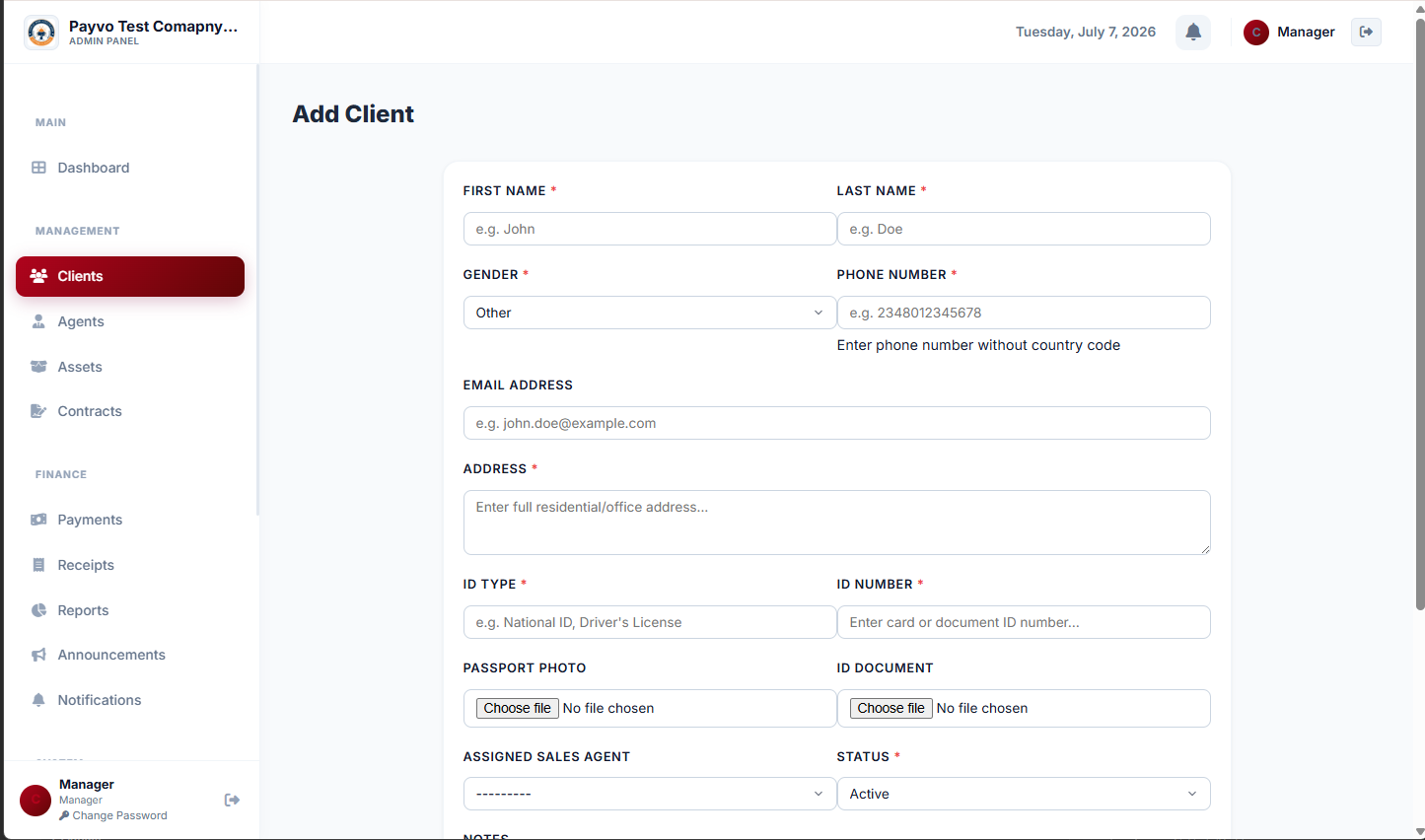 Client: Add Client page
Step 2: Digitize Contract Creation and Schedule Generation
Manual contract creation is time-consuming and susceptible to errors. Automating this process ensures consistency, accuracy, and efficiency. Instead of drafting each contract from scratch or calculating installment schedules manually, a robust system allows you to define payment terms once and let the software generate everything else.
This involves inputting the total sale price, down payment, installment frequency (e.g., weekly, monthly), and the number of installments. The system should then automatically calculate the individual installment amounts and their due dates. This not only saves time but also significantly reduces the risk of miscalculations that can impact your cash flow. Businesses looking for a streamlined approach to contract management software Nigeria can benefit immensely from this.
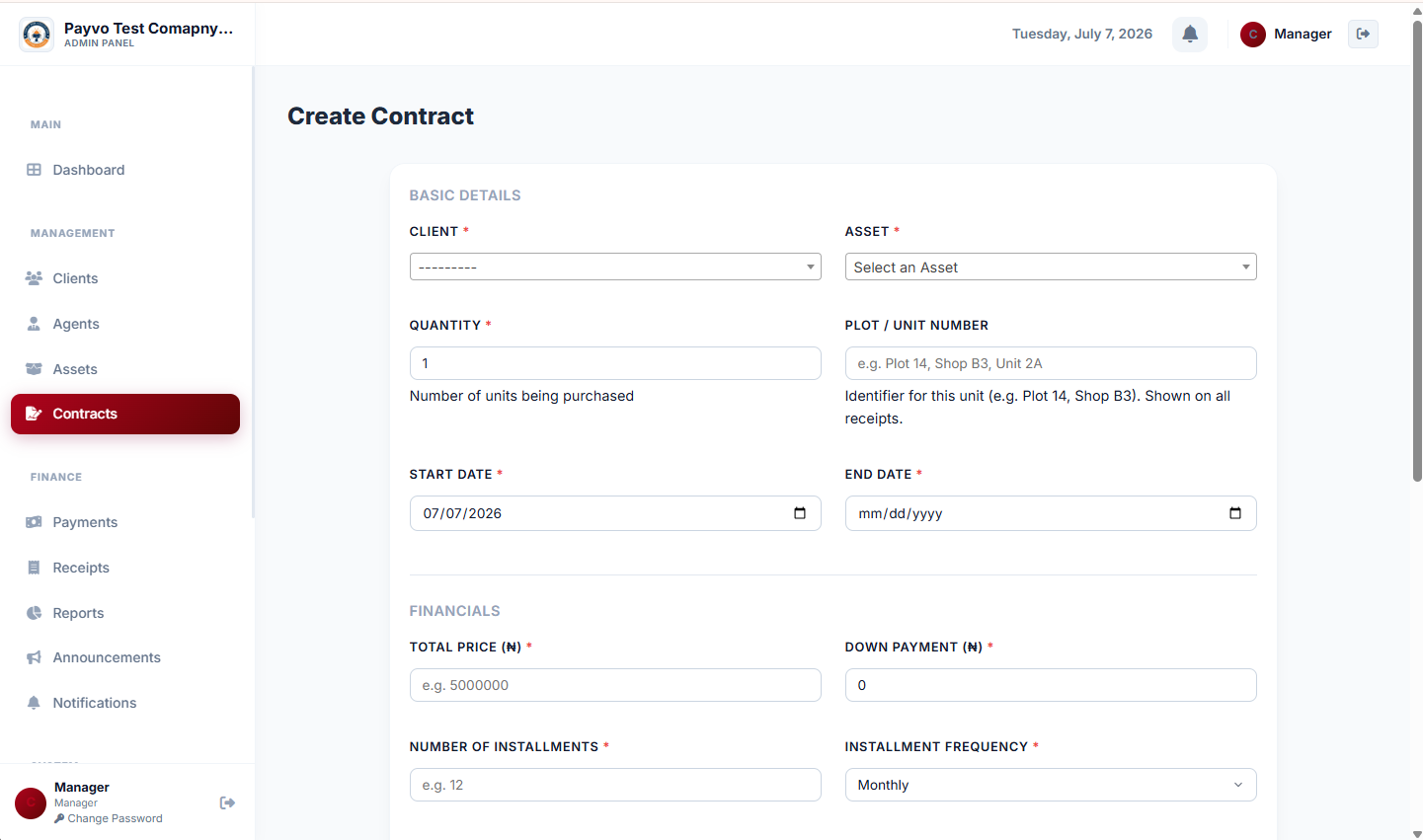 Management: Add contract (top)
Step 3: Implement Automated Payment Reminders
One of the biggest drains on cash flow for businesses offering installment sales is late or missed payments. Manually chasing clients for payments is inefficient and often inconsistent. An automated system for sending payment reminders is a game-changer, significantly improving collection rates and customer satisfaction by providing timely nudges.
Configure your system to send automated notifications a few days before a payment is due, on the due date, and perhaps a follow-up if the payment becomes overdue. These reminders can be sent via email and WhatsApp, making them highly effective. A WhatsApp payment notification system can dramatically increase engagement, as messages are often seen and acted upon more quickly than emails. This proactive approach reduces the need for manual follow-up calls, freeing up your staff.
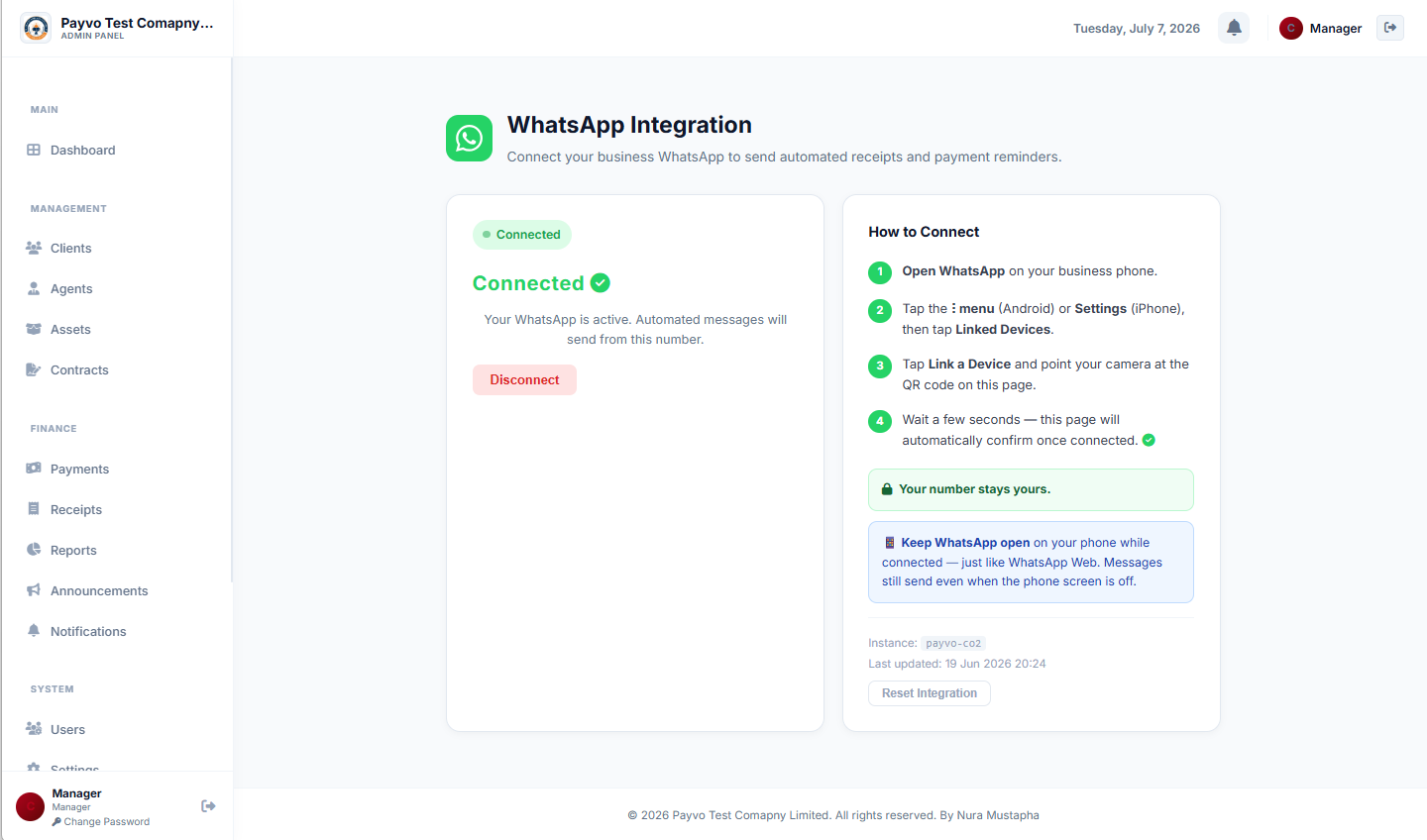 Admin: Whatsapp Integration
Step 4: Streamline Payment Recording and Receipt Generation
Once a payment is received, the process of recording it and issuing a receipt should be instantaneous and accurate. Manual logging in ledgers or spreadsheets is a common source of errors and reconciliation headaches. An automated system allows you to quickly log payments against specific contracts, updating the client's balance in real-time.
Crucially, the system should automatically generate a branded receipt for every payment. This not only provides proof of payment for the customer but also maintains a professional image for your business. For instance, a receipt generator app Nigeria-based businesses can use should include your company logo, colors, and even a digital signature. This process should also provide clients with a public link to view, save, or share their receipts easily. This level of transparency builds trust and reduces customer queries regarding payment history.
> "The difference between businesses that thrive and those that merely survive in the installment sales market often boils down to their ability to efficiently manage their cash flow and customer communication."
Step 5: Automate Agent and Staff Management
For businesses leveraging sales agents, such as real estate firms or car dealerships, accurately tracking commissions and managing staff access is vital. Manual calculations of agent commissions are prone to errors and can lead to disputes. An automated system can link agents to specific contracts and automatically calculate their commission based on payments received.
Furthermore, managing staff accounts with role-based permissions ensures data security and operational efficiency. Business owners can add staff members and control what each person can see and do within the system. Agents can even have self-tracking access to view their own earnings and submit withdrawal requests directly, streamlining the entire process and making it easier for businesses to manage their agent commission tracking software needs.
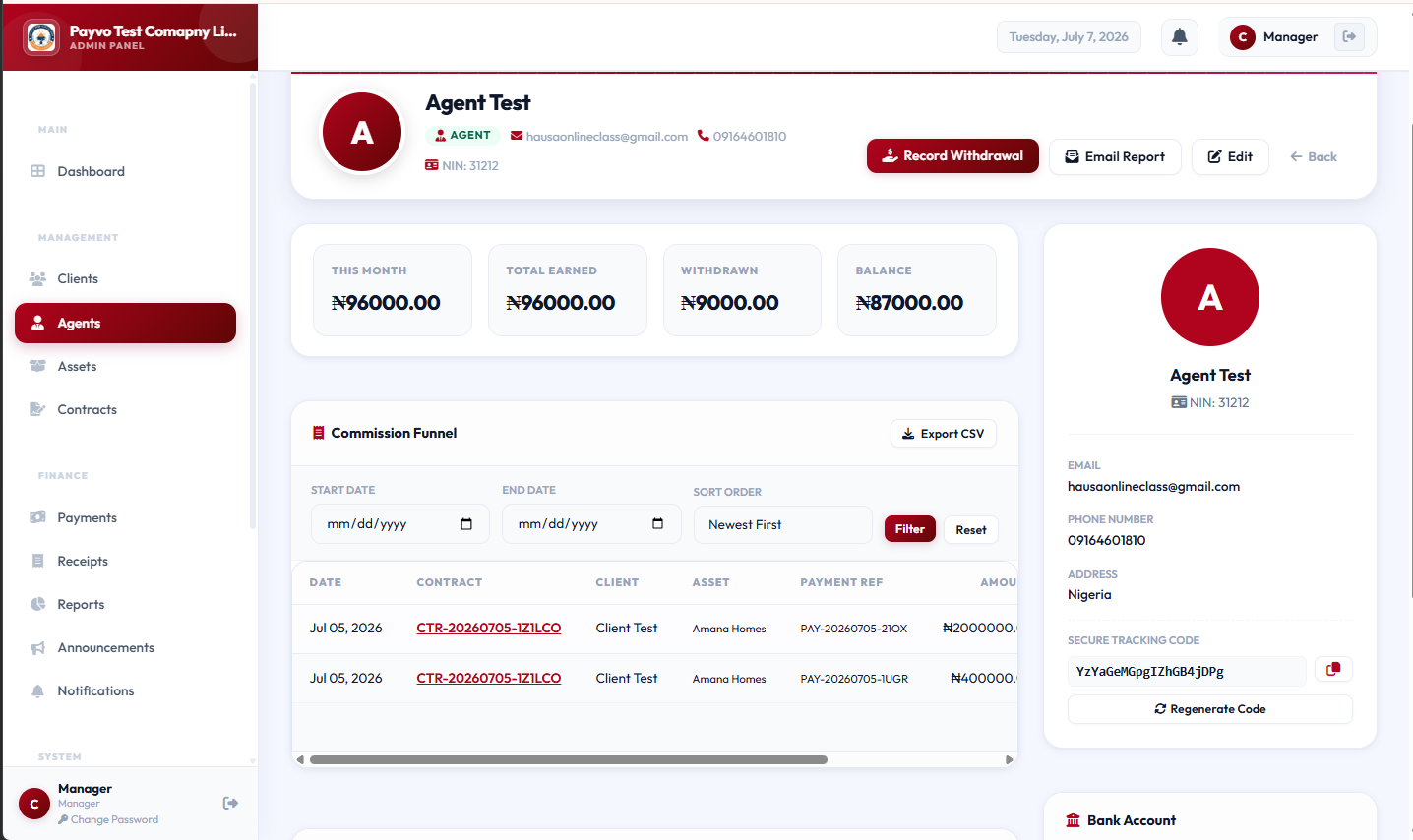 Agent: Agent details page
Step 6: Monitor Performance with Real-time Dashboards and Reports
The final step in automation is gaining actionable insights from your data. Without clear visibility into your financial health and payment performance, making informed decisions is difficult. An effective installment management software Nigeria solution provides real-time dashboards and comprehensive reporting capabilities.
These dashboards should offer an at-a-glance view of key metrics: total clients, active contracts, amount collected, outstanding balances, and next payments due. Beyond the dashboard, the ability to generate detailed reports (e.g., payment lists, contract summaries, financial reports) in formats like PDF or Excel is essential for accounting, auditing, and strategic planning. This allows businesses to monitor cash flow, identify potential issues, and forecast revenue more accurately. For instance, real estate payment tracking Nigeria-based firms need relies heavily on robust reporting for financial reconciliation and compliance.
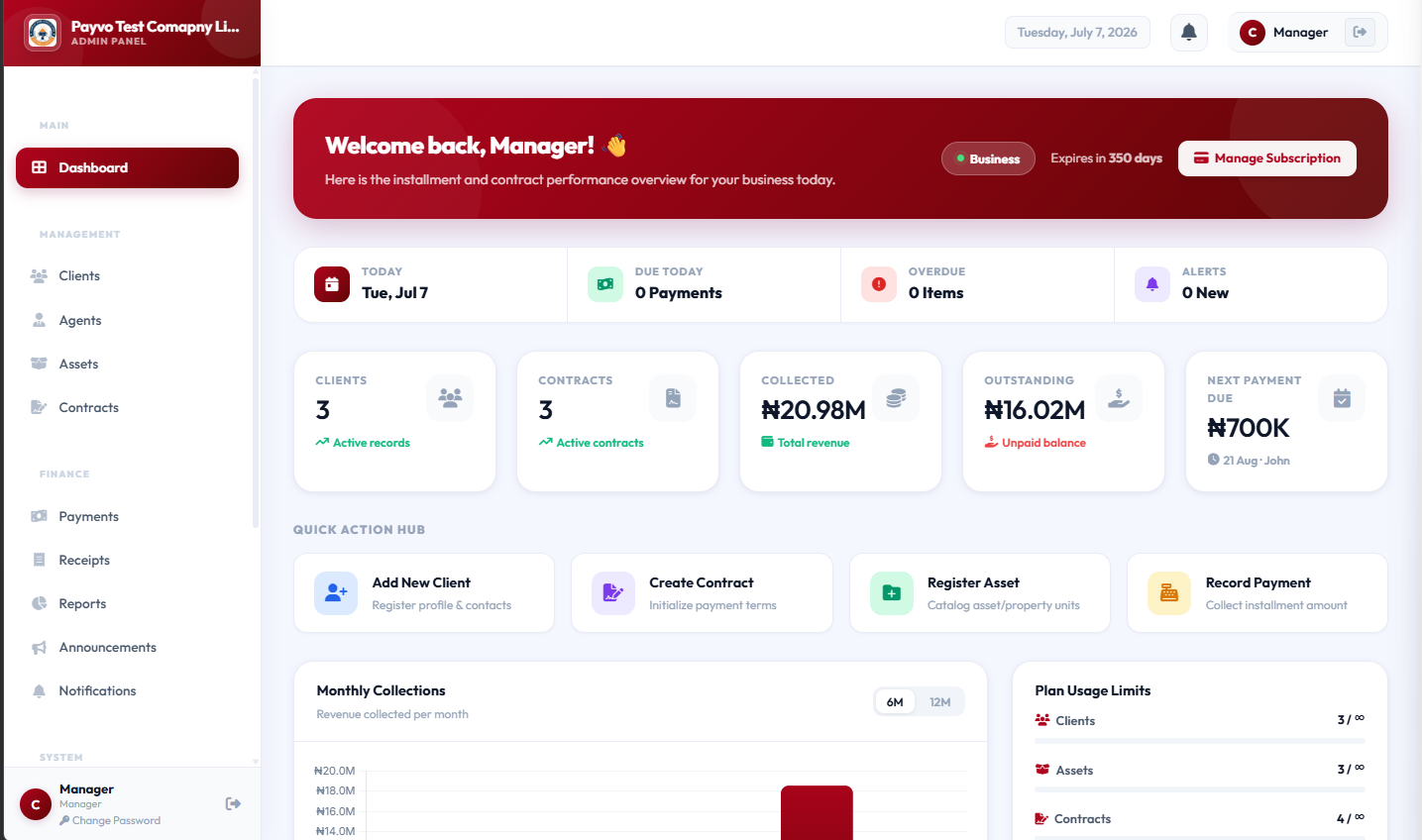 Dashboard (bottom)
Common Mistakes to Avoid
When implementing automated installment payment tracking, businesses often fall into common traps that can undermine their efforts.
- Underestimating Setup Time: While automation saves time long-term, the initial setup—migrating data, defining terms, and training staff—requires dedicated effort. Rushing this phase can lead to errors down the line.
- Neglecting Customer Communication: Automation doesn't replace human interaction entirely. Ensure your automated messages are clear, polite, and provide options for customers to contact you if they have questions. Avoid overly aggressive or impersonal reminders.
- Ignoring Data Accuracy: The effectiveness of any automated system hinges on the accuracy of the data fed into it. Incorrect client details, payment terms, or asset information will lead to faulty reminders and payment calculations.
- Lack of Staff Training: Even the most intuitive software requires proper training for staff who will be using it daily. Without adequate training, adoption will be low, and the system's benefits won't be fully realized.
- Failing to Monitor Performance: Simply setting up automation isn't enough. Regularly review your payment collection rates, client feedback, and system reports to identify areas for improvement.
- Overlooking Security: Handling sensitive client financial data requires robust security measures. Ensure your chosen solution offers data encryption, secure access controls, and regular backups to protect against breaches.
How to Track and Grow After Launch
Once your automated installment payment system is up and running, the real work of optimization and growth begins. Tracking key performance indicators (KPIs) is crucial for understanding its impact and identifying opportunities.
Monitor your payment collection rate and average days past due. A significant improvement in these metrics indicates the success of your automated reminders and streamlined processes. Keep an eye on customer feedback regarding payment notifications; positive feedback suggests your communication strategy is effective, while negative feedback can highlight areas for refinement. For microfinance operators and cooperative societies, tracking the number of active contracts and client retention rates can provide insights into overall business health and customer loyalty.
Leverage the reporting features of your installment management software to generate financial reports regularly. These reports can inform strategic decisions, such as adjusting payment terms, expanding product offerings, or targeting specific customer segments. A business payment tracking app Nigeria businesses use should also offer insights into agent performance, allowing you to identify top performers and provide targeted support to others, thereby boosting overall sales efficiency. You can review your business performance through weekly company reports automatically sent to your email, giving you a consistent pulse on your operations. For more in-depth analysis and custom integrations, Payvo offers audit logs and API access, allowing businesses to integrate with other systems and track everything securely.
Frequently Asked Questions
Q1: How does installment management software help with cash flow?
A1: Installment management software automates payment reminders, reducing late payments and improving collection rates. By providing real-time visibility into outstanding balances and upcoming payments, it allows businesses to forecast cash flow more accurately and take proactive steps to address potential shortfalls, directly boosting liquidity.
Q2: Is it difficult to migrate existing client and contract data to a new system?
A2: The ease of migration depends on the complexity of your existing data and the capabilities of the new system. Most modern installment management platforms offer tools or support for bulk data imports, often from spreadsheets. It's crucial to have clean, organized data beforehand to ensure a smooth transition.
Q3: Can these systems integrate with WhatsApp for payment notifications?
A3: Yes, many advanced installment management solutions, like Payvo, offer direct integration with WhatsApp for sending automated payment notifications and receipts. This WhatsApp payment notification system is highly effective in Nigeria due to the widespread use of the platform, ensuring clients receive timely and easily accessible information.
Q4: How does agent commission tracking work within the software?
A4: An agent commission tracking software within an installment management system allows businesses to assign sales agents to specific contracts. As payments are recorded against those contracts, the system automatically calculates the agent's commission based on predefined rules. Agents can often view their earnings and submit withdrawal requests directly through the platform, streamlining the entire commission payout process. You can learn more about how this works on our dedicated agent tracking page.
Q5: What kind of reports can I expect from an automated tracking system?
A5: You can typically expect a range of reports including payment history, outstanding balances, upcoming payments, client payment summaries, financial performance, and agent commission reports. These reports are usually exportable in formats like PDF or Excel, providing comprehensive data for accounting, auditing, and strategic decision-making.
Ready to Streamline Your Installment Sales?
Stop losing revenue to manual tracking and missed payments. Take control of your cash flow, automate your operations, and provide a superior experience for your clients. Discover how a comprehensive installment management system can transform your business. Visit our features page to explore all the capabilities or register today to get started.